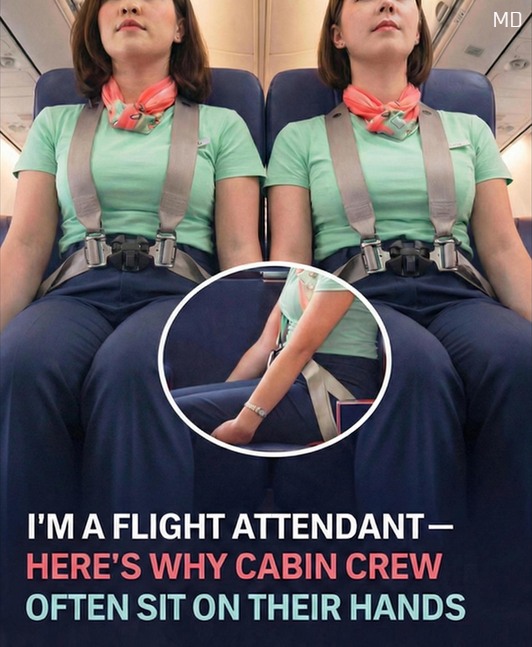
If you’ve ever looked toward the cabin crew during takeoff or landing and noticed them sitting upright with their hands placed under their thighs, you might have wondered why. While it may seem unusual at first glance, this posture is not about comfort or habit. It is a carefully practiced safety technique designed to protect flight attendants and ensure they are ready to assist passengers if needed. In aviation, every movement has a purpose, and this position is no exception.
Takeoff and landing are widely recognized as the most sensitive stages of a flight. During these moments, the aircraft is closer to the ground, speeds are changing, and pilots are managing complex procedures. Because of this, cabin crew members are trained to adopt a specific brace position whenever the aircraft is preparing for departure or arrival. This includes sitting upright with the back straight, shoulders aligned, feet flat on the floor, and hands placed palms-up beneath the thighs. The body is positioned in a way that limits sudden movement and helps maintain stability.
The main purpose of this posture is injury prevention. In the unlikely event of abrupt turbulence or a hard landing, keeping the arms secured reduces the risk of flailing or impact-related injuries. By stabilizing their bodies, flight attendants are better protected and more likely to remain physically capable of assisting passengers immediately after an incident. Beyond physical safety, this position also signals a heightened state of awareness. Cabin crew members use these critical minutes to scan the cabin, observe passenger behavior, and stay mentally prepared for any instructions from the flight deck.
Passengers are typically instructed to lean forward and protect their heads in a brace position if directed, which differs from the crew’s stance. The reason is simple: passengers focus on self-protection, while flight attendants must be ready to move quickly and guide others. Their posture allows them to remain alert and responsive at all times. So the next time you notice a flight attendant sitting with their hands under their thighs during takeoff or landing, you’ll know it’s not random. It’s a deliberate safety practice rooted in training, preparation, and a commitment to passenger well-being.