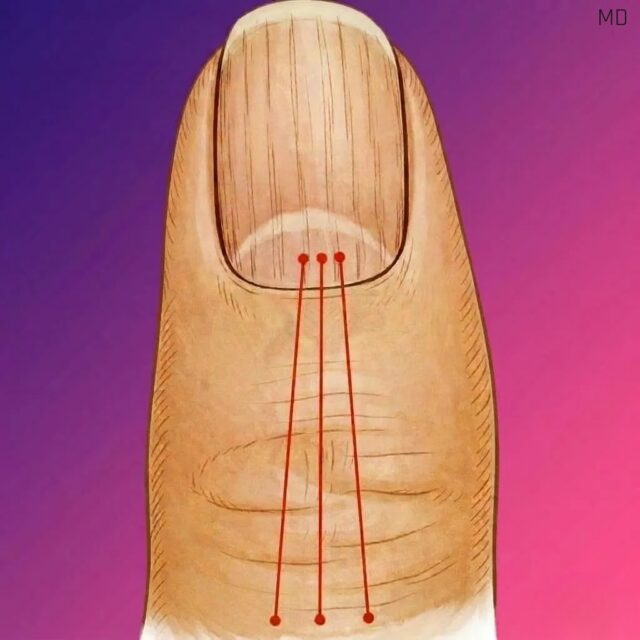
Have you ever looked closely at your fingernails and noticed thin vertical lines running from the base of the nail to the tip? If so, you’re not alone. These subtle lines, known as vertical or longitudinal nail ridges, often become more noticeable with age and can catch people by surprise. Many first notice them after the age of 40 and immediately wonder if something is wrong. Fortunately, in most cases, these ridges are a completely normal part of the aging process. Much like fine lines on the skin or changes in hair texture, nails naturally evolve over time. While they may look different than they did years ago, these changes are usually harmless and simply reflect the body’s natural progression through life.
To understand why these ridges appear, it helps to know how nails grow. Fingernails are made primarily of keratin, a strong protein produced in an area beneath the cuticle called the nail matrix. As we get older, keratin production can slow down or become slightly uneven, which may lead to the formation of ridges along the nail surface. In addition, aging nails often lose moisture more easily, making these lines appear deeper or more visible. Everyday habits can also contribute. Frequent handwashing, exposure to cleaning products, and harsh soaps can strip natural oils from the nails and surrounding skin, increasing dryness and highlighting existing ridges.
While aging is the most common reason for vertical nail ridges, lifestyle and overall health can influence their appearance as well. A balanced diet plays an important role in maintaining healthy nails, and even mild nutritional deficiencies may affect nail growth and texture over time. Circulation is another factor worth considering. Healthy blood flow helps deliver oxygen and nutrients to the nail matrix, supporting strong and consistent nail development. As circulation naturally changes with age, subtle differences in nail texture may become more apparent. These changes are generally gradual and are not usually a cause for concern, but they do remind us that our nails can offer small clues about our overall well-being.
The good news is that caring for aging nails is both simple and effective. Regularly applying moisturizer to your hands, nails, and cuticles can help reduce dryness and improve the appearance of ridges. Wearing gloves while cleaning or washing dishes protects nails from excess water and harsh chemicals. Staying hydrated, eating nutrient-rich foods, and filing nails gently can also encourage healthier growth. Most importantly, remember that vertical ridges are usually a normal part of aging and nothing to worry about. However, it is always wise to pay attention to significant changes in nail color, shape, thickness, or comfort. Staying aware of these changes can help you maintain not only healthy nails but also a better understanding of your overall health as the years go by.