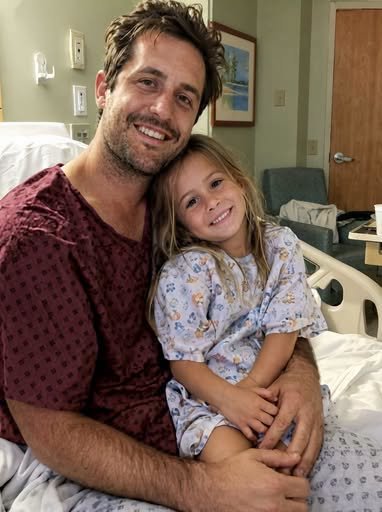
My son hated hospitals. Needles could make my six-foot-tall, thirty-year-old son turn pale. Doctors made him nervous. Hospitals were even worse. He had good reason.
When Ethan was seventeen, his older brother, Daniel, died in a hospital after a terrible accident. I spent the next thirteen years watching my son carry that loss in ways he rarely talked about.
So when Ethan walked into my kitchen one Sunday afternoon, opened my refrigerator as casually as if he still lived there, and said, “Mom, I’m donating a kidney,” I honestly thought he was joking.
I laughed. Then I realized he wasn’t. “You’re doing what?”
He closed the refrigerator door. “Donating a kidney. To a little girl.”
I stared at him. “I know how it sounds,” he said.
“You nearly passed out getting a flu shot.”
“That was one time.”
“You were twenty-eight.”
He rubbed the back of his neck.
“Can we not make this about the flu shot?”
“It’s not about the flu shot. You’re talking about surgery. Major surgery.”
“I know.”
“You hate hospitals.”
“I know, Mom.”
I knew that tone.
Ethan used it when his mind was already made up and he was deciding how much of the truth he was willing to give me.I stopped arguing long enough to ask the question that mattered.
“Whose little girl needs a kidney?”
Ethan sat across from me and pulled out his phone.
A photograph filled the screen.
A little girl with brown curls sat in a hospital bed wearing purple pajamas. Tubes were taped to her arm, but she was smiling at whoever had taken the picture.
“Her name is Rosie,” Ethan said. “Lauren’s daughter.”
I knew the name.
Lauren and Ethan had gone to high school together. I remembered her vaguely as a quiet girl with dark hair. I had seen her at graduation and maybe once or twice afterward.
At least, that was what I thought I knew.
“Lauren posted that Rosie’s kidneys are failing,” Ethan explained. “They’ve been trying to find a living donor. Nobody in the family matched.”
I looked from the photograph to my son.
“And you do?”
He nodded.
“You saw a post and got tested?”
“Yes.”
“Without telling me?”
His jaw tightened.
“I didn’t need permission.”
“No, you didn’t,” I said. “But Ethan, you hate doctors. You hate hospitals. And now you’re volunteering to have an organ removed for a five-year-old child you barely know.”
He leaned forward.
“She’s five.”
I said nothing.
“She’s supposed to be learning how to ride a bike,” he continued. “She’s supposed to be fighting about bedtime and getting grass stains on her clothes. She’s not supposed to know which nurse works which shift.”
My eyes burned.
“Sometimes,” he said quietly, “being there when somebody needs you is reason enough.”
He said it like it was something he’d learned long ago.
Not something he’d suddenly decided.
I almost asked him who had taught him that.
Looking back, I wish I had.
Instead, I asked, “When?”
“Three weeks.”
I wanted to tell him not to do it.
That is the ugly truth.
I wanted to stop my son from entering a hospital for any reason, much less to undergo major surgery.
But Rosie’s little face was still glowing from his phone screen.
So I closed my eyes.
Ethan reached across the table and wrapped his fingers around mine.
“I’m going to be okay.”
I looked directly at him.
“Don’t promise me things you can’t control.”
His smile faded.
“Okay.”
But I could see in his eyes that he still believed he would be fine.
A week before the surgery, I asked him whether Lauren had thanked him.
“More times than I can count.”
“And?”
“And I keep telling her to stop.”
I studied him.
“You two were never close in school.”
Ethan looked away.
“We knew each other better than you think.”
Before I could ask what that meant, he stood, picked up his coffee cup, and carried it to the sink.
That was all he gave me.
At the time, I thought he was simply avoiding another conversation.
I didn’t realize he was carrying thirteen years of history I knew nothing about.
The transplant was successful.
That was what everyone kept telling me.
Rosie was doing beautifully.
Her new kidney started working almost immediately. Her color improved. By the second day, she was asking for macaroni and cheese.
Ethan even laughed when he told me about it from his hospital bed.
“Apparently hospital macaroni is disgusting.”
“You look awful,” I told him.
“Thanks.”
“I’m serious.”
“So am I. I look terrible.”
He smiled.
But there was sweat on his forehead.
Something about him didn’t look right.
I called the nurse.
His vitals were abnormal.
Then everything happened at once.
There was a complication.
Rare.
Severe.
The doctors rushed into the room. Machines began beeping. Nurses moved quickly around his bed.
Someone pushed me into the hallway.
I kept saying the same thing.
“That’s my son.”
As if they didn’t know.
As if saying it loudly enough could somehow keep him alive.
I paced the corridor outside his room, desperately trying not to feel like I was walking through the same nightmare I’d lived thirteen years earlier.
The same hospital fear.
The same helplessness.
The same terrible feeling that a life I loved was slipping away while I stood outside a door.
“It will be okay,” I whispered to myself.
“It has to be okay.”
Hours later, they finally let me back into the room.
Ethan looked smaller somehow.
His skin was gray.
I sat beside him and took his hand.
It was cold.
“Mom.”
“I’m here.”
He swallowed.
“You need to listen to me.”
“No,” I said immediately. “Don’t you dare.”
“Mom.”
He squeezed my fingers.
Barely.
“Please. Listen.”
I leaned closer.
His breathing sounded wrong.
“Whatever happens,” he whispered, “don’t blame Rosie.”
My throat closed.
“Ethan.”
“Or Lauren.”
Lauren.
Not the doctors.
Not himself.
Lauren.
I wanted to ask why, but one look at his face told me he didn’t have enough strength left to explain.
“Ethan, don’t do this to me,” I whispered through tears. “Don’t talk like—”
“Promise me, Mom.”
His eyes found mine.
There was fear in them.
Real fear.
That was the worst part.
He was afraid, and somehow he was still trying to protect me.
“I promise.”
He relaxed slightly.
“Thank you.”
Then, after a pause, he whispered:
“And I’m sorry.”
He died before sunrise.
He was thirty years old.
My only living child.
At his funeral, everyone had their own version of Ethan.
The pastor called his decision selfless.
An old classmate said Ethan had always been the kind of person who would help anybody.
People I barely knew squeezed my hands and told me my son had died a hero because he had given a little girl a future.
They meant it as comfort.
And I was proud of him.
But I was also furious.
I would have traded every beautiful word spoken about my son for one more stupid phone call asking me how long chicken stayed good in the refrigerator.
I wanted him back.
I didn’t want a heroic story.
I wanted Ethan.
The morning after I buried him, someone knocked on my door.
I almost ignored it.
Then they knocked again.
When I opened the door, Lauren was standing on my porch.
And suddenly, the woman Ethan had told me not to blame was standing directly in front of me.
Beside her was Rosie.
The little girl looked even smaller in person.
She wore a pink sweater and held a stuffed rabbit by one ear.
Lauren’s face was swollen from crying.
I gripped the doorframe.
“I’m sorry,” I said. “I can’t do this today.”
“I understand,” Lauren whispered. “But there’s something you need to know.”
She reached into her coat and pulled out a folded piece of paper.
Then she looked directly at me.
“He never told you the real reason, did he?”
I felt my stomach tighten.
“The real reason for what?”
“For why he saved Rosie.”
I looked at the little girl.
Then back at Lauren.
I remembered Ethan telling me that he and Lauren had known each other better than I realized.
And suddenly, one terrible thought entered my mind.
“Was she Ethan’s?”
Lauren blinked.
“What?”
“Rosie. Was Ethan her father?”
Her mouth fell open.
“No.”
“Don’t lie to me.”
“I’m not. Ethan and I were never together. Not once.”
I believed her.
That should have made me feel better.
Instead, it frightened me more.
Because I’d just run out of the only explanation that made sense.
I stared at the paper in her hand.
“Then what is this?”
Lauren looked down.
“It started the day Daniel died.”
I stopped breathing.
“What would you know about Daniel’s death?”
“I was there.”
The words seemed to pull thirteen years of grief apart and rearrange them in front of me.
“What did you say?”
Lauren’s eyes filled with tears.
“I was there that day. And there’s something about the accident Ethan never told you.”
I shook my head.
“No. That can’t be true. The truck came out of nowhere and hit them. Daniel saved Ethan. That’s what happened.”
“Daniel did what he could,” Lauren said gently. “But after Daniel lost consciousness, Ethan was still bleeding. He was confused. He kept trying to stand up. Help hadn’t reached us yet.”
I stared at her.
For the first time, I noticed the slight limp in her step when she shifted her weight.
Lauren swallowed.
“I stayed with Ethan. I kept pressure on his wound and kept him talking until the paramedics came.”
My knees weakened.
“The paramedic told me later that if Ethan had been alone, he might not have made it.”
I leaned against the doorframe.
Daniel had died saving his little brother.
But Daniel hadn’t been the only person who helped keep Ethan alive that day.
For thirteen years, I hadn’t known.
But one question hurt worse than the secret itself.
“Why didn’t he tell me?”
“I asked him that once,” Lauren said.
“And?”
“He said you already had to live with Daniel dying to save him. If you knew how close Ethan came to dying afterward too, he thought you’d spend the rest of your life imagining that you could have lost both your sons that day.”
I covered my mouth.
Because that was exactly what I was doing.
Then I looked at Rosie.
She was making her stuffed rabbit wave at one of my potted plants.
And suddenly, another piece fell into place.
“Oh, my God.”
I looked at Lauren.
“He gave Rosie his kidney because you saved him.”
“Partly.”
The word hit me harder than if she’d denied it.
“So you let my son repay you with an organ?”
“No.”
Lauren’s voice was immediate.
“No. I told him not to do it.”
I stopped.
“I told him he didn’t owe me his life,” she continued. “I told him Rosie wasn’t his responsibility.”
She pulled out her phone.
“Ethan sent me something afterward because he knew I still wouldn’t accept his answer.”
She looked at me.
“I kept the voice note. Do you want to hear it?”
I stared at the phone.
Lauren was holding the only answer Ethan had left behind.
I nodded.
She pressed play.
Ethan’s voice filled my kitchen.
Casual.
Warm.
Alive.
And utterly devastating.
“Lauren, I know what you’re thinking. You think I’m doing this because I owe you.”
There was a short pause.
“I probably will always feel like I owe you something. You stayed when you could’ve left, and I got to grow up because people didn’t walk away when I needed them.”
My eyes closed.
“But this isn’t you collecting a debt. It’s me deciding what to do with the life I got.”
His voice softened.
“Somebody gave me the chance to grow up. Rosie deserves that chance too.”
Another pause.
“You helped keep me here. Let me help keep her here.”
The message ended.
I pressed both hands against my face.
His final words in the hospital came rushing back.
Don’t blame Rosie.
Or Lauren.
Now I understood.
Ethan had known that if something happened to him, sooner or later I might learn the truth.
And he knew grief would make me search for someone to blame.
So he asked me for a promise before grief had the chance to choose someone for me.
“I didn’t collect a debt,” Lauren whispered.
I lowered my hands.
“I know.”
Rosie edged closer.
She stood beside her mother for a moment, then looked up at me.
“Was Ethan your boy?”
My chest cracked open.
“Yes.”
She nodded solemnly.
Then she reached for the folded paper in Lauren’s hand.
“I’m brave enough, Mommy. I’ll give it to her myself. It’ll be fine.”
Lauren looked between us.
Then she let Rosie take the paper.
Rosie carefully smoothed it out.
“Here, Ethan’s mom.”
She held it toward me.
“I made this for Ethan before the surgery.”
I took it with trembling hands.
Four stick figures were connected by crooked crayon lines beneath a giant red heart.
Rosie pointed to two of them.
“That’s Mommy helping Ethan when they were kids.”
Then she moved her finger across the page.
“And that’s Ethan helping me.”
I looked at her.
“Ethan told you about that?”
Rosie nodded.
“He said Mommy helped him get more days. So he wanted me to get more days too.”
Lauren covered her mouth.
I looked down at the drawing again.
Even Rosie had known a piece of my son’s reason before I did.
Above the four figures, written in crooked purple letters, were the words:
PEOPLE HELP PEOPLE.
I pressed the picture against my chest.
For days, everyone had tried to give me reasons Ethan’s death was meaningful.
None of them made me feel better.
This didn’t make me feel better either.
Meaning doesn’t replace a son.
A kidney doesn’t make a mother stop grieving.
And no amount of praise can make thirty years feel like enough.
But for the first time, I understood what Ethan had been trying to tell me.
He hadn’t given Rosie a kidney to settle a debt.
Daniel had stayed for him.
Lauren had stayed for him.
And when Rosie needed someone, Ethan had chosen to do the same.
Lauren took Rosie’s hand and started walking away.
“Lauren, wait.”
She turned.
I looked at Rosie.
“When she’s stronger,” I said, my voice breaking, “I’d like to see you both again.”
Lauren’s face crumpled.
“Are you sure?”
“No.”
I looked down at Rosie’s drawing.
“I’m not sure about anything.”
Rosie walked back toward me.
She held out her stuffed rabbit.
“You can hug him if you’re sad.”
I crouched down.
“I might be sad for a long time.”
She nodded.
“Me too.”
Then she wrapped her little arms around me.
Very carefully.
As if she thought I might break.
I held her back.
None of this made losing Ethan fair.
None of it made his death hurt less.
But she was five years old.
And she was alive.
My son had wanted her to stay that way.
So I held on.
Because sometimes the only thing a grieving mother can do is carry the love her child left behind—and make sure it doesn’t disappear with him.
Ethan had spent his final days giving Rosie a chance at more of them.
And now, somehow, I had to learn how to live with the days he left me.
One at a time.