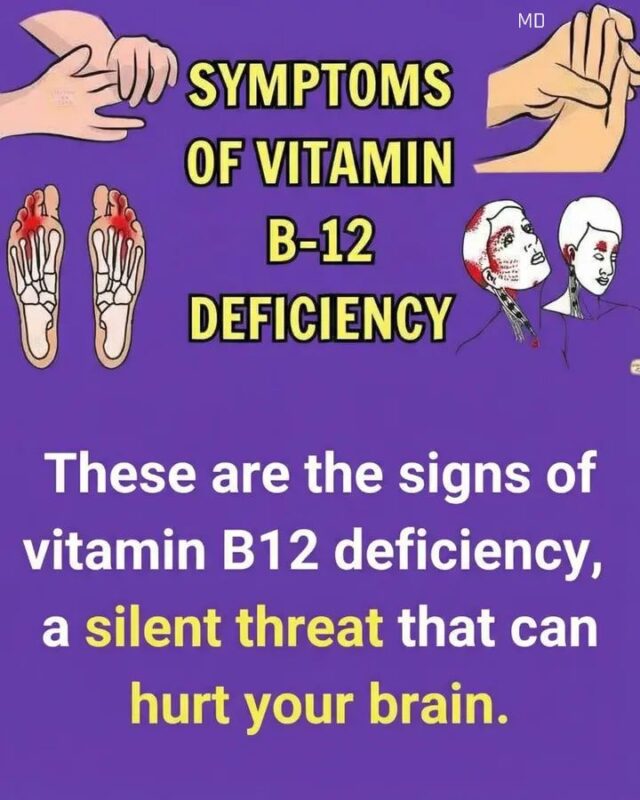
Vitamin B12 is an essential nutrient that plays a key role in producing red blood cells, supporting nerve function, and helping the body create DNA. Unlike some vitamins, B12 cannot be made by the body, which means it must come from food or supplements. As people get older, the body’s ability to absorb vitamin B12 can decrease, making deficiency more common with age. In fact, studies suggest that a significant portion of adults may have low or borderline levels, especially those with digestive conditions or restrictive diets. Because the symptoms can be subtle at first, many people may not realize they are lacking this important nutrient.
One of the most common signs of vitamin B12 deficiency is ongoing fatigue. While feeling tired can result from many factors, persistent exhaustion despite adequate sleep may point to an underlying issue. Vitamin B12 helps form healthy red blood cells, which carry oxygen throughout the body. When levels are low, oxygen delivery may be reduced, potentially contributing to weakness or low energy. Some individuals may also notice muscle weakness, lightheadedness, or difficulty concentrating. These symptoms alone do not confirm a deficiency, but they may signal the need for medical evaluation.
Other possible signs can include pale or slightly yellow-tinged skin, which may occur when red blood cells break down more easily. In more advanced cases, people might experience changes in vision due to nerve involvement, or notice a smooth, red tongue accompanied by discomfort or altered taste sensation. Because these symptoms overlap with many other health conditions, it is important not to self-diagnose. A simple blood test ordered by a healthcare professional can determine whether vitamin B12 levels are within a healthy range.
Vitamin B12 deficiency can develop for several reasons, including reduced stomach acid, digestive disorders that affect nutrient absorption, certain medications, or long-term vegetarian or vegan diets without proper supplementation. To support healthy levels, individuals can include B12-rich foods such as fish, poultry, lean meats, eggs, and dairy products. Fortified cereals and plant-based milks can also help, particularly for those who avoid animal products. In some cases, doctors may recommend oral supplements or injections. Maintaining overall gut health by eating a balanced diet rich in whole foods and fiber may also support nutrient absorption. If you suspect low vitamin B12 levels, consult a qualified healthcare provider for proper testing and guidance tailored to your needs.