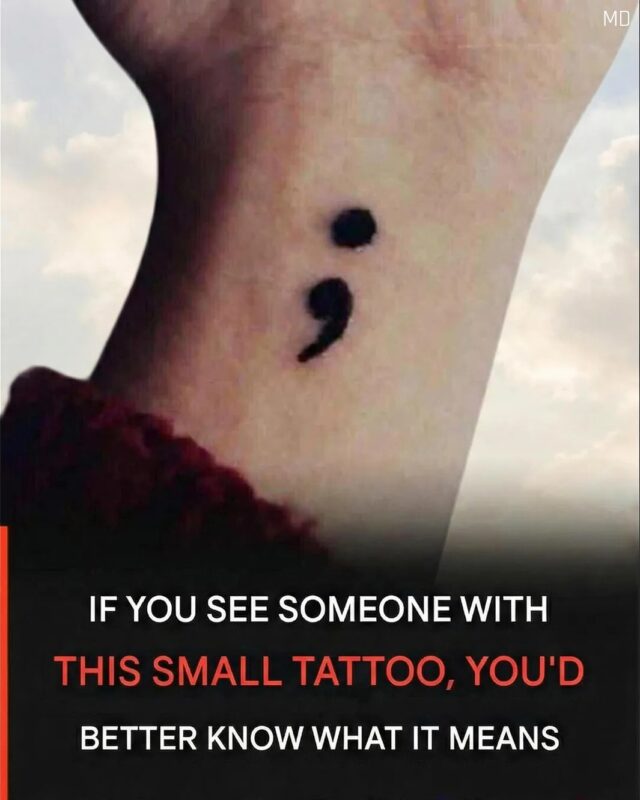
Tattoos have long been used as a meaningful form of personal expression. For many people, body art is more than decoration—it can represent memories, values, and important life experiences. Some choose detailed designs that cover large areas of the body, while others prefer small and subtle symbols that quietly reflect something significant. Among these minimalist designs, one tiny symbol has become widely recognized for its deeper meaning: the semicolon. At first glance, it may appear to be nothing more than a simple punctuation mark used in writing. However, for many individuals around the world, it represents strength, perseverance, and the idea that every life story continues beyond difficult moments.
The semicolon symbol gained global attention after the creation of Project Semicolon in 2013. This initiative was launched to encourage conversations about emotional well-being and to promote greater awareness about mental health. The idea behind the symbol comes from its role in grammar: a semicolon connects two related thoughts in a sentence instead of ending it completely. In a similar way, the movement uses the mark to represent a pause in life rather than a final stop. It reminds people that challenges and hardships are chapters within a larger story, not the end of the narrative.
Over time, the semicolon tattoo has been embraced by individuals from many cultures and backgrounds. For some, the symbol represents personal growth and the strength it takes to overcome difficult periods in life. Others choose it as a way to show support for friends, family members, or communities that value open discussions about mental health. Because the design is so simple, it can be placed almost anywhere and still carry a powerful meaning. Its quiet presence allows people to keep their message personal while also reminding themselves of resilience and hope.
In recent years, the symbol has also gained visibility through artists, writers, and public figures who have spoken openly about emotional well-being. Their willingness to share their stories has helped encourage more understanding and compassion around mental health topics. As conversations become more open and supportive, symbols like the semicolon continue to represent encouragement and solidarity. Though small in appearance, this mark has grown into a meaningful reminder that every story has the potential to continue, and that moving forward—no matter how slowly—is an important part of the journey.