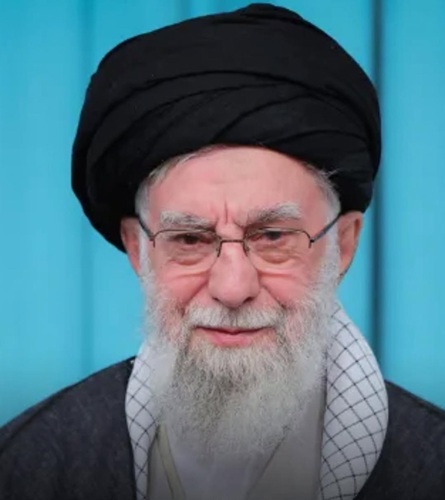
The idea that Iran’s Supreme Leader could be killed in a military strike is stark and profound. The office of the Supreme Leader is the central pillar of Iranian governance — constitutionally, institutionally, and politically.
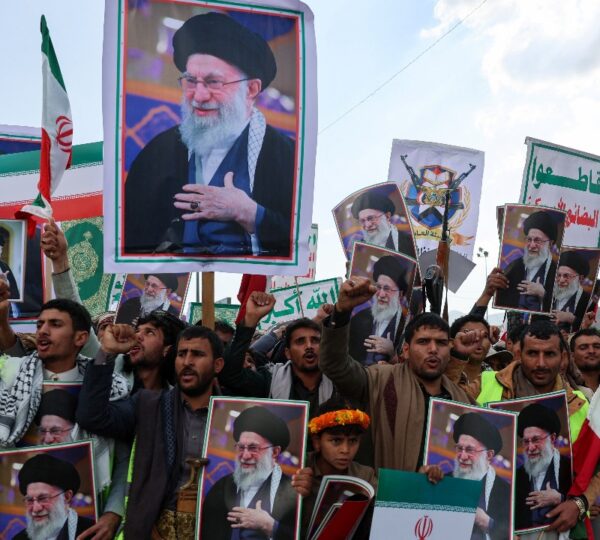
Unlike a president in a typical republic, the Supreme Leader’s authority in Iran extends over the armed forces, the judiciary, national security councils, the clerical establishment, foreign policy, and the Islamic Revolutionary Guard Corps (IRGC).
Given this unique structure, any significant injury or death of the Supreme Leader would not be a routine battlefield casualty.
It would be a structural disruption with consequences for regional stability, global energy markets, international diplomacy, and the calculus of U.S. and allied forces in the Middle East.
This analysis explores:
- The role of the Supreme Leader in Iran’s political system
- How succession works and what it would mean if the office were suddenly vacant
- Possible reactions from Iran’s leadership and security apparatus
- Risks of escalation with the United States, Israel, and regional actors
- Impact on global energy, terrorism, and proxy conflicts
- What this means for ordinary people and international policy
The Power of the Supreme Leader in Iran’s System
To grasp why a hypothetical death of the Supreme Leader would be seismic, it’s essential to understand his position.
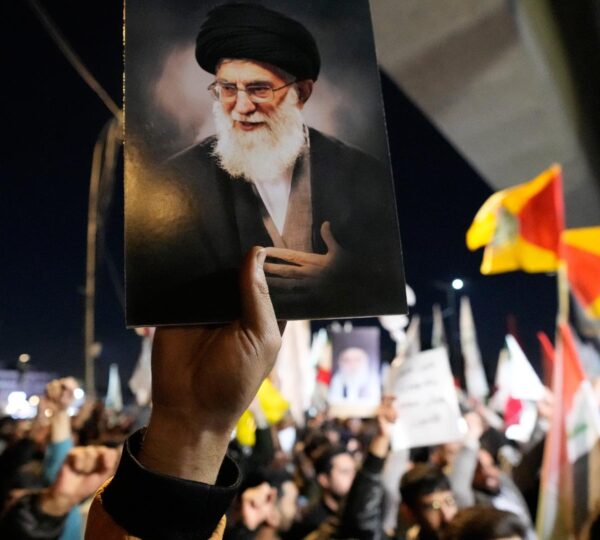
More Than a Head of State
In Iran’s political order — established after the 1979 revolution — the Supreme Leader holds ultimate authority. By constitutional design, he outranks:
- The President and Cabinet
- The Parliament (Majlis)
- The Judiciary
- The commander of the Islamic Revolutionary Guard Corps (IRGC)
- The heads of intelligence and security services
The Supreme Leader appoints key leaders, including the:
- Head of the judiciary
- Commanders of the IRGC and Basij
- Members of the Guardian Council (which vets candidates for public office)
- Directors of major religious foundations (bonyads) with economic power
This concentration of authority means the Supreme Leader is both a political and spiritual figure.
Even during times of domestic protest or international pressure, his position confers continuity beyond electoral cycles and cabinet changes.
Why This Matters
Khamenei has served in this position since 1989, after the death of Ayatollah Ruhollah Khomeini, the founder of the Islamic Republic.
His decades in power have tied the regime’s internal cohesion and external posture closely to his personal leadership style and network of loyalists.
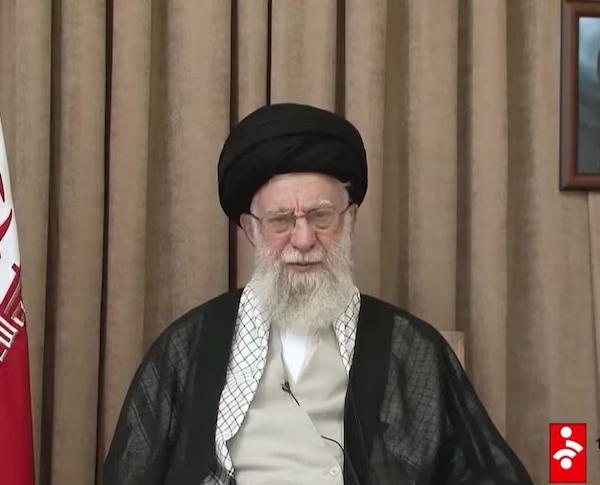
Unlike systems with clear succession protocols — for example parliamentary democracies or constitutional monarchies — Iran’s succession mechanisms are ambiguous and politicized. This ambiguity creates significant uncertainty in moments of potential transition.
Succession in Iran — An Uncertain Path
Unlike a typical presidential succession, passing the office of Supreme Leader is not automatic or strictly codified. It involves several complex factors:
- The Assembly of Experts: A clerical body tasked with selecting and supervising the Supreme Leader, but historically dominated by theocratic elites close to the existing leadership.
- Religious Qualifications: The office theoretically requires high religious standing as a Shi’a jurist — but in practice this has been interpreted flexibly.
- Power Brokers Within the State: The IRGC, intelligence services, and other security organs are major stakeholders. Their internal loyalties and rivalries would shape any transition.
- Hardliners vs. Moderates: Factional tension within Iran’s elite could explode if the office became contested.
In a scenario where the Supreme Leader were prematurely removed, these forces would compete in a high-stakes, high-uncertainty environment.
Immediate Domestic Reactions — What Could Happen Inside Iran
If Iran’s Supreme Leader were suddenly killed or incapacitated:
1. Shock and Uncertainty
The initial effect would likely be widespread confusion across Iran’s ruling institutions. Given the lack of a clear, widely accepted successor, competition among senior clerics and security figures could intensify.
2. Hardliners Might Consolidate Control
In times of perceived crisis, security and hardline elements often move first. The IRGC — already a dominant force inside Iran — could assert control to prevent fragmentation.
A stronger IRGC role could push Iranian policy even further from diplomatic engagement and more toward retaliatory measures.
3. Popular Response Could Be Fragmented
Iranian society is diverse and divided on many issues. Some segments might publicly mourn and rally around the state, while others — especially reformist or younger populations — could see a power vacuum as an opportunity for change.
However, widespread protests under such conditions would be risky, given the regime’s capacity for repression.
Regional Repercussions — Escalation Risks
A sudden decapitation strike against Iran’s leadership — if confirmed — would likely trigger responses across multiple theaters:
1. Retaliation Through Proxies
Iran maintains networks of allied militias and political movements in Lebanon (Hezbollah), Iraq (various militias), Syria (pro-government forces), and Yemen (Houthis).
Even if the Iranian center remains inactive initially, these groups could act autonomously or in coordination.
2. Direct Military Responses
Iranian missile strikes, drone barrages, and naval provocations against U.S. and allied forces could escalate rapidly. The Gulf states, particularly those hosting U.S. bases, would be on heightened alert.
3. Disruption to Shipping and Energy
Iran’s strategic location along the Strait of Hormuz — a chokepoint for global oil and gas exports — means any conflict there affects international energy markets.
Tanker traffic could be threatened, even unintentionally, leading to price spikes and economic instability.
Global Diplomatic Reactions
World powers have differing stakes in Iranian stability:
United States and Western Allies
The U.S. has long accused Iran of sponsoring terrorism and destabilizing its neighbors, and official rhetoric often emphasizes deterrence.
However, policymakers are also acutely aware that direct war with Iran could be far more damaging and unpredictable than years of proxy conflict.
European Governments
Many European countries pursue dual tracks: condemning Iranian human rights abuses or regional aggression, while also supporting diplomatic engagement on nuclear issues.
European leaders would likely call for restraint to prevent uncontrolled escalation.
Russia and China
Both maintain strategic relationships with Iran — Russia through its military involvement in Syria, China through energy deals and Belt and Road investments.
These powers would be deeply concerned about instability disrupting their own interests.
Why This Matters to Ordinary People
For U.S. families, Iranian civilians, and global citizens alike, the stakes are not abstract:
Security Risks
- Escalation could expose U.S. servicemembers across the Middle East to increased danger.
- Terrorist threats against Western cities may rise.
- Cyberattacks targeting infrastructure could increase, given Iran’s capabilities.
Economic Impact
- Oil and gas price volatility could lead to higher heating, transportation, and food costs.
- Supply chain disruptions could ripple into global markets.
Humanitarian Consequences
Civilians in Iran and neighboring conflict zones could face displacement, shortages of essentials, and violence.
Deterrence, Strategy, and What Comes Next
In a scenario this extreme, the priority for governments would be:
- Communicating clear red lines to prevent further escalation
- Strengthening defensive positions for U.S. and allied forces
- Engaging back-channel diplomacy to avoid broader war
- Coordinating humanitarian planning for civilians caught in conflict
Successful strategy in such a moment would depend on a mix of deterrence, controlled diplomacy, and crisis management — not solely military action.
Conclusion — A Complex, Precarious Moment
The hypothetical removal of Iran’s Supreme Leader through military means would not be a simple tactical victory.
It would be a strategic inflection point with unpredictable outcomes — from internal power struggles in Tehran to regional proxy wars, energy disruption, and global diplomatic recalibration.
What matters most — whether in policymaking, military planning, or public understanding — is recognizing the cascading risks that come from destabilizing central authority without clear mechanisms to manage the aftermath.
Calm, informed analysis and clear communication are essential in navigating such a high-stakes environment.