Recent developments in the Middle East have drawn international attention and renewed concerns about rising geopolitical tensions. Following reported military actions involving the United States, Israel, and Iran, several countries in the region have reported missile or drone incidents believed to be linked to the ongoing conflict. Governments across the Middle East have increased security measures as the situation continues to evolve. Meanwhile, global powers such as Russia and China are watching events closely due to their economic and strategic interests in the region. Analysts note that conflicts in this part of the world can have far-reaching consequences, influencing energy markets, global diplomacy, and international stability. While leaders and diplomats continue discussions aimed at reducing tensions, many observers remain concerned about the possibility of further escalation and its potential impact on global security.
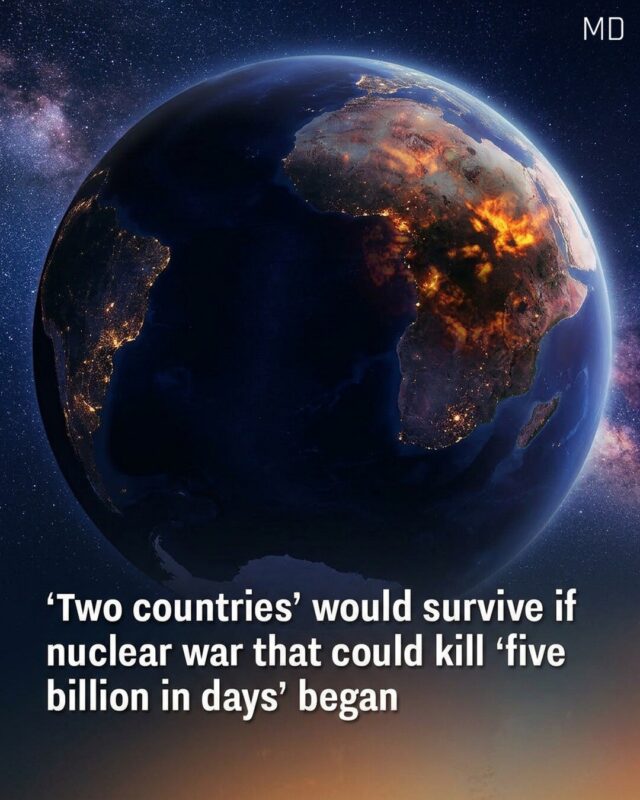
Amid these concerns, discussions have resurfaced about the broader consequences of large-scale global conflict, including the theoretical effects of nuclear warfare. Experts emphasize that such a scenario remains extremely unlikely, but researchers have long studied its possible outcomes in order to better understand global risks. According to some scientific models, a large nuclear conflict could dramatically alter the environment. Massive fires and smoke released into the atmosphere might block sunlight and lower global temperatures for years, a phenomenon sometimes described as a “nuclear winter.” Such changes could disrupt agriculture, damage ecosystems, and challenge food production worldwide. Because of these possibilities, researchers have explored which regions might remain relatively stable in extreme scenarios. Remote areas with strong agricultural potential and geographic distance from major military powers are often discussed in these analyses.
Some studies and expert discussions suggest that countries like New Zealand and Australia could have advantages in maintaining food production due to their climate, agricultural infrastructure, and relative isolation. However, researchers stress that no place would be completely unaffected by a global catastrophe of this scale. Even regions far from conflict could experience economic disruption, environmental change, and supply shortages. Other locations sometimes mentioned in theoretical resilience discussions include Iceland, Switzerland, Chile, South Africa, and small island nations with sustainable resources. Still, specialists emphasize that these ideas are based on modeling rather than predictions, and the true impact of such an event would be unpredictable.
Ultimately, experts say the most important goal is preventing large-scale conflict altogether. International diplomacy, arms control agreements, and global cooperation remain key tools for maintaining stability and reducing nuclear risk. While scientific research helps people understand potential global challenges, policymakers around the world continue to focus on peaceful solutions and conflict prevention. By strengthening communication and cooperation between nations, many believe the international community can reduce the likelihood of catastrophic scenarios and instead work toward a more stable and secure future for everyone.