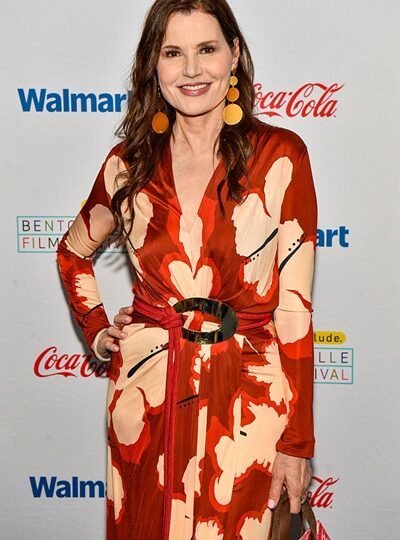
Geena Davis has been one of Hollywood’s most recognizable talents for more than four decades — dazzling audiences with her height, presence, and versatility.
And later becoming a passionate advocate for gender equality in media. From her humble beginnings in Massachusetts to her emergence as an Academy Award‑winning actress and a leading voice for representation, Davis’s life story is one of resilience, reinvention, and quiet conviction.
Virginia Elizabeth “Geena” Davis was born on January 21, 1956, in Wareham, Massachusetts, to Lucille (a teacher’s assistant) and William F. Davis (a civil engineer and church deacon).
Both of her parents grew up in small towns in Vermont, and their values reflected a deeply traditional New England upbringing.
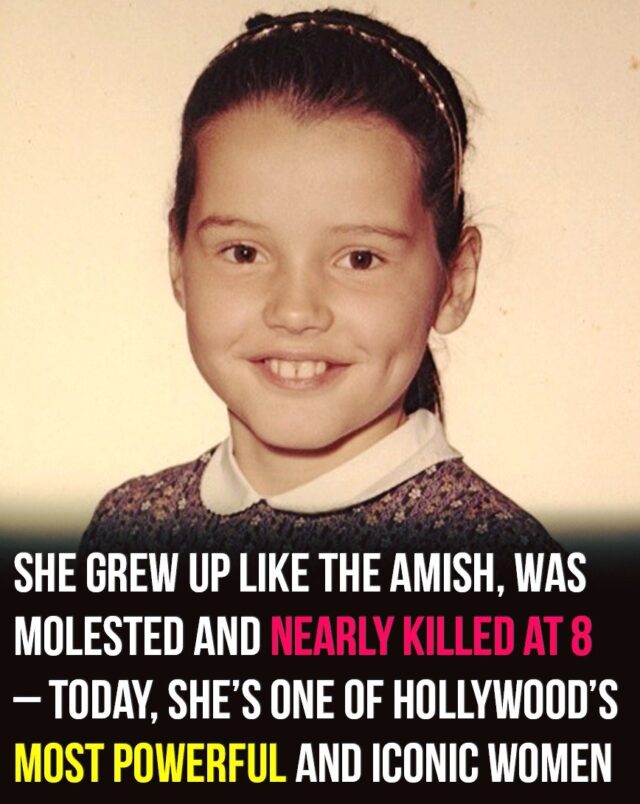
Davis later described her family as old‑fashioned to the point that “they would have been Amish had they heard of being Amish,” emphasizing politeness, self‑reliance, and restraint from pop culture and flamboyance.
Growing up, Davis was tall, musical, and intellectually curious. She learned piano, flute, and organ as a youth and served as organist for her local Congregational church. Despite her musicalism.
Davis often felt unusually self‑conscious about her height — listed at 6 feet (1.83 m) — which made her stand out among classmates and attracted teasing and attention she did not always welcome.
From an early age, she was fascinated by performance, recalling that by the age of three she knew she wanted to act — even though her exposure to movies at that age was limited to animated Disney films.
Childhood Episodes That Shaped Her Outlook
In her 2022 memoir Dying of Politeness — named after her lifelong struggle to express discomfort and conflict due to her upbringing — Davis shared powerful memories of her childhood that illustrate her early conditioning toward extreme politeness.
One such incident occurred when she was around eight years old: she and her family were riding with her 99‑year‑old great‑uncle Jack, whose erratic driving brought the car nearly into oncoming traffic.
No one spoke up until, at the last moment, his wife Marion gently directed him to correct the car’s path. The experience — where no one voiced concern until the danger passed — stayed with Davis as a formative moment about reticence and politeness.
Davis has also been candid, in her memoir and interviews, about being a survivor of childhood sexual abuse. She has explained that she did not fully understand what happened at the time or the psychological impact it would later have on her.
Rather than immediately discussing it, Davis internalized shame and silence — a pattern she later broke as an adult.
(This aspect of her life appears in her memoir; personal interviews on the topic reflect her own processing of the experience in adulthood, but she has not given detailed public accounts in major news outlets.)
The High School Years: Feeling Different and Finding Passions
At Wareham High School, Davis was noticeably the tallest girl in her class, an attribute that made her stand out in ways she did not always enjoy.
She experimented with athletics — participating in track and field (including high jump and hurdles) and being encouraged to play basketball — but it was music and performance that drew her deepest interest.
During her senior year, Davis even studied abroad in Sweden, becoming fluent in Swedish — an unusual achievement for an American teenager and a testament to her early intellectual curiosity and flexibility.
College, Early Modeling, and the Road to Acting
Davis began her higher education at New England College in New Hampshire before transferring to Boston University’s College of Fine Arts, where she initially majored in drama.
She did not complete her degree, however — leaving in 1979 after not obtaining enough credits to graduate, a fact she later admitted she had sometimes obscured out of habit as a young actress.
After leaving Boston University, Davis moved to New York City and worked a series of jobs — including waitressing and sales — while pursuing opportunities in performance.
During this period she was signed by the Zoli modeling agency and appeared in the Victoria’s Secret catalog, among other gigs.
Modeling was never her ultimate goal, but Davis approached it as a practical step toward her dream of acting — recalling that at the time, models such as Christie Brinkley and Lauren Hutton were crossing over into film roles, and Davis hoped to do the same.
Hollywood Breakthrough: From Tootsie to Cult Classics
Davis’s acting career began with a small role in the 1982 comedy Tootsie, directed by Sydney Pollack and starring Dustin Hoffman. The film was a major box‑office success and opened doors for Davis that would change her life.
In the mid‑1980s, she landed work in television — including a regular role on the comedy Buffalo Bill and guest spots on popular series like Family Ties — before starring in her own sitcom, Sara (1985), which ran for a season.
Her early film work included roles in Fletch and Transylvania 6‑5000, both in 1985, but it was her casting opposite future husband Jeff Goldblum in the science‑fiction horror The Fly (1986) that marked a turning point in her film career.
Rise to Stardom: Iconic Roles and an Oscar
Davis quickly became associated with a string of high‑profile films:
- In Tim Burton’s Beetlejuice (1988), she played Barbara Maitland, one half of a ghostly couple haunting a quirky household — a role that showcased her comedic timing and versatility.
- That same year, Davis delivered a critically acclaimed turn in The Accidental Tourist (1988), playing Muriel Pritchett, a vivid and memorable character who helped earn her the Academy Award for Best Supporting Actress.
Academy recognition cemented Davis’s status as a leading Hollywood talent and opened the door to even larger roles.
In 1991, she starred in Ridley Scott’s Thelma & Louise, a culturally significant feminist road film in which she played Thelma, a housewife searching for freedom and identity.
The role earned her a nomination for the Academy Award for Best Actress and remains one of her most celebrated performances.
The following year, Davis starred in A League of Their Own (1992), a beloved sports dramedy about the first professional all‑female baseball league. Her role as Dottie Hinson further solidified her influence and appeal with audiences of all ages.
Later Career: Television, Challenges, and Evolution
In the mid‑1990s, Davis’s film career experienced a downturn with several box‑office disappointments, and she shifted more toward television roles.
She starred in The Geena Davis Show (2000–2001) and later took on the groundbreaking lead role in Commander in Chief (2005–2006), playing the first female President of the United States — a performance that earned her a Golden Globe Award for Best Actress in a Television Drama.
Her later screen appearances have included recurring roles on Grey’s Anatomy, parts in series such as The Exorcist and GLOW, and continued work in film, including Marjorie Prime and others.