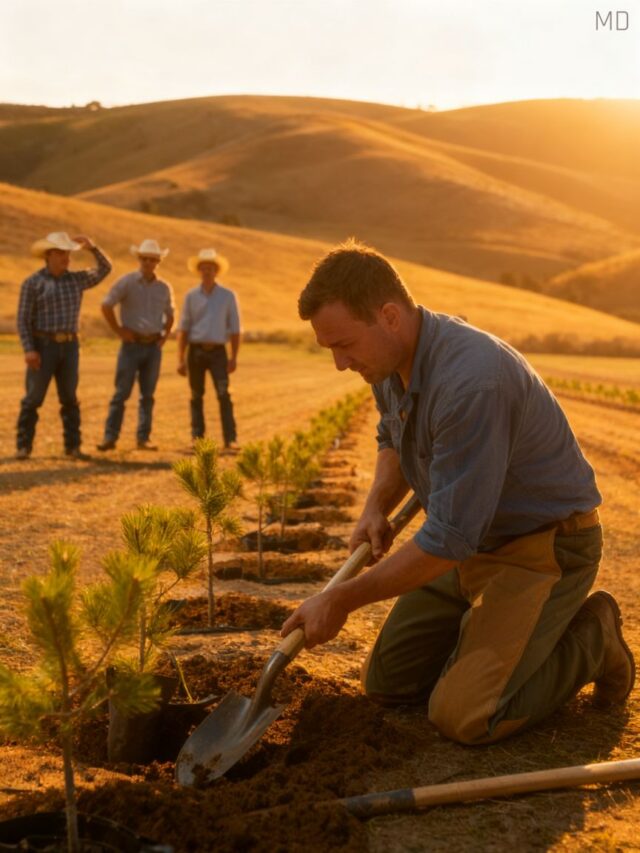
Tom Whitaker was a quiet rancher in the small town of Miller’s Bend, Kansas, where traditions mattered and change was often met with doubt. After losing his wife Rachel to illness, Tom struggled to keep both his family and ranch together. The land his father had left him was slowly weakening under years of harsh wind, dry seasons, and thinning soil. While most ranchers focused only on cattle, Tom spent late nights studying conservation notes, weather patterns, and farming articles. In 1982, he made a decision that puzzled the entire town: he planted rows of pine trees across forty acres of grazing pasture. People laughed openly at what they called “Whitaker’s Forest,” believing he was wasting valuable land. But Tom stayed calm, working side by side with his daughter Emily, who quietly trusted her father even when the town mocked him.
Year after year, the criticism continued. Neighbors joked at the feed store, boys hung signs on his fences, and even church members whispered about his “mistake.” The financial pressure grew heavier as well. Tom sold cattle, postponed repairs, and took extra jobs just to keep the ranch alive. Through every challenge, the trees continued to grow slowly but steadily. Emily often questioned whether the sacrifice was worth it, especially as she watched her father grow more tired each season. Yet Tom believed the land needed protection before disaster arrived. He explained to Emily that preparation often looks foolish until difficult times prove why it mattered. His quiet determination became less about proving people wrong and more about honoring the land and the future Rachel once believed in.
In 1988, a severe drought struck Kansas. Pastures dried, wells weakened, and ranchers across the county began losing cattle. While most fields turned brown and dusty, Tom’s north pasture held on longer than expected. The rows of pine trees slowed the wind, trapped moisture, and created shelter for the cattle. During a violent dust storm, the difference became impossible to ignore. Neighboring ranches suffered heavy damage, including Buck Harlan’s property — the same man who had mocked Tom for years. When Buck’s windmill collapsed and his cattle lost access to water, Tom did something no one expected: he helped. Without anger or pride, he hauled water across the fence and protected Buck’s herd through the storm. That single act changed the town more than the trees themselves ever could. People stopped laughing and started asking questions.
Over the following years, Miller’s Bend slowly transformed. Farmers who once criticized Tom began planting their own windbreaks. Conservation programs spread across the county, and young ranchers visited the Whitaker farm to learn from him. Tom never bragged about being right. Instead, he shared what he had learned with patience and humility. As the trees matured, they protected the soil, strengthened the grasslands, and brought new life to the ranch. One evening years later, Emily sat beside her father beneath the tall pines they had planted together as tiny seedlings. She finally understood what had driven him all those years: real change often begins quietly, long before anyone else can see its value. Tom looked across the peaceful pasture and realized that the greatest reward was never proving others wrong — it was leaving the land stronger for the next generation.