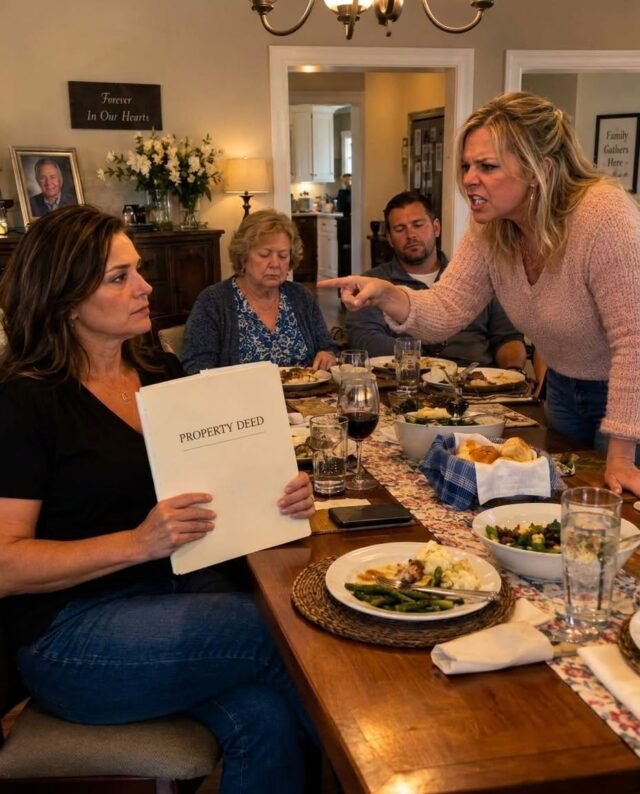
“You’ll understand everything tomorrow,” Richard told my eight-year-old daughter in the final hour of his life. By then he was seventy-seven, frail enough that Emily held his hand the same way she had when she was three—matching his pace even though this time he was barely moving at all. The next morning, his attorney arrived at our house with a briefcase and a sentence Richard had specifically instructed him to say: “He wanted you to know he knew you’d fall for it.” For a moment I thought I had misunderstood the entire five years of our marriage. I had married Richard when he was seventy-two and I was thirty-five, after my first husband died of cancer and left me with a toddler, medical debt, overdue rent, and choices that had narrowed almost to nothing. Richard had been my employer then, a widower whose house I cleaned twice a week, and his proposal had arrived at exactly the moment I needed rescuing most. I had always known desperation played a part in why I said yes; what I did not know was how deliberately he had arranged the offer.
I grew up in foster care and learned young not to lean too heavily toward anything that might disappear. Daniel, my first husband, understood that instinct because he had grown up in the system too. We built a modest life together, had Emily, and then lost nearly everything when his illness came quickly and aggressively. After Daniel died, I returned to work carrying debts I could not outrun, while an elderly neighbor watched Emily when she could. Richard noticed more than I realized. He knew I was behind on rent, knew Emily needed medicine, and understood that I would never accept simple charity. So he offered marriage instead: security, a home, and a future for my daughter, while openly acknowledging the difference in our ages and telling me he did not expect the kind of love I had shared with Daniel. I said yes because the numbers finally worked. What I never expected was that the arrangement would stop feeling like an arrangement. Richard taught Emily chess, walked slowly with her through the garden, remembered how I made his coffee, and treated both of us as though we belonged there long before I believed it myself.
Near the end of his life, Richard finally admitted that the proposal had been intentional in ways I had not understood. He had asked about my circumstances, learned about the debt, and constructed an offer he believed I could accept without feeling pitied. “I designed it so you would say yes,” he told me. That confession unsettled me, even though by then our marriage had become real. His attorney completed the explanation after the funeral. Richard’s will did not leave the estate directly to me outright. Instead, the principal assets had been placed into a trust for Emily, with the house scheduled to pass to her later under the trust terms and funds available for her education, medical care, and other authorized needs. I was named trustee, with fiduciary responsibility to manage the assets according to the trust document rather than simply treat them as my personal property. Separately, Richard had created an account in my name alone and funded it monthly throughout our marriage. The account was designed to remain mine even if I had left him.
Then came the part I had not prepared for. Richard’s letter explained that he knew exactly why I said yes at the beginning, but he also knew there had to be a way for me to live without feeling purchased. The separate account was his answer: money with no condition attached, no repayment expected, no requirement that I stay married to him. His attorney explained that if I had left, Richard had instructed him to deliver the account to me anyway. The trust protected Emily’s long-term interests; the separate account protected my independence. Before the attorney left, he handed me one more card. Richard had quietly asked him to locate Sophie Henderson, the daughter of one of the foster families I had lived with when I was seven—a girl who had once shared her trampoline with me before the family moved away and I was sent back into care. Richard had found her but deliberately left the choice of contacting her to me. Even in death, he had tried to return something without forcing me to take it.
That afternoon Emily came home, saw the card in my hand, and asked who Sophie was. I told her she was someone I had known when I was seven, someone kind from a time when kindness never seemed permanent. Emily listened, then said Richard had probably found her because he paid attention—that was what he always did. She asked whether I would call. I told her I did not know yet. Then she brought out the chessboard and asked me to play. I warned her I was not as good as Richard. “I know,” she said. “But you try.” Sitting there with the trust documents, Richard’s letter, and Sophie’s number beside me, I understood that the secret was not really the money. Richard had spent five years turning rescue into belonging without ever making either of us owe him for it. I had married him because I needed a way out. Somewhere along the way, without either of us planning it, he became family.