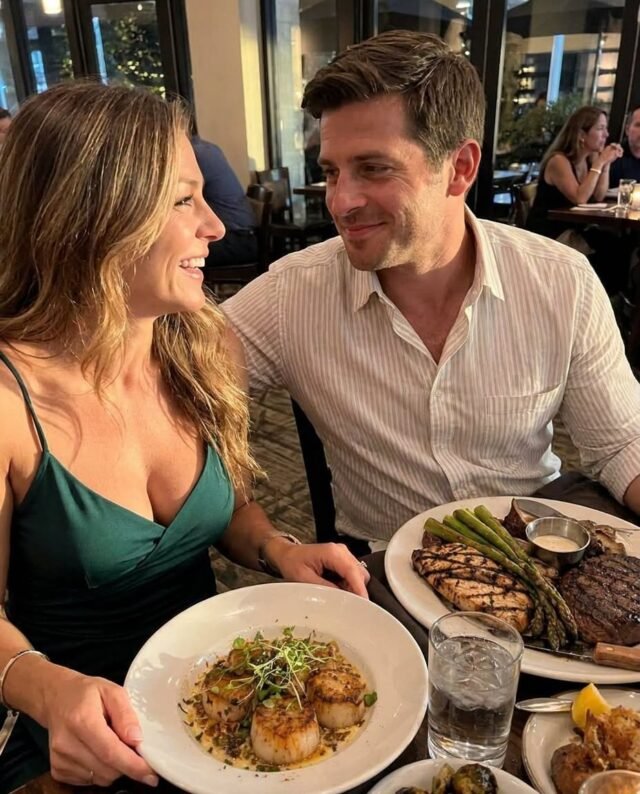
The ring was sitting inside a clear plastic bag on the table where the couple had eaten the night before, and the moment I saw it, I forgot about the $407 they had left me to cover. Four months earlier, my mother Evelyn had vanished without her purse, phone, coat, or medication, leaving behind a house so orderly it seemed impossible she had walked away by choice. The only personal item missing was the thin gold ring she had worn every day for twenty-three years, an aquamarine surrounded by three tiny diamonds with one bent prong near the setting. Now that exact ring had been found wedged behind booth twelve after a couple rushed out without paying. My manager, Jett, finally reviewed the security footage and showed me the woman accidentally dropping it from her purse without noticing. Minutes later, her husband answered a phone call, both of them went pale, and they ran from the restaurant as though the bill no longer existed. The valet remembered the man saying only one thing as they waited for their car: “Call the hospital. Tell them we’re coming.”
I was a college student working nights at Bellamy’s and sending nearly everything I earned home while my aunt kept my mother’s house running. Police had opened a missing-person case, volunteers had helped circulate flyers, and I carried Evelyn’s photograph everywhere, but every lead had ended the same way—with nothing. At the hospital, I showed the front desk my mother’s missing-person poster and explained that the ring had been recovered from people who appeared to be regular visitors there. Staff could not simply disclose patient information to me, but after contacting the appropriate clinical team and comparing the circumstances, a nurse arranged to speak with me privately. An unidentified older woman had been admitted weeks earlier after being found disoriented beside a road in another jurisdiction. She had no identification and significant memory impairment, which helped explain why nobody had connected her with a report filed elsewhere. She had also suffered a seizure the previous evening. When the nurse brought me to the unit, I saw the couple from Bellamy’s through the window of room 318, standing on either side of the bed.
I walked in believing I had found the people responsible for my mother’s disappearance. Instead, the woman—Margaret—and her husband, Thomas, told me they had found Evelyn wandering barefoot beside a county road after dark, confused and drifting dangerously close to traffic. They called emergency services, followed the ambulance, and kept returning because Evelyn panicked whenever the only familiar faces she knew disappeared. During her evaluation, hospital staff had removed the loose ring for safekeeping; Margaret had offered to hold it because Evelyn became distressed whenever she thought it was gone. They had spent weeks visiting a woman whose name they did not know, hoping eventually someone would come looking for her. Their anniversary dinner had been their first evening away from the hospital in some time. The call that sent them running from the restaurant was news of Evelyn’s seizure. They had not fled the bill because they were thieves. They had forgotten it because the stranger they had been caring for suddenly became critically ill.
Once staff verified my identity and began reconciling Evelyn’s medical record with the existing missing-person report, the picture became clearer. Doctors believed she had experienced a neurological event or injury affecting memory, though no one could yet say precisely what had happened before she was found. There was no instant discharge or miraculous recovery; she needed continued observation, neurological follow-up, medication review, and a safe plan for returning home. What changed everything was not a dramatic confrontation but one small personal object that linked two disconnected systems—a missing-person case in one county and an unidentified patient in another. Jett refunded the money I had been required to cover once the circumstances of the walkout were established, though by then I barely cared about the restaurant bill. Margaret and Thomas had not taken anything from my mother. They had kept her safe during the weeks when neither she nor the system could tell anyone who she was.
When Evelyn finally opened her eyes and said my name, I bent over the bed and cried harder than I had in the restaurant parking lot the night before. I slid the ring back onto her finger, though it hung loose after weeks of illness, and she curled her hand around mine to keep it in place. She came home several weeks later with memory still returning unevenly and questions her doctors could not yet answer. Some parts of that missing time may always remain blank. But every Sunday at eight o’clock, she calls me exactly on time, just as she used to. Margaret and Thomas now come to dinner once a month, and Evelyn always seats Margaret beside her. I once thought losing $407 was the final insult in the worst year of my life. Instead, it became the thread that led me back to my mother.