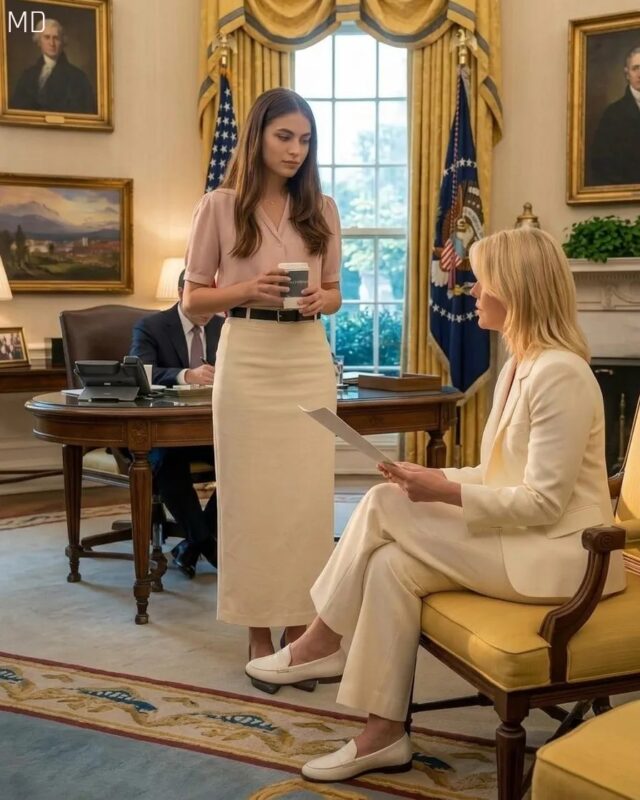
When Natalie married James, she kept one important part of her life private. Her grandmother, Eleanor, had left her three valuable apartments, including the home Natalie lived in and two rental properties that provided steady income. Eleanor had built her independence carefully and always taught Natalie never to place her financial security fully in someone else’s hands. Natalie loved James, but past experiences had made her cautious. She told him only that she had inherited her grandmother’s apartment, choosing to wait before sharing the full truth about the rest of the inheritance.
After the wedding, Natalie began noticing how strongly James’s mother, Diana, focused on family wealth and control. Diana asked pointed questions about Natalie’s background, income, and property, often disguising her interest as concern. One small comment about the apartment being a condominium made Diana suspicious. Soon after, Natalie overheard her mother-in-law asking someone to investigate Eleanor’s estate. Alarmed, Natalie met with her attorney and strengthened the legal protections around her inheritance, making sure the properties remained separate and secure.
The truth came out when Diana arrived unexpectedly while James was away, bringing a notary and documents for Natalie to sign. The papers would have transferred control of Natalie’s properties into the Bennett family trust. Shocked but calm, Natalie called James and put him on speaker. He had no idea what his mother was doing. The confrontation revealed that Diana was trying to use Natalie’s assets to protect the family business from serious financial strain caused by hidden problems. James felt hurt that Natalie had kept the inheritance private, but he also realized his mother had crossed an unacceptable boundary.
With time, honesty, and counseling, Natalie and James rebuilt their trust. He chose his marriage over family pressure, left the family business, and began creating a career on his own terms. Natalie remained transparent about her properties while keeping them legally protected, and Diana eventually apologized after recognizing how fear had shaped her controlling behavior. What began as a painful crisis became a turning point for the entire family. Natalie learned that financial independence does not have to weaken a marriage when it is paired with honesty and respect. Her grandmother’s true gift was not only the apartments, but the wisdom to protect herself while building a partnership based on trust, boundaries, and love.
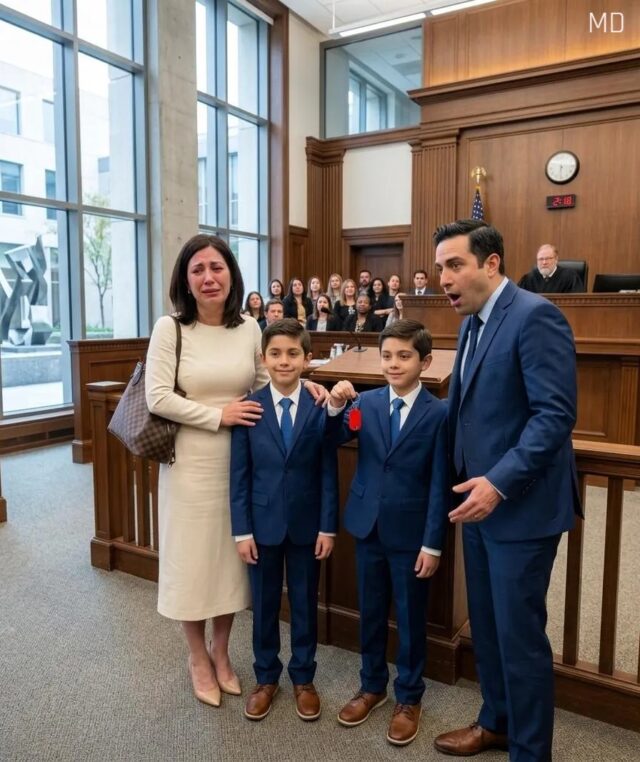
Claire Waverly sat quietly in a Columbus courtroom, watching her nine-year-old twin sons face a question no child should have to answer: where did they feel safest? For more than a year, Claire had fought a difficult custody battle against her wealthy former husband, Preston Vale. While Preston presented an image of success, stability, and financial security, Claire struggled to rebuild her life after their separation. Though she lacked his resources, she never stopped believing that love, honesty, and consistency mattered more than appearances. Still, the courtroom seemed ready to favor the parent with the larger house, better schools, and stronger legal team.
As the hearing unfolded, Preston’s attorneys emphasized his financial advantages and portrayed Claire as overwhelmed and unreliable. Claire sat silently, heartbroken as familiar accusations filled the room. Then the judge invited Noah and Miles to speak. The boys looked nervous, especially Noah, who slowly stood and reached into his blazer pocket. To everyone’s surprise, he pulled out a small red USB drive and explained that it contained recordings he had saved for months. He said he wanted the court to understand things his mother did not know and truths he felt were important. Suddenly, the entire atmosphere in the courtroom changed.
When the files were reviewed, they revealed conversations that painted a very different picture. Recordings showed Preston discussing custody as a way to gain leverage rather than strengthen his relationship with his children. Other recordings suggested that family members had encouraged actions designed to make Claire appear unreliable. One especially troubling video showed pressure being placed on the boys regarding what they should say in court. Noah explained that he had quietly collected the evidence because he wanted someone to finally understand what life had really been like. Through trembling words and remarkable courage, he shared a truth that adults had overlooked for far too long.
The judge carefully reviewed everything and granted temporary custody to Claire while ordering further evaluations. For the first time in many months, Claire left the courthouse with hope instead of fear. Life afterward was not luxurious, but it was peaceful. In a small apartment filled with love, the boys slowly regained their confidence, laughter, and sense of security. Noah no longer carried the burden of protecting everyone around him, and Miles began smiling more freely. Looking back, Claire realized that true stability was never about wealth or appearances. It was about creating a home where children felt safe, valued, and heard. In the end, a brave young boy’s honesty helped reveal the truth and opened the door to a brighter future for his family.
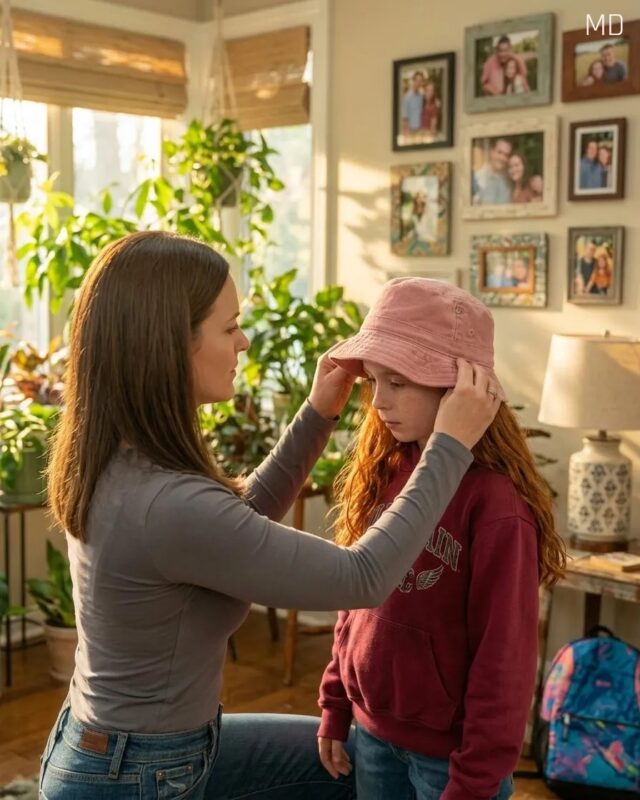
When Francis’s eight-year-old daughter Lily came home from her aunt Megan’s house wearing a pink bucket hat, something felt wrong immediately. Lily would not look up, and when Francis gently removed the hat, she discovered that her daughter’s beautiful red curls had been cut unevenly and far too short. There was also a small injury near Lily’s ear. Inside a plastic bag, Lily carried the braid that had been removed. In a quiet voice, she repeated what her aunt had told her: that her hair was not fair to her cousin Chloe. In that moment, Francis realized this was not a harmless family mistake.
For years, Francis had tried to belong to her husband Daniel’s family. After growing up without a stable family of her own, she accepted being seated at the edge of family gatherings and overlooked by her mother-in-law, Patricia. She wanted Lily to have cousins, traditions, and a sense of connection. Megan, Daniel’s sister, had built a social media image around being a creative single mother. When videos featuring Lily began receiving more attention than Chloe, Megan’s attitude quietly changed. Francis had already asked that Lily’s face not be used online, but her concerns were dismissed as overreacting.
Instead of reacting in anger, Francis documented everything. She photographed Lily’s haircut and injury, saved the braid, contacted a trusted pediatrician, and gathered medical notes. Then she discovered something worse: Megan had filmed the haircut as part of a planned online video. Screenshots, timestamps, and saved files showed that the moment had been staged for content. When Francis confronted the family, Patricia tried to dismiss the situation as “just hair” and accused Francis of creating drama. But Francis knew this was about more than hair. It was about trust, safety, and a child being treated like an object for attention.
At Chloe’s birthday party, where Megan had planned another public display, Francis calmly revealed the truth with medical documents, photos, and proof of the video. The room fell silent as relatives realized what had really happened. Daniel finally stood beside his wife and daughter, understanding that family loyalty could not excuse harm. Legal and protective steps followed, and Megan was no longer allowed unsupervised contact with Lily. In time, Lily’s hair began to grow back, and so did her confidence. Francis learned that belonging should never require silence, and protecting a child is never an overreaction. Sometimes a mother’s strongest moment begins when she finally stops accepting a place at the end of the table.
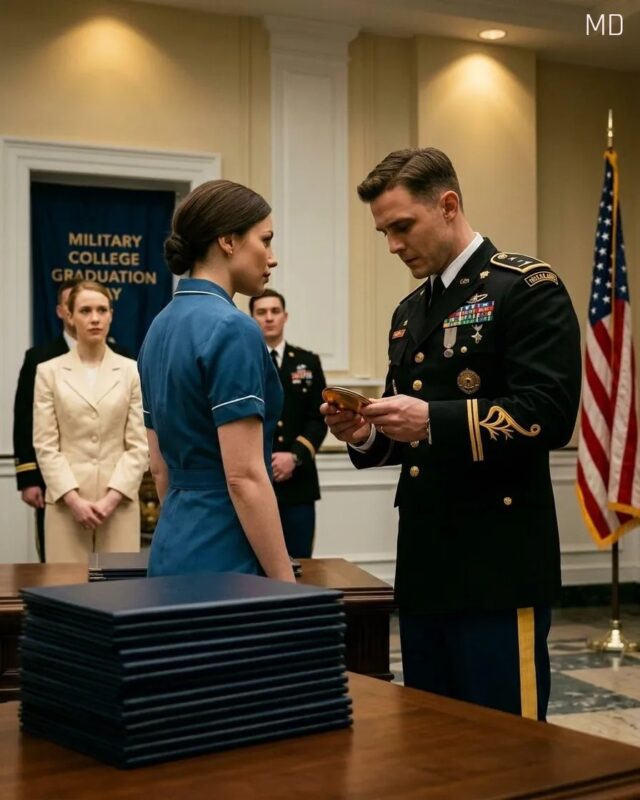
Emma Carter arrived at her brother James’s graduation wearing wrinkled hospital scrubs, exhausted from an overnight shift in the emergency department. That morning, a serious bus accident had brought many injured people into Mercy General Hospital, and Emma stayed until every critical patient was stable. She had planned to wear a navy dress and arrive early, but duty came first. With only minutes to spare, she walked into the military-affiliated school, still carrying the quiet weight of the night’s work and the small brass coin she had kept for twenty years.
The coin had belonged to her father, Captain Ray Carter, a Marine who never came home from the Gulf War. Emma had been nine when he passed, and her younger brother was only three. Their mother gave Emma the coin after the funeral and asked her to keep it safe until James was old enough to understand its meaning. Over the years, Emma carried it through military service, nursing school, emergency shifts, bills, grief, and the long responsibility of helping raise her brother. To her, it was not decoration. It was memory, promise, and proof that their father’s sacrifice still lived through them.
At the graduation entrance, a well-dressed guest complained about Emma’s appearance, saying the ceremony deserved more respectful attire. An administrator gently suggested that Emma wait outside until the event ended. Instead of arguing, Emma placed her father’s coin on the desk. Moments later, Colonel Daniel Marsh entered, saw the coin, and immediately recognized its significance. After learning who Emma was, he made it clear that she belonged in the family section, not outside. During the ceremony, he spoke about service, sacrifice, and the kind of courage that does not always arrive in polished shoes or formal clothing.
Emma sat in the front row as James graduated, and later placed their father’s coin into his hand. For the first time, James understood how much his sister had carried for him. She had protected the memory of their father while building a life of service of her own. That day did more than honor a graduate; it revealed the quiet strength of the woman who helped him reach that moment. Weeks later, Emma accepted an invitation to help train new combat medics, passing forward the lessons her hands and heart had learned. The coin no longer belonged only to the past. It became a bridge between sacrifice, family, and a future built on courage.
For years, I hoped my husband’s family would fully accept my daughter, Zia. When Travis adopted her, he became her father in every way that mattered, but his mother, Lorraine, never truly embraced her. While Zia’s cousins were celebrated, included in family traditions, and showered with attention, my daughter was often treated like an outsider. At first, the differences were subtle—a missed invitation here, an overlooked birthday there. But as Zia grew older, she began noticing the painful pattern herself. I kept making excuses, believing that patience and kindness would eventually bring change. Instead, each holiday left my daughter feeling smaller, as if she were only visiting a family where she already belonged.
Everything came to a head one Christmas. Lorraine transformed her home into a picture-perfect holiday showcase and distributed expensive gifts to every grandchild. There were tablets, cash, jewelry, and other thoughtful presents. When it was Zia’s turn, she received a small scented candle with a tag that read, “To Travis’s Girl.” Not granddaughter. Not Zia. Just a label that quietly separated her from everyone else. My heart broke as I watched my seven-year-old hold the gift with grace beyond her years. She didn’t cry or complain. She simply understood. Later that evening, Travis told me he had prepared something months earlier. If his mother ever crossed the line again, Zia had permission to give her a small red box he had kept hidden away.
The following morning, during a family brunch, Zia calmly approached Lorraine and handed her the red box. Inside was a framed photograph of Travis holding Zia on the day he decided to become her father, along with a copy of her adoption papers and a heartfelt letter. In it, Travis explained that Zia was not “his wife’s child” or “someone else’s daughter.” She was his daughter by love, commitment, and choice. The letter made it clear that if Lorraine could not treat Zia as family, she would no longer have a place in their lives. The room fell silent as years of unspoken hurt finally came into the open. For the first time, Travis chose his daughter without hesitation, and everyone understood exactly where he stood.
The weeks that followed brought unexpected peace. Without constant judgment, Zia seemed lighter and happier. Then a small package arrived from her cousin Maddie. Inside was a simple bracelet and a handwritten note expressing love and friendship. It reminded us that true family is built through kindness, not titles or expectations. That Christmas taught us an important lesson: no child should have to earn a place where they already belong. Love is not measured by gifts, traditions, or appearances. It is shown through acceptance, protection, and the courage to stand up for the people who matter most.
When Donald Trump stepped forward to address the crowd, the atmosphere already felt different. There was no usual energy, no immediate applause building in anticipation. Instead, there was a quiet tension—something unspoken that seemed to settle over the room before he even began.
Those who had followed him for years knew him as someone who rarely showed vulnerability in public. His presence had always been defined by certainty, confidence, and a style that left little room for hesitation. Emotion, at least visibly, was never part of the image he projected.
But this time was not the same.
As he stood at the podium, something shifted.
There was a pause—longer than expected. Not the kind used for emphasis, but the kind that suggests someone is trying to steady themselves before speaking. The room grew quieter, almost instinctively, as if everyone sensed that what was about to be said carried more weight than usual.
Then it became visible.
His expression changed.
Not dramatically, not in a way that demanded attention—but enough to be noticed. His eyes held something unfamiliar, something that didn’t match the tone people were used to seeing. For a moment, it seemed like he might stop entirely.
But he didn’t.
He began to speak.
At first, the words came measured, controlled. The kind of delivery that suggested he was choosing each phrase carefully, aware of the significance behind them. But as he continued, the strain became more evident.
His voice, steady at the start, faltered slightly.
Not enough to interrupt him—but enough to be heard.
And that was when the room fully understood.
This wasn’t a routine address.
This wasn’t a prepared statement delivered with practiced precision.
This was something personal.
Something heavy.
The silence in the room deepened.
Supporters who had gathered expecting a familiar tone found themselves watching something entirely different unfold. There were no interruptions, no reactions breaking the moment. Just attention—focused, complete, and unmoving.
Because moments like that don’t invite distraction.
They demand stillness.
As he continued, the announcement began to take shape. It wasn’t framed in dramatic language or exaggerated expression. It didn’t rely on spectacle.
It didn’t need to.
The weight of it was already clear.
For weeks, there had been speculation—questions about what might come next, about decisions that hadn’t yet been explained, about directions that remained uncertain. But speculation carries distance.
This moment didn’t.
This moment was direct.
And as the words settled into the room, the reaction followed.
Not immediately.
But gradually.
A shift in posture. A change in expression. The realization that what they were hearing was not just significant—it was final in a way that couldn’t be undone.
For many, the most striking part wasn’t the content itself.
It was how it was delivered.
Because seeing someone known for strength reveal even a glimpse of vulnerability changes how the message is received. It adds something that can’t be manufactured—authenticity, whether expected or not.
And that authenticity resonated.
Almost instantly, reactions began spreading beyond the room. Clips, quotes, and fragments of the moment moved across social platforms, drawing attention from people who hadn’t even been present.
The response was immediate—and divided.
Supporters expressed sympathy, emphasizing the difficulty of the moment and the weight it must have carried. They saw the emotion as a reflection of sincerity, something that made the message feel more real.
Others focused on the implications.
What it meant.
What it signaled.
And how it might shape what comes next.
But regardless of perspective, one thing remained consistent.
No one ignored it.
Because moments like that cut through noise.
They stand apart from the constant flow of statements, reactions, and commentary that define public life. They feel different—not because they are louder, but because they are quieter in a way that demands attention.
As the address continued, he regained composure.
The pauses became shorter. The voice steadied. The delivery returned to something closer to what people recognized. But the tone had shifted permanently.
Because once a moment like that happens, it doesn’t disappear.
It lingers.
And when he reached the end, he didn’t leave the audience with uncertainty.
He closed with something deliberate.
A message that moved away from the weight of the announcement and toward something else—resilience.
Not as a slogan.
Not as a performance.
But as a reminder.
That even in moments defined by difficulty, the direction forward still matters. That strength isn’t just about maintaining control, but about continuing despite what has been said, despite what has changed.
For those listening, it offered a point of focus.
Something to hold onto after the initial impact had settled.
When he stepped away, the room didn’t erupt immediately.
There was a pause.
A brief moment where people seemed to process what had just happened, as if reacting too quickly would disrupt something that needed to be understood first.
Then the response came.
Measured.
Respectful.
Different from the energy that usually followed his appearances.
Because this wasn’t a typical moment.
It wasn’t defined by momentum or excitement.
It was defined by contrast.
The contrast between expectation and reality.
Between the image people knew and the moment they had just witnessed.
And that’s what made it stand out.
Not just what was said.
But how it was said.
And how it was received.
In the days that follow, the details of the announcement will continue to be analyzed, discussed, and interpreted from every angle. That’s inevitable.
But for those who were there—or those who watched it unfold—the defining memory will likely remain something simpler.
A pause.
A shift.
A moment where everything slowed just enough to reveal something rarely seen.
Melania Trump began her journey towards fame and the American Dream as a model in her home country of Slovenia. She moved to the US when she was just a teenager, and despite some tough years, the now-First Lady would find success in a very competitive industry.
Now, at 55, Melania has continued to take care of herself, both physically and mentally. Even so, some experts claim she has undergone plastic surgery or received Botox injections – something she has repeatedly denied.
Melania Trump has been praised for her looks for a long time, and the degree to which she has been able to fend off the aging process is quite impressive. So what’s the secret? One factor could be her makeup—and an expert has now revealed how she does it.
The former model is splitting her time between the White House, Palm Beach, and New York City. Melania has publicly stated that Donald’s second presidential term will be different for her, and others agree.
Speaking to Hello! Magazine, her official photographer, Regine Mahaux, states that her self-belief has grown significantly in recent months and that a new First Lady is walking through the doors at 1600 Pennsylvania Avenue. Melania Trump
“She’s always been hands-on, but she’s more free nowadays to make a statement,” Mahaux said. “She’s a different person than she was eight years ago and has always been true to herself. This time, it feels like a different energy with new people that the President has surrounded himself with.”
“She’s always in the right place,” he added. “She’s always behind her husband. He’s in the light; she doesn’t need the light. She’s a very good number two. It’s always her husband first, and I like that; she has strong family values, to be a good wife and to make sure they’re happy.”
Melania started from humble beginnings in Slovenia. As a teenager, she moved to the US to pursue a career as a model and did well for herself. Over the years, the First Lady has been considered a natural beauty, which has sadly led to rumors that she may have gone under the surgeon’s knife.
There’s been much speculation and rumor about her possibly benefiting from plastic surgery, Botox, or lip fillers. If certain ‘experts’ are to be believed, there is no doubt she has made some subtle changes to her appearance. This, however, is just speculation; no one can say for sure whether she has received cosmetic enhancements.
“Her face has a stony look from being overfilled and over-botoxed,” Dr. Franklin Rose told The Skincare Edit.
“Melania’s forehead is as smooth as a baby’s rear end, so she’s had liberal amounts of Botox for sure. Her cheeks, along with the nasolabial lines between the nose and corners of the mouth, likely have fillers. [Her rhinoplasty] is a beautiful job. Whoever is treating her now is just a little overzealous with the injectables.” Melania Trump ‘has undergone plastic surgery,’ experts claim
Dr. Dev Patel, medical director of Perfect Skin Solutions in Portsmouth, agreed with Rose, saying there have been “obvious signs” of her “likely” having done botox treatments.
“She was giving a rather personal account of her background, yet her upper face was not moving in harmony with her words. In fact, it was not moving at all. This suggests too heavy doses are being used by her doctor,” he said.
A third expert, Dr. Jag Chana, says that when comparing pictures of Melania when she was younger and later in life, her nasal shape has changed.
“The nose is narrower and the tip is more refined. The very minor irregularities along the bridge line are suggestive of an osteotomy which is part of the procedure during a rhinoplasty, which narrows the nose. Compared to her younger photograph, the top lip appears fuller. This likely is a result of lip fillers. The forehead is completely smooth and wrinkle free—so likely Botox.”
“I would say Melania has had forehead contouring with filler to make it more rounded, with Botox to lift the brows,” a fourth expert, Dr. Munir Somji, adds. “She also appears to have had buccal fat removal to slim the face, alongside fillers around the jawline with radio frequency tightening to give a chiselled look.”
Dr. Dev Patel also spoke to the Express about Melania’s possible cosmetic surgeries. He estimated that they’ve probably cost around $13,000.
“I think few people could deny that she is strikingly beautiful in her still shots, but considering the masses now indulge in facial aesthetic treatments, I would be extremely surprised if an ex-model (who has such a spotlight on her) would not be doing the same,” he said. Melania said she is “against injections”
According to Melania herself, she has never made any changes to her appearance. Speaking with in 2016, she also denied having undergone a breast augmentation.
“I didn’t make any changes,” Melania said. “A lot of people say I am using all the procedures for my face. I didn’t do anything. I live a healthy life, I take care of my skin and my body. I’m against Botox, I’m against injections; I think it’s damaging your face, damaging your nerves. It’s all me. I will age gracefully, as my mom does.”
Melania has previously spoken about her healthy food choices and her non-drinking lifestyle. But another way she tries to stay young is through her makeup. Besides her designer wardrobe and beautiful appearance, the First Lady makes conscious decisions about makeup, which help with the illusion that she isn’t aging. In 2017, Melania’s makeup artist, Nicole Bryl, did a Q&A with Women’s Wear Daily, sharing some of the secrets she used when styling Melania.
“I certainly spend the most amount of time on my client’s skin. Ensuring that there is always a gentle, flawless glow and that everything is blended perfectly is a skill I never tire of perfecting. I would also say I have a gift for customizing individual eyelashes quickly,” Bryl said.
Melania herself did an interview with Refinery29 in 2012 and revealed her daily beauty regimen.
“I take vitamins and use a moisturizer that’s an oxygen cream. Everything is natural. It’s A, C, and E, and I mix them together. It’s so important to care for your skin — inside and out from morning to night (especially in the night!). You need to take makeup off and moisturize!” she explained. Melania Trump goes against makeup advice
So, how should one use makeup to get the same look as Melania Trump? In an interview with Hello! Magazine, celebrity makeup artist Philippa Louise shared her advice on how and what to use.
The magazine writes that Melania uses slightly heavier makeup, which “women are often advised against” at her age. Philippa Louise, who has worked with the likes of Harry Potter star Emma Watson, explained that there are makeup rules one should follow as one turns 50.
“When you reach your 50s, makeup should be paired back and the rules in makeup application should not be broken if you want to look effortlessly chic. Makeup should empower, not overpower you,” Louise told Hello! Magazine.
“There’s nothing worse than looking at a complexion and seeing makeup caked on, which then emphasises the wrong areas and thus ages you. For anyone over 50 such as Melania, you can get away with a slightly heavier look for a big event, as long as it is applied in the correct way and the right products are used. Melania’s style is elegant, chic and sophisticated, and I think her makeup compliments this beautifully as her makeup artist clearly uses the correct products suited to her own skin.” Melania Trump “religiously follows” this beauty routine, expert claims
Louise further explained that “less is more” regarding makeup after a certain age.
“As we age, our skin becomes dehydrated, dull, texturized and loses elasticity, we therefore don’t want to be putting makeup on that is drying and flat. You can still look done up and glamorous as we see on Melania, so long as you aren’t wearing 100 layers of makeup and the blend is seamless,” the makeup artist continued.
“What we want to do is complement the skin using the correct formulations for your own personal complexion needs. Glow glow, glow and hydration are essential! The key to doing this in the first instance is using the right skincare to drip-feed your skin. This is not an overnight process; it’s an ongoing one which I am sure Melania religiously follows. If you invest in good skincare tailored for your own complexion your makeup will quite simply enhance it – it really is as simple as that.”
Although makeup can help one look younger, an individual should put in hard work to keep up a healthy lifestyle and take care of themselves. Amish Patel, an Aesthetics Practitioner and Skincare Expert at Intrigue Cosmetic Clinic, explained to the Daily Mail that it’s clear that Melania Trump is taking care of herself, which contributes to her looks, too.
“Melania also clearly looks after herself, which is a significant factor in the ageing process. A healthy diet full of vitamins and antioxidants, drinking plenty of water, avoiding too much sugar or alcohol, and getting enough sleep play a role,” Patel said. How Melania Trump is using hair color to stay young
“Melania is also said to enjoy pilates and tennis, which, as a combination of exercise, help destress and boost the blood flow to the skin – another tick in the anti-ageing beauty book.”
Another thing that has helped Melania maintain a youthful look is her hairstyle, which has changed many times over the years. One contributing factor to her timeless look is her carefully-chosen hair color.
“As the years have passed, whilst her hairstyle might not have radically changed, she has gone lighter with more honey and golden hues, which are flattering on maturing skin,” Patel added. “As we age, our skin tone changes, so very dark hair can be harsher on the complexion. The classic haircut is timeless and soft on the face.”
Do you have a beauty regimen? Please share this article on Facebook with friends and family, and let us know your best tip!
In modern life, chargers have become essential. We rely on them every day to power our phones, laptops, and other devices. However, improper use of chargers can create serious risks. Simple habits—such as using low-quality cables or charging devices carelessly—may lead to overheating, device damage, or even fire hazards.
1. Risks of Low-Quality Chargers
Cheap or counterfeit chargers often lack important safety features. They may fail to regulate voltage properly, which can damage your device or cause it to overheat. In contrast, certified chargers are designed with built-in protection systems, making them a much safer choice for everyday use.
2. Dangers of Damaged Cables
Worn-out cables are a common but often overlooked hazard. Frayed wires, loose connectors, or exposed insulation can lead to electrical sparks or short circuits. Continuing to use damaged chargers significantly increases the risk of accidents. Replacing them early is a simple but essential safety step.
3. Unsafe Charging Habits
Improper charging habits can also be dangerous. For example, leaving devices plugged in overnight or placing them on soft surfaces like beds or couches can trap heat. This buildup of heat increases the risk of overheating. To stay safe, always charge devices on hard, flat surfaces with good airflow.
4. Electrical Outlet Safety
The condition of your electrical outlets plays a key role in overall safety. Overloading sockets or using low-quality extension cords can cause overheating. Additionally, old or loose wiring increases the risk of electrical failure. Using surge protectors and maintaining your home’s electrical system can help prevent these issues.
5. Simple Safety Tips
You can reduce risks by following a few basic practices:
Use certified chargers and cables
Replace damaged equipment immediately
Avoid overcharging devices
Unplug chargers when not in use
Keep chargers away from water and heat sources
Conclusion
Proper charger use is more important than many people realize. Small mistakes can lead to serious consequences. By choosing high-quality equipment and adopting safe charging habits, you can protect your devices, your home, and your family.
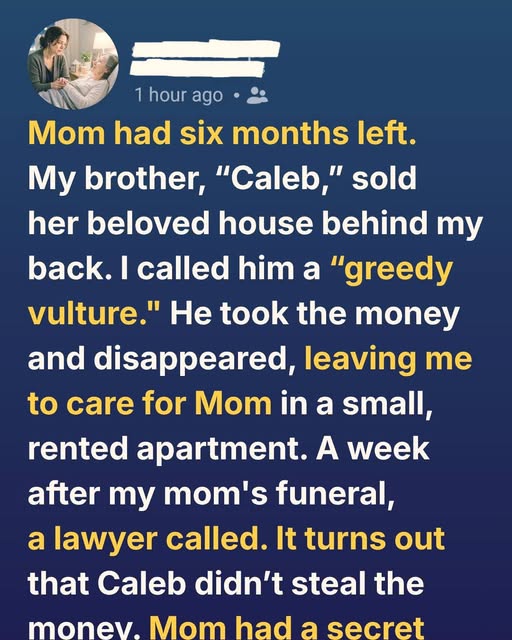
The doctor’s voice was calm, practiced—too calm for what he was saying. Six months. That was all the time we had left with Mom.
I felt like the ground had disappeared beneath my feet. But before I could even process the grief, something else hit me—something sharp, bitter, and unforgiving.
Caleb had sold the house.
Our house.
The one Mom loved more than anything. The one she said held “every memory that mattered.” The one she wanted to leave behind for us.
He didn’t ask me. Didn’t tell me. Didn’t even warn me.
I found out from a neighbor.
I stormed into his apartment that night, my hands shaking with rage.
“You sold it?” I demanded. “You actually sold her house?”
Caleb didn’t look surprised. He just stood there, quiet, like he’d been expecting this moment.
“Yes,” he said.
That was it. No explanation. No apology.
Something inside me snapped.
“You greedy vulture,” I spat. “You couldn’t even wait until she was gone? You had to cash out while she’s still alive?”
He flinched—but only slightly.
“You don’t understand,” he said quietly.
“Then explain it to me!” I shouted.
But he didn’t.
He just shook his head, like there was nothing he could say that would change my mind.
That silence felt like confirmation.
I stepped back, disgust curling in my chest.
“I don’t ever want to see your face again.”
And just like that, he let me walk out.
—
The months that followed were the hardest of my life.
Without the house, I moved Mom into a small, rented apartment. It was clean, but it wasn’t home. She tried to pretend it didn’t bother her, but I could see it in the way her eyes lingered on the bare walls… in the way she’d sometimes ask, “Do you remember the garden?”
I remembered.
And every time she asked, my anger toward Caleb burned hotter.
He had taken that from her.
From us.
And then he disappeared.
No calls. No visits. No help.
Just gone.
So I took care of her alone.
I sat beside her bed during long nights when sleep wouldn’t come. I held her hand through the pain, through the fear, through the quiet moments when she thought I wasn’t looking and wiped away tears.
Sometimes, she would ask about Caleb.
“Have you heard from your brother?” she’d say softly.
I always forced a smile.
“No, Mom. But don’t worry about him.”
She never pushed. She just nodded, like she understood more than she let on.
The day she passed, it was peaceful.
Too peaceful.
One moment, I was holding her hand… the next, it was still.
I remember staring at her, waiting for something—anything—to change. But it didn’t.
She was gone.
—
At the funeral, there was an empty seat in the front row.
Caleb’s seat.
I couldn’t stop looking at it.
Couldn’t stop imagining him sitting there, head bowed, pretending to grieve after everything he’d done.
But he wasn’t there.
And somehow, that made it worse.
I stood beside her casket, fists clenched, my heart full of grief… and anger.
He didn’t deserve to be there.
But he also didn’t deserve to stay away.
—
A week later, I got a call from a lawyer.
I almost didn’t answer.
“I’m calling regarding your mother’s estate,” he said.
“There’s nothing left,” I replied bitterly. “My brother made sure of that.”
There was a pause on the other end.
“I believe there’s been a misunderstanding.”
Something in his tone made me sit down.
“What do you mean?”
He took a breath.
“Your mother had a significant outstanding debt. It originated from a business failure approximately twenty years ago. The balance, with accumulated interest… was substantial.”
My stomach dropped.
“What are you saying?”
“I’m saying the house was about to be seized. Along with any remaining assets.”
The room felt like it was closing in.
“No… that’s not possible. She would’ve told me.”
“She didn’t want to burden you,” he said gently. “Your brother was aware. He approached us months ago.”
I gripped the phone tighter.
“What did he do?”
“He sold the house to settle the debt. After everything was paid… there was a remaining sum.”
I swallowed hard.
“That money… it was transferred to you.”
I couldn’t breathe.
“And Caleb?” I whispered.
There was another pause.
“He declined any portion for himself.”
—
I don’t remember hanging up.
I just remember sitting there, staring at the wall, as everything I thought I knew… unraveled.
The anger.
The accusations.
The words I threw at him.
Greedy vulture.
God.
—
I found him three days later.
It wasn’t easy.
But eventually, someone pointed me to a parking lot on the edge of town.
And there he was.
Sitting in the driver’s seat of an old, worn-out car.
For a second, I just stood there, unable to move.
He looked thinner. Tired. Like life had been slowly draining him.
I knocked on the window.
He looked up—and when he saw me, something flickered across his face. Not anger. Not resentment.
Just… quiet acceptance.
Like he’d always known this moment would come.
He opened the door.
“Hey,” he said softly.
My throat tightened.
“You’ve been living here?” I asked, my voice barely above a whisper.
He shrugged.
“It’s temporary.”
“For six months?”
He didn’t answer.
Of course it wasn’t temporary.
It was sacrifice.
A heavy, suffocating silence fell between us.
“I know,” I finally said.
His eyes met mine.
“The debt. The house. Everything.”
He looked away, exhaling slowly.
“I didn’t want her to know it was that bad,” he said. “And I didn’t want you to worry.”
“So you let me hate you?” My voice cracked.
He gave a small, tired smile.
“It seemed easier.”
Easier.
The word hit me like a punch to the chest.
I stepped closer, tears blurring my vision.
“I called you a greedy vulture,” I whispered.
“I’ve been called worse,” he said lightly.
But I saw it—the hurt he never showed.
“I told you I never wanted to see your face again.”
He nodded.
“I know.”
“And you still… did all of this?”
He didn’t answer right away.
Then, quietly, he said, “She was our mom.”
That was it.
No grand speech. No defense. No need for recognition.
Just love.
Pure and simple.
I broke.
All the anger, all the guilt, all the grief—it came crashing down at once.
“I’m so sorry,” I said, my voice shaking. “I was wrong. I didn’t know. I should’ve trusted you.”
For a moment, he just looked at me.
Then, slowly, he pulled me into a hug.
And just like that, the distance between us—months of silence, years of strain—began to fade.
We stood there in that empty parking lot, holding onto each other like we were kids again.
Like we hadn’t lost everything.
Like maybe… just maybe… we hadn’t lost each other.
And for the first time since Mom was gone, I felt something other than pain.
I felt… peace.
Note: This story is a work of fiction inspired by real events. Names, characters, and details have been altered. Any resemblance is coincidental. The author and publisher disclaim accuracy, liability, and responsibility for interpretations or reliance. All images are for illustration purposes only.
What began as a long-awaited celebration for a couple welcoming their adopted baby has now become a baffling mystery that has captured public attention. After bringing the infant home, the new parents appeared overjoyed—friends described a peaceful evening filled with laughter and relief after months of anticipation. But within hours, something went terribly wr
A Joyful Homecoming Turned Into a Night of Questions
What should have been one of the happiest nights of their lives has instead become the center of confusion, grief, and public fascination. After months of waiting, paperwork, hope, and emotional preparation, a couple finally brought their adopted baby home. Friends described the moment as tender and joyful, the kind of evening that seemed to mark a beautiful new beginning. Relief had finally replaced uncertainty. A child was home. A family had been formed. Everything, from the outside, appeared full of promise
Then, within hours, that peace was shattered.
Neighbors reported hearing distress from inside the home, urgent enough to trigger a call to emergency services. Soon, the quiet rhythm of the neighborhood gave way to flashing lights, rushing responders, and the heavy tension that settles when something has gone terribly wrong. Police and paramedics arrived quickly, but officials have shared very little about what they found or what may have caused the sudden crisis. That silence has only deepened the mystery and fueled speculation far beyond the street where it happened.
In the absence of facts, the public often fills the gap with theory. Social media has done what it frequently does in moments like this: turning uncertainty into a stream of guesses, suspicion, and emotional projection. Some have suggested a medical emergency. Others have drifted toward darker possibilities. But when information is limited, imagination becomes dangerous. It can wound already-broken people, distort the truth, and turn human suffering into spectacle before the facts have even had a chance to speak.
That is what makes stories like this so sobering. A moment that began with celebration has become clouded by silence and fear, and the very people at the center of it are said to be devastated and unwilling to speak publicly while authorities continue their review. That response alone suggests the depth of the wound. Whatever happened inside that home, it was enough to break open what should have been a sacred first night together.
There is something deeply unsettling about how quickly joy can turn. We make plans for happiness as though it can be secured by enough effort, enough love, enough preparation. But life remains fragile even in its most beautiful moments. A long-awaited blessing does not come wrapped in a guarantee that nothing painful will follow. This does not make joy false. It makes it precious. It reminds us that every good thing in life must be held with both gratitude and humility.
At the same time, caution matters. Not every mystery is a scandal. Not every silence hides wrongdoing. Sometimes silence is simply the shape shock takes while people try to understand what has happened to them. A family in crisis does not owe the public immediate answers just because the story has become compelling. Truth should be sought carefully, not forced into a shape that satisfies curiosity.
For now, the facts remain incomplete, and that incompleteness should invite restraint rather than noise. What caused the panic inside that home is still unknown. Investigators will do their work. Details may emerge in time. But before the public turns this into another passing spectacle, it is worth remembering that behind the mystery is a family whose first night together became something no one expected.
And that may be the deepest lesson here: even the beginnings we pray for most can carry burdens we never imagined. That is why compassion must come before commentary, and patience before conclusion. Some stories are not meant to be consumed quickly. They are meant to remind us how fragile human hope can be—and how carefully truth must be handled when lives have been shaken.