Entertainment

Understanding Medical Guidance Around Final Goodbyes

In moments of loss, people often act on instinct rather than logic. Saying goodbye to a loved one is rarely planned; it unfolds through quiet gestures such as holding a hand, brushing back hair, or placing a gentle kiss on the forehead. These actions are deeply rooted in human connection and tradition, offering comfort when words fail. However, as medical understanding advances, professionals have begun discussing whether some of these intimate gestures may carry small health considerations. While the topic can feel uncomfortable, it has opened an important conversation about how families can honor emotional needs while also being informed about practical realities.

Medical experts explain that death does not immediately eliminate all biological processes. Although the person has passed, certain microorganisms may remain on the body for a limited time afterward, particularly if the cause of death involved an infectious condition. Because the immune system is no longer functioning, bacteria or viruses present before death are no longer being suppressed. This does not mean that contact is inherently dangerous, but it does suggest that caution may be appropriate in specific situations, especially before the body has been cleaned and prepared by trained professionals. Doctors emphasize that the overall risk is usually low, yet awareness helps families make thoughtful choices rather than acting out of fear or misinformation.

These medical insights have prompted strong emotional responses, as farewell rituals play a vital role in many cultures and belief systems. For countless families, physical closeness provides reassurance, closure, and a final expression of love. Being discouraged from such moments can feel isolating and even traumatic, particularly during periods of intense grief. Mental health specialists note that rituals surrounding loss help individuals process emotions and begin healing. When these rituals are disrupted or denied, people may struggle with unresolved feelings long after the funeral has passed. This tension between emotional necessity and safety became especially evident during periods when public health restrictions limited personal goodbyes.

Today, most professionals advocate for balance rather than rigid rules. Families are encouraged to communicate openly with healthcare providers, hospice teams, or funeral directors about the circumstances surrounding the death. In many cases, simple adjustments—such as waiting until the body has been prepared or choosing alternative gestures of farewell—can reduce risk without removing comfort. The intention behind this guidance is not to replace compassion with caution, but to empower families with knowledge. By understanding both the emotional value of goodbye rituals and the practical considerations involved, loved ones can make informed decisions that respect their traditions, protect their well-being, and honor the memory of those they have lost.

What Was Meant to Be a Special Anniversary Dinner Became a Turning Point She Never Expected

The anniversary felt like a milestone she had been quietly counting down to for months. Three years together carried weight—shared routines, inside jokes, future plans spoken half-seriously but held close to the heart. When her boyfriend suggested a reservation at a refined restaurant and mentioned a “special surprise,” her imagination filled in the gaps. She took extra care getting ready, enjoying the ritual of preparation and the hope that this night might mark the beginning of a new chapter. As they sat across from each other beneath soft lighting, she noticed his nervous energy, but she interpreted it as anticipation rather than doubt.

Throughout dinner, something felt slightly off. He checked his phone more than usual and barely touched his food, offering distracted smiles that didn’t quite reach his eyes. She tried to keep the mood light, reminiscing about their first date and the small moments that had defined their relationship. Still, an uneasy silence lingered between bites. When dessert arrived, the room seemed to pause. The server placed a single slice of cake in front of her, decorated with a short message written in careful lettering. She leaned forward, smiling at first, expecting a heartfelt surprise.

What she read instead stopped her breath. The message wasn’t cruel, but it was clear, final, and unexpected—words that belonged in a private conversation, not written in icing on a public plate. In that instant, the noise of the restaurant faded, replaced by a sharp clarity. She realized the surprise wasn’t about celebrating the past or committing to the future, but about ending something that had already begun to drift apart. Without raising her voice or drawing attention, she stood up, thanked him calmly, paid her share of the bill, and walked out with a composure that surprised even her.

Later, reflecting on the night, she understood why the moment had hurt so deeply. It wasn’t just the message itself, but the way it was delivered—wrapped in ceremony and expectation. Yet with time, the experience became a lesson in self-respect and emotional honesty. Relationships don’t always end with dramatic arguments; sometimes they end quietly, when two people realize they no longer want the same things. Walking away that night wasn’t an act of anger, but of acceptance. It marked not just the end of a relationship, but the beginning of a clearer understanding of her own worth and the importance of facing difficult truths directly.

Cuppa Cuppa Cake: A Simple, Old-Fashioned Dessert Everyone Loves

There is something comforting about desserts that don’t try too hard to impress. Simple recipes passed down through generations often carry the most warmth, both in flavor and memory. Cuppa Cuppa Cake is one of those timeless treats. Its name comes from its wonderfully straightforward measurements—one cup of flour and one cup of sugar—making it easy to remember and even easier to prepare. With minimal ingredients and no complicated techniques, this cake proves that you don’t need elaborate steps to create a satisfying, home-style dessert that feels nostalgic and inviting.

What makes this cake especially charming is its texture and character. As it bakes, the batter transforms into a soft, moist cake with a naturally formed sauce beneath the surface, thanks to the fruit cocktail and its juice. The fruit adds gentle sweetness and bursts of flavor throughout, while the butter melts into the top, creating a golden, lightly crisp finish. It’s the kind of dessert that fills the kitchen with a comforting aroma and invites everyone to gather around the table before it has even cooled completely. The result is rustic, imperfect, and exactly how it’s meant to be.

Preparation is refreshingly uncomplicated. After preheating the oven to 350°F (175°C), a pie dish or cake pan is generously greased with butter to prevent sticking and add flavor. In a mixing bowl, self-rising flour and granulated sugar are combined with a full can of fruit cocktail, juice included. The mixture is stirred just until blended—no special equipment or advanced skills required. Once poured into the prepared pan, small pieces of butter are placed evenly across the top. As the cake bakes for about 35 to 40 minutes, the butter melts and the batter settles into its signature self-saucing consistency, turning beautifully golden on top.

After baking, allowing the cake to cool briefly helps the flavors settle while keeping it warm enough to enjoy at its best. Cuppa Cuppa Cake is traditionally served plain, but it becomes something truly special when paired with a scoop of vanilla ice cream or a dollop of whipped cream. The contrast between the warm cake and cool topping enhances every bite. Whether served as a casual weeknight dessert, a comforting treat for guests, or a reminder of simpler times, this cake delivers satisfaction without fuss. In a world full of complex recipes, Cuppa Cuppa Cake stands as a reminder that sometimes the most memorable dishes are the ones that keep things beautifully simple.

What Makes Clove Tea a Beloved Traditional Beverage

Tucked away among jars of spices in many kitchens is a small, aromatic ingredient with a rich cultural past: the clove. For centuries, long before modern wellness products became commonplace, cloves were gently steeped into tea in households across Asia, the Middle East, and parts of Africa. This warm, fragrant drink was not treated as a trend or a cure, but as a calming daily habit woven into everyday life. Passed down through generations, clove tea was valued for its simplicity and for the sense of balance and comfort it brought to those who prepared it regularly.

Part of clove tea’s enduring appeal lies in how uncomplicated it is. With just a handful of whole cloves and hot water, the result is a naturally aromatic beverage that feels both grounding and restorative. Cloves contain naturally occurring plant compounds, including eugenol, which has been widely studied for its antioxidant qualities. While clove tea is not a substitute for medical care, these natural compounds help explain why the drink has long been associated with general wellness and everyday comfort. Rather than focusing on dramatic effects, clove tea has traditionally been enjoyed as a gentle, supportive addition to a balanced lifestyle.

Beyond its history, clove tea fits easily into modern routines. Many people enjoy it after meals as a comforting beverage, or in the evening as a way to slow down and relax. Its warming aroma can feel especially soothing during colder months or moments of stress, making it a popular choice for quiet reflection or rest. Cloves also naturally contain small amounts of minerals and plant-based antioxidants, which support overall nutrition when consumed in moderation. These qualities are best appreciated as part of a broader approach to self-care that includes mindful eating, hydration, and rest.

Making clove tea remains as straightforward today as it was generations ago. Whole cloves are simply steeped in hot water for several minutes, allowing their natural flavor and aroma to unfold. Some people prefer it on its own, while others pair it with honey or a slice of citrus for variety. Enjoyed once or twice a day, clove tea serves as a reminder that wellness does not always require complexity. Its quiet reappearance in modern kitchens reflects a growing appreciation for traditional practices that encourage mindfulness, balance, and a slower pace—proof that sometimes the most enduring comforts are the simplest ones we’ve had all along.

A Moment of Compassion That Brought an Unforeseen Opportunity

I was hurrying through my days on autopilot, balancing a full-time job at a small insurance office with raising two young children on my own. Like many single parents, my life revolved around schedules, responsibilities, and exhaustion. My mother helped whenever she could, stepping in after her long hospital shifts so I could keep working. Most evenings, I rushed through errands and dinner plans, focused only on getting home. I wasn’t looking for anything extraordinary—just trying to keep everything together. That’s why, on a cold evening after work, I didn’t think twice when a brief moment in a grocery store parking lot quietly altered the direction of my life.

As I loaded groceries into my car, I noticed a man sitting nearby with his dog curled close beside him. The dog looked well cared for, loyal and calm, while the man appeared tired and worn down by circumstances. He politely explained that he was a veteran and hadn’t eaten since the day before. He didn’t ask for money—just food, if I had any to spare. Every instinct told me to keep moving, but something about the care he showed his dog made me pause. I went back into the store and returned with a hot meal, water, and dog food. His gratitude was quiet but overwhelming. I drove home thinking I had simply done a small, human thing and that the moment would fade into memory.

A month later, that simple act resurfaced in the most unexpected way. My employer abruptly called me into his office, angry and accusatory, and confronted me with a letter from a veterans’ organization praising my kindness. Instead of seeing it as recognition, he assumed manipulation and fired me on the spot. I left the office shaken, terrified, and unsure how I would support my children. That night, I carefully read the letter and learned the organization was real. The next day, I reached out to them, still confused and afraid, hoping only for clarity.

What I discovered changed everything. The veteran I had helped had sought assistance after our encounter, explaining that the small kindness reminded him he mattered. The organization stepped in to support him—and when they learned I’d lost my job because of it, they acted. With their help, the situation was resolved fairly, and I was eventually offered a new position working directly with veterans. Today, I no longer watch the clock at work. I spend my days helping people rebuild stability and hope. What I once saw as a passing moment of kindness became the doorway to a life filled with purpose, proving that doing the right thing can quietly lead you exactly where you belong.

Why One Father Decided to Remove His Tattoos After Becoming a Parent

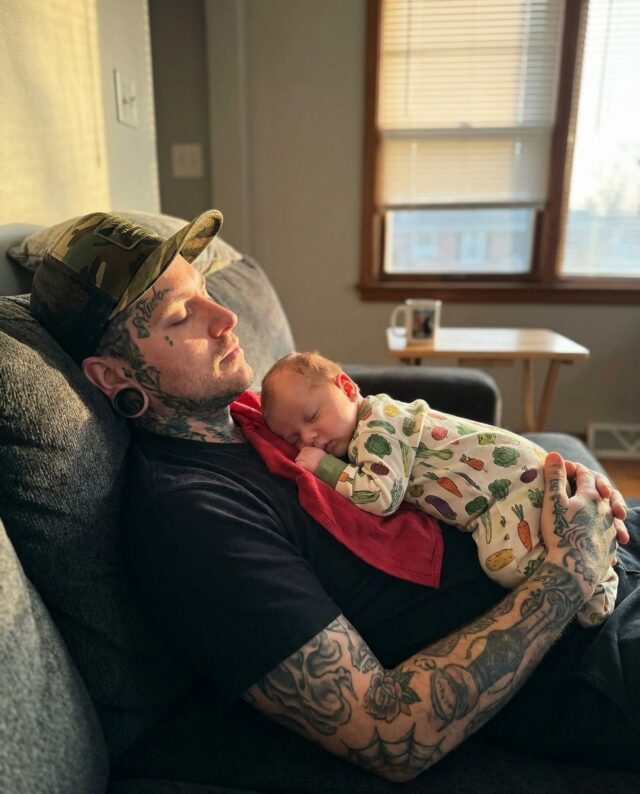
Regret doesn’t always arrive suddenly or dramatically. Sometimes it appears slowly, through reflection, responsibility, and changing priorities. For Australian father Ethan Bramble, that realization came after he became a parent. Once widely recognized online for his extensive tattoos and unique appearance, Ethan had spent many years expressing himself through body art. However, fatherhood brought a new perspective—one that shifted his focus from personal expression to long-term responsibility. Rather than being influenced by public opinion, it was the role of becoming a dad that encouraged him to reconsider how he presented himself to the world.

Ethan began his body modification journey at a very young age, experimenting with stretched ears before his teenage years. Over time, his interest expanded into full-body tattoos and other dramatic alterations, eventually covering much of his skin. He invested a significant amount of time, money, and commitment into shaping his appearance, viewing it as a form of identity and creativity. While he has often stated that he does not reject self-expression, he has also acknowledged that some decisions—particularly those made early in life—were taken without fully understanding their long-term impact. With maturity came a clearer view of how permanent choices can carry unexpected consequences.

As his daughter grew older, Ethan began thinking more deeply about everyday situations and how his appearance might influence them. Simple moments, such as family outings or future school interactions, prompted thoughtful reflection. His concern was not about embarrassment or regret, but about how external judgment could affect his child’s experiences. Wanting to create a sense of ease and normalcy for his family, he decided to begin the process of laser tattoo removal, focusing primarily on facial tattoos. He has described the process as challenging, both physically and emotionally, but also meaningful and purposeful.

This transition has never been about erasing his past or denying who he once was. Instead, Ethan views it as a step toward balance and personal growth. Reducing visible tattoos has helped him feel calmer and more confident as he moves forward in life as a parent. His story reflects a broader truth about change: growth doesn’t always mean starting over, but rather adapting with intention. By embracing responsibility while honoring his journey, Ethan’s experience highlights how life stages can reshape priorities—and how thoughtful change can be an act of care for those we love most.

I Helped a Stranger and Her Baby Before Christmas—What Happened Next Was Unforgettable

Two days before Christmas, after a long shift and with winter weather making the roads slick and quiet, I found myself faced with an unexpected decision. I noticed a woman standing alone at a bus stop, holding a small baby and clearly struggling against the cold. Tired and cautious, I hesitated. As a parent, I had always taught my children to be careful and think things through. Still, something about that moment felt different. I offered her a warm place to rest for the night, fully believing it would be a simple, temporary act of help. I had no idea that this brief encounter would return to me in such a meaningful way on Christmas morning.

At the time, life already felt demanding. I was raising two young daughters on my own while working long hours at a hospital, carefully managing every expense. Our modest home, passed down through family, provided stability but little extra comfort. When I spoke with the woman, I saw more than a stranger—I saw someone trying to protect her child under difficult circumstances. Fear crossed my mind, but empathy outweighed it. I prepared a simple meal, offered a quiet place to sleep, and watched as she cared for her baby with calm strength. There were no dramatic conversations, just shared understanding in a quiet home.

The next morning, she left early, expressing gratitude but not asking for anything in return. I assumed that was the end of the experience. Life moved on, and Christmas arrived filled with the usual excitement and routines. As my daughters gathered around the tree, laughter filling the house, a knock came at the door. Sitting on the porch was a neatly wrapped package with my name on it. Inside, I found a letter from the woman, whose name was Laura. She explained that she and her baby had safely reached family and wanted to express thanks, even though they had very little to give.

The box held thoughtfully chosen clothes, shoes, and small items for my daughters—gifts selected with care and kindness. As my girls tried everything on, smiling and playing, I realized the true gift wasn’t what was inside the box. It was the reminder that kindness has a way of traveling forward. That small decision on a cold night had created a lasting connection between two parents who understood one another without needing many words. We still exchange messages now, offering encouragement and updates. Sometimes a simple act of care doesn’t fade away—it returns quietly, reminding us that compassion can shape moments we never forget.

A teenage girl paid barely $200 for an old caravan!

In a world increasingly defined by the sleek, the new, and the mass-produced, the story of Ellie Yeater serves as a luminous counter-narrative. It is a story that began not in a showroom or an upscale design studio, but in a dusty lot where a weathered, 1974 Williamscraft camper sat abandoned. To the casual observer, the caravan was a relic of a bygone era, a $200 heap of oxidized aluminum and water-damaged wood that whispered only of neglect. But to Ellie, a fourteen-year-old with a vision that bypassed the rust, it was a sanctuary waiting to be born.

The purchase of the caravan was met with a mixture of amusement and skepticism from those around her. It was easy to see why. The exterior had faded to a ghostly, mottled gray, stripped of its original luster by decades of sun and rain. Inside, the air was heavy with the scent of dampness and long-departed adventures. The floorboards creaked underfoot, and the original 1970s paneling was peeling away like dead skin. Friends wondered if she had wasted her hard-earned savings; family members worried that the project would eventually become an eyesore in the driveway, a monument to a youthful whim that had outpaced its creator’s ability.

However, Ellie possessed a quality that is becoming increasingly rare: the patience to see the potential in the broken. She didn’t have professional training, a massive budget, or a crew of contractors. What she had was a small bank of savings, a few hundred dollars more in a renovation fund, and an unshakeable belief in the power of “learning by doing.”

The process of transformation was not a montage from a home-improvement television show; it was a slow, grueling labor of love. Throughout the hot summer months, Ellie became a student of the unconventional. She turned to online tutorials to master the basics of structural repair, teaching herself how to sand down years of grit, how to seal leaky windows against the coming autumn rains, and how to safely navigate the complexities of a vintage interior. Every day, she was out in the driveway, her hands stained with paint and her hair dusted with sawdust, proving that determination is a far more valuable currency than expertise.

She took a radical approach to the renovation, choosing to work with what she had rather than buying new. She repurposed discarded wood into sturdy shelving and spent hours in local thrift stores, hunting for fabrics that she could sew into cheerful, custom curtains. She moved away from the drab, dark tones of the original interior, coating the walls in bright, airy pastels that reflected her own youthful spirit. Each brushstroke was a small act of defiance—a statement that beauty does not require a luxury price tag, only a creative eye and a steady hand.

As the weeks turned into months, the “rust” began to give way to “radiance.” The once-gloomy interior was transformed into a whimsical, vintage-inspired retreat. Soft string lights were draped around the doorway, casting a warm, inviting glow that turned the camper into a beacon in the twilight. She curated the space with 1970s-style décor, leaning into the caravan’s heritage while modernizing it with cozy nooks designed for reading, dreaming, and quiet reflection.

The entire project, including the initial purchase price, cost less than $1,000. When Ellie eventually shared the before-and-after photographs of her project online, the response was a tidal wave of admiration. The images went viral, striking a chord with thousands of people who saw in her work a reflection of their own untapped potential. Commenters began calling her a “modern-day alchemist”—someone capable of taking the leaden reality of a scrap-heap and turning it into the gold of a sanctuary.

But for Ellie, the triumph was never just about the aesthetic of the camper. The true renovation had occurred within. Through the process of building a physical home for her imagination, she had built a internal architecture of resilience and self-reliance. She had learned that she didn’t need to wait for adulthood or wealth to create something meaningful. She had discovered that the act of restoration is a profound teacher; it teaches you that nothing is ever truly “too far gone” if you are willing to put in the work to save it.

Her caravan became a tangible symbol of inner resourcefulness. It stands today as a reminder that creation often begins not with an abundance of resources, but with a surplus of gratitude and vision. In a culture that often views aging objects as disposable, Ellie’s project is a quiet protest. It suggests that there is a unique kind of soul-satisfaction that comes from honoring the history of an object while giving it a new reason to exist.

The same way a soul can rebuild itself after a period of wear and disappointment, this forgotten $200 caravan was given a second life through love and labor. It serves as a sanctuary not just for Ellie, but for the idea of redemption itself. It invites us all to look again at the things—and perhaps the people—we have written off as too old, too damaged, or too difficult to fix.

Ellie Yeater’s story is a gentle but firm invitation to reconsider our own “blank canvases.” We all have them: an old idea gathering dust in the back of our minds, a dream we abandoned because others doubted its feasibility, or a part of our own character that feels a little weathered by life’s storms. Her success suggests that the things that appear broken are often not the end of the story, but merely the messy middle of a beautiful comeback.

Today, when Ellie sits in her pastel-hued nook, surrounded by the objects she salvaged and the shelves she built with her own hands, she isn’t just sitting in a camper. She is sitting inside her own capability. She is proof that with steady hands, a patient heart, and a refusal to see only the rust, we can build ourselves a sanctuary out of almost anything. The $200 caravan is no longer a relic of 1974; it is a gateway to a future where Ellie knows exactly what she is capable of achieving. And perhaps that is the greatest restoration of all: the rebuilding of a person’s faith in the infinite nature of what is possible.

More Than Weight Loss: Tammy Slaton’s Story of Growth and Resilience

After years of public struggle and personal determination, Tammy Slaton entered 2025 looking healthier, more confident, and more at peace with herself than ever before. Viewers first met her through the TLC series 1000-lb Sisters, where her life was shaped by severe health challenges, limited mobility, and the emotional weight of long-term habits. From the beginning, Tammy’s journey was never just about numbers on a scale. It was about survival, self-worth, and the difficult process of changing patterns that had formed over a lifetime. Her openness allowed audiences to witness both her setbacks and her resilience in a way that felt deeply human.

At her heaviest, Tammy reached approximately 725 pounds, a point where everyday life required medical support and constant assistance. Early episodes of the show revealed how much her weight affected her posture, breathing, and independence, while also highlighting her sharp sense of humor and candid personality. Tammy later reflected that weight issues had followed her since childhood, gradually growing into a serious health crisis. Those years were marked by repeated attempts to improve her health, many of which ended in frustration. Still, her willingness to keep trying — even when progress was slow — became a defining part of her story and a source of connection for viewers facing their own challenges.

A major turning point came in July 2022, when Tammy underwent weight-loss surgery after extensive preparation. From that moment, her progress accelerated in ways many once thought impossible. Over time, she lost more than 500 pounds, dramatically improving her mobility and overall health. She often emphasized that the process was not a temporary fix but a lasting lifestyle change that required mental and emotional growth. By early 2025, her progress had reached another milestone: approval for excess skin-removal surgery. The procedure, performed at University of Pittsburgh Medical Center, removed more than 15 pounds of loose skin, helping her feel more comfortable and confident in her changing body.

Tammy’s transformation extended beyond physical health. She also spoke openly about learning to protect her self-esteem, especially in the face of online criticism. When comments about her appearance surfaced on social media, she responded with honesty, reminding people that progress deserves encouragement, not judgment. Over time, she took steps to address personal concerns, including dental work, as part of her broader commitment to self-care. The response from fans was overwhelmingly supportive, celebrating not just how she looked, but how far she had come. Tammy Slaton’s journey stands as a powerful reminder that lasting change is built on persistence, self-respect, and the courage to keep moving forward — even when the road is long.

Sky Sports News Pioneer Clare Tomlinson Signs Off After Nearly Three Decades

Tributes have poured in following the final broadcast of veteran sports presenter Clare Tomlinson, who signed off after an extraordinary 27-year association with Sky Sports News. Her last shift took place on Christmas Day, bringing to a close a career that has been closely linked with the rise and success of round-the-clock sports broadcasting in the UK. As one of the original presenters when the channel launched in 1998, Tomlinson quickly became a familiar and trusted presence for viewers, earning widespread respect for her calm authority, professionalism, and longevity in a highly competitive industry.

Marking the occasion with a brief message shared from the studio alongside her partner Carl Rumney, Tomlinson described the moment as the right time to move on. The announcement prompted an outpouring of admiration from colleagues across different eras of the channel’s history. Former Soccer Saturday host Jeff Stelling praised her contribution and spoke warmly of their time working together, while commentator Rob Palmer described her as a benchmark of professionalism. Current presenter Mark McAdam also highlighted her status as one of the channel’s true pioneers, reflecting the high esteem in which she is held behind the scenes as well as on screen.

During her time at Sky, Tomlinson worked across a wide range of flagship programming, including Goals on Sunday, Super Sunday, and the overnight news show Through The Night. Her versatility allowed her to move seamlessly between studio presenting and pitch-side reporting, helping to shape the tone and credibility of the network during its formative years. Although she appeared less frequently in recent seasons while working on a freelance basis, her presence continued to resonate with long-time viewers. Importantly, her departure is understood to be a personal decision and is not connected to the recent restructuring and redundancies that have affected parts of the broadcaster’s newsroom.

Tomlinson’s career also reflects broader changes within sports media. In 2011, she was inadvertently drawn into a wider debate about workplace culture after inappropriate remarks by then-pundits Andy Gray and Richard Keys were captured off-air. The incident, which led to their exit from the network, became a defining moment for discussions around respect and professionalism in broadcasting. Through it all, Tomlinson remained dignified and focused on her work, further strengthening her reputation. As she steps away from the studio, her legacy stands as one of resilience, trailblazing achievement, and lasting influence on British sports television.

Popular

A Mother’s Love: Vienna’s Journey with a Birthmark

0
Love compels parents to do extraordinary things for their children’s well-being. Celine Casey, a British mother, took remarkable steps to ensure her daughter Vienna’s...