
Entertainment

I Met A Guy From Another Country Online And Decided To Test His Promises, But His Surprising Response Led Me To A Truth I Never Expected

I met him on one of those dating apps that feels more like scrolling through a catalogue than searching for anything meaningful. I wasn’t expecting much. Then I matched with Soren.

He lived in a small coastal town in Norway. I lived in a cramped flat in Bristol, staring out at endless rain and concrete. While I complained about my dead-end job and the gray sameness of my days, he sent photos of the Northern Lights glowing over snow-covered hills. He’d write things like, “You should come here someday. You’d love it.” For months, those messages were my escape.

We talked constantly. Video calls stretched late into the night, the time difference turning our conversations into something sacred and deliberate. He was thoughtful, attentive, and uncannily good at knowing what to say when I felt invisible or exhausted. He talked about hiking trails, quiet mornings, and working as a freelance translator. It sounded peaceful. Almost unreal.

Still, I stayed guarded. I’d been disappointed before by people who loved the idea of connection more than the effort it required.

After one especially brutal day at work—my boss taking credit for my work again—I decided to test him. I wanted to see if he was serious or just enjoying the fantasy. Without thinking too hard, I typed, “I quit my job. I’m coming. Nothing’s keeping me here,” and hit send.

I hadn’t quit. I just wanted to see what he’d do.

I expected hesitation. An excuse. Instead, his reply came almost instantly. “Finally. I’ll check the train schedule from Oslo. Tell me your flight number so I can get the guest room ready.”

My heart raced. He didn’t pull back—he leaned in.

Then, an hour later, another message arrived.

“Don’t book anything yet. There’s something I need to tell you before you come.”

That familiar dread settled in my chest. I braced myself for a confession about a wife, a double life, or a carefully constructed lie. When he asked to video call, I agreed. His face appeared on the screen, pale and tense, sitting in a stark white office instead of his cozy living room.

“I haven’t been completely honest,” he said. Then he told me the truth.

He wasn’t a freelance translator. He was a lead investigator in a unit that tracked international digital fraud. Our match hadn’t been random. My photos and identity had been used by romance scammers targeting elderly women in Scandinavia, and he’d contacted me to confirm I was real.

I couldn’t speak. It felt surreal, like I’d wandered into a thriller I hadn’t agreed to star in.

Then he admitted something else.

“The investigation ended ten weeks ago,” he said quietly. “I was supposed to stop talking to you. But I didn’t.”

He’d continued messaging me on his own time, using his own resources, because the connection had become real. He was terrified that if I came to Norway without knowing the truth, I’d feel manipulated. So he chose honesty, even if it meant losing me.

Over the next few days, we talked through everything. The house with the Northern Lights existed—but it was his parents’. He lived in a modest city apartment. He wasn’t living a fairy tale; he was just a lonely person who’d found something unexpected.

The irony wasn’t lost on me. I’d been testing him to see if he was real, while he’d spent months proving that I was.

This time, I booked the flight for real.

Walking through arrivals in Oslo, my nerves felt electric. Then I saw him—no uniform, no mystery, just a cardboard sign with my name and a nervous smile. He looked exactly like the man from the screen, only more human.

We spent two weeks traveling through fjords, talking endlessly. There were no secrets left. What started as deception slowly transformed into the most honest connection I’d ever known.

The moment that sealed everything came on my last night. We were sitting in a small bistro when his phone buzzed. He showed me the screen. It was a message from one of the women who’d been scammed using my photos. Soren had tracked down her stolen money and returned it anonymously—using his own time and money.

That’s when I understood. He didn’t just care about me. He respected me enough to protect my name.

I flew back to Bristol changed. We’re now navigating the paperwork for me to move to Norway permanently, and for the first time in my life, I feel certain.

The digital world can be deceptive and dangerous, but it can also reveal something rare when people choose honesty over convenience. We spend so much time testing others, waiting for them to fail. Sometimes, the real reward comes when someone tells the truth even when it would be easier to stay hidden.

Love isn’t built on perfect profiles or flawless beginnings. It’s built on courage—the kind that chooses honesty when it risks everything.


A Father’s Day Surprise That Taught Us the True Meaning of Family

When my five-year-old daughter asked if we could invite her “real dad” to Father’s Day dinner, I honestly thought I had misheard her. The question came so casually, like she was asking for extra dessert. I laughed at first, waiting for the punchline that never came. But she looked at me with complete seriousness and explained that he visited when I was at work and brought her chocolate. My heart felt heavier with every word. I gently suggested she might be confused, but she insisted that her mom cooked dinner for him and that he had told her he was her “real daddy.” I didn’t know what hurt more—the confusion in her voice or the calm certainty.

I didn’t want to jump to conclusions. Children sometimes misunderstand things, and imagination can blur into reality at that age. Still, the thought lingered all day like a shadow I couldn’t shake. That evening, instead of confronting anyone, I chose patience. I told her we could invite him to dinner on Sunday, but to keep it as our little surprise. I smiled through the rest of Father’s Day preparations, setting the table, arranging the plates, and pretending everything felt normal. Inside, though, questions echoed louder than the clinking silverware.

At exactly 6:07 p.m., there was a knock at the door. My daughter’s eyes lit up as she ran to hide behind the couch, thrilled about the “surprise.” I walked to the door with steady steps, telling myself that whatever happened next, I needed to stay calm. When I opened it, I was stunned—not because I recognized some secret rival, but because standing there was my younger brother. He looked just as nervous as I felt. In that instant, everything began to make a strange kind of sense.

Over dinner, the truth came out in careful, awkward sentences. My brother had been stopping by occasionally to drop off small gifts and spend time with my daughter when my wife was home. He had jokingly called himself her “real dad” in a playful attempt to make her laugh, not realizing how literally a five-year-old might take those words. There was no hidden life, no betrayal—just a careless joke and a child’s innocent interpretation. That night ended not with anger, but with an important lesson about communication, boundaries, and the weight words can carry. As I tucked my daughter into bed, she wrapped her arms around my neck and whispered, “You’re my only daddy.” And for the first time all day, I truly smiled.

Understanding Why Some Women May Feel Distant in Marriage Over Time

Marriage is often described as a lifelong partnership built on love, commitment, and shared dreams. Couples begin their journey together full of optimism, imagining a future shaped by teamwork and mutual support. While that vision can certainly become reality, the truth is that marriage is far more layered than many expect. Beyond the celebrations and milestones lie responsibilities, compromises, and personal growth that continue long after the wedding day. Even in strong relationships, navigating daily pressures requires patience, communication, and emotional resilience.

Research consistently suggests that stable, supportive marriages can contribute to better mental and physical health. Partners who feel valued and understood often experience lower stress levels and greater overall well-being. However, the same studies also highlight an important nuance: when emotional needs go unmet for extended periods, strain can quietly build. Over time, routine obligations, financial pressures, parenting responsibilities, and career demands may create distance between partners. Without regular check-ins and honest conversations, that distance can widen, sometimes leading to feelings of burnout — particularly among women, who often carry a disproportionate share of emotional and household labor.

Take the example of Alex and Taylor (names changed), a couple married for more than two decades. They have raised three children together, each now at a different stage of life. Alex works as a high school teacher and sports coach, dedicating himself to mentoring students and supporting his teams. Taylor began her professional career later, eventually earning a managerial position at a respected law firm. From the outside, their lives appear balanced and successful — a family built on hard work and shared responsibility.

Yet beneath the surface, subtle shifts have emerged. Alex has begun to question his career direction, wondering whether to slow down or pursue a new path that would allow him to invest more energy into his personal life. Taylor, meanwhile, feels professionally energized and motivated to continue advancing in her field. Their differing seasons of ambition are not unusual, but they require thoughtful navigation. Like many long-term couples, they are learning that marriage evolves alongside individual growth. The key is not avoiding change, but addressing it together — with empathy, flexibility, and a willingness to adapt. In doing so, couples can transform periods of tension into opportunities for deeper understanding and renewed connection.

The Stranger’s Small Gift That Changed Everything After My Son Went Missing

The afternoon my four-year-old son disappeared in the mall is etched into my memory with painful clarity. One moment he was beside me, clutching a small toy dinosaur, and the next he was gone—swallowed by the noise and movement of a busy Saturday crowd. My heart pounded as I called his name, my voice trembling more with each passing second. Store employees locked their doors, security reviewed cameras, and police officers arrived swiftly, asking calm, practiced questions while I struggled to steady my breathing. Two hours felt like a lifetime. I replayed every decision I had made that day, wondering how a simple shopping trip had turned into my worst fear.

Then, just as my hope began to thin, a woman approached from the far end of the corridor, gently holding my son’s hand. He looked tired but unharmed. I rushed forward, tears spilling freely as I pulled him into my arms. The woman’s expression was soft and reassuring. She explained that she had found him near a fountain, bravely telling strangers he was looking for his mom. Before I could properly thank her, she pressed a small hairpin into my palm. “You’ll need this one day,” she whispered with a knowing smile. I was too overwhelmed to question her meaning. I simply nodded, grateful beyond words that my child was safe.

Life returned to its routine, though I held my son’s hand a little tighter everywhere we went. The hairpin sat in a small dish by my bedside, a curious reminder of that frightening afternoon. Three weeks later, while tidying my son’s room, I noticed something that made my blood run cold. His bedroom window—usually secured—had a loose latch. It hadn’t been obvious before, but now I saw how easily it could be nudged open from the outside. The memory of those lost two hours came rushing back. I realized how vulnerable our home had been without us knowing.

My hands shook as I reached for the hairpin. It was simple and sturdy, with a slightly curved end. Acting on instinct, I used it to secure the latch temporarily while I waited for a repair. It held firmly in place. In that quiet moment, I understood the woman’s words. The hairpin was never just a hair accessory—it was a reminder to stay aware, to trust intuition, and to protect what matters most. I never saw her again, but her small act of kindness and subtle warning changed the way I look at everyday details. Sometimes, the smallest objects carry the greatest meaning, and the briefest encounters leave the deepest impact.

Create Colorful DIY Pool Noodle Lounge Chairs to Refresh Your Patio Space

Turn your patio or poolside area into a cheerful retreat with a creative and budget-friendly DIY project: floating pool noodle lounge chairs. These colorful loungers are perfect for relaxing in the water, sunbathing by the pool, or adding a playful touch to outdoor gatherings. Made with simple materials like pool noodles and heavy-duty zip ties, this project is easy to assemble and customizable to match your outdoor style. Whether you’re hosting friends or enjoying a quiet afternoon in the sun, these floating chairs can make your space feel fresh, fun, and inviting.

One of the best features of this project is its versatility. Pool noodles come in a wide range of bright and pastel shades, allowing you to design chairs that complement your existing décor. For a bold, energetic look, mix multiple vibrant colors to create a rainbow-inspired effect. If you prefer something more refined, choose a single color palette such as soft blues, neutrals, or pastels for a cohesive appearance. Pair your finished chairs with coordinating outdoor cushions, rolled towels, or small side tables to create a comfortable and stylish lounging area.

To build the chair, start by measuring and cutting six to eight pool noodles into equal lengths—around four feet each—for the base. Arrange them side by side, ensuring they fit snugly together. Secure the noodles tightly using heavy-duty zip ties at both ends and through the center to create a stable foundation. For the backrest, cut additional noodles into shorter pieces, approximately two feet long. Attach them to one end of the base at a slight angle using more zip ties, forming a comfortable reclining position. Trim any excess tie material for a neat finish. For added comfort, you can place a waterproof cushion or fabric cover on top.

There are plenty of ways to personalize and enhance your floating lounge chairs. You can adjust the width or length by adding more noodles, or create a sturdier design by incorporating a lightweight PVC frame for extra support. Decorative waterproof pillows can add both style and comfort, while nearby planters or lanterns can elevate the overall patio ambiance. Before placing the chair in the pool, always test its stability on dry ground and ensure all fastenings are secure. With a little creativity, this simple DIY project can transform your outdoor space into a colorful, relaxing oasis.

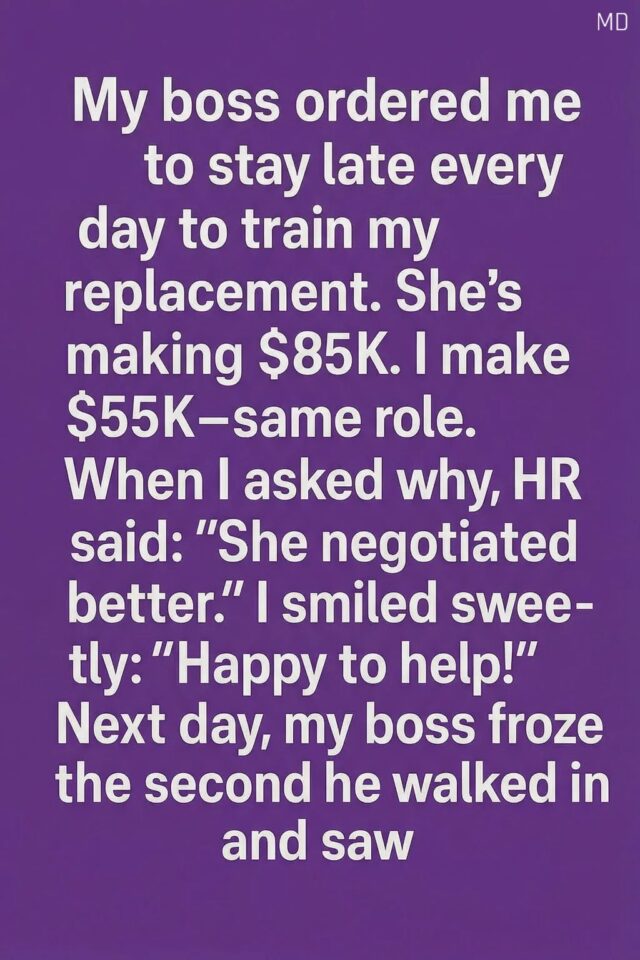
I Was Asked to Train My Replacement — It Taught Me an Unexpected Lesson About Knowing My Worth

When my manager asked me to stay late each evening to train the new hire, I told myself it was a sign of trust. I had built the systems, written the guides, and carried the workload through two hectic years. Of course I would be the one to pass the torch. Then I learned the torch came with a brighter spotlight and a much higher salary. She was stepping into the same role, at $85,000 a year. I was earning $55,000. The difference felt less like a number and more like a quiet summary of how the company valued me. When I finally asked about it, HR offered a calm explanation: “She negotiated better.” The words were meant to be neutral, almost instructional. I nodded, smiled, and said I was happy to help.

That evening, I stayed even later than usual. I walked her through the reporting dashboards, the client history, the shortcuts that aren’t written in any manual. She was smart and capable, and none of this was her fault. In fact, she seemed genuinely grateful. As I explained the rhythm of the job—the hidden deadlines, the personalities behind the email threads—I realized something important. I wasn’t just training her. I was demonstrating the full weight of what I handled every day. I answered her thoughtful questions carefully, making sure she understood not just how tasks were done, but why they mattered. For the first time, I stopped minimizing my expertise.

The next morning, my manager walked in and paused when he saw us reviewing a color-coded workflow chart I had designed overnight. The whiteboard behind us was filled with process maps, contingency plans, and performance metrics. My trainee was taking notes quickly, asking sharp follow-up questions. I wasn’t bitter or cold. I was confident, clear, and thorough. When he asked how the training was going, she spoke before I could. She described the complexity of the role and how much institutional knowledge I carried. She mentioned how many systems relied on decisions I made daily. My manager’s expression shifted—not with anger, but with realization. He was seeing the scope of my contribution in a way he never had before.

That week, I requested a formal compensation review. I came prepared—not with frustration, but with documentation. I outlined my achievements, quantified results, and referenced market benchmarks. I also explained that negotiation is a skill learned through opportunity and encouragement. If the company valued strong negotiators, it should also value those who quietly sustain its foundation. The conversation was respectful and measured. Whether or not the number on my paycheck changes immediately, something else already has. I no longer see myself as replaceable or overlooked. I see myself as capable of advocating for my worth. Training my replacement didn’t diminish me—it clarified my value.

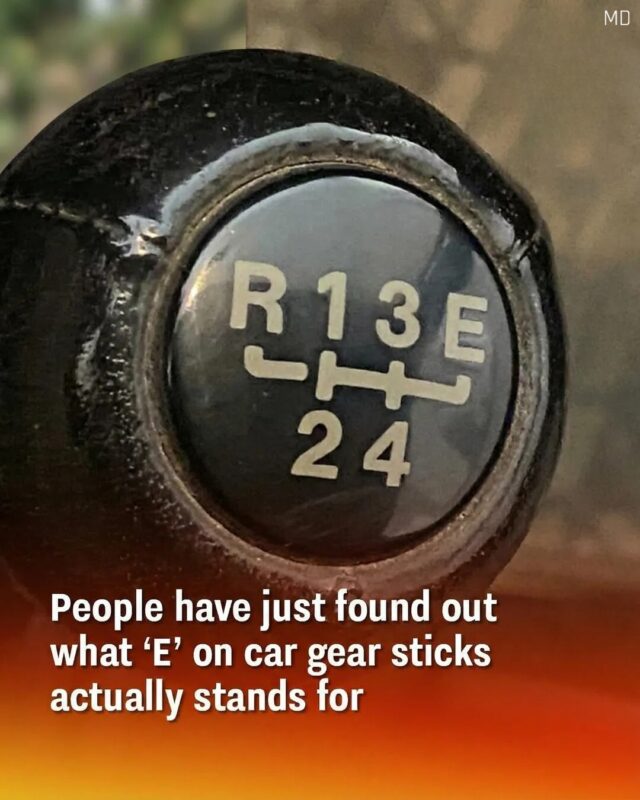
Many Drivers Are Learning the Meaning Behind the ‘E’ on Certain Car Gear Sticks

For generations, drivers have grown used to a familiar set of letters and numbers on their gear sticks. Manual cars typically display numbered gears alongside “R” for reverse, while automatic vehicles commonly show “P,” “N,” “D,” and “R,” representing Park, Neutral, Drive, and Reverse. Occasionally, some automatics also include an “L” for Low gear. So when motorists recently noticed the letter “E” on certain older vehicles, it naturally sparked curiosity. Many younger drivers had never encountered it before, leading to renewed interest in what this lesser-known setting actually meant.

The discussion gained attention after automotive content creator Supercar Blondie asked followers if they knew the purpose of the mysterious “E.” Experienced drivers quickly stepped in with the answer: the letter stood for “Economy.” In select older models, this setting was designed to help improve fuel efficiency during regular driving. By adjusting engine performance to keep revolutions per minute (RPM) lower and optimizing how the vehicle shifted, the “E” mode aimed to reduce fuel consumption, particularly during steady cruising. At a time when fuel efficiency was becoming a growing concern, this feature offered drivers a practical way to save at the pump.

As vehicle technology progressed, however, the need for a separate “Economy” gear gradually faded. Advances in engineering brought more efficient engines, smarter fuel injection systems, improved aerodynamics, and computer-controlled transmissions that automatically adjust performance in real time. Modern cars are now capable of balancing power and efficiency without requiring drivers to manually select a special fuel-saving gear. In many ways, the old “E” setting became unnecessary as manufacturers built efficiency directly into the vehicle’s overall design.

Interestingly, the letter “E” has found new relevance in today’s automotive world — but with a different meaning. It is now most often associated with electric vehicles. Unlike traditional manual transmissions, electric cars typically operate without multi-speed gearboxes and use simplified controls. Some models have even replaced conventional gear sticks with digital selectors or compact switches. As the industry continues to shift toward cleaner and more advanced transportation, the driving experience keeps evolving. While the classic “E” for Economy may belong to an earlier era, it remains a small but fascinating reminder of how automotive innovation has transformed over the years.

The Simple Sink Trick Many People Use Before Leaving for Vacation

Before heading out on vacation, most people take care of the obvious tasks: cleaning out the fridge, setting lights on timers, arming the alarm system, and watering the plants. But there’s one small household detail that often goes unnoticed — the sink drain. While it may seem harmless, leaving it unprotected for days or weeks can sometimes lead to unpleasant odors or minor pest issues. Fortunately, there’s a simple and cost-free precaution that many home maintenance professionals recommend: placing a paper towel over the drain and covering it with an upside-down glass before you leave.

When a home sits unused, the plumbing system also becomes inactive. Every sink has a curved pipe underneath called a P-trap, which holds a small amount of water. This water acts as a barrier, helping to prevent sewer gases from entering your home. Over time — especially in warm or dry weather — that water can slowly evaporate if no one is running the tap. If the water level drops too low, faint odors may rise through the drain. In addition, damp, unused drains can occasionally attract small insects such as drain flies or ants looking for moisture. While this doesn’t happen in every home, taking preventative steps can offer peace of mind while you’re away.

The glass-and-paper method works as a temporary seal. First, make sure the sink is clean and free of food debris or residue. Lightly dry the basin so there is no standing water. Then place a paper towel (or coffee filter) directly over the drain opening. Finally, set a drinking glass upside down over the paper, ensuring it fully covers the drain. The paper helps block dust and minor condensation, while the glass reduces airflow and slows evaporation inside the pipe. This simple barrier can also discourage insects from entering through the drain.

For added precaution, you may also run water in all sinks just before leaving to refresh the P-traps. Empty trash bins, wipe down surfaces, and ensure garbage disposals are clean. If you plan to be gone for an extended period, asking a trusted neighbor to briefly run water in the sinks every week can also help. Small preparations like these take only a few minutes but can make returning home much more pleasant. Sometimes, the simplest home care habits provide the most reliable protection.

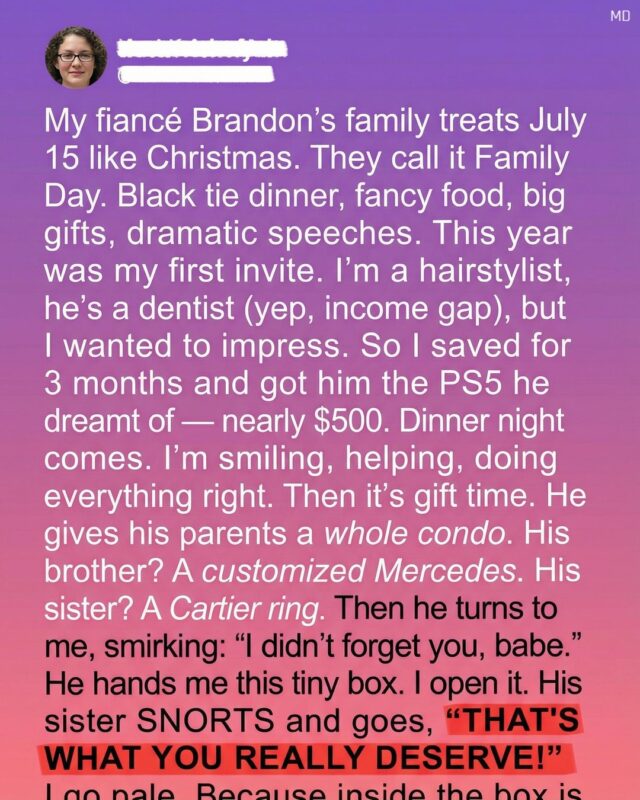
What One Special Celebration Taught Me About True Partnership

July 15 had always sounded magical the way Brandon described it. His family didn’t just celebrate “Family Day” — they staged it. Black-tie dress code, catered dinner, dramatic speeches, and gifts unveiled like scenes from a movie. This year was my first invitation. I’m a hairstylist; Brandon is a dentist. I’ve never measured love in income, but I’d be lying if I said I didn’t feel the gap that night. I wanted to belong. So for three months, I saved quietly and bought him the PS5 he’d been talking about — nearly $500, wrapped carefully with a handwritten note tucked inside.

The evening unfolded exactly as he’d promised. Crystal glasses clinked, cameras flashed, and his parents beamed as if hosting royalty. When gift time arrived, the room shifted into performance mode. Brandon stood, confident and composed. He gifted his parents a condo investment. His brother received a customized luxury car. His sister opened a designer ring box and gasped dramatically. Applause filled the room. Then he turned to me with a half-smile and handed over a tiny box. “I didn’t forget you,” he said lightly.

I opened it slowly. Inside was a small, inexpensive keychain — something you might grab near a checkout counter. The room went quiet for half a second before his sister let out a sharp laugh and muttered that it was “exactly right.” My cheeks burned, but I didn’t cry. I didn’t argue. Instead, I looked around the table and realized something important: generosity without kindness is just display. The evening wasn’t about celebration; it was about hierarchy. And in that moment, I understood where I stood in their carefully curated world.

Later that night, I handed Brandon his gift. When he opened the console, his expression shifted from surprise to something more complicated — maybe embarrassment, maybe reflection. I didn’t make a scene. I simply said, “I gave what I could, because that’s what love means to me.” The next morning, I packed my things. Family traditions can be beautiful, but not when they’re built on comparison and quiet humiliation. Walking away wasn’t easy, but it was clear. I chose a future where partnership feels equal, where respect doesn’t come with a price tag, and where love is measured in effort — not spectacle.

Updates in Ongoing Legal Case From 1995

Tennessee may soon move forward with a rare execution involving a female inmate after the state’s Supreme Court allowed the sentence of Christa Gail Pike to proceed. Now 49 years old, she is the only woman currently on Tennessee’s death row. The case dates back to 1995, when Pike was 18 and enrolled in a Job Corps training program in the Knoxville area. The crime drew significant public attention at the time and has remained one of the most widely discussed cases in the state’s modern legal history.

Court records indicate that tensions developed between Pike and another student, Colleen Slemmer, who attended the same program. Investigators reported that personal conflicts escalated, leading to a confrontation in a secluded area near the campus. The situation turned violent, and authorities later arrested Pike along with two other individuals in connection with the incident. The case deeply affected the local community and sparked broader conversations about youth violence, peer conflict, and the challenges faced by young adults in high-stress environments.

In 1996, Pike was convicted of first-degree murder and sentenced to death. One co-defendant received a life sentence, while another was given a lesser sentence after cooperating with investigators. Over the years, Pike’s case has moved through numerous appeals and legal reviews, reflecting the complex and lengthy process that typically accompanies death penalty cases in the United States. During her time in prison, she also received an additional sentence related to a separate incident, further complicating her legal history.

An execution date is currently set for September 30, 2026, although additional legal efforts are ongoing. Her attorneys have argued that her difficult childhood, exposure to trauma, and mental health concerns should be taken into account. They have also stated that she has expressed remorse for her actions. If carried out, the execution would be the first involving a woman in Tennessee in more than a century, underscoring how uncommon such cases are. As the date approaches, the case continues to prompt discussion about accountability, rehabilitation, and how the justice system addresses long-term trauma and responsibility.

Popular

Iran’s Supreme Leader Ayatollah Ali Khamenei Reportedly Killed in Joint U.S.–Israel...

0
The idea that Iran’s Supreme Leader could be killed in a military strike is stark and profound. The office of the Supreme Leader is...