Entertainment

A billionaire’s baby kept crying on the plane—until a destitute black boy did the unthinkable…

Little Nora Whitman wailed with a force that seemed to rattle the polished windows of the first-class cabin on Flight 412 from Boston to Zurich. The high-backed leather seats trembled with her cries as fellow passengers exchanged frustrated glances, shifting uncomfortably and clutching their champagne glasses. Flight attendants appeared and disappeared like fleeting shadows, offering pacifiers, blankets, and soft murmurs, but nothing could quiet her distress.

At the center of the storm stood Henry Whitman, a man whose presence alone often commanded rooms of international influence. Known for negotiating multi-billion-dollar mergers with the precision of a chess master, he now appeared vulnerable and disarmed, holding his newborn daughter against his chest as if the simple act of cradling her demanded a strength he could not summon. His tailored suit had become disheveled, his crisp white shirt damp with perspiration. For the first time in years, control was slipping through his fingers.

A young flight attendant leaned in, her voice barely audible above Nora’s cries. “Sir, perhaps she is overtired,” she suggested cautiously.

Henry nodded, though his heart pounded with a helplessness he had never imagined. His wife had passed away just weeks after Nora’s birth, leaving him alone to navigate both an empire and the demands of a newborn. That evening, high above the Atlantic, the illusion of mastery disintegrated.

Then, from an aisle near economy class, a hesitant voice spoke.

Excuse me, sir, I might be able to help.

Henry turned to see a slim, tan-skinned boy, no older than seventeen, standing quietly. His dark brown hair was slightly unkempt, and his worn canvas backpack slung across one shoulder suggested a life of careful resourcefulness. Despite his modest appearance, there was an undeniable confidence in his gaze.

“And you are?” Henry asked, his voice hoarse from worry and sleeplessness.

“My name is Mason Reed,” the boy replied. “I helped raise my little sister. I know how to calm a baby. If you’ll let me, I can try with her.”

Henry hesitated. Pride, caution, and years of learned self-reliance whispered that he should refuse. But Nora’s cries tore at something deeper, and slowly he nodded, extending the fragile bundle to the stranger.

Mason approached with careful movements, murmuring softly. Shh, little one, it’s alright. His arms rocked gently, and he hummed a quiet melody that seemed to carry the gentlest weight of a lullaby. Within moments, Nora’s sobs began to ebb, her tiny fists unclenching, her breathing smoothing. The cabin, once filled with tension and noise, descended into an almost reverent silence.

Henry exhaled, a mixture of relief and astonishment flooding him. “How did you do that?” he asked quietly, studying the boy who held his daughter as if she were his own.

Mason shrugged with a faint smile. “Sometimes a baby doesn’t need anything complicated. They just need to feel safe.”

As the plane steadied, Henry gestured for Mason to sit beside him. Nora rested comfortably between them, her eyelids heavy with sleep. In hushed tones, the boy began to tell his story.

He grew up in a modest neighborhood in Philadelphia, raised by a single mother who worked long shifts at a small café. Money was always scarce, but Mason had an extraordinary talent for mathematics and problem-solving. While other children spent afternoons on playgrounds, he filled scavenged notebooks with numbers, equations, and abstract ideas.

I’m heading to Zurich, he explained, to compete in the International Math Challenge. My community raised enough for my trip. They say that if I perform well, it might open doors to scholarships, maybe a future I haven’t dared imagine.

Henry studied him, seeing echoes of his own youth in the determined set of Mason’s jaw and the steady flame in his eyes. He had climbed from humble beginnings to global influence, and here was a boy with the same raw ambition and ingenuity. You remind me of myself, he murmured.

After the flight, Henry insisted that Mason remain close. The boy attended meetings, sometimes quietly observing, sometimes jotting solutions on napkins. His brilliance became apparent to everyone who met him.

At the competition, Mason amazed the judges. Not only did he solve the most complex problems, but he illustrated them with examples drawn from the real world: the mechanics of flight, patterns of global trade, even the rhythms of a newborn’s sleep. Applause erupted, and when the gold medal was draped around his neck, he looked toward Henry, who held Nora, and felt a recognition he had never known.

That evening, Henry invited Mason to dinner in a quiet restaurant overlooking the city. Nora, now cheerful, reached out her tiny hands toward the boy who had once calmed her mid-flight. Henry raised his glass, voice trembling slightly.

Mason, that night you saved my daughter, but you gave me more than that. You reminded me of what truly matters, he said. You are not just talented. You are family.

Mason froze, fork midway to his mouth. Family?

Yes, Henry replied. I will ensure you have every opportunity to pursue your dreams. Scholarships, education, a place in my company when you are ready. Not because you owe me, but because you deserve it.

Tears welled in Mason’s eyes. For the first time, he felt not just seen, but anchored, with a future that was certain.

Months later, photographs of the gold medalist standing beside Henry and smiling down at Nora captured headlines: From Philadelphia to the World Stage: The Boy Who Calmed a Billionaire’s Daughter. Yet beyond the accolades, the truth was simpler: a newborn’s tears, a stranger’s courage, and a moment of trust had intertwined three lives.

And as Nora cooed in Mason’s arms, Henry understood that wealth could never truly be measured in currency alone. True riches were the bonds of family, chosen and cherished.

A little girl hugged her father in the eerie coffin. They had been at the wake for hours, and she hadn’t left her side for even a second.

The parlor of the Montrose family home had never held so much silence. Where laughter and the scent of rosemary bread usually lingered, there was now only the heavy stillness of mourning. The coffin rested in the center of the room, surrounded by roses that had already begun to bow under the heat of dozens of candles. Relatives whispered in hushed tones, neighbors murmured condolences, children darted about without comprehension, and the adults carried the weight of grief with weary hands.

Yet the person who drew every eye was not the man in the coffin, Alistair Montrose, gone too soon at forty-two. It was his daughter, eight-year-old Elodie.

She had not moved since they had returned from the funeral home. Perched on a wooden chair pulled close to the casket, she stood on tiptoe, her small palms pressed against the polished oak. In her pale blue dress, hair ribbons crooked from the day’s rush, and scuffed black shoes, she gazed at her father’s face with unblinking devotion.

“Elodie, sweetheart, come sit with me for a while,” her mother pleaded softly, touching her shoulder. “You need to eat something.”

The child shook her head, her eyes never leaving the still figure inside.

“I’ll stay here,” she whispered.

Her grandmother, seated in the corner with swollen eyes and trembling fingers, raised her voice gently. “Let her be, Caroline. We all say goodbye in our own way.”

The hours crept by. Cups of coffee were poured and emptied, plates of bread and cheese were passed between weary hands, stories of Alistair’s easy laughter and kind nature floated through the room. Still, Elodie remained. She refused food, refused a seat, asking only for the chair that allowed her to be close enough to touch the coffin without stretching.

“She doesn’t understand,” muttered an aunt.
“She’s in shock,” another whispered.
A neighbor lowered her voice further. “No… she’s waiting for something.”

The comment settled uneasily in the room.

By evening, the glow of candlelight turned the parlor amber. Unease spread like smoke, with more glances drifting toward the child than toward the coffin. She leaned against the polished wood, her chin resting there as if expecting her father to stir at any moment.

“I want to stay with him,” Elodie whispered again when her mother tried to coax her to bed.

Her grandmother draped a blanket around her small shoulders, and the family let her remain.

The night dragged on. Cigarettes glowed faintly on the porch as uncles whispered under the stars. In the kitchen, cousins nursed cups of bitter coffee, reheated one too many times. Inside, the grandmother’s knitting needles clicked faintly though her hands shook with every stitch.

Close to midnight, when weariness had softened the edges of grief, Elodie moved. Slowly, carefully, she climbed from the chair, rested one knee on the coffin’s edge, and hoisted herself inside. At first, no one noticed.

It was an aunt’s shrill cry that shattered the quiet. “She’s in there! She climbed in with him!”

The room erupted. Chairs scraped, voices rose in panic. But when they rushed forward, they froze.

The little girl was not struggling. She was curled gently against her father’s chest, her arms wrapped tightly around him. And what silenced everyone was not her stillness but his.

Alistair’s arm, which had lain folded across his chest since morning, now rested against his daughter’s back. The hand was curved naturally, fingers slightly bent, as though embracing her.

Gasps rippled through the mourners. Some crossed themselves in trembling reverence, others insisted the child’s movement must have shifted the arm, but those nearest swore it was impossible. The tenderness in that gesture could not be mistaken for chance.

“Do not touch her,” the grandmother commanded, her voice ringing with unexpected strength. “Let her be.”

No one argued.

The hours that followed were filled with whispers and prayers, with fearful glances and quiet tears. Elodie remained pressed against her father’s chest, breathing evenly, as though sleeping in his arms. The grandmother murmured through tears that perhaps God had granted them a final embrace. Her mother stood pale and trembling, unable to decide if she should pull the child away or kneel in awe.

When dawn’s first light slipped through the curtains, Elodie stirred. She lifted her head, rubbed her eyes, and spoke clearly enough for everyone to hear.

“He told me not to be afraid. He said he will always stay with me.”

No one responded. Some wept openly, others shook their heads, but all were bound in the hush of that moment. Only then did the girl climb down from the coffin. Her grandmother wrapped her tightly in the blanket, holding her as if to anchor her to the living.

When they looked back, Alistair’s arm had returned to its original place across his chest, hands folded exactly as before.

Later that day, the procession wound its way to the cemetery. Elodie walked beside her grandmother, her face calm, her steps measured. At the graveside she leaned close and whispered into the coffin before the earth was closed over it.

“Rest now, Papa.”

She did not cry. Not once.

Word of that night traveled quickly through Ashwell, their town by the river. Some dismissed it as a trick of the candles, a shift of the body caused by the child’s weight. Others swore it was something holy, proof that love could stretch across the boundary of death.

But those who had been present never forgot the chill that filled the room, the silence that followed, or the unshakable certainty that something beyond human understanding had brushed their lives.

They remembered the girl who would not leave her father’s side, who climbed into his coffin and was embraced back.

And they carried with them the memory of a night when farewell blurred with miracle, when a child’s silence spoke louder than grief itself.

During the wedding, my mother-in-law stood up from her seat and told the priest that she was against our union: she certainly did not expect such a response from me

I never thought my wedding would turn into a full-blown spectacle.

It all began even before the ceremony: my mother-in-law had decided that since she wasn’t married and was still “young and beautiful,” she deserved to be the maid of honor.

I tried to protest, but for my husband’s sake, I gave in. “What’s the worst that could happen?” I thought. “After all, it’s just a tradition.”

But the worst did happen.

For the ceremony, my mother-in-law showed up in a long white gown. White! A dress that would have been more fitting for the actual bride. At one point, she literally snatched the bouquet out of my hands and proudly stood next to me, as if the spotlight should have been on her. I struggled to hold back tears and absolutely refused to take pictures with her.

But the most shocking moment came later. When we were at the altar, reciting our vows, the priest asked the usual question: “Does anyone object to this union?”

That’s when my mother-in-law raised her hand.

“I object,” she said loudly. “This is my only son, and I’m not ready to give him up to another woman. Son, let’s just go home. What’s the point of this marriage?”

The guests were stunned; someone even burst out laughing. My husband froze, unable to say a word. I was boiling with anger, but at the same time, an idea popped into my head to save the situation.

Keeping a straight face, I turned to my mother-in-law and said loudly enough for everyone to hear something completely unexpected. I’ll share exactly what I said here, and you can tell me if I handled it well.

With a sharp tone, I said:

“Mom, did you forget to take your medication again? The doctor warned us—if you skip a dose, you start to hallucinate. Do you want me to bring you some water to help you calm down? Remember, it’s your wedding today! I’m your daughter-in-law, and here’s your son. Did you forget us again?”

Then I turned to the guests and added:

“I’m sorry, my mother-in-law is seriously ill, and sometimes she doesn’t understand what she’s saying. Father, please continue, her words don’t mean anything. She’s confused.”

“I’m not sick!” my mother-in-law protested.

“Yes, yes, you’re perfectly fine. You just forgot your medicine again. Don’t worry, everything will be fine, I’ll give it to you later,” I replied softly.

She was left speechless, stepped aside, and sat down, and the ceremony went on. We got married, and in that moment, I realized: sometimes, to protect your happiness, you have to be clever.

Billionaire invites models so his daughter can choose a mother — but she chooses the cleaning lady.

The words rang through the grand halls of the Whitmore estate, freezing everyone in place.

Edward Whitmore — billionaire, tycoon, and the man the media hailed as “the one who never loses” — stood still, speechless. He’d closed billion-dollar deals and negotiated with world leaders, but nothing prepared him for what his six-year-old daughter just said.

Little Sophie, in her pale pink dress, stood clutching her stuffed bear and pointed straight at someone unexpected — Anna, the maid.

Around them, a group of models — tall, dazzling, dressed in silk — exchanged uneasy glances. Edward had gathered them for one reason: to let Sophie choose who might become her new mother.

His wife, Margaret, had died three years earlier, and he thought beauty and elegance could help his daughter forget the loss. But Sophie ignored the glamour and chose the woman who dusted the chandeliers.

Anna pressed a trembling hand to her chest.

“Me? Oh, sweetheart, I’m just…”

“You’re kind to me, Sophie said, her voice soft but sure. You tell me stories when Daddy’s busy. I want you to be my mommy.”

A murmur rippled through the room. The models shifted, whispering. Edward’s jaw tightened. For once, the man who controlled everything had no words. Anna looked just as shocked — there was no calculation, no agenda, only confusion.

By nightfall, the story had spread through the mansion. The guests left in humiliation, and Edward locked himself in his study, replaying his daughter’s voice: “Daddy, I choose her.”

That wasn’t how it was supposed to go. He wanted someone who could charm politicians, grace magazine covers, and fit neatly into his perfect public image — not the maid who polished the silver.

But Sophie refused to change her mind.

At breakfast the next morning, she crossed her arms and declared, “If you don’t let her stay, I won’t talk to you anymore.”

Edward’s spoon clattered against the plate.

“Sophie”

“Mr. Whitmore, Anna interjected softly, please. She’s just a child”

He cut her off.

“You know nothing about my world. Nothing about what appearances mean.”

Anna lowered her gaze, but Sophie didn’t back down.

Edward tried everything — trips, toys, even a puppy. Still, her answer was always the same:

“I want Anna.”

Reluctantly, he began to notice her more. The way she patiently braided Sophie’s hair, listened when she spoke, and filled the house with gentle laughter. Anna wasn’t glamorous, but she was genuine — her kindness quiet, her presence steady.

For the first time, Edward began to wonder if he’d been searching for the wrong kind of woman.

Two weeks later, at a charity gala, Sophie vanished. Panic hit — until he found her by the dessert table, crying.

“She wanted ice cream”, a waiter stammered, “but the other kids teased her — said her mom wasn’t here.”

Before Edward could react, Anna appeared. She knelt and wiped the tears from Sophie’s cheeks.

“Sweetheart, you don’t need ice cream to shine. You’re already special.”

Sophie sniffled.

“But they said I don’t have a mom.”

Anna hesitated, then smiled gently.

“You do. She’s watching from the sky. And until then, I’ll be right here.”

The room had gone quiet. People watched, moved. And Edward realized — no amount of wealth could buy what he just witnessed.

From then on, he stopped fighting it. He watched them together — the bedtime stories, the laughter, the peace Sophie hadn’t known since her mother died.

One evening, Sophie tugged his sleeve.

“Daddy, promise you’ll stop looking for other ladies. I already picked Anna.”

“Edward smiled faintly.”

“Life isn’t that simple.”

“Why not? she asked. She makes us happy. Mommy in heaven would want that.”

Her words struck him deeper than any business deal ever could.

Months passed, and one autumn afternoon, Edward called Anna to the garden.

“Anna, he said quietly, I owe you an apology. I’ve judged you unfairly.”

“There’s no need, sir. I know my place”

“Your place, he interrupted gently, is where Sophie needs you. And that’s… with us.”

Her eyes widened.

“Are you saying”

He nodded.

Sophie chose you long before I did. And she was right. Would you be part of our family?

From the balcony came a joyful voice:

“I told you, Daddy! It was her!”

The wedding was simple — no press, no luxury. Just family, a few friends, and one little girl who never let go of Anna’s hand.

Standing beside them, Edward finally understood: after years of chasing success, he had found the one thing money could never buy — a real family.

Doctors Declared My Baby Had No Sign of Life — But When My 7-Year-Old Whispered ‘I’m Your Big Brother,’ The Unthinkable Happened. The Cry That Followed Changed Everything We Knew About Life, Love, and Miracles.

The Birth That Wasn’t Supposed to Happen

Emily Turner had never known silence could feel this heavy.For nine long months, she had pictured this moment — holding her baby boy, hearing his first cry, feeling his warmth.But now, in the bright, sterile delivery room, there was only stillness.The monitor had gone flat.The nurses had fallen quiet.And Dr. Reed’s calm eyes — the same eyes that had delivered hundreds of babies — were filled with sorrow.

“I’m sorry,” he whispered softly. “There’s no heartbeat.”Emily’s world cracked. The air left her chest.Her husband, Michael, stood frozen near the wall, one hand over his mouth.The nurses gently wrapped the small, motionless body in a blue blanket.Their son — Benjamin — had never taken a breath.

The Brother Who Wouldn’t Let Go

Half an hour passed, though it felt like a lifetime.
Emily lay still, staring at the ceiling, numb and empty.
Michael stood near the window, his shoulders trembling.

A nurse spoke quietly, her tone gentle but firm.
“Would you like to hold him?”

Emily hesitated. Her heart screamed that she couldn’t.
But then she thought of Jacob — their seven-year-old son.

He’d been so excited to meet his baby brother.
He had painted a sign that said “WELCOME HOME, BEN!” in big, uneven blue letters.
He deserved the chance to say goodbye.

Jacob entered slowly, clutching a small teddy bear.
His eyes were already wet.
“Mommy?” he whispered.

Emily nodded, her voice caught in her throat.

The nurse carefully placed the tiny bundle in Jacob’s arms.
He stared at the still face — pale, quiet, perfect.
Then, through trembling lips, he said,

“Hi, Ben… I’m your big brother.”

He brushed a small finger across Ben’s cheek.
“Mom said you’d be brave. Maybe you’re just sleeping, huh?”

And then — something impossible happened.

A soft sound broke the air.
A cry — faint at first, then stronger.

Emily screamed.
Nurses froze.
Michael stumbled backward, grabbing the bedframe.

Jacob’s eyes went wide.
“Mommy! He’s crying! Ben’s crying!”

The nurse rushed forward, calling out,
“We’ve got a pulse! Get Dr. Reed — now!”

The room exploded into motion.
Machines beeped, orders flew, hands moved fast.

“Airway clear.”
“Heart rate rising.”
“Pressure stable!”

Emily sobbed uncontrollably.
Michael dropped to his knees beside the bed, covering his face.

And through it all, that tiny, steady cry filled the room —
the sound of a life refusing to fade.

You Were Gone, But You Came Back

Hours later, when dawn touched the windows, Emily sat beside a clear crib in the NICU.
Benjamin was alive. Small. Fragile. Covered in tubes.
But his chest rose and fell — each breath a miracle.

Dr. Reed entered quietly, shaking his head in wonder.
“In thirty years,” he said softly, “I’ve never seen anything like this. His heart just… started again.”

Michael’s voice trembled. “How does that even happen?”

The doctor smiled faintly. “Sometimes the will to live is stronger than what we can explain.”

Emily leaned forward, whispering to her son,
“You were gone, Ben. But you came back. Do you know how loved you are?”

Jacob, sitting beside her, smiled sleepily.
“I told him to wake up,” he said proudly. “I said I’d take care of him.”

Emily kissed his forehead. “You did, sweetheart. You really did.”

The Whisper in the Dark

Weeks passed, and Benjamin grew stronger.
But something about him felt… different.

He often woke up at night, staring at the empty corners of the room, cooing softly as if he saw something unseen.
Sometimes, the monitor would suddenly spike — his heartbeat fluttering for no reason.
Once, while Emily was feeding him, he smiled at nothing, eyes following something invisible in the air.
A quiet chill ran through her, but she brushed it away.

Then one night, at 2:47 a.m., she heard it.

A whisper.
Faint. Gentle.
“Thank you…”

Her eyes flew open. Her heart raced.
The monitor glowed softly beside the crib.
Ben was asleep, peaceful.

She looked around the room — no one was there.
But Ben’s tiny hand lifted slightly, as if waving.

The next morning, Jacob crawled into her bed and said,
“Mom, I dreamt of Ben last night. He said thank you for calling him back.”

Emily froze. “Calling him back?”

Jacob nodded. “Yeah. He said when I talked to him, he was lost. But when I told him I was his brother, he found the light again.”

Tears filled Emily’s eyes. “The light?”

Jacob nodded again. “He said he saw Grandma. She told him to come back to you.”

Emily’s breath caught. Her mother — Jacob and Ben’s grandmother — had passed away two years earlier.

A Miracle Without a Reason

Within days, the story spread.
The local paper called it “The Baby Who Came Back.”
Doctors called it a spontaneous recovery — a mystery of medicine.

But for Emily, it wasn’t science. It was love.

One evening, as she rocked Ben to sleep, she whispered,
“You came back for us, didn’t you?”

Ben smiled — that quiet, knowing smile that always gave her chills.

The Secret That Changed Everything

A month later, Dr. Reed called her. His voice was tense.
“Emily… there’s something you need to know.”

He explained that before Ben’s unexpected cry, a small blood sample had been taken for hospital records.
The DNA results had just come back — and they didn’t match Michael.

Emily’s heart dropped.
“What are you saying?” she asked quietly.

“There must be a mistake,” the doctor said. “But the results show Michael isn’t the biological father.”

That night, Emily confronted Michael. He swore he didn’t know anything.
But she did.

Two years earlier, after a painful miscarriage, she had turned to a donor through IVF — a choice she had kept secret out of shame and grief.

Now, she realized:
If that child hadn’t been conceived that way, maybe he wouldn’t have survived at all.
Maybe life had found its own way.

Love Stronger Than Anything

When Benjamin turned one, the house was filled with candles, laughter, and tears.
Michael forgave her.
Jacob adored his little brother.
And Emily — finally — felt peace.

Whenever she looked into Ben’s deep blue eyes, she felt that same quiet pull toward something beyond this world — a reminder that love can reach places no one understands.

Because sometimes, miracles don’t ask permission.
They simply… return.

He had no pulse for thirty minutes.
No breath.
But love called him back.

Do you believe love can sometimes be stronger than anything else?

For several days in a row, a little girl came up to my front door, stood there for a few minutes, and then ran away: I got worried about the child and decided to find her parents — and what I discovered was completely unexpected

For several days in a row, a little girl came up to my front door, stood there for a few minutes, and then ran away: I got worried about the child and decided to find her parents — and what I discovered was completely unexpected 😲😱

Almost every day, right at noon, the same little girl appeared on my doorstep. She was pretty, neatly dressed, with round cheeks and a small teddy bear in her hands.

She stood at the door, looking straight into the doorbell camera — as if she were waiting for something.

Most of the time, I was at work during those hours, so I couldn’t open the door to find out who she was or why she came. Each time it happened the same way: the girl rang the bell, waited a minute or two, and then ran off around the corner.

No cars, no adults nearby. To be honest, it was becoming more and more worrying each day. Where were her parents? Why was such a little child wandering around alone?

I began to fear that something terrible had happened.

One evening, I couldn’t take it anymore and went to the police with the video recordings. The officers quickly located the girl’s family and summoned her mother to the station. And that’s when we discovered something completely unexpected 😲😱

When the woman came in and heard what she was being accused of, she suddenly burst out laughing.

— I’m sorry, — she said, wiping away her tears, — but my daughter is at that age when everything fascinates her. We live not far from you and often walk down your street. Every time we pass your house, she says, “I want to say hello to that lady!” She runs to your door, rings the bell, and then comes back. I always wait for her by the gate.

I was speechless.

— But why my house specifically? — I asked.

The woman smiled again:

The officer and I looked at each other and couldn’t help but laugh. It turned out that the “mysterious visitor” was just a sweet little girl who came every day to say “hello” to someone who once showed her a bit of kindness.

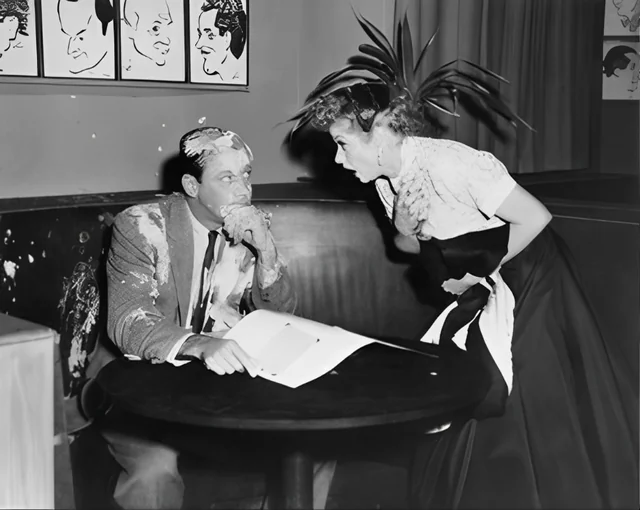
Lucille Ball Meets William Holden: The Most Awkward (and Hilarious) Moment in TV History

“Some moments are so funny, they become immortal.”

In 1955, Lucille Ball gave the world another gem — a scene that combined starstruck panic, slapstick brilliance, and one of television’s greatest comedic meltdowns.

It happened in the I Love Lucy episode “L.A. at Last!”, where Lucy Ricardo finally gets to meet her Hollywood idol — the handsome movie star William Holden.

What begins as an innocent lunch outing quickly spirals into one of the most awkward, side-splitting encounters ever filmed.


🍽️ The Setup: Lucy Meets a Hollywood Star

Lucy, Ricky, Fred, and Ethel have just arrived in Los Angeles for Ricky’s movie debut.
Determined to see real movie stars, Lucy drags Ethel to the famous Brown Derby Restaurant, a real Hollywood hotspot where celebrities actually dined.

And there he is — William Holden — suave, charming, and very much Lucille Ball’s real-life crush.

Ethel dares her to look, but Lucy can’t stop staring. She leans, twists, and gawks so openly that even Holden notices. The longer she looks, the more uncomfortable it gets — and that’s when classic Lucy chaos takes over.


😂 The Incident

As Lucy keeps staring, she accidentally causes a waiter to trip and dump a plate of spaghetti right into Holden’s lap.

Mortified but determined to play it cool, Lucy hides behind a menu, ducks under the table, and scrambles for an escape.
But the damage is done — Holden sees her, amused and slightly irritated.

Later, Ricky introduces Lucy to him — not realizing she’s the woman who just caused the spaghetti disaster.

To disguise herself, Lucy puts on a ridiculous fake nose and dark sunglasses. The result? Comedy perfection.

Holden’s polite smile turns into total confusion as Lucy nervously sips coffee through her fake nose — which, of course, collapses. ☕👃

The audience roars with laughter.


🎭 The Magic of the Scene

The brilliance of this moment isn’t just in the jokes — it’s in Lucille Ball’s fearless physicality.

She didn’t just play embarrassed — she became embarrassment. Every twitch, every sip, every glance was perfectly exaggerated, yet completely believable.

The fake nose gag was so funny that even the cast struggled not to laugh during filming.
It was the perfect mix of social anxiety and slapstick — a universal human moment wrapped in Lucy’s genius timing.

💬 Fun fact: William Holden wasn’t just playing along — he adored Lucille Ball. After filming, he reportedly said it was one of the funniest experiences of his career.


🌟 Why It Still Makes Us Laugh Today

Even 70 years later, this scene is wildly relatable.

Who hasn’t embarrassed themselves in front of someone they admire?
Who hasn’t wished for a disguise after doing something awkward?

Lucille Ball turned those feelings into art — transforming pure mortification into laughter that crossed generations.

It’s the perfect mix of humor and humanity — no words needed, just expressions that said everything.


💜 The Lesson Behind the Laughter

Lucille Ball showed us that laughter is born from honesty.
She didn’t hide from embarrassment — she turned it into connection.

That’s why her comedy still resonates today.
She reminded us that even when things go horribly wrong… you can still laugh your way through it.

So next time you feel awkward, remember Lucy sipping coffee through a rubber nose — and smile.
Because somewhere out there, millions of fans are still laughing with her.

Scenic 23.61-Acre Hilltop Property in Liberty, Tennessee – Rustic Farmhouse, Natural Springs & Endless Potential

Escape to the tranquil hills of Liberty, Tennessee, with this 23.61-acre property offering wide-open views, natural springs, and abundant wildlife. Perfect for outdoor enthusiasts, hunters, or anyone seeking a private retreat, this property provides the ideal combination of rural charm, natural beauty, and flexibility for development.

Property Features and Highlights

  • 23.61 acres of wooded hills and open spaces, giving you privacy and room to roam
  • Rustic farmhouse (approx. 720 sq ft) – while older and without plumbing, it offers a foundation for a hunting lodge, cabin, or tiny home project
  • Two natural springs – a valuable water resource for future building, gardening, or livestock
  • Abundant wildlife, including deer and other native species, making it ideal for hunting, wildlife watching, or enjoying nature
  • Scenic hilltop views across the surrounding Tennessee landscape, providing a peaceful and picturesque setting

Endless Possibilities

This unrestricted property offers multiple options for development:

  • Build a primary residence, weekend cabin, or tiny home
  • Establish a family compound or private retreat
  • Create a hunting lodge or outdoor recreation property
  • Use the land for gardening, small farming, or hobby agriculture

The property has been soil tested, allowing for confidence in building and land use planning. Fiber internet and electricity are available at the road, providing essential modern conveniences while maintaining the privacy and serenity of a rural setting.

Location and Nearby Amenities

  • Just miles from Short Mountain Distillery, offering local flavor and attractions
  • Close to Center Hill Lake, perfect for boating, fishing, and other water activities
  • Approximately one hour from Nashville, providing access to city amenities, cultural events, and shopping while still enjoying rural living

Why This Property Stands Out

With its wide views, natural springs, and unrestricted acreage, this Liberty property offers an unmatched opportunity for buyers looking to combine privacy, outdoor recreation, and the chance to create a personalized retreat. Whether your vision includes a rustic cabin, a family estate, or a hunting paradise, this land provides the space and flexibility to bring it to life.

Take the Next Step

Don’t miss this chance to own 23.61 acres of scenic Tennessee countryside, complete with wildlife, hilltop views, and natural springs. For more information or to schedule a private showing, please contact the listing agent through the Zillow link provided below the photos. Start planning your dream rural retreat in Liberty, Tennessee today!

Listed on Zillow.

Unleash the Potential: Fishing Getaway or Tiny Home Rental Site Near Kentucky Lake

Imagine owning a piece of land so close to the water that fishermen and boaters would race to stay there. That place could be yours—with this unique offering just minutes from Kentucky Lake and Cane Creek Marina. This property is not just a lot—it’s a blank canvas with potential, featuring an existing 1-bedroom, 1-bath home that requires significant work. But it’s precisely this condition that allows us to list it at a low, enticing price—with the promise of big upside for a creative buyer.

Whether you’re looking to build a collection of tiny homes, a fishing lodge, or a multi-unit getaway, this land gives you options. Combine it with the neighboring property (15 Airport Lane), and you’ll own 1.33 acres of prime real estate in a rental-friendly location. I’m offering flexible deals: buy both lots, or take over the loan on the adjacent parcel to expand your possibilities. Let’s explore what makes this opportunity so special—and how you can make it yours.

What You’re Getting

Lot with 1BR / 1BA Home (Needs Significant Repairs)

This parcel includes a 1-bedroom, 1-bathroom dwelling, currently in need of serious rehab. The interior is unfinished in many areas, with structural, mechanical, and cosmetic improvements required. Because of its condition, the parcel is marketed at a lot price, giving buyers the chance to invest, overhaul, and increase value on their own terms.

While the house needs work, the infrastructure is there—a foundation, roof structure, walls, plumbing rough-ins (in some cases), and electric to the lot. Some exterior upgrades have already been made on the adjoining property—a black metal roof and board-and-batten siding—so you can see what’s possible once renovations begin.

Opportunity to Acquire a Neighboring Lot (15 Airport Lane)

Right next door sits 15 Airport Lane—another lot with potential. I’m willing to sign the deed over to you for that property, and you would take over the existing loan of $550/month. This means you can expand your footprint without having to secure a brand-new mortgage on that parcel. Together, both lots total 1.33 acres, giving you space to build, expand, or diversify your rental offerings.


Why This Location Delivers Value

What truly sets this property apart is its proximity to recreation and water access. It’s less than 5 minutes from Kentucky Lake and only a short drive to Cane Creek Marina—a magnet for anglers, boaters, and nature seekers who want convenient access to fish, boat, and explore the lake’s many coves and covenants.

In vacation markets near water, tiny homes, cabins, and compact rentals are in high demand. Guests prefer unique, cozy stays over cookie-cutter motels. With this property, you have the clout to build:

  • Tiny home cabins or glamping units for weekenders
  • A fishing lodge or guest house modeled for groups
  • A main residence with accessory buildings for guests
  • A mixed-use development: comfortable spaces to stay and space to fish, boat, or relax

Because of your proximity to outdoor amenities, your rentals would likely see strong occupancy—especially in high season.

Flexible Financing / Ownership Options

To maximize your flexibility, here are the two core offers:

  1. Buy Both Properties Together
    • Combined price: $100,000
    • You acquire both lots (1.33 acres) and both structures
    • Full control, no taking over loans
  2. Buy This Lot Individually + Deed Transfer of 15 Airport Lane
    • Price for just this lot: $45,000
    • I sign over the deed for 15 Airport Lane to you
    • You take over the existing loan at $550/month

This gives you flexibility—whether you want to start small or scale right away.


What You Should Know (Challenges & Considerations)

Before moving forward, here are key considerations to weigh:

  • Renovation Work Required
    The existing 1BR/1BA home requires extensive repairs—potential structural, plumbing, roofing, insulation, interior finishes, and possibly electrical upgrades. Be prepared to invest capital, time, and effort into restoring or reworking substantial portions of the building.
  • Zoning / Permitting
    Confirm local zoning rules for multiple residences, short-term rentals, accessory buildings, and tiny homes. You may need permits, variances, or special use approvals.
  • Loan Assumption Details
    If you take over 15 Airport Lane’s loan, ensure you review the terms carefully: interest rate, remaining balance, any lender approval required, prepayment penalties, etc.
  • Infrastructure & Utilities
    Verify utility hookups (water, electricity, sewage) on both parcels. If utilities require extension or upgrades, factor those costs into your financial planning.
  • Market Demand & Seasonal Variability
    While proximity to the lake is a selling point, occupancy may fluctuate by season. Build your financial model conservatively, considering off-season and low-demand periods.
  • Site Planning
    You’ll need a well-thought-out site plan showing how many cabins, the main residence, walkways, parking, drainage, green space, and access points all fit into 1.33 acres.

Vision: What You Could Create

The most compelling feature of this offering is its versatility. Based on the growth in lake-based tourism and seasonal rentals, here are some ideas you could develop:

  • Rental Tiny Homes: Several compact, high-quality cabins targeted at anglers, couples, or small families. These can command strong per-night rates given the proximity to Kentucky Lake and marina access.
  • Fishing Lodge or Guest House: Use one building as a main communal area or lodging and use the rest of the land for smaller cabins or amenities (grilling areas, picnic spots, dock access if possible).
  • Owner-Occupied Home + Revenue Units: Live in the renovated original home (or a new build) and use the additional lots for guest suites or cabins, letting the revenue offset your mortgage.
  • Vacation Compound: Create a cohesive destination—landscaped grounds, shared gathering area, firepit, walkways, shade trees, and lodging units—all designed to provide a compelling guest experience.
  • Phased Development: Start with one or two units, get cash flow, then expand gradually over time, improving cash flow and reducing upfront risk.

Why Act Quickly

Given the market for lakefront or near-lake accommodations, a site like this won’t stay hidden long. Some reasons to act now:

  • Undervalued Listing — Because this is being marketed as a “lot,” buyers may overlook the underlying opportunity. Smart buyers will see the value.
  • Early Bird Advantage — If you acquire both parcels or take over the loan, you can beat the rush and build without competing in hot real estate waves.
  • Leverage Creativity — Buyers who can innovate (tiny homes, boutique lodging, mixed-use) will extract much more value than traditional home flipping.
  • Financing Flexibility — The lower starting price combined with loan assumption makes this accessible to buyers who might not qualify for large construction loans right away.

Call to Action

This is more than a listing. It’s an invitation to create, reimagine, and capture capital from land that’s well-positioned for tourism, lodging, or recreational living. Whether your goal is to build a small series of cabins or a full-fledged lodge, this property gives you space, proximity, and flexibility.

Don’t wait. Contact your agent—or reach out directly—and schedule a showing. Walk the land. Draw your site plan. Crunch your numbers. With vision and action, you could turn these two parcels into a lasting legacy—or a thriving rental enterprise.

The water is close. The demand is real. The opportunity is yours—if you act.

From Zillow

1886 NY 6 Bedroom Queen Anne Architectural Masterpiece Lists For Just $149,990!

On a picturesque street lined with stately mansions from the late 1800s stands a remarkable Queen Anne architectural treasure, built in 1886—a home that captures the very essence of Gilded Age craftsmanship and grace.

With six bedrooms, ornate detailing, and a versatile layout, this grand residence is a living piece of history waiting to be brought back to life.

Its story is one of beauty, endurance, and potential—a home that invites dreamers, historians, and visionaries to imagine what it once was and what it could yet become.

The Queen Anne style, popular in the late nineteenth century, was known for its asymmetrical facades, intricate woodwork, decorative gables, and towers that touched the sky. This home embodies those hallmarks perfectly.

The exterior, with its elaborate trim and commanding presence, speaks to an era when architecture was an art form.

Every curve, spindle, and window placement was deliberate—a reflection of the pride and skill of its original builders.

Though time has left its mark, the bones of this masterpiece remain strong, awaiting restoration that will once again make it the crown jewel of its neighborhood.

Inside, the home’s layout offers remarkable flexibility—an uncommon feature in houses of its time.

It can easily serve as a single-family residence, providing ample room for a large household, or be adapted to include a mother-in-law suite with a private entrance, offering both privacy and connection under one roof.

Alternatively, its design allows for a multi-family configuration, featuring a large main living area, a possible studio space, and two upstairs apartments.

This versatility makes it a fascinating canvas for anyone who values both history and functionality.

Stepping through the front door, one can imagine the grandeur that once defined this home.

The high ceilings, wooden banisters, and period moldings hint at its original splendor. Each of the six bedrooms tells its own story—sunlit spaces framed by tall windows and detailed wood trim, echoing the quiet dignity of a bygone era.

Large common areas once filled with music, conversation, and laughter still hold that same spirit, waiting patiently beneath layers of dust and time for someone to rekindle their warmth.

The house does require attention and significant repairs, including a possible roof replacement. Yet, within these needs lies an extraordinary opportunity for preservation.

The original shingles, thoughtfully stored in the basement, remain with the property—ready to serve in the home’s revival.

For restorers and enthusiasts of historic architecture, this is a rare gift: the chance to use authentic materials to return the home to its original appearance.

What makes this property truly exceptional is not just its architectural pedigree, but its location among other grand homes from the same era.

The street itself feels like a living museum of nineteenth-century design—each residence a testament to a time when artistry and craftsmanship were the heart of construction.

Together, these homes form a cohesive tableau of history, and this Queen Anne gem stands proudly among them, its story still unfolding.

Despite its need for restoration, the home offers countless possibilities. It could once again serve as a majestic single-family estate, with rooms filled with light, art, and laughter.

It could become a multi-generational home, blending old-world charm with modern practicality. Or perhaps it will find new life as an artist’s retreat, a bed-and-breakfast, or even a community landmark, where its architecture and history can be appreciated by many.

Every Queen Anne home tells a story, and this one has been more fortunate than most.

Its original form remains intact—its spindles, dormers, and sweeping lines untouched by modern alteration.

What it needs now is care, imagination, and respect for its heritage. Those who see beyond the surface will recognize not a project, but a promise: the chance to preserve a piece of New York’s architectural legacy for generations to come.

This 1886 Queen Anne masterpiece stands as a reminder that beauty never fades—it merely waits to be rediscovered. Beneath its weathered exterior lies the heart of a grand home filled with history, artistry, and potential.

For those with a passion for architecture and a vision for restoration, this is more than a house—it’s a once-in-a-lifetime opportunity to revive a timeless treasure and continue its story into the future.

Queen Anne Architectural Masterpiece

Popular

This Single Dad Fought to Adopt 5 Siblings Under 7 Before...

0
Everyone expected the judge to separate five young siblings that morning. Then a quiet carpenter stood up, and one heartbreaking truth changed the courtroom...