Entertainment

10 behind the scenes secrets of ‘I Love Lucy’

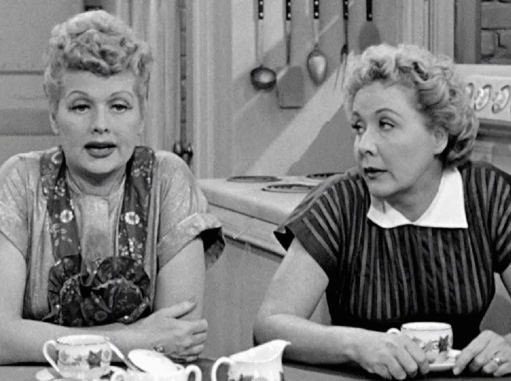
“I Love Lucy” was a sitcom produced in black and white by CBS that ran from 1951 to 1957. Its cast consisted of Lucille Ball, Desi Arnaz, Vivian Vance, and William Frawley.

The show broke almost every record and earned every award available, and during the six seasons it aired, it was the most watched show in the United States for four of them.

Here are some sixty-year-old secrets about the show that we didn’t know. Let’s see how many you were aware of.

10. LUCILLE’S NEAR DEATH EXPERIENCE

During filming for the episode “Lucy’s Italian Movie,” there was a scene where Lucille was being wrestled in a grape vat. The Italian extra in the scene didn’t understand that it was meant to be a fake fight scene and almost drowned her in the grape vat. Talk about lost in translation!

via GIPHY

9. REASON FOR THE TWIN BEDS

Ever wonder why Ricky and Lucy slept in separate twin beds? During the fifties, TV couples would never be shown sharing a bed because of the sexual connotations. My, how the times have changed!

8. DESI ALWAYS TELLS THE TRUTH

In the script for “Lucy Tells the Truth,” Ricky fakes numbers on his tax return to cheat the system. Arnaz refused to have his character do this because of his strong beliefs in honesty and the “American Dream.”

In real life, his family arrived in America as refugees when he was seventeen after fleeing from Cuba and he didn’t want his character, or himself, to be associated with any type of unethical work behavior. Good man!

7. THE CANDY FACTORY SMACK

During the episode “Job Switching,” an extra had to smack Lucille’s face. Lucille had concerns that the woman, who actually worked at a candy store, would be too shy to make the slap appear realistic. Instead, the woman smacked Lucille so hard that they thought her nose was broken! Ouch!

via GIPHY

6. BROKEN ENGLISH

On the show, Lucy is the only one who was ever “allowed” to comment on her husband Ricky’s stunted English. The audience didn’t find it funny when other characters would tease him so the producers chose not to include that anymore. That seems fair!

5. HARPO MARX AS A GUEST STAR

Even though Lucille was a big fan of the comedian, they did not work together well. While Lucille worked with scripts and rehearsals, Max was more inclined to add a new twist to a scene each time he performed it. This led to conflict and the scene was difficult to get right. And cut!

4. ARNAZ DEMANDED REAL OVER FAKE PROPS

Instead of using fake props, Desi Arnaz insisted that the audience would find it funnier with real items. One example is the real 8 ft loaf of rye bread that they had in the episode “Pioneer Women”. Another example is the huge fish used in the fishing episode. That must have seemed fishy to the audience!

3. PREGNANT LUCY

In the fifties, showing pregnant characters were practically unheard of. Producers had to walk on eggshells to include Lucille Ball’s pregnancy in the show, saying that she was “expecting,” and hired a Catholic priest, a minister, and a rabbi to ensure that the episodes weren’t crossing any lines. That escalated quickly!

2. DESI ARNAZ JR. AND LITTLE RICKY

Lucille and Desi’s real-life child was born on the same day as their on-screen child was scripted to be born! To add to the coincidence, both turned out to be boys. Now that is some next-level acting!

1. MERTZ’S FAMILY DRAMA

Vivian Vance and William Frawley who played Ethel and Fred Mertz apparently couldn’t stand each other in real life! The performers often called each other names and insulted each other when the cameras weren’t rolling. We did not know that!

Are you a fan of “I Love Lucy”? Which episode was your favorite? Tell us all about your favorite when you share this post!

‘I Love Lucy’: Lucille Ball’s Reaction When She First Saw Desi Arnaz

I Love Lucy star Lucille Ball had a strong reaction to Desi Arnaz when she first met him. Early on, she made up her mind about what her future would look like.

Lucille Ball learned about Desi Arnaz after he performed in a musical

American actress Lucille Ball (1911 – 1989) with her husband Desi Arnaz (1917 – 1986), circa 1944. Desi is wearing the sleeve insignia of a Technician Fifth Grade of the US Army, having been drafted during World War II. (Photo by William Grimes/Michael Ochs Archives/Getty Images)

Ball first became aware of Arnaz when he starred in the musical comedy Too Many Girls. In her book, Love, Lucy, Ball said women were instantly attracted to Arnaz. His musical was a major hit, and all the newspapers gave the production rave reviews.

“From the way girls reacted to him, he was the Elvis Presley of his day,” wrote Ball. “Offstage he was dating film stars, stage stars, and all the leading debutantes, including the beautiful Brenda Frazier.”

Lucille Ball was smitten when she first saw Desi Arnaz

When Ball first saw Arnaz perform, she couldn’t stop staring at him. She said she was mesmerized by his appearance and charisma.

“I couldn’t take my eyes off this Desi Arnaz,” wrote Ball. “A striped football jersey hugged his big shoulders and chest, while those narrow hips in tight football pants swayed to the catchy rhythms of the bongo drum he was carrying. I recognized the kind of electrifying charm that can never be faked: star quality.”

Ball loved Arnaz’s appearance, but she said she began laughing as soon as he started talking. She found his humor and broken English to be charming. Ball was amused because it took a lot to make her laugh.

“Then Desi opened his mouth and began talking in his own peculiar brand of broken English, and a great belly laugh burst out of me,” wrote Ball. “Now it’s hard to make me laugh. I observe, I smile, but when I’m really amused you can hear me a block away. Here was a stunning-looking male who was not only thrilling but funny. What a combination!”

Lucille Ball and Desi Arnaz spent most of their time talking

Lucille Ball and Desi Arnaz | Bettmann/Contributor/Getty Images

Ball said she first met Arnaz on the RKO lot. They hit it off right away and Arnaz asked her out for dinner. She said she loved talking to him just as much as she loved the way he looked. They talked during most of their date and got to know each other.

“We went to a nightclub, but instead of joining the conga line we sat at a small table, talking and talking,” wrote Ball. “I might as well admit here and now I fell in love with Desi wham, bang! In five minutes. There was only one thing better than looking at Desi, and that was talking to him.”

Lucille Ball said she ‘flipped’ for Desi Arnaz

Ball’s colleagues tried to convince her not to get romantically involved with Arnaz, but she wouldn’t listen. She only had eyes for him, and nothing could sway her decision to move forward with a relationship.

“Everyone at the studio knew I was starry-eyed over Desi, and most of them warned me against him,” wrote Ball. “’He’s a flash in the pan,’” I was told, and, ‘He’s too young for you.’ Or, ‘He’s a dyed-in-the-wool Catholic and you’re Protestant,’ and so on. But I had flipped.”

I Raised My Granddaughter After My Family Died in a Snowstorm Crash – Twenty Years Later, She Handed Me a Note That Changed Everything

I’m 70 years old, and I’ve buried two wives. I’ve outlived almost everyone I once called a friend. You’d think that after a lifetime like that, nothing could still reach up and knock the air out of me.

But grief doesn’t leave the way people say it does.

It just changes its face.

For years, I thought I’d learned how to live with it. Turns out I was only learning how to carry it—quietly—until the truth decided it was ready to surface.

And it did.

It started on a night when the snow came down like it had a grudge.

It was a few days before Christmas, twenty years ago.

My son Michael, his wife Rachel, and their two kids came to my house for an early holiday dinner. I lived in one of those small towns where people wave whether they mean it or not, where winter storms are normal enough that you keep extra blankets in your trunk and never trust a forecast completely.

The weatherman promised light flurries. An inch or two.

He was dead wrong.

They left around 7 p.m. I remember it clearly because Michael stood in my doorway with his youngest, Emily, half-asleep in her puffy jacket. He looked calm, the way sons do when they’re trying to convince their fathers—and maybe themselves—that everything’s under control.

“We’ll be fine, Dad,” he told me. “I want to get the kids home before it gets too late.”

The wind howled when I shut the door behind them, and something inside me twisted. A warning I didn’t understand until it was too late. Like an alarm going off deep in my bones.

Three hours later, there was a knock.

Not the friendly kind. Not the neighbor-with-cookies kind. The kind that makes your stomach drop before you even reach the handle.

Officer Reynolds stood on my porch with snow melting off his jacket and sorrow already spread across his face as if he’d practiced it in a mirror.

There had been an accident.

The rural road Michael took had iced over. Their car went off the shoulder and slammed into trees.

Michael was gone.

Rachel was gone.

My grandson Sam—only eight years old—was gone.

Only Emily survived.

She was five.

I remember the ER hallway. I remember the fluorescent lights and the cold plastic chairs and the way my hands wouldn’t stop trembling. Emily had a concussion, broken ribs, bruises from the seatbelt so deep they looked nearly black. She barely spoke.

The doctors said trauma had fogged her memory. Confusion and fragments. Don’t force it. Let it return naturally—or not at all.

So I didn’t push.

I became her guardian overnight. I went from grieving father to stand-in parent at fifty with no warning, no time to even fully fall apart. Everyone called Emily’s survival a miracle—police, pastor, neighbors in line at the grocery store—especially at the funeral, where the pastor stood in front of three closed caskets and said all the things people say when they don’t know how to make death make sense.

After that, life became a series of small, exhausting lessons.

I learned to cook the meals I hadn’t made in decades. I learned to comb a little girl’s hair without making her cry. I learned to sit in a school gym watching her perform as Snowflake Number 3 while swallowing my grief like it was a bitter pill.

Emily didn’t ask for much.

She never threw tantrums. Never whined. Never demanded more than she thought she was allowed to want. But sometimes she looked at me like she was waiting for someone else to walk through the door instead—someone who wasn’t gone.

We didn’t talk about the crash. Not really.

When she asked where her parents were and why they weren’t coming back, I gave her the answer I’d practiced until it sounded steady.

“It was an accident, sweetheart. A bad storm. Nobody’s fault.”

She nodded and didn’t ask again.

Years passed. Emily grew into the kind of quiet, observant child who felt older than her age. She loved puzzles, mystery novels, anything that suggested the world had patterns you could find if you looked long enough. She was smart, disciplined, and serious in a way that made people praise her—but it made me ache, too, because children shouldn’t have to be that careful with themselves.

When she left for college, I cried harder than I did at the funeral. That’s the truth. You don’t realize how much life someone brings into a house until the door closes behind them.

Four years after graduation, she came back home. She said she wanted to save money for her own place.

She landed a job as a paralegal for a small legal research firm downtown and talked about clerking someday, like she had her whole life mapped out in neat lines.

She was twenty-five—brilliant, independent—and still, in my mind, the little girl who used to fall asleep on my shoulder when the snow hit the windows.

We slipped into a rhythm again. Dinner around six. Quiet talk about odd cases and legal trivia. I loved it more than I knew how to say.

Then, a few weeks ago—right before the anniversary of the crash—something shifted.

Emily grew quieter, but not in a sulky way. In a focused way. Like her mind was somewhere else, working on something heavy.

And then she started asking questions that scraped at old scabs I’d spent twenty years refusing to touch.

“Grandpa, do you remember what time they left here that night?”

“Was anyone else supposed to be on that road?”

“Did the police ever follow up with you more than once?”

At first, I tried to tell myself it was normal. Maybe she wanted closure. Maybe therapy had opened old doors.

But the way she looked at me—like she was measuring my answers—made my skin crawl.

Last Sunday, she came home early.

Her coat was still buttoned when she stood in the entryway holding a folded piece of paper. She held it like it could burn through her fingers if she gripped it too tightly.

“Grandpa,” she said, voice even but hands trembling. “Can we sit down?”

We sat at the kitchen table. That table had seen birthdays, scraped knees, report cards, Sunday pancakes. It had carried our whole life. And I hated the thought of dragging something ugly onto it.

Emily slid the paper toward me.

“I need you to read this before I say anything,” she whispered. “I have to confess something.”

I unfolded it.

It was in her handwriting, neat and measured.

IT WASN’T AN ACCIDENT.

My chest tightened so fast I genuinely thought I might be having a heart attack. I looked up, trying to laugh like it was a joke I didn’t understand.

“Emmy… is this some kind of exercise? Have you been watching too many crime documentaries?”

She didn’t smile. She leaned forward, and her voice dropped into a register I hadn’t heard since she was a child waking me from nightmares.

“I remember things,” she said. “Things everyone told me I couldn’t.”

Then she pulled a scratched-up silver flip phone from her bag. The kind people stopped using years ago.

“I found this in the county archive,” she told me. “In a sealed box from the courthouse. It wasn’t tagged as evidence. I had to request it by serial number.”

I stared at the phone like it was radioactive. My mouth went dry. In that moment, I felt much older than seventy.

“There are voicemails on it,” she said. “From the night of the crash. And Grandpa… one of them was deleted. Not fully, though.”

My brain tried to catch up. Why was there a phone? Who did it belong to? Why was it sealed away?

Finally, I asked the only question that mattered.

“What was in the message?”

Emily swallowed. Her eyes flicked toward the hallway, like she needed to make sure the house itself wasn’t listening.

“They weren’t alone on that road,” she said. “And someone made sure they didn’t make it home.”

I felt the floor tilt under me.

“Who?” I asked, voice barely there.

Emily hesitated, then said the name like it weighed a hundred pounds.

“Do you remember Officer Reynolds?”

Of course I did. He was the one who delivered the news. He’d eaten chili at church potlucks. He’d looked me in the eye that night and told me it was quick, that they didn’t suffer, that no other vehicles were involved.

Emily nodded like she’d been waiting for me to say that part.

“He told you there were no other vehicles,” she said. “But listen.”

She pressed play.

The audio was rough—wind, static, the rattle of an engine—then two voices cut through.

A man, panicked: “—can’t do this anymore. You said no one would get hurt.”
Another voice, cold: “Just drive. You missed the turn.”

The message ended there.

My throat tightened. I wanted to dismiss it. I wanted to cling to the old story because at least it was simple.

“That doesn’t prove anything,” I managed, though my voice shook.

“I know,” Emily said. “That’s why I kept digging.”

And then she told me what she’d found.

Over months, she’d combed through court records, accident reports, internal investigations. She used her firm’s databases, cross-referenced badge numbers, tracked down old rosters and testimony.

And then she dropped the truth like a stone.

Reynolds had been under Internal Affairs investigation around the time of the crash. Suspicions of falsifying reports and taking bribes from a private trucking company. They paid him to redirect paperwork, bury accidents, shift blame onto weather instead of faulty equipment.

I couldn’t breathe.

“That road wasn’t supposed to be open,” Emily said, voice cracking. “A semi had jackknifed earlier that day. There should’ve been barricades.”

She looked at me with wet eyes.

“But they were pulled.”

The world narrowed into one brutal thought: Michael drove onto a road that should have been blocked.

“They swerved to avoid it,” she whispered. “That’s why the tire marks never matched a normal slide. They tried to avoid the truck that wasn’t supposed to be there.”

I sat back, hollowed out. Everything I’d accepted—everything I’d forced myself to swallow—shattered.

I asked the question that had been haunting me since she said it wasn’t an accident.

“But how did you survive?”

Emily wiped at her cheek, angry at herself for crying.

“Because I was asleep in the back seat,” she said. “My seatbelt caught differently. I didn’t brace. I didn’t see it coming. That’s probably why I lived.”

I reached across the table and gripped her hand.

“You never told me,” I whispered, raw.

“I didn’t remember,” she said. “Not until recently. It came back in fragments—nightmares that didn’t feel like dreams. That phone triggered it.”

We sat there, two generations bound by grief and now by truth.

Eventually, I asked, “What happens now?”

Emily exhaled like she’d been holding her breath for months.

“He’s gone,” she said. “Reynolds died three years ago. Heart attack.”

I closed my eyes. “Then there’s no case.”

“Not legally,” she agreed. “But that’s not why I kept digging.”

She reached into her bag and pulled out a worn folder. Inside was an envelope addressed to me—my name in a hand I didn’t recognize.

“It’s from Reynolds’ wife,” Emily said quietly. “She found it while sorting his things.”

My hands shook as I opened it.

The letter explained Reynolds had been desperate, drowning in debt. The trucking company paid him to look away, to erase details, to keep lawsuits from forming. He never expected a storm like that. He never expected a family to be on that road. By the time he tried to fix it, it was too late—he couldn’t undo what he’d already set in motion.

And then, in trembling script, she wrote:

“I cannot undo what my husband did. But I hope knowing the truth gives you peace.”

I read it three times. Each time, the weight I’d carried for two decades shifted.

It didn’t disappear.

But it finally had shape.

That night, Emily and I lit candles like we always did around Christmas. Only this time, we didn’t sit in silence.

We talked about Michael, Rachel, and Sam. We talked about the way Emily used to think her mother’s voice was the wind when she missed her. She admitted that some nights she still woke up gasping because she could feel the seatbelt holding her back.

And I told her I’d kept one of Sam’s drawings in my wallet for years like a private handshake with the past.

Outside, snow fell steadily against the window.

But it didn’t feel threatening anymore.

It felt quiet.

Safe.

For the first time in twenty years, Emily reached across the table and took my hand—not because she needed comfort.

Because she was giving it.

“We didn’t lose them for nothing,” she said softly. “And you weren’t crazy to think something felt wrong. You were right.”

My throat locked up.

But eventually, I managed a nod. I pulled her close and whispered what I should’ve said years ago—what I didn’t know I was allowed to say.

“You saved us both, Emily.”

And she did.

If this happened to you, what would you do? We’d love to hear your thoughts in the Facebook comments.

My 5-Year-Old Asked Why ‘Mr. Tom’ Only Comes at Night When I’m Asleep – I Don’t Know Any Toms, So I Set Up a Camera in Her Room and Waited

It started the way the scariest things always do—like it belonged in the middle of an ordinary day.

Ellie was at the table in her pajamas, spooning Cheerios with the same serious concentration she gave to coloring books and puzzle pieces. I was half-awake, one hand around my coffee mug, mind already racing through work emails.

Without looking up, she said, completely casual:

“Mr. Tom thinks you work too much, Mommy.”

My mug paused midair. “Mr. Tom?”

Ellie shrugged like I was the one being strange.

“He checks on me!”

I forced a little laugh and told myself what any tired parent tells themselves—imaginary friend. Kids name everything. Her stuffed rabbit was Gerald. Her blanket was Princess Cloud. Of course she had invented a “Mr. Tom.”

I let it go.

That was my first mistake.

A week later, I was brushing her hair before bed. We were both facing the bathroom mirror, her head tipped slightly back as I worked through a knot. Ellie frowned at her reflection like she was trying to solve something.

Then she asked, in the calm voice of a child who doesn’t realize she’s ripping open the floor beneath you:

“Mom, why does Mr. Tom only come when you’re asleep?”

The brush stopped.

“When I’m asleep?”

“He comes at night,”

she said, like this was a normal schedule.

“He checks the window first. Then he talks to me for a bit.”

My throat tightened so hard it hurt.

“Ellie… sweetheart. What does Mr. Tom look like?”

She took her time, thinking carefully—because Ellie thinks carefully about everything.

“He’s old,”

she decided.

“He smells like a garage. And he walks real slow.”

Then, as if remembering an important rule:

“He says not to wake you.”

I tried to keep my voice steady. “Do you think he’ll come tonight?”

Ellie nodded, already climbing into bed, already trusting the world.

“I think so, Mommy.”

That night, I didn’t sleep. Not really.

I checked every lock twice. Then I checked them again, because fear makes you superstitious. I told myself it had to be a dream, a story she’d made up, a cartoon that had bled into bedtime the way kids do.

At 1:13 a.m., I heard it.

A soft tap—so light it could have been my imagination—coming from down the hall. One knuckle against glass. Once. Then nothing.

I sat frozen on the couch, bargaining with logic. Branch. Settling house. Wind.

Except there was no wind.

By the time I forced myself to walk to Ellie’s room, the hall was empty. Ellie was asleep. The air was still.

But the curtain was moving.

Not dramatic, not flapping—just drifting inward, like something had brushed it.

I stood in her doorway staring at that curtain, and I felt something hard settle in my chest. That quiet moment where you stop hoping you’re wrong and start preparing for what you’ll do if you’re right.

The next morning, I bought a camera.

I set it on Ellie’s bookshelf between a stuffed giraffe and a stack of board books. Small enough to disappear into her world. I aimed it directly at the window.

I didn’t tell Ellie, because some part of me was still clinging to the idea that if I didn’t say it out loud, it couldn’t become real.

That night, I went to bed at 10:05 with my phone on my pillow, the app open, brightness turned down so low it barely glowed.

At 2:13 a.m., it buzzed.

My body was moving before my brain caught up. I grabbed the phone and stared at the screen.

The footage was grainy, that greenish night-vision haze that turns your home into something unfamiliar. But I could see Ellie sitting up in bed, facing the window, whispering like she was talking to someone she trusted.

And right near the glass—close enough to feel like a threat through pixels—was a silhouette.

Tall. Still. The shape of someone older, shoulders slightly rounded.

Then the angle shifted just enough that the mirror caught part of his face.

My breath vanished.

I was out of bed and running so fast my foot caught the edge of the rug. I slammed Ellie’s door open hard enough it bounced against the wall.

The window was cracked open two inches.

The curtain lifted inward.

And Ellie sat in the center of the bed, blinking at me with wide, furious eyes—furious in the way children get when you interrupt something important.

“Mommy! You scared him!”

I went straight to the window and shoved it up. Cold air slapped my face. In the yard, an older man moved across the darkness—not running, not sprinting, just walking away as if he had all the time in the world.

And I recognized the walk.

That slight drag of the left foot.

My stomach turned, not with relief—but with the sick realization that I had seen that walk before.

Behind me, Ellie’s voice wobbled with heartbreak.

“Mr. Tom wanted to tell me a story,”

she said.

“But he got scared when you came, Mommy.”

I turned and saw her curled tight, chin trembling, looking at me like I’d broken something precious.

I swallowed the panic that was trying to claw out of my throat.

“Come sleep in my room tonight, sweetie,” I told her, soft as I could make it.

She came without arguing.

That’s what scared me most—how quickly she let go, like she’d always known she might need to.

Ellie’s warm weight pressed against my side as I lay awake, staring at the ceiling while a memory I’d packed away for years tore itself open.

Jake.

The divorce.

The affair I found out about when Ellie was six months old—back when I was surviving on the rawest kind of exhaustion and the sharp edge of betrayal. I’d left him, and I’d left everything that came with him. His family. His town. His history.

When Jake’s father called in those first brutal months, I didn’t pick up. Not once. I didn’t have the emotional energy to separate “guilty” from “related.”

I changed my number. Blocked accounts. Packed Ellie into the car and relocated across town in less than two weeks.

At the time, it felt like the only way to keep breathing.

Now, lying there with my daughter’s small body curled into me, I wasn’t sure anymore.

Near dawn, I called Jake.

“I need you to meet me in the morning,” I said the second he answered, his voice thick with sleep. “Your father and I are going to talk. And you should be there.”

The silence told me he understood.

After dropping Ellie at daycare, I drove to the house Jake grew up in. His father, Benjamin, opened the door before I finished knocking.

He looked older than I remembered. Grayer. Slower. Like life had been sanding him down.

And when he saw my face, he didn’t pretend to be confused.

I didn’t give him any space to hide.

“Why were you at my daughter’s window?” I asked.

Benjamin held himself together for maybe four seconds. Then his composure cracked in a way that looked less like guilt and more like exhaustion.

He told me he’d tried to reach me after the divorce. Twice, maybe three times. Then my number stopped going through. He didn’t know how to show up without making everything worse.

He said that weeks ago, he’d come to my house meaning to knock on the front door and ask—properly—for a chance to see Ellie. But he froze. Lost his nerve. Turned to leave.

And then Ellie saw him through the window.

“She waved,”

he said, voice thinning.

“I didn’t know what to do. She asked who I was… and I couldn’t tell her I was her grandfather.”

My stomach clenched. “So what did you say to her?”

Benjamin rubbed a hand over his face like he was tired of himself.

“She told me her favorite cartoon is Tom and Jerry,”

he said.

“She said Tom is funny and stubborn… and always comes back no matter what. Then she asked if she could call me Mr. Tom instead. I said yes.”

I stared at him, anger rising hot and sharp.

“So you let my child give you a name,” I said, voice low, “and you took it without asking me.”

Benjamin met my eyes. His were clear. Painfully honest.

“I should’ve knocked. I know that,”

he admitted.

“I should’ve told her to tell you immediately. Instead, I stood outside like a fool, talking through the glass.”

He swore he’d never entered the room. The figure I saw wasn’t inside—it was his reflection, close to the window, speaking softly through the crack Ellie had learned to leave open.

Then Jake arrived.

He walked into the room, saw his father, and went still.

“You went to her house?” Jake said, voice tight. Like disbelief and anger were fighting for the same space.

Benjamin didn’t answer right away. When he finally spoke, it was quiet and blunt.

“I do not have much time left.”

The room went silent.

Stage four cancer. Diagnosed four months ago.

Benjamin had been trying to find a way to ask for the one thing he didn’t feel he had the right to request—time with his only grandchild. And in the process, he’d chosen the worst possible method: nighttime visits, secrecy, a child’s trust used like a bridge because he was too afraid to cross the front door like an adult.

I stood there, looking at this stubborn, sick man, and felt too many things at once to name any of them cleanly.

But one thing was clear.

“You are not allowed to go to her window again,” I said, hard and steady.

Benjamin nodded immediately. No excuses. No bargaining.

“You’re right,”

he said, like the words cost him something.

That afternoon, when I picked Ellie up from daycare, she crossed her arms the second she saw me.

“Mr. Tom was telling me about the time he found a live frog in his shoe when he was seven,”

she announced stiffly.

“You scared him away before the ending.”

For thirty full seconds—an eternity in five-year-old time—she refused my hand. Then her fingers crept back into mine anyway.

I didn’t tell her everything. I told her Mr. Tom loved her, but he’d made a grown-up mistake. And from now on, he wouldn’t come to her window at night.

Ellie’s mouth trembled.

“But he said he didn’t have any friends,”

she whispered.

“What if he’s lonely now?”

I didn’t have a clean answer for that. Only the truth that loneliness doesn’t give anyone permission to scare a child in the dark.

That night, I locked every window properly and pulled the blinds down all the way. I stood in the hallway after tucking Ellie in, letting the last few days settle into something I could hold without shaking.

Then I did what I should’ve done from the start.

I called Benjamin.

“Daytime,” I told him. “Front door. That’s the only way this happens going forward. Are we clear?”

The pause on the line stretched long enough that I thought he might not respond.

Then he cried—quietly, the way people cry when they’ve been strong just long enough and the permission finally arrives. He thanked me so softly I had to press the phone harder to my ear.

The doorbell rang at two o’clock the next afternoon.

Ellie looked up from the kitchen table like her whole body recognized the sound.

“You want to see who it is?” I asked gently.

She was out of her chair before I finished the sentence.

She ran to the door, grabbed the handle with both hands, and swung it open so fast the hinges protested.

Her shriek could’ve rattled the neighbors’ windows.

“MR. TOM!!”

Benjamin stood on the porch holding a small stuffed bear like it might be taken from him. He looked like a man who hadn’t slept in days, like he still wasn’t sure he deserved to be standing there at all.

Ellie launched herself at him—small, fierce, joyful—and Benjamin stumbled half a step before catching her, both arms wrapping around her like he was afraid she might disappear.

His eyes squeezed shut.

I stood in the doorway watching this tired, sick, stubborn old man hold my child like she was the best thing he’d touched in years, and I felt something in me loosen.

Not disappear. Not magically forgive.

Just loosen enough to breathe.

Benjamin lifted his gaze and found mine over the top of Ellie’s head.

I stepped back.

“Come in,” I said. “I’ll make coffee.”

He nodded once, careful, like he knew better than to push. Ellie already had him by the hand, dragging him toward the couch at full speed, explaining Gerald the rabbit’s emotional history and demanding to know if Mr. Tom believed stuffed animals had real feelings.

Benjamin’s face—his whole face—came alive.

And standing there, watching them, I realized the scariest part hadn’t been the shadow at my daughter’s window.

It was how close I came to cutting off a love that, handled properly, could have been safe all along.

Expert reveals the 15 US cities that would be first targets in WW3 – some might surprise you!!

Fear of large-scale war has a way of settling into society quietly. It doesn’t always arrive with sirens or headlines. Instead, it lingers in the background, shaped by news alerts, diplomatic threats, and a growing sense that the global order is less stable than it once appeared. In recent years, that unease has deepened, fueled by rising political tension, fractured alliances, and increasingly aggressive rhetoric among world powers.

Part of the messaging surrounding the return of Donald Trump to the White House emphasized keeping American troops out of prolonged foreign conflicts. On the surface, that promise appealed to a war-weary public. Yet alongside those assurances came a series of moves and statements that left analysts unsettled. Escalating pressure related to Venezuela, sharp rhetoric toward Iran, and repeated public insistence that the United States should acquire Greenland have contributed to a sense that global stability rests on a thinner margin than many would like to admit.

At the center of public anxiety is the prospect of a third world war. Unlike previous conflicts, a modern global war—particularly one involving nuclear weapons—would not simply redraw borders or shift power balances. It would threaten life on a scale that permanently alters civilization itself. Optimists point to deterrence, treaties, and rational self-interest as barriers against such a catastrophe. More cautious observers counter that history is filled with wars sparked not by long-term planning, but by miscalculation, pride, and moments where restraint failed.

As uncertainty grows, people have begun asking more concrete, uncomfortable questions. Not just whether a global conflict could happen, but what it would look like if it did. That shift from abstract fear to specific scenarios is telling. It reflects a deeper loss of confidence in the systems meant to prevent escalation.

Into that discussion stepped nuclear historian Alex Wellerstein of the Stevens Institute of Technology. Speaking publicly in 2025, Wellerstein explained that in the event of a nuclear conflict, targets would be selected based on strategic goals rather than symbolism alone. The first strikes, he noted, would likely focus on disabling an opponent’s ability to respond.

“If the adversary were Russia and the goal was to prevent U.S. retaliation,” he explained, “command centers and intercontinental ballistic missile sites would be hit first. A different kind of attacker, especially a rogue actor, might focus instead on population centers or symbolic locations.”

That distinction pulls attention away from obvious megacities and places it squarely on smaller, lesser-known locations whose strategic value far outweighs their population.

One such city is Great Falls, home to just over 60,000 residents. Despite its modest size, Great Falls sits near Malmstrom Air Force Base, which controls hundreds of nuclear missile silos. In a nuclear scenario aimed at neutralizing U.S. strike capability, that proximity alone makes the area a high-value target.

A similar logic applies to Cheyenne, which lies close to Francis E. Warren Air Force Base, another critical hub in America’s nuclear missile command structure. Cheyenne rarely appears in discussions of global conflict, yet its strategic importance places it squarely on vulnerability lists.

In Utah, Ogden and Clearfield sit near Hill Air Force Base, a key installation for nuclear weapons storage and aircraft maintenance. Together, these communities have a relatively small combined population, but their location near critical military infrastructure makes them potential targets in a first-strike scenario.

Further south, Shreveport is located close to Barksdale Air Force Base, home to B-52 bombers capable of carrying nuclear payloads. Any strike aimed at disabling that base would almost certainly devastate the surrounding civilian area, regardless of whether it was the intended target.

On the Pacific front, Honolulu remains strategically vital due to its concentration of naval and air forces. The legacy of Pearl Harbor still looms large in military planning, and Hawaii’s geographic position makes it a critical node in U.S. defense strategy across the Pacific.

In the American heartland, Omaha stands out because of its proximity to Offutt Air Force Base, a central command hub for U.S. nuclear operations. Nearby Colorado Springs is home to NORAD, the command responsible for defending North American airspace. Both locations hold immense strategic value despite lacking the global profile of coastal cities.

The Southwest is not immune either. Albuquerque hosts Kirtland Air Force Base, which contains one of the largest concentrations of nuclear weapons-related infrastructure in North America. Its importance makes it another potential early target in a conflict aimed at crippling U.S. capabilities.

Some cities, of course, are obvious. Washington, D.C. represents the political heart of the nation. Seattle, near Naval Base Kitsap and a major global port, carries both military and economic weight.

Other major urban centers appear on vulnerability lists not because of missile silos or command centers, but because of their population density and economic influence. San Francisco, Houston, Chicago, Los Angeles, and New York City are all places where destruction would send shockwaves through global markets, infrastructure, and morale.

None of this analysis suggests that nuclear war is inevitable. Experts are careful to stress that deterrence remains powerful and that multiple layers of safeguards exist to prevent catastrophe. Still, the fact that such discussions feel increasingly relevant says something important about the current moment.

Public anxiety is not rooted solely in fear of weapons, but in fear of judgment. Of leaders misreading intentions. Of alliances cracking under pressure. Of egos overriding caution. History shows that wars often begin not because they are wanted, but because they are mismanaged.

The conversation about potential targets is unsettling precisely because it forces people to confront how interconnected military strategy and civilian life truly are. These cities are not abstract points on a map. They are homes, schools, hospitals, and communities filled with people who have no say in geopolitical calculations.

Whether the world steps back from the edge or drifts closer to it will depend on diplomacy, restraint, and the willingness of leaders to recognize that power without control is a liability. For now, the growing unease reflects a collective awareness that peace is not a permanent state. It is something that must be actively maintained, especially in an era where the cost of failure is unthinkable.

My Stepmom Raised Me After My Dad Passed Away When I Was 6 – Years Later, I Found the Letter He Wrote the Night Before His Death!

I was twenty years old when I realized the story I’d been told about my father’s death wasn’t the whole truth.

For fourteen years, Meredith had repeated the same explanation whenever I asked.

“It was a car accident,” she would say. “Nothing anyone could have prevented.”

And I believed her.

For the first four years of my life, it had been just Dad and me. My memories are hazy—warm flashes of him lifting me onto the kitchen counter, his cheek rough against mine when he carried me to bed.

“Supervisors belong up high,” he’d say with a grin. “You’re my whole world, kiddo.”

My biological mother died the day I was born. Once, while he flipped pancakes, I asked, “Did Mommy like pancakes?”

He paused for just a second.

“She loved them,” he said quietly. “But not as much as she would have loved you.”

His voice always changed when he spoke about her, thick and careful. I didn’t understand that tone until years later.

When I was four, Meredith entered our lives. The first time she came over, she crouched down to meet my eyes.

“So you’re the boss around here?” she smiled.

I hid behind Dad’s leg. She didn’t force anything. She just waited.

The next time she visited, I handed her a drawing I’d spent hours on. “For you,” I told her. “It’s important.”

She took it like it was priceless. “I’ll keep it safe. I promise.”

Six months later, they were married. Soon after, she adopted me. Calling her Mom felt natural in a way that surprised me. Life steadied again.

Until it didn’t.

I was six when she came into my room one afternoon, her hands ice-cold around mine.

“Sweetheart… Daddy isn’t coming home.”

“From work?” I asked.

Her lips trembled. “At all.”

The funeral is a blur of black clothes and heavy flowers. After that, the explanation never changed. It was a car accident. It was sudden. It was unavoidable.

When I was ten, I started pushing.

“Was he tired? Was he speeding?”

“It was an accident,” she repeated.

I accepted it. What else was there to know?

By twenty, I thought I understood my life. One mother who died bringing me into the world. One father taken too soon. One stepmother who stepped in and held everything together.

Simple.

But something in me kept searching.

One evening, as Meredith washed dishes, I caught my reflection in the window.

“Do I look like him?” I asked.

“You have his eyes,” she said.

“And her?”

She dried her hands slowly. “Her dimples. And that curly hair.”

Her tone was careful. Too careful.

That night, I went into the attic looking for the old photo album she’d stored away. I found it in a dusty box and sat cross-legged on the floor, flipping through images of a younger version of my dad—laughing, carefree.

There was a picture of him holding my biological mother. I whispered a soft, awkward, “Hi,” to her face in the photo.

Then I turned the page and saw him outside a hospital, cradling a tiny bundle. Me. He looked terrified and proud all at once.

I slid the photo from its sleeve.

And something else slipped out.

A folded sheet of paper.

My name was written on the front in his handwriting.

It was dated the day before he died.

My hands shook as I unfolded it.

“My sweet girl,” it began, “if you’re old enough to read this, then you’re old enough to know your beginnings. I never want your story to exist only in my head. Memories fade. Paper stays.”

I read slowly, my chest tightening with every line.

He wrote about the day I was born. About how my biological mother kissed my forehead and whispered, “She has your eyes.” About how he worried he wouldn’t be enough for both of us.

He wrote about Meredith.

“I wonder if you remember the first drawing you gave her. She carried it in her purse for weeks.”

Then came the line that stopped my breath.

“Lately I’ve been working too much. You noticed. You asked me why I’m always tired. So tomorrow I’m leaving work early. No excuses. We’re making pancakes for dinner, and I’m letting you add too many chocolate chips.”

My pulse thundered in my ears.

I had always been told the accident happened late in the afternoon. That he was driving home like any other day.

But this letter made it clear.

He wasn’t just driving home.

He was rushing home to me.

I went downstairs, the letter trembling in my hand. Meredith looked up from the kitchen table and saw my face. Her expression drained of color.

“Why didn’t you tell me?” I asked.

She closed her eyes, just for a moment.

When we were alone, I read the letter aloud. My voice cracked when I reached the pancake line.

“Is it true?” I whispered. “Was he coming home early because of me?”

“It was pouring that day,” she said softly. “The roads were slick. He called me from the office. He was so happy. He said, ‘Don’t tell her. I’m going to surprise her.’”

The words hollowed me out.

“And you never told me?”

“You were six,” she said, her voice breaking. “You’d already lost your mother. If I’d told you he died because he was hurrying home to you, you would have carried that weight forever.”

I hadn’t thought of it that way. I’d only seen the omission. Not the protection.

“He loved you,” she said firmly. “He was racing home because he didn’t want to miss another minute. That’s love. Even if it ended in tragedy.”

I looked down at the letter again. He’d planned to write me a whole stack—one for every stage of my life. He wanted me to grow up certain of how deeply I was loved.

For fourteen years, Meredith had carried the heavier truth alone.

Not to deceive me.

To spare me.

I stepped forward and wrapped my arms around her.

“Thank you,” I sobbed. “For protecting me.”

She held me tightly. “You’ve been mine since the day you gave me that drawing.”

In that moment, something shifted inside me.

My father hadn’t died because of me.

He had died loving me.

And the woman standing in front of me had spent more than a decade making sure I never confused those two things.

When my brother peeked into the kitchen and asked, “Are you okay?” I squeezed Meredith’s hand.

“Yeah,” I said softly.

We were.

This Little Boy Grew Up To Be One Of The Most Evil Men In The World!!!!

Even the most harmless-looking child can grow into something unrecognizable when early life is shaped by instability, neglect, and violence. Few stories illustrate that transformation more starkly than the one behind the notorious name that still echoes through true crime history: Charles Manson.

He was born on November 12, 1934, in Cincinnati, Ohio, to a 16-year-old mother. From the beginning, his world was fractured. His father, described as a con artist, disappeared before he was even born. The absence wasn’t just emotional—it created a vacuum where responsibility, safety, and routine should have been.

By the time he was four, his life took another sharp turn. After his mother, Kathleen, was arrested for assault and robbery, he was sent to live with an aunt and uncle in McMechen, West Virginia. The crime, committed alongside her brother Luther, was brutal in its simplicity: a bottle smashed over a man’s head, a car stolen, and two lives diverted into prison sentences. Luther received ten years, while Kathleen was sentenced to five but served three.

Kathleen’s visits were reportedly mandatory while her son stayed with relatives, though he often resisted them. When she was released and returned home, those first weeks were later described as some of the happiest of his childhood—brief stability, a sense of being wanted, the illusion of a fresh start. But it didn’t last. Alcoholism took hold, and the household slid back into disorder. She would vanish for days at a time, leaving him to a revolving door of babysitters and temporary arrangements that offered little supervision and even less emotional security.

When his behavior became too difficult to manage, reform school became the answer—at least on paper. In reality, it failed to contain him. By nine, he would later claim he had already set one of his schools on fire. Truancy and petty theft followed, and the pattern of defiance hardened into something more entrenched.

At thirteen, he was sent to the Gibault School for Boys in Terre Haute, Indiana, a Catholic institution run by strict priests. Accounts describe harsh discipline and beatings for minor infractions. He ran away—first back to his mother, who sent him straight back, and then farther, to Indianapolis. There, the choices narrowed: steal or go hungry, find shelter wherever the night didn’t swallow you. He slept outdoors, under bridges, and wherever he could disappear long enough to survive.

Arrests came quickly, as did transfers through juvenile institutions. At one school in Omaha, Nebraska, he and another boy stole a car within days and went on a spree of armed robberies while trying to reach a relative’s home—less a random outburst than an early “apprenticeship” in crime. He even developed a tactic he later called the “insane game,” performing exaggerated shrieking, contorted expressions, and wild movements to convince potential attackers he was too unpredictable to challenge.

There were brief attempts at ordinary life. At one point he worked as a Western Union messenger, a job that suggested the possibility of something stable. But stability didn’t hold. He slipped back into criminal behavior, and the escalation became harder to ignore. Psychiatric evaluations later described him as “aggressively anti-social,” and his record increasingly reflected manipulation, exploitation, and violence.

While incarcerated, his conduct remained severe. He was arrested for sexually assaulting another boy at knifepoint in a federal reformatory. Repeated incidents and alleged sexual coercion contributed to transfers into higher-security facilities. By twenty-one, when he was released, the groundwork was set for the pattern that would define his adult life: theft, deception, control, and a relentless need to dominate the people around him.

As an adult, he demonstrated an unsettling ability to draw vulnerable people into his orbit. He married, crossed state lines in stolen cars, and drifted through criminal enterprises. His fixation on control extended to women, including attempts to establish prostitution rings and relationships with underage girls—behavior that repeatedly led him back to prison.

During a sentence at McNeil Island in Washington, he reportedly experimented with hypnosis and practiced persuasive techniques on fellow inmates, including actor Danny Trejo. Those skills—part charm, part intimidation, part psychological pressure—would later become central to what the public came to know as the Manson Family.

By the late 1960s, his worldview had fractured into a delusional ideology. He convinced followers he was a prophetic figure and claimed the Beatles were speaking directly to him through their music. From that obsession grew the “Helter Skelter” narrative: a race war he believed was imminent, followed by his rise to dominance after hiding in a desert bunker.

Before the murders that would cement his infamy, he chased music fame in the West Coast scene and briefly intersected with celebrity circles, including Dennis Wilson of The Beach Boys. But rejection, humiliation, and resentment appeared to deepen his obsession—and the obsession turned toward violence.

In August 1969, members of his cult carried out the brutal murders of actress Sharon Tate, her unborn child, and four others. The next night, Leno and Rosemary LaBianca were killed as well. In court and in public memory, the horror wasn’t only the violence—it was the sense that it had been manufactured by influence, ideology, and fear.

Prosecutor Vincent Bugliosi later framed Manson’s grip over his followers with chilling clarity:

“The very name Manson has become a metaphor for evil—and evil has its allure,”

Convicted of multiple murders, including those connected to Tate, the LaBiancas, Gary Hinman, and Donald Shea, Manson was sentenced to death in 1971. His punishment was later commuted to life imprisonment after California abolished the death penalty. He applied for parole multiple times, but remained incarcerated until his death in 2017 at age 83, following cardiac arrest complicated by colon cancer.

Even after his death, Charles Manson’s legacy lingered through documentaries, books, interviews, and pop culture references—an ongoing, uneasy reminder of how manipulation can become a weapon, and how a childhood marked by chaos can intersect with choices that produce lasting harm.

My 15-year-old daughter had been complaining of nausea and stomach pain. My husband said, “she’s just faking it. Don’t waste time or money.” I took her to the hospital in secret. The doctor looked at the scan and whispered:

When Mark said, “She’s exaggerating. Don’t waste money on doctors,” he said it with the kind of certainty that ends conversations.

But something inside me refused to quiet down.

For weeks, Hailey had been fading.

Not dramatically. Not in a way that demanded attention. Just… slowly. Quietly. Like someone dimming a light one notch at a time.

She used to run across soccer fields like she owned them. She used to stay up editing photos and laughing with friends. Now she barely left her room. She flinched when someone asked if she was okay. She kept her hood up even inside the house.

She said her stomach hurt.

She said she felt dizzy.

She said she was tired all the time.

Mark dismissed it every time.

“Teenagers love drama.”

“She just wants attention.”

“Doctors are a waste of money.”

I tried to believe him. I wanted to believe him. It’s easier when the other adult in the room sounds confident.

But I watched her wince tying her shoes. I saw the way her appetite disappeared. I noticed how she avoided being alone in certain rooms.

One night, I found her curled into a tight ball on her mattress, clutching her stomach like she was trying to hold herself together.

“Mom,” she whispered, her voice breaking. “It hurts. Please make it stop.”

That was it.

The next morning, while Mark was at work, I put her in the car and drove to St. Helena Medical Center without telling him.

She stared out the window the whole way, hollow-eyed.

At the hospital, they ran blood tests. Then an ultrasound. I sat in the waiting room with my hands locked together so tightly they went numb.

When Dr. Adler came in, I knew something wasn’t simple.

He held his clipboard like it weighed more than paper should.

“Mrs. Carter,” he said gently, “we need to talk.”

Hailey sat beside me on the exam table, trembling.

Dr. Adler lowered his voice. “The scan shows there is something inside her.”

I stopped breathing.

“Inside her?” I repeated.

He hesitated.

And in that hesitation, my mind ran to the worst places it could possibly go.

“What is it?” I whispered.

He closed the door before answering.

“Your daughter is pregnant. Approximately twelve weeks.”

The room fell silent in a way that felt violent.

“No,” I said automatically. “That’s not possible. She’s fifteen.”

Hailey broke.

She covered her face and sobbed in a way I had never heard before — not embarrassment, not teenage tears. This was grief. Fear.

Dr. Adler explained that because of her age, protocol required a social worker.

I nodded, barely hearing him.

Lauren, the social worker, arrived and asked to speak to Hailey alone.

I paced the hallway. Every minute felt like a year.

When Lauren came back, her face told me this was not a misunderstanding.

“Mrs. Carter,” she said softly, “this pregnancy was not consensual.”

The words rearranged the air.

“What?” My voice barely came out.

“She did not choose this.”

My legs gave way and I sat down hard in the nearest chair.

“Has she said who?” I asked.

Lauren nodded once. “She said it was someone she sees often. Someone she doesn’t think will be believed.”

Then she asked the question that split me in two.

“Does Hailey feel safe at home?”

“Of course she’s safe,” I said instinctively.

But as soon as the words left my mouth, they felt fragile.

Memories rushed in.

Hailey shrinking when Mark entered a room.

Hailey begging to stay with me when he offered to “help with homework.”

Hailey’s sudden hatred of weekends.

My stomach dropped.

That night, Lauren recommended Hailey and I not go home.

We went to my sister Amanda’s house instead. Amanda didn’t ask questions. She just opened her arms.

The next morning, we met detectives at a child advocacy center. The room was painted soft colors. Stuffed animals lined the shelves.

None of it softened what Hailey had to say.

When Detective Morris stepped out to speak to me, his voice was quiet but steady.

“She told us who it was.”

My body braced.

“It was Mark.”

Everything inside me cracked open.

My husband.

The man who dismissed her pain.

The man who told me she was dramatic.

The man who told me doctors were a waste of money.

Detective Morris said they had enough to issue a warrant.

Mark was arrested that afternoon.

I don’t remember much about that moment except the strange stillness that followed.

Relief and horror, tangled together.

In the weeks that followed, I filed for divorce. Charges were filed. Protective orders were put in place.

Hailey started therapy.

We moved into a small apartment across town. It wasn’t big. It wasn’t renovated. But it was ours.

And it was safe.

Healing has not been fast.

There are still nights when Hailey wakes up crying. There are days when she stares at nothing for too long.

But she’s started drawing again.

She laughs sometimes.

She joined a support group and, slowly, she’s reclaiming herself.

One night, we were sitting on our new couch eating takeout from paper cartons when she looked at me and said something I will carry with me forever.

“Thank you for believing me, Mom.”

I squeezed her hand.

“I always will.”

I trusted my instincts when everyone told me not to.

And that decision saved my daughter.

If there’s one thing I know now, it’s this:

When a child changes overnight, when fear replaces light, when your gut whispers something is wrong — listen.

Even if it means standing alone.

Even if it means shattering the life you thought you had.

Safety is worth everything.

Her Son Became a Global Star — The Inspiring Journey Behind His Mother’s Past

Long before sold-out arenas and international headlines, a teenage boy’s dream quietly began at a local talent competition. After placing second with a heartfelt performance of Ne-Yo’s “So Sick,” his mother decided to upload the video online so friends and family could watch. What started as a simple act of pride quickly gained unexpected momentum. As more people discovered the clips, she continued sharing additional performances, unknowingly setting the stage for a career that would soon capture global attention. In many ways, it was a modern example of how digital platforms can transform raw talent into worldwide opportunity.

Behind that early success stood a mother whose own life had been marked by significant hardship. In her 2012 memoir, Nowhere But Up, she opened up about a difficult childhood, personal struggles, and the challenges of raising a child on her own. Through honesty and faith, she described how she rebuilt her life and committed herself to being a steady, supportive presence for her son. Her story resonated with readers not because of fame, but because of resilience. It highlighted the quiet determination that often exists behind public triumphs.

As her son grew into adulthood, their relationship naturally shifted. In interviews, she spoke candidly about how parenting evolves as children become independent. Pride and emotion often go hand in hand when letting go. Like many young adults navigating sudden success, he faced moments of public scrutiny and personal missteps. In 2014, a legal incident involving reckless driving tested both his reputation and their bond. Later, he reflected openly on that period, acknowledging the importance of rebuilding trust and learning from mistakes. Growth, he explained, takes time and accountability.

Over the years, their connection has strengthened through patience and understanding. She has continued to express pride in the man he is becoming, particularly highlighting his spiritual development and maturity. Their journey illustrates the complexities of raising a child under intense public attention, where every high and low is amplified. Yet at its heart, the story remains deeply personal—a mother’s unwavering love and a son’s willingness to grow. Today, that young performer who once sang in a small competition is known around the world as Justin Bieber, and his path serves as a reminder that behind every headline is a family learning, healing, and evolving together.

Seventeen Years Later: A Father’s Journey Toward Redemption

When my wife passed away during childbirth, the world I knew shattered in a single afternoon. I remember the hospital hallway, the quiet hum of machines, and the weight of words I wasn’t ready to hear. In the same breath that doctors told me she was gone, they explained that our daughter would face serious medical challenges throughout her life. I was overwhelmed by grief, fear, and confusion. Instead of holding my newborn and stepping into the unknown with courage, I let my fear take control. I made a choice that would define the next seventeen years of my life.

I told myself I wasn’t strong enough. I convinced myself that walking away was an act of survival, not abandonment. I signed papers without fully reading them, numb to the consequences. Friends and family tried to reach me, but I built walls around my regret and called it independence. I buried myself in work, in distractions, in anything that would keep me from thinking about the daughter I never held. On anniversaries, I avoided memories. On birthdays, I told myself it was better this way. But deep down, silence never erased the truth—it only amplified it.

Seventeen years later, on what would have been our wedding anniversary, I finally gathered the courage to visit my wife’s grave. I hadn’t been there in years. I brought flowers and stood in front of her name carved in stone, feeling smaller than I ever had before. As I traced the letters with my fingers, I felt the full weight of what I had done. Love had once made me brave, but fear had made me run. I whispered apologies into the quiet air, unsure if forgiveness was something I deserved. For the first time, I allowed myself to grieve—not just my wife, but the father I had failed to become.

That visit changed something in me. I realized that while I couldn’t undo the past, I could choose what kind of man I would be moving forward. I reached out to learn about my daughter—the young woman she had become, the strength she carried, the resilience she had shown without me. I discovered she had grown into someone remarkable, supported by people who believed in her potential. Shame still lives in my heart, but so does hope. Sometimes the hardest truth to face is the one about ourselves. And sometimes, redemption begins the moment we stop running and finally turn back toward love.

Popular

This Is How I Love Lucy Ended

0
These days, how a beloved TV show ends is as much a part of the conversation about the show as the show itself. For...