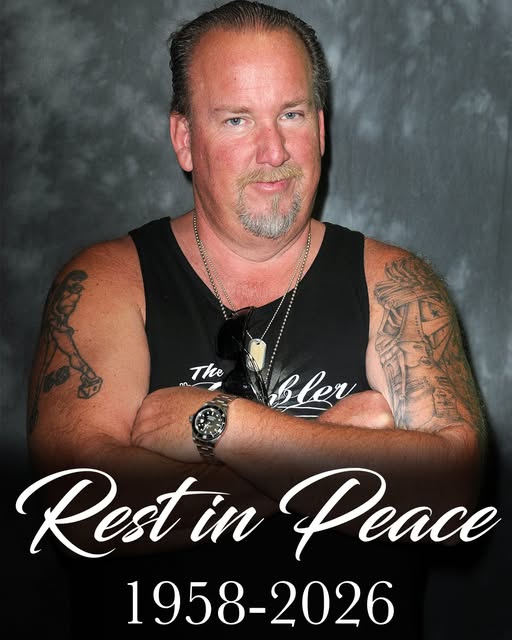
The passing of Darrell Sheets at 67 has left many fans reflecting on a personality who helped define an era of reality television. Known widely as “The Gambler,” Sheets became one of the most recognizable figures on Storage Wars, where his instinct for risk and reward turned ordinary storage auctions into compelling television.
According to authorities in Lake Havasu City, Arizona, officers responded to his residence on April 22 and found him deceased. Initial reports indicate a suspected self-inflicted gunshot wound, though officials have stated that the case remains under active investigation as further details are reviewed.
For viewers, however, the news is less about the circumstances and more about the legacy he leaves behind.
Sheets appeared in 163 episodes of Storage Wars, which first aired in 2010 and quickly became a cultural phenomenon. His approach to auctions—bold, unpredictable, and often high-stakes—earned him both his nickname and a loyal following. While others played cautiously, he leaned into uncertainty, sometimes walking away with remarkable finds and other times embracing the losses with humor.
That unpredictability was part of his appeal.
Behind the scenes, his life reflected both success and struggle. In 2019, he publicly shared that he had suffered a heart attack and was dealing with serious health issues, including congestive heart failure. Following that period, he gradually stepped back from the spotlight and relocated to Arizona, where he focused on running an antiques business and living a quieter life.
Despite stepping away from television, his presence within the Storage Wars community remained significant. Fellow cast members and fans alike often described him as larger-than-life—someone whose personality extended beyond the screen.
He was also a father, leaving behind his children, including Brandon Sheets, who followed him into the world of storage auctions and appeared alongside him on the show. That generational connection was something Sheets himself had spoken about, expressing a desire to pass on both the knowledge and the spirit of the business.
In a statement, A&E acknowledged his impact, describing him as a beloved member of the Storage Wars family and extending condolences to those closest to him.
Moments like this often prompt a broader reflection. Reality television thrives on personality, but the people behind those personas carry real lives—complex, evolving, and sometimes difficult in ways the audience never fully sees.
For many viewers, Darrell Sheets will be remembered not only for the risks he took in storage units, but for the energy he brought to the screen—confident, unfiltered, and unmistakably himself.
If discussions like this bring up difficult feelings for you or someone you know, reaching out to a trusted person or local support service can make a meaningful difference. You don’t have to navigate those moments alone.
Farrah Fawcett became a massive celebrity following her stint on Charlie’s Angels – her signature hairstyle and “pin-up” status only served to bring her even more fame.
At the same time, Fawcett endured tough times in her life. She was involved in a multimillion-dollar lawsuit against her former employer her love life was notoriously complicated from time to time.
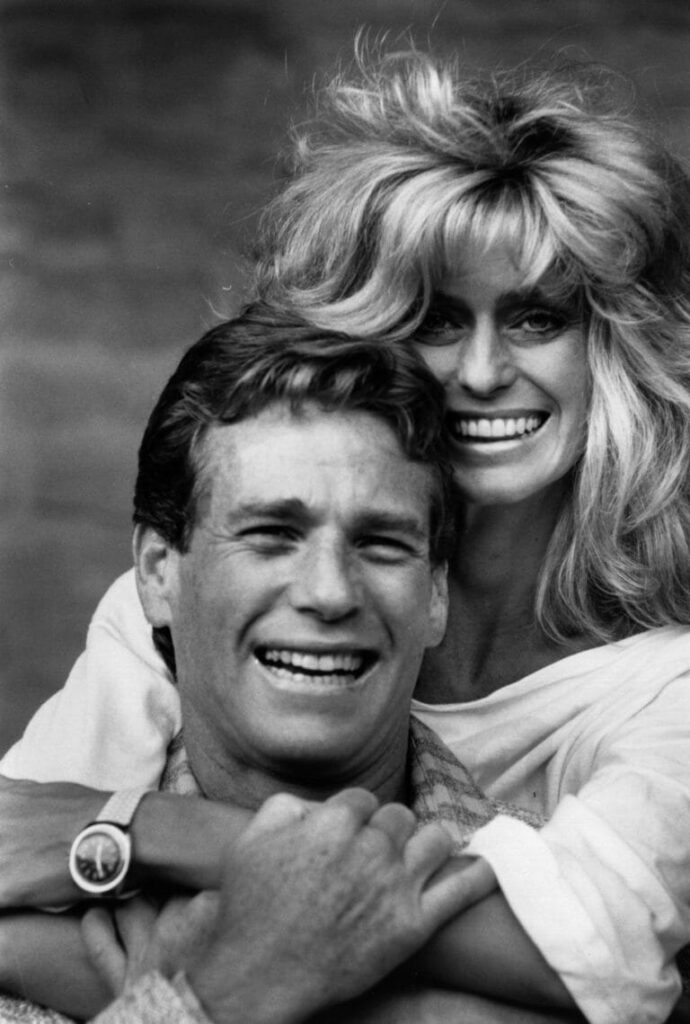
In the 1990s, she was involved in a relationship with actor Ryan O’Neal, which was nothing if not chaotic. The saddest part of all, though, was that she eventually decided to break up with him because of one very shocking discovery.
Here’s all you need to know about cult actress Farrah Fawcett!
Farrah Fawcett was born on February 2, 1947, in Corpus Christi, Texas. She was the second daughter of mother Pauline and father Jim – her mother worked as a homemaker, her father as an oil field contractor.
Farrah Fawcett – early life
Farrah was actually named Ferrah – an Arabic word for joy – at birth. However, she decided to change it at a later stage.
Fawcett would become one of her generation’s most good-looking “golden girls.”
As reported by the Texas Monthly, her mother, Pauline, recalled that when she carried Farrah into a store, women stopped their cart to say, “She looks like an a-n-g-e-l.” Pauline also claimed that children around their neighborhood came to their house just to see her.
However, it wasn’t all positive for Farrah. Though her mother loved that people adored her daughter, it became a problem for her later on.
Farrah knew she was pretty, but that in itself posed problems for her.
“I always felt so self-conscious,” Farrah’s mother Pauline recalled the actress saying. “I wanted people not to look at me because so many people kept looking at me.”
Youtube/Classic TV Rewind Of course, looks aren’t everything, but there’s no denying that Fawcett’s appearance became a considerable part of her life.
Moving to Los Angeles She was voted “Most Beautiful” by her classmates for three years running in high school. Then, after she moved to Austin to study at the University of Texas in 1965, she was again voted “Most Beautiful” during her freshman year.
Fawcett studied microbiology and art at the University of Texas. Just a year after she enrolled, however, a new kind of career began to gain speed.
After Farrah was voted one of the “Ten Most Beautiful” women at the University of Texas, a picture of her reached Hollywood PR man, David Mirisch. He thought she looked great, and decided to call her to try and get her to move to Los Angeles, where he said he could help her begin a modeling career.
Now, Mirsch had several other known clients, including Perry Como and Patt Boone. While Farrah was still studying, he phoned her to convince her to quit and make the move to Hollywood.
Fawcett wanted him to speak to her father, but Mirisch was persistent.
Finally, upon finishing her junior year, Farrah was convinced. She got her photo taken in a Texas Park by a photographer for the Texas Student Publications. Her idea was to go to Los Angeles for a short time to see what it was like; she planned on returning to university for her senior year.
Farrah Fawcett – ‘Charlie’s Angels’ & legendary poster As we now know, that never happened.
Fawcett moved to Los Angeles, and it wasn’t long before she had signed a contract with Screen Gems that reportedly paid her about $350-a-week. She began appearing in commercials such as Wela Balsam and Ultra-Brite toothpaste, whilst also doing work for Max Factor and Mercury Cougar Cars.
Farrah wasn’t only a great model, but also a promising actress. She was soon appearing in television commercials and, after several more gigs as a model – which entailed posing on dozens of magazine covers – she began getting jobs as an actress in the mid-1960s.
She initially appeared in television series such as I Dream of Jeannie, The Partridge Family, and The Flying Nun.
At that time, Farrah was on a steady rise towards fame. Then, everything changed in 1976, as she became world-famous thanks to two jobs.
Famed television producer Aaron Spelling had cast Farrah in the 1975 television movie Murder on Flight 502. Through that, he had been left very impressed with her acting.
Afterwards, he decided to cast her in a brand new television show named Charlie’s Angels, a show which would center around three female detectives.
“We were looking for the California beach-girl type, and Farrah was perfect for that,” he wrote in his 1996 memoir A Prime-Time Life. “She was drop-dead gorgeous and the living image of the beautiful L.A blonde in tennis shorts or a bathing suit.”
“Her hair helped make the show” The show aired in September, 1976, and though critics were rather harsh, the fans loved it.
Farrah starred as agent Jill Munroe, appearing alongside Kate Jackson and Jaclyn Smith on the show. According to Spelling, she was the main reason Charlie’s Angels was received so well among viewers.
“We thought about changing it for a moment in the beginning, and had we been doing a traditional cop show, we would have,” he wrote. “But her hair helped make the show. It became one of our signatures.”
Fawcett’s hair became a huge thing worldwide, and the actress from Texas quickly turned into a huge celebrity. In 1996, the New York Times even declared that Farrah might have had the most famous hair of the seventies, perhaps even of all time.
“Her feathered, high-lighted, layered phenomenon was a work of art that looked as if it had just come out of the sea and had been tossed by the wind into a state of careless perfection. Farrah’s hair was emblematic of women in the first stage of liberation – strong, confident, and joyous – before the reality of mortgage payments and single parenthood set in,” the Times wrote, as quoted by Texas Monthly.
Yet after just one season of Charlie’s Angels, Farrah had enough.
Sued for breach of her contract She felt that the production’s long hours weren’t great, and the script wasn’t good enough. As a result, she declared her contract invalid and left.
What followed was a lawsuit against her for $7 million for breach of contract. In a settlement, Fawcett later agreed to return for six more episodes. She appeared in only 29 episodes out of 115 – but was still the giant star.
“I left Charlie’s Angels because I felt creatively stifled,” Farrah said.
“Now, when I go back to Charlie’s Angels, it is much better. I have a chance to work with the writers on the script and the director. I can treat it like a business, I could not do that before, I was hurt at first because I was sued.”
She added: “I read things in the press that hurt, like things that girls had said. All of that is past now. We are all friends again. I feel much better.”
Not only did Fawcett become a major Hollywood celebrity through Charlie’s Angels, but she also appeared on a poster which pretty much changed her life.
In 1976, the same year as the drama television series aired for the first time, she appeared on a poster wearing a one-piece red bathing suit. It became one of the best-selling posters of all time – and helped turn her into the global star she became.
“The combination of that poster with Charlie’s Angels was a phenomenon that was hard to escape. Something like 12 million boys plus had that poster on their walls, so it’s hard to avoid the big smile, big hair, and that bathing suit,” Mike Pingel told Closer.
“I am constantly watched” At the same time as Fawcett became known worldwide, life as a celebrity wasn’t always great.
In a 1979 interview, she stated that writers could make up stories about her because they knew they would sell.
“I go through life thinking everything is wonderful,” Farrah Fawcett said. “People keep things from me. I don’t read most of the things about me. You almost have to quit reading to keep from being hurt. Writers write unflattering things bout you because that sells.”
“Sometimes I get very sad,” she added. “I just want to go out and be myself; I would like to just go shopping or go to the movies and buy popcorn and sit quietly in the audience. But I am constantly watched. Things like going to dinner with friends become very precious.”
She’s spoken several times about how she wants to have control of all aspects of her life and brand. Yet, as we all know, Hollywood can be a notoriously harsh environment to work in.
Farrah Fawcett – private life, husband, children, marriage “I think what has bothered me the most was all of the merchandising. Things over which I had no control: the bedsheets and things like that. I didn’t, like any of that, but there wasn’t much that could be done about it,” she explained.
The beginning of the 1980s was tough on Fawcett, as she continued her career in television. She got plenty of roles, but no performance that could cement her role as a great actress.
Then, in 1984, Farrah produced and starred in the television The Burning Bed, for which she earned national recognition and an Emmy nomination for Outstanding Lead Actress in a Limited Series or a Special.
Five years later, she was nominated for an Emmy for Outstanding Lead Actress in a Miniseries or a Special in Small Sacrifices. Then, in 2001, she earned a third nomination for her work in The Guardian.
At the same time as Fawcett grew into a cult figure, her private life was a rocky one. She was married to Lee Majors between 1973 and 1982, but she’s also had several high-profile relationships over the years, including one with Canadian filmmaker James Orr.
The one that became most famous – and perhaps more important to Fawcett – was her long-term relationship with actor Ryan O’Neal.
Relationship with Ryan O’Neal
O’Neal saw Fawcett for the first time in 1979. He was a good friend of Lee Majors, said he’d caught a glimpse of a “beautiful girl,” one day. That girl turned out to be Farrah.
“She’s delightful, full of childlike warmth,” O’Neal wrote in his 2012 book Both of Us: My Life with Farrah. “There is no pretense or cattiness about her whatsoever, she’s vibrant and wholesome, refreshing in this town.”
When Majors was out of town one night, he asked O’Neal to take Farrah to dinner. They pair went out, O’Neal soon became a member of Lee Major and Farrah Fawcett’s inner circle.
As he spent more time with the couple, he also got a front-row seat to watch their marriage breaking down.
“They were saying the marriage was over, and I was saying they were terrific together,” O’Neal recalled.
“She said, ‘Lee, remember when we were first married, and we were in Nevada, and you’d leave me in some dinky cabin and go to a bar? You’d tell me to get undressed and get in bed and wait for you, but you never came back.’ His answer was ‘Same man now as I was then.’”
Though Farrah Fawcett and Lee Majors didn’t divorce until 1982, the couple had separated by 1979.
Walked in on her boyfriend with another actress As for Fawcett and O’Neal, they didn’t hide their relationship – though O’Neal was one of Majors’ friends – and even kissed in front of the press while being asked questions.
“Farrah and I have no plans to marry — nor do we have plans to separate,” O’Neal said. “Don’t fix what ain’t broken.”
In 1985, Fawcett gave birth to the couple’s son, Redmond O’Neal. However, the relationship didn’t last forever.
In 1997, Farrah Fawcett reportedly walked in on her boyfriend with actress Leslie Ann Stefanso. In 1998, the couple split, but they reunited when O’Neal was diagnosed with leukemia in 2001. Five years later, Farrah Fawcett was diagnosed with cancer herself, and Ryan dedicated his time to taking care of her.
“The hair is gone,” he told People while he was watching over her.
“Her famous hair. I have it at home. She didn’t care. I rub her head. It’s kind of fun, actually, this great, tiny little head. How she carried all that hair, I’ll never know. She doesn’t have a vanity about it.”
“It’s a love story. I just don’t know how to play this one. I won’t know this world without her. Cancer is an insidious enemy,” O’Neal added.
Farrah Fawcett – cause of death, net worth On June 25, 2009, Farrah Fawcett passed away, age 62. Her son Redmond lost his mother, and Ryan O’Neal lost his soulmate. Furthermore, the world lost an incredible star. At the time of her death, Farrah was said to have had a net worth of around $20 million.
In his book, O’Neal explained how Farrah passed away in his arms.
“After the priest leaves, I lie down next to her, wrap my body around her to keep her warm, and then take her hand. I can feel a steady pulse… I caress her hand for hours. Her heart refuses to quit,” O’Neal wrote in Both Of Us: My Life With Farrah.
“I’m left alone with my love. I take her hand. I can still feel her pulse, but now it is fluttering. She’s trying to let go. Her heartbeat slows, then disappears. On the morning of June 25, Farrah slips into eternal sleep.”
Even though O’Neal got to spend three decades with Farrah, he still harbors regrets about the past.
“I would have been much kinder, more understanding, more mature,” he told People, saying he wished he could have a do-over.
“I’d lose some of the savagery. I don’t know how she got cancer; maybe some of it was me.
“But ultimately, there was never a day I didn’t love her.”
Farrah Fawcett turned into a Hollywood legend, and we will never forget her many performances on-screen.
Please, share this article on Facebook with friends and family to honor her legacy!
Christmas Eve at my parents’ home had always followed the same polished script—beautiful table settings, carefully prepared food, polite conversation, and just enough tension beneath the surface to remind everyone that not everything was as perfect as it looked. That year seemed no different. We gathered around the table, exchanging small talk and holiday pleasantries, each person settling into the role they had played for years. Then, during a quiet pause in the conversation, I casually mentioned that I had sold my company. At first, the room responded with confused smiles and mild laughter, as if I had delivered an unexpected joke. But when I calmly explained that I was serious—and that the sale had been successful—the atmosphere changed instantly. For the first time in years, every eye in the room was on me, not with dismissal, but with genuine attention.
For most of my adult life, I had been considered the unconventional one in the family. My siblings pursued traditional careers with clear titles and predictable paths, while I chose entrepreneurship and spent years building a logistics software company from the ground up. To my family, my work often seemed abstract, risky, or temporary—something they tolerated more than respected. At family gatherings, questions about my business were rare, and when they came, they usually carried a tone of polite confusion rather than true interest. But while others underestimated what I was building, I kept working quietly, solving problems, taking risks, and growing the company one client and one long night at a time. I stopped waiting for approval and focused instead on proving to myself that my path had value.
That Christmas dinner became more than an announcement—it became a moment of reckoning. Family members who had once dismissed my career suddenly wanted to know how I had built the business, what the company did, and what came next. The conversation shifted from surface-level pleasantries to genuine curiosity. It also opened the door to deeper discussions we had avoided for years: assumptions about success, the pressure to follow certain expectations, and the subtle ways families can overlook what they do not understand. The evening was not entirely comfortable, but it was honest. For the first time, I felt that my family wasn’t simply hearing my words—they were listening to the life I had built in silence while they looked elsewhere.
In the months that followed, I embraced the freedom the sale had created and began designing a life that reflected who I had become. I moved to a new city, pursued projects that inspired me, and invested time in relationships and experiences that brought real meaning to my days. More importantly, I stopped measuring my worth by whether others understood my choices. That holiday reminded me that recognition, when it comes, is meaningful—but self-belief matters far more. Family relationships do not transform overnight, and not every old pattern disappears at once. But that Christmas marked a turning point in my life: the moment I stopped feeling like the outsider at the table and started fully owning the story I had worked so hard to create for myself.
After fifty-two years of marriage, I believed my wife Martha and I had shared every chapter of our life together. We had raised three children in our Vermont home, welcomed grandchildren into the family, and built a quiet life filled with routines, traditions, and trust. Yet there was one small mystery I had never questioned too deeply—the locked attic door at the end of the upstairs hall. Whenever I asked about it, Martha would smile and say it held nothing but old family belongings and forgotten keepsakes. I accepted her answer for decades. But when she suffered a fall and had to spend several weeks in rehabilitation, the house grew painfully quiet, and for the first time in years, I found myself alone with my thoughts—and my curiosity.
One sleepless evening, after hearing noises from above, I climbed the attic stairs with a flashlight and finally opened the door. The room looked ordinary at first, filled with covered furniture, faded boxes, and the scent of dust and cedar. But tucked into the far corner was a large trunk, carefully preserved and locked. When I casually mentioned it to Martha during my visit the next day, her expression changed in a way I had never seen before—fear mixed with sadness. That night, unable to quiet the unease in my chest, I opened the trunk. Inside were neatly bundled letters tied with ribbon, each one addressed to Martha from a man named Daniel. As I read them, my world shifted. The letters spoke of a deep and enduring love, and among them were references to “our son, James”—the same James I had raised as my own.
When Martha returned home, I gently asked her to tell me the truth, and through tears she finally did. Long before she met me, she had been engaged to Daniel, the man she believed she would marry. He had gone overseas during the war, and shortly after he left, she discovered she was expecting his child. Then came the devastating news that he had gone missing in action, and everyone believed he would never return. Alone, grieving, and frightened, she did her best to move forward. Then she met me, and together we built a life. I welcomed James into that life with an open heart, never knowing the full story. Years later, Daniel returned alive, but when he saw Martha had married and James had a loving home, he chose not to disrupt the life they had built. Instead, he stayed away, writing letters she kept hidden for decades.
The final piece of truth came from James himself. With quiet honesty, he told me he had learned the story as a teenager when Daniel privately introduced himself, but he had kept the secret because he loved us both and never wanted to hurt me. Then he looked at me, placed a hand on my shoulder, and said words I will carry for the rest of my life: “You are my father because you chose to be—every single day.” In that moment, the ache of the revelation softened into something greater than shock—understanding. Life rarely follows the simple path we imagine. Sometimes family is formed not only by blood, but by devotion, sacrifice, and the quiet choice to love without conditions. That day I learned the strongest bonds are not always the ones we are born into, but the ones we build with steady hearts and open hands.
We left the house at 3:26 a.m., a detail I remember with unusual clarity because fear sharpens certain moments while blurring everything else. Minutes earlier, at 3:07, the pounding on our door had torn through the quiet of the night. It wasn’t a polite knock—it was urgent, insistent. When I opened the door, our neighbor Denise stepped inside, her expression steady but serious. “Pack a bag,” she said. “Right now.” Her words didn’t sound dramatic; they sounded certain. Within seconds, the calm rhythm of our home was replaced with movement—drawers opening, documents gathered, shoes found in the dark.
Aaron woke our daughter Lucy while I rushed through the house collecting essentials—passports, certificates, anything that felt important enough to prove who we were if needed. Denise stayed near the window, speaking quietly on her phone, coordinating with someone she trusted. She explained just enough for us to understand: Aaron’s brother, who had grown increasingly tense in recent months, was on his way with others. What might have once been dismissed as family pressure had crossed into something far more serious. “Don’t wait here,” she said firmly. “If they want a confrontation, they’ll create one.”
We left quickly, taking my car while Denise followed behind us. As the garage door lifted, I noticed headlights in the distance, slow and deliberate, and any lingering doubt disappeared. Lucy, half-awake in the back seat, asked if we were going on a trip. I told her yes, because sometimes the gentlest answer is the kindest one. We drove to a nearby hotel, where the silence of the room finally allowed everything to settle. That was when Denise shared the full picture—how certain conversations, messages, and patterns had pointed to a situation that could escalate if we stayed.
By morning, what had once felt like isolated family tension revealed itself as something deeper—a pattern of control disguised as concern. Aaron, sitting quietly at the edge of the bed, began to see it too. It wasn’t about a single argument or misunderstanding; it was about boundaries that had never been respected. That night marked a turning point, not just in where we stayed, but in how we understood our lives. We didn’t return home right away, and in the days that followed, we took careful steps to ensure safety and clarity. What began as fear in the middle of the night became something else entirely—a quiet decision to choose stability, to protect what mattered, and to build a future shaped not by pressure, but by peace.
The night I left home, I carried everything I owned in a small bag and a quiet determination I didn’t yet understand. At sixteen, life had shifted faster than I could keep up with, and the people I thought would stand beside me chose distance instead. Weeks later, when the first signs of labor came in the early hours of the morning, I found myself alone again. The streets were empty, the air cold, and the only option I had was to call a taxi and trust that I would reach the hospital in time.
The driver didn’t say much at first. He glanced at me through the mirror, noticing my discomfort, my nervous breaths, and the way I held my hands close as if trying to steady myself. The silence in the car wasn’t unkind, but it felt heavy. I kept thinking about what waited ahead—fear, uncertainty, and a responsibility I was not fully prepared for. Still, I reminded myself that I had already come this far. Sometimes courage doesn’t feel strong; sometimes it simply feels like continuing forward because there is no other choice.
By the time we reached the hospital, the world had narrowed to moments—voices guiding me, lights overhead, and the quiet reassurance of people who knew what to do. Hours later, as the sun began to rise, everything changed. I held my child for the first time, and in that instant, the loneliness that had followed me for weeks softened. It didn’t disappear, but it no longer defined the moment. I realized that even in difficult beginnings, there can be something steady and hopeful waiting to grow.
Later that morning, there was a gentle knock at the door. The same driver stepped inside, holding a small package. He explained that he had stayed nearby, wanting to make sure everything turned out well. Inside the bag were simple items—water, a blanket, and a handwritten note wishing me strength and kindness in the days ahead. It wasn’t a grand gesture, but it was enough to remind me that compassion can appear in unexpected ways. That day, I learned that even when life begins with uncertainty, it can still be guided by small acts of care that make the journey feel less lonely.
The call came on a quiet Saturday morning while I was making coffee. A landlord introduced himself and asked a simple question: had I agreed to support my sister’s lease? I hadn’t. What followed was a calm explanation that revealed far more than I expected. My sister, Brianna, had fallen behind on rent over several months and had told the landlord that I would cover the remaining balance. She had even listed me as a financial contact without my permission. All he needed from me was clarity. I gave it. In that moment, something shifted—not in anger, but in understanding. The situation had not begun that morning; it had been building for a long time.
By then, the pattern was familiar. Brianna would promise what she didn’t have, my father would reinforce it, and my mother would try to hold everything together with emotion. For years, I had stepped in quietly, covering costs and smoothing over crises because it seemed easier than watching everything fall apart. But this time felt different. It wasn’t just about money—it was about being assigned responsibility without consent. When the landlord confirmed that he simply needed the truth on record, I realized how often silence had been mistaken for agreement. Saying “no” was not an act of harm; it was an act of honesty.
Within hours, messages from my family began to arrive, filled with urgency and confusion. They believed I had caused the situation to collapse, but in reality, it had already reached its breaking point. The landlord’s decision was based on missed payments and broken agreements, not on anything I had done. Still, the pressure was immediate—calls, texts, and expectations that I would step in and fix it. I listened, responded calmly, and repeated the same thing: I had not agreed to be involved, and I would not take on a responsibility that was never mine.
In the days that followed, the noise slowly faded, leaving behind something quieter but more meaningful. For the first time in years, I felt a sense of distance from a cycle that had once defined my role in the family. It wasn’t a feeling of victory or satisfaction—just clarity. I understood that support cannot come at the cost of truth, and responsibility cannot be assigned without agreement. Sometimes the most difficult choice is not saying “yes” to help, but saying “no” to something that was never yours to carry. And in that decision, I found something I hadn’t realized I was missing: peace.
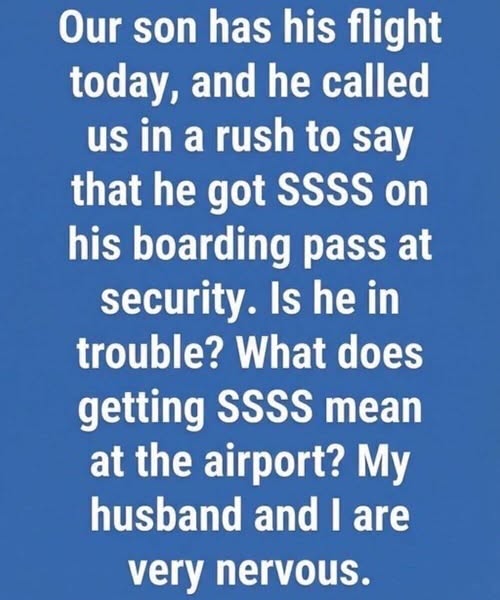
You are standing at the airport gate, boarding pass in hand, ready to escape the chaos of the terminal and settle into your seat. You scan your ticket at the kiosk, expecting the familiar green light and the friendly beep of clearance, but instead, the machine emits a sharp, jarring error tone. A TSA agent approaches, eyes scanning your documents with a cold, professional detachment, and you realize with a sinking heart that your journey is about to hit a massive…
…wall of bureaucratic scrutiny. Those four letters—SSSS—staring back at you from the corner of your boarding pass are the universal symbol for a traveler’s worst nightmare: Secondary Security Screening Selection. In an instant, the ease of your travel plans evaporates, replaced by the invasive reality of a process that feels less like a routine check and more like a targeted interrogation. Your bags are pulled aside, your electronics are swabbed for chemical residue, and you are ushered into a private area for a thorough pat-down.
What Does SSSS Actually Mean? The SSSS designation is not a mark of criminal suspicion, though it certainly feels that way. It is a tool of the Transportation Security Administration’s Secure Flight program, an automated system designed to compare passenger data against government watchlists and intelligence databases. When the algorithm flags you, it is essentially saying that your profile—or perhaps just the specific circumstances of your travel—requires a deeper layer of verification before you are permitted to board the aircraft.
It is important to understand that this is rarely personal. The system is designed to be cold, calculated, and indifferent to your status, your history, or your intentions. It is a precautionary measure, a digital dragnet that catches innocent travelers in its wide, unblinking eyes. For the person standing in the terminal, however, the “why” matters little when they are missing their flight or enduring the public gaze of fellow passengers.
Why Were You Chosen? The triggers for an SSSS designation are often as mundane as they are frustrating. While the TSA keeps the exact mechanics of their algorithms under lock and key, common triggers include booking a flight at the very last minute, purchasing a one-way ticket, or traveling to certain high-risk international destinations. Even a simple data mismatch—such as a typo in your name or a discrepancy between your ID and your passport—can be enough to flag your record in the system.
Sometimes, it is truly random. The system is designed to introduce unpredictability into the security landscape, ensuring that no one can game the process by knowing exactly who will be screened. If you find yourself repeatedly targeted, it may be due to a name similarity with someone on a government watchlist, a situation that often requires filing a redress inquiry with the Department of Homeland Security to clear your name from the digital shadow of another person.
How to Handle the Secondary Screening If you see those four letters, the worst thing you can do is react with hostility. The agents performing the screening are following a strict protocol; they are not the ones who made the decision, and they are not the ones who can undo it. The most effective strategy is to remain calm, cooperative, and organized. Arrive at the airport earlier than usual, keep your electronics accessible, and be prepared for a longer, more invasive process.
While the experience can be deeply unsettling, it is ultimately a reflection of the high-stakes environment of modern aviation. The SSSS code is a reminder that in the pursuit of safety, the system prioritizes caution over convenience. By understanding that this is a procedural hurdle rather than a personal accusation, you can navigate the process with dignity, ensuring that a temporary delay doesn’t destroy your entire travel experience.
The sun was shining when they left home, casting long, golden shadows across the path that had always been their sanctuary. By nightfall, their world had shattered into a thousand jagged pieces. An ordinary walk on a favorite trail transformed in an instant into a harrowing scene of flashing sirens, desperate shouting, and a father screaming his son’s name into the biting wind. In a town that once believed tragedy only happened on television, one small boy’s final afternoon has left Maple Ridge reeling in the wake of an impossible loss. The silence in the aftermath is the loudest sound of all, a heavy shroud that has settled over the community. In the days since Daniel’s passing, the town of Maple Ridge has moved with a haunting slowness, as if every resident is collectively holding their breath, afraid that a single exhale might break the fragile peace.
Neighbors who once exchanged nothing more than polite, distant waves now cross the street to embrace Michael and Sarah. There are no words—no platitudes or hollow promises—that can bridge the chasm of their grief. Instead, there is only the quiet, steady presence of a community that refuses to let them walk through the darkness alone. The nature trail, once a place of joy and discovery, has been transformed into a sacred, quiet sanctuary. Each night, the path is illuminated by a growing constellation of candles and soft, plush toys, a testament to a life that, while brief, left an indelible mark on everyone who knew him.
Michael finds himself drawn back to that trail at dusk, his fingers trembling as he clutches the camera that still holds their final, stolen moments together. He scrolls through the digital gallery, his eyes stinging as he lands on the last photo. In it, Daniel’s smile is impossibly wide, his small arms thrown open to the towering trees he loved so dearly. It is a portrait of pure, unadulterated wonder, a frozen second of innocence before the world changed forever.
That is the image his parents cling to in the quiet hours of the night—not the sterile, tragic reality of the hospital bed, but the boy under the open sky, alive and vibrant. Their grief is a vast, uncharted ocean, yet they are buoyed by the overwhelming tide of love that now binds a town together. Maple Ridge has made a silent vow: they will never forget the small, irreplaceable life that once ran through their woods. In the shared sorrow, they have found a profound, aching dignity, honoring a boy who taught them, even in his absence, the true weight of a life well-loved.
I never thought a piece of clothing could hurt so much.
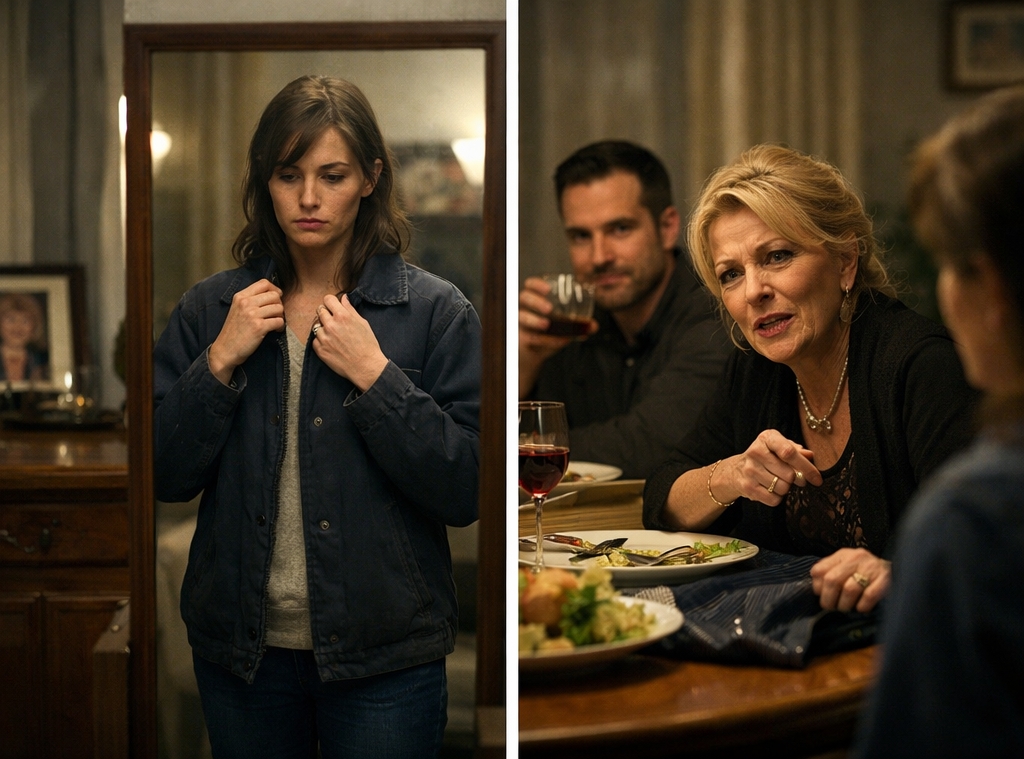
The jacket had belonged to my mother. She wore it for years—on quiet walks, grocery runs, even to my college graduation. It was simple, dark blue, a little worn at the cuffs, but to me, it still carried her warmth.
When she passed away, it was the one thing I couldn’t bring myself to give away.
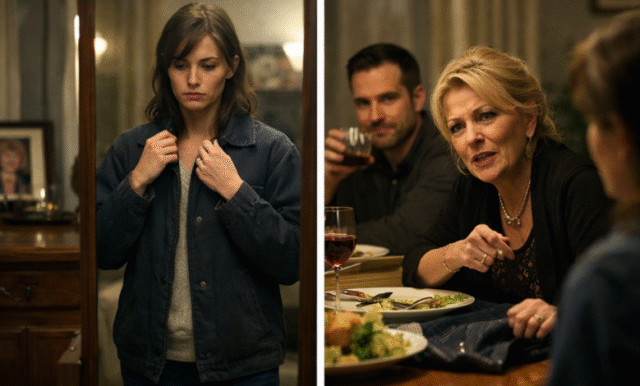
That evening, before the family gathering at my in-laws’ house, I stood in front of the mirror, hesitating. Then I slipped it on. I just wanted to feel close to her.
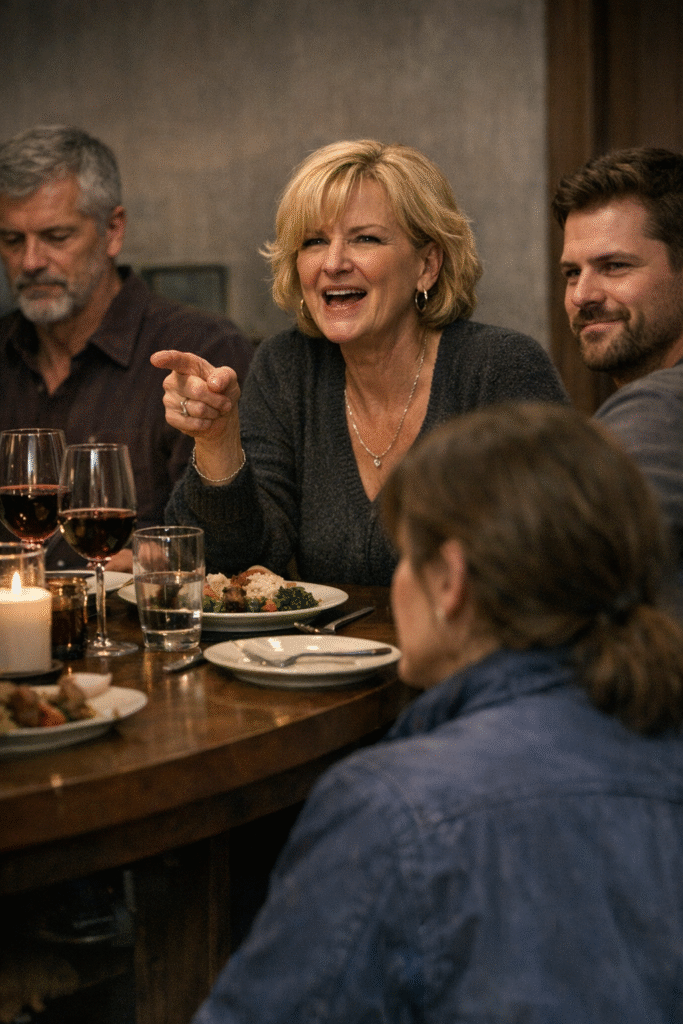
The dinner began politely enough. Silverware clinked against porcelain, polite laughter filled the air, and the smell of roasted lamb drifted from the kitchen.
But my mother-in-law never missed an opportunity to remind me that I came from “nothing.” Her eyes landed on my jacket. Her lips curled into a sharp, knowing smile.
“Did you steal that from a trash bag?” she said loudly—loud enough for everyone to hear.
The words sliced through me.
An awkward ripple of laughter followed—the kind that wasn’t joy, just compliance.
I looked at my husband, hoping—no, begging—for him to say something.
He didn’t.
He smirked, took a sip of his drink, and looked away.
That hurt even more than her words.
I excused myself soon after, muttering something about a headache. The moment I got into the car, the tears came.
I cried the entire way home—grieving not just my mother, but the way her memory had been mocked so casually.
The jacket, once a comfort, now felt like a wound pressed against my skin.
Days passed. I avoided thinking about it. Avoided my husband. Avoided the jacket.
I folded it carefully, placed it at the back of the closet, and shut the door.
Out of sight—but never out of mind.
Every time I walked past that closet, I felt the weight of silence. My husband’s silence. My mother-in-law’s cruelty. My own inability to fight back.
Then one afternoon, the front door burst open.
My mother-in-law stormed in—face pale, eyes wild. She didn’t greet me. Didn’t even acknowledge me.
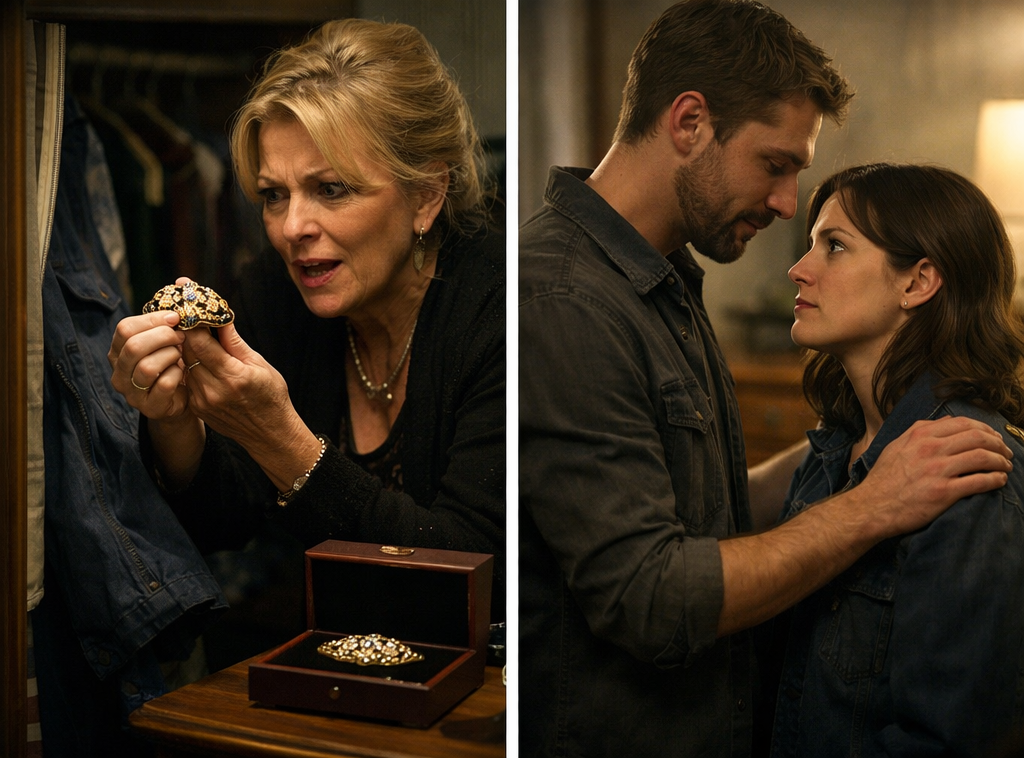
She marched straight to the bedroom, flung open my wardrobe, and grabbed the jacket like it belonged to her.
“What are you doing?” I asked, my voice trembling.
She ignored me, already digging through the pockets, her hands shaking with urgency.
I stood frozen, watching her invade the last private piece of my mother I had left.
Then she stopped.
Slowly, she pulled something out.
A brooch.
Small. Ornate. Unmistakably expensive.
Gold filigree. Tiny diamonds catching the light.
My breath caught.
My father had been a jeweler—I knew quality when I saw it. This was no costume piece.
She gasped, clutching it to her chest.
“Who would’ve thought your broke mother owned something like this?!”
I stared at it, my mind racing.
I had never seen it before.
I would have remembered.
That’s when my husband appeared in the doorway.
“Looking for something?” he asked calmly.
My mother-in-law turned, eyes blazing with triumph.
“You said it yourself! You said her mother was rich! That the jacket was priceless! And look—I found proof!”
He nodded slowly.
“Yes. You did.”
I looked at him, confused.
He met my eyes—and for the first time in days, there was no smirk.
Only quiet resolve.
Later, after she left in a huff, still muttering to herself, he explained everything. He told me that at the dinner, when he saw me leave in tears, something inside him finally snapped.
Not loudly. Not dramatically.
Quietly.
He had mentioned to his mother—casually—that my mom had actually been wealthy but chose to live modestly. That the jacket I wore was far more valuable than it looked.
“And I told her the pockets held proof,” he added.
The day before she barged in, he had slipped the brooch—one he inherited from his grandmother—into the jacket pocket.
He knew exactly how his mother’s mind worked.
Greed. Assumptions. Judgment.
“She judged your mother by her clothes,” he said softly. “So I let her reveal who she really was.”
I sat there, stunned.
The brooch was returned to its box.
The jacket went back into my closet—untouched, respected.
But something inside me shifted.
I had spent days drowning in humiliation, convinced my husband had abandoned me.
Yet he hadn’t.
He had been working quietly, patiently—crafting a lesson that would cut deeper than any argument ever could.
From that day on, my mother-in-law never mocked my late mother again. Not her background. Not her choices. Not her memory.
The silence at family dinners changed.
It was no longer the silence of complicity.
It was the silence of someone who had learned a lesson she would never forget.
And that was when I understood something important.
My husband didn’t defend me with loud words or dramatic scenes.
He defended me with patience, precision—and a strategy that spoke louder than any confrontation.
Behind that quiet smile was a heart of pure gold.
And for the first time, I felt truly seen.
Truly protected.
The jacket still hangs in my closet. I wear it sometimes—not just to feel my mother’s warmth, but to remind myself of that night.
Of the cruelty that tried to break me. Of the quiet strength that shielded me.
And of a truth I will never forget:
Sometimes, the fiercest battles aren’t fought with noise—
but with silence, sharpened into something unbreakable.