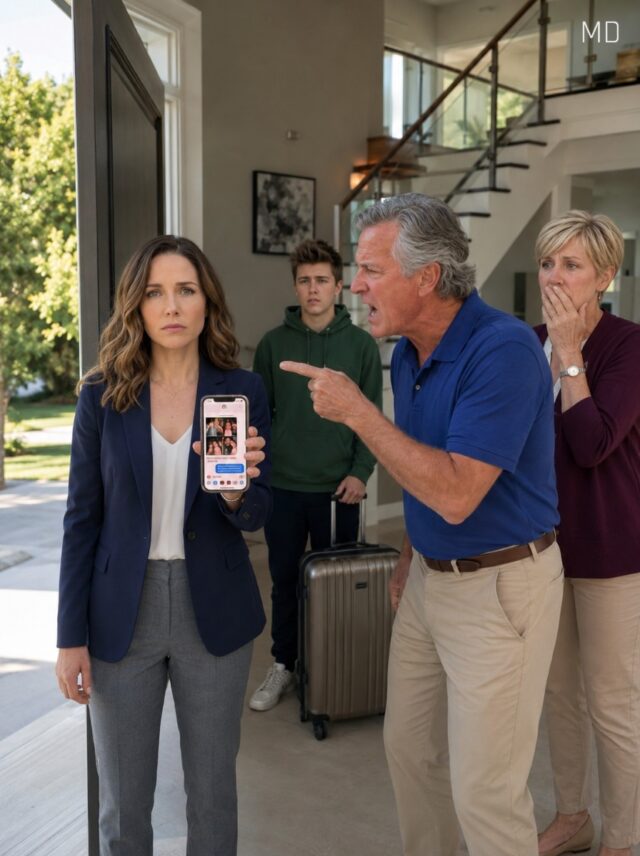
The morning after I celebrated buying my dream home, my father called with a request that left me speechless. After years of hard work building my own business, I had finally purchased a beautiful house overlooking the hills outside Nashville. The housewarming party had been one of the proudest moments of my life, yet my parents never showed up. They chose instead to help my younger brother, Mason, move into his college dorm. I tried not to let it ruin the day. Friends, coworkers, and neighbors filled the house with laughter and encouragement. But less than twenty-four hours later, before offering congratulations or even an apology, my father asked for something unexpected. “Your mother and I need a spare key,” he said. For a moment, I thought he was joking. He wasn’t.
As the conversation continued, the real reason behind the request became clear. My parents immediately began discussing all the ways the house could benefit the family. They talked about future gatherings, extra storage space, and even the possibility of Mason staying there whenever campus life became inconvenient. Listening to them, I realized something painful. The home I had worked so hard to earn had quickly become, in their minds, a resource for everyone except me. When I reminded them they had missed the housewarming entirely, they brushed it aside. Mason needed them, they said. That answer sounded familiar because it had shaped most of my childhood. Whenever there was a choice between supporting me and supporting my brother, the decision always seemed to favor him. This time, however, I refused to stay silent.
The disagreement spread through the family faster than I expected. Relatives called to tell me I was being unreasonable for refusing to hand over a key. Even Mason sent a message asking why I was making such a big deal out of it. But when I explained that our parents had skipped my celebration and then immediately demanded access to the house, his response surprised me. He admitted he had never known the housewarming and his dorm move-in happened on the same day. For the first time, I realized my parents had not only disappointed me—they had also hidden the truth from him. That discovery changed everything. My frustration shifted away from Mason and toward a pattern that had existed for years. The issue was never really about a key. It was about feeling overlooked whenever my accomplishments deserved attention.
A month later, my parents finally visited. They arrived carrying flowers and looking far more nervous than I had ever seen them. As they walked through the house, they admired the rooms, the library, and the spaces I had carefully created. Then my father quietly said something I had waited years to hear: “We should have been here.” It wasn’t a perfect apology, but it was honest. They didn’t leave with a key, but they stayed for dinner. Over time, Mason and I grew closer, and my parents slowly learned to respect boundaries they once ignored. The biggest surprise came during Christmas when my father stood at the front door holding a pie and politely asked, “May we come in?” In that simple question, I finally found something I had wanted far more than a mansion—a family willing to respect the life I had built.