Entertainment

Tragic update on surgery-addicted woman who wanted to become a”forest elf”

It’s fair to assume many celebrities have undergone plastic surgery. Some have had botox, while others have altered their entire bodies.

One of those people were Mary Magdalene. 

But the content creator, who boasted more than 400,000 followers across several Instagram accounts, met a tragic fate.

Just before falling from high-rise apartment in December 2025, she shared a chilling final post.

Mary Magdalene, a Toronto native, rose to fame online thanks to her daring and extensive cosmetic procedures.

She openly admitted to spending tens of thousands of dollars on plastic surgery, documenting her transformation for her devoted followers.

For many of us, looking our best can involve trying new beauty products, experimenting with fashion, or hitting the gym. But for some, the journey goes further. Plastic surgery isn’t always about drastic changes, it can also be about feeling confident and authentic in your own skin.

For Mary Magdalene, it was a mix of both.

From exotic dancing to social media fame

Mary Magdalene began working as an exotic dancer at 17.

Mary Magdalene had her first breast augmentation at just 21, traveling to Mexico for the procedure. She said it reflected her long-time love of “the fake bimbo look.”

Shockingly, she later revealed that the surgery was done by a dentist, not a certified surgeon. She described the results as botched, and from that moment on, corrective surgeries became a regular part of her life rather than a rare fix.

Over time, she expanded her online presence, amassing over 400,000 followers across multiple Instagram accounts. Even after a suspension of her main account, she maintained a strong fanbase of nearly 70,000 followers.

During the pandemic, Mary became a full-time virtual dancer, charging about $110 for five-minute sessions. Her clients spanned ages 20 to 80 and included both men and women.

“I do a chat and a [exotic dance], although sometimes I am just a therapist. Some people just love having someone to talk to,” Mary told Unilad.

“I get all sorts of different requests. Some people just want to see me eat, twerking, trying on clothes. I also get foot fetishists – I’ve even had people begging me to humiliate and insult them.”

An ongoing obsession

Mary’s pursuit of her ideal look didn’t stop with one surgery. She covered her body in tattoos and underwent numerous procedures, including multiple nose jobs, brow lifts, fat transfers, three Brazilian butt lifts, liposuction, veneers, and butt and breast implants. Her breasts grew to a 38J, with 5,000cc expanders.

”I get a lot of dirty looks and have literally caused car accidents. I often have people stop me on the street begging for my number and desperate to give me money. The wives and girlfriends try and distract their boyfriends and husbands when I walk by because they are jealous. They will stare at [my body] and get turned on,” Mary once shared.

”But I don’t care; they always find a way to stare at me anyway. There have been times where they secretly slipped me their number before. I thought it was hilarious.”

Some surgeries were so extreme that Mary had to travel to Russia for them. She openly admitted that she still had more procedures planned, saying, “Next week I have my eyebrow transplant, jaw and lips booked then my face will be complete.”

Despite the extreme nature of her surgeries, she often emphasized the personal satisfaction and confidence they brought her. “The biggest positive is my [love] life; my over-sized body parts make everything way more fun, and my surgeries, in general, have just become great for my business and brand,” she said.

However, the procedures weren’t without risk. During a vaginal fat transfer, complications nearly cost her life. “I almost died during [the] procedure,” Mary revealed on the No Jumper podcast. “The doctor said I was losing so much blood and turning very pale. He thought I was going to die.” She required blood transfusions and further corrective surgery to survive.

Life in the spotlight

Mary Magdalene often drew attention in public, sometimes causing car accidents or prompting strangers to slip her their numbers.

Yet she remained unapologetic about her choices.

In early 2023, Mary Magdalene faced another serious setback when one of her breast implants ruptured and deflated, leaving her temporarily with only one breast. The implant in question was reportedly a massive 38J.

The cause of the rupture wasn’t confirmed, though many fans speculated it might have been overfilled. Mary had previously spoken about using implant expanders—devices that allow saline to be injected through a small port with a needle to gradually increase size.

Even while recovering from surgery, she remained dedicated to sharing her transformations with fans.

After a recent nose job, she called herself a “forest fairy elf” and added, “It’s a very fake-looking Barbie nose which is exactly what I asked for, and so many surgeons said it was not possible for me to have this type of nose because of my three prior nose jobs.”

She also revealed that she could no longer drink from a straw, and because her lips were too big, she couldn’t whistle.

”Another negative are the complications from my v*gina surgery, but I am optimistic that it will get repaired,” she said.

A tragic end

Tragically, Mary Magdalene’s life ended far too soon. On December 9, 2025, Denise Ivonne Jarvis Gongora, the real name behind the persona, fell from the ninth floor of a high-rise apartment in Patong, Phuket Island, Thailand. She was 33.

At 1:50 p.m., her body was discovered in the building’s parking area, confirmed by police and family members.

According to The Phucket News, condo staff reported that she was scheduled to check out the following day, and a pair of flip-flops believed to belong to her was found on the ninth floor.

On December 8, just one day before her tragic fall, Mary Magdalene posted a haunting final message on her social media. She shared two stills from the closing scene of The Truman Show, featuring the iconic line: “And in case I don’t see ya, good afternoon, good evening and good night.” Alongside the images, she also included what looked like a blurry photo of herself as a child.

Her brother, Ivan, shared emotional tributes across Instagram, posting photos and videos spanning her life. “You are so funny and so creative way more than I’ll ever be,” he wrote. “I love you much more than words will ever say. You are my world. I wish things were different. Thank you for everything I love you sis.”

Mary Magdalene’s story is one of ambition, artistry, and risk — both in her body and her life. Her dramatic transformations brought her fame, but ultimately, her life ended in heartbreaking tragedy.

‘I Love Lucy’ Brought Two Comedy Legends Together in One of Its Best Episodes

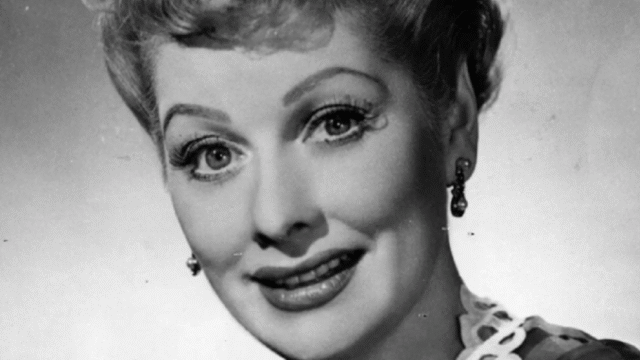
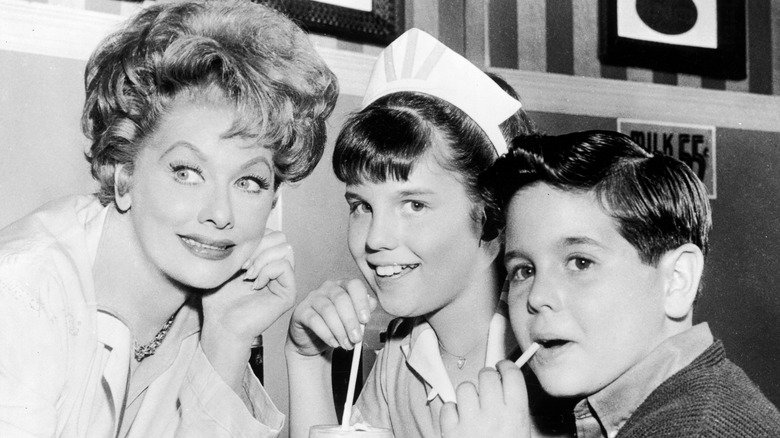
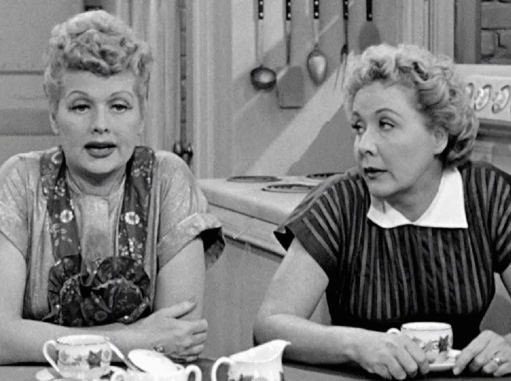
Almost since its inception, sitcoms have always been the backbone of U.S. television. The format may have changed over the years, but the genre continues to endure. While recent hits like Young Sheldon and Modern Family have made history on the modern front, no show is more groundbreaking than I Love Lucy. Starring Lucille Ball and Desi Arnaz as Lucy and Ricky Ricardo, the hit series revolutionized the early days of television and created some of the most memorable moments in history.

To date, it remains one of the most-watched programs of all time, thanks to syndication and streaming. Having produced 180 episodes over six seasons, plus 13 one-hour-long follow-up installments under the title The Lucy-Desi Comedy Hour, nearly everyone in the world has a different favorite episode. From the famous chocolate factory gag in the episode “Job Switching” to the beloved “We’re Having a Baby” segment, it’s hard to narrow down the show’s “best” moment. But, without a doubt, one of the most fascinating episodes occurred during Season 4, when the Ricardos, along with Ethel (Vivian Vance) and Fred Mertz (William Frawley), head out to Hollywood. Lucy caused quite a few memorable stirs as she met some of Classic Hollywood’s greatest stars. For most, her most infamous run-in was with John Wayne, but her most satisfying was the time she met Harpo MarxBoth endlessly funny and beautifully executed, it remains one of TV’s most beloved moments. However, bringing the pair together was a much harder task than most realized.

It Wasn’t Easy To Get Harpo on ‘I Love Lucy’

By the time I Love Lucy came about, the Marx Brothers were already beloved stars. In fact, they’d previously worked with Ball in the 1938 film Room Service during her studio contract days. With all the stars that had already passed through I Love Lucy and Ball’s past partnership with them, one would assume it wouldn’t be very hard at all to get Harpo to appear. However, the beloved Marx Brother faced several personal issues that would make the casting a challenge.

In an interview with Yahoo Entertainment, Harpo’s son, Bill Marx, recalled that his father had recently suffered a heart attack. Though only 67 at the time, Marx had retired from showbusiness as a result and moved to Palm Springs, per Woman’s World. But with the episode written specifically for him, Bill Marx says that his father’s doctor did clear him to perform. But securing Marx was only half the battle. The actor had quite a bit to do throughout the half-hour, and there was a lot of physical comedy built into the story.

‘I Love Lucy’ was Physically Challenging for Harpo Marx

Though he was playing himself, Marx’s appearance on I Love Lucy was not easy. The installment sees Lucy caught in a jam after stretching the truth in letters she sent to her friend, Carolyn Appleby (Doris Singleton). Convinced Lucy is now close to many of Hollywood’s greats, Carolyn comes out to Los Angeles. Lucy stages an afternoon of fake celebrity sightings right there in the hotel before Ricky and Fred run into Harpo. They ask him to head upstairs and help Lucy out. When he arrives, Lucy is done up in a Harpo disguise. She hides, which allows Harpo to perform. According to the Yahoo interview with Marx’s son, the physical demand of the episode was not lost on anyone, considering Harpo’s condition.

The sequence sees Marx carry in his famous harp and play “Take Me Out to the Ball Game” before getting up, chasing Carolyn, and throwing her over his shoulder. But, despite Harpo’s health, he performed the stunt. As his son is quoted: “When people see this show, that is… his professionalism… You can’t make a mistake. You have to do it, otherwise you have to do it again, and the audience has already laughed at it. It’s not as funny anymore.” Marx performed the scene without a hitch, and, with the knowledge of all his difficulties, it’s a marvel to watch. The comedy is brilliantly executed, going from Marx’s impressively touching performance on the harp to his over-the-top shenanigans. To watch it, one would never even guess how unwell he had been. But the best part of his performance was still to come and would provide one final challenge.

Lucy and Harpo’s Mirror Routine Had Its Own Challenges

Image via Paramount

The episode’s most famous sequence comes when Harpo discovers the hiding Lucy. She tries to convince him that he is looking at himself in a mirror. The result is one of the most iconic moments in the history of television. Lucy mirrors Harpo’s every move before eventually being caught. The sequence is both hysterical and fascinating to watch. But many don’t realize the skit was lifted from a Marx Brothers film called Duck Soup.

In an interview on The Dick Cavett Show, Lucille Ball, who remained fond of Marx long after his passing, revealed that Marx kept changing the routine while shooting. She said he was so used to working alone that the I Love Lucy crew had to re-teach Harpo his own routine. Marx’s son, who was working on the set as a prop man, confirmed this when talking to Yahoo TV, saying, “He had to get it out of his mind, what he did in Duck Soup and in Vaudeville, whereas Lucy just had to learn for the first time what to do as Harpo. There was a lot of rehearsal that went into it to make it as good as it was.” But “good” doesn’t do the sequence justice. Though it may have taken a lot of rehearsing, the scene remains one of the best moments of the series. This is no small feat, considering how many iconic scenes the show produced. It’s a testament to the talent of both legends and a moment of star power that has never been recreated.

I Love Lucy has no shortage of great comedic moments. But Lucille Ball and Harpo Marx’s mirror routine is really something special. It was no small feat to make due to Marx’s illness and the physical challenges that came with the script. However, Harpo’s professionalism and enthusiasm fueled his performance and made for one of the greatest moments in the history of sitcoms.

Lucille Ball’s 10 Best Movies, Ranked

Legendary actress Lucille Ball was responsible for the hit sitcom I Love Lucy but also had a great career as a movie actress. Throughout her career, Lucille Ball started her career in the late 1920s as a model but eventually got her first acting gig as an uncredited extra in the 1933 movie Roman Scandals. Up until her death in 1989, Ball was a celebrated comedian, actress, singer, dancer, and producer and is still remembered to this day. In fact, Desilu Productions, Lucille Ball’s company, launched Star Trek and Mission: Impossible, some of the best TV shows of all time.

During her long career, Lucille Ball’s TV shows and movies bagged an incredible number of award nominations, including an amazing five Primetime Emmy wins. Ball is remembered for her brilliant comic timing, her ability to adapt to a range of different characters, and being a general Hollywood icon. Although audiences knew Lucille Ball for I Love Lucy, her movie career was just as successful, and she appeared in several movies as both a serious and comedic performer.

Movie TitleYear of Release
Stage Door1937
The Big Street1942
The Dark Corner1946
Lured1947
The Long, Long Trailer1953
I Love Lucy: The Movie1953
The Facts Of Life1960
Yours, Mine and Ours1968
Mame1974
Cher… and Other Fantasies1979

10. The Facts Of Life (1960)

Ball’s Performance As Kitty Resulted In Her First Golden Globe Nomination

1960’s The Facts of Life proved that Lucille Ball’s acting skills, when paired with an equally talented costar, were nothing short of fabulous. Ball and Bob Hope starred opposite each other in The Facts of Life as Kitty (Ball) and Larry (Hope), who fall in love and start up an affair before quickly realizing that their romance wasn’t as expected. Both actors showed off their comedic abilities in this film, and their chemistry was strong throughout, but Ball stands out for her sly demeanor and hilarious attitude as Kitty.

Ball’s performance as the bored housewife was so popular that it earned her a Golden Globe nomination for Best Actress in a Comedy in 1961. Although she didn’t win, losing out to Shirley MacLaine in The Apartment, The Facts of Life established Ball’s abilities as an actress, and she was still greatly celebrated for her role. At this point in her career, Ball already had a highly decorated career, but The Facts of Life proved that she was much more than just Lucy Ricardo.

9. The Big Street (1942)

Breaking Away From Comedic Roles

Although 1942’s The Big Street was never one of Ball’s better-known titles, she had previously stated that it was her favorite (via IMDb). The Big Street saw Ball in one of her earliest leading roles as the cold nightclub singer Gloria Lyons and although the film wasn’t a commercial success, her portrayal of Gloria was particularly notable. Ball was praised for demonstrating the character’s journey, filled with drama and anticipation among her comedic moments, demonstrating her ability to play complex characters.

Ball’s role as Gloria also allowed her to break away from the typical comedic roles she’d become known for.

Ball had brilliant on-screen chemistry with her co-star Henry Fonda, who played the film’s protagonist, busboy Little Pinks. They were both particularly praised for their dynamic in especially emotional moments, such as their dance at the end of the film. Ball’s role as Gloria also allowed her to break away from the typical comedic roles she’d become known for, and her performance was incredibly impactful overall.

8. Lured (1947)

Ball Takes Down A Serial Killer

Lured was a remake of the 1939 French film Pièges, with Ball stepping into the shoes of the protagonist, Sandra Carpenter. The suspense-filled thriller movie once again allowed Ball to portray a character that wasn’t simply comedic, and she was praised for her brilliant job of bringing Sandra’s intelligence and resourcefulness to life. Through her performance, Ball kept audiences engaged and on the edge of their seats as Sandra navigated a new, dark world with a serial killer targeting women who looked just like her.

Sandra’s back-and-forth with Robert (George Sanders) was particularly endearing, and their interactions quickly added an extra layer of depth to the film as they attempted to solve a string of murders. Although she was very powerful throughout Lured, it’s important to note that Ball’s incredible performance was partly down to the strength of the supporting cast, such as Charles Coburn as the unsettling Harvey Temple. Lured was a movie that let Ball show off her talents, with a brilliant blend of comedic and dramatic acting throughout.

7. The Dark Corner (1946)

The Film Was A Noir Match For Lucille Ball

The 1946 crime noir movie The Dark Corner starred Lucille Ball as the astute secretary Kathleen Stewart, who works for the private investigator Bradford Galt (Mark Stevens). Ball had fabulous chemistry with Stevens throughout the film, which added to the dark noir atmosphere. Kathleen and Galt’s relationship was complex and deep, resulting in some incredibly impactful moments for both actors.

As a character, Kathleen was a standout in the genre, breaking out of the femme fatale trope and being just as useful to the ongoing investigation as Galt was with her intelligence and wit. According to the book Henry Hathaway: The Lives of a Hollywood Director, Ball faced issues with the director behind the scenes but still delivered a stellar performance. Critics praised Ball for standing out in a noir film, a genre she didn’t tend to appear in, especially as her performance demonstrated just how strong a dramatic actress she was.

6. Stage Door (1937)

It Was A Small Role With A Big Impact

In the early days of her career, Ball starred in several small movie roles but was left uncredited, with a few exceptions. 1937’s Stage Door, however, marked the end of this period. Ball as Judy Canfield was her first credited role, although there has been a common misconception for years that it was 1936’s Chatterbox. Despite the character of Judy not being hugely prominent, Ball still managed to catch the audience’s attention with Judy’s sassy one liners.

Considering the number of Hollywood Golden Era actors and actresses in Stage Door, such as Katharine Hepburn as Terry Randall and Ginger Rogers as Jean Maitland, it was impressive that Ball made such an impact in a small role. According to the 2004 book Lucy A to Z: The Lucille Ball Encyclopedia, Ball and Rogers were distant cousins. Stage Door reflected on the very real issues that Hollywood actresses faced at the time, which allowed Ball to show off her comedy skills while still being able to relate to the story despite still being in the early days of her career.

5. Cher… and Other Fantasies (1979)

Lucille Ball as Cher’s Fairy Godmother

In the 1979 TV movie Cher… and Other Fantasies, legendary singer Cher gathered some of the best comedians at that time for a ridiculous camp network TV special. After the musician got trapped in a strange building and began exploring, Cher found herself in several strange musical sequences, scored with songs from the Cher album “Take Me Home,” including one with several women from history all wearing clothes designed by the iconic Bob Mackie. In Cher… and Other Fantasies, Ball portrayed a cranky and bitter cleaning lady who helped save the day.

Ball’s first scene sees her singing “Bibbidi-Bobbidi-Boo” from Cinderella, which was not only comical to watch but also fitting for the story. Ball’s raspy voice and dedication to the character were incredibly strong, which proved that the actress had the ability to effectively apply herself to any role, no matter how big or small. Although the focus was on Cher, that didn’t stop Ball from stealing the show, and she continued to show this determination throughout her career.

Lucille Ball’s first appearance in Cher… and Other Fantasies comes at the 5:30 minute mark.

4. Mame (1974)

It Was Lucille Ball’s Final Movie

Lucille Ball’s last feature film before her death in 1989 was Mame, which was released in 1974. Mame was inspired by the 1966 Broadway musical of the same name, which had been adapted from the 1955 novel Auntie Mame by Patrick Dennis. Even with a huge amount of source material, Ball still put her own spin on the titular character. Although Ball didn’t know Mame would be her last full-length movie, she performed as Mame Dennis as if she did, receiving praise for her interpretation and earning a Golden Globe nomination for Best Actress in a Comedy or Musical.

Ball was praised for several elements of her performance, such as her comedic timing and dramatic responses to other characters.

Mame included several musical numbers that Ball loaned her voice to, including “It’s Today,” which set up her character brilliantly. Although Mame received mixed reviews upon release, the film still beautifully highlighted Ball’s entire career and experience as an actress. Ball was praised for several elements of her performance, such as her comedic timing and dramatic responses to other characters, including Bea Arthur as Vera Charles. Overall, Mame provided an amazing reflection on Ball’s decorated career, and her portrayal of Mame Dennis was a fitting final role for the actress.

3. Yours, Mine and Ours (1968)

It Was Ball’s Hilarious Take On Motherhood

Yours, Mine and Ours was one of Lucille Ball’s most notable movies, mainly because of her leading role as the widow Helen. Much like in The Big Street, Ball had brilliant chemistry with Henry Fonda, who played Frank. Interestingly, the film was based on the real-life versions of Helen and Frank, using Helen’s book Who Gets the Drumstick? as inspiration. For the time period, Yours, Mine and Ours had a relatively modern storyline, with Ball and Fonda marrying and blending their eighteen children into one family, which also set up some hilarious moments throughout.

Ball’s voice-over narration also added a deeper layer to her character.

While Ball was very funny, her dramatic performance was also particularly strong. Amazingly, Ball demonstrated the struggles of an overworked, overtired mother, all wrapped up in a wholesome family drama. Ball’s voice-over narration also added a deeper layer to her character, and in doing so, the actress proved that she could still give a solid performance even if she weren’t on screen. Although Yours, Mine and Ours received lukewarm critical reviews upon its release, it later received the popularity it deserved, mainly due to Ball’s iconic performance, which earned her a Golden Globe nomination for Best Actress.

2. The Long, Long Trailer (1953)

Ball and Arnaz Gave An Amazing Portrayal Of Newlyweds

Throughout her career, Ball frequently worked with Desi Arnaz before their divorce in 1960. After meeting on the set of Too Many Girls, the couple worked together on multiple projects, including I Love Lucy. HoweverThe Long, Long Trailer was the first movie they starred in together as romantic leads. The Long, Long Trailer followed Arnaz and Ball’s characters, Tacy and Nicky Collini, in the early days of their marriage and how they coped with an array of absurd yet comical situations as they traveled across the United States.

Ball was especially praised for her use of physical comedy, especially in one notable moment where Nicky tries to teach Tacy to drive.

Arnaz and Ball’s comedy skills were very strong in The Long, Long Trailer, and used their own marriage off-camera to motivate their roles. Ball was especially praised for her use of physical comedy, especially in one notable moment where Nicky tries to teach Tacy to drive. Out of all of her movies, The Long, Long Trailer stood out for Lucille Ball’s authentic and relatable performance as Tacy. The role showed Ball at her very best as a comedic actress, and the film continued to be a beloved classic for years after its release.

1. I Love Lucy: The Movie (1953)

Ball’s Hit Sitcom On The Silver Screen

While Lucille Ball had many outstanding movies in her filmography, I Love Lucy: The Movie was her best. The film was originally made in 1953 as a spinoff of the iconic sitcom of the same name but never got a theatrical release and was shelved. I Love Lucy: The Movie was finally released in 2001 as a part of the I Love Lucy 50th-anniversary special. At a glance, I Love Lucy: The Movie appeared to be the first few episodes of the sitcom cut together into a feature-length film, but its additional scenes created a whole new storyline.

I Love Lucy: The Movie can be considered an example of a meta movie as the added scenes followed a young couple who attended the filming of an episode of I Love Lucy. Ball was particularly praised in I Love Lucy: The Movie for her ability to seamlessly jump between playing herself and Lucy Ricardo, but also for creating the concept in the first place. Although I Love Lucy didn’t get an official movie, this project beautifully represented Lucille Ball and her long-spanning career, her comedic abilities, and the well-loved franchise as a whole.

TV’s Most Iconic “Hate-Watch” Duo: The Secret Feud of Ethel and Fred

On I Love Lucy, the cantankerous, yet often endearing, landlords Ethel and Fred Mertz were the perfect foils to Lucy and Ricky’s shenanigans. Played brilliantly by Vivian Vance and William Frawley, their bickering, comedic timing, and grudging affection were essential to the show’s massive success. Audiences adored their hilarious dynamic.

The Real-Life Rancor

But what if we told you that off-screen, the actors who played this iconic couple absolutely loathed each other? It’s true! The animosity between Vivian Vance and William Frawley was legendary in Hollywood, a stark contrast to their seemingly seamless on-screen partnership.

Vance, a vibrant actress 22 years younger than Frawley, reportedly resented playing the wife of a man she considered far too old for the role. She made her feelings known, and Frawley, known for his gruff demeanor and quick temper, certainly didn’t hold back his own criticisms of her. Their backstage disagreements and insults were frequent and often cutting, making the atmosphere on set tense at times.

Professionalism Prevails

Despite their very public disdain for one another, a remarkable thing happened every time the cameras rolled. Vance and Frawley would step into character, transform into Ethel and Fred, and deliver performances so convincing, so genuinely funny, that you’d never suspect the real-life animosity simmering beneath the surface.

This ability to put aside personal feelings for the sake of the craft is a testament to their incredible professionalism and talent. It’s a kind of “show business magic” that only true veterans can pull off. They knew their job was to entertain, and entertain they did, creating two of television’s most memorable supporting characters who, despite their actors’ off-screen feud, remain beloved to this day.

Desi Arnaz’s 1976 Bestseller Is Back — And It Includes Previously Unpublished Writings

The ‘I Love Lucy’ star’s book gets a rare re-release 50 years later.

Desi Arnaz’s long-out-of-print memoir, A Book, is back. The legendary bandleader and I Love Lucy star originally released his book in 1976. Fifty years later, an expanded edition has been announced by his daughter, Lucie Arnaz Luckinbill.

In a post to Instagram, Luckinbill shared the cover of the new edition of the book, with the caption, “We at Desilu, too LLC are so very proud to announce the Release of my father’s 1976 NY Times best-selling autobiography, A BOOK! This is also an ‘expanded’ edition with a variety of written materials culled from the papers he left behind and it is quite a read.”

Luckinbill also gave a “congratulations” to her dad, who died in 1986 at age 69.

The full title of the 50-year-old tell-all is A Book (Expanded Edition):  The Outspoken Memoirs of the Man Who ‘Loved Lucy’-And Revolutionized Television. A teaser reveals that the new edition features “Exclusive New Material with Commentary by Lucie Arnaz.” The book includes 41 chapters with no titles and follows Arnaz’s childhood in Cuba to his whirlwind romance with Lucille Ball to their I Love Lucy and television production fame and the aftermath of their devastating 1960 divorce.

A synopsis for the book reveals that the new print features additions from Arnaz’s uncompleted, never-published second memoir and new photos throughout.

Fifty years ago, Arnaz promoted his memoir with a rare appearance as guest host on the first season of Saturday Night Live. The February 21, 1976, appearance also featured Arnaz’s son, Desi Jr., and culminated with a conga line around the SNL studio.

Arnaz also turned up on The Tonight Show Starring Johnny Carson, where the late-night host teased him about the two-word title of his book.

“Well, what do you want me to call it, A Pencil?” Arnaz cracked.

“No, I really was going crazy with all the titles that they suggest you know,” the TV legend continued.  “So you know you do a thing like this, I’ve never done a book in my life, and I never, don’t even like to write letters. And when they asked me to do this thing, then towards the end they send you a thousand different things.  …when we have time, about an hour and a half one day, I’ll read you the whole list. So I figured I just call  it what it is, A Book.”

A Small Act of Kindness on a Flight Changed My Day Forever

Flying alone with my 14-month-old son, Shawn, was a challenge I had mentally prepared for, but I could not have anticipated just how overwhelming it would feel in the moment.

Circumstances had left me with little choice: my mother was gravely ill, and my father had arranged and fully paid for this trip so she could finally meet her grandson.

The thought of witnessing my mother’s reaction to meeting Shawn for the first time should have been a source of joy, but instead, it added an emotional weight that made every step of the journey feel heavier.

From the moment we stepped onto the plane, Shawn was fussy and restless. His cries pierced the cabin with a sharp intensity that seemed to grow louder with every passing minute.

As a mother, I had become accustomed to navigating these moments, but this was different. There were unfamiliar eyes watching me—judgmental, perhaps impatient, or maybe just curious.

Traveling solo with a young child is inherently exhausting, and the additional anxiety of flying across the country to see a sick loved one magnified every feeling tenfold.

My hands were full, my mind racing, and my energy depleting with every unsuccessful attempt to soothe him.

I tried everything I knew. I whispered soft, calming songs, gently rocked him in my arms, and walked up and down the narrow aisle, hoping the movement would provide comfort.

I offered sippy cups, pacifiers, and toys, each attempt met with only temporary distraction or outright rejection. Shawn’s frustration seemed to mirror my own; the more I tried to calm him, the more desperate I felt.

By the first hour of the flight, exhaustion had set in, and a deep anxiety began to creep through me. I felt myself on the verge of tears, mentally tallying the miles between me and safety, between my mother and me, and wondering how I would survive the remainder of the journey if Shawn’s distress continued.

It was in that vulnerable moment that I noticed a man seated across the aisle, observing me. His name was David. He leaned slightly forward and introduced himself with a warm, reassuring smile.

He mentioned that he had a child about Shawn’s age and could empathize with the difficulties of traveling with a toddler.

His voice carried genuine concern, and though I initially hesitated to let a stranger interact with my child, something in his demeanor suggested kindness rather than threat.

The combination of exhaustion, relief, and desperation pushed me to cautiously allow him to hold Shawn, all while I remained within arm’s reach, carefully monitoring every movement.

For a brief and beautiful moment, the strategy seemed to work. Shawn’s cries softened, his little body relaxed into David’s arms, and a rare quietness settled over us.

I exhaled deeply, feeling a wave of relief that I had almost forgotten existed. For a fleeting second, it felt as if hope had arrived, a reminder that small acts of human kindness can cut through even the most difficult situations.

But that sense of relief was short-lived. I noticed, almost immediately, that David was doing something that set off a profound internal alarm.

The action was subtle at first, something that might be easily missed by an inattentive observer, but for a mother, the instinct was unmistakable.

He was giving Shawn something clearly inappropriate and unsafe for a child—an object or substance that could have caused harm. In that split second, fear gripped me like ice, but so did clarity.

Every ounce of instinctive protectiveness surged through me. Without hesitation, I moved toward Shawn, swiftly taking him back into my arms.

My voice trembled, a mixture of anger, fear, and sheer protectiveness cutting through the cabin air. “Stop. Do not do that,” I said firmly, my heart pounding in my chest as I held my son close.

The commotion drew attention quickly. A flight attendant, alerted by the raised voices and tension, approached with immediate professionalism and calm authority.

Her presence was a lifeline in that moment, a steadying force amidst the chaos. She requested that David return to his seat and then guided me to a quieter section of the plane, away from the judgmental and curious eyes of other passengers.

There, in a secluded area near the rear of the cabin, I could finally focus on Shawn and hold him without further interruption.

The flight attendant remained nearby, her watchful presence offering reassurance that we were no longer in immediate danger and that my instincts had been validated.

Once settled, I cradled Shawn, feeling the weight of both his tiny body and the emotional strain of the past hour begin to lift.

I sang to him softly, feeling the tension in his small shoulders ease as sleep finally claimed him. Relief washed over me in waves, a mixture of gratitude toward the flight attendant, wariness from the near-incident, and recognition of the profound responsibility of parenting.

That flight became a deeply formative experience, a real-time lesson in the power of maternal instinct and the need to trust it, even under the most taxing circumstances.

As the plane hummed steadily along its path, I reflected on the lessons embedded within those tense hours.

Traveling with a young child is never simple, but adding fear and the need for vigilance in a public setting elevated every small action into a matter of critical importance.

I realized that kindness from strangers can indeed be a light in dark moments, but vigilance is non-negotiable. Protectiveness does not end when exhaustion sets in; rather, it demands heightened awareness and rapid response when something feels wrong.

Looking back on that day, I see now that the experience was more than just a stressful flight; it was a concentrated lesson in courage, intuition, and resilience.

It was a vivid reminder that parental strength is often measured not in grand gestures but in the decisiveness of small, immediate actions taken to ensure safety and well-being.

That moment on the airplane, high above the ground, crystallized a truth I had long known but never experienced with such intensity: instinct is a parent’s most potent tool, and the safety of a child demands its full expression, even in unfamiliar and uncomfortable circumstances.

It also reinforced the importance of community and support systems. The flight attendant’s swift, calm, and professional intervention provided not only safety but emotional relief, a reminder that the presence of someone trained and caring can transform fear into reassurance.

Similarly, David’s initial empathy and willingness to assist, even though it ultimately went awry, highlighted the duality of human kindness: it can bring comfort, yet it must always be balanced with discernment and vigilance.

This experience strengthened my resolve as a parent. I realized that trusting my instincts is essential, that hesitation in moments of potential danger can carry heavy consequences, and that asking for help—whether from flight attendants, family, or trusted friends—is a sign of strength, not weakness.

Parenting requires a unique combination of courage, patience, and constant attentiveness, qualities that are tested most sharply in situations where the stakes are high and external support may be limited.

Emotionally, that flight left an indelible mark. The stress of travel, compounded by the fear of harm to my child, sharpened every sense and amplified every emotion.

Yet, it also illuminated the depth of my protective instincts and the reservoirs of patience and determination I did not know I possessed.

In retrospect, the fear I felt was both terrifying and transformative, reinforcing that the protective bond between parent and child is instinctive, unwavering, and ultimately empowering.

Once Shawn settled into sleep, I allowed myself a moment of quiet reflection. I thought of my mother, waiting to meet her grandson, and the bittersweet combination of joy and sorrow that brought me on this journey.

I thought of all the parents traveling alone with young children, navigating the complexities of airports, airplanes, and unpredictable little humans, often under the watchful gaze of strangers.

I felt solidarity with them, understanding that parenting in public spaces requires courage, flexibility, and often, a willingness to stand firm in the face of judgment.

The flight, now calm, provided space to internalize the lessons of vigilance, trust, and emotional resilience. Every aspect—the cries, the intervention, the support of the flight attendant, the brief misjudgment by David—contributed to a deeper understanding of what it means to protect, nurture, and guide a child.

It was an intense, high-pressure scenario that distilled the challenges of parenthood into a few critical hours, leaving me with a heightened appreciation for both the responsibility and the profound reward of caring for a young life.

Looking back, I recognize that day as a turning point. It changed the way I approach decision-making as a parent, reinforced the necessity of trusting intuition, and reminded me that courage often manifests in quiet, decisive acts—like standing firm against a perceived threat to my child.

It reminded me that, as a parent, there is no separation between love and action: protective instincts are inseparable from emotional bonds, and vigilance is a form of love expressed through decisive action.

Finally, the experience reinforced hope and gratitude. Despite fear, chaos, and judgmental glances, moments of human kindness—both from strangers and professionals—highlight the potential for compassion to make a tangible difference.

The ability to lean on others, while simultaneously protecting one’s child, creates a delicate balance that every parent must navigate.

My journey that day was a microcosm of life’s unpredictability, a reminder that challenges may arise at any moment, but resilience, intuition, and love can carry us through.

As we disembarked, Shawn sleeping peacefully in my arms, I felt a deep sense of accomplishment and a renewed commitment to trust my instincts, protect my child, and remain vigilant in the face of uncertainty.

That flight was more than a journey across the country—it was a profound lesson in parenting, a testament to the strength and courage required to raise a child, and a reminder that even in the most challenging circumstances, love is a guiding and protective force.

It taught me that courage is not always visible, often showing itself in small, decisive actions taken in moments of uncertainty.

Most importantly, it reaffirmed the truth that a parent’s love and protection are the strongest forces in the world, capable of navigating even the most overwhelming situations.

I went into cardiac arrest after delivering triplets. While I was unconscious in the ICU, my CEO husband stood in the hospital corridor and finalized our divorce. When a doctor told him, “Sir, your wife is in critical condition,” he barely reacted.

The divorce papers were signed under fluorescent lights that hummed above a hospital corridor thick with antiseptic and iron.

Inside the ICU, I lay motionless, machines breathing for me after an emergency C-section delivered our premature triplets and nearly took my life. My body had flatlined for a moment. Long enough to terrify the doctors. Long enough for my husband to decide I was no longer an asset worth keeping.

Outside my room, Grant Holloway asked his lawyer one question.

“How fast can this be finalized?”

When a physician tried to explain that I was critical, that my survival was uncertain, he cut her off.

“I’m no longer her husband,” he said. “Update the file.”

Then he walked away.

By the time I woke up days later, groggy and stitched together, the world had shifted.

I was no longer married.

My insurance had been terminated.

My hospital room had been downgraded.

The NICU bills for my babies were suddenly flagged for financial review.

Administrators spoke to me in clipped, procedural tones. “Coverage lapse.” “Custody clarification.” “Temporary liability.”

Grant hadn’t just divorced me.

He had erased me.

To him, I was a complication. A high-risk pregnancy. Three fragile newborns. A wife who might slow his company’s funding round. He believed he had acted decisively — cleanly — removing a liability before it cost him.

What he didn’t know was that his signature had awakened something older than his ambition.

Dr. Naomi Reed, the NICU director, sensed something was wrong when my babies’ care became tethered to money. She contacted an attorney, Ethan Cole.

That was when I learned about the Parker Hale Trust.

My grandmother had established it decades earlier. A quiet fortress of generational wealth, bound by clauses few remembered. One of them had remained dormant for years — a provision activating upon the birth of multiple legitimate heirs.

My triplets.

The moment Grant signed the divorce papers, that clause triggered.

I had no immediate access to the funds. But legally, I became a protected beneficiary. The trust shielded my children — and me — under specific financial and fiduciary safeguards.

Grant’s actions — terminating insurance, interfering with medical stability, filing for emergency custody — were now documented as financial coercion against a protected party.

He thought he had severed a tie.

He had stepped into a minefield.

I left the hospital with barely enough money for prescriptions. The stitches pulled with every step. Grant had already filed for emergency custody, arguing I was unstable, financially incapable, medically compromised.

Behind the scenes, Ethan and a strategist named Julian Cross told me the same thing: stay calm. Stay quiet. Document everything.

So I did.

Grant worked the public angle. Galas. Interviews. A new woman on his arm. He spoke about resilience and “making hard decisions.”

But investors began to ask questions.

The trust review triggered risk exposure investigations into his company. Financial institutions paused. Due diligence expanded. His aggressive timing — divorcing a critically ill wife hours after childbirth — began circulating in private briefings.

He reached out to negotiate.

In a polished conference room, he offered a settlement. It looked generous. Structured. Thoughtful.

I appeared exhausted. Smaller than before. I signed.

What he didn’t recognize was the acknowledgment buried inside that agreement: formal recognition of the Parker Hale Trust and documented admission of his financial decisions during my hospitalization.

That signature became evidence.

Within weeks, his board invoked a contingency clause tied to reputational and fiduciary risk. Grant was removed as CEO. Investors distanced themselves quietly, then completely.

His empire didn’t explode.

It unraveled.

At the custody hearing, Dr. Reed testified. Medical records were entered. Financial records followed. The pattern was clear.

I was granted full custody of my children.

Ninety days later, the trust unlocked.

I didn’t seek revenge. I paid every medical bill. I secured long-term care for my children. I established funding for premature infant support programs. I built a home defined not by spectacle, but by stability.

Grant lost his position. His influence thinned. The people who once surrounded him drifted away when the power did.

Months later, he asked to see me.

The arrogance was gone. The certainty too.

“I never meant for it to go this far,” he said quietly.

“That’s the problem,” I told him. “You never thought it would.”

In the end, the victory wasn’t his downfall.

It was survival.

It was holding three healthy children in my arms.

It was rebuilding peace after being discarded like a risk on a spreadsheet.

He believed erasing me would make him unstoppable.

Instead, it made him irrelevant.

I Went to the Hospital to Care for My Son After He Broke His Leg – Then the Nurse Slipped Me a Note, ‘He’s Lying. Check the Camera at 3 a.m.’

When my ex-husband’s name flashed across my phone, I answered before the second ring.

Our son was with him that week.

“Hey, so… don’t freak out,” Jasper began.

My heart slammed against my ribs. “What happened?”

“Howard broke his leg. Scooter accident. Freak thing. I was right there. Saw the whole thing.”

Howard is ten. Brave, stubborn, still small enough that I tuck his hair behind his ear when he’s tired.

“Is he okay?”

“He’s fine. Just shaken. We’re at the ER.”

I don’t remember the drive. Just red lights I barely saw and the way my hands shook on the steering wheel.

Howard looked tiny in that hospital bed, swallowed by white sheets and fluorescent light. A bright blue cast ran from ankle to knee.

“Hey, buddy,” I whispered, kissing his forehead. “You scared me.”

“I’m sorry,” he said, eyes rimmed red.

“For what?”

“For falling.”

He wouldn’t meet my eyes.

“Were you trying tricks again?” I asked gently.

“I told you,” Jasper cut in. “He just slipped. No tricks. I was right there.”

Howard glanced at him. Then at the floor.

Something didn’t line up.

But I swallowed it. Not here. Not in front of our son.

Later, a charge nurse came in—calm, efficient, steady hands. She checked vitals. Adjusted the blanket.

When Jasper reached to smooth Howard’s hair, my son flinched.

It was small. Almost nothing.

But the nurse saw it.

As she walked past me, she pressed something into my palm without breaking stride.

I waited until Jasper was back on his phone before unfolding it.

A yellow Post-it.

HE’S LYING. CHECK THE CAMERA AT 3 A.M.

My throat went dry.

I found her at the nurses’ station.

“What does this mean?” I asked quietly.

Without looking up, she said, “We record all pediatric rooms. Audio and video. Go to security at 2:55. Channel 12. Watch.”

That was all.

At 2:58 a.m., I knocked on the security office door.

“The nurse sent me. Room 412. Channel 12.”

The guard didn’t argue. He pulled up the feed.

Howard slept under thin hospital blankets. The chair beside him—where Jasper was supposed to be—sat empty.

The clock ticked to 3:00 a.m.

The door opened.

Jasper walked in.

He wasn’t alone.

A woman followed him. She closed the door softly.

Jasper still wore his coat.

He hadn’t been sitting with our son.

He’d been somewhere else.

Howard stirred. “Dad?”

Jasper pulled the chair closer. “Hey, buddy. You okay?”

The woman—Kelly, I would later learn—stood near the wall.

“We need to make sure we’re telling the story right,” Jasper said.

My stomach dropped.

“I told everyone I fell,” Howard said.

“Right,” Jasper nodded quickly. “Scooter. I was outside. You slipped. That’s what we tell Mom.”

“But Dad… I don’t want to lie to Mom.”

I felt something crack inside my chest.

“We have to,” Jasper said, sharper now. “Your mom can’t know I wasn’t there. She’ll overreact.”

Wasn’t there?

“But you just went to the store,” Howard said. “Kelly was there…”

Kelly shifted. “Your mom doesn’t know about me yet. Remember?”

Jasper lowered his voice. “We’re keeping things simple. You don’t say I wasn’t there. You don’t say Kelly went inside. You don’t say you were doing a trick. We stick to the story.”

“But I tried the curb jump,” Howard whispered. “Kelly wasn’t watching. She was getting her phone.”

Kelly stepped forward. “I was inside for a second. You were fine.”

Jasper waved it off. “We’re not doing this. We stick to the story. Okay?”

A long pause.

“Okay,” Howard said softly.

They left.

My son lay alone in that hospital bed, carrying a lie too heavy for his small shoulders.

Beside me, the guard asked quietly, “Want me to save that?”

“Yes.”

The charge nurse was waiting near the elevators.

“You saw?” she asked.

I nodded.

By morning, a social worker had reviewed the footage.

Official note: inconsistent statement. Admission of absence. Coaching a minor to lie.

When I walked back into the room at 8 a.m., Jasper was in his chair.

“You get some sleep?” he asked casually.

“I know what happened,” I said.

Howard’s eyes went wide.

“It’s okay,” I told him quickly, taking his hand. “You don’t have to explain anything.”

Then to Jasper: “Step outside.”

In the hallway, he tried denial first.

“I don’t know who’s feeding you—”

“I watched the footage,” I said flatly.

His face drained.

“It was ten minutes,” he snapped. “You’re acting like I left him in traffic.”

“You told me you were there. You made him lie. That’s what you don’t get to minimize.”

The social worker appeared. “Sir, we need to speak with you.”

For the first time, Jasper looked unsure.

The weeks after were heavy.

Legal meetings.

Therapy appointments.

Kelly disappeared quickly once court papers started flying.

Howard started seeing a therapist. He needed someone to tell him it wasn’t his job to protect grown men from consequences.

And I stopped trying to be agreeable.

I used to swallow my instincts to avoid being labeled dramatic. Difficult. The “crazy ex.”

But being easy had never protected my son.

Being vigilant did.

A month later, we left his final cast check. He walked with a slight limp, but he was smiling again.

Halfway to the car, he stopped.

“Mom?”

“Yeah?”

“I don’t like keeping secrets.”

I knelt in front of him and held his face between my hands.

“You don’t ever have to. Not for me. Not for anyone.”

He nodded.

In the rearview mirror, as we drove home, I saw something I hadn’t seen in weeks.

Relief.

The truth had been ugly. It had changed everything.

But my son would never again carry the weight of someone else’s lie.

And that was worth every shattered illusion.

Critics Blast Kash Patel for Celebrating With Team USA at the Winter Olympics

In late February 2026, FBI Director Kash Patel became the center of a viral public controversy after footage emerged of him celebrating with the United States men’s Olympic hockey team following their gold medal victory in the 2026 Winter Olympics in Milan, Italy.

What would normally be a moment of national pride instead ignited a broad debate about professional conduct.

The use of government resources, and the role of senior law‑enforcement officials in public celebrations. The Victory in Milan. On Sunday, February 22, 2026, the U.S. men’s hockey team secured a dramatic gold medal victory over Canada, winning in overtime — the team’s first Olympic title in decades.

The victory was celebrated widely among fans and athletes alike, becoming one of the most talked‑about moments of the Winter Games.

Viral Video: Celebration in the Locker Room

In the hours after the game, clips and photos circulated widely on social media showing Director Patel inside the team’s locker room, joining in the celebration.

The videos showed him wearing Team USA gear, drinking from a bottle, spraying beverages around the room, and at one point being given a gold medal by players.

The footage was shared across platforms, quickly drawing attention both positive and negative.

Many users saw it as a moment of patriotic joy; others questioned the appropriateness of the FBI Director engaging in such a scene while leading the nation’s principal federal investigative agency.

Position and Defense from Patel and the FBI

In response to the criticism, Patel took to the social media platform X to address the controversy directly.

In his statement, he wrote that he was “extremely humbled” to be invited by the winning athletes to join their celebration. He praised the team’s achievement and said the moment reflected American unity and pride.

An FBI spokesperson, Ben Williamson, also clarified that Patel’s travel to Italy was part of official FBI business and not purely a leisure trip.

According to Williamson, Patel was scheduled to meet with Italian law‑enforcement partners and officials involved in Olympic security planning.

The FBI also stated that Patel would personally cover any expenses associated with the celebration itself.

Context: Official Trip to the Olympics

According to multiple news reports, Patel traveled to Milan aboard an FBI or government aircraft. The bureau maintained that his schedule included meetings with the Milan Joint Operations Center — a multinational security coordination group created to support the Winter Olympics — and other security partners.

Photos shared by Patel showed him meeting with officials responsible for law‑enforcement cooperation and Olympic security planning.

The FBI’s explanation sought to underscore that Patel’s presence in Italy was not solely to watch hockey but was tied to the bureau’s role in ensuring the safety and security of U.S. athletes and attendees.

Public and Political Reaction

Despite the FBI’s efforts to frame the trip as official business, reactions were sharply divided.

Criticism from public figures and lawmakers

Some Democratic lawmakers publicly questioned the optics of the FBI Director appearing in an exuberant locker‑room celebration.

Representative Seth Moulton suggested that Patel’s presence and behavior raised broader questions about his priorities and commitment to law‑enforcement duties.

“If Kash Patel loved America, he would uphold the Constitution,” Moulton said in an interview when asked about the video and Patel’s justification for attending the games.

Senator Dick Durbin, chairman of the Senate Judiciary Committee, also criticized Patel’s travel, alleging that the use of FBI and Department of Justice aircraft for trips such as this had hampered the bureau’s operational effectiveness — including delays in responding to critical investigations.

Durbin stated that he had requested reviews by the Government Accountability Office and the Justice Department’s inspector general into Patel’s travel practices.

Former FBI officials weigh in

Former FBI acting director Andrew McCabe commented that the episode sent a “horrible message” to the bureau’s rank and file, saying he found the rationale for Patel’s presence at the Olympics “patently ridiculous” given the bureau’s priorities and typical timelines for security coordination meetings.

Media and cultural commentary

The episode also drew commentary in broader media. Some culture and opinion commentators used the moment to highlight divisions over law‑enforcement conduct, public optics, and political alignment.

In popular late‑night shows, the celebration was sometimes referenced in comedic segments on how public officials engage with high‑profile sports moments.

Supportive Voices

Not all reaction was critical. Some former professional athletes and commentators defended Patel’s presence and participation, framing it as a display of national pride and solidarity with American athletes.

NHL star Jeremy Roenick, for instance, appeared on national television backing the celebration and discussed the significance of the Olympic victory itself.

Supporters also noted that high‑ranking officials, including vice presidents and other government leaders, have historically joined celebrations of American athletic success without incident — though each era’s norms differ.

Broader Debate About Government Officials and Public Appearances

The controversy over Patel’s celebration taps into larger debates about how federal officials balance formal duties with public events.

Critics argue that leaders should maintain a focus on institutional responsibilities and preserve professional decorum, particularly during times of intense national security concerns.

Supporters contend that celebrating American successes — especially in sports that carry strong cultural resonance — can be a unifying gesture that transcends political divisions.

The FBI’s Stance and Next Steps

At the time of this writing, the FBI has continued to stand by Patel’s explanation, reiterating that his travel had official purposes and that he would personally account for any non‑official expenses related to the celebration.

No disciplinary actions or formal inquiries into Patel’s conduct have been announced by the Justice Department.

The contrasting views on Patel’s behavior — from defenders praising national pride to critics decrying lax judgment — reflect broader national polarization around law enforcement and public officials’ roles.

I Thought She Did “Nothing” All Day — Then a Single Box Proved Me Wrong

When Anna mentioned her high school reunion, I barely glanced up from my phone.

She stood at the kitchen counter, twisting her hair into that loose knot she always makes when she’s pretending something doesn’t matter — even though it clearly does.

Behind her, the usual chaos played out. One kid hopping on one foot, missing a shoe. Another groaning over math homework. The baby rhythmically smashing a spoon against the tray like it was percussion practice.

Our life.
Messy. Loud. Full.

“They’re having a ten-year reunion next month,” she said, trying for casual. “I was thinking about going.”

I gave a short laugh.

Not because it was funny. Because it felt unnecessary.

“Why?” I asked.

She paused. “Why what?”

“Why go?” I leaned back in my chair. “So you can tell everyone you stay home and wipe noses all day?”

The air shifted immediately.

“What?”

I shrugged, irritation surfacing from somewhere I didn’t bother to examine. “Come on, Anna. Your classmates are probably surgeons, lawyers, executives. What are you going to say? That you’re just a stay-at-home mom?”

That word.

Just.

It landed heavier than I expected.

Her shoulders stiffened. Her lips pressed into a thin line.

“Oh,” she said quietly. “Okay.”

No argument. No tears. She turned back to the sink and kept washing dishes.

She didn’t go to the reunion.

And she didn’t really talk to me for days.

She answered logistics — practice schedules, grocery lists, bills — but the warmth disappeared. The spontaneous laughter. The hand brushing my back as she passed me in the hallway.

At night, she faced the wall, her body a quiet barrier I didn’t know how to cross.

I told myself she was overreacting.

I told myself I was being realistic.

Two weeks later, a large box arrived on the porch with her name written neatly across the top.

No return address.

She was upstairs settling the baby when I brought it inside.

Curiosity got the better of me.

I told myself I was just checking for damage.

I opened it.

And felt something sink in my chest.

Inside was a professionally framed photo of her graduating class. Rows of smiling faces. Names I’d heard in stories but never met.

Across the white border were signatures — dozens of them. Bold strokes. Looping handwriting. Familiar names.

There was a note taped to the back.

“We missed you.
Maria told us what happened. Being a mom IS something to be proud of. You’re raising three human beings — that’s harder than any title we have.
Come next time. We’ll save you a seat.”

Maria.

Her best friend. The surgeon. The one I had casually referenced as an example of “real success.”

I sat there staring at the frame.

I thought about Anna at twenty-two, pregnant with our first child while her friends packed for internships and graduate programs. I thought about the nights she walked circles around the living room with colicky babies while I slept because I “had meetings in the morning.”

I thought about the birthday parties she orchestrated down to color-coded napkins. The lunches she packed before sunrise. The pediatric appointments she tracked without reminders. The tiny shoes she lined up by the door every evening.

I had reduced all of that to one word.

Just.

She came downstairs and stopped when she saw the box open, the frame resting on the table.

“You opened it,” she said.

Not angry.

Just tired.

“I’m sorry,” I said immediately. My voice didn’t sound like mine. “I shouldn’t have said what I did. I was wrong.”

She walked over and traced her fingers over the signatures, lingering on certain names.

“They didn’t forget me,” she murmured. “I thought maybe they had.”

Something inside me cracked.

“I forgot you,” I said quietly.

She looked up.

“Not you physically,” I added quickly. “But who you are. What you carry. What you do every single day. I got distracted by titles and salaries and forgot that our entire life runs because of you.”

Her eyes shimmered, but she didn’t cry.

“I don’t need them to validate me,” she said softly. “I just needed you not to make me feel small.”

That landed deeper than anything else could have.

“I won’t,” I said. “I promise.”

She gave a small nod.

It wasn’t forgiveness.

But it was movement.

The photo hangs in our hallway now.

Not as a reminder of something she missed — but as a reminder of who she has always been.

And next time there’s a reunion?

I won’t sit at the table dismissing it.

I’ll be the one helping her choose what to wear.

I’ll be the one telling her to stay out late.

I’ll be the one making sure she walks out that door knowing that raising our children was never “just” anything.

Popular

A Simple Guide to Tipping at the Nail Salon: Finding What...

0
For a long time, getting my nails done was one of the small routines I truly looked forward to. It was more than just...