Entertainment

My Biological Mother Showed up on My Doorstep After 16 Years – After Our Meeting, I Finally Learned the Truth

I grew up knowing I was adopted, but I never expected my past to confront me face-to-face. What should’ve been a night of celebration became the moment everything changed.

I’m 16 years old, and I’ve known for as long as I can remember that I was adopted. My adoptive parents, the ones I’ve always just called Mom and Dad, never kept it from me. But then, on the day of my prom, my biological mother tried to lure me away from them.

From the moment I could understand, my adoptive parents told me I was their little girl, and with them, I always felt warmth and love. They used to say I was their “chosen girl,” that out of everyone in the world, they picked me.

They told me that another woman gave me life, but they were the ones who gave me everything else that mattered.

I grew up in a modest neighborhood where people fixed their own fences and borrowed sugar from each other.

My dad, Tom, is a mechanic who comes home with grease under his nails and a smile like he’s just built a rocket ship. My mom, Linda, does sewing and clothing alterations from home. They’ve never had much money, but they’ve always given me everything they could.

We never had fancy vacations, but we had weekend camping trips in our rusty minivan. We’d share burnt marshmallows while Dad played his guitar under the stars. My clothes were mostly hand-me-downs from my cousins or stuff Mom reworked, but they always fit better than anything store-bought.

I had a family that showed up for every birthday, school play, and every scraped knee. To me, that was everything.

I’ve always felt lucky, loved, and safe.

Then the senior prom came.

Every girl at school was freaking out about what they’d wear. Some flaunted the designer dresses they’d wear and that they’d have their hair done at the salon. I knew we couldn’t afford any of that, and honestly, I didn’t even expect a new dress. But Mom surprised me.

She spent weeks sewing a dress just for me in the dining room, working late into the night, hunched over her old machine. I’d fall asleep to the sound of her humming as she worked.

When she finally let me try it on, I gasped.

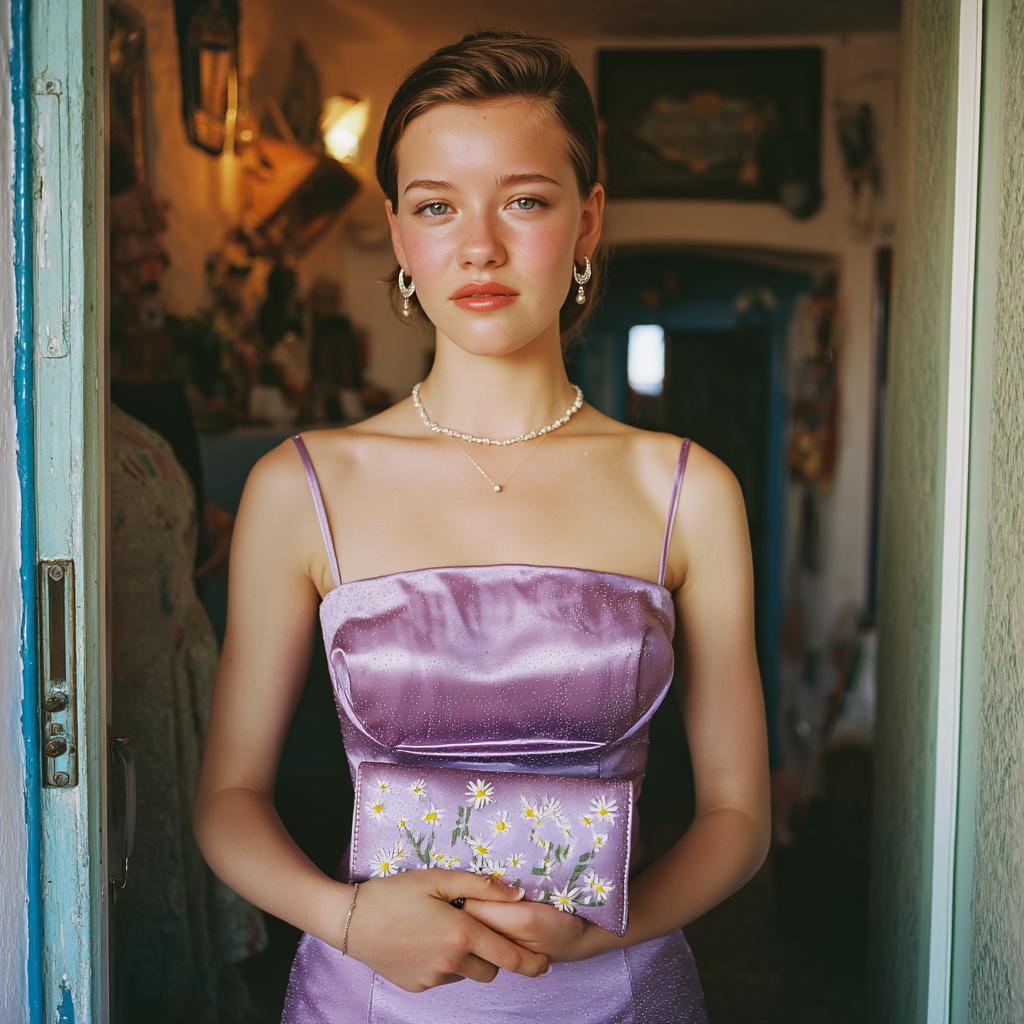
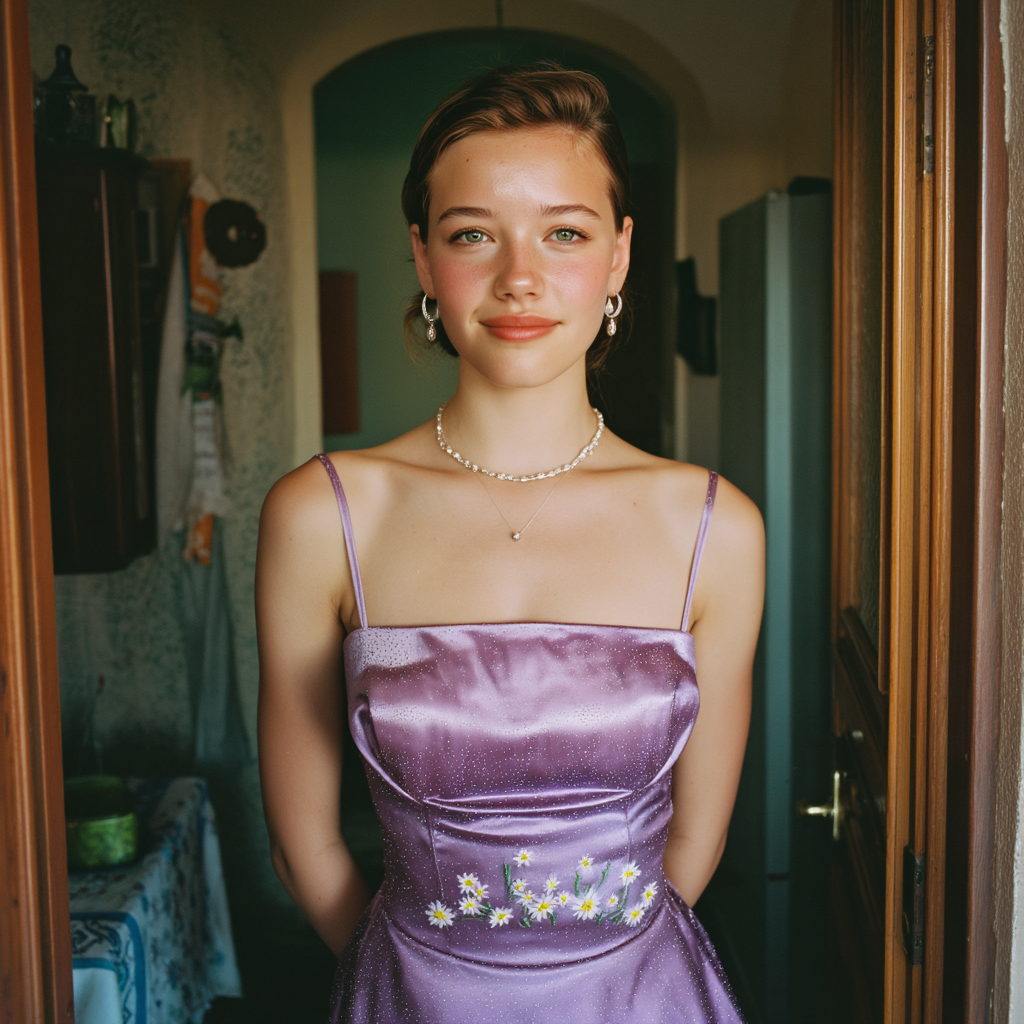
It was purple, soft, with glitter that shimmered under the light. At the waist, she’d hand-stitched tiny embroidered daisies, just like the ones I used to pick from our backyard when I was little. The bodice fit like it was made for me, because it was.

It was delicate, unique, and beautiful because it was made with love.

When I twirled in front of the mirror, Dad teared up and nearly dropped his old camera trying to get the perfect shot.

Mom touched my hair, smiling through the tears, and whispered, “You look like the most beautiful girl in the world.”

And I felt like it!

When prom night came, I was a mess with anxiety. My date, Lucas, was supposed to pick me up at 7 p.m. sharp. At 6:55 p.m., someone knocked on the door.

My heart leaped. I thought it was him.

I grabbed my little clutch and ran down the stairs, lifting my dress to avoid tripping over it. I opened the door, smiling.

But it wasn’t Lucas.

It was a woman. Mid-forties, tall, elegant. She had platinum-blonde, glossy hair that curled just right and wore designer clothes, including a navy-blue coat that looked way too expensive for our street.

She held a small white box tied with a gold ribbon and looked at me like she knew me. Her soft but sharp eyes were wide and piercing, like mine, as they lingered on me. Then she smiled, just barely.

Her perfume hit me before her voice did.

“Hi, sweetheart,” she said. “It’s been a long time. I’m your mother.”

I didn’t understand at first. I stared at her, the box, the curve of her lips. My stomach twisted. “You’re… what?”

“Your biological mother,” she said, stepping a little closer. “I know this is a shock. But I had to come. I’ve waited long enough.”

I froze in the doorway, clutching my dress. I didn’t know what to say. I’d imagined meeting her before, sure, once when I was eight and again when I turned 13. I always thought it would be in some quiet café or maybe in a park where we could talk, maybe even cry.

I didn’t think she’d show up on prom night.

“Why now?” I asked, finally finding my voice.

She sighed like she’d rehearsed the answer. “Because I’ve been following your life from a distance. I knew where you were. I was there when you were adopted, and I remembered their names and took down their address. I kept tabs, quietly.”

“But now… I’m ready to be in your life again. I thought tonight would be the perfect time. You’re dressed up, about to step into adulthood. I wanted to give you something,” she explained.

Then, without hesitation, she pressed the box into my palms. Her voice dropped, urgent and cold, as if every word carried a warning. “You deserve more than what you’ve been given.”

I didn’t take the box.

“You have to listen to me right now, you need to hear the truth, Claire,” she continued. “You’ve lived in their little bubble long enough. The truth is simple: I was too young when I had you, and I didn’t want a kid holding me back. Then I met a man—a wealthy, powerful man who offered me everything. But he had one rule: no kids. No baggage.”

She smiled again, colder this time.

“I had to choose. Him or you. And I chose him.”

I swallowed hard. “You… gave me up because of him?”

“Yes,” she said plainly. “He was my ticket out. I wanted mansions, Europe, and five-star dinners. A baby would’ve ruined all that. So I signed the papers and walked away. And it paid off.”

Behind me, I heard movement. I turned and saw Mom and Dad standing in the hallway. Mom had one hand on the wall for balance. Dad’s jaw was tight.

The woman didn’t stop.

“Don’t look so shocked. What was I supposed to do? Raise a baby in a tiny apartment, working double shifts? I made the smart choice. And look at you now. You’re beautiful. They kept you alive, sure, but they also kept you small.”

My mom started crying, and Dad consoled her, his fists clenched like he was holding himself back from exploding.

“For 16 years, you’ve been living a lie. You’ve never known real luxury. That dress? It’s cute, I’ll admit. But it’s homemade. Do you know what Dior feels like? I could show you. I can give you everything I couldn’t before.”

She opened the box and shoved it back into my hands.

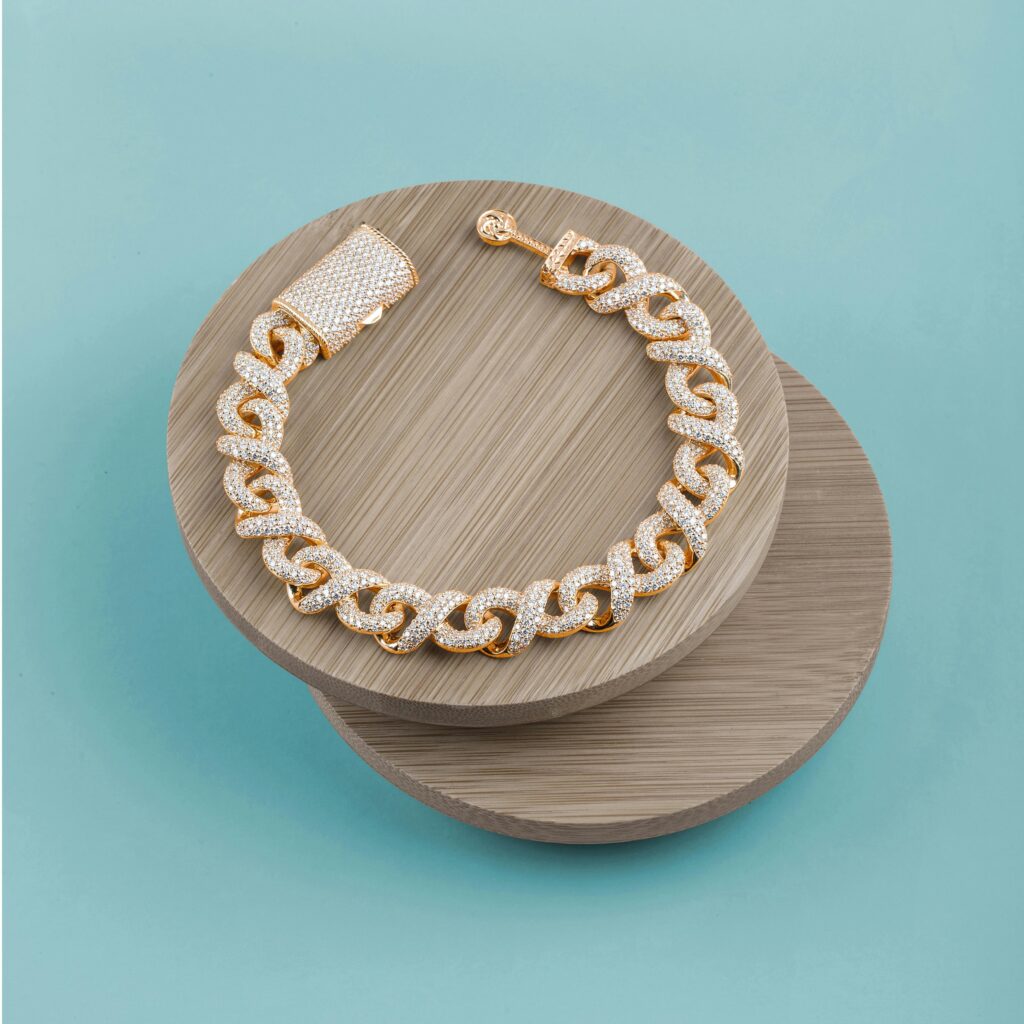
Inside was a diamond bracelet, sparkling under the porch light. I stared at it. It didn’t look real. It looked like something from a magazine ad.

“This is just the beginning,” she said. “The man’s gone. But I kept everything—the money, homes, and access. You could go to any college you wanted, wear the best clothes, and travel the world. I have lawyers and advisors lined up. You don’t have to live this small life anymore. You can come with me.”

Behind me, Mom stepped forward, her voice barely a whisper. “Claire, you don’t have to listen to this or do anything. You already know who we are. You know who you are.”

The woman rolled her eyes. “Of course, they don’t want to lose you. You’ve been their project. Their charity case. But you’re not a child anymore. Look at her,” she added, gesturing toward Mom. “Still hand-sewing because she can’t afford a proper dress. That’s not a future. That’s survival.”

Her words dug into me, but not because they were true. They weren’t. They were cruel.

I could see the pain on my mom’s face. Every stitch in my dress had been sewn with love, not money. And in that moment, I realized I had more than the woman could ever offer.

“I used to think about you,” I said quietly, “and I told myself there had to be a good reason you gave me up. That you wanted me to have a better life.”

“I did,” she said with a shrug. “Just not with me.”

I looked at her, really looked. She was glamorous, yes. And she had probably flown first-class to get here. But there was something hollow in her. Something missing.

“You don’t even regret it,” I said.

“No,” she said. “Because I can make it right now. Come with me, Claire. Leave all this behind. You deserve more.”

I stepped back. My heart was pounding so loud it felt like it was echoing through my dress.

For one terrifying second, I doubted myself, thinking maybe she was right, maybe I was missing out.

But then I thought of Mom sitting late at night, her eyes tired as she sewed each flower onto my dress. I thought of Dad fixing my bike over and over until I learned to ride. I thought of birthdays with homemade cakes, of bedtime stories, and of arms that never once let me feel unwanted.

And suddenly, my fear turned to fire.

“You had your chance,” I said. “You chose your life. And I’m choosing mine. You think you can just show up with diamonds and erase all of that?” My tears spilled over, but my voice grew louder. “You’re not my mother. She is.” I pointed to my mom, who was silently crying behind me. “You can’t buy me back.”

“You’ll regret this.”

“No,” I said, pushing the box back into her hands. “I’m choosing love over greed. Take your bracelet and money. And leave.”

Then I closed the door.

The second it clicked shut, I turned and collapsed into Mom’s arms. Dad wrapped both of us up and held on like he never wanted to let go. The purple satin of my dress wrinkled and bunched between us, but I didn’t care.

Mom stroked my back and whispered, “We didn’t tell you the truth because we didn’t want you to think you were ever unwanted. Not by us. You were the best thing that ever happened.”

Dad kissed my forehead. “We promised when we brought you home that you’d never feel like you were a second choice again. And we’re still keeping that promise, no matter what your mother said.”

I looked up at them, my eyes blurry from crying, but my heart was full. For the first time that night, my tears weren’t just from pain; they were from relief.

“You’re my real parents,” I whispered into their shoulders. “You always were.”

Another knock came at the door.

This time it was Lucas. He was holding a bouquet of daisies, his tie slightly crooked. When he saw me in the dress, his mouth dropped open.

“You look… wow.”

I smiled with red eyes, still wiping tears. “Thanks.”

He paused. “Everything okay?”

I looked back at Mom and Dad, who were still in the hallway, watching me with so much love and pride it nearly broke me again.

“Yeah,” I said. “Now it is.”

I kissed my mom’s cheek and whispered, “Thank you for making the best dress in the world.”

That night, as we walked out, I looked down at my wrist. No diamonds, but I had something priceless: the certainty that I was exactly where I belonged.

This work is inspired by real events and people, but it has been fictionalized for creative purposes. Names, characters, and details have been changed to protect privacy and enhance the narrative. Any resemblance to actual persons, living or dead, or actual events is purely coincidental and not intended by the author.

The author and publisher make no claims to the accuracy of events or the portrayal of characters and are not liable for any misinterpretation. This story is provided “as is,” and any opinions expressed are those of the characters and do not reflect the views of the author or publisher.Names, characters, and details have been altered. Any resemblance is coincidental. The author and publisher disclaim accuracy, liability, and responsibility for interpretations or reliance.

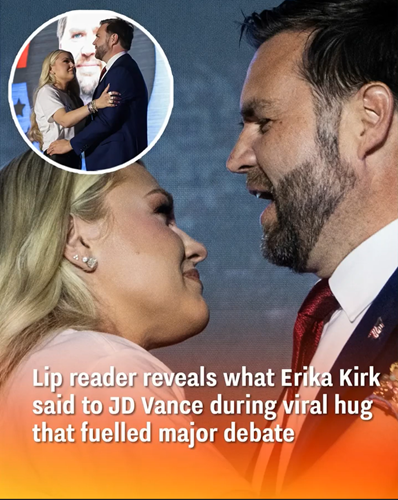
“Viral Hug Moment: Lip Reader Interprets Words Between Erika Kirk and JD Vance”

At a recent public event held at the University of Mississippi, Erika Kirk formally stepped into her new role as Chief Executive Officer of Turning Point USA, an organization founded by her late husband, Charlie Kirk.

This occasion was significant on multiple levels, marking both her first major public appearance as CEO and a deeply emotional moment as she honored the legacy of her husband, whose sudden passing left a profound impact on the organization and its supporters.

Erika addressed an audience that included friends, colleagues, long-time supporters of Turning Point USA, and key figures from the political and educational spheres, delivering a speech that combined personal reflection, tribute, and a clear commitment to continuing her husband’s mission.

She spoke openly about the challenges of navigating life after loss, describing both the grief she has experienced and the inspiration she draws from Charlie’s vision and encouragement.

Her remarks emphasized the importance of carrying forward the principles of leadership, civic engagement, and youth empowerment that Charlie had championed through the organization.

During her speech, Erika welcomed Vice President JD Vance to the stage, where he appeared as a guest of honor in recognition of the event’s significance.

As Vance approached, the two shared a long, heartfelt embrace, a moment that quickly captured the attention of attendees and viewers alike.

The hug was immediately noted online, generating widespread discussion and speculation.

Some social media users questioned the nature of the interaction, while others recognized it as a natural expression of comfort, empathy, and solidarity between two colleagues navigating a challenging and emotionally charged moment.

Many observers noted that the embrace appeared to reflect the shared understanding of grief and the supportive environment surrounding Erika during her first public appearance as CEO.

A professional lip-reading expert later analyzed the exchange between Erika and Vance, providing insight into the verbal communication that accompanied the hug.

According to the lip reader, Erika seemed to be seeking emotional support and reassurance before stepping fully into the spotlight to address the audience.

Vance reportedly offered words of encouragement, expressing pride in Erika for her courage, resilience, and commitment to her husband’s legacy.

Erika’s response conveyed both sorrow and gratitude, acknowledging that while nothing could replace the loss of her husband, she was determined to honor his work and continue his mission.

The interaction, as interpreted by the expert, emphasized the human and empathetic dimension of the moment, highlighting the deep emotional weight Erika carried while taking on her new role in the organization.

Despite the attention the moment received online, Erika chose not to directly address the viral discussion, instead prioritizing privacy, dignity, and the well-being of her family.

She reminded the public of the sensitive nature of her husband’s passing and emphasized the need for compassion and respect as her family navigates legal matters and personal challenges.

In interviews and public statements surrounding the event, Erika consistently underscored the importance of allowing space for mourning and reflection, encouraging media outlets and supporters alike to approach the situation with understanding rather than sensationalism.

Her approach reflects a deliberate balance between fulfilling public leadership responsibilities and protecting the emotional and personal boundaries of her family.

Throughout the event, attendees and supporters observed Erika’s composure, strength, and poise.

Many described the ceremony as deeply moving, noting that it provided a rare glimpse into the intersection of personal grief and professional responsibility.

Erika’s speech, combined with the visible support of figures like JD Vance, highlighted the profound challenges of stepping into leadership after a sudden and personal loss.

In addition to honoring Charlie’s contributions, Erika used the platform to express gratitude toward the Turning Point USA community for its support and to reaffirm her commitment to maintaining the organization’s focus on civic engagement, educational initiatives, and youth empowerment.

The emotional resonance of the event extended beyond the stage and the immediate audience.

Social media reactions, while varied, frequently acknowledged the courage required for Erika to appear publicly and address the loss of her husband while assuming leadership of a prominent organization.

Many supporters praised her ability to project strength, grace, and determination even while experiencing profound personal grief.

Others discussed the hug between Erika and Vance as an emblem of human empathy, a reminder that leadership often involves not only professional skill but also emotional intelligence and the capacity to provide and receive support during difficult times.

The event also served to reinforce the broader significance of Turning Point USA and Charlie Kirk’s legacy.

As Erika continues her tenure as CEO, she faces the dual challenge of honoring the organization’s mission while guiding it through a period of transition and change.

Her commitment to continuing her husband’s work, combined with the public acknowledgment of her emotional journey, demonstrates a dedication to leadership that is both authentic and deeply human.

Erika’s ability to navigate the balance between grief and responsibility has been highlighted as a model of resilience and determination, inspiring both the Turning Point USA community and a wider audience who have followed her journey.

Ultimately, the viral hug between Erika Kirk and JD Vance, while briefly a point of public attention and online discussion, reflects a moment of shared empathy, support, and understanding amid a period of profound personal and professional transition.

It underscores the human realities behind public figures and serves as a reminder that moments of vulnerability and connection can carry powerful significance.

Erika Kirk’s presence at the University of Mississippi event, her remarks honoring her late husband, and her embrace with Vance collectively illustrate the courage required to lead in the face of loss, the enduring importance of personal support networks, and the capacity for public leaders to inspire through authenticity, empathy, and strength.

As she continues to navigate her responsibilities as CEO, Erika remains committed to preserving Charlie Kirk’s vision, supporting her team, and guiding Turning Point USA toward a future that honors both its mission and the legacy of its founder.

At a recent public event held at the University of Mississippi, Erika Kirk formally stepped into her new role as Chief Executive Officer of Turning Point USA, an organization founded by her late husband, Charlie Kirk.

This occasion was significant on multiple levels, marking both her first major public appearance as CEO and a deeply emotional moment as she honored the legacy of her husband, whose sudden passing left a profound impact on the organization and its supporters.

Erika addressed an audience that included friends, colleagues, long-time supporters of Turning Point USA, and key figures from the political and educational spheres, delivering a speech that combined personal reflection, tribute, and a clear commitment to continuing her husband’s mission.

She spoke openly about the challenges of navigating life after loss, describing both the grief she has experienced and the inspiration she draws from Charlie’s vision and encouragement.

Her remarks emphasized the importance of carrying forward the principles of leadership, civic engagement, and youth empowerment that Charlie had championed through the organization.

During her speech, Erika welcomed Vice President JD Vance to the stage, where he appeared as a guest of honor in recognition of the event’s significance.

As Vance approached, the two shared a long, heartfelt embrace, a moment that quickly captured the attention of attendees and viewers alike.

The hug was immediately noted online, generating widespread discussion and speculation.

Some social media users questioned the nature of the interaction, while others recognized it as a natural expression of comfort, empathy, and solidarity between two colleagues navigating a challenging and emotionally charged moment.

Many observers noted that the embrace appeared to reflect the shared understanding of grief and the supportive environment surrounding Erika during her first public appearance as CEO.

A professional lip-reading expert later analyzed the exchange between Erika and Vance, providing insight into the verbal communication that accompanied the hug.

According to the lip reader, Erika seemed to be seeking emotional support and reassurance before stepping fully into the spotlight to address the audience.

Vance reportedly offered words of encouragement, expressing pride in Erika for her courage, resilience, and commitment to her husband’s legacy.

Erika’s response conveyed both sorrow and gratitude, acknowledging that while nothing could replace the loss of her husband, she was determined to honor his work and continue his mission.

The interaction, as interpreted by the expert, emphasized the human and empathetic dimension of the moment, highlighting the deep emotional weight Erika carried while taking on her new role in the organization.

Despite the attention the moment received online, Erika chose not to directly address the viral discussion, instead prioritizing privacy, dignity, and the well-being of her family.

She reminded the public of the sensitive nature of her husband’s passing and emphasized the need for compassion and respect as her family navigates legal matters and personal challenges.

In interviews and public statements surrounding the event, Erika consistently underscored the importance of allowing space for mourning and reflection, encouraging media outlets and supporters alike to approach the situation with understanding rather than sensationalism.

Her approach reflects a deliberate balance between fulfilling public leadership responsibilities and protecting the emotional and personal boundaries of her family.

Throughout the event, attendees and supporters observed Erika’s composure, strength, and poise.

Many described the ceremony as deeply moving, noting that it provided a rare glimpse into the intersection of personal grief and professional responsibility.

Erika’s speech, combined with the visible support of figures like JD Vance, highlighted the profound challenges of stepping into leadership after a sudden and personal loss.

In addition to honoring Charlie’s contributions, Erika used the platform to express gratitude toward the Turning Point USA community for its support and to reaffirm her commitment to maintaining the organization’s focus on civic engagement, educational initiatives, and youth empowerment.

The emotional resonance of the event extended beyond the stage and the immediate audience.

Social media reactions, while varied, frequently acknowledged the courage required for Erika to appear publicly and address the loss of her husband while assuming leadership of a prominent organization.

Many supporters praised her ability to project strength, grace, and determination even while experiencing profound personal grief.

Others discussed the hug between Erika and Vance as an emblem of human empathy, a reminder that leadership often involves not only professional skill but also emotional intelligence and the capacity to provide and receive support during difficult times.

The event also served to reinforce the broader significance of Turning Point USA and Charlie Kirk’s legacy.

As Erika continues her tenure as CEO, she faces the dual challenge of honoring the organization’s mission while guiding it through a period of transition and change.

Her commitment to continuing her husband’s work, combined with the public acknowledgment of her emotional journey, demonstrates a dedication to leadership that is both authentic and deeply human.

Erika’s ability to navigate the balance between grief and responsibility has been highlighted as a model of resilience and determination, inspiring both the Turning Point USA community and a wider audience who have followed her journey.

Ultimately, the viral hug between Erika Kirk and JD Vance, while briefly a point of public attention and online discussion, reflects a moment of shared empathy, support, and understanding amid a period of profound personal and professional transition.

It underscores the human realities behind public figures and serves as a reminder that moments of vulnerability and connection can carry powerful significance.

Erika Kirk’s presence at the University of Mississippi event, her remarks honoring her late husband, and her embrace with Vance collectively illustrate the courage required to lead in the face of loss, the enduring importance of personal support networks, and the capacity for public leaders to inspire through authenticity, empathy, and strength.

As she continues to navigate her responsibilities as CEO, Erika remains committed to preserving Charlie Kirk’s vision, supporting her team, and guiding Turning Point USA toward a future that honors both its mission and the legacy of its founder.

People are losing it at Trump’s reaction as guest collapses in the Oval Office during press conference

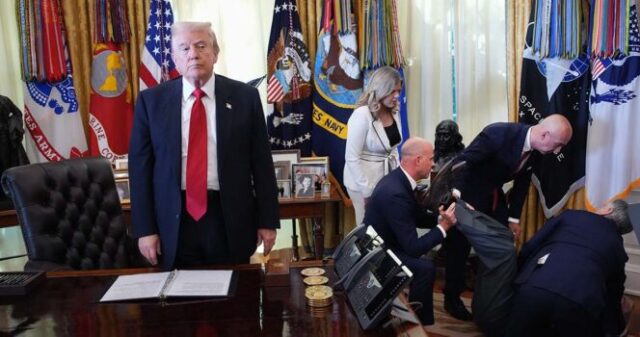
On Thursday, as Dr. Oz gave a speech in the Oval Office with Donald Trump and guests in attendance, one guest suddenly collapsed in the background, which was caught on camera. Now, people are losing it over the president’s reaction.

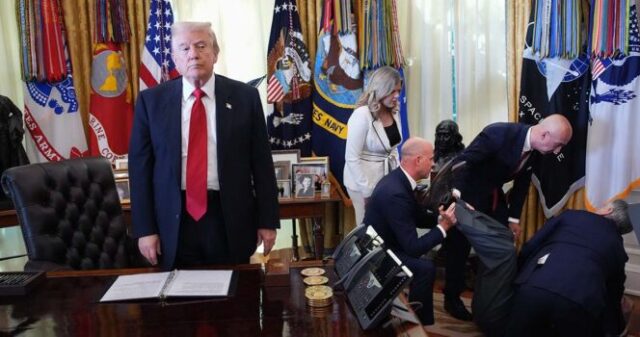
“Press out,” White House officials shouted when a person, who has not been identified, collapsed on the Oval Office floor behind the Resolute Desk. Dr. Mehmet Oz, Trump’s administrator for the Centers for Medicare & Medicaid Services, held a press conference regarding the president’s announcement of his weight-loss drug cost-reduction plan when the incident occurred.

Executives from Novo Nordisk, which makes Ozempic, Rybelsus, and Wegovy, were present. White House Press Secretary Karoline Leavitt later stated that the person was doing “okay” after the fainting.

“The White House Medical Unit quickly jumped into action, and the gentleman is okay,” she said.

At first, it was reported that Gordon Findlay, an executive at Novo Nordisk, had passed out. However, the company said that CEO Mike Doustdar and Dave Moore, EVP, US Operations, were the only two Novo Nordisk reps in the room. Later, it was confirmed that the guest was from Eli Lilly, a pharmaceutical company.

“If you’ve ever been in the Oval Office, you stand a long time and it’s warm. I’m pleased to say that the White House medical staff did a great job, and he’s doing great, so nothing to be concerned about. Thanks for your concern,” David Ricks, Eli Lilly chair and CEO, told ABC News.

People are losing it at Donald Trump’s reaction as White House attendee collapses

Dr Oz was seen helping the person on the floor. However, afterward, social media was filled with reactions regarding what the President of the United States did in the situation.

Images of Donald Trump standing at his desk looking towards the cameras while people helped the man on the floor quickly spread.

“Just replace the guy on the floor with America and we have the perfect painting for 2025,” one person wrote on Reddit.

Another added: “[Trump’s] not scripted for dynamic events. It’ll be better to just to restart the quest so you don’t corrupt your save.”

Meanwhile, a third person was critical, saying, “This photo perfectly encapsulates the Trump admin in 2025. Humans empathetic for someone in trouble, while Trump stands by vaguely annoyed that it isn’t about him.”

The press conference was momentarily delayed, but shortly after, the press were invited back. Donald Trump announced that the person was doing well.

“You saw he went down, and he’s fine. We just sent him out and he’s got doctor’s care, but he’s fine,” he said. “So we had a little bit of an interruption.”

What’s your take on this? Please share this article on Facebook and give us your opinion in the comment section!

You Don’t Buzz a Legend! — Lucille Ball’s Hilarious Super Password Moment (1987)

By 1987, Lucille Ball had already become a living legend — a household name for over three decades and the queen of television comedy. But what made Lucy truly special wasn’t just her success, it was her ability to still make audiences laugh effortlessly, even outside her iconic sitcom roles.

One of her most delightful later appearances came on the hit NBC game show Super Password All-Stars, where she joined other comedy greats — Betty White, Estelle Getty, and several of TV’s brightest personalities.

It was supposed to be a friendly, competitive match of wordplay and quick thinking. But when Lucille Ball is in the room, things never stay “ordinary” for long.


🎬 Love seeing Lucy on TV again? Don’t miss her hilarious interview with Joan Rivers, where she opens up about her kids and her legacy.

🎮 The Legendary Moment

During one of the game’s fast-paced rounds, Lucy leaned in, focused, and gave her answer — just a fraction too late.
The buzzer went off.

And then, without hesitation, one of her fellow players shouted the now-iconic line:

“You don’t buzz a legend!”

The studio audience roared with laughter, the contestants cracked up, and Lucy herself gave that unmistakable “caught-in-the-act” grin that fans knew so well. It was a moment that perfectly summed up her entire career — spontaneous, funny, and utterly irresistible.

Even in a modern, high-energy 1980s game show setting, Lucille Ball didn’t need a script or setup to be magnetic. One buzz. One line. And she had stolen the entire show.


💬 A Legendary Lineup

The episode was filled with powerhouse personalities:

  • Lucille Ball — TV’s eternal queen of comedy
  • Betty White — the quick-witted charmer
  • Estelle Getty — beloved for The Golden Girls
  • Hosted by Bert Convy, who struggled to keep the laughter in check

Seeing these icons together was like watching TV history collide — the past and present of comedy sharing one unforgettable stage.

🍇 Relive the classics! Watch Lucy’s grape-stomping scene that inspired generations of comedians.


🌟 Lucy’s Lasting Charm

At 76 years old, Lucille Ball’s spark was undimmed. Her facial expressions, sharp timing, and natural sense of humor reminded everyone that her gift wasn’t tied to youth or scripts — it was simply who she was.

In this short exchange, Lucy showed why she wasn’t just a legend — she defined what it meant to be one. It wasn’t about fame or titles; it was about heart, presence, and a kind of joy that never faded.


💡 Did You Know?

1. Lucille Ball was a lifelong fan of game shows.
She first appeared on Password in the 1960s and loved the challenge of quick-thinking wordplay — though she often joked that the pressure made her “go blank on live TV.”

📺 2. This was one of her last TV appearances.
Super Password All-Stars aired just two years before Lucy’s passing in 1989, making it one of her final public performances — a sweet and humorous reminder of her enduring brilliance.

❤️ 3. Betty White adored Lucille Ball.
The two shared a deep friendship. Betty once said that Lucy “wasn’t afraid to look silly — and that’s what made her great.”

🎭 4. That buzz moment wasn’t scripted.
The “You don’t buzz a legend!” line was totally spontaneous — pure, unplanned TV magic.

Man who discovered America’s ‘most inbred family’ says ‘they’ve been lying to me the whole time’

In 2004, Mark Laita became a name known worldwide after meeting the Whittakers, who claimed to be “America’s most inbred family.” The documentary became a success; however, it wasn’t all positive for Laita. Later, he revealed the family had lied to him for years.

In 2004, the Whittkaer family outside the small rural town of Odd, West Virginia, became known to the entire world. Filmmaker Mark Laita documented the family, which was branded “America’s most inbred family” in a YouTube documentary, featuring siblings Ray, Betty, Larry, and Lorene, alongside Lorene’s son, Timmy.

Besides the siblings being descendants of two generations of first cousins, one set of cousins who married had fathers who were identical twins. The twin brothers, John and Henry Whittaker, were born in 1897, and John later married his first cousin, Ada.

They had nine children, including one girl named Gracie Irene Whittaker, born in 1920. At the same time, Henry had married a woman named Sally. They had seven children, including a boy named John in 1913, and in 1935, cousins John and Gracie married. They had 15 children, with everyone having distinct mental and physical conditions.

The Whittakers were branded “America’s most inbred family”

The Whittakers were asked about inbreeding, but it appeared they didn’t seem to understand that it could be due to their ancestral line. For example, Laita asked family member Kenneth why their eyes weren’t facing forward, to which he responded,” might be coal mining.”

Mark Laita eventually befriended the family, but at first, John’s brother had pulled a gun at him. However, later, the documentary filmmaker revealed that the Whittakers had lied to him.

In March 2024, Laita announced that one of the family members, Larry, had died in a possible heart attack. Per The Mirror, Mark said, “There’s some news with the Whittaker family. Sadly, Larry Whittaker passed away last week. I think he had a heart attack.”

“Larry was always a great dude to me. He was always really nice. Larry was always a standup guy and he and Betty really ran the show very well. Larry will be greatly missed. It’s going to be hard on Betty now,” he added.

Laita donated $ 1,000 to Larry’s funeral, but later it turned out the Whittaker family had lied. Larry was alive, as announced in a YouTube video titled “The Death of Larry Whittaker.” Larry was seen sitting outside the family home in rural West Virginia.

Photgrapher Mark Laita says the Whittaker family “lied” to him

Laita found out about it from the YouTube video, saying they had been “lying to me all this time.” The money had been handed to Larry’s daughter, BJ, who later apologized to the filmmaker.

BJ said: “I’m very sorry for what I done. I mean, it was because I was on drugs, and you’ll do anything to get it. Yep…I was on heroin and crack cocaine.”

Although they had lied to him, Mark Laita continued to help the family through GoFundMe, which raised thousands of dollars for the Whittaker family.

Who is Zohran Mamdani’s wife? Inside the life of Rama Duwaji

When Zohran Mamdani was declared the next mayor of New York City on Tuesday night, he made history becoming the first Muslim mayor and the youngest to lead the city in over a century.

But standing beside him, smiling quietly as the crowd roared, was someone about to make history too – his wife, 28-year-old artist Rama Duwaji.

While Mamdani’s political rise has captured headlines, his love story with Rama is straight out of a movie — one that begins not in City Hall, but on a dating app.

A match made on hinge

The couple first connected on Hinge in 2021, back when Mamdani had just been elected to the New York State Assembly. Rama, a Syrian-American illustrator based in Brooklyn, wasn’t familiar with New York politics — and Mamdani wasn’t exactly looking for the spotlight.

Their first date was refreshingly normal: coffee at Qahwah House, a cozy Yemeni café in Brooklyn, followed by a walk through McCarren Park. On their second date, Mamdani took Rama on a tour of his Astoria district, the same neighborhood that would one day help make him mayor.

By October 2024, the two were engaged.

“Couldn’t possibly be prouder,” Rama wrote on Instagram alongside photos of the couple and a childhood picture of Mamdani.

Just days after announcing their engagement, Mamdani launched his campaign for mayor. The couple celebrated their nikah and engagement party in Dubai that December, a rooftop ceremony overlooking the Burj Khalifa, filled with white roses and trailing greenery.

“This engagement and Nikkah were more than an event — it was a floral installation set against Dubai’s dusky skyline,” LMF Dubai, the event designer, wrote on Instagram.

A civil ceremony in New York

Two months later, in February 2025, they made it official in a civil ceremony at the City Clerk’s Office in Lower Manhattan. Mamdani later shared photos of the day, writing:

The lead photo captured the couple in a candid black-and-white moment on the New York City subway at Union Square. Smiling as they held onto a pole, Duwaji stood out in a white dress paired with black boots, clutching a bouquet, while commuters around them went about their day, seemingly unaware they were sharing a train with the city’s future first couple.

“Three months ago, I married the love of my life, Rama, at the City Clerk’s office. Now, right-wing trolls are trying to make this race — which should be about you — about her. Rama isn’t just my wife; she’s an incredible artist who deserves to be known on her own terms. You can critique my views, but not my family.”

Who is Rama Duwaji?

Born in Houston, Texas, Rama moved with her family to Dubai when she was nine. She later returned to the U.S. to attend Virginia Commonwealth University and earned her master’s in illustration from the School of Visual Arts in New York.

Her work — featured in The Cut, Vogue, The New Yorker, and BBC — explores themes of identity, womanhood, and displacement.

On Instagram, where she has more than 250,000 followers, her artwork often focuses on Middle Eastern women, Gaza, and the Palestinian cause.

”I believe everyone has a responsibility to speak out against injustice, and art has such an ability to spread it,” Duwaji said in an interview earlier this year.

“With so many people being pushed out and silenced by fear, all I can do is use my voice to speak out about what’s happening in the US and Palestine and Syria as much as I can,” she added.

Sometimes, Rama also enjoys stepping away from her digital work to craft her own ceramics, especially hand-painted blue-and-white plates adorned with her signature illustrations.

Despite avoiding the traditional “first lady in waiting” role, no campaign speeches, no glossy magazine profiles, Rama played a quiet but key part in Mamdani’s rise.

She helped design his campaign’s branding, a vibrant mix of Metrocard yellow, Mets blue, and firehouse red, seen across posters and digital ads citywide.

“She’s been a huge influence on how we present our message,” one campaign staffer said. “Even if she’s not on stage, she’s everywhere.”

From Brooklyn to Gracie Mansion

Now, the couple is set to move into Gracie Mansion, where Rama Duwaji will officially become New York’s First Lady, and the first member of Gen Z to hold the title.

Rushing to social media to celebrate the historic moment, one X user wrote: “If Mamdani wins the election, becoming the city’s first Muslim mayor and its youngest in a century, Duwaji too would be positioned to make and shape history. She would be the first member of Gen Z to serve as New York City’s first lady.”

“Now, that’s exciting!” exclaimed another, while a third added: “The new First Lady of NYC, Rama Duwaji, ladies and gentlemen.”

“First-ever Gen Z First Lady of NY!” gushed a fourth.

Whether she chooses to stay behind the scenes or step into advocacy, one thing is certain: she’s redefining what it means to be a political partner in the modern age.

Together, Zohran Mamdani and Rama Duwaji aren’t just New York’s newest power couple. They’re symbols of a new generation leading with creativity, conviction, and love.

Trump finally responds to Mamdani’s election-night jabs

President Donald Trump didn’t like what he heard when newly elected New York City Mayor Zohran Mamdani delivered his victory speech.

Now, the president is firing back and warning his new political rival.

Euphoric atmosphere in Brooklyn

The biggest topic in U.S. politics this week has undoubtedly been Zohran Mamdani’s historic victory in the New York City mayoral race.

In the euphoric atmosphere that filled Brooklyn on election night, the 34-year-old Mamdani took the stage to deliver a victory speech, one that took direct aim at Donald Trump.

“New York will remain a city of immigrants, a city built by immigrants, powered by immigrants and, as of tonight, led by an immigrant,” he said, adding: “If anyone can show a nation betrayed by Donald Trump how to defeat him, it is the city that gave rise to him.”

But he didn’t stop there.

Wasting no time, Mamdani called out Trump directly, hinting at the fierce political battles to come. Facing a roaring crowd, he delivered four pointed words aimed squarely at the president:

“Donald Trump, since I know you’re watching, I have four words for you: turn the volume up!”

Trump fires back

It goes without saying that Donald Trump is no fan of Zohran Mamdani — the president has repeatedly labeled him a communist, even though Mamdani himself describes his politics as democratic socialist.

And of course, many had been waiting to hear Trump’s first reaction to Mamdani’s speech, and now, the president has finally given his first public response.

Trump, speaking with Fox News’ Bret Baier, fired back on Wednesday, saying that the newly elected New York City Mayor went too far. The president criticized the fiery victory speech, calling the remarks “angry toward me” and “very dangerous.”

“It’s a very dangerous statement for him to make,” Trump said.

“He has to be a little bit respectful of Washington, because if he’s not, he doesn’t have a chance of succeeding.”

”Slimy Newscum, right?”

The president had previously warned that he would provide only the “very minimum” of federal funds to New York City if Mamdani won City Hall.

During his appearance at the America Business Forum in Miami on Wednesday, Trump also turned his attention to California Governor Gavin Newsom, unveiling a new nickname for his longtime political rival.

“Maybe that should be his nickname — Slimy. Slimy Newscum, right?” Trump said, prompting laughter from the crowd.

Newsom was quick to respond on X, writing simply:

“You lost.”

Meanwhile, in California, both Gov. Newsom and Secretary of State Shirley Weber were named in a lawsuit filed by state Republicans after voters approved Proposition 50, a measure allowing the state to redraw congressional district boundaries.

Little Girl Begged to Hells Angels “They’re Beating My Mama”

In a world where heroes often wear capes or carry badges, there’s a story that proves real strength lies in protecting the helpless—no matter who you are. It’s a story that starts with a little girl, a desperate cry for help, and a group of tough, leather-clad bikers who have long been known for their fierce reputation.

But on that day, they weren’t out for trouble. They weren’t chasing revenge. They were on a mission to protect.


A Cry for Help That Stopped Time

The moment a terrified little girl burst into a Hells Angels biker bar, her words cut through the noise and laughter, freezing every conversation. “They’re beating my mama,” she screamed, her face twisted in panic and fear. The room, usually filled with the roar of engines and boisterous talk, fell into stunned silence. In that instant, every person in that bar understood what needed to be done.

The Hells Angels are no strangers to conflict, but on this occasion, the violence wasn’t a call for more destruction. It was a call for justice. Every biker in that room knew that when innocence is threatened, something bigger than the reputation of their club takes precedence. This wasn’t just about muscle; this was about honor.


The Unstoppable Fury of Brotherhood

Minutes later, the engines roared to life. It wasn’t a reckless rush, nor was it an act of revenge. It was a calculated, determined response from men who understood what it meant to stand up when someone couldn’t protect themselves.

The Hells Angels were heading out, but not in pursuit of violence. Their destination was one of righteousness, a mission to stop an assault and make sure that the little girl’s mother would no longer live in fear.

Riding as one, they formed a brotherhood of unbreakable strength and unity. Each member knew that the justice they sought wasn’t about brute force—it was about standing between evil and the innocent. The mother, a victim of domestic violence, had no other way out, and this was her moment of salvation.


Standing Between Evil and Innocence

As they arrived at the house, the bikers didn’t rush in guns blazing. They didn’t escalate the situation with unnecessary violence. They simply made their presence known—loud, powerful, and unwavering. The man who had been hurting the mother saw the Hells Angels approach and knew that he no longer had control of the situation.

In that moment, it wasn’t just about physical strength. It was about the overwhelming power of knowing that someone was finally standing up for what was right. The bikers didn’t need to fight or strike a single blow. Their very presence, their solidarity, sent a message loud and clear: this was a line that should never be crossed, and they would protect the innocent with every ounce of their being.

The mother, once trembling in fear, now found herself surrounded by a shield of strength and solidarity. The man, realizing the consequences of his actions, had no choice but to back down. The bikers didn’t need to prove their toughness through aggression—they demonstrated the strength of their hearts and their code.


The Code of Honor

For the Hells Angels, this wasn’t a moment about their reputation or proving something to the world. It was about the brotherhood and code they live by—a code that values honor, protection, and loyalty. Real strength isn’t about causing fear; it’s about offering protection to those who need it most. When that little girl ran in, they could have brushed it off, but they knew that when someone cries for help, real men step up.

This act of courage didn’t make headlines for the usual reasons associated with the Hells Angels. It wasn’t about a clash between rival gangs or a violent showdown. It was about something much deeper—heart, honor, and the unshakable bond that ties them together as protectors.


True Heroes Still Ride

This story is a powerful reminder of why the strongest heroes don’t always fit the mold we expect. Real power isn’t about tearing things down; it’s about standing up for what’s right, protecting the helpless, and showing that there is more to strength than just physical force.

The Hells Angels proved that day that true heroes don’t just ride for revenge—they ride to protect. In a world where too many forget what it means to honor and defend the vulnerable, this story stands as a shining example of courage, compassion, and the unwavering belief that sometimes, the toughest men are the ones who fight to protect others.

If you believe in heroes who act without hesitation, who rise when others fall, this story will reaffirm that real strength lies in heart, in honor, and in protecting the powerless. Because, in the end, it’s not the loudest engines or the toughest men that make the biggest difference—it’s the ones who stand up when they’re needed most.

Bikers Kidnapped My Terminally Ill Son From The Hospital And Police Refused To Help Me Find Him

The bikers walked into my son’s hospital room at midnight and took him while I was sleeping in the chair beside his bed.

I woke up to an empty bed. Empty IV stand. His stuffed elephant gone. The only thing left was a note in crude handwriting: “We have Tommy. Don’t call the cops. He’s safe. We promise. You’ll understand by morning.”

I called the cops anyway. Screaming. Hysterical. My seven-year-old son had stage four leukemia. Two weeks to live, they’d said. Maybe less.

He needed his medications. His oxygen. His monitoring equipment. And some leather-wearing criminals had stolen him from his deathbed.

The officer who responded read the note and did something I’ll never forget. He smiled. Actually smiled.

“Ma’am, if the Iron Knights took your boy, he’s exactly where he needs to be.” Then he refused to file a report. Refused to issue an Amber Alert. Just kept saying I should trust them.

Trust them? I hated bikers. Hated everything about them. My ex-husband was a biker. Left us when Tommy got sick. Said he couldn’t handle watching his son die. These people were all the same. Selfish. Reckless. Criminal.

And now they had my dying son. I had no idea where. No idea why. Just a note saying “don’t call the cops” from the same officer who wouldn’t help me.

My son had days left to live. Maybe hours. And I was supposed to trust the people I hated most in the world? The morning couldn’t come fast enough, because when it did, I was going to find my son myself and make every single one of those bikers

I’m Jennifer Mason. Thirty-four years old. Single mother. Waitress at Miller’s Diner. And eight hours ago, I hated bikers more than anyone on this planet.

My ex-husband, Derek, was a biker. Rode with some club. Spent more time with his “brothers” than his family. When Tommy got diagnosed with leukemia three years ago, Derek lasted six months before the pressure broke him.

“I can’t watch him die, Jen,” he said. “I’m not strong enough.”

He left. Sent child support sometimes. Never visited. Never called Tommy. Just… gone. And I blamed the bikes. The club. The lifestyle that made him think running was acceptable.

So when I woke up at 12AM in Tommy’s hospital room and found his bed empty, when I saw that note written in chicken-scratch handwriting with a drawing of a skull at the bottom, my first thought was: Bikers did this.

My second thought was: My baby’s going to die alone and scared.

Tommy had been in St. Mary’s Hospital for three weeks. This was it. The final stay. No more treatments. No more hope. Just pain management and waiting. The doctors said two weeks maximum. His little body was shutting down.

He was seven years old. Should have been in second grade. Should have been playing soccer. Should have been losing teeth and learning to read chapter books and complaining about homework.

Instead, he was dying. And now he was gone.

I ran to the nurses’ station screaming. They called security. Security called the police. Officer Mike Randall showed up twenty minutes later.

Big guy. Fifty-something. When he read the note, his whole face changed.

“The Iron Knights took him?”

“I don’t know! The note just has that skull symbol thing!”

Officer Randall pulled out his phone. Made a call. “Yeah, it’s Mike. Iron Knights grabbed a kid from St. Mary’s. Tommy Mason, right?” He looked at me. I nodded numbly. “Yeah, the Mason kid. Stage four. Okay. Got it.”

He hung up. Looked at me with something like pity.

“Ma’am, your son is fine.”

“Fine? FINE? He’s dying! He needs his medications! He needs—”

“He needs what they’re giving him. Trust me.”

“Trust you? Trust them? Some criminals kidnapped my son!”

“They didn’t kidnap him. They borrowed him.”

I thought I was going insane. “Borrowed him? He’s not a library book! He’s a dying child who needs—”

“Mrs. Mason.” Officer Randall’s voice was firm. “I know you’re scared. I know this looks bad. But the Iron Knights… they don’t hurt kids. They help them. Especially sick ones.”

“My ex-husband was a biker. You know what he did when Tommy got sick? He ran. He abandoned us. That’s what bikers do.”

Officer Randall was quiet for a moment. “Your ex was with the Iron Knights?”

“Some club. I don’t know which one. I didn’t care.”

“Well, the Iron Knights aren’t like other clubs. They’re…” He struggled for words. “Special. They do something for kids like Tommy. Something important. Something you need to see to believe.”

“I want my son back. Now.”

“You’ll have him back by 8 AM. I promise. But you need to let them finish.”

“Finish what?”

He wouldn’t answer. Just kept saying trust them. Trust the process. Trust that Tommy was safe.

I didn’t sleep. Couldn’t. I sat in that empty hospital room staring at Tommy’s empty bed. His stuffed elephant—Mr. Trunk—was gone. His iPad. His blanket. Everything.

The nurses tried to comfort me. “The Iron Knights are good people,” one said. “My nephew… they did this for him too. Before he passed.”

Before he passed.

Those words made me want to vomit.

At 6 AM, my phone rang. Unknown number.

“Hello?”

“Mommy?” Tommy’s voice. Weak but… happy? “Mommy, you won’t believe what’s happening!”

“Tommy! Baby, where are you? Are you okay? Did they hurt you?”

“Hurt me? Mommy, they’re amazing! We’re at the beach! I’m at the beach, Mommy!”

The beach. We were in Nebraska. The nearest beach was 1,000 miles away.

“Tommy, that’s not possible. You were too sick to—”

“The bikers brought me! They have a special van with a bed and everything! And Mommy, I saw the sunrise! Over the ocean! It was so pretty!”

I was crying now. “Baby, you need to come back. You need your medicines. You need—”

“I have all my medicines. There’s a nurse here. Her name is Susan. She’s really nice. And Mommy, there’s more bikers than I can count! They’re all here for me!”

“For you?”

“It’s called a wish ride. They do it for kids like me. Kids who are…” His voice got quiet. “Kids who don’t have much time. They make our wishes come true.”

I couldn’t speak.

“Mommy, I always wanted to see the ocean. Remember? I told you last month? But we couldn’t afford it. And I was too sick. But the bikers… they just picked me up and took me! We drove all night! Well, I slept most of the way in the special bed. It had IV hooks and everything!”

“Who are these people?”

“The Iron Knights! There’s like fifty of them! All on motorcycles! And they’re so nice, Mommy. They keep asking if I need anything. If I’m comfortable. If I want snacks. One guy—his name is Bear—he told me jokes the whole way!”

I heard voices in the background. Laughter. Tommy laughing.

“Mommy, I gotta go. We’re gonna build a sandcastle! Can you believe it? I’m actually gonna touch sand! Real ocean sand!”

“Tommy, wait—”

“I love you, Mommy. Thank you for letting them take me.”

He hung up.

I hadn’t let them take him. They’d stolen him. But as I sat there listening to the dial tone, I realized Tommy sounded happier than he’d been in three years.

Officer Randall came back at 7 AM. Found me crying in the hospital room.

“He called you?”

I nodded.

“The beach. It’s what he wanted, right?”

“How did you know?”

“The Iron Knights asked the nurses. Asked what Tommy’s wish was. The nurses said he talked about the ocean constantly. About seeing it before…” Randall didn’t finish. “So they made it happen.”

“Why?”

“Because that’s what they do. Started fifteen years ago. Biker named John ‘Reaper’ Sullivan. His daughter died of cancer at eight. Her last wish was to see the Grand Canyon. They were too poor. Too far. She died without seeing it.”

Randall sat down in the chair I’d been sleeping in.

“Reaper started the program. Called it Last Ride Wishes. Any child with a terminal diagnosis. Any wish that involves travel. The Iron Knights make it happen. They have a special medical van. Volunteer nurses. Doctors on call. They coordinate with hospitals. Get permission from parents—usually. In your case, they knew you wouldn’t say yes.”

“Because I hate bikers.”

“Because you hate your ex-husband. There’s a difference.”

He was right.

“The Iron Knights have granted 247 wishes in fifteen years. Beach trips. Mountains. Disney World. Baseball games. They’ve taken dying kids all over the country. Given them one last adventure. One last moment of joy.”

“At their own expense?”

“Completely. Gas. Food. Medical supplies. All donated. All volunteer. These guys work regular jobs. Use their vacation days for this. Their own money. Because they believe every child deserves one last perfect day.”

I couldn’t process it. These bikers—these people I’d hated, assumed were criminals—were giving dying children their last wishes.

At 8

AM, I heard the motorcycles. Dozens of them. The entire hospital heard them. That distinctive roar echoing through the parking lot.

I ran to the window. Fifty motorcycles. Maybe more. And in the center, a white van with a cartoon knight painted on the side.

They were bringing Tommy home.

I took the elevator down. Ran to the parking lot. The bikers were helping Tommy out of the van. He was in his wheelchair—he couldn’t walk anymore—but he was glowing. Actually glowing with happiness.

“Mommy!” he screamed when he saw me. “Mommy, I saw the ocean! I touched it! I have sand! Look!”

He held up a jar. Full of sand. Ocean sand.

I ran to him. Hugged him. Checked him over. He was fine. Tired but fine. His IV was still in. His meds had been administered. His charts were updated. A nurse—Susan, I assumed—handed me a folder.

“All his vitals. Every medication given. Exact times. He did beautifully. Slept most of the drive there and back. We stopped every two hours to check on him. He never once was in distress.”

I looked at this nurse. “Why?”

“Because I had a daughter like Tommy. She died before we could do something like this for her. So now I make sure other kids get their wishes.”

The bikers were standing around us. Big men. Leather vests. Tattoos. Beards. Everything I’d taught myself to fear.

One stepped forward. Older. Sixty-something. Gray beard. The skull patch on his vest matched the drawing from the note.

“Mrs. Mason. I’m Reaper. I’m sorry we scared you. But we’ve learned that sometimes parents say no. Not because they don’t want their child to have the experience, but because they’re scared. Scared of losing control. Scared something will go wrong. Scared of trusting strangers.”

“You kidnapped my son.”

“We borrowed him. With the hospital’s permission. The head of oncology approved it. She just couldn’t tell you because you would have refused.”

He was right. I would have.

“Tommy had one wish. See the ocean. We have two weeks—maybe less—to make that happen. We couldn’t wait for you to trust us. We had to act.”

I looked at Tommy. At his smile. At the jar of sand he clutched like treasure.

“Did you have fun, baby?”

“The best time ever, Mommy. The water was cold! And the waves were big! And I saw birds—seagulls!—and they tried to steal my crackers!” He was talking so fast. So excited. “And Bear taught me about tides! And someone flew a kite! And we ate ice cream for breakfast!”

“Ice cream for breakfast?”

Reaper shrugged. “Kid’s dying. Figured nutrition rules don’t apply.”

Tommy grabbed my hand. “Mommy, they said they’d come back. That they’d visit me. Is that okay?”

I looked at these fifty bikers. These men who’d driven through the night. Who’d spent their own money. Who’d given my son something I couldn’t.

“Yes, baby. That’s okay.”

Over the next two weeks, the Iron Knights visited every day. They’d sit with Tommy. Tell him stories about their rides. Show him pictures of places they’d been. Bear taught him poker—using goldfish crackers instead of chips. Another biker, Tiny, showed him magic tricks.


They brought other kids from the hospital to meet Tommy. Other sick kids. Made them all honorary Iron Knights. Gave them little vests—kid-sized with patches.

Tommy wore his every day.

On day eleven, Tommy took a turn. The doctors said hours. Maybe a day.

I called Reaper. I don’t know why. Maybe because Tommy kept asking for him.

Reaper showed up with fifteen brothers. They filled Tommy’s room. Made it feel less like a death watch and more like a party.

Tommy was fading. Could barely talk. But he smiled when he saw them.

“Tell me… about a ride,” he whispered to Reaper.

Reaper pulled his chair close. Held Tommy’s hand.

“I’m gonna tell you about the best ride I ever took. It was with a little boy who wanted to see the ocean. We drove all night. When we got there at sunrise, he said it was the most beautiful thing he’d ever seen. Said the water looked like diamonds. Said the sound was like music.”

Tommy smiled. “That was me.”

“That was you, little brother. Best riding partner I ever had.”

“Did I… do good?”

“You did perfect.”

Tommy looked at me. “Mommy… don’t be sad. I got to see… the ocean. How many kids… get to see the ocean?”

“Not enough,” I whispered.

“Love you… Mommy. Love you… bikers.”

He closed his eyes. Squeezed Reaper’s hand. And he was gone.

Fifteen bikers cried in that hospital room. Big, tough men. Crying for a seven-year-old they’d known for two weeks.

At Tommy’s funeral, fifty Iron Knights showed up. Full colors. They formed a line outside the church. When Tommy’s casket came out, they revved their engines. A final salute.

I broke down. These men—these bikers I’d hated—had given my son something precious. They’d given him joy in his final days. They’d given him the ocean.

After the service, Reaper approached me.

“We put together a video. Of Tommy’s beach trip. Every moment. Thought you might want it.”

He handed me a flash drive.

“Why?” I asked. “Why do you do this?”

“Because kids like Tommy deserve better than hospital rooms and pain. They deserve magic. Adventure. Joy. And if we can give them one perfect day before they go, then our lives mean something.”

I watched the video that night. Tommy on the beach. Laughing. Playing in the sand. Splashing in the waves. Dancing with bikers. Eating ice cream.

He looked like a normal kid. Not a dying one.

That video is my most precious possession.

It’s been five years since Tommy died. I’m part of the Iron Knights now. Not a biker—I don’t ride. But I help coordinate the wishes. Talk to scared parents. Explain what the program is. Help them trust.

I tell them my story. About how I hated bikers. How they “kidnapped” my son. How they gave him the ocean.

How they taught me that family isn’t always blood. Sometimes it’s leather and motorcycles and men who cry when seven-year-olds die.

The Iron Knights have granted 412 wishes now. More kids seeing their dreams. More families learning to trust. More parents like me, who started out hating bikers and ended up loving them.

Tommy’s jar of sand sits on my mantle. Next to his urn. Next to a photo of him surrounded by fifteen bikers, all smiling, his little vest making him look like he belonged.

Because he did belong.

He was an Iron Knight. For two weeks. And in those two weeks, he lived more than most people do in a lifetime.

All because some bikers decided that dying children deserve the ocean.

Last week, a new family came to me. Their daughter—Emma, age six, brain cancer—wanted to see horses. Real horses. In Montana.

The mother was skeptical. “I don’t know these people. How can I trust them with my dying daughter?”

I showed her Tommy’s video. Showed her the jar of sand. Told her my story.

“I hated bikers,” I said. “Thought they were criminals. Thought they were selfish. Thought they’d hurt my son. I was wrong about everything.”

“What changed your mind?”

“They gave my son the ocean. And in doing that, they taught me that love looks different than I thought. That heroes wear leather. That the rumble of fifty motorcycles can sound like angels singing.”

Emma went to Montana. Saw wild horses. Rode a gentle mare named Buttercup. Died three weeks later with photos of horses taped to her hospital room walls.

Her mother is part of our family now too.

Because that’s what the Iron Knights do. They don’t just grant wishes. They transform hatred into love. Fear into trust. Endings into beautiful final chapters.

Tommy’s been gone five years. But his legacy lives on. Every kid who gets their wish. Every parent who learns to trust. Every biker who gives their time and money and heart.

I was wrong about bikers.

I was wrong about everything.

And I’m grateful every day that they didn’t let my hatred stop them from giving Tommy the ocean.

Because some things are worth more than following rules.

Some things are worth kidnapping for.

And a dying child’s wish? That’s worth everything.

The Bull Surprised Them All by Freezing in Front of Her

Laughter and music echoed faintly through the alleyways, but Elena, a young, adventurous, stunning in her pale summer top and denim shorts – walked alone, unaware that her life was about to freeze in a moment she would never forget.

She had come to Spain to feel alive again. To escape heartbreak, to write, to breathe. Barcelona was supposed to be her escape, a place of warm air, street guitars, and forgotten pain.

But destiny waited for her… in the form of thunderous hooves.

Around the corner, the ground trembled. Shouts in Spanish filled the air.

“¡Toro! ¡Toro suelto!”
(Bull! The bull is loose!)

Elena turned, just in time to see the massive black bull charging through the alley, crowds scattering in terror. Her heart raced. She pressed her back against an old blue wooden door, hands shaking as she tried to open it, but it was locked.

The bull stopped. Right in front of her.

Its breath was heavy, steaming in the heat. Muscles rippled beneath dark fur. Its horns, long and powerful, hovered dangerously close to her waist. People watched from balconies, holding their breath. Some screamed for help. Others were too shocked to move.

Elena froze, tears forming in her eyes.

But the bull did not lower its head to attack.

Instead, it leaned closer. Its nostrils flared, not in rage, but in calm curiosity. As if sensing the fear, the heartbeat, the softness in this trembling girl who stood so still… in front of a creature that could end everything in a heartbeat.

The crowd fell silent.

“Don’t move…” someone whispered from above.

Elena’s chest rose and fell rapidly. One wrong move and she knew, this could be her last breath.

But the bull gently pressed its nose against her waist, breathing softly. Elena, crying silently, whispered,
“Please… don’t hurt me.”

Yet the bull only stood there, calm, almost protective.

For a brief moment, the world stopped. Two living beings, one fragile, one powerful, shared a silent understanding. Fear… but also strange peace.

Then, footsteps. The local handlers approached slowly with ropes, whispering soft Spanish words to calm the animal.

The bull took one last breath near Elena’s shoulder, as if memorizing her scent—the scent of fear, of life, of something pure.

Then it turned… and walked away.

Elena collapsed to her knees, hand on her chest, tears streaming—but she was alive.


Why Didn’t the Bull Attack?

Experts later explained: bulls aren’t mindless monsters. They sense energy—fear, calm, innocence. This one wasn’t raging… it was lost. Confused. Overwhelmed by noise, crowds, flashes of color.

And perhaps, deep inside, it simply chose not to hurt her.

Popular

A Mother’s Love: Vienna’s Journey with a Birthmark

0
Love compels parents to do extraordinary things for their children’s well-being. Celine Casey, a British mother, took remarkable steps to ensure her daughter Vienna’s...