Entertainment

President Trump Announces Tiffany Trump Pregnancy!

At a campaign stop at the Detroit Economic Club in Michigan, former President Donald Trump surprised the audience with a piece of deeply personal news about his family. Speaking to a packed room filled with supporters, business leaders, and media representatives, Trump paused his usual political talking points to deliver an announcement that quickly made headlines: his youngest daughter, Tiffany Trump, is expecting her first child.

The announcement instantly set the tone of the event apart from the often heated atmosphere of campaign rallies. With a rare display of warmth and pride, Trump told the crowd that his 30-year-old daughter, whom many Americans remember from her quieter, more private presence compared to her siblings, would soon be stepping into motherhood. That means Trump himself, already a grandfather several times over through his other children, will once again expand his role as a grandfather. The news drew applause, smiles, and even some laughter from the audience, who welcomed the brief departure from politics into a moment of family celebration.

While delivering the news, Trump took time to acknowledge Massad Boulos, the father of Tiffany’s husband, Michael Boulos. Michael, a businessman of Lebanese and Nigerian heritage, married Tiffany in 2022 in a lavish ceremony at Mar-a-Lago, Trump’s estate in Palm Beach, Florida. Their marriage was described at the time as a blending of two powerful families from very different backgrounds, and Trump’s words underscored his respect for the Boulos family. He praised both Tiffany and Michael, describing them as “exceptional young individuals with strong values and a bright future.” It was during this praise that Trump casually but proudly added, “And she’s going to have a baby. So that’s nice.” The understated way he phrased it drew laughter, but also gave the moment a natural authenticity.

For Tiffany Trump, the news marks an important milestone in her personal journey. Unlike her half-siblings—Donald Jr., Ivanka, and Eric—who have been deeply immersed in both business and politics, Tiffany has often chosen to remain outside the spotlight. After completing her law degree at Georgetown University in 2020, she pursued a career in law and public policy, occasionally appearing alongside her father at major campaign events. Supporters have often pointed out her calm demeanor and measured presence as a striking contrast to the more outspoken personalities of her siblings. This pregnancy signals a new chapter for her, shifting her focus further toward family life.

The Trump family dynamic has always attracted intense public scrutiny, and this announcement is no different. For Trump, who has built much of his political identity around projecting strength, wealth, and family values, the news of Tiffany’s pregnancy adds a softer layer to his public image. It allows him to connect with voters on a more human level, reminding audiences that beyond politics, he is also a father and grandfather. At a time when political campaigns are often criticized for being overly combative, this kind of announcement helps cast him in a more relatable light.

Michael Boulos, Tiffany’s husband, also represents an important addition to the Trump family’s expanding influence. Born into a wealthy business family in Lagos, Nigeria, Michael was educated abroad and eventually entered the family’s trading and real estate empire. Since marrying Tiffany, he has maintained a relatively low-profile presence in U.S. politics but is often seen as supportive of both Tiffany and the Trump family as a whole. With Tiffany’s pregnancy, speculation is already rising about how the couple will balance their lives between business, politics, and parenting.

The timing of the announcement also sparked commentary among political analysts. For Trump, who is once again seeking the Republican nomination, humanizing moments like these are strategically useful. They provide a break from the harsher rhetoric of the campaign trail and give him a chance to showcase a different side of himself. By sharing personal family news, he invites his audience into a more intimate space, creating a sense of shared joy that transcends political lines. Even some critics have acknowledged that moments like these resonate with people who may not otherwise be enthusiastic about his politics.

Meanwhile, the broader Trump family continues to evolve. Donald Jr., Ivanka, and Eric have already built families of their own, and their children have occasionally been seen alongside Trump at campaign events, serving as reminders of his role as a patriarch. Tiffany’s baby will be welcomed into a family that is not only large but also deeply intertwined with American politics and media. For supporters, the baby represents the continuation of a legacy. For the Trumps themselves, it is simply another reason to celebrate behind the scenes, away from the cameras.

In Detroit, the announcement wrapped up on a high note. While the main purpose of Trump’s visit was to speak on economic policy, the story most attendees carried home wasn’t about tariffs, taxes, or trade. Instead, it was the personal revelation that Tiffany Trump is preparing to become a mother and that Donald Trump, once again, will step into grandfatherhood.

Moments like these, fleeting yet powerful, remind people that even the most polarizing figures in politics have personal lives filled with the same milestones, joys, and hopes that ordinary families experience. Tiffany Trump’s pregnancy is not just newsworthy because of her last name, but also because it underscores the shared human experience of growth, family, and the anticipation of new beginnings.

By the time the event ended, one thing was clear: amid the whirlwind of political campaigns and global headlines, it was a piece of family news that stood out the most.

Desi Arnaz Jr. Speaks About Father’s Alcoholism, Divorce from Lucille Ball in Rare Interview

In his new book ‘Desi Arnaz: The Man Who Invented Television,’ biographer Todd S. Purdum delves deep into the life of the man most know as Ricky Ricardo

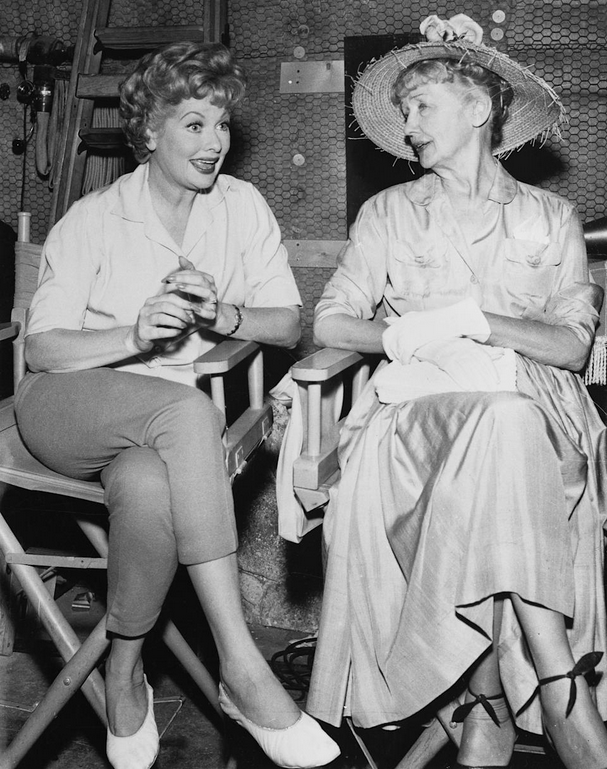
Desi Arnaz Jr. is opening up about his father, Desi Arnaz, and offering a rare look at a man who lived to entertain — but wrestled with his demons behind the scenes.

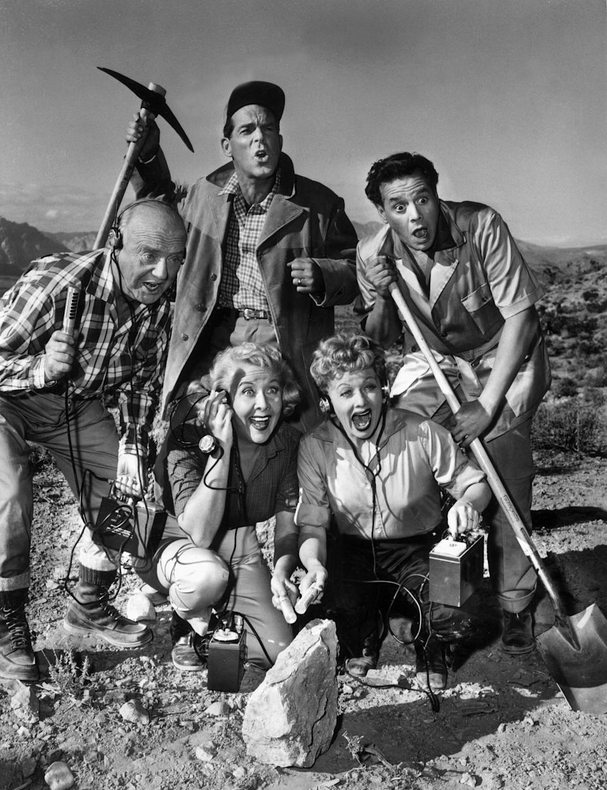
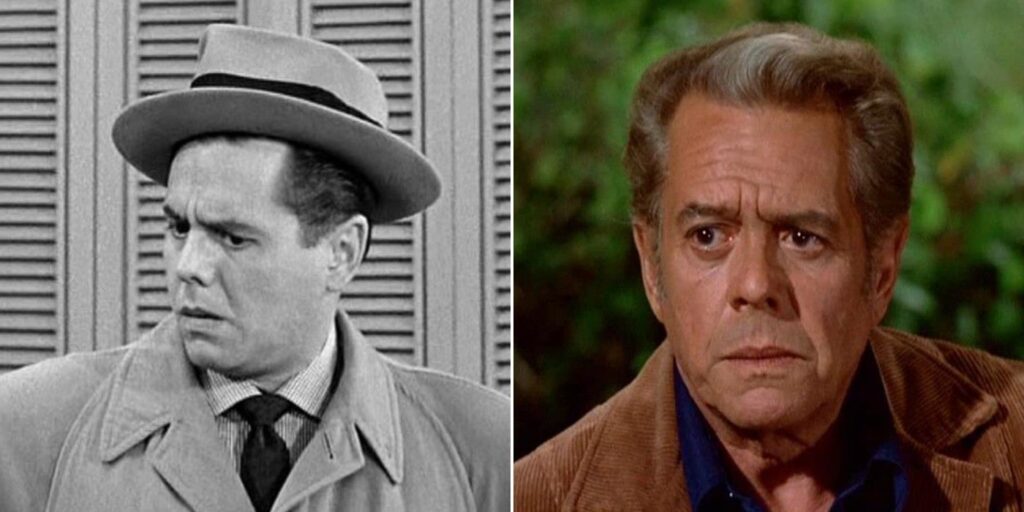
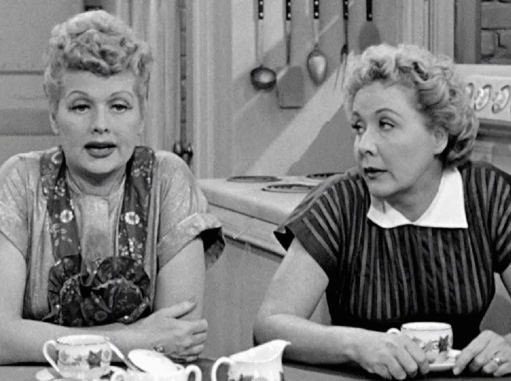
In his new book Desi Arnaz: The Man Who Invented Television, biographer Todd S. Purdum delves deep into the life of the man most know as Ricky Ricardo — or, perhaps, as Mr. Lucille Ball.

In interviews with the couple’s children — Desi Jr. and daughter Lucie — Purdum offers glimpses into the behind-the-scenes life of Arnaz and the tumultuous relationship of the I Love Lucy stars, who divorced in 1960, after 20 years of marriage.

The book offers a rare look at Desi Jr., who was — at the time of his birth in January 1953 — arguably the most famous baby in America. Desi Jr.’s birth was even incorporated into the show, and while he had his own foray into showbiz early on, he later retreated from the public eye and now rarely speaks to the press.

While audiences were delighted by his parents’ relationship, Desi Jr. told Purdum that behind the scenes, Lucy and Desi were incredibly argumentative

“It wasn’t good for anyone,” Desi Jr. told the author in the book. “And we’ll always remember when they sat us down and said, ‘Look, you know, things aren’t working.’ I mean, I remember word for word.”

Desi Arnaz, Lucille Ball, Desi Jr., Lucie’, 1953.CBS Photo Archive/Archive Photos/Getty

In interviews with the author, the now-adult children explained how different their parents were. Lucie recalled how her mother “took it personally” when one of the children would disappoint her. Desi, by contrast, “was not like that,” she described.

“He would get really angry and blow his stack, and be loud, but then he’d be done and it would be like it never happened,” Lucie said. “Like a storm just passed. The storm never said, ‘I’m sorry,’ the storm never left a note saying, ‘I’m sorry, that wasn’t your fault.’ But it stopped, right? My mother would get personally offended by childhood behavior or what you said, because you should have known not to say that somehow, even though no one’s taught you what to say. And she would emotionally separate from you for however long she wanted to. And it would be sometimes days, sometimes weeks.”

Lucille Ball and her husband Desi Arnaz, with their children Lucie and Desi Jr., 1959.J. Wilds/Keystone/Hulton Archive/Getty

When the children were involved in their parents’ work, by attending weekly shootings of I Love Lucy, they weren’t always happy.

Speaking to the author, Lucie detailed how she would “hide under the bleacher” when her mother introduced her to the audience.

Desi Jr., meanwhile, “was very much embracing the whole thing,” he said.

But theirs was not a normal life, instead hallmarked by the stardom of their parents and the strange upbringing that comes with being born to fame.

In one pivotal moment in the book, Johnny Aitchison, Desi’s secretary, described how strange it was to see a young Lucie and Desi playing with paper dolls of their own parents. “And it was the most natural thing in the world to watch these kids playing with that, just your normal kids having a good time, but playing with paper dolls of their parents.”

Lucille Ball, Desi Arnaz, Desi Jr.Michael Ochs Archives/Getty

Of course, the highs of their star power were at times eclipsed by the lows, with the book detailing Desi’s descent into alcoholism.

It was his son, Desi Jr. — who himself had struggled with addiction and was thrust into the spotlight as a teen amid well-publicized romances with Patty Duke and Liza Minnelli — who helped him seek treatment.

Four years after Desi Jr. sought treatment (in 1981 at the Scripps Clinic near San Diego), his father came to him for advice. In 1985, Desi himself entered an alcohol rehabilitation program at the Scripps McDonald Center in La Jolla, where he registered under the name “Bill Sanchez” to protect his privacy.

“It was really nice,” Desi Jr. said, “because whatever I was going through, it was paying off. I said, ‘I can’t do anything for you, but there’s a place that can.’ He understood that.”

As Desi Jr. explained to the author, it was in fame where his father felt the most lonely: “That’s when he realized the emptiness—at the crest of his success. He didn’t stop drinking. He didn’t know what the real poison was. This is a temporary life.”

Linn Strömberg’s Incredible Anorexic To Fit +42lb Transformation Story!

Linn, You Started Off With A Healthy BMI, What Initially Made You Want To Start Losing Weight?

I wasn’t pleased with my body. I had just graduated and moved back to my parents house to save some money before I got a job. Therefore, I had a lot of free time and needed something to do. I’ve always been a person who likes to accomplish things and set goals for myself. So I set my mind on losing some weight. Initially it was just to tighten up a little bit, but of course, I had no idea that it would escalate as it did.

What Were You Doing To Lose The Weight? Diet? Training?

In the beginning I just ate less, but when I was at my worse I weighed all my food (even the salad such as tomatoes… yep…) and ate no more than 200 calories per meal, often less than that. Depending on my workout (swimming, walks etc) I ate between 400-900 kcal/day. I never skipped any meals, it was the other way round, I was extremely fixated on eating every 3 hours.

I set my alarm clock on the phone so I wouldn’t forget to eat. When the phone rang it was time for my sacred moment – food. Everything had to be right. The right plate, fork, I had to be comfortable – no one was allowed to interrupt me and so on. I was extremely obsessed and planned my life around food. If you can call it “life”, I wasn’t living. My days consisted of anxiety and every movement was like torture to my body, I was so weak. It’s kind of scary, that you can lose your mind to a sickness like that.

Linn, You Started Off With A Healthy BMI, What Initially Made You Want To Start Losing Weight?
I wasn’t pleased with my body. I had just graduated and moved back to my parents house to save some money before I got a job. Therefore, I had a lot of free time and needed something to do. I’ve always been a person who likes to accomplish things and set goals for myself. So I set my mind on losing some weight. Initially it was just to tighten up a little bit, but of course, I had no idea that it would escalate as it did.

What Were You Doing To Lose The Weight? Diet? Training?

In the beginning I just ate less, but when I was at my worse I weighed all my food (even the salad such as tomatoes… yep…) and ate no more than 200 calories per meal, often less than that. Depending on my workout (swimming, walks etc) I ate between 400-900 kcal/day. I never skipped any meals, it was the other way round, I was extremely fixated on eating every 3 hours.

I set my alarm clock on the phone so I wouldn’t forget to eat. When the phone rang it was time for my sacred moment – food. Everything had to be right. The right plate, fork, I had to be comfortable – no one was allowed to interrupt me and so on. I was extremely obsessed and planned my life around food. If you can call it “life”, I wasn’t living. My days consisted of anxiety and every movement was like torture to my body, I was so weak. It’s kind of scary, that you can lose your mind to a sickness like that.
Food

How Long Did You Stay With This Approach To Losing Weight?

I had trouble with my relationship with food for a long time, about 3 years, but never as extremely as what would come later. I got really sick in 2011 and managed to get well during 2013.
Food

At What Point Did You Realize You Had Started Going Too Far?

I saw how people I hadn’t seen for a while started crying at the sight of my body, and I realized that I was hurting my loved ones. They couldn’t do a thing, just try to help and make me listen, and watch me while I disappeared more and more.

It was awful, but it’s so hard to just turn away from an illness like this. I was stuck in my Eating Disorder ‘world’, and I chose to ignore the fact that I didn’t just hurt myself but also the ones close to me, who were suffering just as much as I was.

When my mom and boyfriend began threatening to get me admitted, I got scared. I was older than 18, but when someone is becoming a danger to themselves you can be detained and put in hospital, or treatment facility, against your will. I got scared by the thought that someone else would decide that for me what and when to eat, so I began to gain weight.

Credits: TrimmedandTonned

Beloved Former TV Star Inspires Fans by Embracing Natural Aging and Authentic Beauty

During the golden era of 1980s television, one actress captured the hearts of audiences with her warmth, humor, and relatable charm. Her role on the beloved sitcom Family Ties made her a familiar and comforting presence in households across the country. Viewers connected with her natural style and down-to-earth personality, which set her apart in an industry often focused on glamour. She represented a balance of confidence and authenticity that resonated deeply with people of all ages, earning her lasting admiration that continues even decades later.

Now in her late fifties, she is once again gaining attention—but for a very different reason. Rather than returning to the spotlight through a major project or publicity campaign, she has sparked conversation by choosing to embrace aging in a natural way. In a field where maintaining a youthful appearance is often emphasized, her decision stands out. She has openly shared that she prefers not to rely on cosmetic procedures, instead allowing her appearance to reflect her life journey. For her, aging is not something to hide, but something to accept with confidence and grace.

Her perspective has inspired thoughtful discussions among fans and the public. While some people still feel influenced by traditional expectations around beauty, many others appreciate her honesty and self-assurance. She has spoken about the pressure individuals—especially women—often face to meet unrealistic standards. By choosing a different path, she hopes to encourage others to feel comfortable in their own skin. To her, signs of aging are not flaws, but meaningful reminders of experiences, growth, and resilience over time.

Today, she continues to use her voice to promote self-respect and a broader understanding of beauty. She emphasizes that personal choices about appearance should come from a place of comfort and confidence, not from external pressure. Once celebrated for her youthful energy on screen, she is now admired for her authenticity and strength of character. Her journey reflects a growing cultural shift toward embracing individuality and self-acceptance, reminding us that true confidence often leaves the most lasting impression.

A Lighthearted Memory Test That Became a Lesson in Friendship

Three friends in their later years arrived at their doctor’s office for a routine memory assessment, unaware that the visit would soon become more heartwarming than clinical. The doctor began with a simple question: “What is three times three?” The first gentleman answered with complete confidence, “274,” as if solving a riddle only he understood. The doctor kept his expression polite, jotting down a note while quietly puzzling over how the man settled on such a number. He then turned to the second friend and repeated the question. The second man smiled proudly and responded, “Tuesday,” as though numbers and days of the week naturally belonged together. Amused but composed, the doctor nodded and moved on, preparing himself for the third man’s answer with equal parts curiosity and caution.

When the doctor posed the same question to the third gentleman, the nurse watching from the doorway struggled to hide her laughter, expecting another surprising response. But the third man paused thoughtfully and replied, “Nine.” The doctor’s eyes brightened—finally, an answer that made sense. Yet before anyone could celebrate, the man added with a proud grin, “I used your calculator when you weren’t looking.” A light silence filled the room before it melted into shared laughter. Though the answer had been borrowed rather than remembered, it revealed something meaningful: each of the three men was navigating aging in his own way, using humor, creativity, or curiosity to soften moments that might otherwise feel discouraging.

Seeing how levity transformed the atmosphere, the doctor shifted away from tests and invited the men to talk about their younger days. What followed was a tapestry of treasured memories. The first man described building radios from spare parts, remembering how the crackle of static once felt like opening a door to the world. The second man recounted journeying from town to town with little more than a backpack and a sense of adventure, recalling the thrill of discovering new places and friendly strangers. The third spoke about repairing clocks, sharing how he always believed that even when time seems to slow or skip, life still finds a way to move forward. Their stories filled the room with warmth, reminding everyone present that memory is not measured solely through tests—it is preserved through the experiences that shape a lifetime.

By the time the appointment ended, the doctor realized that what these men needed most was not stricter assessments, but meaningful connection. Inspired by their stories, he started a weekly “Memory Circle” at the clinic, encouraging seniors to gather, reminisce, and stay mentally engaged in a supportive environment. Soon the once-quiet waiting room transformed into a lively space filled with laughter, storytelling, and companionship. Although the three men still occasionally mixed up a number or forgot a weekday, they discovered something far more important: growing older does not diminish their worth. Through friendship, humor, and shared reflection, they embraced the present with confidence, proving that the heart of memory lives not only in what we recall, but in the moments we continue to create.

Minnesota Community Mourns NHL Reporter Jessi Pierce and Her Children After House Fire

Minnesota’s hockey community is mourning the heartbreaking loss of respected NHL reporter Jessi Pierce, also known as Jessica Hinrichs, along with her three children. The tragic incident occurred in the early hours of March 21, when emergency crews responded to a house fire in White Bear Lake. Just one day earlier, the family had been enjoying simple, joyful moments together—memories that have since taken on a deeper meaning for those who followed her life. When firefighters arrived, the home was already heavily affected, and despite their efforts, the family was found inside. Authorities described the event as devastating and confirmed that the cause of the fire is still under investigation.

Jessi Pierce, 37, had built a strong reputation over the years as a dedicated hockey reporter, covering the Minnesota Wild and contributing to NHL coverage for nearly a decade. She was known not only for her professionalism but also for her warmth and ability to connect with players, colleagues, and fans alike. Many described her as someone who brought energy and positivity into every room, while also being deeply devoted to her role as a mother. Following the news, tributes poured in from across the hockey world, with colleagues remembering her as a vibrant presence who truly loved the sport and the community around it.

In the days after the tragedy, the outpouring of support reflected just how much she meant to others. Community members gathered to honor the family, leaving flowers and messages of remembrance while expressing their grief and disbelief. Friends, coworkers, and fans shared stories of her kindness, her work ethic, and the joy she brought to everyday interactions. Efforts to support her surviving family members quickly gained momentum, showing the strength of a community coming together during an incredibly difficult time.

While officials continue to investigate what led to the fire, many are choosing to focus on remembering Jessi Pierce’s legacy. She is being honored not only for her contributions to sports journalism but also for the way she touched people’s lives beyond her career. Her enthusiasm, compassion, and dedication left a lasting impact that will not be forgotten. In the face of loss, her story stands as a reminder of the importance of connection, kindness, and cherishing the moments we share with those we love.

Doctors Share Important Advice About Popping Pimples in Sensitive Areas of the Face

Many people try to get rid of pimples quickly by squeezing or popping them, assuming it’s a harmless and effective solution. However, health experts are increasingly warning that this common habit can sometimes lead to unexpected complications—especially depending on where the blemish appears. While most breakouts are minor, certain areas of the face require extra caution and care.

One woman shared her experience after noticing a small, cyst-like pimple near her nose. Like many others, she decided to pop it without much thought. Within hours, however, she began to notice unusual symptoms, including swelling and discomfort in her face. Concerned, she sought medical attention and was prescribed medications, including antibiotics, to address a developing infection. Thankfully, she acted quickly and began recovering within a few days, but her experience highlights how fast a situation can change.

Medical professionals explain that the area between the bridge of the nose and the corners of the mouth is sometimes referred to as a high-risk zone. This is because blood vessels in this region are closely connected to deeper areas of the body, making it easier for bacteria to travel if an infection develops. When a pimple is squeezed, it can create a small opening in the skin, which may allow bacteria to enter. In rare cases, this can lead to more serious complications if not treated promptly.

To reduce risks, experts recommend avoiding the urge to pop pimples in sensitive areas and instead focusing on proper skincare. Keeping the skin clean, using gentle treatments, and allowing blemishes to heal naturally are often safer approaches. If a pimple becomes painful, swollen, or persistent, consulting a healthcare professional is the best course of action. While it may be tempting to seek a quick fix, taking a careful and informed approach can help protect both your skin and your overall well-being.

After Our Father’s Passing, His Final Decision Taught Us an Unexpected Lesson

When my father passed away, grief came in quiet waves—unexpected and heavy. A week later, my brother and I sat in a lawyer’s office, prepared for what we assumed would be a straightforward process. We had grown up believing that everything would be shared between us, especially the house that held so many memories. But as the lawyer read the will, the room seemed to shift. Our father had left everything to his nurse, Elena. The words didn’t feel real at first, and then they settled in with a weight that turned our sadness into confusion—and, if I’m honest, frustration.

We didn’t understand. In our minds, we had been there all along, even if life had pulled us in different directions over the years. The idea that someone else—someone we barely knew—had been trusted with everything felt impossible to accept. Without giving ourselves time to think, we drove straight to the house, determined to confront her and demand answers. It wasn’t just about the property; it felt like something deeper had been taken from us, something we believed was ours by right.

When we walked in, the house was quiet, just as we remembered it. Elena stood near the window, holding a framed photo of our father. She didn’t look surprised to see us—just calm, almost gentle. Without raising her voice or defending herself, she handed us a sealed envelope. Inside was a letter written in our father’s familiar handwriting. As we read it, everything began to change. He wrote about his final months—how Elena had been there every day, not just as a nurse, but as someone who listened, cared, and stayed when he felt most alone. He didn’t write about money or possessions; he wrote about kindness, presence, and trust.

By the time we finished reading, the anger we had carried in with us had softened into something quieter—understanding. Our father hadn’t made his decision to hurt us, but to honor someone who had stood by him when he needed it most. Elena didn’t ask us to leave or argue her place. Instead, she invited us to sit, to remember him together. That day, we learned something we hadn’t expected: that love isn’t always measured by time or titles, but by the moments someone chooses to stay. And in that realization, we didn’t lose our father again—we finally understood him.

Fighter Pilot Vanished in 1944, 70 Years Later, Her Plane Was Found in a Forest!

The story of Evelyn Whitmore is not merely a tale of a missing pilot; it is a chronicle of a three-generation search for a truth that was systematically buried by a bureaucracy of silence. In November 1944, Evelyn took off from a military airfield in Delaware, tasked with what her family was told was a routine ferry mission to the West Coast. Her aircraft never arrived. Three weeks later, the Army Air Forces sent a telegram stating she had been lost over the English Channel during a transatlantic transit. No wreckage was recovered, and the military declared no further investigation was warranted. Her three-year-old son, Robert, grew up in the shadow of that void, spending sixty years petitioning the War Department for answers that never came. He died in 1998, leaving behind boxes of rejected FOIA requests and a single, brittle photograph of a smiling woman in a flight suit.

The silence was finally shattered in 2014 when a violent winter storm tore through the Ardennes Forest in Belgium, 4,000 miles from the English Channel. Forestry workers discovered a P-47 Thunderbolt buried under seventy years of growth, its serial number matching the plane allegedly lost at sea. Thirty meters from the bullet-riddled fuselage, beneath a hand-placed stone cross, they found a shallow grave. Inside a flight jacket wrapped around the remains, investigators discovered a letter that would force the military to reveal a classified program so sensitive it had remained buried for eight decades—a covert operation that sent American women into combat over Nazi-occupied Europe, then erased them when they didn’t come home.

Special Agent Daniel Whitmore was at his desk in Virginia when the call came. As an investigator for the Air Force Office of Special Investigations, Dany was used to finding things people wanted hidden, but he wasn’t prepared for Colonel Marcus Webb’s message: “The remains belong to a woman… We believe she may be your grandmother.” To find her in the Ardennes, the site of the bloody Battle of the Bulge, contradicted every official record his father had ever chased. Dany flew to Belgium, where he met Dr. Paul Hendrickx of the DPAA. The crash site was a scene of haunting preservation. The Thunderbolt hadn’t plummeted; it had been a controlled descent. Evelyn had survived the landing.

The true heart of the mystery was revealed by Henrik Caron, the 86-year-old son of a local resistance fighter. Henrik’s father had discovered the wreckage in 1944. “She was thirty meters from the aircraft, sitting against a tree,” Henrik explained. “My father said she looked peaceful, but she had been wounded by ground fire. She had dragged herself from the cockpit and sat down to rest.” In her lap, the resistance found a pen and a letter addressed to her son, Robert. She had spent her final moments writing to the child she would never see again.

Dany held the evidence bag containing his grandmother’s dog tags and the oil-cloth-wrapped letter. Researching the OSS—the wartime predecessor to the CIA—Dany discovered a requisition for female pursuit pilots for “special duty.” Evelyn was one of five women recruited for covert combat missions. All five had died within four months; all five had their records scrubbed or falsified to hide the existence of the program. The military had lied to Robert Whitmore to avoid admitting they were using women in unauthorized combat roles. For eighty years, the truth had waited in a Belgian forest. Dany looked at the photograph of the woman who shared his eyes and finally felt the “stone in the chest” dissolve. He wasn’t just bringing home a pilot; he was finishing the mission his father had started—bringing Evelyn Whitmore out of the shadows and back into history.

The Reason Donald Trump Never Served in the Military!

President Donald Trump drew renewed attention to his past after sharing a photo from his teenage years at the New York Military Academy. In the image, he stands in uniform beside his parents, Fred and Mary Trump, during his time at the academy in Cornwall-on-Hudson, where he studied from age 13 to 18. He captioned it simply: “At Military Academy with my parents, Fred and Mary!”

On its own, the post reflects a familiar kind of memory—youth, structure, family pride. But timing often shapes how something is received. The image appeared during a period of rising international tension, shortly after reports of a U.S. military aircraft incident in Iraq and amid escalating conflict in the Middle East. In that atmosphere, even a personal photograph can take on wider meaning.

Online reactions followed quickly, and as often happens, they divided along existing lines. Some saw the image as a glimpse into discipline and upbringing. Others revisited long-standing questions about Trump’s history during the Vietnam War.

A History That Still Draws Attention

Trump, born in 1946, was of draft age during the Vietnam War. During that period, he received five deferments—four tied to his education at Fordham University and later the Wharton School, and one medical exemption related to bone spurs in his heels.

Student deferments and medical exemptions were not unusual at the time. Many young men used similar paths to delay or avoid service. Still, such decisions have remained part of public discussion for decades, especially when viewed alongside the sacrifices of those who did serve.

Trump has said in past interviews that he opposed the Vietnam War and that his exemption was based on medical grounds rather than unwillingness to serve. Critics, however, have questioned the circumstances of the diagnosis and what it represented. These differing views continue to shape how his history is interpreted.

When Memory Meets Judgment

After the photo was shared, reactions online ranged from support to sharp criticism. Some commentators questioned the contrast between a military-style image and a history of deferments. Others defended the post as a personal reflection, separate from later events.

Language on social media often becomes more forceful than necessary. Labels and mockery can spread quickly, but they rarely bring clarity. At the same time, the underlying questions—about fairness, responsibility, and how privilege may influence opportunity—are not without weight. They deserve to be considered carefully, not dismissed or exaggerated.

The Broader Context
The renewed discussion also extended beyond Trump himself. Some online users turned attention toward his son, Barron, who is now within the age range required to register with the Selective Service System.

Under current U.S. law, men between 18 and 25 must register, though a draft has not been active for decades. Speculation about future conscription, especially during times of global tension, tends to stir public imagination. In this case, it also drew commentary—some serious, some careless—about Barron’s potential eligibility.

It is easy, in such moments, for public debate to lose proportion. Family members who hold no public office can become symbols in conversations they did not choose to enter. That shift may generate attention, but it often moves the discussion away from substance.

What Remains Beneath the Noise
The response to a single photograph reveals something broader. Military service, especially during a conflict like Vietnam, continues to carry deep meaning in American memory. For some, it represents sacrifice and duty. For others, it raises questions about who served, who did not, and why.

Trump’s history sits within that larger context. His deferments were legal and aligned with policies of the time, yet they remain open to interpretation. For some, they reflect ordinary use of available options. For others, they highlight unequal access to those options.

Both perspectives exist, and neither is resolved by a single post.

A More Measured View
In moments like this, it becomes clear how easily conversation can shift from reflection to reaction. A photograph intended as personal remembrance becomes a point of debate. A past decision becomes a present judgment.

There is value in examining history honestly. There is also value in resisting the urge to reduce people to one dimension—whether in defense or in criticism.

What matters is not only what is remembered, but how it is understood.

And understanding requires more than quick conclusions. It asks for steadiness, context, and a willingness to look at both actions and circumstances without losing balance.

Popular

A Mother’s Love: Vienna’s Journey with a Birthmark

0
Love compels parents to do extraordinary things for their children’s well-being. Celine Casey, a British mother, took remarkable steps to ensure her daughter Vienna’s...