Entertainment

The Brutal Reality Facing Artemis II Astronauts After Splashdown That NASA Does Not Want You To See

Once the global cheers fade and the broadcast signals cut to commercial, the real battle for survival begins. The Artemis II crew, having journeyed further into the deep black of space than any humans in over half a century, will return to their home planet in a violent, high-stakes re-entry. They will slam back into the Earth’s atmosphere at a staggering 25,000 mph, encased in a capsule that becomes a blazing fireball, before finally hitting the cold, unforgiving waters of the Pacific Ocean. But for these four brave explorers, the splashdown is not the end of the mission—it is the beginning of a physical nightmare. The real shock hits the second the hatch opens, when the invisible grip of gravity becomes a crushing enemy and their own bodies suddenly turn against them.

The world will undoubtedly see images of triumphant faces, waving hands, and the iconic sight of astronauts being hoisted onto a recovery ship. It is a scene designed to inspire, a celebration of human ingenuity and courage. However, what the high-definition cameras won’t fully capture is the quiet, grueling struggle behind every single movement. For the Artemis II crew, legs that once felt light and agile will tremble with the effort of supporting their own weight. Vision that was sharp enough to navigate the lunar vicinity will swim and blur as the brain struggles to recalibrate to a world that isn’t floating. Hearts that beat steadily in the void will pound at a frantic pace, working overtime to pump blood that has grown used to a gravity-free environment.

The science behind this physical collapse is as fascinating as it is terrifying. In the microgravity of space, the human body underwent a radical and rapid transformation. Without the constant tug of Earth’s 1g environment, muscles began to shrink and atrophy, no longer needed to maintain posture or move against resistance. Bones, sensing they were no longer required to provide a heavy structural framework, began to shed density. Most significantly, the fluid in the body shifted upward toward the head, and the delicate vestibular system of the inner ear—the body’s natural gyroscope—forgot which way was down. For days or weeks, the astronauts lived in a world where “up” and “down” were merely suggestions. The moment they hit the water, that forgotten weight slams back into them with the force of a lead blanket.

As soon as the Orion capsule is stabilized, doctors and specialized medical teams will close in. They aren’t there as a mere formality; they are a vital lifeline for individuals who are effectively disabled by the very planet they call home. These specialists must guide the astronauts through their first unsteady steps, which often feel like trying to walk on stilts made of gelatin. Every heartbeat is tracked, and every breath is measured as the long, agonizing work of rebuilding strength begins, literally atom by atom. For the first several days back on solid ground, simply standing upright can feel like an act of extreme defiance against the laws of physics.

The sensory overload is one of the most immediate and debilitating side effects. On Earth, our brains constantly process signals from our inner ears to tell us where we are in space. In orbit, the brain learns to ignore these signals because they no longer make sense. Upon return, the inner ear begins firing again, but the brain has forgotten how to interpret the data. This leads to profound nausea and a sensation that the world is spinning out of control. Astronauts often describe a feeling of being “pulled” to one side, or a terrifying sensation that the floor is tilting at a forty-five-degree angle. Every tilt of the head can trigger a wave of motion sickness so intense that even the most seasoned pilots are left incapacitated.

Furthermore, the cardiovascular system faces its own set of hurdles. In space, the heart doesn’t have to work nearly as hard to move blood to the brain. Over time, the heart muscle actually shrinks slightly, and the total volume of blood in the body decreases. When gravity reappears, the blood immediately pools in the legs, away from the brain and heart. This is why many returning astronauts suffer from orthostatic hypotension—a sudden drop in blood pressure that can cause them to faint the moment they try to stand up. The recovery ship isn’t just a platform for a press conference; it is a floating intensive care unit designed to manage these complex physiological failures.

The exhaustion that follows is not the typical tiredness one feels after a long day at work. It is a profound, systemic fatigue that reaches into the very marrow of the bones. The effort required to move a limb against the weight of the atmosphere is exhausting. The effort required for the brain to re-map the environment is draining. The Artemis II crew will fight through a fog of weakness and a constant urge to sleep, all while undergoing a battery of tests to ensure their long-term health. They are the pioneers of a new era, but they are also the primary test subjects in a study on how deep-space travel affects the human vessel over long durations.

Rehabilitation is a slow, methodical process. It involves hours of physical therapy, a strictly controlled diet to restore lost minerals, and a gradual re-introduction to physical activity. It takes months for bone density to begin returning to normal levels, and even longer for the fine motor skills and balance to be fully restored to their pre-flight baseline. Through the nausea, the weakness, and the overwhelming exhaustion, the crew will demonstrate the true cost of exploration. They prove that the most difficult part of voyaging to the moon isn’t necessarily the launch or the vacuum of space—it is the brutal, physical toll of surviving the return to the world they left behind.

In the end, the Artemis II mission will be remembered for its scientific breakthroughs and its role in paving the way for a permanent human presence on the lunar surface. But the story of the mission is incomplete without acknowledging the human price paid by those inside the capsule. Their struggle reminds us that we are creatures of Earth, evolved for this specific gravity and this specific atmosphere. To leave it is to transcend our biological limits, but to return is to be reminded of our own fragile nature. As the crew works to adapt to their home planet once again, they stand as a living testament to the fact that exploration is not just about where we go, but about the incredible resilience of the human spirit in the face of a physical reality that demands everything we have to give.

How a painful childhood forged a global rock legend

Born Farrokh Bulsara in 1946, the boy who would become Freddie Mercury learned early that survival meant performance. Behind the painted nails and outrageous clothes was a child who’d felt rejected, shipped off to a harsh boarding school, and, according to later accounts, scarred by abuse that stole his innocence but not his will. When revolution forced his family from Africa to London, he reinvented himself completely: art student, airport baggage handler, relentless dreamer studying Hendrix posters like holy texts.

Queen was his final act of defiance against everything that tried to silence him. He weaponized his pain into operatic anthems, towering vocal runs, and that impossible Live Aid command of 70,000 souls. Even as AIDS consumed his body, he kept recording, determined that the curtain would only fall on his terms. The money, the fame, the myth—none of it explains him. The music does.

Freddie Mercury was born Farrokh Bulsara on 5 September 1946 in Stone Town, Zanzibar, to Parsi parents from India. That boy who would one day become the most theatrical rock star the world has ever seen already understood, at a painfully young age, that survival itself was a kind of performance. Sent away at eight to a strict boarding school in India, he found himself an outsider—different in culture, different in accent, different in the way he moved and felt. Later accounts from friends and family speak of darker shadows too: emotional and physical abuse that left scars no one could see but which never managed to break his spirit. Instead, those early wounds seemed to sharpen his hunger for reinvention.

When the Zanzibar Revolution exploded in 1964, the Bulsara family fled to England, arriving as refugees with almost nothing. London in the swinging sixties became Farrokh’s blank canvas. He enrolled at Ealing Art College, studied graphic design by day, and worked the night shift as a baggage handler at Heathrow Airport just to pay the rent. In his tiny bedsit he pinned up posters of Jimi Hendrix like sacred icons, studying every chord, every scream, every note of controlled chaos. He already knew he wanted more than a normal life; he wanted to explode onto the stage and never come down.

In 1970 he met Brian May and Roger Taylor, two students from Imperial College who had a band called Smile. Farrokh—now calling himself Freddie Mercury—joined them, then convinced them to bring in John Deacon on bass. He renamed the group Queen, designed the famous crest himself, and declared that they would not just play rock music—they would perform opera, vaudeville, heavy metal, gospel and pure camp all at once. The rest of the world thought he was arrogant. Freddie simply knew what he was worth.

Queen’s breakthrough came in 1974 with “Killer Queen,” but it was the 1975 masterpiece “Bohemian Rhapsody” that rewrote the rules. A six-minute suite with no chorus, opera sections, hard rock, and a ballad, it became the longest song ever to reach No. 1 in the UK. Freddie’s voice—four octaves of pure velvet and razor blades—could sound like a choir of angels one moment and a screaming demon the next. He weaponised every ounce of pain, loneliness and defiance from his childhood into music that felt like emotional surgery for millions of listeners.

Live, he was untouchable. At Live Aid in 1985 he walked onto the stage at Wembley in front of 72,000 people and 1.9 billion watching on television, sat at a piano, and in twenty-one minutes turned a global charity concert into the single greatest live performance in rock history. No set list. No safety net. Just Freddie, a microphone, and 70,000 voices singing every word back to him. He didn’t just command the crowd—he seduced it, teased it, made love to it, and left it gasping for more.

Behind the painted nails, the moustache, the skin-tight spandex and the outrageous stage costumes was a man who still carried the quiet boy from Zanzibar inside him. He was fiercely private about his sexuality for years, terrified of hurting his traditional parents. Only in the last years of his life did he allow the world to see the real Farrokh—vulnerable, loyal, generous, and heartbreakingly funny. Even as AIDS slowly destroyed his body from 1987 onward, he refused to stop. He recorded the majestic “The Show Must Go On” while barely able to stand, knowing it would be one of his final messages. He died on 24 November 1991, aged just 45, on his own terms, surrounded by the people he loved.

The money, the mansions, the myth, the tabloid headlines—none of that explains Freddie Mercury. What explains him is the music. Songs like “Love of My Life,” “Who Wants to Live Forever,” “Somebody to Love,” “Don’t Stop Me Now” and “We Are the Champions” still sound like they were written yesterday. They are not just hits; they are survival anthems for anyone who ever felt different, rejected, or told they were too much.

Freddie turned every wound into a spotlight. He took the loneliness of a boarding-school boy, the displacement of an immigrant, the fear of a man living with a secret illness, and poured it all into performances so electric that people still feel them decades later. That is why, long after the final curtain, his voice still roars out of stadiums around the world and millions of strangers sing along like they’re part of the same family he always wanted but never quite had as a child.

He didn’t just live. He performed his life so brilliantly that the whole planet is still applauding.

Inside the Life of a Global Star: A Story of Love, Challenges, and the Passion to Keep Going

Today, Billy Joel fills arenas across the globe with his unmistakable voice and a catalog of timeless songs. Widely regarded as one of the greatest songwriters of all time, his music continues to resonate across generations.

Yet behind the success and global recognition lies a childhood marked by emotional complexity, financial hardship, and family struggles. His early years were far from the glamorous image often associated with his later fame.

Born on May 9, 1949, in New York City, Joel grew up in the Bronx before moving to Long Island. He was raised alongside his cousin Judy, who was adopted by his parents and became like a sister.

His family background carried the weight of history. His father, Howard Joel, was a German Jewish immigrant who fled Nazi Germany during the rise of World War II, losing his family’s business and stability.

After arriving in the United States, Howard eventually rebuilt his life and worked as an engineer. Despite his accomplishments, he rarely spoke about his past, leaving much of his trauma unspoken within the household.

Joel’s upbringing on Long Island placed him in a community of working-class families, many of whom had experienced displacement and hardship due to the war. This environment shaped his understanding of resilience and survival.

Music entered his life at an early age. Encouraged by his mother, Rosalind, he began piano lessons when he was just four years old, showing an early aptitude that would later define his career.

Rosalind recognized her son’s talent and insisted he continue practicing, even when he resisted. Her determination played a crucial role in nurturing his musical abilities during his formative years.

Ezoic
In contrast, Joel’s relationship with his father was distant and often difficult. Howard was described as a skilled pianist himself but did not provide the emotional support or encouragement young Billy needed.

At times, his father’s behavior could be harsh. Joel has recalled a childhood incident where he was struck for deviating from classical piano instructions, leaving a lasting impression on his perception of authority and discipline.

The tension between his parents created an unstable home environment. Joel later reflected that he witnessed conflict and emotional strain, which made their eventual separation feel, in some ways, like a relief.

After his father left the family, Joel and his sister were raised primarily by their mother. The absence of a stable breadwinner quickly led to financial struggles that reshaped their daily lives.

Ezoic
Joel has spoken openly about feeling different from other children who had fathers present. This sense of isolation contributed to his identity and influenced the emotional depth found in his later songwriting.

Despite financial hardship, Rosalind worked tirelessly to support the family. She took on multiple responsibilities, ensuring her children had what they needed, even during periods of significant economic difficulty.

At the same time, she faced her own personal challenges. Joel has described her as deeply loving but also emotionally complex, noting periods of loneliness and behavior that suggested underlying mental health struggles.

Her use of alcohol became more noticeable over time, creating an unpredictable home atmosphere. Joel and his sister often felt they had to be cautious, aware that small triggers could lead to emotional outbursts.

Even so, Joel never doubted his mother’s love. He has frequently credited her as his greatest supporter, someone who believed in his talent long before the world recognized it.

During these challenging years, Joel formed a particularly close bond with his sister. They relied on each other for emotional support, strengthening their relationship in the face of shared hardship.

Ezoic
Music became both an escape and a form of expression for Joel. Through the piano, he found a way to process his experiences and channel his emotions into something meaningful and creative.

As he grew older, his passion for music intensified. He began exploring different styles, blending classical training with influences from rock, pop, and jazz, shaping the unique sound that would define his career.

By the early 1970s, Joel had launched his solo career, gradually building a following with his distinctive voice and storytelling ability. His breakthrough came with the release of the album Piano Man.

The title track, Piano Man, became one of his most iconic songs, capturing the lives and struggles of everyday people, a theme that would remain central throughout his work.

Over the decades, Joel released numerous successful albums, including The Stranger and 52nd Street, both of which solidified his place in music history.

His songwriting often reflected personal experiences, blending introspection with universal themes. This authenticity helped him connect with audiences on a deeply emotional level, earning widespread acclaim.

Joel’s achievements include induction into the Songwriters Hall of Fame in 1992 and the Rock and Roll Hall of Fame in 1999.

Despite his success, his personal life was not without challenges. Joel has been married multiple times, with several relationships ending in emotional strain and, at times, financial complications.

One of his early marriages involved a professional partnership that later became contentious, particularly during a period when Joel was recovering from a serious motorcycle accident and felt vulnerable.

Ezoic

In another instance, a trusted manager, who was also a family member of his wife, was found to have mismanaged or taken a significant portion of Joel’s earnings, leading to legal action and emotional distress.

Joel has often emphasized that the emotional betrayal in these situations was more painful than the financial loss. These experiences shaped his perspective on trust and personal relationships.

In addition to relationship struggles, Joel faced battles with alcohol. He has openly discussed using alcohol as a coping mechanism during difficult periods in his life, particularly following major personal setbacks.

The aftermath of the September 11 attacks deeply affected him, contributing to feelings of depression and increased reliance on alcohol.

Ezoic
Recognizing the impact on his health and life, Joel sought help, entering rehabilitation programs in the early 2000s. Over time, he made significant efforts to regain control and improve his well-being.

By the early 2020s, Joel had made the decision to stop drinking entirely, describing it as a personal turning point that allowed him to focus more clearly on his health and future.

In his personal life, he eventually found stability with his wife, Alexis Roderick, with whom he shares a family and a more grounded lifestyle.

Even as he continued to perform, Joel began to shift his priorities, balancing his career with his personal life. His long-running residency at Madison Square Garden became a defining chapter of his later career.

In 2025, Joel revealed that he had been diagnosed with Normal Pressure Hydrocephalus, a condition that can affect balance, vision, and cognitive function if left untreated.

Following the diagnosis, he canceled scheduled performances to focus on treatment and recovery. The announcement prompted an outpouring of support from fans, fellow musicians, and loved ones.

His daughter, Alexa Ray Joel, shared encouraging updates about his progress, noting his commitment to physical therapy and overall improvement in health.

Joel himself has maintained a positive outlook, emphasizing that while the diagnosis sounded serious, he felt better than many might expect and remained hopeful about returning to the stage.

In early 2026, he made a surprise appearance with a tribute band in Florida, performing songs like “We Didn’t Start the Fire” and “Big Shot,” delighting fans and signaling his enduring passion for music.

These appearances reassured audiences that Joel was not ready to retire. Instead, he continues to approach his career with determination, adapting to challenges while staying connected to his art.

Throughout his life, Joel has demonstrated remarkable resilience. From a difficult childhood to global fame, and through personal and health struggles, he has remained committed to his craft.

His story is one of perseverance, shaped by both hardship and success. The emotional depth found in his music reflects the complexities of his experiences and the lessons he has learned along the way.

With a career spanning decades and a legacy that continues to grow, Billy Joel remains a powerful example of how adversity can be transformed into art that speaks to millions around the world.

As fans look forward to his potential return to full performances, his journey serves as a reminder that true artistry is not only about talent but also about resilience, authenticity, and the courage to endure.

The Tiny Spotted Parasite That Could Change Your Life and the Urgent Steps You Must Take After a Bite

The discovery of a Lone Star tick is rarely a calm affair. For most, it begins with a moment of icy realization—a small, dark speck on the skin that doesn’t belong. In that split second, the mind races through a checklist of biological horrors. When I first spotted one, my hands were shaking so violently that I had to force a rhythmic breath just to steady them. Armed with nothing but fine-tipped tweezers and a surge of adrenaline, I performed the delicate surgery of removal. The goal is simple but high-stakes: pull the tick straight out with steady, even pressure to ensure the mouthparts don’t remain embedded, turning a simple bite into a localized infection.

Once the intruder was out, the real work began. I scrubbed the area with antiseptic, feeling every sting of the soap as a reminder of the vulnerability of the human body. I sealed the tick inside a plastic bag—a tiny, trapped evidence of the encounter—and meticulously recorded the date, the time, and the exact location on my body where it had latched. That night, sleep was a distant luxury. Every phantom itch felt like a new attachment, and every twinge of muscle felt like the onset of a systemic disaster.

In the days that followed, my routine shifted from domestic comfort to clinical observation. I became an obsessive inspector of my own skin, searching for the tell-tale signs of trouble: the expanding red rash, the sudden onset of fever, or the deep, bone-weary aches that signal a tick-borne illness. But the vigilance didn’t stop with me. I spent hours combing through my dog’s fur, searching for any stowaways that might have hitched a ride into our sanctuary. It was a tedious, exhaustive process that highlighted just how much our outdoor environment had changed.

This encounter served as a harsh wake-up call, forcing a total transformation in how my family interacts with the world outside our door. The casual attire of summer—shorts and sandals—was replaced by the protective armor of long sleeves and pants, even during the hottest afternoons. We learned the “tuck and spray” method, ensuring that every gap in our clothing was sealed and every inch of exposed skin was guarded by repellent. The yard, once a wild meadow of tall grass and wildflowers, was trimmed low to the ground, removing the humid hiding spots where ticks thrive.

The reality of the Lone Star tick is particularly daunting because of its potential to cause Alpha-gal syndrome—a life-altering allergy to red meat. This isn’t just about a temporary fever; it is about a fundamental shift in one’s biology. Realizing that a single insect can rewrite your dietary future is enough to induce a permanent state of anxiety. However, as the days turned into weeks and my health remained stable, that paralyzing fear began to evolve into something more productive.

Vigilance replaced helpless panic. We began to view our backyard not as a battlefield, but as a managed environment where we could still find joy, provided we followed the rules of engagement. Protecting your family from these silent invaders requires more than just luck; it requires a commitment to education and preparation. The fear never entirely disappears—nor should it. That lingering spark of concern is what keeps the tweezers ready, the grass short, and the repellent applied. In the end, the encounter didn’t take away our love for the outdoors; it simply gave us the tools to navigate it with our eyes wide open.

The Price of Loyalty Why We All Quietly Sell Our Souls for Less Than We Imagine

The narrative of a young boy choosing a two-dollar bill over a religious icon is often dismissed as a lighthearted joke, but beneath the laughter lies a sharp, uncomfortable mirror reflecting the human condition. It is a story about the intersection of identity and opportunity, exposing how quickly our most sacred beliefs can bend when a tangible reward is placed on the table. The humor acts as a gateway to a deeper recognition: the reality that most of us have, at some point, negotiated our values for far less than we claim they are worth. This phenomenon isn’t limited to childhood innocence; it is the quiet arithmetic of adult life.

Consider the classic tale of the impoverished suitor who proposes to a wealthy heiress, only to be rejected. Instead of mourning the loss of a partner or a shared future, he laments the “loss” of the million-dollar fortune he never actually possessed. This highlights a fundamental shift in how we perceive value. In this scenario, love is not an emotional bond but a financial calculation. The pain of rejection is replaced by the phantom pain of a missed investment. It suggests that our ideals are often just placeholders until a more profitable option presents itself, turning even our most intimate desires into a ledger of credits and debits.

Then there is the story of Stanley, a man presented with the opportunity to purchase a “magic desk” for five thousand dollars—a piece of furniture rumored to grant its owner unparalleled success. Stanley’s doubt isn’t rooted in a disbelief in magic, but in a skepticism of the price tag. He questions whether the wonder is worth the cost, effectively putting a ceiling on his own potential for awe. This cynicism is painfully familiar in a modern world where even the miraculous must justify its return on investment. We have become a society of skeptics who know the price of everything and the value of nothing.

These stories resonate because they peel back the veneer of our high-minded ideals to reveal the transaction beneath. Whether it is faith, love, or wonder, we are constantly assessing what—and who—is “worth it.” We like to believe our integrity is priceless, yet history and humor suggest that everyone has a breaking point, a number that turns a conviction into a commodity. The Jewish boy in the story isn’t a villain; he is a pragmatist. He recognizes that while Moses offers spiritual guidance for the afterlife, two dollars offers a chocolate bar in the present.

This “quiet arithmetic” defines our social and professional interactions. We choose the prestigious job over the fulfilling one because the math makes more sense. We maintain toxic connections because the social capital is too high to liquidate. We sell out our time, our energy, and our beliefs in small, incremental installments, rarely noticing that the sum total of these sales is our very identity. The humor in these parables works because it forces us to acknowledge the parts of ourselves we usually keep hidden in the shadows of our bank statements.

Ultimately, these narratives challenge us to look at the “aftertaste” of our choices. When the transaction is complete and the initial thrill of the gain fades, what remains? If value is never what it appears on the surface, then perhaps the most expensive thing we own is the integrity we’ve managed to keep off the market. The mirror these stories hold up isn’t meant to condemn us, but to remind us that as long as we are calculating the cost of our souls, we are missing the true value of living a life that isn’t for sale.

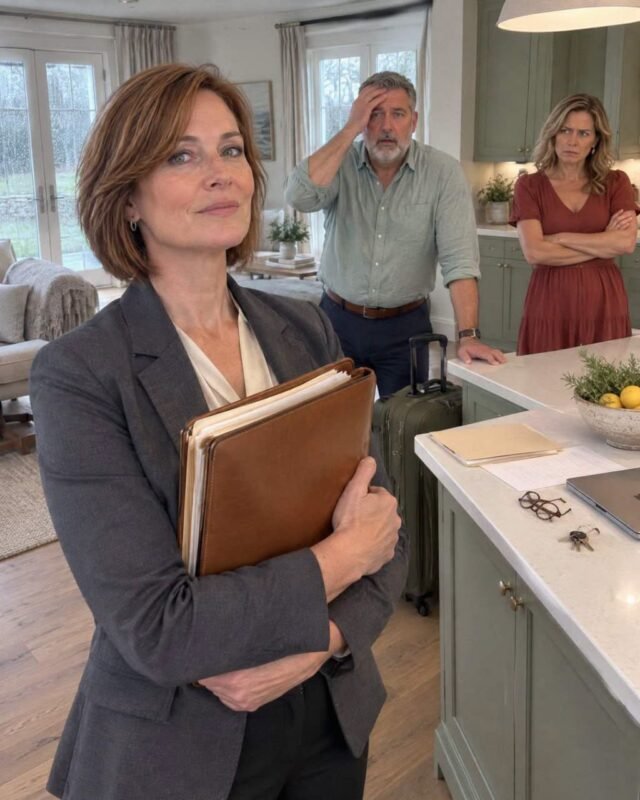
My Husband And My Sister Thought Their Secret Was Safe Until My Unhinged Gender Reveal Party Exposed It All

I am Rowan, a thirty-two-year-old woman who, until very recently, believed I was living the suburban dream. I am pregnant with my first child, a milestone that should have been the pinnacle of my happiness. For eight years, Blake and I were the couple everyone envied. He was charming, attentive, and seemingly devoted. When the pregnancy test turned positive, he wept real tears, holding me so tight I could feel his heartbeat, promising me that we were finally going to be the parents we always dreamed of being. I believed him with every fiber of my being. I didn’t realize that while he was rubbing my belly and whispering to “little peanut,” he was also whispering to someone else.

The betrayal came to light just forty-eight hours before our massive backyard gender reveal party. I was exhausted, sinking into the couch for an early evening nap, while Blake was in the shower. His phone buzzed on the coffee table. We have the same model, and in my fatigue-induced haze, I reached for it, thinking it was mine. A message flashed on the screen from a contact saved only with a heart emoji. It read: “I can’t wait to see you again. Same time tomorrow, darling.”

My blood turned to ice. I opened the chat, hoping for a misunderstanding, but found a digital trail of filth. Flirting, intimate plans, and photos that documented a long-term affair. Then I saw a picture that made my stomach churn—a woman’s collarbone adorned with a gold crescent-moon necklace. I knew that necklace intimately because I had bought it myself as a birthday gift for my sister, Harper.

Harper was the one organizing the gender reveal. She was the “trusted” aunt-to-be, the only person who knew the baby’s sex. As I heard the shower stop and Blake’s footsteps approaching, I felt a feral surge of rage. I put the phone back and pretended to be asleep, watching him through half-closed eyes as he kissed my forehead and played the part of the doting father. That night, while he slept the peaceful sleep of the sociopathic, I lay staring at the ceiling and made a choice. I wasn’t going to have a quiet confrontation in our kitchen where he could lie, cry, and manipulate me. If he was going to destroy our family, I was going to make sure everyone saw the wreckage.

The next morning, as soon as Blake left for “work,” I went into high gear. I screenshotted every message and photo. Then, I called a party supply shop across town. I spoke to a woman who possessed the kind of professional intuition only found in people who have seen it all. I told her I needed a reveal box filled with balloons, but not in pink or blue. I wanted them black. Shiny, jet-black balloons, each one custom-stamped with a single word in silver: CHEATER. I also requested black confetti in the shape of broken hearts. She didn’t ask a single question; she simply told me to bring her the evidence I wanted included in the box.

Friday night was a masterclass in psychological torture. Harper came over to “help,” hugging me with a warmth that felt like a physical violation. She and Blake moved around the backyard together with an intimacy that made my skin crawl. I watched them from the window for exactly ten seconds before I swapped the original reveal box for my special delivery. I also packed an overnight bag and hid it in my trunk. I refused to spend another night under the same roof as a man who viewed my pregnancy as a distraction for his infidelity.

Saturday arrived, a bright and crisp afternoon. Our backyard was packed with friends, colleagues, and both sets of our parents. Blake was in his element, working the crowd, soaking up the congratulations, and playing the hero. My mother-in-law hugged me and told me how proud she was of us. I almost broke then; her kindness was a knife to my heart. Harper was there too, wearing a soft blue dress and acting like the perfect, supportive sister.

The moment finally came. Everyone gathered around the giant white box in the center of the yard. Phones were out, recording what they thought would be a joyous memory. Blake wrapped his arm around my waist, beaming for the cameras. “Ready, sweetheart?” he whispered. I looked at him and smiled with a clarity that felt like a superpower. “More than you know,” I replied.

The crowd counted down: “Three! Two! One!”

We pulled the ribbons, and the lid fell away. A dark, suffocating wave of black balloons surged into the air. The crowd let out a collective gasp of confusion. The wind caught the balloons, spinning them so the silver word was visible from every angle: CHEATER. Black heart confetti rained down, sticking to the blue frosting of the cupcakes and the hair of our horrified guests. The yard went so silent I could hear the rustle of the leaves.

“Rowan, what is this?” Blake hissed, his face draining of color.

I stepped away from him, my voice calm and carrying across the entire yard. “This is a truth reveal,” I announced. I pointed directly at Blake and then at Harper. “My husband has been cheating on me throughout my pregnancy, and he’s been doing it with my sister.”

The silence shattered into a million pieces. Blake’s mother let out a strangled cry. Harper began to stammer, looking for an escape route, but there was nowhere to go. I told the crowd that if they wanted proof, they could look at the envelope at the bottom of the box. It contained every screenshot, every date, and every photo. I looked at Harper as she started to sob, “I didn’t mean—” I cut her off with a look of pure disgust. “You never mean it. You just do it.”

I turned to Blake, who was standing like a ghost amidst the black confetti. “You cried when I told you I was pregnant,” I said quietly. “I realize now those weren’t tears of joy. You were just practicing for the performance of a lifetime.”

I didn’t stay for the aftermath. I didn’t want to hear their excuses or see the family members choose sides. I walked into the house, grabbed my keys, and drove to my mother’s. My phone erupted with messages from Blake, pleading for a chance to explain and telling me to “think of the baby.” I replied with five words that ended our eight-year history: “I am. That’s why I’m done.”

I filed for divorce the following week. People often ask if I regret the public nature of the exposure—if I regret “ruining” the party. I tell them I regret folding baby clothes while he texted my sister. I regret trusting people who could rub my belly and lie to my face. But the black balloons? I don’t regret them for a second. They told the truth in a way that couldn’t be minimized or spun. I made my betrayal echo so loudly that he could never pretend it didn’t happen. For the first time in my life, I didn’t take a tragedy quietly; I made it a spectacle, and in doing so, I took my power back.

The Secret McDonalds Mystery That Left An Entire Restaurant Silent And Restored My Faith In Humanity

The fluorescent lights of the local McDonald’s hummed with a clinical, relentless energy that night, reflecting off the polished linoleum floors in a way that usually felt sterile and unremarkable. I had walked into the establishment draped in the kind of exhaustion that settles deep in the marrow, the result of a day that had demanded too much and offered too little in return. I was running on nothing more than habit and the primal need for a quick, hot meal before disappearing into the sanctuary of my own home. At that hour, the restaurant was a crossroads of the weary: night-shift workers grabbing caffeine, students hunched over laptops, and travelers seeking a momentary reprieve from the road. It felt ordinary in every predictable way, right down to the rhythmic hiss of the fryers and the soft, repetitive chime of the order screens.

However, as I stood by the counter waiting for my number to be called, my perspective shifted from my own fatigue to a small drama unfolding at a corner table. There sat a mother and her daughter, a pair who seemed out of sync with the fast-food environment. The mother wore a thin coat that had clearly seen better winters, her clothes worn at the seams but meticulously clean. Beside her was a little girl, perhaps six or seven years old, who was trying with all her might to maintain a posture of hope. I had watched them at the register moments earlier. The order was modest—a single small burger and a cup of water—followed by a quiet, hesitant inquiry from the child about a Happy Meal. The mother’s response had been a gentle but firm shake of the head, a “no” that carried the weight of a thousand other denials.

The air around their table felt heavy, thick with the kind of tension that comes from a parent trying to shield a child from a reality they cannot fix. The mother sat with a rigid spine, bracing herself against more than just the draft from the front door. She was bracing against the invisible pressure of scarcity, the constant calculation of pennies that turns a simple trip to a restaurant into a battlefield of emotional endurance. The girl was brave; she didn’t pout or cry. Instead, she sat in a quiet, dignified disappointment that was far more heartbreaking to witness than any loud tantrum.

Then, the atmosphere of the room underwent a subtle but profound transformation. Without any fanfare, without a dramatic announcement or the sound of a trumpet, a Happy Meal appeared. A young man, likely a college student who had been sitting a few tables away, had walked up to their booth, placed the iconic red box on the table, and walked away before either of them could even find their breath to speak. He didn’t linger for a thank you; he didn’t pull out a phone to record the interaction for social media clout. He simply delivered a moment of joy and vanished back into the anonymity of the crowd.

The transformation in the little girl was instantaneous. Her eyes widened into saucers of pure disbelief, a look that quickly melted into a radiant, unfiltered delight. She didn’t just see a meal; she saw a treasure. She reached out and touched the cardboard handle as if it were made of spun gold. When she pulled out the toy, her laughter broke through the ambient noise of the restaurant like a sunburst through a leaden sky. It was a sound so sincere and so bright that it seemed to momentarily silence the hiss of the fryers and the chatter of the other patrons.

The mother’s reaction was more complex. Her initial shock was visible in the way her hands flew to her mouth, her eyes darting around to find the benefactor. But as she saw her daughter’s face, the tightness in her shoulders finally began to dissolve. The armor she had been wearing all evening fell away, replaced by a profound relief and a gratitude that remained silent but was etched into every line of her face. She didn’t have to say a word; her eyes, shimmering with unshed tears, said everything that needed to be said about the power of being seen in a moment of struggle.

What struck me most as I watched this scene play out was the utter lack of audience participation. The restaurant continued to function. People kept scrolling through their phones, families at other tables continued their conversations, and the staff kept moving behind the counter. There was no round of applause, no grandstanding, and no public recognition. In a world that often feels like it is constantly performing for a digital camera, this was a moment of pure, unadulterated humanity. It was kindness for the sake of kindness, a quiet correction of the world’s imbalance.

Under those harsh, artificial lights, a simple but profound truth settled into my consciousness. I realized that dignity doesn’t disappear just because a person is struggling with financial hardship. The mother’s dignity was preserved because the gift was given without condescension, and the girl’s dignity was elevated because she was treated to the same joy as any other child in the room. Kindness, I understood then, does not need a stage or a spotlight to be effective. In fact, its most potent form is often found in the shadows, in the gestures that are whispered rather than shouted.

When my own order was finally called, I took my bag and walked toward the exit. As I stepped back out into the biting cold of the night, I realized that I was carrying nothing extra in my hands, yet I felt significantly lighter than when I had arrived. The exhaustion that had weighed me down on my way in had been replaced by a quiet, humming energy. I was reminded that the world is not just a collection of hard realities and cold statistics. It is also a place where a small, red cardboard box can restore a piece of someone’s soul.

That simple Happy Meal had revealed a profound lesson about loss and recovery. While we may lose our footing, our resources, or our sense of security, we never lose our need for connection. The student had seen a mother’s struggle and a child’s hope, and he had stepped into the gap. He had proven that we all have the power to mend the frayed edges of the world, one meal, one toy, and one quiet moment at a time. As I drove home through the quiet streets, the image of that little girl’s laughter stayed with me—a bright, defiant spark against the darkness, proving that even in the most ordinary places, extraordinary grace is always within reach.

The Choice to Stay: How a Pediatric Surgeon’s Patient Became His Son

A pediatric surgeon learns to live with pressure. Lives hang in the balance, decisions must be precise, and outcomes are never guaranteed. But some moments don’t end when the surgery does.

For one doctor, it began with a six-year-old boy named Owen.

A Life Saved, Then Left Alone

Owen’s condition was severe. His body carried the strain of a heart defect that had worn him down far too early. The operation was difficult, but it succeeded.

That should have been the turning point.

Instead, the next morning brought something else.

His room was quiet. Too quiet. No parents waiting, no relief, no presence—just absence. They had signed the papers and disappeared, leaving behind a false address and a child who had just survived something he should never have faced alone.

It is easy to judge such a decision.

But behind it, there was likely fear, debt, and a sense of being overwhelmed beyond reason. None of that makes it right. It only explains how people can fail in moments that demand courage.

Owen was left with a small toy and a future no one had claimed.

A Choice That Changed Everything

The surgeon and his wife, Nora, had their own quiet struggle. Years of hoping for a child, with no answer.

They didn’t rush into the decision.

They chose it.

Adopting Owen was not an act of rescue alone. It was a commitment to stand where others had stepped away. And that kind of commitment is tested over time.

Owen didn’t trust easily. He carried the kind of fear that doesn’t need words—the fear that anyone who stays might still leave.

But they stayed.

Not perfectly, but consistently.

And over time, that consistency became something stronger than reassurance. It became belief.

Growing Into What Was Given

Owen changed.

Not suddenly, not all at once—but steadily. He grew into someone curious, determined, and quietly resilient. The kind of person who doesn’t forget where he came from, but doesn’t let it define where he’s going.

Eventually, he chose a path that mirrored the one that saved him.

Medicine. Children. Care.

Not out of obligation, but out of understanding.

When the Past Returns

Years later, in a hospital hallway, everything came full circle.

Nora had been in an accident. The urgency, the fear, the waiting—it all returned, but from a different side this time.

And then, someone from the past appeared.

A woman who had followed the ambulance. Not out of curiosity, but something deeper. Recognition. Memory.

She saw the scar.

And she knew.

It was Owen’s biological mother.

Facing What Cannot Be Undone

She spoke with regret. With the weight of years that don’t erase a single decision. She had thought about him, carried the memory, lived with it.

But some choices don’t wait for understanding. They leave a mark that time alone cannot soften.

Owen listened.

He didn’t turn away. He didn’t respond with anger either.

He stood beside Nora.

And he answered simply:

“I survived because someone chose me.”

What Defines a Family

There was no need to argue.

No need to reopen what had already been lived through.

He understood the difference between giving life and staying to protect it.

Both matter.

But they are not the same.

Final Thought

Owen’s life was shaped by two moments.

One where he was left.

And one where he was chosen.

The first could have defined everything.

But the second gave it meaning.

Family is not only where you begin.

It is who remains when staying becomes difficult—and who continues to remain, long after.

5 Ways I Love Lucy Did It First and Changed TV Forever

More than just a hilarious sitcom, I Love Lucy wasn’t just a show – it was a revolution. This iconic series didn’t just entertain; it laid the very foundation for much of what we recognize as modern television. Here are five groundbreaking things I Love Lucy did first, forever altering the landscape of the small screen:

1. The Power of a Live Audience: Before Lucy, sitcoms often felt staged and somewhat artificial. I Love Lucy broke the mold by being the first sitcom filmed live in front of a studio audience. This innovation injected an immediate energy and authenticity into the performances, with the genuine laughter of the viewers becoming an integral part of the show’s charm and comedic timing. This live audience format quickly became a staple for countless sitcoms that followed.

2. Pioneering the Multi-Camera Magic: Forget static, single-camera setups! I Love Lucy was among the first to utilize a multi-camera shooting technique. This allowed for dynamic scene coverage, capturing different angles simultaneously and streamlining the editing process. This approach became the gold standard for sitcom production, enabling the fast-paced, visually engaging style we see in comedies today.

3. The Birth of the Rerun: Life imitated art – and television history was made! When Lucille Ball became pregnant, the show faced a unique challenge. Instead of disappearing from screens, I Love Lucy became the first program to introduce the concept of reruns. This “re-airing” of previous episodes not only kept the show on the air during Ball’s maternity leave but also established a fundamental practice in television programming that continues to this day.

4. Breaking Barriers with an Interracial Romance: In a time of significant social division, I Love Lucy bravely featured the first prominent interracial couple on mainstream television: the beloved Lucy Ricardo (Lucille Ball) and her Cuban bandleader husband, Ricky Ricardo (Desi Arnaz). Their on-screen chemistry and genuine affection challenged societal norms and paved the way for greater representation on television.

5. Ratings That Rocked the Nation: The show’s cultural impact was undeniable. The episode titled “Lucy Goes to the Hospital,” which aired the same day Lucille Ball gave birth to Desi Arnaz Jr., garnered a staggering viewership. Its ratings were so colossal that it actually outdrew the inauguration of President Dwight D. Eisenhower! This cemented I Love Lucy‘s status as a cultural phenomenon and demonstrated the immense power of television to captivate the nation.

I Love Lucy wasn’t just a funny show; it was a trailblazer. Its innovative production techniques, its willingness to break social barriers, and its sheer popularity reshaped the television industry in profound and lasting ways. To understand the history of television, you have to understand the enduring legacy of Lucy.

Lucille Ball’s I Love Lucy Spin-Off Had A Strange & Personal ‘Killswitch’ Clause Attached

How much juice did Lucille Ball have in the late 1960s? While many of her contemporaries struggled to remain relevant as America seemed on the brink of a cultural and political revolution (alas, only the former came to pass), the old-school Ball was still one of television’s most reliable entertainers. “I Love Lucy,” the paradigm-setting sitcom she created with her husband Desi Arnaz, was a syndication powerhouse. Five years after ending the series, she shook off the Broadway failure of 1960’s “Wildcat” and scored another sitcom hit with “The Lucy Show.” At the end of the series’ sixth season, it was the second highest-rated show on television, but when Ball sold Desilu Productions to Gulf+Western in 1967, she decided to pull the plug.

Why? Because she didn’t want to star in a show owned by someone else. So when “The Lucy Show” aired its final episode on March 11, 1968, Ball turned around and created “Here’s Lucy,” which premiered six months later and instantly became a top-ten ratings sensation.

But while Ball didn’t miss a beat, she did take a risk. In keeping with the family vibe of her biggest hit, “I Love Lucy,” she decided to cast her real-life children as her character’s kids. For her son, Desi Arnaz Jr., this wasn’t a huge deal. He’d been in a semi-successful pop band called Dino, Desi & Billy since age 12, and was thus a seasoned live performer. Lucie Arnaz, however, was unproven. Though she’d had some walk-on roles on “The Lucy Show,” she’d never been anything close to a series regular. Could she hang with her mom, brother, and veteran actors like Gale Gordon and Mary Jane Croft?

No one was more concerned about her casting than Lucie, so she struck a most unusual deal with her mother.

Lucie was no nepo-baby

Lucie’s headstrong mother was adamant that she take the gig, so, rather than fight what almost certainly would’ve been a losing battle, Lucie devised a “pull-the-plug” deal that stipulated Ball would fire her daughter from the show if the untested performer started getting bad reviews. Amazingly, her mom agreed.

In a recent interview with the New York Post’s Page Six, Lucie revealed that she was desperate to avoid charges of nepotism. As she told the gossip column:

“I debated about whether or not I should actually do that. Because people will say ‘Oh, she just got that job because she’s her daughter,’ and they would be right.”

Lucie needn’t have worried. She turned out to be a fine comedic actor, though she didn’t really find her niche in show business until she got into musical theater, where she earned raves for her turns in the Jones Beach Theatre revival of “Annie Get Your Gun” and the 1986 international company tour of the Tommy Tune-directed “My One and Only.” She also briefly found big-screen fame/infamy as Neil Diamond’s love interest in the pop star’s remake of “The Jazz Singer.” The film might’ve been a critically reviled flop, but she still earned a Golden Globe nomination for Best Supporting Actress.

Lucie has seemingly stepped away from acting of late, but she did score legit awards success in 2021 as the executive producer of the Academy Award-nominated “Being the Ricardos.” Not a bad run for someone who once gave her mother the option to fire her from a hit television series.

Popular

Why A Grieving Biker Decided To Adopt A Rejected Disabled Teenager

0
The Day Someone Chose Me My name is Destiny, and for most of my life, I believed family was something that happened to other people. I...