Entertainment

Kathy Bates Shines at 77 with a Remarkable Health Transformation and Renewed Confidence

From award-winning performances to deeply personal health challenges, Kathy Bates has lived a life marked by resilience and transformation. Once known for her commanding presence on screen, she is now drawing attention for a remarkable personal journey that reflects years of determination and self-care. Born in Memphis, Tennessee, Bates discovered her passion for acting early and pursued it with unwavering dedication. After studying drama, she moved to New York City, where she worked tirelessly through small jobs and auditions before finally earning recognition. Her breakthrough success eventually led to an Oscar-winning career, but her most profound battles would take place far from the spotlight.

Over time, Bates began focusing more seriously on her health, a decision that would change her life. Over several years, she lost more than 100 pounds through consistent effort and mindful habits. She has emphasized that her transformation was not the result of shortcuts, but of discipline and long-term commitment. Her motivation grew stronger after being diagnosed with Type 2 Diabetes, which pushed her to reevaluate her lifestyle. Simple changes—such as portion control, avoiding late-night meals, and paying attention to her body’s needs—became the foundation of her progress. These adjustments not only supported weight loss but also improved her overall well-being.

Her journey, however, has included significant medical challenges. Bates previously faced Ovarian Cancer and later Breast Cancer, experiences that deeply impacted her physically and emotionally. She also lives with Lymphedema, a condition that became more manageable as her health improved. Through these experiences, she developed a stronger sense of self and a deeper appreciation for everyday life. Rather than focusing solely on appearance, Bates has spoken about feeling renewed from within—stronger, more confident, and more connected to her well-being.

Today, at 77, Bates continues to inspire audiences not just through her performances, but through her authenticity and perseverance. Her recent public appearances have sparked admiration, with many praising her elegance, confidence, and vitality. Yet beyond the headlines and reactions, her story carries a meaningful message: transformation is not about perfection, but about persistence, self-awareness, and growth. Her journey stands as a reminder that it’s never too late to make positive changes—and that true strength often reveals itself in the quiet determination to keep moving forward.

My Husband Brought Another Woman Home—So I Invited Someone Too, and the Truth Changed Everything

The night my marriage finally came undone began like any other Thursday—quiet, familiar, and carefully planned. Thursdays had always been ours, a pause in the chaos of life. I had cooked dinner, set the table for two, and lit a candle from our anniversary years before. But as the minutes passed, the food grew cold and the silence heavier. When the door finally opened, Ethan walked in with calm confidence—and with him came a woman who clearly didn’t belong in my home. He spoke of “honesty” as if it were a gift, admitting their relationship without hesitation. I didn’t argue or raise my voice. Instead, I stayed still, because I already knew something he didn’t: he wasn’t the only one bringing a surprise that night.

Right on cue, the doorbell rang. I welcomed my guest—a man named Daniel—who stepped inside just as the other woman turned and recognized him. The shock on her face said everything. In seconds, the room filled with tension as truth replaced every excuse. What followed wasn’t loud or chaotic, but it was undeniable. Hidden messages, quiet suspicions, and long-avoided questions all came into the open. As each person faced the reality of what had been happening, it became clear that the situation was more complicated than it first appeared. Misunderstandings and assumptions had played their part, but so had poor choices and a lack of honesty.

In that moment, I realized something important: this wasn’t just about betrayal—it was about clarity. For too long, things had been left unsaid, ignored, or quietly accepted. That night, everything was finally spoken out loud. It wasn’t easy, and it wasn’t comfortable, but it was necessary. When the conversation ended, there was no dramatic scene—just quiet decisions being made. Some people left, and with them went the version of my life I had been holding onto.

After the door closed, the house felt different—still, but no longer heavy. I stood there for a moment, taking it all in, and understood that while something had ended, something else had begun. Not everything broken can be fixed, but sometimes the truth gives you the strength to rebuild in a way that’s honest and whole. That night didn’t take everything from me—it gave me back something I hadn’t realized I had lost: my sense of self.

Why Hotels Place a Fabric Strip at the Foot of the Bed and What It’s Used For

When you walk into a hotel room after a long day, your attention might be drawn to a neatly placed strip of fabric across the foot of the bed. At first glance, it may seem like a simple decorative touch. However, this item—often called a bed runner—serves several practical purposes that go beyond appearance. Hotels design every detail of a room with both comfort and cleanliness in mind, and the bed runner is no exception.

One of its primary functions is to protect the bedding. Guests often sit or rest at the edge of the bed while still wearing travel clothes or even shoes. This can transfer dirt, oils, and dust onto the sheets. The bed runner acts as a protective layer, helping keep the main bedding clean and reducing the need for frequent sheet changes. It also minimizes wear and tear, allowing hotels to maintain a fresh and well-kept sleeping environment for every guest.

In addition to protection, bed runners provide a convenient surface for everyday items. Guests frequently place belongings such as handbags, jackets, laptops, or room service trays on the bed. Using the runner instead of the sheets helps prevent stains and keeps the sleeping area more hygienic. Since runners are typically made from durable, darker fabrics, they are better suited to handle these items and can be cleaned more easily when needed.

Finally, bed runners support both housekeeping efficiency and overall presentation. They can be washed separately and more frequently than larger bedding pieces, helping maintain high hygiene standards. At the same time, they add a layer of visual appeal, bringing color, texture, and a polished look to the room. What may seem like a small detail actually plays an important role in keeping hotel spaces clean, functional, and welcoming for every guest.

My Graduation Celebration Was Canceled After a Family Change—What Happened Next Meant Everything

I had been looking forward to my honors graduation party for months—not for attention, but because I had earned it. Late nights, discipline, and quiet determination had carried me there, even in a home where my achievements rarely came first. My older brother, Brandon, had always been the center of attention. When he struggled, everyone adjusted. When he was upset, plans changed. And I was always expected to understand. The night before my celebration, a storm canceled his trip, and his frustration quickly filled the house. What hurt most wasn’t his reaction—it was how easily my parents shifted everything to protect his feelings, without considering mine.

The next day, unaware of what had already been decided, I spent hours preparing. I set up chairs, arranged food, and decorated the backyard with care, believing the evening would be meaningful. But as time passed, no one arrived. The yard looked perfect, yet completely empty. When I finally asked my parents what was happening, they calmly told me they had canceled the party. Their reason was simple: Brandon was upset, and it didn’t feel right to celebrate. In that moment, I realized this wasn’t just about one night—it was about years of being overlooked. When I tried to speak up, I was told to show empathy, as if my feelings mattered less.

Then the doorbell rang. My grandfather, Walter Sutton, stepped inside, immediately noticing the silence and the untouched setup outside. When he asked what happened, I told him everything—how the party had been canceled, and how this pattern had shaped my life. He listened carefully before turning to my parents with quiet clarity. He revealed that he had been supporting their business for years and had even helped fund my celebration. Then, with calm finality, he said that support would end—not out of anger, but because of the choices they had made.

That night changed everything. When my grandfather asked if I wanted to leave with him, I said yes. It wasn’t just about leaving a house—it was about choosing a different kind of life. One where respect didn’t have to be earned through silence, and where my voice mattered. In the months that followed, I built a new path, one grounded in balance and self-worth. Looking back, that empty party wasn’t a loss. It was a turning point—the moment I stopped trying to fit into a space that never truly made room for me.

What Shapes Loyalty in Relationships? A Thoughtful Look at Personality and Life Influences

Grand gestures and kind words can be meaningful in any relationship, but what truly sustains a lasting connection is consistency over time. Strong partnerships are built through everyday actions—showing up, communicating honestly, and choosing each other even during difficult moments. While some people enjoy exploring personality patterns, including those linked to seasons or birth months, it’s important to remember that loyalty and commitment are shaped by personal values and life experiences. Still, looking at general tendencies can offer an interesting way to reflect on how different individuals approach long-term relationships.

For instance, people born in January are often described as responsible and grounded. They may prefer stability and tend to approach challenges with patience and practicality. Rather than avoiding problems, they often work through them step by step, which can help create a sense of security in relationships. Those born in April are commonly associated with energy and determination. They may bring passion into their partnerships and show a strong willingness to keep moving forward, even when situations become complicated.

Individuals born in August are often seen as confident and dependable. They may take pride in being supportive partners and value consistency in their relationships. Their sense of responsibility can help build trust over time. Meanwhile, those born in November are sometimes described as emotionally aware and deeply intuitive. They may form strong personal connections and place a high importance on honesty and trust, which can strengthen emotional bonds in meaningful ways.

In the end, no single factor defines a successful relationship. Every couple experiences both joyful and challenging times, and what matters most is how they navigate those moments together. Open communication, mutual respect, and shared effort are far more important than any personality category. While general traits can offer insight, it is the daily choice to care, understand, and grow together that truly creates a lasting and meaningful connection.

I Discovered Money Missing, and My Son’s Explanation Was Completely Unexpected

For months, I had been carefully saving money for my husband Mark’s eye surgery, counting every dollar and making sacrifices to ensure we could afford it in time. So when small amounts of cash began disappearing, I thought I had simply made a mistake. But as the days passed, the losses grew—from $20 to $50, and eventually hundreds of dollars. With the deadline approaching and the risk to Mark’s vision becoming more serious, the situation quickly turned from confusing to alarming. One afternoon, after discovering a large portion of the savings missing, I knew I had to find out what was happening.

When I gently asked my six-year-old son, Joseph, if he had seen the money, his answer caught me off guard. Calmly and without hesitation, he admitted that he had taken it and given it to “Granny.” At first, I assumed he meant my mother-in-law, but his description didn’t match. He explained that this “Granny” spoke to him near the backyard fence and had asked for help. A deep sense of concern settled in. Wanting clarity, I installed a small camera facing the fence, hoping to understand who had been interacting with my child and why.

The following day, I reviewed the footage and felt my heart sink. A familiar face appeared—someone from my past I had worked hard to distance myself from. She had approached my son, gained his trust, and persuaded him to hand over money. Realizing the seriousness of the situation, I decided to address it directly. When she returned, I confronted her calmly but firmly, making it clear that her actions were unacceptable and would not be tolerated. Faced with evidence, she returned the money and left without further argument.

That experience left a lasting impression on me. It reminded me that protecting my family means setting clear boundaries and teaching my child important lessons about trust and safety. A few days later, we were able to proceed with Mark’s surgery, and everything went as planned. As we sat together afterward, I felt a renewed sense of strength. Family, I realized, is not defined by labels or past connections, but by those who respect, support, and protect one another through difficult times.

My Husband Admitted to Betraying Our 38-Year Marriage — Five Years Later, at His Funeral, a Stranger Revealed a Hidden Truth About His Past

Five years after my husband ended our 38-year marriage with a quiet confession, I stood at his funeral carrying more anger than grief. I had learned to live with the silence he left behind, to rebuild a life that no longer included him. But that morning, as the final hymn echoed through the church, I noticed a woman sitting alone in the back pew—calm, distant, and unfamiliar. I knew everyone else in that room. She was the only stranger, and somehow, I felt she had come for a reason. When the service ended, I found myself walking toward her before I could change my mind.

She spoke my name as if she had known me for years. Her voice was gentle, but what she said next changed everything: she had been with my husband at the end, during hospice care. Confused and unsettled, I listened as she revealed a truth I had never imagined—he had been seriously ill for years. The affair he confessed to, the reason our marriage ended, had never existed. It had been a story he created, a way to push me away. He believed I would have stayed, cared for him, and slowly lost myself in his suffering. So instead, he chose to let me hate him, thinking it would protect me from the pain of watching him fade.

She handed me a letter he had written, one he had kept hidden all that time. I didn’t open it right away. Later, sitting alone on the porch we once shared, I finally unfolded the page. His words were steady, familiar, and filled with a kind of love I hadn’t expected to find again. He wrote that he had never betrayed me, that every choice he made was to give me a chance to keep living fully. He apologized—not for leaving, but for taking away my choice, for forcing me to carry anger instead of grief. Reading it, I realized how deeply love can change shape, even when it hurts.

The next day, I shared the letter with our children. We sat together in a quiet understanding that felt both heavy and healing. Not long after, my son returned with another piece of the past—a deed to the small lake cabin we once loved, now left in my name. Attached was a simple note in his handwriting, asking me to keep the porch light on, just as we always had. And for the first time in years, I understood: love doesn’t always leave the way we expect. Sometimes, it stays behind in quiet places, waiting for us to see it clearly again.

He Left Her Behind for a Trip—She Quietly Rewrote the Ending

Five years into a marriage built on appearances, I received a message that ended everything before sunrise. My husband, Adrian, casually told me not to go to the airport—we were supposed to celebrate our anniversary in the Maldives, but he had decided to take his secretary instead. I read the words again and again, not out of confusion, but because of how clearly they revealed the truth. There was no argument, no dramatic confrontation. Just a quiet understanding that something fundamental had broken. For years, I had mistaken patience for strength, believing that enduring his behavior made me resilient. But in that moment, the illusion collapsed. I wasn’t shocked—I was finished.

What Adrian never understood was that the life he thought he controlled had never truly been his. The penthouse we lived in, the symbol of his success, had been secured through a structure tied to my family—something he never questioned because he assumed everything connected to me would eventually belong to him. Within hours of his message, I made a decision that felt less like revenge and more like clarity. I contacted a realtor, arranged a private showing, and by the end of the day, accepted a strong cash offer. Within forty-eight hours, the sale was complete. I took only what mattered to me and left everything else behind—the furniture, the art, even the carefully curated image of our life. Then I left the country without explanation, carrying nothing but certainty.

Ten days later, Adrian returned from his trip, expecting comfort to be waiting for him. Instead, he found locked doors and a reality he couldn’t access. The building manager later sent me the footage: the confusion, the disbelief, the quiet unraveling. His key no longer worked. His name was no longer tied to the residence. A simple envelope explained everything—documents of the sale, proof of ownership, and a brief note that said more than any argument ever could. Standing beside him, his companion quickly understood what he hadn’t—that the stability he projected was never real. In that moment, the roles shifted. He was no longer in control, and she was no longer impressed.

From a small apartment overlooking a quiet river in Lisbon, I listened to the aftermath from a distance. His messages came in waves—anger, disbelief, then something closer to fear. He asked where he was supposed to go, a question that revealed more than he intended. For the first time, he had to face a life without the safety net he had taken for granted. I didn’t respond. There was nothing left to explain. Walking away hadn’t been about winning or proving a point—it was about choosing peace over performance. And as I stepped into a life that was entirely my own, I understood something simple and lasting: I hadn’t lost anything of value. I had simply stopped holding together something that was never meant to last.

Three Triplets Vanished From Their Home in 1981, 15 Years Later, Their Mother Made a Shocking Discovery!

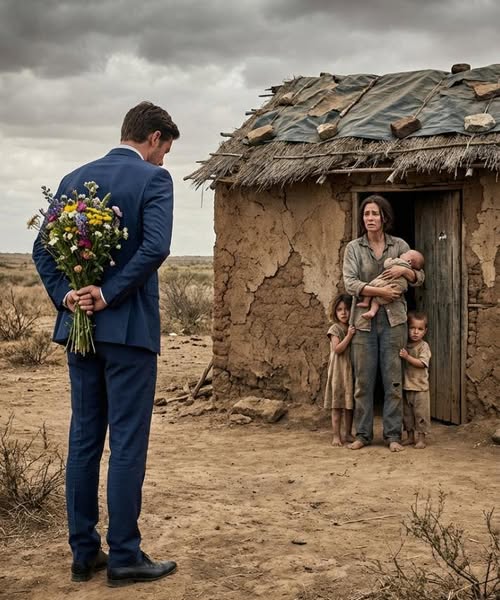
In 1981, the Harper family’s world shattered when six-year-old triplets Sarah, Sophie, and Stella vanished from their California yard. For fifteen years, the case remained a haunting mystery, leaving Margaret and Jon Harper trapped in a cycle of perpetual grief. The silence was finally broken not by a police breakthrough, but by a chance encounter at a local farmers market in Watsonville.

While browsing the stalls, Margaret was drawn to “Strawberry Sisters Farm,” a stand managed by three young women in their early twenties. As Margaret engaged one of them in conversation, a cold chill of recognition set in. The girl introduced herself as Sarah and mentioned her sisters, Sophie and Stella. The impact of hearing those three names together caused Margaret to drop her basket in shock. Up close, the physical resemblances were undeniable: the delicate bone structure, the blue-green eyes, and specific habitual gestures—like a certain tilt of the head or a furrowed brow during concentration—matched the daughters Margaret had lost over a decade prior.

The young women spoke fondly of their “father,” Robert Greenfield, a former elementary school teacher who had allegedly adopted them after a tragic accident orphaned them as children. Margaret and Jon immediately recognized the name; Greenfield had been the girls’ science teacher at the time of their disappearance. This revelation spurred the Harpers into a desperate, private investigation.

Records at the local library and courthouse painted a suspicious picture. Greenfield had purchased a remote 150-acre farm in the coastal foothills shortly after the 1981 disappearance, paying in cash despite his modest teacher’s salary. Most damning was the total absence of legal adoption papers or any public record of the “tragic accident” Greenfield claimed had left the girls alone. It appeared he had successfully abducted the children, moved them to an isolated location, and constructed an entirely new reality for them, far from the prying eyes of the community.

Driven by a mix of hope and horror, Margaret and Jon drove to the outskirts of the Greenfield property. Through binoculars, they observed the three women working the fields. To the casual observer, it was a picture of agricultural diligence; to Margaret’s maternal eye, it looked like a life of quiet, controlled isolation. The girls moved with a mechanical efficiency, lacking the easy laughter of siblings, their posture appearing deferential and guarded in Greenfield’s presence. When Greenfield emerged onto the porch carrying a rifle to scan the perimeter, the Harpers realized the true danger of the situation. Their daughters weren’t just living on a farm; they were being held in a psychological and physical stronghold by a man who had spent fifteen years convincing them he was their only savior.

The emotional weight of the discovery was suffocating. Margaret grappled with the guilt of that fateful morning in 1981, while Jon focused on the logistical challenge of proving their identity. They knew that a direct confrontation could be disastrous; Greenfield had spent a decade and a half brainwashing the women into believing their biological parents didn’t exist or didn’t want them.

The Harpers realized that to reclaim their daughters, they would need more than just a mother’s intuition—they needed irrefutable proof. They began planning a covert mission to collect DNA samples from the girls at the next farmers market, hoping to match them against the evidence still held in the police cold case files. As they stood in the preserved bedroom of their missing children, surrounded by photos of three little girls who had never truly grown up in their hearts, Margaret and Jon prepared to bridge the fifteen-year gap and expose the man who had stolen their lives.

They Vanished After Prom Night in 1992, Decades Later, a Hidden Truth Left Everyone Speechless!

On May 16, 1992, Lincoln County, Ohio, was alive with the scent of lilacs and the electric energy of prom night. For eighteen-year-olds Joseph Mulvaney, William Hamilton, and Nikki Baccolis, the evening was supposed to be a final celebration of their inseparable childhood before graduation pulled them toward adulthood. Joseph, crisp in a silver-gray tuxedo, climbed into his metallic 1989 Pontiac Grand Prix at 11:45 p.m., joking about being the “chauffeur of bad decisions.” With William’s infectious humor and Nikki’s bright-eyed laughter filling the car, they planned a quick trip to the Miller’s Lake overlook. They never arrived.

By the following afternoon, the initial assumption of a post-prom adventure curdled into cold dread. Their beds were untouched, and three families were left staring at a silent telephone. The subsequent search was unprecedented in its scale. Volunteers combed cornfields, helicopters scanned the rural grid with searchlights, and bloodhounds strained against their leashes. Yet, there were no skid marks, no shattered glass, and no silver Pontiac. It was as if the earth had opened up and swallowed the trio whole.

In the weeks that followed, the investigation hit an impenetrable wall. Divers scoured the murky depths of local quarries, and detectives chased every phantom sighting from Kentucky to Michigan. Rumors bubbled up to fill the vacuum of evidence: whispers of a drunken cover-up, a runaway pact, or a random predatory abduction. None of it held weight. For the families, life became a frozen clock. Nikki’s mother, Eleni, kept her daughter’s room as a shrine, the pink silk prom dress still hanging on the door. Joseph’s mother spent her Sundays at St. John’s Church, relighting candles that flickered against the draft of twenty-four passing years.

The mystery eventually transitioned from a headline to a local ghost story—the “Prom Vanishings.” It became a cautionary tale for new generations of teenagers driving those same back roads. In 1993, a young detective named David Kirby noticed a small detail in the case file: a section of an industrial park near the banquet hall had been under construction the night the teens vanished, with fresh concrete poured that same week. However, the idea of a car being buried beneath a foundation was deemed too far-fetched to pursue, and the lead withered.

Over the decades, the landscape of Lincoln County changed. Roads were widened, the old banquet hall was demolished, and new housing developments smoothed over the rugged terrain of the early nineties. Each layer of asphalt felt like another shovel of dirt on a forgotten grave. Retired detectives and even Joseph’s brother, Mark—who joined the Sheriff’s Department specifically to find the Grand Prix—refused to let the file close. They chased every rusted piece of metal found in a ravine, hoping for a match to license plate 4G2971, but the silence remained absolute.

The breakthrough finally came twenty-four years later, hidden beneath the very progress that had tried to bury the past. During a deep-water recovery exercise or a localized construction project—depending on which local legend you believe—a shimmer of metallic gray was spotted in a place no one had looked deep enough. The discovery of the silver Pontiac, settled in a watery or earthen tomb that had been overlooked for a quarter-century, finally provided the physical evidence the county had craved. The interior of the car held the tragic remains of three friends who had never left their prom night. The hidden truth was neither a runaway pact nor a sinister cover-up, but a heartbreaking accident lost to time and terrain. The three seniors finally came home, leaving a town speechless and families finally able to blow out the candles that had burned for twenty-four years.

Popular

A Mother’s Love: Vienna’s Journey with a Birthmark

0
Love compels parents to do extraordinary things for their children’s well-being. Celine Casey, a British mother, took remarkable steps to ensure her daughter Vienna’s...