Entertainment

What’s the Real Story Behind Lucille Ball’s Favorite I LOVE LUCY Episode?

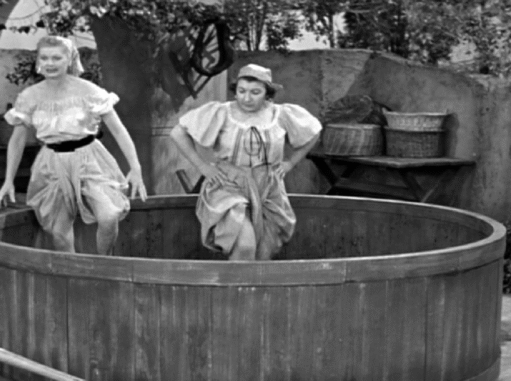
Lucille Ball’s favorite episode of I LOVE LUCY might have been funny onscreen, but the actress revealed she took a “beating” while filming it.

“Our director didn’t speak Italian,” Ball said of the episode “Lucy’s Italian Movie” while appearing on THE DICK CAVETT SHOW in 1974. “I didn’t speak Italian, no one spoke Italian…[Italian co-star Teresa Tirelli] was told that there would be a fight, and it was also explained to her that there were times when my legs had to come up in this huge vat of real grapes.”

Ball continued, “I slipped and when I slipped, I hit her, accidentally. And she took offense. So, she hauled off and let me have it…it took all the wind out of me.”

The actress explained that Tirelli “kept me down by the throat. And she was choking me, and I am really beating her to get her off. I was drowning in these grapes. She was killing me.”

However, producers reportedly didn’t intervene because they knew how funny the scene would be for viewers.

“She spent so much time beating…me in the vat, we had to cut half of it,” Ball joked.

While Ball’s story is hilarious, I LOVE LUCY producer Jess Oppenheimer’s son Gregg took to Facebook in 2024 to set the record straight.

“Any stories you may have heard that the Italian woman in the vat spoke no English, or that Lucy nearly drowned, are simply untrue,” he wrote. “The fight scene in the grape vat was carefully rehearsed all week. The Italian actress, Teresa Tirelli, was a card-carrying SAG member who spoke perfect English. She later appeared on the TV series DR.S KILDARE and as a midwife in THE GODFATHER PART II.”

Whether or not Ball’s story about the episode is true, there’s no denying her legacy as an actress and comedian.

“Her face was seen by more people more often than the face of any human being who ever lived,” the citation for her posthumously-awarded Presidential Medal of Freedom read. “Who can forget Lucy? She was like everyone’s next-door neighbor, only funnier. Lucille Ball was a national treasure who brought laughter to us all. Love Lucy? Sure. This nation is grateful to her, and we will miss her dearly.”

Ball’s recollection of this now-iconic episode of I LOVE LUCY is just another way the legendary comedian kept us laughing.

Vivian Vance: 13 Facts About Ethel Mertz from I Love Lucy

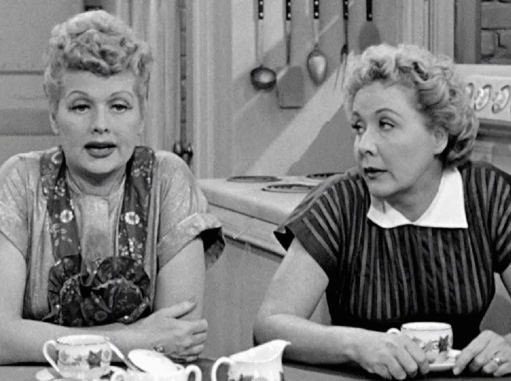
You simply cannot think of the best of classic television without I Love Lucy topping the list, and you cannot consider I Love Lucy without the image of Lucille Ball and Vivian Vance — better known as Lucy Ricardo and Ethel Mertz — coming to mind. They are, quite simply, the greatest TV comedy duo ever and an inspiration to generations who have followed in their creative footsteps. And the bottom line is, as brilliant as Lucille Ball was, that show simply would not have been the same without Vivian Vance.

She was born Vivian Roberta Jones on July 26, 1909 in Cherryvale, Kansas, moved to that state’s Independence when she was six and quickly discovered a love for acting that went directly against her mother’s religious beliefs — which is just the start of her story, as the following facts will detail.

1. Acting was equated to sin

Growing up as one of six children in an extremely religious household, Vivian Vance realized that she wanted to pursue acting while she was in high school, though strong opposition came from her mother, who, notes Theater Mania, “was dead-set against it. ‘You want to be an actress, trying to lead men into sin? You’re going to hell!’”

2. New Mexico became her salvation

An early publicity photo taken of Vivian Vance when she was in New Mexico in the 1930s.
Lou Ann Graham/Alburquerque Museum

Electing to ignore her mother, as a teenager Vance moved to Albuquerque, New Mexico, where she began to perform at the Albuquerque Little Theater in 1930, appearing in a number of different shows. One of them was See Naples and Die in 1932. “It was Vivian Vance’s night,” reviewed the Albuquerque Journal at the time. “Her entrance was marked by applause. She was stunning.”

3. Broadway Bound

It wasn’t long before Vance found herself on Broadway, thanks to friends she’d made during her time performing. In 1932, the New York Daily News reported, “Vivian had played in the Little Theater for a couple of seasons for no salary, but the citizens decided she deserved fame and fortunate in New York. So they opened an ancient opera house and staged The Trial of Mary Dugan, with Vivian as Mary. Box office receipts went to Miss Vance and she came to Broadway.”

4. New York wasn’t easy at first

In 1942, Vivian Vance told The Herald-News of New Jersey of her trip to New York, explaining that breaking onto the Broadway stage was “no cinch.” Until she could, she danced in a few choruses and sang at some nightclubs. She credits her first break being the show Hooray for What, in which she was a singing chorus girl for which she was hired when the production found it literally had seven hours to fill the part.

“Then,” she said, “I got a legitimate role or two, notably in Skylark, where the critics liked me, and Out from Under.”

5. She was friends with Ethel Merman

Actress Ethel Merman as seen in 1934
Hulton Archive/Getty Images

Pop culture historian Geoffrey Mark, who is also the author of The Lucy Book, explains that when casting was underway for the musical Anything Goes, written for the comedy team of Ethel Merman, Victor Moore and William Gaxton, Vance became Merman’s understudy. “Merman liked her so much,” he says, “that she considered Vivian to be a protege of hers. And in 1936, when she had red, Hot and Blue with Bob Hope, Vivian was again her understudy. The two of them became good buddies. This led to Vivian eventually becoming a star in her own right on the Broadway stage in musicals. Then she did a play where she was the bitch called The Voice of the Turtle. But while they were running that play, she had a nervous breakdown.”

6. Vivian was repressed by her father

According to Geoffrey Mark, the nervous breakdown of Vivian Vance was a result of her father’s repressive nature. He explains, “Her father made her afraid of men. This came from Vivian, and because of it, she only married gay men. She said, ‘I was so afraid of men, that I spent my life hiding underneath them.’ Because of her breakdown, she stopped performing and it wasn’t until 1950 that she started doing regional theater to get her feet we. She also had small parts in two Hollywood movies, The Secret Fury and The Blue Veil.”

7. ‘The Voice of the Turtle’ and ‘I Love Lucy’

Vivian Vance was starring in The Voice of the Turtle in La Jolla, California at the time casting was underway for the Lucille Ball and Desi Arnaz series I Love Lucy. Arnaz and the show’s producer and director went to watch her perform and were so impressed, that the actress was signed to play Ethel Mertz — wife of Fred and landlords to Lucy and Ricky Ricardo — during the show’s intermission.

8. Vivian Vance and William Frawley

Probably not the best way to begin things took place on the first day of rehearsal for I Love Lucy. “She comes in, and Desi’s already there, Bill Frawley, who’s going to play Fred Merz is already there, and she says, ‘Who’s that old coot sitting over there?’ And Desi says, ‘That’s William Frawley, he’s going to play your husband, honey.’ And she said, ‘Husband? He could play my grandfather.’ Bill Frawley overheard this and absolutely hated her for the rest of his life. The funny thing is that the writers saw how much he disliked her and wrote it into the scripts.”

9. Lucille didn’t love Vivian at first

On the first day of rehearsal, Lucille Ball met Vivian Vance and upon learning she had been cast as Ethel Mertz, thought it was a terrible mistake. Says Geoffrey Mark, “Ms. Ball said, ‘You can’t play Ethel — you’re the same age I am, you have the same color hair, you have an attractive figure, you’re pretty.’ But Vivian was smart and said, ‘What does Ethel Mertz look like?’ Miss Ball says, ‘Oh, she’s overweight and she has bleached blonde hair with a frizzy permanent and dark roots and wears tacky clothes.’ She replied, ‘It’s Monday. I can’t give you that for Friday, but next Friday I can give you that.’” True to her word, by the following week she had transformed into what Lucille Ball had described.

10. ‘Ethel’ did Love ‘Lucy’

There’s no denying that the schedule for I Love Lucy during its six seasons was grueling, but Vivian Vance seemed to enjoy the challenge of it, telling the media at the time, “It’s an actor’s dream. You do the same character, but you don’t have the boredom of reading the same lines week after week, as on the stage. We also have what the movies lack: an audience to stimulate you.”

11. They still worked together… for a time

I Love Lucy came to an end in 1956, followed by 13 one-hour episodes of The Lucy-Desi Comedy Hour that aired between 1957 and 1960. Two years later, following her divorce from Desi Arnaz, Lucille Ball launched The Lucy Show, in which she played Lucy Carmichael and Vivian portrayed Vivian Bagley. Notes Geoffrey Mark, “And she’s nothing like Ethel Merz. She’s much more secure, she’s more confident, she’s got a boyfriend, she’s much smarter, she’s nobody’s fool and she doesn’t suffer quite as much with Ms. Ball’s antics; she puts up more of a fight.”

And the actress was enthusiastic, as she expressed in 1962: “We’re a couple of good, honest performers and we work well together. That’s not being immodest; I like to watch us work together as a member of the audience. Television is like an X-ray; the audience gets the feeling we like each other.”

12. Vivian needed to leave ‘The Lucy Show’

A misunderstanding by the person handling contract negotiations led to Lucille Ball believing that Vivian Vance was insisting on outrageous demands to continue with the show and refused to negotiate, resulting in the latter departing. Geoffrey Mark, who points out that the show was still popular but, creatively, never the same, says, “It took about a year for the hurts to heal and Vivian came back as a guest star and continued to be a guest star on all the shows Lucille did over the years. The friendship survived, because they liked one another and I think they both realized, ‘We let these businessmen put a wedge between us that never should have been there.’”

13. Things slowed down for Vivian before the end

Although Vivian Vance made guest appearances on Lucille Ball’s third series, Here’s Lucy (which ran from 1968 to 1974), her career really came almost to a half after she was diagnosed in 1973 with breast cancer. She did guest-star on Rhoda and appeared in the TV movies The Front Page (1970) and Getting Away from It All (1972), and appeared with Ball in the CBS TV special Lucy Calls the President (1977), which was her final role.

Why Lucille Ball Decided Not to Meet Vivian Vance’s Contract Demands: ‘It Broke Lucy’s Heart’

Lucille Ball and Vivian Vance couldn’t agree when it came time for salary negotiations on ‘The Lucy Show.’

Lucille Ball became a living legend through her iconic series I Love Lucy. Spotlighting the husband-and-wife characters Ricky and Lucy Ricardo, real-life spouses Desi Arnaz and Ball created comedy gold for six successful seasons.

Vivian Vance proved to be an invaluable partner in Ball’s antics as her bestie Ethel Mertz and later in their series The Lucy Show. Though Vance was considered indispensable to Ball, the two came to an impasse when it was time for contract negotiations.

Lucille Ball and Vivian Vance of ‘I Love Lucy’ | CBS Photo Archive/Getty Images

From ‘I Love Lucy’ to ‘The Lucy Show’

The dynamic duo decided to hit the small screen together for another go-round in the comedy series The Lucy Show. Running from 1962 to 1968, the show once again spotlighted the mayhem of the two BFFs. When it was time for the fourth season to start filming, Vance hesitated on continuing her role.

“I don’t want anything to happen to my marriage,” Vance said, according to the book Desilu: The Story of Lucille Ball and Desi Arnaz by Coyne Steven Sanders and Tom Gilbert. The actor lived in Connecticut with her fourth husband and was commuting at the time. “All this flying back and forth is difficult. … I get up, go to the studio, go home, and fall into bed. It’s lonely.”

Making $8,000 per episode at the time, Vance saw her co-star’s position as owner of Desilu Productions as more worth the effort.

“If I were Lucy, I’d do what she’s doing, but I don’t own a studio,” Vance explained. “I just own a beautiful farmhouse and yard filled with flowers that need attention, and I’d like to be there.”

Vivian Vance wanted more money and input

According to Sanders and Gilbert’s book, Vance was asking for close to a half a million dollars to return for another season of The Lucy Show. She also wanted to direct, write, and produce. Co-star Gale Gordon recalled Ball being on board with the idea for fear of losing Vance.

“Lucy cried in private talking to me because she depended on Vivian,” Gordon revealed. “She told me she could never do a show without Vivian. Lucy told me that, just prior to the break, Vivian was asking for more money than Lucy was willing to accept. It broke Lucy’s heart, really.”

Bernie Weitzman, Vice President of Business Affairs for Desilu Productions, shared that Ball felt an unbreakable bond with Vance that she was unwilling to risk. At first, Ball was set to agree to her co-star’s requests.

“Lucy said, ‘I want Vivian to stay. It’s very important to me,’” Weitzman said. “‘She’s very helpful to me, consoles me, we have a great friendship.’ And she was the last of the old guard. [Lucy] had been very emotionally involved with her.”

Lucille Ball decides to do the show sans Vivian Vance

When Weitzman met with Vance’s agent to negotiate, he was presented with some terms that seemed over the top.

“He gave me some numbers that were out of sight, what she wanted to do and the control she wanted on the show,” Weitzman explained. “I said, ‘That’s unreasonable. There’s no way we could live with that.’ He said, ‘Vivian doesn’t care about doing the show. She’s married, she’s happy, so if you want her to do the show, if Lucy wants her to do the show, these are her demands.’”

When Weitzman brought the conditions to Ball, she decided that Vance’s requirements were too great to accommodate.

“Lucy says, ‘That’s outrageous. I can’t believe it,’” he recalled. “I told her, ‘You gotta decide if Vivian Vance is Lucille Ball … That’s the decision you have to make, because she wants to own the show.’ Lucy made the decision that she was going to do the show without her.”

Cast of ‘The Lucy Show’: Jimmy Gerrett, Candy Moore, Lucille Ball, Dick Martin, Vivian Vance, and Ralph Hart | CBS Photo Archive

Though they stopped working together, Ball and Vance maintained their friendship over the years. Ball later gave praise to her co-star and commented on her aversion to her most famous moniker.

“She hated being called Ethel,” Ball said of Vance. “But she was a great show doctor and a wonderful right arm. … When she got married and moved East and quit the show, I never really did recover.”

I Opened My Home to a Friend in Need—What Happened Next Taught Me a Valuable Lesson

When my best friend called me after her divorce, her voice carried a quiet exhaustion I had never heard before. She didn’t ask for much—just a place to stay until she could find her footing again. Of course, I said yes. We had grown up together, shared secrets, and supported each other through every chapter of life. Offering her a spare room felt like the most natural thing in the world. The only thing I asked in return was simple: help me look after my three-year-old son during the day while I worked. She agreed with a soft smile, and for a moment, it felt like everything would fall into place.

The first few days went smoothly. My son warmed up to her quickly, laughing at her silly jokes and following her around like a little shadow. Seeing them together reassured me that I had made the right decision. She seemed calmer, too—more grounded than when she first arrived. I began to relax, trusting that our arrangement was helping both of us heal in different ways. Life settled into a quiet rhythm, and for a brief moment, it felt like we had created a small, supportive world within the walls of my home.

One afternoon, I finished work earlier than expected and decided to surprise them. I imagined walking in to find them playing together or maybe napping peacefully. But when I opened the door, the house felt strangely still. There were no toys scattered across the floor, no giggles echoing down the hallway. I called out my son’s name, but there was no answer. My heart began to race as I searched each room, a growing sense of unease settling in. When I finally found her in the kitchen, she looked at me with a calm expression that didn’t match the moment.

“You can relax,” she said gently, noticing my panic. “He’s safe.” She explained that she had taken him next door to play with the neighbor’s children, knowing how much he loved being around other kids. She had wanted to give him a fun afternoon and give herself a moment to breathe, trusting that the familiar neighbor’s home was a safe place. Relief washed over me, mixed with a quiet realization. I had been so focused on helping her rebuild her life that I hadn’t considered how much trust and communication truly mattered.That evening, we sat down and talked openly for the first time since she moved in. We agreed on clearer boundaries and better communication, understanding that kindness works best when paired with trust and honesty. From that day on, our home felt even stronger—not just as a place of support, but as a space where we both learned to grow, listen, and care in deeper ways.

Simple Ways to Use Tangerine Peels at Home

Instead of throwing away tangerine peels, consider giving them a second life as a simple and natural addition to your home. These bright, citrus-scented peels can gently refresh your space without the need for artificial products. When placed on a sunny windowsill or near a warm area like a radiator or oven, they slowly dry and release a light, pleasant aroma. Over time, this natural fragrance helps reduce stale or lingering odors, leaving behind a clean and subtle scent. Unlike strong air fresheners, tangerine peels create a softer atmosphere that feels more natural and inviting.

Their usefulness goes beyond freshening the air. Once dried, tangerine peels can be placed in drawers, closets, or storage spaces to add a gentle scent to clothes and linens. This small touch can make everyday items feel fresher and more enjoyable to use. You can also add a few dried peels to hot water or tea for a mild citrus flavor that enhances your drink in a simple way. These small habits turn something that might have been discarded into something practical and enjoyable, adding value to your daily routine.

Using tangerine peels is also a mindful way to reduce waste and make more sustainable choices at home. By reusing what you already have, you create a more thoughtful and efficient living environment. This approach encourages you to see everyday items differently and find simple ways to make use of them. Over time, these small actions can help build habits that are both practical and environmentally friendly, without requiring extra effort or expense.

Beyond their practical benefits, tangerine peels can also contribute to a more calming and pleasant atmosphere. The light citrus scent is often associated with freshness and positivity, helping to create a space that feels comfortable and balanced. Incorporating these natural elements into your home can make daily routines feel more enjoyable and intentional. With just a little creativity, something as simple as a tangerine peel can enhance your surroundings in a meaningful and sustainable way.

I Found My Husband’s Secret — What I Did Next Changed Everything

I never expected a quiet evening to unravel everything I believed about my marriage. It started with a strange feeling—nothing obvious, just a small instinct I couldn’t ignore. One night, out of curiosity more than suspicion, I searched his name online. That’s when I found it: a profile on a dating site. My heart sank, but instead of confronting him immediately, I created a simple account and reached out. What followed felt surreal. He responded quickly, confidently, like someone with nothing to hide. As the conversation unfolded, I asked about his life, and that’s when he said it—his wife was gone, and he was ready to find love again. Reading those words, I felt like the ground had disappeared beneath me.

I didn’t cry right away. Instead, I grew quiet. Something inside me shifted from shock to clarity. I realized that confronting him in anger wouldn’t change the truth—it would only create more chaos. So I made a different choice. I began planning my next steps calmly and carefully. I reviewed my finances, gathered important documents, and started thinking about what independence would look like. On the surface, nothing changed. I smiled, spoke normally, and carried on with daily routines. But inside, I was preparing for a future where I would no longer have to question my worth or my place in my own life.

A few days later, he came home earlier than usual. There was something different about him—hesitant, almost thoughtful. He sat down across from me and said he wanted to talk. For a moment, I froze, unsure of what was coming next. He looked at me and began speaking about change, about feeling lost, and about wanting to fix things before they broke completely. He didn’t know what I had discovered, but it was clear he sensed the distance growing between us. Listening to him, I realized that sometimes people hide behind poor decisions instead of facing their fears honestly.

That night didn’t end with a dramatic confrontation. Instead, it became a quiet turning point. I understood that the real decision wasn’t about him—it was about me. Whether I chose to leave or rebuild, it had to come from strength, not pain. I had already taken the first step by valuing myself enough to prepare for change. In the days that followed, I focused on clarity, communication, and honesty—with him and with myself. Sometimes, the most powerful moments in life are not loud or visible. They are the quiet decisions we make when no one is watching, the ones that shape the direction of everything that comes next.

She Didn’t Cry at the Funeral—Her Reason Changed Everything

The day my grandfather was laid to rest felt heavier than the gray sky above us. Family members stood in quiet clusters, speaking in hushed tones, while memories seemed to echo in every corner of the room. I watched my grandmother closely, expecting to see the same grief reflected in her eyes that I felt in my own chest. But instead, she stood tall—calm, composed, and even smiling faintly. It unsettled me. How could she remain so steady after losing the man she had shared her life with for decades?

As the ceremony ended and people slowly drifted away, I found the courage to walk up to her. “Grandma,” I whispered gently, “are you not sad at all?” She looked at me with warmth, the kind that felt both comforting and mysterious. For a moment, she said nothing. Then she leaned in slightly, her eyes soft but certain, and gave me a small, knowing smile. “Your grandpa told me something a long time ago,” she said quietly. “He said that when his time came, he didn’t want tears to be the loudest thing in the room.”

I frowned, trying to understand. She continued, her voice steady but full of meaning. “He told me that love doesn’t end when someone leaves this world—it changes shape. He said if I truly loved him, I would carry his laughter forward, not just his absence. He didn’t want me to feel broken. He wanted me to remember every good day, every small joy, every ordinary moment we shared.” Her words settled into me slowly, like sunlight breaking through clouds.

That evening, as I sat alone thinking about everything she had said, I realized something I hadn’t before. Grief doesn’t always look like tears. Sometimes, it looks like strength. Sometimes, it looks like a quiet smile that carries a lifetime of memories. My grandmother wasn’t untouched by loss—she had simply chosen to honor love in a different way. And in that moment, I understood that my grandfather hadn’t really left us. He lived on in her courage, in her peace, and in every story that would continue to be told.

I Chose to Become a Single Mom—Years Later, One Detail Changed Everything

For most of my life, I never imagined I would become a mother on my own. After a few difficult relationships, I stopped searching for love and started listening to what I truly wanted. And what I wanted, more than anything, was a child. It wasn’t an easy decision, but it was a clear one. With careful thought and support from my closest friend, Jude, I chose to move forward and build a life centered on that dream. Not long after, I welcomed my son, Alan, into the world—a moment that changed everything in the most beautiful way.

Raising Alan as a single parent came with its challenges, but it also brought a deep sense of purpose and joy. We created our own rhythm of life in a new place, surrounded by simple routines and meaningful moments. Every milestone, from his first steps to his first day of school, reminded me that I had made the right choice. Over the years, our bond grew stronger, built on trust, love, and the understanding that we were a team. For eight years, our life felt full and complete.

Eventually, I felt ready to return to my hometown. I wanted Alan to see where I grew up and to reconnect with familiar faces from my past. At first, everything seemed normal, but as we spent more time around old friends, I began to notice something unusual. People would pause, glance at Alan, and exchange quiet looks with one another. It wasn’t unkind, but it was noticeable enough to make me curious. I couldn’t understand what they were seeing that I wasn’t.

Then one afternoon, while talking with Jude, everything became clear. She gently pointed out that Alan shared a striking resemblance to someone from my past—someone I had once trusted deeply. It wasn’t something I had considered before, but in that moment, the pieces came together. Instead of feeling unsettled, I found a sense of calm. Life has a way of connecting moments in ways we don’t always expect. What mattered most was the life we had built, the love we shared, and the strength we found along the way.

Why a Student Received a Low Grade in Math Despite Understanding the Concept

Math has long been seen as one of the most challenging subjects for students, often associated with pressure, memorization, and the fear of making mistakes. For many children, numbers can feel rigid and unforgiving, especially when lessons focus heavily on rules rather than understanding. While some students adapt to memorizing formulas and tables, others naturally seek meaning behind what they learn. Johnny was one of those students. He paid attention, tried his best, and believed that learning should make sense. To him, math was not about repeating answers—it was about understanding why those answers were correct.

One day after school, Johnny calmly told his father that he had received a failing grade in math. Surprised by both the grade and Johnny’s relaxed attitude, his father asked him to explain what had happened. Johnny described the situation clearly. During class, the teacher asked, “What is three times two?” Johnny confidently answered, “Six.” Then, immediately after, the teacher asked, “What is two times three?” Johnny felt confused by the repetition. In his mind, the answer remained the same, and repeating it seemed unnecessary.

As Johnny explained this, his father quickly realized what had taken place. From a mathematical perspective, both questions have the same result due to a basic principle that shows numbers can be multiplied in any order. Curious, his father asked, “What difference does it make?” Johnny’s face brightened as he replied, “Exactly—that’s what I was trying to say!” In that moment, it became clear that Johnny had understood the concept correctly, but approached it differently than expected in the classroom.

The situation highlights an important lesson about learning styles and how education is sometimes structured. While systems often emphasize following instructions exactly, true understanding comes from thinking deeply and asking questions. Johnny’s experience wasn’t a sign of failure, but rather a reminder that curiosity and logic are valuable qualities. With the right encouragement, students like Johnny can thrive, especially when their perspective is recognized and appreciated.

Kid Rock Reacts Strongly to Conan O’Brien’s Oscars Joke

At this year’s Academy Awards, host Conan O’Brien set the tone with his sharp wit, delivering a series of jokes throughout the night. However, one particular joke aimed at musician Kid Rock sparked a reaction that quickly gained traction online. During the opening monologue, O’Brien made a playful reference to an “alternate” Oscars ceremony, suggesting that anyone uncomfortable with the tone of the evening could head to a nearby venue for a show hosted by Kid Rock. “Tonight could get political, and if that makes you uncomfortable, there’s an alternate Oscars being hosted by Kid Rock. It’s at the Dave & Buster’s down the street,” O’Brien joked, referencing the musician’s previous involvement in a more patriotic alternative to the Super Bowl halftime show. While the audience laughed at the punchline, Kid Rock wasn’t quite as amused by the jest.

Following the broadcast, Kid Rock took to social media to share his thoughts on the joke. While he made it clear that he enjoys humor, even when it targets him, the singer wasn’t impressed by O’Brien’s remark. “I love a good joke, even when I am the butt of it, unfortunately, this was not a very good one,” Kid Rock posted on X. His response highlighted that while he can typically appreciate being teased, this particular joke didn’t sit well with him. Despite his disappointment, the rocker decided to turn the moment into an opportunity for self-promotion, leveraging the attention to advertise his upcoming tour.

Kid Rock’s post quickly gained attention, and he used the platform to promote his “Freedom 250” tour, which celebrates America’s 250th anniversary. He urged fans to buy tickets for his shows, humorously pointing out that the tickets could be purchased through Ticketmaster, despite his apparent frustration with the platform. “If you want to see a REAL good show this spring/summer that celebrates America and 250 years of freedom – make sure you buy your tickets from (ugh) Ticketmaster for my Freedom 250 tour – The Road To Nashville. There is a reason for this, TRUST ME!” he wrote.

The joke about Kid Rock, while intended as a lighthearted quip, ended up being one of the most talked-about moments from the Oscars. Despite the initial backlash, Kid Rock turned the viral moment into a publicity opportunity, effectively turning the unexpected attention into a promotional tool for his tour. Meanwhile, O’Brien’s humor continued to make waves, but it was the response from Kid Rock that lingered long after the ceremony concluded.

Popular

A Mother’s Love: Vienna’s Journey with a Birthmark

0
Love compels parents to do extraordinary things for their children’s well-being. Celine Casey, a British mother, took remarkable steps to ensure her daughter Vienna’s...