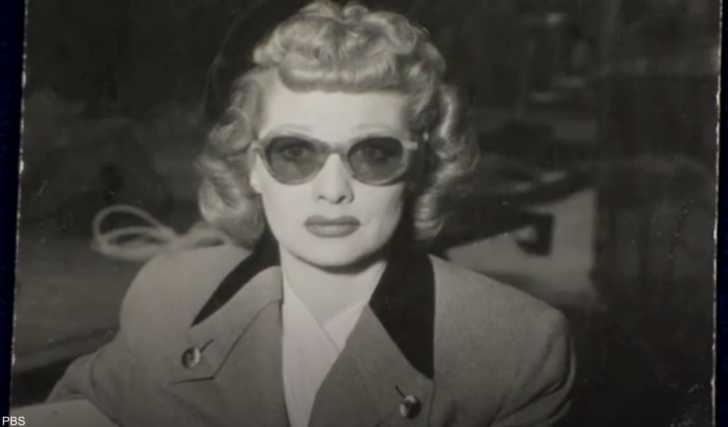
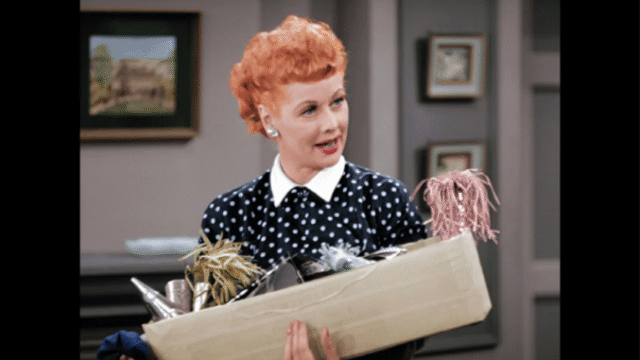
Before she became the undisputed “Queen of Comedy” and America’s beloved redhead, Lucille Ball navigated the often-tough landscape of New York City, taking on various odd jobs to make ends meet and support her family. Among these unexpected gigs was a particularly peculiar one: she worked as a silent hair model for aspiring hairdressers.
Imagine this: the future comedic genius, known for her expressive face and boisterous laughter, had to sit for hours on end without uttering a single word. During these sessions, cosmetology students would practice rolling curls, perming, and dyeing her hair, all while she maintained complete silence. It was a stark contrast to the lively, vocal performances that would later define her career.
Lucille Ball herself once reflected on these early days, stating, “At that time, I just needed money to eat—I wasn’t dreaming of Hollywood or cameras.” This poignant quote underscores the sheer practicality that drove her during those formative years. Her focus was on
immediate survival, not on the grand aspirations that would eventually become her reality.
Her journey is a powerful reminder that even the greatest icons often begin from the most humble and unexpected circumstances. From silent hair model to a global comedy phenomenon, Lucille Ball’s path proves that resilience, hard work, and an unexpected turn of fate can lead to extraordinary achievements.
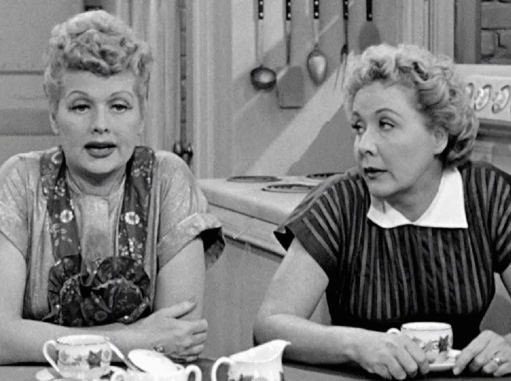
Lucille Ball once revealed her favorite episode of I Love Lucy – and her answer was surprising, given the beating she took while filming it.
During a 1974 appearance on The Dick Cavett Show, Ball responded to the audience with one word when asked to name her favorite episode from the classic TV sitcom she starred in with her then-husband, Desi Arnaz, from 1951 to 1957.
“Grapes,” she said.
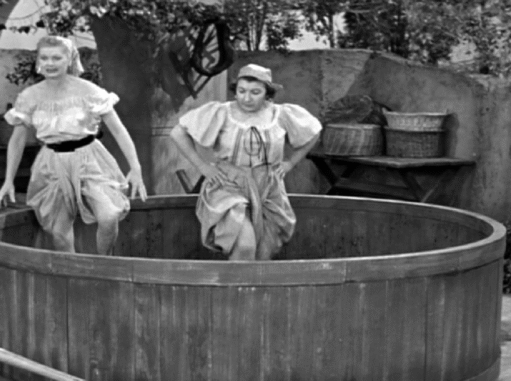
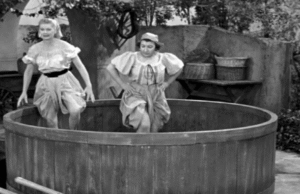
Ball was referring to the iconic 1956 episode “Lucy’s Italian Movie,” which aired 70 years ago on April 16, 1956. Ball teamed up with an Italian actress, Teresa Tirelli, for a famous grape-stomping scene during her character Lucy Ricardo’s trip to Italy. But things went awry when Tirelli reportedly went off-script and got overly physical with Ball in the grape-stomping vat.
“Our director didn’t speak Italian,” Ball told host Dick Cavett. “I didn’t speak Italian, no one spoke Italian. …[Tirelli] was told that there would be a fight, and it was also explained to her that there were times when my legs had to come up in this huge vat of real grapes.”
“I slipped and when I slipped, I hit her, accidentally. And she took offense. So, she hauled off and let me have it … it took all the wind out of me,” Ball continued. “She had been told that we were to stay down for a while, give me a chance to get my legs way up so that they’d show in the camera. Then, up would come an arm…My head was supposed to pop [up]. Well, my head never popped up. She kept me down by the throat. And she was choking me, and I am really beating her to get her off. I was drowning in these grapes. She was killing me.”
Producers reportedly didn’t intervene because they knew the scene would be a hit with fans. But Ball lamented of Tirelli, “She spent so much time beating the hell out of me in the vat, we had to cut half of it.”
The lack of communication may not have been a language barrier
Ball’s story on Cavett’s show alluded to the fact that Tirelli didn’t speak English. But I Love Lucy producer Jess Oppenheimer’s son, Gregg, stated on Facebook in 2024, “Any stories you may have heard that the Italian woman in the vat spoke no English, or that Lucy nearly drowned, are simply untrue. The fight scene in the grape vat was carefully rehearsed all week. The Italian actress, Teresa Tirelli, was a card-carrying SAG member who spoke perfect English. She later appeared in the TV series Dr. Kildare and as a midwife in The Godfather Part II.”
Oppenheimer directed fans to get the full behind-the-scenes in his father’s book, Laughs, Luck and Lucy.
But when one fan asked, “But isn’t Lucy partly to blame for the story of the Italian actress not speaking English and nearly drowning Lucy?” Oppenheimer explained.
“You’re right,” he wrote. “Lucille Ball was not only a great actress, but a great storyteller, and she loved to tell them. One of the traits she shared with Lucy Ricardo was a rich imagination, and sometimes she used it to embellish her stories, including this one.”
Tirelli, who was also a renowned classical singer, died in June 1989 at age 81, per a UPI obituary, just two months after Ball’s death that April at age 77.
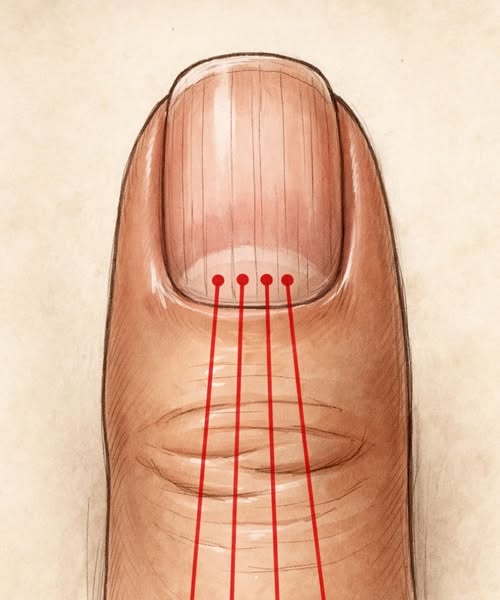
Nails don’t just reflect grooming habits—they reflect what’s happening inside your body. The texture, strength, and appearance of your nails can offer subtle clues about your overall health, especially when changes appear gradually. One of the most common changes people notice over time is the development of vertical ridges. In many cases, these ridges are harmless and simply part of the natural aging process. As the body slows down certain functions, nail growth patterns can shift, making ridges more visible.
But not all changes should be ignored.
When ridges become more pronounced, when nails turn brittle, thin, or start splitting more easily, it may point to something deeper—often related to nutrition. The body relies on a steady supply of nutrients to build and maintain strong nails. When that supply is inconsistent or lacking, the effects can show up in ways that are easy to overlook at first.
The good news is that improving nail health doesn’t require complicated treatments. In many cases, it starts with what you eat.
At the core of nail strength is protein. Nails are made primarily of keratin, a structural protein that provides durability and flexibility. Without enough protein in your diet, your body simply can’t produce keratin efficiently. This leads to nails that feel soft, weak, and more likely to develop ridges or break under minimal pressure.
Including a consistent source of protein in your daily meals is essential. Eggs, poultry, fish, dairy products like Greek yogurt, and plant-based options such as beans, lentils, and tofu all contribute to maintaining strong keratin production. It’s not about eating large amounts at once—it’s about steady intake throughout the day.
Beyond protein, certain vitamins play a direct role in improving nail quality. Biotin, also known as vitamin B7, is one of the most recognized nutrients for nail health. It supports the structure of keratin and helps nails grow thicker and more resilient. People with brittle nails often benefit from increasing their biotin intake, and while supplements exist, many can meet their needs through food.
Eggs, when fully cooked, are a strong source of biotin. Nuts like almonds and walnuts, leafy greens such as spinach, sweet potatoes, and fatty fish like salmon also contribute. Over time, consistent intake can help reduce fragility and improve the overall appearance of nails.
Iron is another key factor that shouldn’t be overlooked. When iron levels drop, the body prioritizes essential functions, and nail health can suffer as a result. Nails may become thin, develop ridges, or in more severe cases, change shape entirely. While vertical ridges alone don’t automatically signal iron deficiency, they can be part of a broader pattern, especially when combined with fatigue or weakness.
Adding iron-rich foods into your routine can make a noticeable difference. Lean red meat, chicken, legumes like lentils and chickpeas, pumpkin seeds, and dark leafy greens all provide valuable sources. For those relying on plant-based options, pairing them with vitamin C-rich foods—such as citrus fruits or bell peppers—helps improve absorption, making the iron more effective.
Zinc plays a quieter but equally important role. It supports cell growth and repair, processes that are essential for maintaining healthy nails. A deficiency in zinc can lead to irregularities such as ridges, white spots, or slower nail growth. Because the body doesn’t store zinc efficiently, it needs to be replenished regularly through diet.
Foods like oysters, beef, seeds, nuts, and whole grains can help maintain adequate levels. Even small, consistent amounts contribute to better nail strength over time.
While structure and strength matter, moisture is just as important. Dry nails tend to appear more ridged, more brittle, and more prone to damage. This is where omega-3 fatty acids come into play. These healthy fats help maintain hydration in the nail bed, improving flexibility and reducing the likelihood of cracking or splitting.
Fatty fish such as salmon, sardines, and mackerel are among the best sources of omega-3s. For those who prefer plant-based options, chia seeds, flaxseeds, and walnuts offer similar benefits. In addition to supporting nail health, omega-3s improve circulation, ensuring that nutrients are delivered more effectively to the areas where they’re needed most.
Hydration itself is often underestimated. Even with the right nutrients, dehydration can undo progress by making nails dry and fragile. Drinking enough water throughout the day supports not just nail health, but skin elasticity and overall bodily function. Incorporating water-rich foods like cucumbers, oranges, and watermelon can also help maintain proper hydration levels.
It’s important to understand that these changes don’t happen overnight. Nails grow slowly, and improvements take time to become visible. Consistency matters more than quick fixes. A balanced diet maintained over weeks and months will produce better results than short-term adjustments.
At the same time, not all nail changes are purely nutritional. Certain signs should not be ignored. Deep horizontal ridges, sudden discoloration, dark streaks, or pain around the nail can indicate underlying health conditions that go beyond diet. In those cases, it’s important to seek medical evaluation rather than relying solely on nutritional changes.
Understanding the difference between normal variation and potential warning signs is part of taking control of your health.
Nail care often gets reduced to surface-level solutions—polishes, treatments, and cosmetic fixes. But real strength starts from within. What you eat directly affects how your body builds and maintains every structure, including your nails.
When you prioritize protein, ensure adequate intake of biotin, iron, and zinc, include healthy fats, and stay properly hydrated, you create the conditions your body needs to function at its best. Over time, those internal changes show up externally in ways that are hard to miss—stronger nails, smoother texture, and less visible ridging.
It’s not about perfection. It’s about consistency.
Small adjustments in daily habits can lead to noticeable improvements, not just in nail health, but in overall well-being. Paying attention to these details allows you to respond to what your body is telling you, rather than ignoring it.
In the end, your nails are not just a cosmetic feature. They are a reflection of how well your body is being supported.
Take care of what goes in, and what shows on the outside will follow.
Then the man said something that made everything worse.
“She didn’t steal it.”
Relief hit me—
for half a second.
Then he added:
“But she doesn’t know what she bought.”
The crowd reacted instantly.
Murmurs. Whispers. Phones zooming in.
“What does that mean?” I asked.
No answer.
The officer stepped closer now.
“That sounds like a problem.”
Still calm.
Still controlled.
But ready.
The older biker spoke this time.
“It’s not a crime.”
“Then what is it?”
Another pause.
The first man reached into his jacket.
The officer stiffened immediately.
“So do we,” he warned.
But the man didn’t react.
He pulled something out slowly.
Carefully.
Not a weapon.
A photograph.
Old.
Worn at the edges.
He held it for a second…
then turned it toward me.
I stepped closer.
Against instinct.
Against fear.
And looked.
It was a Harley.
Shiny.
New.
The same model.
Same frame.
Same markings.
And standing next to it—
was a younger version of the man who sold it to me.
My stomach dropped.
Behind him…
were dozens of bikers.
And right in the center—
standing beside that bike—
was the man in front of me now.
Younger.
Stronger.
But unmistakably him.
“What is this?” I whispered.
The man didn’t raise his voice.
Didn’t step forward.
Didn’t threaten.
He just said:
“That bike…”
A pause.
Just long enough to pull every breath out of the air.
“…was never meant to be sold.”
And suddenly—
I realized—
I hadn’t just bought a broken motorcycle.
I had stepped into something unfinished.
Something that hadn’t ended.
And now…
every single person in that parking lot…
was waiting to see what would happen next.
No one moved after he said it.
The wind dragged lightly across the parking lot, rattling a loose plastic bag caught on the Harley’s handlebar. A dry, repeating sound. Small, but impossible to ignore.
I was still holding the paper.
The man in front of me didn’t step closer. Didn’t raise his voice.
He just waited.
“Not meant to be sold…” I repeated, my throat tight. “Then why did he sell it to me?”
Silence.
The older biker took a slow breath.
“What exactly did he say to you?” he asked.
“Nothing,” I said. “Just… asked if I had family.”
A few of them exchanged glances.
Something shifted. Subtle. Quiet. But real.
I looked down at the paper again.
The names. The dates. The strange symbol in the corner.
“I don’t understand any of this,” I said. “If there’s something wrong, just tell me.”
The man in front of me finally stepped forward.
One step.
That was all.
He didn’t reach for the paper.
He leaned slightly… and pointed to a name.
His finger stopped there.
Then he spoke.
“He kept it.”
That same sentence again.
But this time… it sounded heavier.
“He kept what?” I asked.
The man looked at me.
Really looked at me.
And for the first time… there was something in his eyes that wasn’t distance.
It was memory.
“He kept the last ride,” he said quietly.
I frowned.
“I don’t—”
“He wasn’t supposed to survive that night.”
The words didn’t land all at once.
They sank.
Slowly.
Like something falling through water.
The older biker took the paper from my hand again, this time more gently.
“You see these names?” he said.
I nodded.
“There are nine of them.”
I counted quickly.
He was right.
Nine names. Each followed by a date.
“What about them?”
“They’re all gone,” he said.
A pause.
“Except one.”
My stomach tightened.
“The man who sold you the bike,” he added.
The world seemed to tilt slightly.
“What happened?” I asked.
No one rushed to answer.
It was the man in front of me again.
He exhaled once.
Then spoke.
“Three years ago. Arizona highway. Night run.”
His voice stayed calm.
Controlled.
But something underneath it… carried weight.
“Truck drifted across the line,” he continued. “No lights. No warning.”
I felt my chest tighten.
“There were ten of us riding.”
His eyes flicked briefly to the Harley.
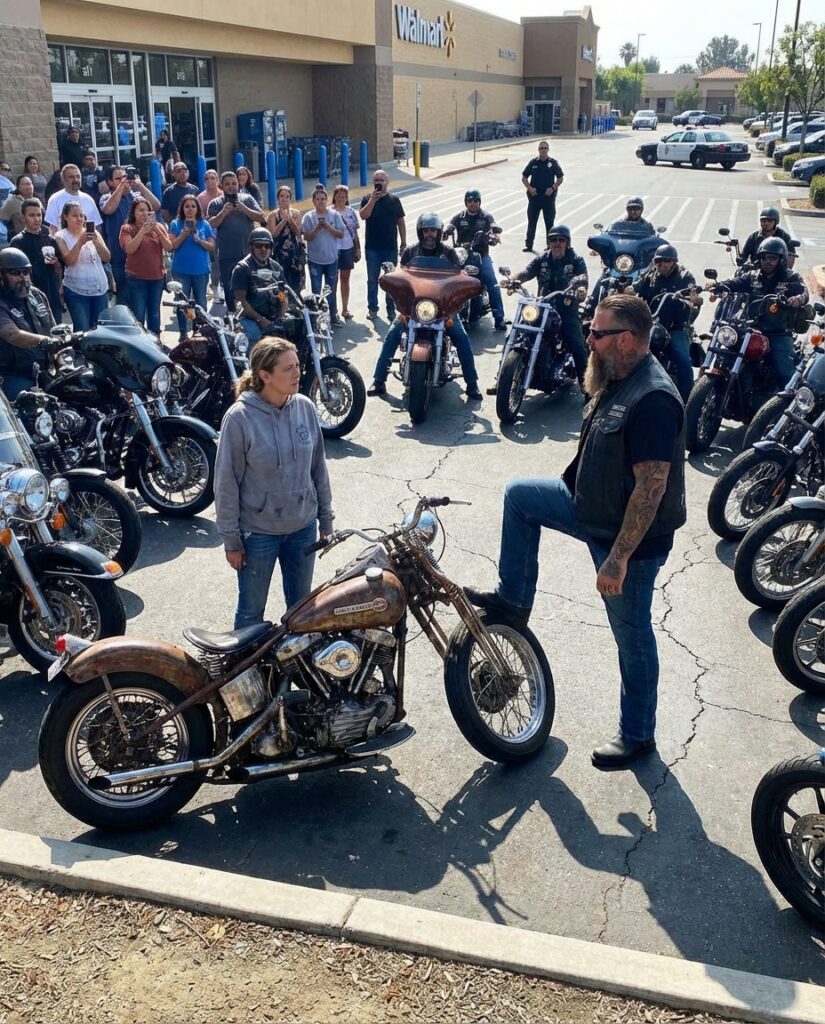
“That bike was in the middle.”
The older biker continued for him.
“They didn’t even have time to brake.”
I swallowed.
Hard.
“He was the only one who didn’t go down,” the man said. “Everyone else…”
He didn’t finish the sentence.
He didn’t need to.
I looked at the paper again.
Nine names.
Nine dates.
The same night.
“And this?” I asked, pointing at the strange symbol.
The older biker’s jaw tightened.
“That’s our mark,” he said quietly. “Not for outsiders.”
A pause.
“That bike… wasn’t just a bike.”
He looked directly at me now.
“It was the last thing they all rode together.”
My hands started to shake.
“Then why would he sell it?” I whispered.
No one answered immediately.
The man in front of me looked down for a moment.
Then back at me.
“Because he’s been carrying something he couldn’t let go of,” he said.
Another pause.
“And maybe… he thought you needed it more than he did.”
That didn’t make sense.
Not yet.
But something in my chest…
shifted.
The police officer took a step closer.
“So what are we saying here?” he asked. “Is there a problem or not?”
The tension snapped slightly.
The moment broke.
The man in front of me turned toward him.
“No problem,” he said.
Then he reached into his jacket again.
This time, slower.
More deliberate.
He pulled out something small.
Folded.
Worn.
He handed it to me.
“Open it,” he said.
I hesitated.
Then did.
Inside was another piece of paper.
Newer.
Cleaner.
But written in the same hand.
My eyes scanned the words.
And everything inside me… stopped.
“If you’re reading this,” it began, “it means I finally let her go.”
I felt my throat close.
“She carried ten of us when we couldn’t carry ourselves. I kept her running… because I didn’t know how to stop remembering.”
My fingers tightened around the paper.
“But if she found her way to you… then maybe you needed a second chance more than I needed the past.”
My vision blurred.
“Take care of her. Not because she’s worth something… but because you are.”
At the bottom—
A name.
The same man who sold it to me.
And beneath it—
One more line.
“Tell them I’m still riding. Just… not the same road anymore.”
My chest tightened.
I looked up.
At the man in front of me.
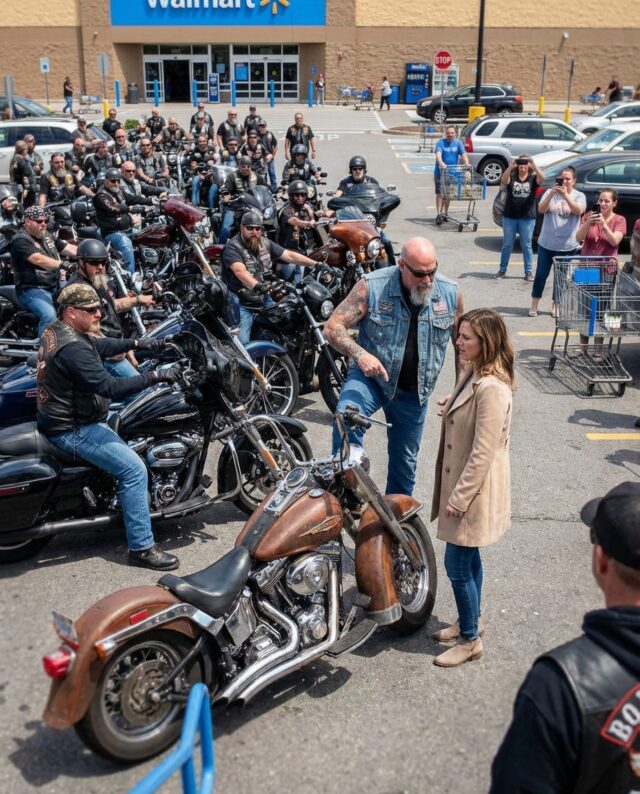
At the 90 bikers standing around us.
At the silence they were holding.
“You knew,” I said softly.
He nodded once.
“We’ve been looking for that bike,” he said.
A pause.
“But not to take it back.”
He looked at me.
Steady.
Certain.
“To see who it chose next.”
No one clapped.
No one spoke.
The crowd didn’t understand.
Most of them had already started to leave.
Phones lowered.
Interest fading.
But the circle of bikers didn’t move.
Not yet.
The man stepped aside.
Just slightly.
Making space between himself… and the Harley.
“It’s yours,” he said.
Simple.
Final.
The officer looked between us.
Then nodded once.
And stepped back.
I stood there.
Still holding the letter.
Still trying to breathe through something I didn’t have words for.
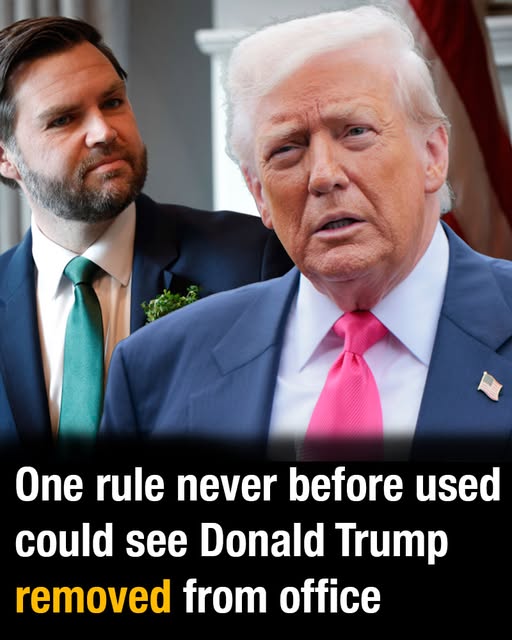
Scott McConnell, co-founder of The American Conservative, is calling for the 25th Amendment to be invoked to remove Donald Trump from office.
Donald Trump has faced criticism since the conflict with Iran began. After his return to the White House, his comeback has been anything but calm, and much has happened.
Trump has taken several decisions that have divided opinion, and the coordinated airstrikes with Israel against Iran sparked strong reactions. The conflict in the Middle East has had devastating consequences, and tensions continue to grow. More than 3,000 people have been reported killed, including over 1,000 civilians.
Now, a conservative commentator is urging Vice President JD Vance to take the extraordinary step of removing President Donald Trump from office.
“Announce your support of 25th amendment transition” Scott McConnell, co-founder of The American Conservative, suggested in a series of posts on X that Vice President JD Vance should consider invoking the 25th Amendment.
It is a rarely discussed constitutional option that allows a president to be removed from office under certain circumstances.
According to VT, he wrote: “My advice to Vance: Announce your support of 25th amendment transition,” before outlining what he described as a possible path forward.
McConnell continued: “Say Chris Murphy or similar will be veep. Announce you will NOT be a candidate in 2028. Use your position, access to the media to explain why this is necessary. Don’t resign.”
He went on to explain that he believes Democratic Senator Chris Murphy is a suitable choice, describing him as someone who is anti-war and “smart and not super woke.”
He wants Trump removed from office Although McConnell did not explicitly mention Trump’s decision to strike Iran in that particular post, he has previously been critical of U.S. military involvement in the region.
He has also suggested that Senator Marco Rubio could be a part of solving the issue, writing that he could join the effort, “keep his job, negotiate a ceasefire and be the GOP frontrunner,” according to VT.
McConnell later returned to the platform with even sharper criticism of the administration, writing: “So Netanyahu fed Trump BS intelligence.
“Trump, ignoring his own intelligence agencies, lapped it up.
“Now because things didn’t work out like the BS intelligence claimed, wants to commit genocide in our name. OK.”
President Trump has recently stated that there are “strong” ongoing talks with Iran about a possible ceasefire. However, Iranian officials have since rejected those claims.
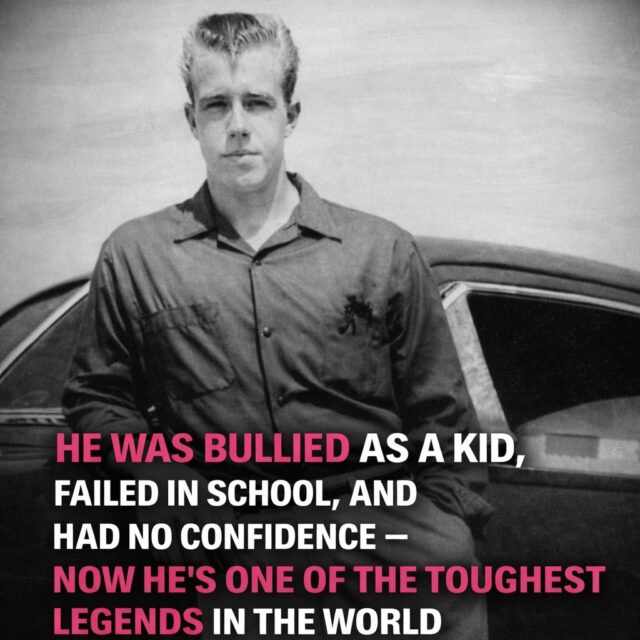
He was not born strong, fearless, or famous. Long before he became a global action icon, he was a shy, insecure boy who struggled with confidence, school, and bullying. His journey from a quiet child with no direction to one of the most recognizable martial arts legends in the world is a story built on discipline, persistence, and determination.
## A Difficult Childhood
He was born on March 10, 1940, in Ryan, Oklahoma. His childhood wasn’t easy. His family struggled financially, and his father had problems with alcohol. Because of this, life at home was unstable, and he often felt uncertain about the future.
As a child, he was extremely shy. He wasn’t athletic, he lacked confidence, and he was often bullied by other kids. He later admitted that he felt invisible and weak growing up. School was also difficult for him. He didn’t stand out academically and had trouble finding motivation.
Eventually, his parents divorced, and he moved with his mother and brothers to California. This move changed his environment, but he was still searching for purpose and direction.
## Joining The Air Force
After finishing high school, he didn’t have a clear plan for his life. He wasn’t thinking about becoming famous or acting. Instead, he joined the United States Air Force in 1958.
He was sent to South Korea — and this is where everything changed.
While stationed there, he began training in martial arts. He started with Tang Soo Do and quickly became passionate about it. For the first time in his life, he found something that gave him confidence and discipline.
He trained constantly. Day after day, he practiced kicks, strikes, and techniques. The shy boy who once lacked confidence slowly began transforming into someone stronger — physically and mentally.
It wasn’t just about fighting. Martial arts gave him structure, belief, and identity.
## Becoming A Martial Arts Champion
After leaving the Air Force, he continued training seriously. He opened martial arts schools and began competing professionally. Soon, he started winning tournaments.
He became one of the top martial artists in the world. Over time, he won multiple championships and defeated some of the best fighters of his era. His discipline and calm presence made him stand out.
He didn’t just become a fighter — he became a teacher. Many celebrities and athletes came to him to learn martial arts. His reputation continued growing.
But another opportunity was about to change his life completely.
## The Move To Hollywood
His entry into Hollywood happened unexpectedly. He met martial arts legend Bruce Lee, who saw potential in him. The two respected each other greatly, and soon he was offered a role in a film.
He appeared in *Way of the Dragon*, fighting Bruce Lee in one of the most iconic martial arts scenes in movie history. That moment introduced him to global audiences.
From there, his acting career slowly grew.
He starred in action films where he became known for his tough, silent, fearless characters. Audiences loved his calm confidence and fighting skills. He didn’t need many words — his presence was enough.
Then came his biggest success.
## Becoming A Global Action Star
He starred in multiple action movies that became extremely popular. His roles often portrayed justice, strength, and resilience. Fans began seeing him as the ultimate tough guy.
Later, he starred in the television series **Walker, Texas Ranger**, which made him even more famous worldwide. The show ran for years and turned him into a household name.
His calm personality, martial arts skills, and strong moral characters made him different from other action stars.
## Life Beyond Acting
Outside of acting, he focused on family, business, and philanthropy. He also promoted fitness, martial arts education, and youth programs. He wrote books, gave motivational talks, and supported charities.
He became known not only as an action star, but also as a disciplined and respectful figure.
In later years, he stepped away from frequent acting roles and focused more on personal life and family. He appeared occasionally in films, interviews, and public events.
## A Lasting Legacy
From being bullied as a child… To struggling with confidence… To finding purpose in martial arts… To becoming a world champion… To turning into a Hollywood action legend…
His life story became an inspiration to millions.
He proved that strength is not something you are born with — it is something you build. The shy boy who once lacked confidence became one of the toughest legends in action film history.
And even today, his name remains synonymous with discipline, resilience, and toughness.
What started as a playful joke turned into something far more meaningful than I ever expected. The night my husband left for his office Christmas party, I laughed as I wrote a silly message on his chest, claiming him as mine in a lighthearted way. It was never about control or jealousy—it was just our kind of humor, something small and harmless between two people who enjoyed teasing each other. He rolled his eyes, smiled, and promised to be home soon. I didn’t think much of it after he walked out the door.
When he returned the next morning, he looked exhausted and a little unsteady, clearly having enjoyed the evening a bit too much. I helped him inside, quietly guiding him to bed, smiling at how familiar and ordinary the moment felt. As I helped him change and settle in, I noticed something unexpected. There, written across his back, was a reply—simple, neat, and completely surprising. It wasn’t anything inappropriate or alarming, just a short message that read like a response to mine, almost like a continuation of the joke.
At first, I paused, unsure how to feel. My mind briefly wandered through possibilities—who wrote it, when, and why. But as I looked closer, I realized something important. The tone of the reply wasn’t disrespectful or mocking. It felt light, almost playful, as if someone had simply joined in on the harmless humor. Instead of creating tension, it made me reflect on trust. Relationships aren’t built on fear or constant suspicion—they’re built on understanding, communication, and the quiet confidence you have in one another.
Later that day, when he woke up, I showed him the message. He laughed, clearly just as surprised as I had been, and explained how his coworkers had noticed my note and turned it into a running joke throughout the night. In that moment, any doubt disappeared. What remained was something stronger—a reminder that trust isn’t about controlling situations, but about knowing the person beside you. Sometimes, even unexpected moments can reinforce what truly matters: respect, honesty, and the kind of bond that can turn even a simple joke into a story you’ll remember for years.
I remember that evening more clearly than I wish I did. The road was quiet, the sky dimming into that soft gray just before night settles in. As I drove home, I noticed a car pulled over on the side, a thin stream of smoke rising from under the hood. I slowed down, my hands tightening on the wheel. For a moment, I considered stopping, stepping out, checking if someone needed help. But uncertainty held me back. I couldn’t see anyone inside, and the stillness around the car made it feel strangely distant, almost unreal.
Instead, I did what felt safe at the time. I called emergency services, gave them the location as clearly as I could, and waited just long enough to hear that help would be sent. Then I drove away. The rest of the night passed quietly. I made dinner, helped with homework, and tucked the kids into bed. Still, that image stayed with me—the smoke, the silence, the question I didn’t answer: should I have done more?
The next morning, everything changed. As I scrolled through the news, a headline stopped me cold. It mentioned a vehicle found on the same stretch of road, the same time I had passed by. My chest tightened as I read further. Details were still unfolding, but it was enough to make my heart sink. I sat there for a long time, replaying the moment over and over, wondering if my hesitation had mattered more than I realized.
Since then, I’ve carried that evening with me—not as a weight of guilt, but as a quiet lesson. Life often gives us moments where we must choose between caution and compassion, and the line between them isn’t always clear. I remind myself that I did act, that I made the call, that I didn’t ignore what I saw. But I also understand now how powerful even a small step forward can be. Sometimes, the difference between passing by and stepping closer is where our humanity is truly tested.
After losing my husband, our home grew quieter in a way that felt almost overwhelming. The small routines we once shared seemed heavier, and even ordinary moments carried a sense of absence. I believed grief had taken more than just a person—it had taken our sense of direction. But in the middle of that stillness, my son began to change in a quiet, thoughtful way. What started as a personal way for him to cope slowly became something that would reach far beyond our home.
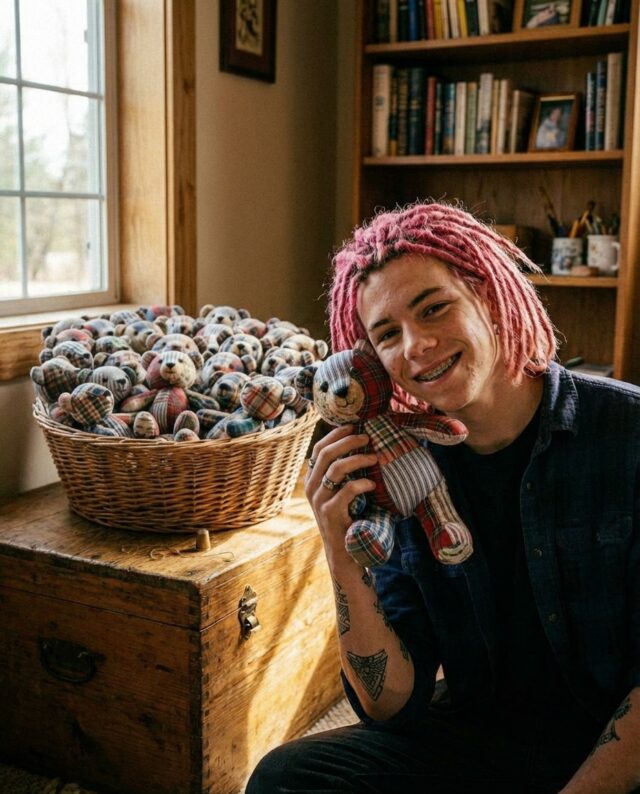
He had always been creative, often finding comfort in simple, hands-on activities. After his father’s passing, he spent long hours at the table with fabric and thread, focused and calm. One evening, he asked if he could use some of his father’s old shirts. It was not an easy decision, but I trusted his intention. Over the following days, I noticed his quiet determination as he worked. Then one night, I discovered what he had been making—small, hand-sewn teddy bears, each one carefully stitched and filled with meaning.
When he told me he wanted to give the bears to children at a local shelter, I understood that this was more than a project. It was his way of transforming loss into kindness. We visited the shelter together, and I watched as children received the bears with genuine joy. In that moment, something shifted for both of us. The heaviness we had been carrying felt lighter, replaced by a sense of connection and purpose. What we didn’t realize was that this simple act had quietly touched others as well.
A few days later, our doorbell rang early in the morning. A small group had come to visit, moved by what my son had created. They spoke not of recognition, but of continuing a cycle of kindness—one that began with my husband, and now lived on through my son. Their visit marked a turning point for us. It reminded me that even in difficult times, compassion has a way of growing and reaching further than we expect. Sometimes, the smallest acts can create ripples that return in the most meaningful ways.
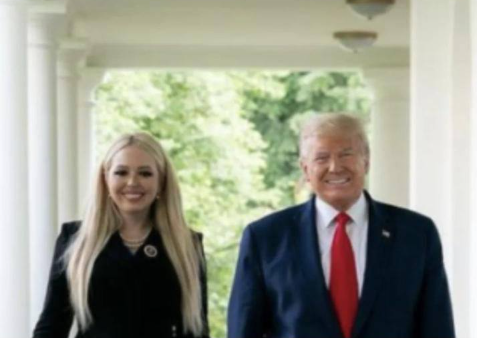
At a campaign stop at the Detroit Economic Club in Michigan, former President Donald Trump surprised the audience with a piece of deeply personal news about his family. Speaking to a packed room filled with supporters, business leaders, and media representatives, Trump paused his usual political talking points to deliver an announcement that quickly made headlines: his youngest daughter, Tiffany Trump, is expecting her first child.
The announcement instantly set the tone of the event apart from the often heated atmosphere of campaign rallies. With a rare display of warmth and pride, Trump told the crowd that his 30-year-old daughter, whom many Americans remember from her quieter, more private presence compared to her siblings, would soon be stepping into motherhood. That means Trump himself, already a grandfather several times over through his other children, will once again expand his role as a grandfather. The news drew applause, smiles, and even some laughter from the audience, who welcomed the brief departure from politics into a moment of family celebration.
While delivering the news, Trump took time to acknowledge Massad Boulos, the father of Tiffany’s husband, Michael Boulos. Michael, a businessman of Lebanese and Nigerian heritage, married Tiffany in 2022 in a lavish ceremony at Mar-a-Lago, Trump’s estate in Palm Beach, Florida. Their marriage was described at the time as a blending of two powerful families from very different backgrounds, and Trump’s words underscored his respect for the Boulos family. He praised both Tiffany and Michael, describing them as “exceptional young individuals with strong values and a bright future.” It was during this praise that Trump casually but proudly added, “And she’s going to have a baby. So that’s nice.” The understated way he phrased it drew laughter, but also gave the moment a natural authenticity.
For Tiffany Trump, the news marks an important milestone in her personal journey. Unlike her half-siblings—Donald Jr., Ivanka, and Eric—who have been deeply immersed in both business and politics, Tiffany has often chosen to remain outside the spotlight. After completing her law degree at Georgetown University in 2020, she pursued a career in law and public policy, occasionally appearing alongside her father at major campaign events. Supporters have often pointed out her calm demeanor and measured presence as a striking contrast to the more outspoken personalities of her siblings. This pregnancy signals a new chapter for her, shifting her focus further toward family life.
The Trump family dynamic has always attracted intense public scrutiny, and this announcement is no different. For Trump, who has built much of his political identity around projecting strength, wealth, and family values, the news of Tiffany’s pregnancy adds a softer layer to his public image. It allows him to connect with voters on a more human level, reminding audiences that beyond politics, he is also a father and grandfather. At a time when political campaigns are often criticized for being overly combative, this kind of announcement helps cast him in a more relatable light.
Michael Boulos, Tiffany’s husband, also represents an important addition to the Trump family’s expanding influence. Born into a wealthy business family in Lagos, Nigeria, Michael was educated abroad and eventually entered the family’s trading and real estate empire. Since marrying Tiffany, he has maintained a relatively low-profile presence in U.S. politics but is often seen as supportive of both Tiffany and the Trump family as a whole. With Tiffany’s pregnancy, speculation is already rising about how the couple will balance their lives between business, politics, and parenting.
The timing of the announcement also sparked commentary among political analysts. For Trump, who is once again seeking the Republican nomination, humanizing moments like these are strategically useful. They provide a break from the harsher rhetoric of the campaign trail and give him a chance to showcase a different side of himself. By sharing personal family news, he invites his audience into a more intimate space, creating a sense of shared joy that transcends political lines. Even some critics have acknowledged that moments like these resonate with people who may not otherwise be enthusiastic about his politics.
Meanwhile, the broader Trump family continues to evolve. Donald Jr., Ivanka, and Eric have already built families of their own, and their children have occasionally been seen alongside Trump at campaign events, serving as reminders of his role as a patriarch. Tiffany’s baby will be welcomed into a family that is not only large but also deeply intertwined with American politics and media. For supporters, the baby represents the continuation of a legacy. For the Trumps themselves, it is simply another reason to celebrate behind the scenes, away from the cameras.
In Detroit, the announcement wrapped up on a high note. While the main purpose of Trump’s visit was to speak on economic policy, the story most attendees carried home wasn’t about tariffs, taxes, or trade. Instead, it was the personal revelation that Tiffany Trump is preparing to become a mother and that Donald Trump, once again, will step into grandfatherhood.
Moments like these, fleeting yet powerful, remind people that even the most polarizing figures in politics have personal lives filled with the same milestones, joys, and hopes that ordinary families experience. Tiffany Trump’s pregnancy is not just newsworthy because of her last name, but also because it underscores the shared human experience of growth, family, and the anticipation of new beginnings.
By the time the event ended, one thing was clear: amid the whirlwind of political campaigns and global headlines, it was a piece of family news that stood out the most.