Entertainment

What a Two-Year-Old Taught Me About Love and Friendship

I teach two-year-olds, which means my days are filled with tiny shoes in the wrong cubbies, snack-time negotiations, and questions that lead to the most unexpected answers. One morning during circle time, we were practicing names. I asked one little boy, “What’s your mommy’s name?” He smiled proudly and said, “Michelle.” The class clapped, as they always do. Then I asked, “What’s your daddy’s name?” He paused, eyebrows furrowed, clearly thinking hard. Trying to help, I gently rephrased: “What does Mommy call Daddy?” I expected something simple — maybe “John” or “Mike.” Instead, he looked up at me with complete sincerity and said, “Best friend.”

The room went quiet for a second before a few children giggled, not fully understanding why the answer felt different. But I understood. In his small world, labels like “husband” or “partner” didn’t matter. What stood out to him was how his parents treated each other. To him, his father wasn’t just a name — he was someone Mommy laughed with, shared stories with, and trusted. “Best friend” was the title that made sense in a two-year-old’s language of love.

That simple answer stayed with me long after the children went home. We often think children are too young to notice the dynamics around them, but they absorb more than we realize. They watch how we speak, how we listen, and how we respond when life gets busy or stressful. They may not understand adult conversations, but they understand tone, warmth, and respect. In that classroom moment, I was reminded that what children remember most isn’t what we say about love — it’s how we live it.

Later that afternoon, when his mother arrived for pickup, I shared the story with her. She laughed softly and said, “We always tell each other that.” Her eyes grew a little misty as she added, “We want him to grow up knowing that friendship matters.” As they walked out hand in hand, I thought about how powerful small, everyday habits can be. In a world that often feels hurried, being someone’s “best friend” might be one of the greatest gifts we can give. And sometimes, it takes a two-year-old to remind us of that truth.

A Look at Alfonso Ribeiro’s Family Life and His Commitment to Fatherhood

Although Alfonso Ribeiro is widely recognized for his memorable role on The Fresh Prince of Bel-Air, his most meaningful accomplishments take place far from television cameras. As a devoted father of four, Ribeiro has built a family life centered on consistency, encouragement, and genuine involvement. Now in his mid-50s, he frequently shares heartfelt glimpses of everyday parenting—moments that reflect gratitude, patience, and a deep sense of responsibility. While his career has spanned decades in entertainment, he has made it clear that fatherhood remains his most important role.

His oldest daughter, Sienna Michele, was born during his first marriage and grew up during a time of personal and professional change. Even after divorce reshaped the family structure, both parents remained committed to cooperation and stability. That shared focus helped create an environment where Sienna felt supported and secure. As she began exploring her own interest in acting, she did so with steady guidance rather than pressure. Her development highlights the importance of balanced parenting—offering encouragement while allowing space for independence and self-discovery.

In later years, Ribeiro remarried and welcomed three more children, expanding his family with renewed joy and purpose. Each child brings a distinct personality into the home, contributing to a dynamic built on respect and warmth. Whether it’s leadership qualities, creative imagination, or athletic enthusiasm, every child is celebrated for who they are. Together with his wife, Ribeiro approaches parenting intentionally, focusing on empathy, communication, and shared traditions. In a blended household, that level of care helps ensure that every child feels equally valued and heard.

What stands out most about Ribeiro’s journey is not fame, but steadiness. Through career milestones, life transitions, and the everyday responsibilities of raising four children, he has remained consistently present. The confidence and closeness his children display speak to a home grounded in reliability and affection. Long after television roles fade from memory, his lasting impact will be measured not by awards or applause, but by the supportive foundation he continues to build for his family each day.

A Routine Traffic Stop That Turned Into an Unforgettable Surprise

The morning traffic downtown was crawling along at its usual pace when a police officer spotted something that immediately caught his attention. An old pickup truck was moving steadily through the street, but what filled the open truck bed was anything but ordinary. Instead of tools or supplies, it was packed with ducks—no cages, no crates—just a flock standing calmly side by side, quacking as if they were on a casual outing. Maintaining his professionalism, the officer pulled the vehicle over and approached the elderly driver, who greeted him with a friendly smile. In a calm but firm tone, the officer explained that transporting a group of ducks through busy city streets in that manner was not appropriate and advised the man to take them to the zoo right away. The driver nodded politely, thanked the officer, and drove off without argument.

Satisfied that he had addressed the situation responsibly, the officer returned to his patrol. Rules are designed to ensure order and safety, and he believed he had handled the matter properly. By the next afternoon, however, the unusual scene replayed itself. The same pickup truck appeared again, traveling at the same relaxed speed. The ducks were still in the back—but this time, each one wore a tiny pair of colorful sunglasses. Curious onlookers couldn’t help but smile at the sight. The officer, both surprised and slightly exasperated, pulled the truck over once more.

With a measured voice, he reminded the driver of their previous conversation. “Sir, I thought I told you to take these ducks to the zoo,” he said. The elderly man looked genuinely puzzled before responding warmly, “I did exactly that. We had a wonderful time.” The officer paused, trying to process the reply. “Then why are they back on the road?” he asked. The man chuckled and gestured toward the flock behind him. “Well,” he explained cheerfully, “today we’re headed to the beach. I figured they deserved another fun day out.”

For a moment, the officer wasn’t sure how to react. But as he glanced at the ducks—content, calm, and proudly wearing their sunglasses—he couldn’t help but smile. The misunderstanding was harmless, born not of defiance but of good humor and a literal interpretation of instructions. As the truck rolled away once again, the officer reflected on how even routine days can deliver unexpected moments of levity. Sometimes, a little humor and kindness can turn an ordinary situation into a story that brings smiles to everyone involved.

Check, important to pause on one critical detail in this scenario!

The disappearance of Nancy Guthrie, the 84-year-old mother of Today show co-anchor Savannah Guthrie, has become a national mystery since she vanished from her home in Tucson, Arizona, in early February 2026.

The case is currently being investigated as a kidnapping, involving both the Pima County Sheriff’s Department and the FBI.

The Night of the Disappearance

Nancy Guthrie was last seen on the evening of January 31, 2026. After a family dinner and game night at her daughter Annie’s home, she was dropped off at her residence in the Catalina Foothills by her son-in-law at approximately 9:50 PM.

A Digital Trail of Events

Investigators have reconstructed the following timeline from home security systems and medical devices:

  • 1:47 AM (Feb 1): A masked individual was captured on doorbell camera footage disconnecting the device.
  • 2:12 AM: Motion was detected by the security system, but no video was recorded as the camera had been disabled.
  • 2:28 AM: Nancy’s pacemaker disconnected from its smartphone app, a critical piece of evidence suggesting she was either moved away from her phone or the device was tampered with.

She was reported missing at noon on Sunday, February 1, after failing to show up for her virtual church service.

Evidence and Investigation

The investigation shifted from a missing person search to a criminal probe within 48 hours. Key evidence discovered at the scene and in the surrounding area includes:

  • Blood Evidence: Forensic testing confirmed that blood found on Nancy’s front porch belongs to her.
  • The Masked Intruder: The FBI released footage of a suspect described as a male, approximately 5’9″ to 5’10”, wearing a ski mask, neoprene gloves, and a black 25-liter Ozark Trail Hiker Pack (a brand sold at Walmart). He appeared to be armed with a handgun in an “oddly placed” holster.
  • Recovered Gloves: Investigators found a pair of black gloves roughly two miles from the home. While they match the style worn by the intruder, preliminary DNA tests have not yet provided a definitive suspect match in national databases (CODIS).
  • Ransom Demands: Several ransom notes were sent to media outlets (including TMZ) demanding $6 million in Bitcoin. However, law enforcement has warned that many of these are likely hoaxes; one man in Southern California has already been arrested for sending a fraudulent ransom text.

Current Status

As of February 19, 2026, Nancy Guthrie remains missing. The FBI has increased the reward for information leading to her location to $100,000.

Savannah Guthrie and her siblings, Annie and Camron, have been vocal on social media, pleading for their mother’s safe return and expressing their willingness to cooperate with any demands to see her home safely. Authorities have officially cleared all family members and their spouses of any involvement, labeling them as victims of the crime.

“We believe Nancy is still out there. We want her home.” — Pima County Sheriff Chris Nanos

‘I Love Lucy’: The 1 Most Ironic Detail About How Lucille Ball Met Desi Arnaz

Lucille Ball met her husband and co-star Desi Arnaz on the set of a Hollywood movie. The title of that film would prove prophetic.

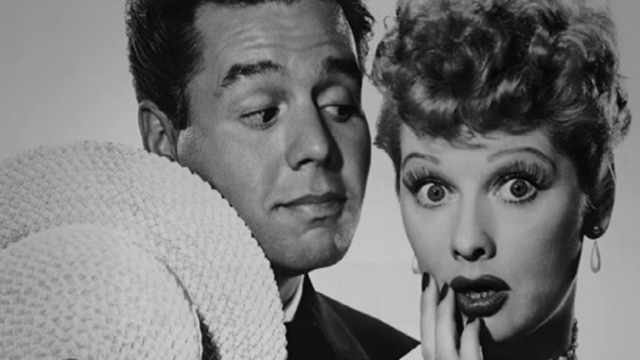
Lucille Ball and Desi Arnaz have a true Hollywood love story. The pair met while working together on a movie and went on to become famous starring in the iconic CBS sitcom, I Love Lucy. Ball and Arnaz played a married couple on the show and then went home at night as husband and wife in real life. However, their life wasn’t as perfect as it looked on television.

The I Love Lucy stars had a notoriously tumultuous relationship due to several factors, including infidelity, alcohol abuse, and personality conflicts. One detail about how they met eerily predicted exactly how Ball and Arnaz’s relationship would end up.

Lucille Ball wanted to be a Hollywood star

Lucille Ball | John Kobal Foundation/Getty Images

Ball aspired to movie stardom and worked hard to get there. In the 1930s, she auditioned for multiple movies and Broadway productions, looking to get her big break, biography.com reported. Ball appeared in several Fred Astaire and Ginger Roberts musicals including Roberta (1935) and Top Hat (1935). But she struggled to achieve the fame she desired. Ball lost out to Vivien Leigh for the coveted role of Scarlett O’Hara in Gone with the Wind.

Despite the difficulties, Ball kept working and auditioning. One of those roles would change her life forever both personally and professionally.

She met Desi Arnaz on the set of ‘Too Many Girls’

Too Many Girls, poster | LMPC via Getty Images

Ball scored the lead in the 1940 musical comedy Too Many Girls. The plot follows a celebrity heiress going to college along with four secret bodyguards, one of whom is Arnaz. He doesn’t play Ball’s love interest in the movie but he did catch her eye on set. The couple married a couple months after their first meeting.

It’s ironic that Ball and Arnaz fell in love because of a movie titled Too Many Girls. Eventually, that reality would become the downfall of their 20-year marriage.

Arnaz didn’t think cheating was a big deal

Lucille Ball and Desi Arnaz | Michael Ochs Archives/Getty Images

There were cultural differences between Ball and Arnaz. He believed that having a mistress (or several) was just part of life. Meanwhile, Ball expected her husband to remain faithful to her. This conflict caused some epic fights and eventually, the unraveling of their marriage.

Their daughter Lucie Arnaz offered insight into how her dad felt about monogamy. “My father loved women, and Latin American countries have a whole different code of ethics,” she explained to Chicago Tribune.

“There’s the home with the wife, and the house with the mistress. Each is highly respected by the other. Unfortunately, my mother was from upstate New York, and my father couldn’t get her to go along with that concept.”

Arnaz had too many girls — and it led to divorce

The I Love Lucy star even offered a defense for which specific women he saw on the side. Vanity Fair printed an excerpt from a 1955 Confidential article recalling a conversation between Arnaz and a friend, “What’s she upset about? I don’t take out other broads. I just take out hookers,” the Cuban-born actor supposedly said.

Ultimately, their differences in opinion led to the dissolution of their marriage — but not their love. Ball and Arnaz divorced in 1960. They remained close, even after both getting remarried, until Arnaz’s death in 1986.

In the end, their relationship both started and ended with too many girls.

I Love Lucy star Lucille Ball found out she was pregnant from a radio broadcast

A Broadcast of Life: The Unbelievable Story of How Lucille Ball Heard Her Pregnancy News on the Radio

In the golden age of Hollywood, where a star’s every move was public knowledge, it was almost impossible to keep a secret. But for comedy icon Lucille Ball, the public knew a secret about her that she didn’t even know herself. The story of how she discovered she was pregnant is one of the most bizarre and surreal tales in Hollywood history. She didn’t find out from her doctor or her husband, Desi Arnaz, but from a radio broadcast, a shocking moment that blurred the line between her public persona and her private life in an unprecedented way.

This incredible event, which took place in June 1950, is a testament to the ravenous appetite for celebrity gossip and the ruthless methods of the media at the time. It’s a story that perfectly encapsulates the pressures of fame and the lengths to which journalists would go for a scoop.

The Context: A Vaudeville Tour and a Secret Hope

In the summer of 1950, before Lucille Ball and Desi Arnaz became the most famous couple on television with I Love Lucy, they were on a grueling vaudeville tour. The demanding schedule and high-energy physical routines of their act, which required Ball to perform rigorous dance numbers, were exhausting. Offstage, the couple was trying for a baby, a long and difficult journey that had already been marred by multiple miscarriages.

In his book, Desi Arnaz: The Man Who Invented Television, biographer Todd S. Purdum details the moment that changed everything. Lucille Ball had gone for a medical checkup, and like any couple, she and Desi were anxiously awaiting the results. They were in New York, in the middle of their stage show run, when they got the news in the most unexpected way imaginable.

The Broadcast That Beat the Doctor’s Call

Between shows, Lucille Ball was relaxing in her dressing room, listening to the radio. She had tuned in to the popular broadcast of celebrity gossip columnist Walter Winchell. Winchell was a journalistic force of nature, known for his rapid-fire delivery and his ability to get scoops before anyone else. He had a vast network of informants, and on that day, one of them had given him the ultimate tip.

In the middle of his broadcast, Winchell announced the news to millions of listeners, using his trademark lingo. He proclaimed that the beloved actress Lucille Ball was “infanticipating,” his unique euphemism for “pregnant.”

Lucille Ball, sitting alone in her dressing room, heard the news of her own pregnancy for the first time on the radio. The broadcaster had been tipped off by an informant at the medical lab, and the news had been delivered to the public before the Arnazes themselves had been officially notified.

The moment must have been a whirlwind of emotions. Shock, disbelief, and a touch of Hollywood surrealism. The joy of the news was intertwined with the violation of a private moment being made public in such a crude and sudden way.

The Aftermath and the Path to I Love Lucy

Upon learning the news, Ball and Arnaz immediately made a decision to “trim the planned length of the tour” and prioritize Lucille’s health. However, the joy of the announcement was tragically short-lived. A few weeks later, Lucille Ball suffered another heartbreaking miscarriage. This was one of several she experienced, with doctors eventually discovering a medical complication that was corrected, paving the way for her to become pregnant again later that year.

The story of the radio broadcast, while an incredible anecdote, highlights a much deeper story about the resilience and determination of Lucille Ball and Desi Arnaz. Their desire to start a family was a driving force, and their personal journey would soon become a public phenomenon.

This tumultuous period led to one of the most revolutionary decisions in television history. When Lucille Ball became pregnant again in 1952, at the height of I Love Lucy‘s success, she and Desi fought tirelessly to write her pregnancy into the show. At the time, network executives were horrified by the idea of showing a pregnant woman on television, deeming it too scandalous for the American public. Desi Arnaz, in a legendary power move, fought for his wife and his show. He won, and the storyline of Lucy Ricardo’s pregnancy became a groundbreaking television event.

The real-life birth of their son, Desi Arnaz Jr., was scheduled to coincide with the broadcast of the episode where Lucy Ricardo gives birth to Little Ricky. The episode, “Lucy Goes to the Hospital,” which aired on January 19, 1953, drew more than 68 percent of American households, an astonishing number that cemented the show’s place in history.

A Legacy of Public and Private Lives

The story of Lucille Ball hearing about her pregnancy on the radio is more than just a piece of celebrity trivia. It’s a powerful and poignant example of the unique pressures faced by stars in the public eye. It shows a moment where the lines between a woman’s personal life and her public image were completely erased.

It is a testament to the incredible talent and emotional strength of Lucille Ball and Desi Arnaz that they were able to take such a violation of privacy and turn it into one of the most iconic moments in television history. They took their personal journey—including their joy, their heartbreak, and their determination to be a family—and shared it with the world in a way that had never been done before.

In a strange and almost magical way, the radio broadcast that first announced her pregnancy was a precursor to her televised one. It was the first of many moments where her life and her art would become inextricably linked. The unbelievable story of how she found out she was expecting from a radio show is a powerful reminder that behind the laughter and the lights, there was a woman whose personal journey was just as compelling as her character’s.

Long Before Oprah, There Was Lucy: Business Lessons From Lucille Ball

Who doesn’t know the famous, hilarious redhead. Each generation gets to know Lucille Ball all over again, thanks to networks like TV Land and Nick at Nite.

While I Love Lucy was way before my time, I became a fan as a child. I never miss an opportunity to watch the show, or any of the other shows and movies Ball has done.

When I was pregnant with my son, she was pregnant with Little Ricky. OK, so “Little” Ricky was probably with grandchildren by then, but I was pregnant at the same time as she was in re-runs (1991). She gave birth the day before I did and I cried (hormones) because I was so happy for her.

She is and always will be America’s Funniest Redhead. But make no mistake, Lucy was a hell of a businesswoman who had a command of her career that women today should respect and model. Long before Oprah, there was Lucy. We should all hope to have the kind of brand longevity and business acumen that she had (and still has) today.

As we celebrate her 115th birthday, I can’t help but offer some important career and business lessons I’ve taken away from her humor and talent. Here are the top six lessons I’ve learned from Lucille Ball/Lucy Ricardo.

Own your stuff. Lucy was madly in love with Desi Arnaz and was a success in her own right. She wanted Desi to experience success as well. In her time, it was unheard of for a woman to have any kind of behind the scenes clout in Hollywood. And definitely not a place for foreigners to have any say.

Yes, Hollywood was very racist back then (and in some ways still is today). So what was Lucy’s solution? Desilu Productions.

What many people don’t know is that it was Lucy who came up with the idea for Desilu. She let her husband run things but make no mistake, that was her brainchild. I Love Lucy was the first real sitcom developed by a husband and wife team, and under Desilu Studios pioneered the multi-camera shot, and filmed in front of a live audience. Nobody else was doing that at the time.

The most important thing I learned from Lucy is when people deny you, create your own!  When you believe enough in yourself to “just do it anyway”, you trail blaze.

Do it anyway! How many times have we heard “No Lucy, you can’t be in the show!” from Ricky? How many times did people say “Lucy (Ricardo) has no talent, she can’t sing“? Did she care? Hell no! Week after week she did everything she could to get into Ricky’s show.

We all knew she couldn’t hold a tune. But it was fun to watch that spirit, that hubris that she exuded as she forged ahead to get out into the spotlight.

I learned from her that even when people say no, do it any way. Everyone’s definition of talent and success is different. Don’t let others put you in a box or try to define you. And did you know that she was 40 when she decided to go for what she wanted (with her career)? She didn’t let the fact that Hollywood considered her “old” stop her from achieving her dream.

Be fearless when you want something. As I sit in my hotel room in Los Angeles, I can’t help but be reminded of Lucy’s trip to L.A. where she created havoc. But then again, when hasn’t she? Sneaking away from the tour bus to find William Holden’s home was brilliant.

Of course these days Beverly Hills PD will arrest you before you could get to the front door. But she showed some real guts. She wanted to meet him and wouldn’t let anyone stand in her way. Not even her side kick Ethel, or that big ass dog William Holden had.

Now I don’t advocate trespassing on people’s property or stealing (remember John Wayne’s footprints?). But when you have an idea, go for it. Don’t let fear of consequences (most time imagined) hold you back.

Know when it’s time to move on and invest in yourself (and your business). Sadly, as I Love Lucy came to an end, so did Lucy and Desi’s marriage. She had done all she could to hold that marriage together, but it had become a business liability. She had to cut it loose in order to move forward in her career.

While she did divorce Desi, she maintained her ownership in Desilu Productions and focused on her own career. She cut loose the baggage of the past and forged ahead to hone her craft, build her brand (America’s funniest redhead) and give the fans what they wanted.

Desilu went on to produce some of the most famous shows of all time (Star Trek, Dick Van Dyke Show, Mission Impossible, My Three Sons, I Spy, The Untouchables, That Girl, I can go on and on). By 1962, she bought out Desi Arnaz to have complete control of the company. She was the first woman to own a major studio. I’d say that’s investing in yourself in a big way. She not only invested in herself, she invested in others.

Don’t be afraid to reinvent yourself (or your business) while still honoring the brand. When you hear the name Lucy you think comedy. Did you know she started out as a “B” movie screen actress? I’ve seen a few of them (after getting to know Lucy Ricardo) and found myself waiting for the punchline. She didn’t set out to be a comedic actress but clearly she found her stride.

When she did I Love Lucy, the TV execs didn’t believe she could pull it off. Clearly, they were wrong. She went on to be the number one comedic actress of all time. And not just that. Lucy was responsible for green-lighting many shows that were not the typical comedy prototype. She wanted Desilu to be a studio/production company that wasn’t singularly focused. She realized she had to give the people the content they wanted. And that meant a variety of programming. Studios today need to take note!

Don’t let the fact that you’re a woman keep you from calling the shots. I don’t take anything away from Desi Arnaz. In fact he was responsible for many of the innovations at Desilu. He knew the financial benefits of reruns before CBS or any other studio (he bought the episodes of I Love Lucy from CBS outright, which was a very lucrative decision).

But Lucy was no slouch. She had a knack for knowing how to pick just the right programming, and she did all the approving (all of her approvals have gone on to have long runs and remain popular in syndication. Three of the shows went on to become successful movie franchises- Mission Impossible, Start Trek and The Untouchables).

When it made financial sense, she bought out her partner rather than sell to someone else or become an “employee”. She showed she could multi-task and still run a successful company. She starred in her own weekly show while still running the studio….while being a Mom.

Happy Birthday Lucy. I’ll be checking out her old home in Beverly Hills and the Lucy exhibit at Universal Studios to pay my respects for a woman who paved the way for women to be taken serious in business. She leaves an enormous legacy and blueprint we should all be paying attention to.

Yes Lucy, You CAN Be in the Show…and Own It!

Anderson Cooper Is Leaving CBS News’ ’60 Minutes’ After Nearly 20 Years — Details

Anderson Cooper is leaving his famous TV show. The reason behind the broadcast journalist’s quiet exit has nothing to do with contracts or controversy.

A major shift is coming to Sunday nights. After nearly 20 years on “60 Minutes,” Anderson Cooper is stepping away, and the real reason unfolds far from the studio lights.

For viewers who have followed his reporting since 2007, the departure marks a turning point for the iconic CBS newsmagazine. Conversations about his future had been underway, hinting that this moment might arrive.

LOS ANGELES, CA – JANUARY 05: Anderson Cooper attends the Sean Penn CORE Gala benefiting the organization formerly known as J/P HRO & its life-saving work across Haiti & the world at The Wiltern on January 5, 2019 in Los Angeles, California. (Photo by Michael Kovac/Getty Images for CORE, formerly J/P HRO )

According to People, Anderson will not renew his contract with CBS, officially ending his tenure as a correspondent. The move closes out nearly two decades with the program.

As Variety reported, he had been in talks about extending his deal. Ultimately, he chose to concentrate more fully on his expanding role at another network.

In a statement, CBS News said it is “grateful” for the years he devoted to the broadcast and added that “’60 Minutes’ will be here if he ever wants to return.”

NEW YORK – MARCH 24: Behind the scenes with Anderson Cooper, correspondent for 60 MINUTES, while he tapes his segment, March 24, 2010. 60 Minutes broadcasts, Sundays (7:00 – 8:00 PM, ET/PT) on the CBS Television Network. (Photo by John Paul Filo/CBS via Getty Images)

But the business explanation only tells part of the story.

Why He Is Leaving the CBS Show

The clearest reason came directly from Anderson himself. The acclaimed journalist told People:

“For nearly twenty years, I’ve been able to balance my jobs at CNN and CBS, but I have little kids now and I want to spend as much time with them as possible, while they still want to spend time with me.”

NEW YORK, NY – APRIL 15: Anderson Cooper attends AOL Build Speaker Series to discuss “Nothing Left Unsaid” at AOL Studios In New York on April 15, 2016 in New York City. (Photo by Laura Cavanaugh/Getty Images)

In the end, the decision wasn’t about negotiations — it was about fatherhood. And while one chapter is closing, another is firmly secured.

What Comes Next in His Career

While Anderson is stepping away from “60 Minutes,” he is not stepping back from television.

In a separate December 2025 report, the same publication revealed that he signed a new deal with CNN, cementing his place at the network as it expands into digital streaming and subscription platforms.

WATCH WHAT HAPPENS LIVE WITH ANDY COHEN — Episode 20157 — Pictured: Anderson Cooper — (Photo by: Charles Sykes/Bravo via Getty Images)

Michael Jacksons daughter has broken her silence, My dad made me, see it!

The image of an eleven-year-old girl standing before a global audience of millions, her voice trembling but her resolve firm, remains one of the most poignant moments in the history of modern celebrity culture. When Paris Jackson stepped to the microphone at her father’s 2009 memorial service to declare that Michael Jackson was “the best father you could ever imagine,” she did more than just offer a eulogy; she pierced through the dense, often controversial fog of her father’s public persona to reveal a private truth. For the world, Michael Jackson was an enigma of talent and eccentricity, but for Paris, he was the bedrock of her existence. That moment of raw, unvarnished grief served as the starting point for a journey that has seen Paris evolve from a shielded child into a resilient, self-defined woman navigating one of the most complex legacies in entertainment history.

The sudden loss of a parent is a seismic event for any child, but for Paris, the trauma was compounded by the unrelenting glare of the international media. During his life, Michael Jackson had famously—and sometimes controversially—gone to extreme lengths to protect his children from the paparazzi, often using masks and veils to ensure they could experience some semblance of a normal childhood. With his passing, that protective veil was stripped away. Paris was thrust into a world that felt entitled to her grief, her memories, and her future. The transition from a life of carefully guarded privacy to becoming the focus of global headlines was abrupt and overwhelming, forcing her to process a profound personal tragedy while simultaneously becoming a permanent fixture of tabloid speculation.

In the years following the tragedy, stability was found in the family compound under the guardianship of her grandmother, Katherine Jackson. This period was a delicate balancing act of mourning and maturation. While the world continued to dissect her father’s career and personal life, Paris was engaged in the universal struggle of adolescence, made exponentially more difficult by the weight of the Jackson name. She lived under her grandmother’s roof until the age of nineteen, a time she has since described as being filled with both deep familial love and the inherent pressure of living within the shadow of a legend.

A significant turning point in her journey toward autonomy occurred on her nineteenth birthday. In a symbolic act of reclaiming her history, Paris moved into her father’s former private studio at the family estate. By transforming this hallowed space—originally a site of intense creative labor for the King of Pop—into a personalized, dorm-style sanctuary, she began the process of reintegrating her father’s memory into her own adult identity. It was a physical and emotional middle ground: she was surrounded by the artifacts of his genius, yet she was using that space to forge her own path. This period of reflection allowed her to transition from being a daughter defined by loss to an artist defined by her own aspirations.

Today, at twenty-seven, Paris Jackson has emerged as a multifaceted creative force who speaks with a clarity and maturity that belies her years. Her evolution was notably highlighted in a candid conversation with supermodel Naomi Campbell, an interview that served as a milestone in her public “breaking of silence.” In this dialogue, Paris provided insight into how she has successfully navigated the pitfalls of fame that have ensnared so many other children of icons. She spoke not as a victim of her circumstances, but as a deliberate architect of her own life.

Her foray into the fashion world was one of the first ways she asserted her independence. By walking the runways of Paris and Milan and appearing on the covers of the world’s most prestigious fashion magazines, she discovered a medium where she could be appreciated for her own aesthetic and presence. For Paris, modeling was more than a career; it was a way to step out from behind the microphones and stage lights of her father’s world and enter a different kind of spotlight—one where her individuality was the primary focus. She has described the fashion industry as a space that allowed her to explore different versions of herself, helping her to shed the “legacy-bound” labels that had been thrust upon her since childhood.

Parallel to her fashion career is her burgeoning musical identity. When she released her debut album, listeners were surprised to find a sound that was starkly different from the high-gloss pop and R&B that defined her father’s discography. Embracing an indie-folk and alternative sound, Paris utilized her music as a confessional tool, processing her experiences with a vulnerability that felt both fresh and authentic. Her willingness to experiment with genres far removed from the “Jackson sound” demonstrated a profound confidence. She was no longer trying to replicate her father’s success; she was honoring the creative spirit he instilled in her by applying it to her own unique tastes.

During her recent public reflections, Paris has been remarkably balanced in her assessment of her upbringing. She speaks of her father with a palpable, enduring love, crediting him for teaching her the values of resilience, kindness, and global awareness. However, she is also candid about the difficulties of her unique childhood. She acknowledges the “heavy weight” of the family name and the internal struggle to ensure that her own voice wasn’t drowned out by the echoes of the past. Her story is one of a woman who has reached a state of “peaceful coexistence” with her heritage—she neither runs from it nor allows it to consume her.

The narrative of Paris Jackson is ultimately a testament to the human capacity for healing and self-creation. It highlights the truth that we are not merely the products of our lineage or the tragedies that befall us. While her father’s influence is undeniably woven into the fabric of her being—visible in her artistic drive and her commitment to humanitarian causes—it does not serve as her boundaries. She has managed to do what many thought impossible: she has kept her father’s private memory alive while allowing his public shadow to recede.

As she continues to make her mark in music, fashion, and activism, Paris Jackson stands as a beacon for anyone trying to find their way through the aftermath of loss or the pressure of expectation. She is a woman who has survived the “unprecedented glare” of fame to find a quiet, powerful voice of her own. Her journey reminds us that the best way to honor those we have lost is not to remain frozen in their memory, but to use the love they gave us as fuel for our own flight. In the ever-evolving story of the Jackson family, Paris is writing a chapter defined by strength, individuality, and a resilient grace that is entirely her own.

My Mom Wore the Same Ragged Coat for Thirty Winters – After Her Funeral, I Checked the Pockets and Fell to My Knees

My name is Jimmy. I’m thirty-six years old, and for most of my childhood, I was embarrassed by a coat.

Charcoal gray wool. Thinning at the elbows. Cuffs pilled and frayed. Two mismatched buttons my mom had sewn on years apart.

It looked tired.

When I was fourteen, I made her drop me off a block away from school so no one would see her in it.

She’d just smile and say, “It keeps the cold out, baby. That’s all that matters.”

I promised myself that one day I’d buy her something better.

When I landed my first job as an architect, I did. A beautiful cashmere trench. Elegant. Expensive. The kind of coat that told the world you’d made it.

She thanked me, hugged me tight, and hung it carefully in her closet.

The next morning, she wore the old coat to work.

Mom worked at a flower shop in the mall. She loved flowers. Said they were the only things that were beautiful without trying.

We fought about that coat for years.

“Mom, we’re not that poor family anymore,” I’d say. “Please. Just throw it away.”

She’d look at me like I’d said something that hurt.

“I know, baby. I know. But I can’t.”

She never explained why.

She wore that coat until the day she died.

Mom passed unexpectedly at sixty, on a freezing Tuesday in February. The doctors said regular checkups might’ve caught it. I visited most weekends. I called every evening.

I told myself I was doing enough.

After the funeral, I went alone to her apartment to pack her things. The place felt smaller without her in it. Too quiet.

The coat was still hanging by the door.

Same hook. Same position. Like she’d just stepped out and would be back any minute.

Something in me snapped when I saw it.

Grief felt helpless. Anger felt manageable.

We could’ve afforded better for years. She chose that coat. And now she was gone, and I’d never know why.

I pulled it off the hook, ready to toss it into a donation bag.

But it felt heavier than it should.

I ran my hand along the lining.

She had sewn deep inside pockets into it herself years ago. I’d never noticed. They were full.

I reached into one and pulled out a thick bundle of envelopes held together by a brittle rubber band.

Thirty of them.

Each numbered in her handwriting.

No stamps. No addresses.

I sat on the floor by the door and opened the first one.

“Dear Jimmy,” it began. “When you find these, I’ll be gone. Please don’t judge me until you’ve read them all.”

My father’s name was Robin.

She wrote that she’d met him at twenty-two in the town square, after she dropped her groceries on the sidewalk. He helped her pick them up.

He never really left after that.

For two years they were inseparable.

Then he got a job opportunity overseas. Good money. A real future.

He promised to come back.

The day he left was freezing. He took the coat off his own back and wrapped it around her shoulders.

“Just to keep you warm while I’m gone,” he’d said.

She laughed and told him he’d freeze.

He said he’d be fine.

Weeks later, she found out she was pregnant.

She wrote to him at his forwarding address.

No replies ever came.

For years, she believed he had abandoned her.

She raised me alone. Two jobs. Every winter in that coat, because it was the only thing she had left of him.

When I was six, I asked why I didn’t have a dad.

“Some dads have to go away,” she told me.

That question, she wrote, cracked something open.

On the anniversary of the day he left, she wrote him a letter. Told him he had a son. Told him the boy had his eyes.

She sealed it.

And tucked it into the coat.

She did it again the next year.

And the next.

Thirty winters. Thirty letters.

I kept reading.

The early ones were raw—my first steps, my first words, the way I cried the first week of kindergarten.

Around the ninth or tenth letter, the tone shifted.

She wrote that I’d just won a design award at fifteen. That she cried the whole drive home.

Then I reached the letter that changed everything.

She had found a newspaper clipping while cleaning out a box.

A small obituary from the region where he’d gone to work.

He had died in a worksite accident six months after he left.

Before he ever knew she was pregnant.

He never came back because he never could.

He hadn’t abandoned us.

He had simply never had the chance.

Mom had spent years hating a ghost.

The letters after that were different.

She apologized to him in them. Told him about every milestone.

“He became an architect,” she wrote in one. “He builds things that last. You would’ve been so proud of him, Rob.”

I read that line over and over.

The final envelope held a photograph.

Mom and a young man I’d never seen—laughing. Young. In love.

And another letter.

She had discovered that Robin had a sister. Jane. Still alive. Living not far from where I grew up.

“I never reached out,” she wrote. “I was afraid she wouldn’t believe me. Afraid you’d get hurt. But you deserve to know you’re not alone in this world.

Take the coat. Take this photo. Go find her.”

Three days later, I stood on the porch of a small cottage as snow fell steadily around me.

An elderly woman opened the door.

“Can I help you?”

“I think you’re Robin’s sister. Jane.”

“My brother died decades ago,” she said flatly.

“I know. I’m his son.”

She let me in, but her guard never dropped. I laid the letters and the photo on her kitchen table.

“Anyone could find a photograph,” she said.

“My mother kept that coat because he put it on her shoulders the day he left.”

“My brother wasn’t married.”

“No,” I said. “But he loved her.”

She told me to leave.

I stepped outside.

The snow came down harder.

I stood there on her porch wearing the coat the way my mother had worn it every winter of my life.

Five minutes passed.

Then ten.

The cold seeped into my bones.

Finally, the door opened.

“You’re going to freeze,” she said.

“I know.”

“Then why are you still standing there?”

“Because my mother waited thirty years for answers she never got. I can wait a little longer.”

Her eyes dropped to the coat.

She stepped forward and touched the collar.

Her fingers found a small repair along the seam. A clumsy stitch in a slightly different thread.

She closed her eyes.

“Robin repaired this himself,” she whispered. “He was terrible at sewing.”

Her voice broke.

“Get inside. Before you catch your death.”

We sat by the fire with tea between us.

After a long silence, she picked up the photograph again.

“He has your eyes,” she said softly.

“It’ll take time,” she added.

“I know.”

“But I suppose you’d better start from the beginning.”

When I left that night, I hung the coat on the hook by her door.

She didn’t tell me to take it back.

And I didn’t.

My mother didn’t wear that coat because she couldn’t afford better.

She wore it because it was the last thing that ever wrapped around her from the man she loved.

For years, I was ashamed of it.

Now I understand.

Some things aren’t rags.

They’re proof.

Popular

Three mischievous old grannies were sitting on a bench outside

0
Three mischievous old grannies were sitting on a bench outside a nursing home when an old grandpa walked by. One of the grannies shouted: “Hey...