Entertainment

Here are all the celebrities who have spoken out against Trump’s Iran war

The backlash that followed U.S. and Israeli airstrikes on Iran unfolded as much on social media as it did in diplomatic chambers. Within hours of reports emerging, entertainers, authors, and cultural figures began expressing sharp criticism. Their reactions reflected a broader unease that military escalation carries consequences far beyond strategic calculations.

For many artists, the strikes represented more than a foreign policy maneuver. They framed the moment as a moral crossroads. Musicians and actors described the escalation as reckless and disconnected from the human cost that inevitably accompanies armed conflict. Their posts suggested that decisions made at the highest levels of power ripple outward into homes, families, and communities across borders.

Jack White publicly questioned what he described as a sudden shift toward a “war posture,” raising concerns about consistency and transparency. Rosie O’Donnell accused former President Donald Trump of contradicting earlier peace-oriented messaging. John Cusack characterized the operation as a potential distraction from domestic controversies, invoking the phrase “wag-the-dog” to suggest political motive. Stephen King raised constitutional questions, calling attention to the role of Congress in authorizing military force. Carrie Coon used stark language to emphasize the human stakes, while Mark Ruffalo pointed to the influence of advisers and the direction of strategic counsel.

Together, these voices reflected a larger anxiety about accountability and leadership integrity. Their criticism resonated with audiences already wary of deepening instability in an already volatile region. For supporters of the strikes, however, the narrative looked different. They argued that decisive action was necessary to counter threats posed by Iran’s leadership and to protect national security interests. From that perspective, deterrence—not escalation—was the goal.

The divide illustrated a familiar pattern in modern crises: policy decisions quickly become cultural flashpoints. Social media accelerated the debate, amplifying both condemnation and defense in real time. What once might have unfolded primarily through press conferences and editorials now plays out instantly through millions of posts, reactions, and shared clips.

Beneath the rhetoric lies a deeper question that transcends party lines: how should democratic societies weigh security concerns against humanitarian risks? Military decisions are often framed in strategic language—deterrence, proportional response, regional stability—but they are experienced in profoundly human terms.

Moments like this reveal how public figures increasingly function as moral commentators. Whether one agrees with their positions or not, their reactions highlight the emotional dimension of geopolitical events. War is never only about territory or leverage; it touches fears about safety, justice, and the value of human life.

In times of escalation, public discourse can quickly harden into accusation and counter-accusation. Yet crises also invite reflection. Power carries responsibility. Security demands wisdom. And lasting peace, history shows, rarely emerges from impulse alone.

The intensity of the celebrity response underscores how global events resonate far beyond government briefings. They enter living rooms, timelines, and personal conversations. In that sense, the debate is not merely about one strike or one administration. It is about how societies navigate fear, authority, and conscience when the stakes are measured in human lives.

I Asked My Son Why He Waves At The Biker Outside School And His Answer Broke Me

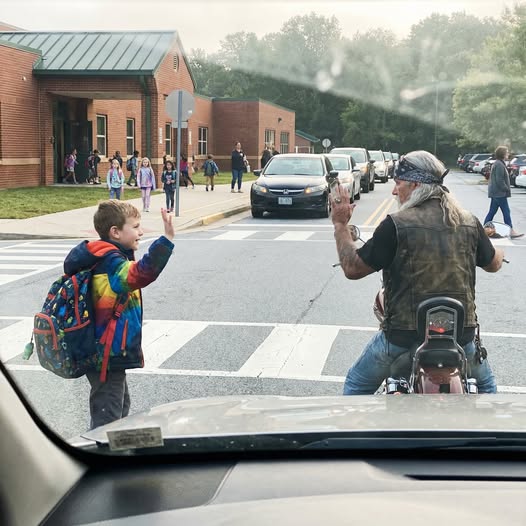
Every morning when I dropped off my seven-year-old, Caleb, there was a man on a motorcycle parked across the street from the school entrance. Leather vest. Bandana. Arms crossed. Just sitting there watching kids walk in.

At first, I was concerned. A grown man on a motorcycle watching an elementary school? I almost called the police.

But Caleb would wave at him. Every single morning. Big, enthusiastic wave. And the man would wave back.

“Do you know that man?” I asked one day.

“That’s my friend,” Caleb said.

“What friend? How do you know him?”

“He’s just my friend, Mom.”

I let it go. But it kept happening. Rain or shine. Every morning. The biker was there. Caleb waved. The biker waved back.

After two months, I couldn’t take it anymore.

“Caleb, I need you to tell me the truth. How do you know that man?”

Caleb got quiet. Picked at his cereal. Then he said something that knocked the air out of my lungs.

“Because the kids used to push me off the swings and take my lunch. Every day. They called me stupid and said nobody wanted to be my friend.”

I couldn’t breathe.

“Then one day the motorcycle man was there when it happened. After school by the fence. He didn’t say anything to them. He just revved his engine really loud and stared at them. They got scared and ran away.”

My hands were shaking.

“The next day he was there again. And the next day. And every day. And the kids stopped being mean because they think he’s my bodyguard.”

Tears were running down my face.

“He keeps me safe, Mom. That’s why I wave. Because nobody else did.”

That last sentence destroyed me.

My seven-year-old had been suffering in silence. A complete stranger noticed before I did.

I sat in the kitchen for a long time after Caleb left for school. Then I got in my car and drove there.

The biker was in his usual spot. I pulled up next to him. He looked at me. I looked at him.

And what happened next changed everything I thought I knew about that man, my son, and myself.

He was already tense when I got out of my car. I could see it in his shoulders. The way his jaw tightened. Like he’d been expecting this conversation and dreading it.

Up close, he was maybe fifty-five. Weathered face. Gray-streaked beard. A tattoo of a name on his forearm that I couldn’t read from where I was standing. His leather vest had military patches on it. Marine Corps. Desert Storm.

“I’m Caleb’s mom,” I said.

He nodded slowly. “The kid who waves.”

“Yeah. The kid who waves.”

Silence. Cars were pulling in behind us. Other parents dropping off their kids. I could feel them watching. Wondering why I was talking to the man they’d all been gossiping about.

“I know what this looks like,” he said. “I know what people think. I’m not here to bother anyone.”

“Then why are you here?”

He didn’t answer right away. He looked at the school. At the kids walking through the front doors with their backpacks and lunchboxes.

“What did Caleb tell you?” he asked.

“He told me he was being bullied. He told me you scared the kids away. He told me you’ve been coming back every day since.”

The man exhaled. Rubbed his face with both hands.

“I didn’t plan this,” he said. “I was just riding past one day. Stopped at the light. Saw your boy by the fence. Three kids had him on the ground. Kicking his backpack around. Throwing his stuff.”

My stomach turned.

“He wasn’t fighting back. Wasn’t even crying. He was just sitting there taking it. Like he was used to it.”

“Why didn’t you call someone? Tell the school?”

“I did. Called the next day. Spoke to some office lady. She said they’d look into it. Nothing happened. I rode past the next week and the same kids were at it again.”

He looked at me. His eyes were hard but there was something underneath. Something that looked a lot like pain.

“So I started parking here. Before school and after. The kids noticed me. Stopped messing with your boy. That’s all I did. Parked my bike and watched.”

“For three months?”

“Every school day. Yes.”

“Why?”

That’s when his face changed. The hardness cracked. Just for a second.

“Because I didn’t do it for mine.”

His name was Ray Dalton. He told me his story while sitting on that motorcycle in the school parking lot, cars pulling in around us, parents staring.

Nathan was bullied from third grade on. Name-calling at first. Then shoving. Then worse.

“He told me about it,” Ray said. “Told me kids were messing with him. I told him to toughen up. Stand up for himself. Hit back.”

He stared at his handlebars. “That’s what my dad told me when I was a kid. Toughen up. Handle it. Don’t be weak.”

“What happened?” I asked. But I already felt it coming. The way his voice had dropped. The way his hands gripped the handlebars like they were the only thing keeping him upright.

“Nathan didn’t get tougher. He got quieter. Stopped talking about it. I figured it had stopped. Figured he’d handled it.”

He paused.

“He hadn’t handled it. He’d just stopped telling me.”

Ray’s jaw clenched.

“Seventh grade. October 14th, 2011. I came home from work and his bedroom door was locked. I knocked. No answer. Knocked again. Called his name.”

He closed his eyes.

“I broke the door down. Found him on the floor.”

He didn’t say how. He didn’t need to. The words hung there like smoke.

“He was twelve years old. Left a note. Three sentences. ‘I’m tired of being scared. I’m tired of being alone. Nobody’s coming to help.’”

The parking lot noise faded. All I could hear was Ray’s breathing. Heavy. Controlled. The breathing of a man who’d learned to keep himself together through sheer force of will.

“Nobody’s coming to help,” he repeated. “My son wrote that. While I was ten miles away at work, thinking everything was fine.”

I was crying. Standing in a school parking lot at 8 AM, crying in front of a stranger.

“I wasn’t there for Nathan,” Ray said. “I told him to toughen up instead of showing up. I failed him. That’s something I carry every day.”

He looked at the school.

“When I saw your boy on the ground by that fence, I saw Nathan. Same look on his face. Same resignation. Like he’d accepted that this was his life now.”

His voice broke for the first time. “I couldn’t ride past. I just couldn’t.”

I didn’t go to work that day.

I sat in my car in the school parking lot for forty minutes after Ray rode away. Trying to process everything. The bullying. The stranger. Nathan. The note.

Nobody’s coming to help.

My son had been pushed down, kicked, robbed of his lunch, called names for months. And he hadn’t told me. Just like Nathan hadn’t told Ray.

Because kids learn fast that telling doesn’t always fix things. Sometimes it makes things worse.

But a stranger on a motorcycle had done what the school hadn’t. What I hadn’t. He’d shown up.

At 9 AM, I walked into the school office. Asked to speak with the principal.

Mrs. Whitfield was pleasant. Professional. Had one of those smiles that never quite reaches the eyes.

“How can I help you, Mrs. Torres?”

“My son is being bullied. Has been for months. I need it to stop today.”

Her smile dimmed. “That’s a serious accusation. Do you know which students are involved?”

“Caleb can tell you. But I also know that a concerned citizen called the school about it weeks ago and nothing happened.”

She typed something on her computer. “I don’t see any record of a complaint.”

“It was a phone call. To the front office.”

“Well, without documentation, I can’t—”

“Mrs. Whitfield. My seven-year-old told me that a stranger on a motorcycle is the only reason he feels safe at school. Not his teachers. Not the administration. Not his mother. A stranger. Do you understand how that sounds?”

Her smile disappeared entirely.

“I’d like to have a meeting with Caleb’s teacher. Today.”

“I’ll see what I can arrange—”

“Today. Or I go to the school board tomorrow.”

She arranged it.

The meeting was at 2 PM. Caleb’s teacher, Mr. Brennan, was a young guy. First or second year. He looked nervous.

“I wasn’t aware of any ongoing bullying,” he said.

“It’s been happening for months.”

“Kids at this age have conflicts. Sometimes what looks like bullying is just—”

“My son was pushed off swings. His lunch was taken. He was called fat and stupid daily. That’s not a conflict. That’s abuse.”

Mr. Brennan went pale. “I’m sorry. I genuinely didn’t see it.”

I believed him. He was overwhelmed, underpaid, managing twenty-five kids by himself. Things fall through the cracks.

“The students involved are Brandon Miller, Devon Hayes, and A.J. Russo,” I said. Caleb had given me the names that morning. Quietly. Like he was afraid of getting in trouble for telling.

Mrs. Whitfield wrote the names down. “We’ll speak to their parents.”

“And what changes for Caleb?”

“We’ll implement a safety plan. Buddy system during recess. Check-ins with the counselor.”

“That’s a start. But I want to know what happens with those boys. Not specifics. Just that there are consequences.”

“We can’t share disciplinary details about other students.”

“I understand. But I need to know my son is safe here. Because right now, the only person making him feel safe is parked across the street on a Harley. And that’s not acceptable.”

Mrs. Whitfield flinched.

Good.

Things started to change after that. Slowly. Imperfectly. The way real things change.

The three boys were spoken to. Their parents were called in. Two of the mothers were horrified and apologetic. The third, Brandon’s mom, was defensive.

“Boys will be boys,” she said in the hallway after her meeting. She said it loud enough for me to hear.

I didn’t respond. But I filed it away.

Caleb got a buddy system. A counselor check-in on Wednesdays. Mr. Brennan started paying closer attention at recess. It wasn’t perfect but it was something.

The bullying didn’t stop completely. It never does. But it got better. Brandon shoved Caleb one more time, got suspended for two days, and didn’t touch him again.

Through all of this, Ray kept showing up.

Every morning. Every afternoon. Parked across the street on his motorcycle. Watching.

I brought him coffee one morning. Black, two sugars. He looked surprised.

“You don’t have to do that,” he said.

“You don’t have to be here every day either.”

He took the coffee. Almost smiled.

It became a routine. I’d drop Caleb off, walk over with two coffees, and we’d talk for a few minutes while the kids filed into school.

Ray told me more about his life. After Nathan died, his marriage fell apart. His wife blamed him. He blamed himself. They divorced a year later.

He rode for a while. Just rode. No destination. No purpose. Trying to outrun the grief.

“You can’t outrun it on a motorcycle,” he said. “Believe me, I’ve tried. It just rides with you.”

He joined a veterans’ motorcycle club eventually. Found some brotherhood. Some purpose. Started doing charity rides. Toy drives. Fundraisers for kids’ organizations.

“That’s how I cope,” he said. “Helping kids. Can’t help Nathan. But I can help someone.”

Caleb asked about Ray one night at dinner.

“Mom, does the motorcycle man have kids?”

I set down my fork. “He had a son. A long time ago.”

“Where is his son now?”

I chose my words carefully. “His son passed away when he was young.”

Caleb was quiet for a while. Processing.

“Is that why he watches the school? Because he misses his son?”

“Partly. And because he wants to make sure kids are safe.”

Like me?”

“Especially like you.”

Caleb nodded. Then: “Can I make him a card?”

“A card?”

“Yeah. A thank you card. For being my bodyguard.”

My throat closed up. “Yeah, baby. You can make him a card.”

He spent an hour on it that night. Drew a picture of a motorcycle with a stick figure on it. Wrote in his best seven-year-old handwriting: “Dear motorcycle man. Thank you for being my friend. You are brave and cool. Love, Caleb.”

He decorated it with stars and flames.

I gave it to Ray the next morning.

He unfolded it. Read it slowly. Traced the drawing with his finger.

Then this fifty-five-year-old Marine combat veteran who’d survived a war and buried a child put his hand over his eyes and cried in a school parking lot.

He didn’t make a sound. His shoulders just shook.

I stood there and let him have it. Didn’t try to fix it. Just let him feel it.

When he collected himself, he folded the card carefully and put it in his vest pocket. Right over his heart.

“Nobody’s ever—” he started. Then stopped. Tried again. “It’s been a long time since anyone—”

He couldn’t finish.

“You don’t have to say anything,” I said.

He nodded. Put his sunglasses back on.

“Tell Caleb I said thank you,” he said. “Tell him he’s the bravest kid I know.”

It’s been eight months since I first confronted Ray in that parking lot.

He still shows up most mornings. Not every day anymore. Caleb doesn’t need a bodyguard now. He’s got friends. Real ones. A kid named Marcus who sits with him at lunch. A girl named Priya who draws comics with him at recess.

But Ray comes when he can. And Caleb still waves. Every time.

They know each other now. Ray came to Caleb’s birthday party last month. Rode up on his Harley with a wrapped present under his arm. Caleb screamed with excitement.

The present was a drawing set. Professional grade pencils and a sketchbook.

“Nathan loved to draw,” Ray told me quietly while Caleb tore into the wrapping. “I thought maybe Caleb might too.”

Caleb does. He draws motorcycles mostly. And a figure he calls “Ray the Protector.”

The other parents have gotten used to Ray. Some of them bring him coffee now too. One mom baked him cookies at Christmas. Another invited him to the school fundraiser.

He went. Wore his leather vest. Stood in the corner looking uncomfortable. But he went.

Last week, the school held an assembly on bullying prevention. They asked parents and community members to speak. Mrs. Whitfield asked me if Ray would be willing to say something.

He said no at first. Public speaking wasn’t his thing.

But Caleb asked him. “Please? You’re the bravest person I know.”

Ray couldn’t say no to that.

He stood in front of three hundred kids and their parents and told them about Nathan. Kept it simple. Age-appropriate. Said his son was bullied and it hurt him so badly he didn’t want to be here anymore.

“If you see someone being picked on,” Ray said, his voice steady, “don’t walk past. Don’t pretend you didn’t see it. Because that kid might think nobody’s coming to help. And everybody deserves to know that somebody is coming.”

He paused.

“You don’t have to be big or tough. You just have to show up. Wave at the kid who’s alone. Sit with the kid who’s got nobody. That’s what brave looks like.”

Three hundred kids stared at this big, bearded biker in a leather vest.

Then Caleb stood up from his seat and started clapping. Just him at first, small hands slapping together. Then Marcus joined. Then Priya. Then row after row until every kid in that gymnasium was on their feet.

Ray stood at that podium and let it wash over him. He didn’t cry this time. He just nodded. Slow and steady.

Like a man who’d finally found what he’d been looking for.

I still think about what Caleb said that morning at the kitchen table.

“He keeps me safe, Mom. Because nobody else did.”

It haunts me. Probably always will. The guilt of not knowing. Not seeing.

But it also reminds me of something important.

Sometimes help doesn’t come from where you expect it. Sometimes it comes from a stranger on a motorcycle who can’t save his own son but refuses to let it happen to someone else’s.

Ray didn’t know Caleb. Didn’t know me. Didn’t know our story. He just saw a kid on the ground and couldn’t ride past.

That’s what courage looks like. Not the loud kind. Not the dramatic kind. The quiet kind. The kind that shows up every single morning and doesn’t ask for anything in return.

Caleb still waves at Ray every day.

And Ray always waves back.

That’s their thing. That’s their language. A wave that says I see you and you matter and I’m here.

It started with a seven-year-old boy and a broken-hearted biker in a school parking lot.

And it saved them both.

Kelly Osbourne fires back at trolls after skinny BRIT awards look sparks concern

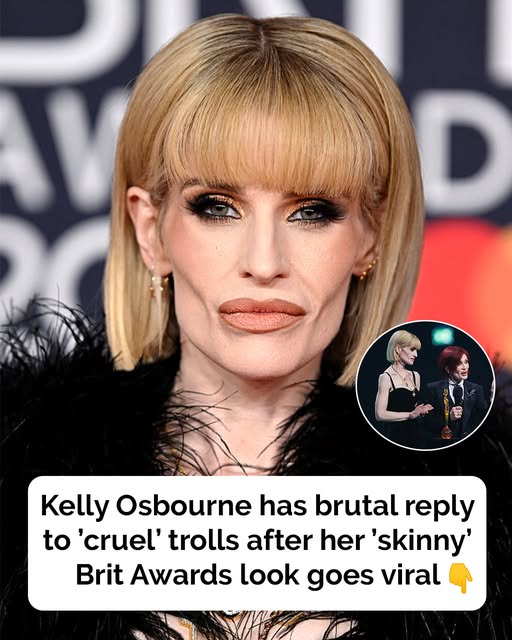
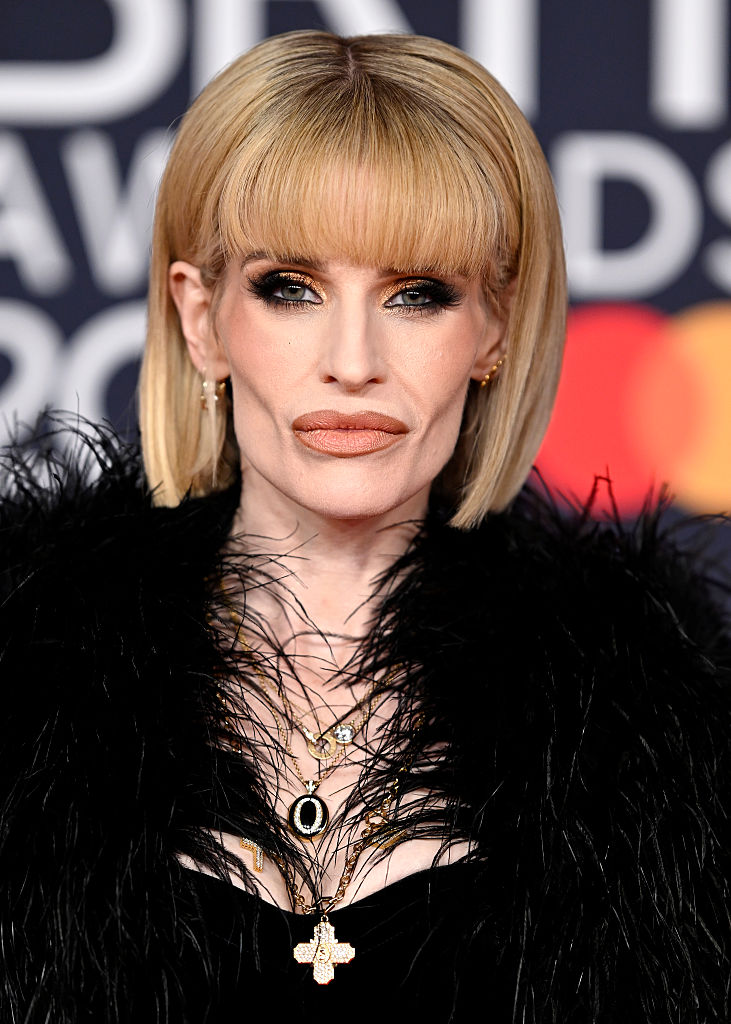
Kelly Osbourne’s appearance at the 2026 Brit Awards in Manchester sparked intense discussion after photos revealed her noticeably slimmer figure.

Now, the 41-year-old is responding — taking aim at haters and cruel online trolls.

”A serious cry for help”

Kelly Osbourne is firing back after renewed backlash over her appearance at the 2026 BRIT Awards, calling the online reaction to her weight loss “cruel” and “dehumanizing.”

The 41-year-old made headlines after stepping onto the red carpet in Manchester alongside her mother, Sharon Osbourne, as the pair accepted a lifetime achievement honor on behalf of Kelly’s late father, Ozzy Osbourne.

Photos from the event quickly went viral, reigniting intense scrutiny of Kelly’s noticeably slimmer figure.

“This is a serious cry for help,” one social media user wrote.

”This is so bad. Someone needs to step in,” another added.

Growing concern over Kelly and Sharon Osbourne’s noticeably thinner appearances has often been linked to what’s commonly referred to online as “Oz*mpic face.”

According to UCLA Health, the weight-loss medication work by suppressing appetite and slowing digestion, which can lead to fat loss throughout the body rather than in targeted areas.

Photos of Kelly Osbourne from the BRIT Awards became one of the weekend’s biggest viral talking points, spreading rapidly across social media and news platforms. Just hours later, Kelly addressed the backlash directly on her Instagram Stories, condemning what she described as relentless and heartless commentary.

“There is a special kind of cruelty in harming someone who is clearly going through something,” she wrote.

“Kicking me while I’m down, doubting my pain, spreading my struggles as gossip, and turning your back when I need support and love most.”

She continued: “None of it proves strength; it only reveals a profound absence of compassion and character.”

Critics clap back

Kelly went on to explain that she is currently navigating profound personal loss and emotional hardship following her father’s death, making the public scrutiny especially painful.

“I’m currently going through the hardest time in my life. I should not even have to defend myself. But I won’t sit here and allow myself to be dehumanized in such a way!”

Kelly Osbourne attends The BRIT Awards 2026 at Co-op Live on February 28, 2026 in Manchester, England. (Photo by Gareth Cattermole/Getty Images)
But some critics framed their comments as concern rather than body-shaming.

It’s not all body shaming, this is scary thin,” one user wrote, while another added,

“There’s a huge difference between body shaming and genuine concern.”

Why she is losing weight

Still, Kelly has made it clear that many comments crossed a line. Kelly — who shares son Sid, 3, with fiancé Sid Wilson — has always been vocal about people who leave “mean comments,” particularly other women.

Days before the BRIT Awards, Ozzy’s youngest daughter responded to a separate remark comparing her to a “dead body,” writing:

“Literally can’t believe how disgusting some human beings truly are! No one deserves this sort of abuse!,” Kelly wrote.

Kelly has repeatedly linked her recent weight loss to grief following her dad’s tragic passing in July 2025. The Black Sabbath frontman died from cardiac arrest but suffered from coronary artery disease and Parkinson’s disease.

In previous statements, Kelly has pushed back against speculation about her health and denied using weight-loss medications.

“I am ill right now. My life is completely flipped upside down,” she said late last year. “I don’t understand why people expect me to bounce back and look like everything is just fine in my life when it’s not.”

“The fact that I’m getting out of bed and facing my life — trying — should be more than enough.”

Sharon Osbourne, who had been married to Ozzy Osbourne since 1981, has publicly backed her daughter amid the backlash, saying the criticism ignores the reality of Kelly’s grief.

”She’s not happy, she’s lost her daddy,” Sharon said during a Dec. 10 interview with Piers Morgan.

“She can’t eat right now. It’s a shield for people that are unhappy, and jealousy and people’s perception of somebody else.”

Sharon herself has faced criticism over her own thinner appearance in recent years.

Kelly Osbourne and Sharon Osbourne present The BRIT Awards 2026 at Co-op Live on February 28, 2026 in Manchester, England. (Photo by Grant Buchanan/Dave Benett/Getty Images)

The 73-year-old has previously been open about her use of GLP-1 weight-loss medication, admitting that the rapid transformation became difficult to control and ultimately left her feeling “too gaunt.” She has since said she stopped using the medication and warned others about its risks.

“You can lose so much weight and it’s easy to become addicted to that, which is very dangerous,” Sharon previously said.

My Fiancée Sent My Daughter to Sit in the Bathroom During Our Wedding — When I Found Out Why, I Knew I Had to Teach Her a Lesson!

I thought the hardest part of my wedding day would be walking down the aisle without thinking about my late wife.

I was wrong.

Five years earlier, I had stood in a cemetery holding my nine-year-old daughter’s hand, promising her we would be okay. Since then, it had been just the two of us — me and Juniper — learning how to breathe through the quiet.

Junie was watchful. Not rude. Not dramatic. Just observant in a way that made adults uncomfortable. She noticed tone shifts. Forced smiles. The things people didn’t say.

When Maribel came into our lives, she made everything feel lighter. She laughed easily. She cooked for us. She kissed my cheek in the kitchen and called Junie “sweet pea” like it was affectionate.

People told me I looked happier.

I wanted that to be true.

Juniper didn’t warm up the way everyone said she would. She didn’t protest. She didn’t argue. She just watched.

“She’s protective,” Maribel would say with a smile. “It’s kind of cute.”

Junie never laughed at that.

The wedding day arrived bright and loud. White chairs lined our backyard. String lights hung between trees. Flowers filled every corner.

Guests hugged me. “She would’ve wanted this,” they said about my late wife, and I nodded because it was easier than explaining grief doesn’t disappear — it rearranges itself.

Juniper wore a pale floral dress and a serious expression. She sat in the front row during photos, then drifted off when the noise grew too much.

Three minutes before I was supposed to walk down the aisle, I looked toward her seat.

It was empty.

Not “bathroom break” empty.

Gone.

My chest tightened instantly.

“Have you seen Junie?” I asked my brother.

“She was right there.”

I didn’t wait. I checked the yard first. Called her name casually so no one would hear the panic creeping in.

The processional music started.

I stepped inside the house.

Kitchen. Living room. Office.

Nothing.

The bathroom door was cracked open.

I knew before I pushed it wider.

Juniper was sitting on the tile floor in her dress, knees pulled to her chest.

“Junie?” I knelt down. “Why are you in here?”

She looked at me calmly.

“Maribel told me to stay here.”

My stomach dropped.

“She told you to sit on the bathroom floor?”

Junie nodded once.

“She said I’m not allowed to tell you.”

A cold wave ran through me.

“Tell me what, sweetheart?”

Junie hesitated.

“She was in your office last night,” she said quietly. “She took papers from the blue folder. Three. I counted.”

The blue folder.

Life insurance documents. House paperwork. Legal records I hadn’t touched since my wife died.

Heat rushed to my face.

“She said if I told,” Junie continued, “you’d choose me and she’d lose.”

My heart broke in a way that felt physical.

“You never keep secrets like that from me,” I said, steady but firm. “Not ever.”

She nodded, like she was storing that rule somewhere permanent.

“Come with me.”

Outside, Maribel was greeting guests with her bright bridal smile.

I walked straight toward her.

“Maribel,” I said quietly. “We need to talk.”

“Grant, now?” she asked sweetly.

“Yes. Now.”

We stepped aside near the hedge.

“Why did you put my daughter in the bathroom?”

Her smile flickered.

“Oh my God. Relax.”

“Answer me.”

“She watches me like I’m a criminal,” Maribel snapped. “It’s weird.”

“She’s nine.”

“She sticks her nose where it doesn’t belong.”

“She told me you were in my office,” I said. “She said you took papers from the blue folder.”

Maribel’s eyes darted toward the house.

“I was looking for tape,” she said quickly.

“Three papers,” I said.

The music swelled again.

“Grant, don’t do this,” she whispered urgently. “We can fix it later.”

“No,” I said. “We’re talking now.”

Her patience snapped.

“It’s not my fault she’s like her mother.”

The world inside my head went completely silent.

“You never met my wife,” I said carefully.

“People talk,” she replied too fast.

I looked at her and saw something I had ignored before.

Calculation.

I walked to the microphone.

“Before we begin,” I said to the gathered guests, “I need to explain why my daughter wasn’t in her seat.”

The yard fell quiet.

“Juniper was told to sit on the bathroom floor and keep a secret from me.”

A ripple of confusion moved through the chairs.

“Junie,” I said gently. “Come here.”

She stepped forward, small and steady.

“What did she tell you?” I asked softly.

“She said I ruin things,” Junie said clearly. “She said if I tell you what I saw, you’ll choose me and she’ll lose.”

A murmur spread.

“She was in your office,” Junie continued. “She took three papers from the blue folder. She put them in her purse.”

Maribel laughed sharply. “She’s jealous. She imagines things.”

I turned to her.

“Hand me your purse.”

Her face hardened. “No.”

“Hand it to me.”

She tried to leave.

“Call the police,” I told my brother. “And call a locksmith.”

“Are you serious?” Maribel shouted. “You’re humiliating me!”

“You humiliated my daughter,” I said calmly.

When the police arrived, the energy shifted instantly.

“Sir, what’s happening?” an officer asked.

“My daughter saw her remove legal documents from my office,” I said.

The officer extended his hand.

“Ma’am, I need the purse.”

Maribel clutched it. Then slowly, she handed it over.

Inside were the folded papers.

Life insurance forms.

My name printed across the top.

Juniper spoke again.

“She asked me what passwords you use,” she said. “She asked what I remember about my mom.”

The officer’s expression tightened.

“There won’t be a wedding today,” I said.

No one argued.

That night, after the chairs were stacked and the yard was empty, I changed the locks.

Juniper sat on the couch still in her dress.

“Did I ruin it?” she asked quietly.

I sat beside her and took her hand.

“You didn’t ruin anything,” I said. “You saved us.”

She cried softly, the kind of crying that comes from release.

A week later, we went out for pancakes.

The diner smelled like syrup and coffee. It felt grounding.

“Her smile wasn’t real,” Junie said, pushing a strawberry around her plate.

“I know,” I said.

“You trusted your gut,” I told her. “Next time you feel that tight feeling, you tell me immediately.”

“Even if you’ll be sad?”

“Especially then.”

She reached across the table and squeezed my hand.

Her grip was small.

But it held like a promise.

When we got home, I deleted the wedding playlist from my phone.

And for the first time in months, the quiet didn’t feel lonely.

It felt safe.

I Took My Mom to Prom Because She Missed Hers Raising Me – My Stepsister Humiliated Her, so I Taught Her a Lesson She’ll Remember Forever

When I asked my mom to be my prom date, it wasn’t meant to be dramatic. It was supposed to be a quiet, meaningful way to repay her for everything she gave up while raising me on her own. I never imagined that my stepsister would try to humiliate her in front of everyone—or that the night would end up changing how an entire room saw my mom forever.

I’m eighteen now, but what happened last May still replays in my head like a film stuck on repeat. You know those moments that redraw your sense of right and wrong? The kind where you finally understand what it means to stand up for the people who stood up for you first?

My mom, Emma, became a parent at seventeen. She sacrificed her entire teenage life for me—including the prom she’d dreamed about since she was a kid. She gave up that dream so I could exist. I figured the least I could do was give it back to her.

She learned she was pregnant during her junior year. The boy responsible disappeared the moment she told him. No goodbye. No support. No interest in whether I’d look like him or share his laugh.

From that point on, my mom handled everything alone. College applications went straight into the trash. The prom dress she’d picked out never got worn. Graduation parties happened without her. She babysat neighborhood kids, worked overnight shifts at a truck-stop diner, and studied for her GED late at night after I finally fell asleep.

When I was growing up, she’d occasionally joke about her “almost-prom,” always with this forced laugh—like she was burying something painful under humor. She’d say things like, “At least I dodged a bad prom date!” But I always caught the sadness flicker in her eyes before she changed the subject.

As my own prom got closer, something clicked. Maybe it was sentimental. Maybe it was naive. But it felt right.

I decided I was taking my mom to prom.
One night while she was washing dishes, I just said it. “Mom, you gave up your prom for me. Let me take you to mine.”

She laughed like I was joking. When she realized I was serious, the laughter broke into tears. She had to grip the counter to steady herself, asking again and again, “You really want this? You’re not embarrassed?”

That moment—her face, her disbelief, her joy—might be the happiest I’ve ever seen her.

My stepdad, Mike, was over the moon. He came into my life when I was ten and became the dad I needed—teaching me how to tie a tie, how to read people, how to stand my ground. He loved the idea immediately.

But one person didn’t.

My stepsister, Brianna.

She’s Mike’s daughter from his first marriage, and she treats life like a personal runway. Perfect hair, outrageously expensive beauty routines, a social media feed dedicated to documenting outfits, and an ego large enough to block out sunlight. She’s seventeen, and we’ve clashed since day one—mostly because she treats my mom like an inconvenience.

When she heard about the prom plan, she nearly spit out her overpriced coffee.

“Wait—you’re taking YOUR MOM? To PROM? That’s genuinely pathetic, Adam.”

I walked away without responding.

A few days later, she cornered me in the hallway, smirking. “Seriously, what’s she even going to wear? Some old thing from her closet? This is going to be humiliating.”

I ignored her again.

The week before prom, she went for the kill. “Proms are for teenagers, not middle-aged women desperately trying to relive their youth. It’s honestly sad.”

My fists clenched. My blood boiled. But I laughed casually instead of snapping.

Because I already had a plan.

“Thanks for the input, Brianna. Super helpful.”
When prom day arrived, my mom looked stunning. Not flashy. Not inappropriate. Just elegant.

She wore a powder-blue gown that made her eyes shine, styled her hair in soft vintage waves, and smiled with a joy I hadn’t seen in years. Watching her get ready nearly made me cry.

She kept worrying as we prepared to leave. “What if people judge us? What if your friends think this is weird? What if I ruin your night?”

I took her hand. “Mom, you built my whole world from nothing. There’s no way you could ruin anything.”

Mike took photos nonstop, grinning like he’d won the lottery. “You two look incredible. Tonight’s going to be special.”

He had no idea how right he was.

At the school courtyard, people stared—but not the way my mom feared. Other parents complimented her dress. My friends gathered around her, genuinely excited. Teachers stopped to tell her how beautiful she looked and how touching the gesture was.

Her nerves melted away.

Then Brianna struck.

As the photographer arranged group shots, Brianna—wearing a glittery dress that probably cost someone’s rent—loudly announced, “Why is SHE here? Did someone confuse prom with family visitation day?”

Mom’s smile collapsed. Her grip on my arm tightened.

Brianna followed up, voice dripping with fake sweetness. “No offense, Emma, but you’re way too old for this. Prom is for actual students.”

Mom looked ready to disappear.

Anger burned through me—but I smiled.

“That’s an interesting opinion, Brianna. Thanks for sharing.”
She smirked, convinced she’d won.

What she didn’t know was what I’d already arranged.

Three days earlier, I’d met with the principal, the prom coordinator, and the photographer. I told them my mom’s story—everything she sacrificed, everything she missed. I asked if there could be a brief acknowledgment. Nothing big.

They were immediately on board. The principal even teared up.

So later that night, after my mom and I shared a slow dance that had half the gym emotional, the principal took the mic.

“Before we announce prom royalty, we’d like to honor someone special.”

The music faded. The room went quiet. A spotlight landed on us.

“Tonight, we recognize Emma—a woman who gave up her own prom to become a mother at seventeen. She raised an incredible young man while working multiple jobs and never once complaining. She is an inspiration to all of us.”

The gym erupted.

Cheers. Applause. People chanting her name. Teachers crying openly.

Mom covered her face, shaking, then looked at me. “You did this?”

“You earned it a long time ago, Mom.”

That photo became the school’s featured “Most Touching Prom Moment.”

Across the room, Brianna stood frozen, mascara streaking, her friends backing away.

One of them said, “You bullied his mom? That’s messed up.”

Her social status collapsed on the spot.

Later that night, we celebrated at home with pizza and balloons. Mom floated around the house, still glowing. Mike hugged her constantly.

Then Brianna stormed in.

“I can’t believe you turned some teenage mistake into this pity party! You’re acting like she’s a saint for getting pregnant in high school!”

Silence.

Mike calmly stood. “Brianna. Sit.”
She protested—but sat.

He didn’t yell.

“You humiliated a woman who raised her child alone. You mocked her sacrifices. You embarrassed this family.”

Then came the consequences. Grounded through August. Phone confiscated. No car. No friends. And a handwritten apology letter.

She screamed. “She ruined my prom!”

Mike replied coldly, “No. You ruined it yourself.”

She stormed upstairs.

Mom cried—not from pain, but relief.

The photos now hang proudly in our living room.

Mom finally sees her worth.

That’s the real win.

My mom has always been my hero.

Now everyone knows it.

The Night a Simple Test Made All the Difference

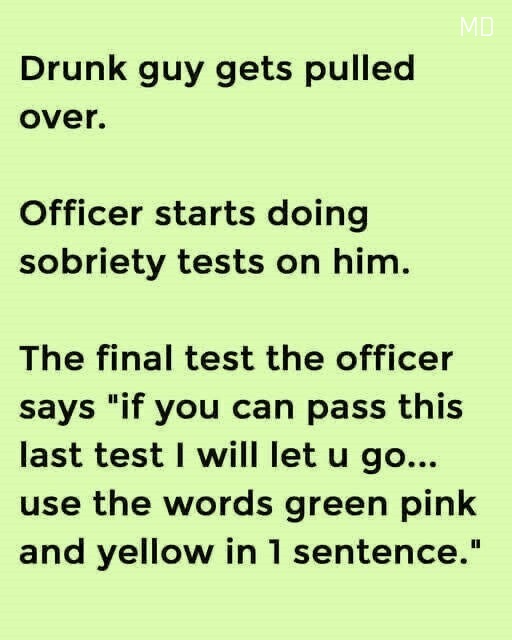
The late-night traffic stop unfolded on a quiet stretch of road, the kind where headlights seem brighter and mistakes feel heavier. An officer noticed a car drifting slightly between lanes and decided to investigate. When the vehicle finally came to a stop, the driver insisted he was “perfectly fine.” Yet his speech was slightly slurred, and his movements lacked steadiness. What may have felt minor to him raised serious concerns for the officer, who understood how quickly impaired driving can turn a routine night into a life-altering event.

Remaining calm and professional, the officer guided the driver through a series of standard field sobriety tests. Each step was explained clearly, not as a trap, but as a safety measure. The goal wasn’t humiliation—it was prevention. Impaired driving doesn’t just endanger the person behind the wheel; it puts passengers, pedestrians, and other motorists at risk. On empty roads especially, drivers sometimes underestimate how much their judgment has been affected. Confidence can feel convincing, even when coordination and reaction time tell a different story.

As part of the assessment, the officer asked the driver to create a simple sentence using three colors. It may have sounded harmless, even playful, but such exercises are designed to check mental clarity and focus. The driver responded with what he believed was a clever line: “The phone went green green, I pink it up, and the light turned yellow.” He delivered it proudly, as though humor might smooth over the situation. Instead, the unusual phrasing reinforced the officer’s concern that the driver’s cognitive abilities were impaired. What seemed like a joke became a reminder of how subtle signs can reveal deeper risks.

When the officer made the decision to place the driver under arrest, it wasn’t about winning an argument—it was about preventing potential harm. The soft click of handcuffs marked the end of the encounter, but it also represented something larger: accountability. Driving under the influence remains one of the most preventable causes of serious accidents worldwide. Laws exist not simply to punish, but to protect communities from avoidable tragedy. That night, no one was injured. No crash occurred. And that, perhaps, was the most important outcome. Sometimes the most responsible action is the one that stops a dangerous situation before it has the chance to unfold.

A Tense Moment at Church Took a Surprising Turn That No One Expected

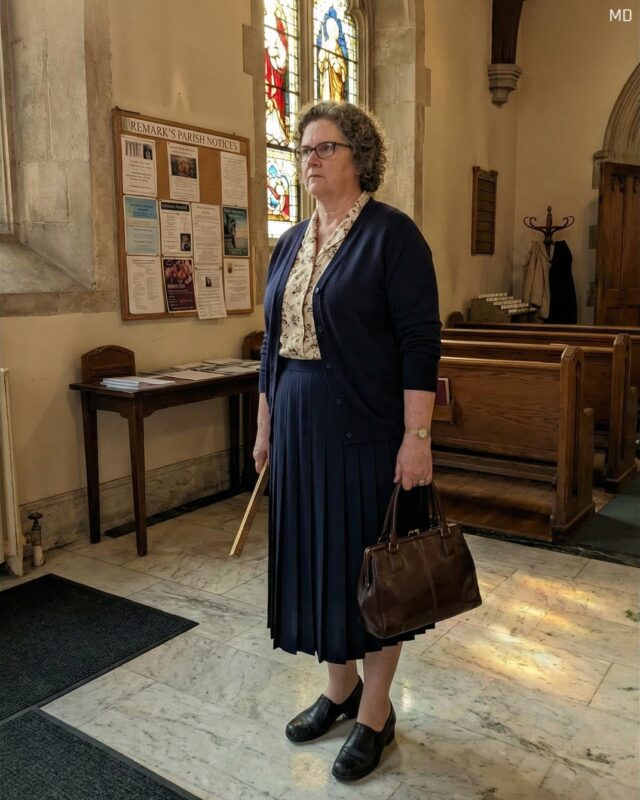
For nearly two years, Sunday mornings at church carried an uncomfortable routine for me. One woman in our congregation, Mrs. Gable, had taken it upon herself to enforce what she believed were proper standards of dress. Each week she would stand near the entrance with a wooden ruler, measuring the length of my skirt in front of other churchgoers. The moment was always quiet but deeply humiliating. While most people looked away politely, the message was clear: I was being publicly judged before the service even began. I tried to ignore it, reminding myself that I was there for the music and the faith that had always guided me. That particular Sunday was especially important because a visiting music scout was attending, and I had been chosen to perform a solo that could open doors for my future.

As I walked through the foyer that morning, Mrs. Gable approached me once again with the familiar ruler. The crowd gathered around us as she repeated the ritual she had carried out so many times before. But just as she tried to continue her inspection, something unexpected happened. She lost her balance and stumbled near a marble pedestal by the entrance. Her large handbag slipped from her shoulder and struck the floor with a loud crash. Its clasp burst open, and several items rolled across the polished tiles—rings, watches, and an envelope that immediately caught people’s attention. The sudden silence in the room made the moment feel even heavier as everyone realized these items didn’t belong to her.

The pastor’s wife stepped forward and recognized one of the rings, explaining that it had gone missing from a secure drawer in the church weeks earlier. Others began to recognize the items scattered across the floor as well. For a brief moment, confusion filled the room. Mrs. Gable tried to gather everything quickly and even attempted to suggest that I had something to do with the situation. But the truth soon came into focus. Church leaders remembered that security cameras had recently been installed during renovations, and the officers who arrived soon reviewed the footage. The recordings clearly showed Mrs. Gable taking items from different areas of the building during previous weeks. The evidence left little room for doubt, and the situation was handled by authorities.

After the commotion settled, the church felt strangely quiet, as though everyone was reflecting on what had just unfolded. For me, the experience carried an unexpected sense of relief. The weight of two years of quiet embarrassment had finally lifted. When the service began, I walked to the choir loft with a calm I hadn’t felt in a long time. I sang my solo with confidence, focusing on the music rather than the opinions that had once made me doubt myself. When the final note echoed through the sanctuary, I realized something important: respect and character matter far more than appearances. That morning reminded everyone present that fairness, humility, and truth are values that should guide a community far more than judgment ever could.

25-Year-Old Fishing Show Crew Member Todd Meadows Passes Away During Production

A young crew member featured on the long-running reality series Deadliest Catch has passed away at the age of 25. Todd Meadows, described by colleagues as one of the newest additions to the team, was reportedly filming for the Discovery Channel show when the tragic event occurred on 25 February. Meadows had joined the crew of the fishing vessel Aleutian Lady for the program’s 22nd season, working in the demanding and often unpredictable conditions of the Bering Sea crab fishing industry.

Captain Rick Shelford confirmed the news in a heartfelt message shared on social media, calling it one of the most difficult days in the vessel’s history. He described Meadows as a dedicated deckhand who quickly became part of the crew’s close-knit community. According to Shelford, Meadows earned respect through his strong work ethic, positive attitude, and genuine passion for fishing. His laughter and upbeat spirit left a lasting impression on those who worked alongside him during the season.

Meadows was not only a valued crew member but also a devoted husband and father to three young children. In his tribute, Captain Shelford emphasized how deeply Meadows cared for his family, noting that everything he did reflected his commitment to providing for them. Friends and colleagues have shared memories of his kindness and determination, highlighting the impact he had both on deck and at home. A fundraising campaign has been established to support his family with expenses and to provide assistance during this difficult time.

A spokesperson for Discovery Channel expressed condolences, stating that the network is deeply saddened by the loss and extends its thoughts to Meadows’ loved ones, crewmates, and the broader fishing community. Production for the season was reportedly nearing completion when the incident occurred. As tributes continue to pour in, many remember Todd Meadows not only as a hardworking fisherman but as a young man whose dedication to his craft and family defined his life. His memory, those who knew him say, will remain part of the vessel, the crew, and the community he cared about so deeply.

If You Still Practice These 8 Habits After 70, You’re Likely Aging in a Healthy Way

Aging is often viewed in different ways. Some people associate it with slowing down, while others see it as a new stage filled with opportunities to grow, learn, and enjoy life in meaningful ways. During my daily walks in the park with my grandchildren and our energetic dog, Ottelo, I often notice older adults who seem full of life and enthusiasm. Many of them are in their seventies or even eighties, yet their energy and curiosity are inspiring. Watching them laugh, chat, and move with confidence reminds me that age alone does not determine how vibrant a person can feel. Over time, these observations have helped me notice several habits and attitudes that many active older adults share, and these qualities can offer helpful guidance for anyone hoping to age with confidence and well-being.

One of the most noticeable traits among energetic seniors is their commitment to staying physically active. Physical movement does not have to be intense or complicated to be beneficial. Simple activities like walking, stretching, gardening, or light exercise can help maintain flexibility, balance, and heart health. Even a short daily walk can boost energy and support overall wellness. Many health experts emphasize that consistent movement helps regulate blood pressure, improve circulation, and support better sleep. Beyond the physical benefits, exercise often lifts mood and reduces stress. When people make activity part of their routine, they are not only caring for their bodies but also creating habits that support independence and vitality later in life.

Another important factor in aging well is maintaining meaningful relationships. Strong friendships and social connections provide emotional support and a sense of belonging. Over the years, life can become busy with responsibilities, and it’s easy for friendships to fade into the background. However, people who continue meeting friends for coffee, joining community activities, or participating in group hobbies often report feeling happier and less isolated. These interactions create opportunities for laughter, shared experiences, and encouragement. Staying socially engaged also keeps the mind active and can help people feel connected to the world around them, which plays a significant role in emotional health.

Curiosity and a willingness to keep learning also appear to be common traits among older adults who remain active and enthusiastic about life. Many people continue exploring new interests well into their later years—whether learning a new language, trying a creative hobby, or taking online courses. Lifelong learning stimulates the brain and encourages curiosity about the world. Along with learning, maintaining a positive outlook and a sense of humor can make a powerful difference. Being open to new experiences, adapting to technology, and finding moments of laughter in everyday life all contribute to a balanced perspective. Aging gracefully is less about counting years and more about staying engaged, curious, and connected. When people nurture their health, relationships, and interests, they create a fulfilling life that continues to grow richer with time.

The Man Walking Behind My Daughter Had a Reason I Didn’t Expect

Late one afternoon, my 12-year-old daughter walked home from school the same way she always did—down the quiet neighborhood street lined with small trees and familiar houses. I was inside finishing a few chores when my phone buzzed with a motion alert from our doorbell camera. Curious, I opened the app and saw her walking toward the house. But a few steps behind her was a man I didn’t recognize. My heart began to race. I hurried outside, ready to confront him, my mind filled with protective worry.

When I reached the front yard, the man immediately raised his hands, clearly nervous about the situation. Before I could say a word, he spoke quickly and respectfully. “Please don’t be upset,” he said. “I was following her because I noticed something on the road behind her.” His voice was calm but urgent. Confused, I looked at my daughter, who seemed unaware that anything unusual had happened during her walk home. The man pointed toward the street a short distance away.

He explained that he had been driving nearby when he noticed a large branch partially blocking the sidewalk and road where children often walk after school. From a distance, he saw my daughter heading toward that area. Worried she might trip or step into traffic to avoid it, he parked his car and walked behind her to make sure she stayed safe. He didn’t want to startle her by calling out from far away, so he simply followed at a distance until she reached our house.

Relief washed over me as I realized the truth behind the situation. The man hadn’t meant to frighten anyone—he had simply acted out of concern. I thanked him sincerely for looking out for my child, and he politely wished us a good evening before continuing on his way. Later that night, as I thought about what had happened, I realized how quickly fear can shape our assumptions. But sometimes, the story behind a moment is kinder than we expect. That day reminded me that communities are built not only on caution, but also on quiet acts of care between people who may be strangers, yet still look out for one another.

Popular

A Stranger Took the Airplane Seat I Paid For — Then...

0
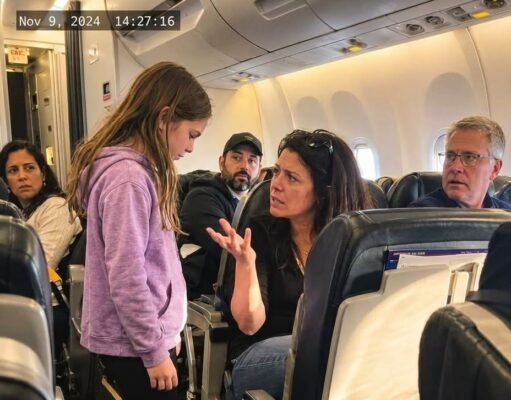
“You have a wallet under your leg,” my ten-year-old daughter said, standing in the airplane aisle with both hands trembling at her sides. Two...