Entertainment

Why Some Experts Suggest Not Flushing After Every Bathroom Visit

Flushing the toilet is such an automatic habit that most of us rarely question it. Yet for simple urination, flushing every single time may not always be necessary, especially when considering how much clean water is used in the process. Many people are surprised to learn how much drinking water is consumed with each flush. By becoming more aware of our daily routines, we may discover small changes that help conserve valuable resources without sacrificing cleanliness or comfort at home.

Each time a toilet is flushed, between three and nine liters of treated drinking water are used. That water has already gone through a purification process, only to be immediately sent down the drain. In an average household, toilets are used many times a day, meaning hundreds of liters of water may be consumed weekly for flushing alone. Over the course of a year, this can add up to tens of thousands of liters of water. In many parts of the world, access to safe drinking water remains limited, making conservation efforts increasingly important on a global scale. Even modest changes in household habits can contribute to reducing unnecessary waste.

Some environmentally conscious households follow a simple rule: flush when necessary rather than automatically every time. Since urine itself is generally low risk when toilets are cleaned regularly, some families choose to delay flushing when practical, especially in private homes. Of course, cleanliness remains essential. Regular cleaning of the toilet bowl and bathroom ensures hygiene is maintained, and flushing should always be done when needed to avoid odors or discomfort. Small measures such as proper ventilation or natural air fresheners can also help maintain a pleasant environment.

Saving water does not require expensive renovations or complicated equipment. Simple awareness and thoughtful use of household resources can make a noticeable difference. Modern dual-flush toilets, which allow users to choose between smaller and larger flush volumes, also provide an effective long-term solution. Ultimately, each household should choose what feels comfortable and respectful for everyone living there. By paying attention to everyday actions, families can reduce water consumption while keeping their homes clean and functional, showing that responsible habits can begin with the smallest routines.

What the First Letter of Your Name Might Reveal About Your Personality

Since ancient times, people have searched for meaning in the symbols that surround them, and names have always held a special place in many cultures. A name is more than a simple label—it often represents identity, family history, and personal story. In various traditions, special attention is given to the first letter of a person’s name, which is sometimes seen as a symbolic gateway to personality and character. While these interpretations are not based on scientific proof, they remain popular as tools for reflection and self-understanding. Many people enjoy exploring what their name might suggest about how they relate to the world and the people around them.

A name is one of the first things a person learns to recognize as their own, and it follows them throughout life. Because of this deep connection, some symbolic traditions suggest that the first letter carries a kind of emotional or cultural imprint. In ancient societies, including Greek, Hebrew, and various Eastern cultures, letters were often connected to numbers, ideas, and spiritual symbolism. Over time, this led to the belief that certain letters could represent qualities such as strength, creativity, sensitivity, or determination. Today, these interpretations are usually seen as a fun and thoughtful way to explore personal traits rather than strict definitions.

Many popular interpretations group initials into symbolic categories. Some letters are associated with leadership, independence, and initiative, suggesting individuals who are confident decision-makers. Other initials are linked with empathy and emotional awareness, describing people who are thoughtful and sensitive to others. Certain letters are often connected to creativity and self-expression, symbolizing imagination and communication skills. Meanwhile, other initials are traditionally tied to discipline, responsibility, and perseverance, representing people who value stability and long-term goals. These meanings are not rules, but rather ideas that encourage personal reflection and self-discovery.

Ultimately, no single letter can define a person’s destiny or personality. Life experiences, upbringing, personal choices, and environment shape who we become far more than any symbolic interpretation. Still, many people find value in exploring these ideas as a way to better understand their strengths and motivations. The true meaning of a name lies in the story built around it—the actions, relationships, and memories that give it life. While the first letter may serve as a symbolic starting point, it is each individual’s journey, decisions, and character that truly define who they are and how their story unfolds.

The Hidden Purpose Behind Traditional Church Pews

At first glance, the photograph appears to capture nothing more than a simple wooden bench inside a church. Yet small details often carry quiet stories, and this carved opening along the pew reveals how thoughtfully such spaces were designed. Churches have long been places where communities gather not only for worship but also for reflection, comfort, and connection. Every element within these buildings, from stained glass windows to wooden seating, was often crafted with both purpose and care. The smooth, worn wood seen in the image suggests years of use, countless visitors sitting, standing, and kneeling in shared moments of hope and contemplation.

The carved slot in the pew may seem unusual to modern visitors, but it serves practical purposes rooted in tradition. Many church pews include features that help support worshippers during services, such as spaces for hymn books, prayer guides, or personal belongings. In some designs, openings allow easier movement or create room for kneeling during prayer. These details reflect how architecture and furniture evolved to accommodate both comfort and ceremony. Over time, small touches like this became part of the experience, helping people focus less on discomfort and more on the quiet purpose that brought them there.

Beyond practicality, objects like this pew often carry emotional weight. Generations of families may have sat in the same spot, celebrating weddings, baptisms, holidays, and moments of remembrance. The polished surface, shaped by years of use, tells a story of community continuity. While modern seating in many buildings prioritizes efficiency or minimal design, older handcrafted furniture reminds us of a time when durability and warmth mattered deeply. Each mark and softened edge is evidence of shared human experiences that unfolded within those walls.

Ultimately, the photograph encourages us to notice how even ordinary objects can hold layers of meaning. What might seem like a simple detail becomes a reminder of tradition, craftsmanship, and the importance of communal spaces. In today’s fast-moving world, places designed for quiet reflection remain valuable. The pew, with its modest yet purposeful design, symbolizes how thoughtful construction can support moments of stillness and connection. Sometimes, the smallest features quietly preserve the memory of countless stories, inviting us to slow down and appreciate the environments that continue to bring people together.

A Payroll Mistake Taught Me an Unexpected Lesson About Fairness at Work

When Daniel checked his bank account late one evening, he was surprised to see two identical salary deposits instead of one. At first, he assumed it was some kind of bonus or delayed payment finally processed. But after reviewing the details more carefully, he realized it was likely an accounting error. The extra money would have helped with overdue bills and repairs he had postponed for months, and for a moment he felt tempted to ignore it. Still, he knew mistakes in payroll systems rarely went unnoticed for long, and uncertainty weighed on his conscience.

The next morning, human resources contacted him, explaining that a duplicate payment had been made and politely asking him to return the extra amount. Daniel, frustrated by how often employees complained about unpaid overtime and delayed reimbursements, responded defensively. He felt that the company rarely took responsibility when mistakes hurt workers, so why should he rush to fix one that worked in his favor? The conversation ended awkwardly, and although HR remained professional, Daniel sensed tension building around the situation.

The following day, however, things changed. A company-wide email arrived explaining that a technical error had affected multiple payroll accounts. Several employees had either been underpaid or paid incorrectly, and the finance team was urgently working to correct the situation. The message reminded staff that accurate payroll depended on cooperation from everyone, including returning accidental overpayments so that corrections could be made quickly. Reading the email, Daniel felt his earlier reaction differently. What he had seen as a small personal win was actually part of a larger problem affecting coworkers who were missing money they relied on.

Later that afternoon, Daniel contacted HR and arranged to return the extra payment. The conversation this time was calm and constructive. The representative thanked him and explained how even small delays in corrections could create complications for others. The experience left Daniel reflecting on how workplace situations often look different when seen from multiple perspectives. In the end, he realized the issue wasn’t about blame but about fairness and trust. Mistakes happen in any organization, but how people respond to them helps shape the environment they share. By choosing cooperation over frustration, Daniel helped restore a small piece of balance—and learned that integrity at work often matters more than a temporary advantage.

The Meaning Behind My Mother’s Morning Routine Finally Made Sense Years Later

When I was 10, my mom would braid my hair every morning—but only on days when Dad was home. I used to ask why she skipped the other days. She would smile and say, “It’s better this way.” Back then, I thought it was just one of those mysterious grown-up answers, something parents said when they didn’t want to explain things to children. I didn’t question it much. I simply enjoyed the gentle tug of her fingers through my hair, the quiet moments we shared before school, and the feeling that everything in our small world was perfectly normal.

On the mornings Dad traveled for work, Mom seemed more relaxed. We ate breakfast slowly, sometimes laughing over spilled cereal or a silly story from the radio. My hair stayed loose, and we rushed out the door together, carefree and unhurried. I never noticed the difference in her mood until much later. To me, she was just being practical, saving time when it was just the two of us. Childhood has a way of hiding adult worries behind ordinary routines.

Eighteen years later, while helping her sort old photos, I casually mentioned how pretty my braids looked in those childhood pictures. She smiled, then grew quiet. After a long pause, she explained that my father, though loving, believed appearances mattered deeply and expected everything in the house to look orderly, including me. On the days he was home, she woke earlier to braid my hair so mornings would stay calm and peaceful. On the days he was away, she allowed herself—and me—a little freedom and extra rest.

In that moment, I finally understood what she meant by “It’s better this way.” She had quietly balanced everyone’s needs, protecting the harmony of our home while still giving me small pockets of ease and comfort. Those braids were never about hairstyle alone—they were her silent way of keeping our family steady. Now, whenever I braid my own daughter’s hair, I remember those mornings and recognize the quiet strength in the small things parents do, often unnoticed, simply to keep love at the center of everyday life.

Chilling new video reveals blood trail outside Nancy Guthrie’s front door

Nancy Guthrie’s mysterious disappearance continues to baffle police and her family.

Now, a shocking new video shows blood drops and splatter on the front porch of the Arizona home of the Today anchor’s missing mother.

100 sheriff’s detectives working on the case

Nancy Guthrie has been missing since Saturday, January 3. Police have confirmed that the case is now being treated as a criminal investigation.

The disappearance has drawn widespread attention, in part because 84-year-old Nancy is the mother of one of the U.S.’s top TV personalities, “Today” show anchor Savannah Guthrie.

“We do believe Nancy was taken from her home against her will,” Sheriff Chris Nanos said during a press conference on Tuesday.

Four days into the frantic search for, and with roughly 100 sheriff’s detectives on the case, the mystery surrounding Nancy’s disappearance has only grown more baffling.

Chilling new footage

According to police sources and reports, authorities began to suspect something terrible had occurred after certain discoveries at Nancy’s Tucson home. It has been reported that blood was found inside the house, along with signs of forced entry.

Police have described the scene at Nancy Guthrie’s Tucson home as alarming but have declined to provide additional details.

Sources, however, told New York Post that blood was discovered inside the residence and that personal items, including her phone, things she normally wouldn’t leave behind, were still at the home.

Shocking new footage also shows a trail of blood leading from the Arizona home of “Today” host Savannah Guthrie’s missing mother. Captured by NewsNation Senior National Correspondent Brian Entin, the video reveals dark red blood drops and splatter across the front porch of the Tucson residence, matching earlier descriptions of a chaotic crime scene, sources told The New York Post.

Credits: NewsNation

According to NewsNation, blood could still be seen outside the front door even after authorities cleared the crime scene and returned the property to her family.

It’s still unknown whose blood it is, but the footage surfaced just hours after an unverified ransom note was sent to TMZ, demanding millions in Bitcoin for Nancy’s safe return.

Another detail reported by the media is that a Ring doorbell camera, which had been installed near the entrance, was missing. Pima County Sheriff Chris Nanos confirmed that investigators are looking into whether the device was deliberately taken by the suspect.

Nancy Guthrie, who lived alone in a ranch-style home in the Catalina Foothills community, was last seen Saturday night when family members dropped her off at her residence. Local authorities say she may have been forcibly taken in the middle of the night.

Her family grew concerned after she failed to show up for church services Sunday morning, according to the Arizona Department of Public Safety.

Investigators noted that Nancy’s pacemaker stopped syncing with her devices around 2 a.m., suggesting she may have been taken at that time. Authorities warn that without her essential medications, her life could be in immediate danger.

Pulls out of Winter Olympics coverage

Savannah Guthrie has been absent from the Today show since the investigation began. She also withdrew from covering the Winter Olympics in Italy to “focus on being with her family” and has thanked the public for their support. Later, on Instagram, the 54-year-old posted a photo with the caption, “Please Pray.”

“We believe in prayer. We believe in voices raised in unison, in love, in hope. We believe in goodness. We believe in humanity. Above all, we believe in Him,” Savannah wrote.

“Thank you for lifting your prayers with ours for our beloved mom, our dearest Nancy, a woman of deep conviction, a good and faithful servant. Raise your prayers with us and believe with us that she will be lifted by them in this very moment.”

She concluded, “We need you. He will keep in perfect peace those whose hearts are steadfast, trusting in the Lord.” A verse from Isaiah, “for all time, for all of us. Bring her home.”

‘I Love Lucy’: Lucille Ball Wasn’t a Natural Redhead — Here’s 1 Trick She Used to Get Flaming Red Results

Lucille Ball was born a brunette. But fans can only picture her as the redhead Lucy Ricardo on ‘I Love Lucy.’ Here’s how she kept her hair so flaming red.

Lucille Ball is one of the best-loved actresses of all time. Best known for her work on the sitcom I Love Lucy, the actor became a legendary comedian for her generation. She went from modeling to acting to proving her business acumen behind the camera as a producer. Amazingly, the talented Ball became the first woman to run a major television studio: Desilu Productions.

The Emmy Award winner put her heart and soul into her work. However, some of her deepest emotions remained hidden from the public. And not everyone knew the true Ball. Some fans don’t even realize she wasn’t a natural redhead.

Lucille Ball didn’t get famous until she was almost 40

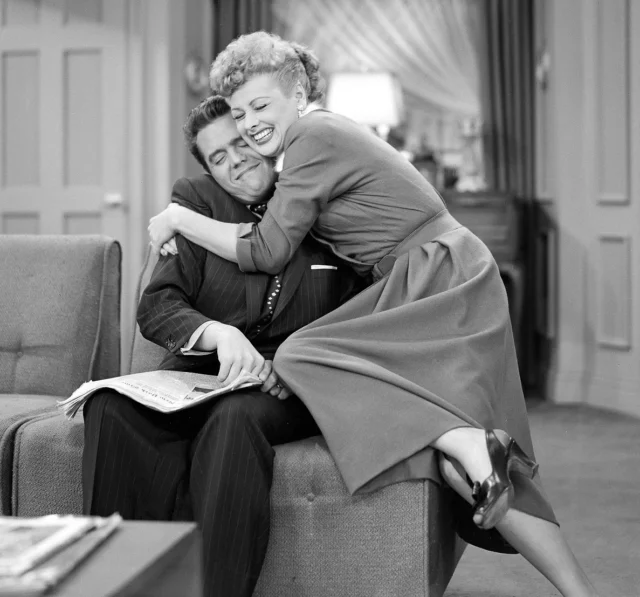
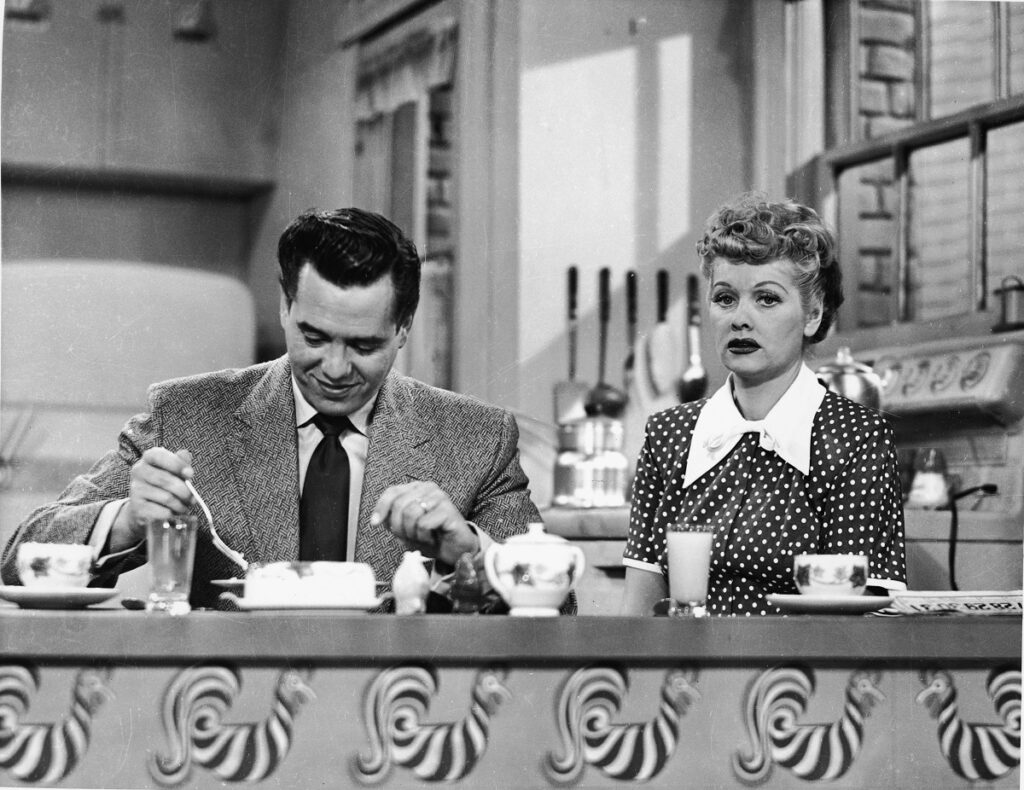
Lucille Ball and Desi Arnaz | CBS Photo Archive/Getty Images

She eventually became one of the biggest stars in Hollywood. But before her breakout role on I Love Lucy, Ball was just a struggling actress trying to make it big, landing small parts and modeling gigs sporadically without finding true success. At the time, the actor still maintained her natural brown hair color.

Ball fought hard to get her real-life husband, Desi Arnaz, cast alongside her on the sitcom I Love Lucy. The show was based on the popular radio program My Favorite Husband, which Ball also starred in. Ball was almost 40 when the sitcom premiered in 1951.

Ball was a natural brunette

Lucille Ball | CBS via Getty Images

It’s not the only factor in Ball’s lack of Hollywood stardom. However, as a brunette, the actor wasn’t standing out from the crowd of talent the same way she did after dyeing her hair. Ball first changed her look from brown to red for the project Du Barry Was a Lady. Her preferred color was called “golden apricot.”

But even then, Ball hadn’t quite achieved the flaming red mane Lucy Ricardo became known for. The show’s former stylist revealed how they got the color so bright.

Lucille Ball’s stylist used 1 weird trick to turn her hair bright red

Lucille Ball | Silver Screen Collection/Hulton Archive/Getty Images

There were other redheaded actresses at the time but no one looked just like Ball. That’s because of the effort from I Love Lucy hairstylist Irma Kusely, who is credited with maintaining the color. She did it by swapping out regular hair dye for henna.

“A lot of people think of it as red — it’s not red at all,” Kusely said, according to Good Housekeeping. “[Ball] met a very wealthy sheikh and he had heard about her problem [getting the right coloring], he said he would send her a lifetime supply of henna, which he did! [We kept it] in my garage, locked away in a safe.”

That flaming hair became an integral look for Lucy on the series, matching her zany personality and unique outlook on life.

Her hair wasn’t the only thing she changed

During her quest to become a movie star, Ball made several changes, including her name. The actor was born Lucille Désirée Ball. However, she briefly used the name Diane Belmont while trying to break into the modeling world, HuffPost reported. Ball allegedly thought the new name sounded more “glamorous.”

Of course, Ball would find true success with her real name and fake hair. Who would have thought?

Why ‘I Love Lucy’ Wasn’t Called ‘I Love Lucille,’ According to Desi Arnaz

Lucille Ball and Desi Arnaz were the stars of I Love Lucy. Arnaz explained why he didn’t want the show to be called I Love Lucille.

I Love Lucy has been a presence in many homes for decades. When you hear the name of the show, the first thing you likely think of is Lucille Ball with her bright, red hair and hilarious facial expressions. Here’s the interesting reason I Love Lucy wasn’t named I Love Lucille, according to Desi Arnaz.

‘I Love Lucy’ was a hit for Lucille Ball and Desi Arnaz

Lucille Ball | CBS Photo Archive/Getty Images

I Love Lucy aired from 1951 to 1957. Ball played the role of Lucy Ricardo and Arnaz played the role of Ricky Ricardo. Their TV neighbors, Fred and Ethel Mertz, were played by William Frawley and Vivian Vance.

Ball and Arnaz got a lot of attention because they were an interracial couple on television. I Love Lucy also caused a stir by showing a pregnant woman on TV. The duo almost ended I Love Lucy after they received baby news. During that time, it was considered controversial for a visibly pregnant woman to be on TV. Even saying the word “pregnant” on television was forbidden.

Why ‘I Love Lucy’ wasn’t called ‘I Love Lucille’

When Arnaz and Ball first met, he called her Miss Ball, but she told him to call her Lucille. According to his book, A Book, Ball jokingly said she would call him “Dizzy.” As they grew more familiar, Arnaz changed how he addressed Ball.

Arnaz later explained why the show was called I Love Lucy. He says he didn’t like the name Lucille because other men before him called her by that name. He preferred to call her Lucy instead.

“I had started calling her Lucy shortly after we met; I didn’t like the name Lucille,” wrote Arnaz. “That name had been used by other men. ‘Lucy’ was mine alone. That’s how eventually our television show was called I Love Lucy, not I Love Lucille.”

Lucille Ball was the star of ‘I Love Lucy,’ according to the producer

Jess Oppenheimer, the producer and head writer of I Love Lucy, said the show wouldn’t be the same without Ball. He considered her the star of the show. “The entire project rode on the talent of one woman,” wrote Oppenheimer in his book Laughs, Luck, and Lucy: How I Came to Create the Most Popular Sitcom of All Time. “In every sense, she was a star,” he added.

Oppenheimer said Ball accurately interpreted the script every time. According to him, she consistently gave a stellar performance and brought the script to life exactly as he had imagined it. He said every week, “she kept astounding us.”

Oppenheimer went on to say the audience was so mesmerized by Ball that they would forget she was acting. To them, she really was Lucy Ricardo. They were sitting in her living room and watching her life with Ricky Ricardo. Said Oppenheimer, “If you looked carefully, you would marvel that every fiber in the woman’s body was contributing to the illusion.”

‘I Love Lucy’: A Traumatic Event Caused Lucille Ball to Avoid Pictures of Birds

I Love Lucy star Lucille Ball described her childhood as “challenging” and marked by “death and cruel circumstances.” One event in particular caused her to avoid pictures of birds for the rest of her life.

Lucille Ball said her mother tried to ‘keep her under control’

Lucille Ball in 1968 | Max B. Miller/Fotos International/Getty Images

According to Ball, her mother, DeDe, had difficulty keeping her “under control,” so she would sometimes tie her to a dog leash and keep her in the backyard. In her book, Love, Lucy, Ball says life became difficult for her mother during her father’s illness and eventual death. She was overwhelmed with work and childrearing, so she looked for ways to keep Ball occupied.

DeDe would sometimes leave Ball with the local grocery store owner. “My mother finally made arrangements with our kindly corner grocery store owner, Mr. Flower,” wrote Ball. “He let me prance up and down his counter reciting little pieces my parents had taught me. My favorite was apparently a frog routine where I hopped up and down harrumphing. Then I’d gleefully accept the pennies or candy Mr. Flower’s customers would give me—my first professional appearance!”

Why Lucille Ball avoided pictures of birds

Ball said her father died after developing the flu and typhoid fever. He was just 28 years old and her mother was 22. Ball, who was almost 4 years old at the time, said she remembered that day vividly. After her mother told her about her father’s death, she noticed birds in the window. From that moment on, she couldn’t stand to be around anything with an image of a bird on it.

 And I remember at that very moment, a picture suddenly fell from the wall. And I noticed on the kitchen windowsill some little gray sparrows feeding. I’ve been superstitious about birds ever since. I’ve heard that birds flying in the window are supposed to bring bad luck.

I don’t have a thing about live birds, but pictures of birds get me. I won’t buy anything with a print of a bird, and I won’t stay in a hotel room with bird pictures or bird wallpaper.

Lucille Ball, Love, Lucy

Lucille Ball’s mother became very depressed

Ball’s brother, Freddy was born four months after her father died. She said her mother became very depressed after his birth. Consequently, the family separated so that DeDe could take care of herself. Ball said she was jealous of Freddy at first because she was ignored, but she eventually learned to love her sibling.

“After Freddy’s birth, my mother became more and more depressed, so finally it was decided that she should go to California for a complete change of scene,” wrote Ball. “Freddy stayed with my mother’s parents, while I was sent to live with my aunt Lola, my mother’s younger sister.”

DeDe eventually moved back, and the family was together again for a short time. Ball’s mother remarried, but Ball said she didn’t have a chance to get to know her stepfather. DeDe and her new husband moved to Detroit to look for jobs, leaving Ball and her brother behind.

In a significant breakthrough, Arizona law enforcement office

The announcement sent shockwaves across the country. Authorities in Arizona have publicly identified a suspect in connection with the alleged kidnapping of Savannah Guthrie’s mother, transforming what had already been a deeply unsettling disappearance into an even more intense and closely watched investigation.

What began as a quiet evening in a residential neighborhood quickly unraveled into a scene of flashing lights, patrol units, and mounting fear. Neighbors who had once described the area as peaceful now find themselves replaying every unfamiliar sound and passing car in their minds, wondering what they might have missed.

Investigators say the suspect is now under significant scrutiny as detectives work methodically to reconstruct the hours leading up to the disappearance. Authorities are carefully reviewing surveillance footage, digital activity, phone data, and witness accounts in an effort to build a precise timeline. Each detail, no matter how small, is being examined for potential significance.

Law enforcement agencies at multiple levels have joined the search effort. Local officers, federal partners, forensic specialists, and digital analysts are collaborating in what officials describe as a coordinated, high-priority response. The case has drawn national attention not only because of the family involved, but because of the troubling nature of the alleged crime itself.

Savannah Guthrie, widely known for her role on Today, has long reported on major national events and personal tragedies affecting others. Now, she faces an intensely personal crisis unfolding under the glare of public attention. While authorities continue their work, her family waits in uncertainty, navigating both private anguish and widespread media coverage.

Police emphasize that no conclusion has been reached beyond what has been formally charged or alleged. They continue to stress that a named suspect remains innocent unless proven guilty in court. At the same time, they underscore the seriousness of the investigation and the urgency of locating Guthrie’s mother safely.

Behind the investigative updates and court filings lies a family enduring an unimaginable ordeal. Loved ones have remained hopeful, expressing gratitude for public support while urging caution against speculation. Officials have repeatedly asked the public to rely on verified information rather than rumors circulating online.

Community members have stepped forward with prayers, tips, and offers of assistance. Detectives say that public cooperation may prove critical, as even minor observations could help clarify key gaps in the timeline. Law enforcement has reiterated that anyone with relevant information should contact authorities immediately.

As the investigation develops, the nation continues to watch closely. The combination of coordinated police efforts, public vigilance, and careful legal process reflects the gravity of the situation. For now, investigators remain focused on one overriding objective: bringing Savannah Guthrie’s mother home safely and ensuring that justice is pursued through proper legal channels.

Popular

My Entitled Daughter In Law Tried To Trap Me As An...

0
The complex emotional landscapes of multigenerational families frequently feature subtle, deeply hidden power dynamics where younger generations mistakenly conflate a grandparent’s unconditional love with...