Entertainment

I Met A Guy From Another Country Online And Decided To Test His Promises, But His Surprising Response Led Me To A Truth I Never Expected

I met him on one of those dating apps that feels more like scrolling through a catalogue than searching for anything meaningful. I wasn’t expecting much. Then I matched with Soren.

He lived in a small coastal town in Norway. I lived in a cramped flat in Bristol, staring out at endless rain and concrete. While I complained about my dead-end job and the gray sameness of my days, he sent photos of the Northern Lights glowing over snow-covered hills. He’d write things like, “You should come here someday. You’d love it.” For months, those messages were my escape.

We talked constantly. Video calls stretched late into the night, the time difference turning our conversations into something sacred and deliberate. He was thoughtful, attentive, and uncannily good at knowing what to say when I felt invisible or exhausted. He talked about hiking trails, quiet mornings, and working as a freelance translator. It sounded peaceful. Almost unreal.

Still, I stayed guarded. I’d been disappointed before by people who loved the idea of connection more than the effort it required.

After one especially brutal day at work—my boss taking credit for my work again—I decided to test him. I wanted to see if he was serious or just enjoying the fantasy. Without thinking too hard, I typed, “I quit my job. I’m coming. Nothing’s keeping me here,” and hit send.

I hadn’t quit. I just wanted to see what he’d do.

I expected hesitation. An excuse. Instead, his reply came almost instantly. “Finally. I’ll check the train schedule from Oslo. Tell me your flight number so I can get the guest room ready.”

My heart raced. He didn’t pull back—he leaned in.

Then, an hour later, another message arrived.

“Don’t book anything yet. There’s something I need to tell you before you come.”

That familiar dread settled in my chest. I braced myself for a confession about a wife, a double life, or a carefully constructed lie. When he asked to video call, I agreed. His face appeared on the screen, pale and tense, sitting in a stark white office instead of his cozy living room.

“I haven’t been completely honest,” he said. Then he told me the truth.

He wasn’t a freelance translator. He was a lead investigator in a unit that tracked international digital fraud. Our match hadn’t been random. My photos and identity had been used by romance scammers targeting elderly women in Scandinavia, and he’d contacted me to confirm I was real.

I couldn’t speak. It felt surreal, like I’d wandered into a thriller I hadn’t agreed to star in.

Then he admitted something else.

“The investigation ended ten weeks ago,” he said quietly. “I was supposed to stop talking to you. But I didn’t.”

He’d continued messaging me on his own time, using his own resources, because the connection had become real. He was terrified that if I came to Norway without knowing the truth, I’d feel manipulated. So he chose honesty, even if it meant losing me.

Over the next few days, we talked through everything. The house with the Northern Lights existed—but it was his parents’. He lived in a modest city apartment. He wasn’t living a fairy tale; he was just a lonely person who’d found something unexpected.

The irony wasn’t lost on me. I’d been testing him to see if he was real, while he’d spent months proving that I was.

This time, I booked the flight for real.

Walking through arrivals in Oslo, my nerves felt electric. Then I saw him—no uniform, no mystery, just a cardboard sign with my name and a nervous smile. He looked exactly like the man from the screen, only more human.

We spent two weeks traveling through fjords, talking endlessly. There were no secrets left. What started as deception slowly transformed into the most honest connection I’d ever known.

The moment that sealed everything came on my last night. We were sitting in a small bistro when his phone buzzed. He showed me the screen. It was a message from one of the women who’d been scammed using my photos. Soren had tracked down her stolen money and returned it anonymously—using his own time and money.

That’s when I understood. He didn’t just care about me. He respected me enough to protect my name.

I flew back to Bristol changed. We’re now navigating the paperwork for me to move to Norway permanently, and for the first time in my life, I feel certain.

The digital world can be deceptive and dangerous, but it can also reveal something rare when people choose honesty over convenience. We spend so much time testing others, waiting for them to fail. Sometimes, the real reward comes when someone tells the truth even when it would be easier to stay hidden.

Love isn’t built on perfect profiles or flawless beginnings. It’s built on courage—the kind that chooses honesty when it risks everything.

9 Heartwarming Stories That Prove Kindness Still Thrives

The Power of Everyday Kindness

Even in a busy, fast-paced world, compassion quietly thrives. From small gestures to thoughtful acts, these stories show that empathy isn’t lost—it’s alive and transformative. Simple moments, like helping a neighbor o

r offering a kind word, can ripple far beyond what we see, touching lives in unexpected ways.

A Cardigan’s Secret

A young woman inherited a red cardigan from her grandmother. Years later, her daughter discovered hidden concert tickets inside—love quietly passed down, waiting to be found.

Grocery Line Generosity

An elderly man couldn’t cover his grocery bill. A stranger stepped in, preserving dignity and feeding a family with one small act.

City Kindness

A commuter bought a meal for a hungry man outside a deli. For a few dollars, he reminded someone they mattered.

Workplace Compassion

Two coworkers clashed over parking—until one realized the other was recovering from surgery. A small act of empathy changed office dynamics for the better.

Everyday Moments

From holding doors to assisting lost children, kindness shows up in ordinary ways, quietly shaping communities and lives

These stories remind us: legacy isn’t measured by wealth or status but by the care we show others. Even tiny gestures hold immense value, proving that compassion endures when we choose to act.

Young woman puts both babies inside the fir! See now

The morning had begun with a deceptive, heavy stillness—the kind of quiet that usually blankets a neighborhood before the world fully wakes. But that silence was shattered with a violence that few who witnessed it will ever be able to erase from their memory. By the time the first sirens began to pierce the air, screaming through the suburban streets with an urgent, mechanical wail, the worst of the catastrophe had been narrowly, miraculously avoided. It was a scene of raw, unfiltered desperation: a car engulfed in a sudden, terrifying blaze, and two young lives hanging in the precarious balance between life and death.

The salvation of the two small girls did not come from a divine intervention or a stroke of luck, but from the immediate, visceral bravery of the neighbors. These were people who, moments before, had been sipping coffee or checking their mail, only to find themselves thrust into the role of first responders. They forced themselves into motion, acting against every instinct of self-preservation. They plunged toward the heat, pulling the children from the vehicle with a frantic, trembling strength. They refused to let the choking smoke or the mounting confusion of the moment slow them down, governed by a singular, desperate focus: get the babies out.

When the fire trucks finally screeched to a halt, the firefighters moved with the clinical efficiency of their training. They made quick work of the flames, reducing the charred skeleton of the vehicle to a steaming pile of metal and melted plastic. Yet, as the fire died, a different kind of darkness took hold. An emotional weight settled over the block, manifesting as a stunned, suffocating silence. The neighbors stood on the sidewalk, soot-streaked and shaking, unable to fully process how close they had come to a collective tragedy. The visual of the “fire” was gone, but the image of the children’s faces behind the glass remained burned into their minds.

In the harrowing days that have followed, the investigation has shifted from the physical evidence of the scene to the much more complex and haunting question of “why.” The authorities are no longer just documenting a crime scene; they are attempting to map the collapse of a human psyche. At the center of this storm is a young father—a man who, by all outward appearances, had been trying to navigate the turbulent waters of early parenthood. What the world saw as a quiet, perhaps slightly tired father, was actually a man reaching a psychological breaking point. The question that haunts the investigators, and the community at large, is what specific brand of desperation could drive a person to such a terrifying edge.

As the legal system begins its slow, deliberate march, a parallel effort has been launched to address the human wreckage left behind. Mental health professionals have been integrated into the family’s support network, working to untangle the web of trauma that led to that morning. The two little girls, the innocent protagonists of this nightmare, have been placed in a secure and nurturing environment while the state reviews the long-term viability of the family structure. Their physical wounds may be minimal, but the specialists involved are acutely aware that the psychic scars of such an event require a much longer and more delicate period of healing.

The conversation in the neighborhood has undergone a profound transformation. In the immediate aftermath, the air was thick with judgment and the sharp, hot sting of blame. People wanted to know how anyone could be so monstrous. However, as more details about the father’s struggle have surfaced—stories of extreme isolation, the crushing weight of financial instability, and the lack of a traditional support system—the narrative has shifted. Around kitchen tables and on front porches, the talk is no longer about a villain, but about a “pressure cooker” existence that many in the community now realize they had ignored.

The incident has become a somber catalyst for a broader discussion about the invisible crises occurring behind closed doors. The neighbors who pulled the girls from the fire are now reflecting on the “quiet struggles” they may have overlooked in the months leading up to the disaster. There is a newfound, collective realization that a friendly wave in the driveway isn’t enough to gauge the health of a household. The community is beginning to talk about the importance of asking for help long before a struggle explodes into a public emergency, and the equally important responsibility of offering that help without being asked.

This tragedy has highlighted a systemic failure in how society supports young, struggling parents, particularly those who lack the vocabulary or the courage to admit they are drowning. The young father’s actions were inexcusable, yet they were symptomatic of a larger, more pervasive problem: the myth of the “self-sufficient” family. In a world that is increasingly connected by screens but disconnected by physical distance, the isolation of a young parent can become a lethal environment. The “breaking point” wasn’t a single moment; it was the accumulation of a thousand moments where the pressure increased and the escape valves remained closed.

As the charred patch of asphalt where the car once sat begins to fade under the wear of traffic, the residents of the street are finding it difficult to return to their old routines. There is a sense of “before” and “after.” They look at their own children and their own lives with a renewed, fragile appreciation for the stability they once took for granted. They are learning that safety is not just a matter of locks and alarms, but of community and vigilance. The heroism of that morning saved two lives, but the honesty of the conversations happening now might save dozens more.

The story of the young father and the two babies in the fire is not just a headline or a police report; it is a mirrors held up to a society that often waits for the flames to start before it notices the heat. The children will grow, and the father will face the full weight of the law, but the community is left with a permanent reminder of the power of a single moment of intervention. They are choosing to move forward with a commitment to empathy over outrage, and to the radical idea that we are, indeed, our brother’s keeper—especially when that brother is too overwhelmed to say he is lost.

DEVASTATING ROLE IN THE RUST INCIDENT!

The tragic discharge of a firearm on the set of the Western film “Rust” remains one of the most harrowing cautionary tales in the history of modern cinema. What began as a routine rehearsal at the Bonanza Creek Ranch in Santa Fe, New Mexico, spiraled into a nightmare that claimed the life of cinematographer Halyna Hutchins and left director Joel Souza wounded. The incident didn’t just halt a production; it ignited a global conversation about labor rights, set safety, and the personal accountability of high-profile actors who also serve as producers. Alec Baldwin, the face of the film and a veteran of the industry, found himself at the center of a legal and emotional maelstrom that would redefine his career and his legacy.

The day of the incident was marked by the kind of technical preparation that defines independent filmmaking. Baldwin was practicing a “cross-draw” maneuver with a .45-caliber Colt revolver, a scene meant to heighten the tension of the gritty period piece. The weapon was supposed to be “cold,” a term used in the industry to indicate that a firearm contains no live ammunition. However, as the gun discharged, a live round struck Hutchins in the chest and lodged in Souza’s shoulder. The immediate aftermath was chaotic, a blur of emergency responders and stunned crew members standing in the dust of the New Mexico desert. The loss of Halyna Hutchins, a rising star in the world of cinematography known for her vibrant eye and collaborative spirit, sent shockwaves through the international film community.

As the dust settled, the focus shifted from the tragedy itself to the systemic failures that allowed a live round to enter a movie set. The investigation led by the Santa Fe County Sheriff’s Office pulled back the curtain on a production plagued by tension. Reports surfaced of previous accidental discharges and a walkout by camera crew members just hours before the fatal shooting, citing poor housing conditions and safety concerns. At the heart of the controversy was the film’s armorer, Hannah Gutierrez-Reed, whose level of experience was called into question, and assistant director David Halls, who reportedly handed the weapon to Baldwin while declaring it “cold.” These revelations painted a picture of a rushed production where corners were cut, and the traditional hierarchy of safety checks had catastrophically collapsed.

Alec Baldwin’s role in the tragedy is multifaceted, involving his actions as an actor and his responsibilities as a producer. In the months following the shooting, Baldwin took to the media to maintain his innocence, famously stating in a high-profile interview that he did not pull the trigger, but rather the gun went off when he pulled back the hammer. This claim became a central point of contention for forensic experts and prosecutors. The legal battle that followed was a grueling series of charges, dismissals, and refiled indictments. Baldwin was charged with involuntary manslaughter, a move that polarized the public. Some saw him as a victim of a systemic failure, while others argued that as the person holding the weapon and a leader on the set, he bore ultimate responsibility for the environment that allowed such a lapse in safety.

The trial of Hannah Gutierrez-Reed eventually provided some clarity, though it offered little comfort. She was found guilty of involuntary manslaughter, with the prosecution successfully arguing that her “sloppy” work led to the presence of live ammunition on set. This conviction set a somber tone for Baldwin’s own legal proceedings. Throughout 2024 and into 2025, the legal maneuvers were relentless. Baldwin’s defense team argued that the prosecution was motivated by his celebrity status, while the state insisted that no one, regardless of fame, is above the law when a life is lost due to negligence. The emotional weight of the case was compounded by the civil suits filed by Hutchins’ family, which sought to address the hole left in the lives of her husband and young son.

Beyond the courtroom, the “Rust” incident forced a reckoning within Hollywood. For decades, the use of real firearms on sets was a standard practice, justified by the desire for authenticity. In the wake of Hutchins’ death, a massive movement emerged to ban live firearms entirely, advocating for the use of non-functional replicas and digital effects to simulate gunfire. Many actors and directors pledged never to use real guns again, citing the tragedy as proof that the risks far outweigh the benefits. Unions and safety organizations overhauled their handbooks, implementing stricter protocols that require multiple, redundant checks before a weapon ever nears an actor’s hand. The industry was forced to admit that the “show must go on” mentality had become a dangerous relic of the past.

The personal toll on Baldwin has been visible. Once known for his quick wit and commanding presence, he appeared in courtrooms and public statements as a man aged by the gravity of the situation. While he eventually reached a settlement with the Hutchins estate, the moral weight of the event is something he has acknowledged will stay with him forever. The “Rust” project itself, in a controversial move, eventually resumed filming in Montana to honor Hutchins’ final work, with her husband serving as an executive producer. This decision was met with mixed reactions, as some felt it was a path toward closure, while others saw it as a painful reminder of the price paid for a piece of entertainment.

The legacy of the “Rust” shooting is one of profound loss and necessary change. It serves as a reminder that the magic of cinema is never worth a human life. The legal precedents set during the trials of Baldwin and Gutierrez-Reed will likely influence set safety and liability laws for generations. As the industry moves forward, the name Halyna Hutchins serves as a beacon for those fighting for safer working conditions. Her death was not just a freak accident; it was a failure of a system that prioritized speed and budget over the basic right to a safe workplace. The echoes of that gunshot in the New Mexico chapel continue to resonate, ensuring that the tragedy of “Rust” is never forgotten and, hopefully, never repeated.

In the end, the story is about the fragility of life and the immense power of accountability. Alec Baldwin’s career will always be viewed through the lens of this incident, a permanent asterisk on an otherwise storied life in the arts. As the legal chapters close and the industry adapts to new standards, the focus remains on the void left by a talented cinematographer and the lessons learned in the harshest way possible. The transformation of film sets into safer environments is the only tribute that can truly honor the memory of those lost. The story of “Rust” is a dark chapter in Hollywood history, but it is also the catalyst for a more mindful and protected era of filmmaking.

A Simple Hug, a Big Misunderstanding, and the Workplace Lesson That Followed

Working in the same hospital as my father always felt comforting, like carrying a piece of home into long, exhausting shifts. He had been a nurse for nearly thirty years, known for his calm voice and gentle humor, while I worked in social services, helping patients and families navigate difficult moments. We rarely crossed paths during busy days, so whenever we did, we’d share a quick hug in the hallway—just a simple reminder that we were both okay. One afternoon, a newly hired nurse saw us greeting each other and smiled politely, but by the next morning, whispers followed us through corridors. Somehow, our innocent hug had turned into gossip about a secret relationship, and the rumor spread faster than anyone expected.

By lunchtime, coworkers who had known us for years seemed unsure how to act. Some avoided eye contact, while others gave awkward smiles. Neither my father nor I understood what was happening until our supervisor called us in, explaining that rumors about inappropriate behavior between two staff members were circulating. Shock quickly turned to disbelief as we realized the story involved us. My father, normally unshakable, looked genuinely hurt. The hospital had always been a place where professionalism and trust mattered, yet suddenly we were at the center of a misunderstanding. HR scheduled a meeting to clear things up, and we agreed, hoping the truth would settle the situation.

During the meeting, the new nurse entered nervously, clearly uncomfortable. She admitted she had misunderstood what she saw and casually mentioned her assumption to another coworker, never expecting it to grow into widespread gossip. Hearing her explanation, I realized how easily assumptions can spiral when people repeat stories without checking facts. My father calmly clarified our relationship, even pulling out family photos from his phone to show HR. The room shifted from tense to embarrassed, and apologies followed. HR reminded everyone about professionalism and respect, emphasizing how damaging rumors can be in a workplace built on trust and teamwork.

In the days that followed, things slowly returned to normal, though the experience left a lasting lesson for many of us. My father and I still greet each other warmly in the halls, but now coworkers smile knowingly, some even joking about how the story ended. What could have created lasting damage instead became a reminder to think carefully before believing or spreading assumptions. Hospitals are places where compassion and understanding matter most, not just for patients but for the people who work there. And for me, the ordeal strengthened something important: the pride I feel working beside my father, knowing that honesty and patience can clear even the most unexpected misunderstandings.

Choosing One Food to Give Up: A Fun Look at Personal Preferences

Imagine being faced with a simple but surprisingly difficult question: if you had to remove one food from your life forever, which would it be? There are no loopholes, no occasional exceptions, and no second chances. Once it’s gone, it’s gone. At first, this choice might seem like nothing more than a matter of taste, but our immediate reactions often reveal more than we expect. The foods we keep close tend to be linked to comfort, habits, and emotional associations formed over time. Meanwhile, the foods we are quickest to let go of can highlight our flexibility, preferences, and tolerance for change.

Consider ketchup, for example. People who would easily give it up often prefer simplicity and adaptability. They are comfortable enjoying things without added enhancements and tend to adjust well when circumstances change. On the other hand, those who find ketchup essential may value familiarity and consistency. Pickles create a similar divide. Letting them go often reflects a preference for balance and calm, while keeping them suggests a love for bold flavors and expressive choices. Chocolate brings out even stronger reactions. Giving it up can indicate emotional self-reliance, while holding onto it often reflects a deep appreciation for comfort, nostalgia, and small moments of joy.

Licorice and cheese reveal different sides of personal preference. Licorice is a distinctive taste, so choosing to give it up may point to social flexibility and a desire for harmony, whereas valuing it highly often reflects confidence in personal taste and comfort with standing apart from the crowd. Cheese, one of the most widely loved foods, tends to symbolize warmth and tradition. Those willing to remove it often demonstrate discipline and long-term thinking, while those who cannot imagine life without it usually appreciate connection, routine, and shared experiences. Olives, too, tell a story: giving them up can suggest trust in one’s instincts, while keeping them often reflects patience and an appreciation for flavors that grow on you over time.

Ultimately, this exercise is not about judging choices or labeling personalities. It’s about understanding how preferences form and why certain things feel harder to let go of than others. Our reactions are shaped by memory, culture, and everyday experiences, making food a surprisingly effective lens for self-reflection. Whether you lean toward comfort, balance, intensity, or tradition, your choice highlights what you value most in small, familiar moments. So, if you really had to choose just one food to give up forever, which would it be—and what does that choice say about what matters to you?

How Colors Affect Your Skin and Make You Look More Radiant After 50

Have you ever slipped on a favorite top and felt that something just wasn’t right? That subtle shadow under your eyes, a less vibrant complexion, or a fleeting look of fatigue in the mirror? Often, the secret doesn’t lie in the cut of the garment, but in its color. Certain shades, even if trendy, can subtly alter the way light reflects on your face, highlighting or diminishing your natural radiance. As we age, especially after 50, this effect becomes more noticeable. Colors that once perfectly complemented your skin may suddenly appear dull or harsh, making you look tired despite feeling well-rested. Understanding how different tones interact with your complexion can instantly refresh your appearance and elevate your style.

Black is often considered a wardrobe staple, admired for its slimming effect and effortless sophistication. Yet when worn near the face, especially in intense shades, black can emphasize shadows and create a harsher look. The solution isn’t to abandon it altogether. Consider wearing black on the lower half or pairing it with lighter accents—bright scarves, soft jewelry, or subtle makeup—to balance contrast and maintain a healthy glow. Similarly, deep navy, often chosen as a gentler alternative to black, can sometimes have the same flattening effect. Opting for more vibrant blues, such as royal, peacock, or indigo, allows you to keep the elegance while enhancing your skin’s natural radiance.

Pastels, while charming and soft, can sometimes offer too little contrast, particularly on mature skin, creating a slightly washed-out appearance. This doesn’t mean they should be avoided—rather, they can be incorporated in accessories or in slightly bolder variations like raspberry pink or sky blue. Khaki green, another trendy shade, can also dull the complexion if it lacks brightness. Choosing fresher greens, such as sage, light olive, or emerald, adds depth and warmth, complementing the skin rather than absorbing its natural light. Even neon colors, full of energy and modern appeal, can overwhelm the face if worn too close to it. Accessories in these bright hues offer the excitement without compromising your overall look.

The key takeaway is that color isn’t just decorative; it actively interacts with your complexion. By selecting shades that enhance rather than flatten your natural features, you can refresh your look and radiate vitality instantly. Lighter tones, richer blues, and carefully chosen accents create balance, while darker or overly muted shades can be softened or repositioned within your outfit. Experimenting with your palette allows you to feel confident, look more awake, and embrace a wardrobe that reflects your personality and energy. Ultimately, understanding the colors that suit you best is a simple yet transformative way to highlight your natural beauty at any age.

The Stranger in the Hospital Room Who Helped Heal a Broken Heart

Mara had waited years to hear a child’s cry fill a room meant for laughter. After three pregnancies that ended in quiet heartbreak, hope felt fragile, almost dangerous to hold. When her daughter finally arrived, the sound she longed for came only once—a soft cry that faded too quickly into silence. In the haze of exhaustion and grief, Mara barely understood what the doctors were saying. Her husband, overwhelmed and unable to process the loss, walked away with words that cut deeper than he realized. Alone in the hospital bed, Mara felt as though the future she had fought so hard for slipped through her hands in a matter of minutes.

In the next bed lay another mother, Elena, who had just welcomed a healthy baby girl. Seeing Mara’s sorrow, she did something unexpected. She gently placed her newborn in Mara’s arms for a moment, saying every mother deserved to feel that warmth, even if only briefly. Mara hesitated, afraid the closeness might hurt more, but when the baby curled instinctively against her chest, something shifted. For the first time since the loss, she felt a small spark of comfort. That simple act of kindness didn’t erase the pain, but it reminded her that compassion still existed in a world that suddenly felt empty.

Life moved forward slowly after that day. Mara rebuilt herself piece by piece, returning to work, reconnecting with friends, and eventually finding strength she didn’t know she possessed. Years passed, and although the grief never fully disappeared, it softened into something quieter. One afternoon, at a charity event supporting parents who had experienced pregnancy loss, Mara unexpectedly met Elena again. Standing beside her was a lively little girl who smiled shyly at Mara before hiding behind her mother’s leg. Elena recognized her instantly and embraced her like an old friend.

As they talked, Elena shared something that surprised Mara. After witnessing her pain years earlier, Elena began volunteering with families facing similar losses, creating support groups and donation programs for grieving parents. She explained that holding Mara’s hand in that hospital room changed her own perspective on motherhood and community. That brief connection had inspired her to help others, and countless families had since found comfort through those efforts. Hearing this, Mara realized that even in her darkest moment, something meaningful had grown. The child she lost would never be forgotten, but through unexpected kindness, her story had helped bring compassion and healing to others. And for the first time in a long while, Mara felt peace where grief once lived.

Lucille Ball and Desi Arnaz’s Relationship in Photos

Lucille Ball and Desi Arnaz had a love story for the ages, from starring on I Love Lucy to co-parenting their two children, Lucie Arnaz and Desi Arnaz Jr. As the couple’s relationship is in the spotlight again thanks to the films Being the Ricardos and Lucy And Desi, look back at their love story in pictures 

Lucille Ball and Desi Arnaz Elope

getty

Lucille Ball and Desi Arnaz first met while filming the musical comedy Too Many Girls and hit it off right away.

Only six months after meeting, they eloped on Nov. 30th, 1940. The newlyweds shared a passionate kiss in this snapshot captured that same month.

The couple was married from 1940 to 1960, which included many ups and downs over the years. Most recently, their relationship has been documented through various productions, including the Oscar-nominated film Being the Ricardos starring Javier Bardem and Nicole Kidman and Amazon Prime Video’s documentary Lucy and Desi directed by Amy Poehler.

Lucille Ball and Desi Arnaz Share a Kiss

getty

In the early 1940s, Arnaz was drafted into the Army, but he ended up being classified for limited service due to a knee injury. Ball clearly couldn’t resist a man in uniform!

Lucille Ball and Desi Arnaz Renew Their Vows

getty

After eloping in 1940, the duo eventually renewed their vows in June 1949. They shared a romantic kiss on the big day.

Lucille Ball and Desi Arnaz Celebrate Their 10th Anniversary

getty

In June 1950, the couple celebrated their 10th anniversary by cutting a cake at the Roxy Theater.

Lucille Ball and Desi Arnaz Pose With Their Dogs

getty

In this photo from the 1950s, Ball and Arnaz shared a cute moment with their three Cocker Spaniels as they sat on the couch together.

Lucille Ball and Desi Arnaz Costar in I Love Lucy

getty

Wanting to spend more time together, the couple created and costarred in the hit sitcom I Love Lucy, where they played fictionalized versions of themselves.

Their daughter Lucie explained to PEOPLE, “They did the show so they could be together because my dad was always on the road and they never saw each other. So my parents thought, ‘Well, this is going to save our marriage, and we can have a family.’ “

The show ran from 1951 to 1957 and became the most-watched show in the United States at the time.

Lucille Ball and Desi Arnaz With Their Daughter, Lucie Arnaz

getty

On July 17, 1951, the couple welcomed their first child together, a baby girl named Lucie Arnaz, a combination of both of their names.

Though she never appeared on I Love Lucy, she did make several appearances on her mother’s other shows, including Here’s Lucy, which marked her acting debut, and The Lucy Show, on which she had several walk-on roles.

Lucille Ball and Desi Arnaz With Their Son, Desi Arnaz Jr.

getty

On Jan. 19, 1953, the couple welcomed their second child, a baby boy named Desiderio Alberto Arnaz IV, who was later known professionally as Desi Arnaz Jr.

His birth was extrememly publicized as Ball’s pregnancy was written into the storyline of I Love Lucy, which was groundbreaking on television at the time. Her character later gave birth to a baby boy named nicknamed “Little Ricky.” Arnaz even appeared on the cover of the very first issue of TV Guide with the headline “Lucy’s $50,000,000 baby.”

Lucille Ball and Desi Arnaz Costar in The Long, Long Trailer

getty

In 1954, the couple shared the screen again for the comedy film The Long, Long Trailer, where they played newlyweds who travel around the U.S. while living in a trailer.

Lucille Ball and Desi Arnaz at the Emmy Awards

getty

In March 1955, Arnaz and Ball attended the Emmy Awards together where I Love Lucy was up for several awards, including best actress starring in a regular series for Lucille Ball and best situation comedy series.

Over the course of the series, I Love Lucy received five Emmy wins and was later inducted into the Television Academy Hall of Fame in 1991.

Lucille Ball and Desi Arnaz Celebrating Their 15th Anniversary

getty

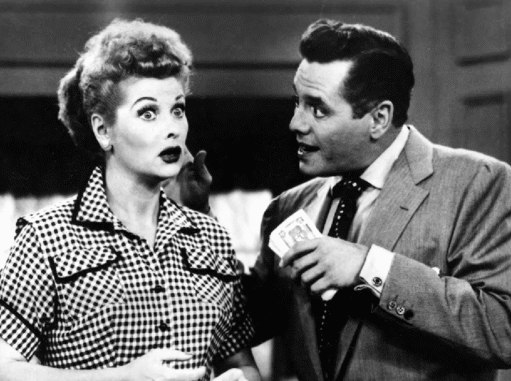
During rehearsals for I Love Lucy, crew members surprised Ball and Arnaz with a cake for their 15th wedding anniversary. The duo captured a playful photo together where they made suprised looks for the cameras.

Lucille Ball and Desi Arnaz in Forever, Darling

getty

Following the success of their film The Long, Long Trailer, the couple starred in the romantic comedy Forever, Darling. The 1956 film followed Ball as a neglected wife who tries to save her marriage with the help of a guardian angel.

Lucille Ball and Desi Arnaz Celebrate Their Wedding Anniversary

getty

In this photo from the 1950s, the two sported matching outfits as they celebrated their wedding anniversary with a fun party and cake that had a miniature version of them as a topper.

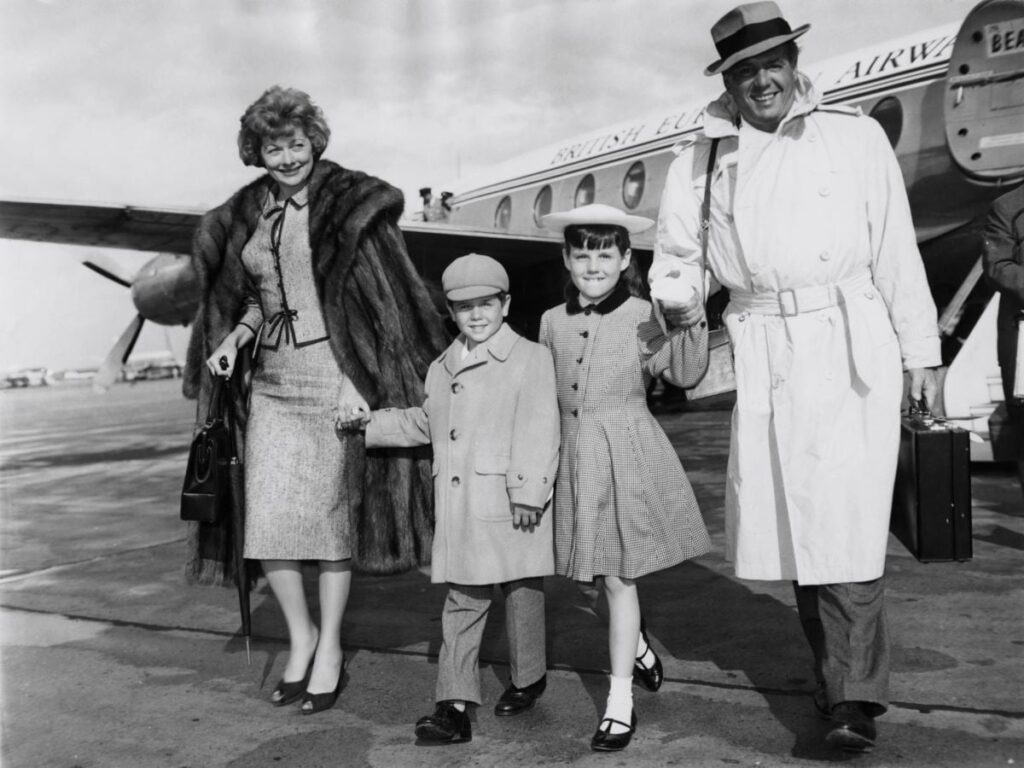
Lucille Ball and Desi Arnaz With Their Kids

getty

Following a trip to Naples, the couple was spotted with their children, Lucie and Desi Jr., at London Airport in June 1959.

The couple divorced the following year as a result of Arnaz’s alcoholism, which put a strain on their marriage throughout the years.

Despite moving on with other people later in life, the couple shared an “unconditional love for each other” that “never went away,” their daughter Lucie recalled to PEOPLE.

“They gave the country this wonderful creation, but they never got what they wanted — to stay together,” she said. “… [But] they loved each other until the end.”

Catherine O’Hara, Celebrated Actress from Film and Television, Dies at 71

The world of film and television has been shaped by performers whose talent goes far beyond laughter, and Catherine O’Hara stands among the most unforgettable of them. Known for her warmth, originality, and expressive humor, she built a career that touched generations of viewers. From heartfelt family films to iconic comedy series, her performances carried both wit and emotional depth, making her one of the most admired actresses in modern entertainment. Her legacy is not only measured by awards and roles, but by the joy and connection she brought to audiences around the world.

Born in Toronto in 1954, Catherine O’Hara grew up in a large, hardworking family where creativity was encouraged but success was never guaranteed. Her journey into comedy began modestly, with early experiences in school theater and later at the renowned Second City comedy troupe. The path was not easy—she faced rejection, self-doubt, and uncertainty—but her persistence shaped her distinctive style. Through years of dedication, she developed a voice that was both fearless and deeply human, proving that true artistry often emerges from resilience rather than instant recognition.

Her breakthrough came through sketch comedy and television, where she became a standout presence on SCTV and collaborated with future legends of comedy. Rather than chasing fame, she chose projects that aligned with her values and creative instincts. Over time, she transitioned seamlessly into film, appearing in acclaimed productions and beloved classics. Many viewers remember her as the caring mother in Home Alone, while a new generation discovered her brilliance through the unforgettable character Moira Rose in Schitt’s Creek. Each role reflected her rare ability to balance humor with sincerity, making her characters feel real and relatable.

Beyond her professional achievements, Catherine O’Hara’s story is one of quiet determination and artistic integrity. She demonstrated that success does not always follow a straight line, and that authenticity can be more powerful than popularity. Her contributions to comedy and storytelling continue to inspire actors and audiences alike. While her career spanned decades, her influence remains timeless—reminding us that laughter, empathy, and imagination can leave a lasting mark long after the curtain falls.

Popular

My Entitled Daughter In Law Tried To Trap Me As An...

0
The complex emotional landscapes of multigenerational families frequently feature subtle, deeply hidden power dynamics where younger generations mistakenly conflate a grandparent’s unconditional love with...