Entertainment

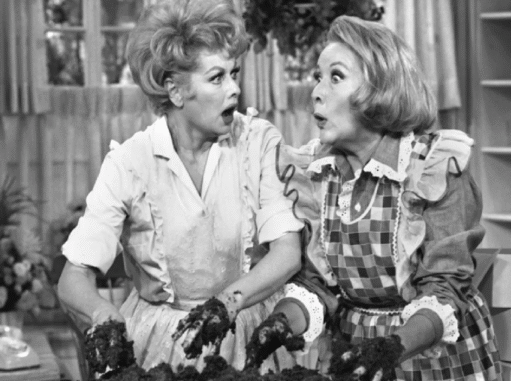
Looking back at the brilliant life of Lucille Ball: The immortal “Queen of Comedy”

Lucille Ball and Desi Arnaz had simultaneously one of the most romantic and chaotic marriages in Hollywood. While they were together for two decades, tying the knot in 1940 and remaining married until 1960, their marriage was marred by infidelity, addiction issues, complicated feelings stemming from multiple miscarriages, and the pressures that came with being the most famous couple on television. Just four years into their marriage, Lucille filed for divorce from Desi, although her claim was quickly dismissed when they reconciled not long after. And a decade into their marriage, they created and starred in I Love Lucy together.

The couple welcomed two children while together, with their oldest, daughter Lucie Arnaz, now 74, spotlighting the early years of their relationship and marriage in a new book, Lucy & Desi: The Love Letters, which includes several of the letters saved by Lucille over the years, featuring her correspondences with Desi primarily when he was away during World War II.

© Getty Images

Lucille and Desi were married from 1940 to 1960

“It wasn’t unusual that there were letters that they wrote to each other, but that she kept both of them,” she told People, coinciding with the book’s release on November 4. “That’s what’s so incredible to me…. And they were so beautifully kept.” However, one thing she highlighted was that the letters paint a very different picture of Lucille and Desi when you compare them to Lucy and Ricky.

From 1951-57, the couple played Lucy and Ricky Ricardo, a well-to-do young married couple living in New York City, interacting most often with their landlords Fred and Ethel Mertz. Lucy and Ricky get into several scraps over the course of the series, with the former often asking for an extravagant demand from her husband, while the latter exasperatedly admonishes her and blurts: “Lucy! You’ve got some ‘splainin’ to do!”

© Getty Images

The couple co-created and starred in “I Love Lucy” from 1951-57

Behind the scenes, and away from their characters, Lucie describes them as “youthful, passionate, tempestuous, vulnerable” but also “complicated,” highlighting some of the more tough moments in their marriage, specifically in the latter half, while their show was taking off. “Maybe the last 10 years or 8 years of the marriage were uncomfortable and very hard for them both, but after they separated, everything softened.”

© Getty Images

They welcomed two children while together, a daughter named Lucie Arnaz and a son named Desi Arnaz Jr.

They remained in each other’s lives throughout despite separating. “They didn’t leave each other. They were in each other’s lives forever, for always — they just weren’t married.” She highlights how strong their bond was with passages from her mom’s letters like: “I think of you instantly upon waking– all day – all nite – until I go to sleep again. Maybe that’s why you sounded so kinda sad + bored with me last nite.”

© Getty Images

“Maybe the last 10 years or 8 years of the marriage were uncomfortable and very hard for them both, but after they separated, everything softened.”

Despite finding love with others over time, Lucie saw how much her parents’ relationship still endured. “They were married to other people, but they were still a couple in a weird way, you know … they respected each other’s marriages and each other’s partners as something that made more sense, maybe — Maybe those people were better for them at this particular time in their life, but I don’t think it was ever as passionate as it was with just the two of them.”

Farewell, Lucille Ball: The woman who changed the history of world television

In 1933’s Roman Scandals, Lucille Ball kicked up her heels in a circle of gorgeous women dressed alike in blonde wigs and tunics. The ancient Rome-set musical, starring comedian Eddie Cantor, marked her big-screen debut as a Goldwyn Girl.

Like so many young starlets arriving in Hollywood in the 1930s, Lucille dreamed of being a movie star. Fate had other plans and for nearly 20 years, the future legend lingered on the cusp of film stardom. During that period, Lucille appeared in over 70 films in many genres, earning herself the nickname Queen of the B movies.

Lucille’s mother, Dede, encouraged her daughter’s dreams from a young age. “She was a pioneer spirit,” Lucie Arnaz tells Closer of her grandmother. “You could go to her for anything, she was game for anything and she had a great cackling laugh.”

Lucille had been paying her rent as a model and Chesterfield cigarette girl in New York City when she heard of the opening among the Goldwyn Girls in Los Angeles. The first thing she did was call her mother, who was supportive of her move west. “She said do it,” says Sarah Royal, author of A.K.A. Lucy: The Dynamic and Determined Life of Lucille Ball.

In many of Lucille’s earliest film appearances, she has no lines. “She would hang around the studio, so she’d be on hand when someone said, ‘Hey, we need a pretty face to stand there,’” says Royal. “She became like a chorus member in the background.”

That was okay. For Lucille, no role was too small. “I loved being part of the business. I would have swept floors just to be in it,” she said.

She found mentors to guide her, including Lela Rogers, the mother of Ginger Rogers, who ran an acting workshop on the RKO lot. “Lela took the dungarees off us and put us into becoming dresses,” recalled Lucille, who was taught by Lela how to impress decision-makers and how to speak properly. “She made us read good literature to improve our English and expand our understanding of character.”

Lela would be among the first to note Lucille’s knack for comedy, calling her “a clown with glamour.” However, not everyone saw the same spark. Lucille appeared in comedies with both The Three Stooges and The Marx Brothers, but neither caused her career to catch fire. “She could have been a great star of the silent era but after sound came in the late 1920s, studio heads insisted that actresses be beautiful and glamorous. They could not take pratfalls,” says Kathleen Brady, author of The Life of Lucille Ball.

Comedian Buster Keaton recognized Lucille’s talent too and brought her to Columbia Pictures. “They made some films where she did all these crazy, funny things like get caught in a mudslide, jackhammer a foundation, and hang from a clothesline,” says Brady. “These films didn’t take the country by storm, but they showed what she could do.”

Lucille didn’t mind taking a pie to the face if it meant getting on screen, but she didn’t burn to do comedy. “What she really cared about was that she was an actress — that was a real calling to her,” says Brady. “She said, ‘I am an actress who has learned to execute in a comedic way what my writers write for me.’”

In pursuit of her silver screen dreams, Lucille allegedly was among the thousands of women — including established stars Joan Crawford, Tallulah Bankhead and Claudette Colbert — who put their bonnet in the running to play Gone With the Wind’s Scarlett O’Hara. Lucille didn’t get the part, of course, but she did coo over Fred Astaire in Follow the Fleet and play with Henry Fonda’s affections in The Big Street.

Film expert Ben Mankiewicz calls The Big StreetLured, and especially, Stage Door, with Katharine Hepburn and Ginger Rogers, among Lucille’s best film performances. “She’s funny. She’s smart,” he says. “Ironically, she’s the one who goes and gets a husband!”

If Desi Arnaz had not been cast in 1940’s Too Many Girls, Lucille might have continued to seek movie stardom. However, their marriage and her desire to start a family led her to move to radio and the nascent medium of television.

I Love Lucy would make Lucille one of the world’s biggest stars, yet she never got over her desire to be in movies. “She came from a generation who believed that to be a great star, you had to be a movie star,” film expert Robert Osborne said, noting that Lucille hoped her starring role in the 1974 musical Mame would be her triumph. “That was the movie that in her mind might win her an Academy Award and make her a movie star. And it didn’t,” he said.

Movie stardom would always elude her, but Lucille didn’t believe in giving up. “One of the things I learned the hard way was that it doesn’t pay to get discouraged,” she said. “Keeping busy and making optimism a way of life can restore your faith in yourself.”

Political Leaders Respond After Minneapolis ICU Nurse Alex Pretti Is Fatally Shot During Federal Immigration Enforcement Operation

Federal authorities are investigating a fatal confrontation that occurred during an immigration enforcement operation in Minneapolis, where ICU nurse Alex Jeffrey Pretti was shot by a federal agent. Video footage recorded by bystanders shows a tense scene on a snowy city street, with federal officers attempting to restrain Pretti amid shouting and whistles from nearby onlookers. In the footage, officers appear to push individuals back as they try to control the situation. Pretti is seen holding a phone as officers surround him, and moments later a gunshot is heard. The video does not clearly show the weapon being fired, but it ends with Pretti lying motionless on the pavement as officers step away. Officials say the situation escalated quickly and remains under active review.

Pretti, 37, was later identified by family members as the man killed in the incident. He was a U.S. citizen and worked as a registered nurse in the intensive care unit at the Minneapolis Veterans Affairs hospital. Colleagues described him as compassionate, dedicated, and deeply committed to patient care. Hospital staff said he was known for his calm presence and willingness to help both coworkers and veterans under his care. State nursing records confirmed his license was active, and court records showed no criminal history beyond minor traffic violations. Friends and coworkers expressed shock at his death, saying he was respected in both his professional and personal circles.

Family members said Pretti was passionate about social issues and cared strongly about environmental protection and human rights. His parents described him as gentle, thoughtful, and driven by a desire to make a positive impact. They said he often spent time outdoors with his dog and enjoyed hiking and biking. In recent years, he had become increasingly vocal about political and social concerns, particularly around federal immigration enforcement policies. Relatives said he attended protests to express solidarity with vulnerable communities and believed civic engagement was part of being a responsible citizen. They also stated that although he legally owned a firearm, they had never known him to carry it during public demonstrations.

The incident has sparked widespread public debate and political reaction at local and national levels. Federal officials have stated that Pretti was armed at the time of the encounter, while family members dispute that claim, saying available video footage does not show a weapon in his hands. Investigators are reviewing body-camera recordings, bystander videos, and forensic evidence to determine exactly what happened. Meanwhile, community members have gathered at memorial sites across Minneapolis to honor Pretti’s life and call for transparency in the investigation. As inquiries continue, many questions remain unanswered, and authorities have urged the public to await verified findings before drawing conclusions.

Minneapolis Identifies 37-Year-Old ICU Nurse Alex Pretti After Fatal Encounter With Federal Agents

In late January 2026, a federal immigration enforcement operation in Minneapolis resulted in the death of a local man, drawing public attention and raising questions about the circumstances surrounding the incident. Authorities confirmed that federal officers were conducting a targeted enforcement action when a confrontation occurred. During the encounter, an officer discharged a weapon, and the man later died from his injuries at a nearby hospital. Officials stated that the situation is still under review and that additional information will be released once investigations are complete. The event took place during a period of heightened federal immigration activity in the region, following other recent operations that had already prompted community concern.

Family members later identified the man as Alex Jeffrey Pretti, a 37-year-old registered nurse and U.S. citizen. Pretti worked in the intensive care unit at the Minneapolis Veterans Affairs hospital, where colleagues described him as dedicated, compassionate, and deeply committed to helping others. Born in Illinois, he studied nursing at the University of Minnesota and received his nursing license in 2021. Hospital staff and friends recalled him as someone who brought energy and kindness to the workplace, often going out of his way to support patients and coworkers alike. Outside of work, he enjoyed outdoor activities and had a strong appreciation for nature and environmental causes, according to his family.

Relatives shared that Pretti was socially aware and engaged in community discussions, sometimes attending public demonstrations to express concern about issues he cared about. They emphasized that he believed in peaceful expression and had a strong sense of empathy for others. His parents described him as thoughtful, passionate, and driven by a desire to improve the world around him. Friends also noted that he valued fairness and community involvement, traits that shaped many of his personal interests and activities. In the days following his passing, tributes appeared online and at local gatherings, reflecting the impact he had on those who knew him personally and professionally.

The incident occurred only weeks after another fatal encounter during a federal operation in Minneapolis, involving a local woman named Renee Nicole Good. Her death had already sparked vigils, community meetings, and calls for transparency from local leaders. Good was remembered as a creative individual, a mother, and a supportive neighbor whose loss deeply affected those around her. Together, the two cases have led residents to seek clearer communication and accountability regarding enforcement activities in their city. As official investigations continue, community members, families, and coworkers of both individuals are left mourning, while awaiting answers about how these tragic events unfolded and how similar situations might be prevented in the future.

Loved Ones Remember ICU Nurse Alex Pretti After His Death During Federal Enforcement Operation

The death of Minneapolis resident Renee Nicole Good during a federal immigration enforcement operation has drawn nationwide attention and renewed debate over public safety and law enforcement practices. Good, a mother of three, died earlier this week following an encounter with Immigration and Customs Enforcement officers. Authorities have confirmed that the federal agent involved in the incident was Jonathan Ross, an ICE Enforcement and Removal Operations officer stationed in Minnesota. The event has prompted community gatherings, public statements from city officials, and calls for greater transparency as investigations continue into the circumstances surrounding the encounter.

Recently released video footage has provided additional context to the moments leading up to the incident. The recording shows Good inside her vehicle speaking calmly to an officer before attempting to leave the area. The situation quickly escalated, ending in a fatal outcome that has since been reviewed by multiple agencies. Public reaction has been strong, with residents and local leaders expressing concern over the presence of heavily equipped federal enforcement teams operating in residential neighborhoods. At the national level, officials have offered differing interpretations of the event, reflecting broader divisions over immigration enforcement policy and public safety measures.

Jonathan Ross, 43, was identified by local media as the officer involved. A military veteran, Ross previously served in Iraq and later worked with the U.S. Border Patrol before joining ICE in 2015. Reports indicate he has also served as a firearms instructor and participated in joint task forces focused on security operations. Colleagues and records describe him as an experienced officer with years of fieldwork in enforcement roles. His background has drawn public interest as investigators seek to determine how prior training and experience factored into decision-making during the encounter.

Additional attention has been given to a previous on-duty incident in 2025 in which Ross was injured during an enforcement operation involving a vehicle stop. In testimony related to that case, he spoke about the challenges officers face during roadside encounters, noting that drivers sometimes appear uncertain or attempt to delay interactions. That earlier event has resurfaced as part of broader discussions surrounding officer safety and response protocols. Meanwhile, community members in Minneapolis continue to hold vigils in memory of Renee Good, remembering her as a devoted parent and creative spirit. As official reviews progress, city residents, advocacy groups, and federal agencies await findings that may shape future enforcement policies and community relations.

Political Leaders Respond Following the Passing of ICU Nurse Alex Pretti During Federal Enforcement Operation in Minneapolis

A fatal encounter during a federal immigration enforcement operation in Minneapolis has sparked widespread public attention, political debate, and grief within the community. The incident occurred during a targeted action by federal agents in late January 2026, when ICU nurse Alex Jeffrey Pretti was shot and killed. Pretti, a 37-year-old U.S. citizen and registered nurse at the Minneapolis Veterans Affairs hospital, was known among colleagues for his dedication to patient care. Authorities confirmed that the shooting took place during an Immigration and Customs Enforcement operation, though investigations into the precise circumstances remain ongoing. Community members gathered in the days following the incident to honor his life at memorial sites across the city.

State and city leaders quickly responded with strong statements calling for transparency and independent investigation. Minnesota Governor Tim Walz said the state would lead the review process rather than federal authorities, emphasizing the importance of public trust and accountability. Minneapolis Mayor Jacob Frey echoed concerns over the presence and conduct of federal enforcement operations within the city, urging cooperation between agencies while stressing public safety priorities. Meanwhile, President Donald Trump defended the actions of federal officers, stating that they were carrying out their assigned duties under difficult conditions. The differing responses from officials highlighted broader national discussions regarding immigration enforcement and law enforcement oversight.

Pretti’s family described him as compassionate, principled, and committed to helping others. In public statements, his parents expressed both grief and frustration, noting that their son worked in intensive care and dedicated much of his life to serving veterans. They disputed early claims suggesting he posed a threat during the incident, saying he was holding a phone and attempting to protect another individual. Federal authorities later stated that Pretti legally owned a firearm and that officers believed he was armed at the scene, though bystander footage released publicly did not clearly show a weapon. Investigators have indicated that all available video and witness accounts are being reviewed to determine an accurate timeline of events.

Friends and colleagues remembered Pretti as a caring professional with a strong interest in social and environmental issues. Records show he held an active nursing license and had no criminal history beyond minor traffic violations. Those who knew him said he often engaged in community activism and peaceful demonstrations, motivated by a desire to improve public welfare. As inquiries continue at both state and federal levels, officials have asked the public to allow the investigation process to proceed without speculation. The case has drawn national attention, raising questions about enforcement procedures, interagency coordination, and civilian safety during high-risk operations. For now, the city mourns the loss of a healthcare worker whose life ended during a moment of civic unrest, while authorities work toward establishing a clear and verified account of what happened.

How to Boil Eggshells for Practical Home Uses

Eggshells are often treated as kitchen waste, but with a little preparation they can become a helpful resource for your home and garden. These shells are naturally rich in calcium and have a sturdy texture that makes them useful in several everyday tasks. By cleaning and heating them properly, you can safely reuse eggshells instead of sending them to the trash. This simple habit supports a low-waste lifestyle and offers practical benefits without requiring special equipment or expensive products.

Before reusing eggshells, it is important to sanitize them. Rinse the shells to remove any remaining egg white, then place them in a pot of water and bring it to a gentle boil for about ten to fifteen minutes. After boiling, drain the water and let the shells dry completely on a clean towel or baking sheet. Once dry, they can be stored in a sealed container until needed. This step helps ensure cleanliness and prepares the shells for crushing, grinding, or general use around the home.

One popular way to use prepared eggshells is in gardening. Crushed shells can be mixed into compost or sprinkled lightly into garden soil to contribute natural minerals over time. Some gardeners also place coarsely broken shells around delicate plants as a physical barrier to slow down certain crawling pests. Eggshells can also serve as small seed-starting containers. Half shells filled with soil can hold herb or flower seeds, and when seedlings grow, the shell can be planted directly into the ground where it naturally breaks down. In the kitchen, finely crushed shells mixed with soapy water can act as a gentle cleaning scrub for cookware or sinks, offering a biodegradable alternative to synthetic scouring products.

While eggshells are versatile, they are not a cure-all, and it is best to use them for practical household purposes rather than health treatments. They should not replace professional medical supplements or treatments, and overly abrasive use should be avoided on delicate surfaces. When used thoughtfully, however, they can reduce waste and add small conveniences to daily routines. With simple preparation and a bit of creativity, eggshells can move from trash bin to useful resource, showing that many household items still have value long after their original purpose is complete.

The Doctor Who Held My Hand: A Story of Loss, Healing, and Hope

The day her son slipped on the playground and never woke up again changed everything. In a matter of hours, her world became quiet in the loudest way possible. Her husband, overwhelmed by grief and guilt, turned his pain into blame and walked away, leaving her alone with memories that felt heavier than any physical burden. In the hospital, among the machines and hushed voices, one doctor stayed by her side. The doctor didn’t offer perfect words—only a warm hand and a steady presence. “Hang on,” she said gently. “Don’t let the pain win.” Those words became the fragile thread that kept her moving forward.

The months that followed were slow and difficult. Some days she couldn’t bring herself to leave her bed; other days she forced herself to walk outside, letting sunlight remind her that the world still existed. She joined a support group, planted a small garden in her son’s memory, and began writing letters to him in a journal she kept locked away. The pain never vanished, but it softened into something she could carry without collapsing. She often wondered about the doctor who had helped her through the darkest moment, but she never expected to see her again.

Two years later, she recognized that familiar voice at a community event focused on child safety and healing. The doctor was there as a speaker, sharing stories about compassion in medicine and the importance of empathy. When their eyes met, recognition flickered, followed by a warm smile. She felt an overwhelming urge to hug the woman who had once held her hand in the hospital. But as they spoke privately, the doctor revealed something unexpected: her own child had been seriously injured in a similar accident shortly after they last met, and that experience had inspired her to dedicate her life to prevention and support for families. The revelation was shocking, not frightening, but deeply human—pain had shaped them both in different ways.

Instead of pulling away, she listened. They talked about loss, resilience, and the strange ways tragedy can lead people toward purpose. The doctor admitted that comforting grieving families had helped her heal too. Together, they decided to start a small awareness initiative in their community, teaching parents about safety while also creating a safe space for grief and hope. In that moment, she realized the doctor’s words had come full circle: pain had not won. It had transformed into compassion, connection, and a quiet promise that her son’s memory would help protect other children. And for the first time in a long while, her heart felt lighter—not because the past was forgotten, but because it had given rise to something meaningful.

I Learned Something Surprising Today

The microwave ring cover is a small but essential part of a microwave oven that many people barely notice. Located beneath the glass turntable, this circular component plays a key role in how the appliance operates. Because it is hidden from view once the turntable is in place, it is often misunderstood or mistaken as an optional piece. In reality, the ring cover is a carefully designed support system that helps the microwave function correctly. Understanding its purpose can help users maintain their appliance better and avoid unnecessary performance issues.

Designed from durable heat-resistant plastic, the microwave ring cover typically features small rollers or wheels evenly spaced around its surface. These wheels allow the glass turntable to rotate smoothly during operation. This movement is not just for convenience — it ensures that food is heated evenly by distributing microwave energy throughout the cooking process. Without stable rotation, certain areas of food may receive more energy than others, resulting in uneven heating. The ring cover also helps balance the weight of the turntable and any dishes placed on it, reducing strain on the microwave’s internal motor and preventing wobbling or slipping.

A common misconception is that the ring cover has little importance and can be removed if it becomes dirty or worn. Some users even discard it without realizing its purpose. However, operating a microwave without this part can cause several issues, including louder operation, inconsistent turntable movement, and uneven cooking results. Over time, it may also place unnecessary stress on the turntable motor, which could shorten the appliance’s lifespan. Keeping the ring cover clean and properly positioned ensures smooth performance and protects internal components from excess vibration and wear.

Beyond supporting turntable rotation, the ring cover contributes to quieter operation and improved stability. It acts as a cushion between the spinning glass tray and the microwave’s base, helping absorb minor shocks and vibrations during cooking. This not only makes the appliance run more quietly but also adds an extra layer of protection to internal parts. In short, the microwave ring cover helps ensure even heating, smooth rotation, reduced noise, and long-term durability. Though small and often overlooked, it is an important piece of the microwave’s overall system. By recognizing its role and caring for it properly, users can keep their microwave working efficiently for years to come.

Small Changes That Can Improve Your Night’s Sleep

Waking up during the night is a common experience that can leave many people feeling tired the next day. One moment you are resting peacefully, and the next you find yourself awake and unsure why. These interruptions can happen for many reasons, including natural sleep cycles, environmental factors, or everyday habits. While occasional nighttime wake-ups are normal, frequent disruptions can affect energy levels and overall well-being. Learning what influences your sleep patterns is the first step toward improving rest and creating more refreshing mornings.

A calm and comfortable sleep environment plays a major role in supporting steady sleep. Room temperature, light, and sound all influence how deeply you rest. A cool, dark, and quiet bedroom helps signal your body that it is time to sleep. Blackout curtains, eye masks, or white noise machines can be useful tools for reducing disturbances. Comfortable pillows and breathable bedding also contribute to relaxation, making it easier to fall back asleep if you wake briefly during the night.

Mental activity can be just as important as physical comfort. Thoughts often feel louder in the stillness of nighttime, especially if stress or worry is present. Creating a relaxing bedtime routine can help ease the transition into rest. Simple activities such as reading, gentle stretching, or practicing slow breathing can calm the nervous system. Limiting screen time before bed is also helpful, as bright light and digital stimulation can make it harder to settle down. Keeping a small notebook nearby to write down lingering thoughts may prevent the mind from staying overly alert when you wake.

Daily lifestyle habits influence sleep quality more than many people realize. Consuming caffeine late in the day, eating heavy meals close to bedtime, or drinking large amounts of fluids at night can lead to disrupted rest. Regular physical activity and consistent sleep schedules encourage healthier sleep patterns over time. If nighttime wake-ups happen often or lead to ongoing fatigue, seeking guidance from a healthcare professional can provide personalized support. With small, steady adjustments and mindful routines, it is possible to enjoy calmer nights, deeper rest, and brighter mornings.

Popular

My Family Laughed at Me for Marrying a Man Because of...

0
My parents spent years pretending their cruelty was humor. They mocked my husband’s height. They mocked his past. They mocked the way he looked in...