Entertainment

Denim’s Hidden Foundation: The Industrial Origin of the Blue Jean Rivet

Most people pull on a pair of jeans without noticing the small metal dots set into the corners of the pockets. They seem decorative now — part of the familiar look of denim. But those tiny fasteners were never meant to be style.

They were meant to keep clothing from falling apart.

In the late 1800s, denim wasn’t fashion. It was equipment. Miners, railroad workers, and laborers depended on sturdy clothing, yet the same problem kept repeating: pockets tore under weight and strain. A tailor named Jacob Davis watched men lose tools through ripped seams and realized the fabric itself wasn’t the weakness — the stress points were.

So he borrowed an idea from industry.

Copper rivets, normally used to reinforce heavy materials, were pressed into the corners of pockets where tension concentrated. The result was simple and effective: the fabric stopped tearing.

Davis partnered with Levi Strauss to patent the design in 1873, not to create a brand, but to solve a daily problem for working people.

The rivet works by spreading force across a wider area instead of letting it pull at one thread. Made from copper or brass, it resists rust and handles repeated pressure without breaking down. In early jeans, rivets appeared in even more places — including back pockets and near the fly — until riders complained the metal scratched saddles and furniture. The design shifted, always guided by use rather than appearance.

As denim slowly moved from workwear into everyday life, the rivet stayed.

Not because it looked good.
Because it worked.

Modern stitching can now replace much of its function, and some jeans no longer use metal at all. Yet many makers keep the rivets — not out of nostalgia, but as a quiet nod to craftsmanship rooted in durability. For some people, jeans feel incomplete without them. Not wrong — just disconnected from what denim was built to do.

The rivet is a small thing.

But it carries a larger lesson: the best designs are often born from need, not trend. They survive because they solve real problems.

More than a century later, fabrics are softer, styles change every season, and technology evolves — yet the stress of movement hasn’t changed. Those tiny metal points still hold where fabric would otherwise fail.

When you wear jeans, you’re not just wearing something fashionable.

You’re wearing a solution — refined over time, kept because it works, and passed down quietly through generations.

Sometimes progress isn’t about replacing what’s old.

It’s about recognizing what was built wisely in the first place.

And sometimes the strongest things are the ones so small we forget to notice them — until they’re gone.

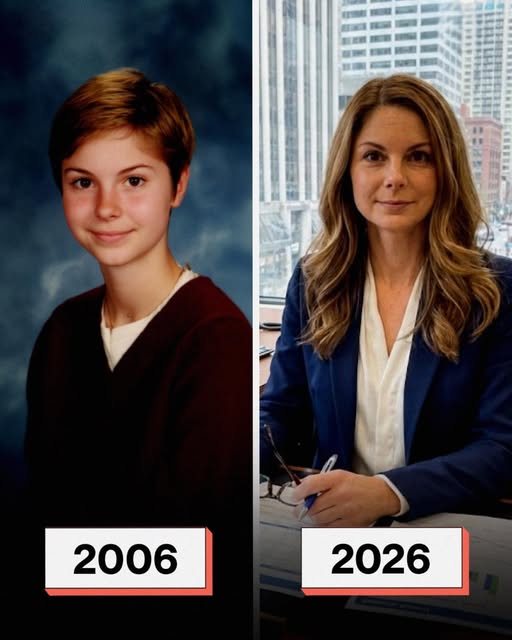
Their acne is severe!

The presence of severe, persistent, or late-onset acne is far more than a superficial concern; it is a complex dermatological condition that often serves as a signal from the body that professional intervention is required. While many view acne as a standard rite of passage during puberty, the transition of these skin issues into adulthood—or their sudden emergence later in life—demands a deeper understanding of human biology, endocrinology, and modern skincare science. When skin conditions escalate to include cysts, nodules, and deep, painful lesions, the situation moves beyond the efficacy of over-the-counter washes and enters the realm of clinical dermatology. Understanding why this happens and when to seek help is essential for both physical recovery and long-term emotional well-being.

Severe acne is primarily characterized by inflammatory lesions that sit deep within the dermis. Unlike a standard whitehead or blackhead, which are relatively superficial, cystic acne and nodules involve significant inflammation that can destroy healthy skin tissue. Cysts are large, soft, fluid-filled lumps that feel like a knot under the surface, while nodules are hard, painful, and do not contain pus. Because these lesions are located so deep within the skin, the body’s natural healing process often results in scarring—either atrophic pits or hypertrophic raised tissue. This is why a dermatologist is necessary: they provide access to systemic treatments, such as oral retinoids, antibiotics, or hormonal therapies, that can penetrate deep enough to arrest the inflammatory process before permanent structural damage occurs.

Late-onset acne, also known as adult-onset acne, is a specific phenomenon where individuals who may have had clear skin throughout their teenage years suddenly experience breakouts in their twenties, thirties, or even forties. This is particularly common in women and is frequently linked to hormonal fluctuations. The endocrine system is a delicate web of signals, and even minor shifts in androgen levels can stimulate the sebaceous glands to produce excess oil. This oil, combined with a buildup of dead skin cells and the presence of Cutibacterium acnes bacteria, creates a perfect storm for deep-seated inflammation. When acne appears for the first time in an adult, it is rarely just about skin hygiene; it is often a symptom of underlying shifts in the body’s internal chemistry, such as those related to stress, diet, or reproductive health.

Persistent acne represents a different challenge: the continuation of adolescent breakouts into the adult years without a period of clearance. For many, this suggests a genetic predisposition to follicular hyperkeratization—a fancy way of saying the skin cells don’t shed properly and instead clog the pores. When acne persists for decades, the skin remains in a chronic state of inflammation. This constant battle can lead to “acne conglobata,” a severe form of the disease where lesions become interconnected under the skin. Without the guidance of a specialist, individuals with persistent acne often find themselves in a cycle of “product hopping,” trying one consumer-grade cream after another, which often leads to further irritation and a compromised skin barrier.

The decision to see a dermatologist should not be seen as a last resort but as a proactive step toward health. A specialist does more than prescribe medication; they perform a comprehensive diagnostic evaluation. They may look for signs of Polycystic Ovary Syndrome (PCOS) in women, evaluate the impact of medications for other conditions, or investigate environmental triggers that the patient may have overlooked. Furthermore, the psychological impact of severe and persistent acne is profound. Studies have shown that chronic skin conditions are closely linked to higher rates of anxiety, depression, and social withdrawal. By addressing the root cause of the acne through clinical means, a dermatologist helps restore not just the skin’s texture, but the individual’s confidence and quality of life.

Modern dermatology offers a spectrum of solutions that far exceed what is available on a drugstore shelf. For the most severe cases, Isotretinoin remains the gold standard for its ability to permanently alter the oil glands and provide long-term remission. For those dealing with hormonal adult acne, spironolactone or specific oral contraceptives can regulate the signals that lead to breakouts. Additionally, in-office procedures like chemical peels, light therapies, and steroid injections for individual cysts can provide immediate relief and accelerate the healing process. The goal of professional treatment is twofold: to clear the active infection and to prevent the future formation of scars.

The concept of “skincare” has been somewhat diluted by social media trends and marketing, but for those with severe acne, the focus must remain on medical efficacy. The skin is the body’s largest organ, and when it is in distress, it requires more than a topical bandage. Late-onset and persistent acne are indicators that the body’s equilibrium is off, whether through genetics, hormones, or environment. By recognizing the severity of cysts and nodules and understanding that adult acne is a distinct medical condition, patients can bypass years of frustration. Consulting a dermatologist provides a clear, science-based path toward clear skin, ensuring that the face reflecting back in the mirror is healthy, vibrant, and free from the pain of deep-seated inflammation. Taking action early is the most effective way to protect the integrity of the skin for the decades to come.

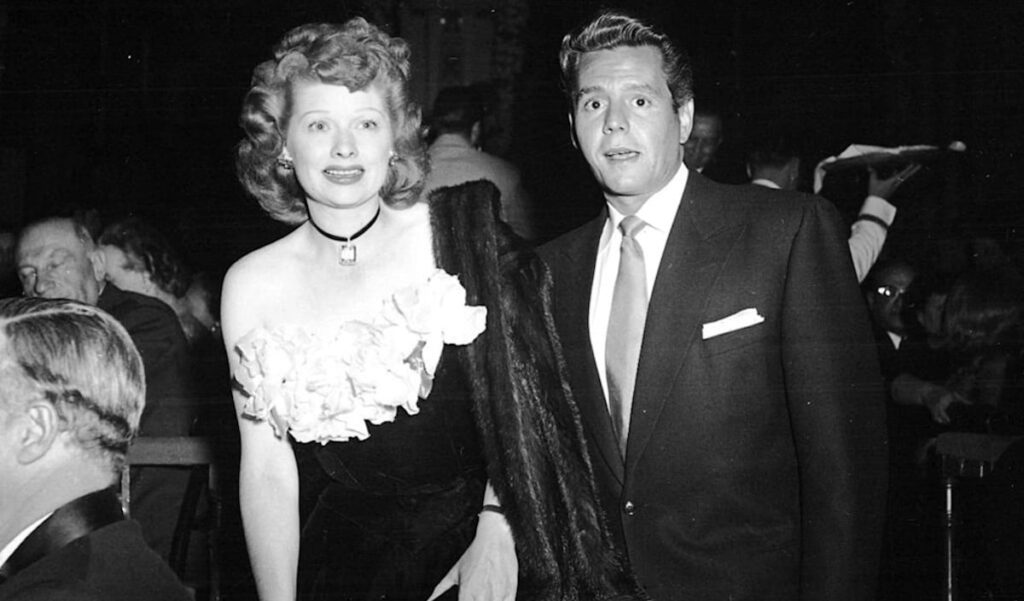
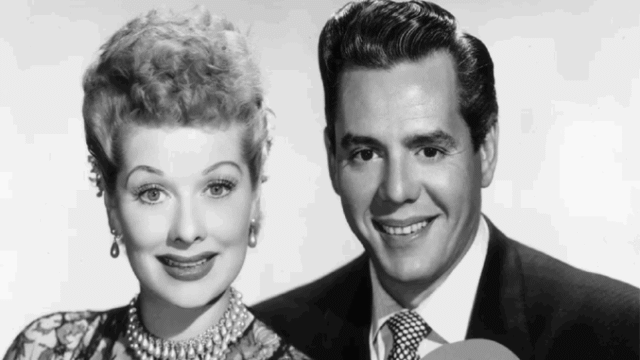
Lucille Ball Was Once a Professor at California State University

Many people don’t realize that Lucille Ball was also a professor at California State University.

Best known for her starring role in the classic sitcom I Love Lucy, Lucille Ball was an iconic comedian, actor, and producer. Many people don’t realize she was also a professor at California State University.

A pioneer in the television industry, the fiery redhead is credited for setting new standards, becoming the first female owner of a major independent television studio, Desilu Productions.

She had a broad range of characterization, expert timing, and a knack for physical comedy. The beloved actor shared her passion and knowledge of the industry with fortunate college students, eager to learn from the one-of-a-kind professional.

The queen of comedy

Born in 1911, Ball was destined to be in show business. At 15 years of age, she enrolled in drama school and started modeling using the name Diane Belmont. Catching the eye of a Hollywood studio executive in 1933, the young actor appeared in her first film Roman Sandals. As her career began to flourish, Ball took on more significant roles working alongside Henry Fonda, Bob Hope, and other well-known actors.

In 1950, Ball and Desi Arnaz, whom she married ten years prior, formed Desilu Productions, and together they produced the history-making comedy series I Love Lucy. The show transformed television, becoming the first sitcom to use 35mm film while recording in front of a live studio audience. Ball was also the first visibly pregnant woman to appear on television.

According to PBS, “Ball cultivated a personal image that corresponded to that of her television character and in doing so broke down a profound barrier between actor and audience.” They explained it as “a ‘parasocial’ relationship not unlike those flourishing today with TikTok and YouTube stars.” PBS claims, “For many Americans, tuning in every week to ‘I Love Lucy’ was like catching up with an old friend.”

The comedian taught a course at California State University

In 1979, long after the cameras stopped rolling on the set of I Love Lucy, the acclaimed actor taught a course at California State University, Northridge. Hired as an assistant professor, she instructed film students in a three-credit course, “Television and Film Aesthetics,” which analyzed film and television programming.

According to The Wrap, Ball said in an interview with the LA Times, “I try to teach them the art of taking care of themselves in every way so someone else doesn’t have to.” She continued, “All they hear about is rejection. I try not to talk about rejection. I teach how to do the best for you – don’t be a patsy, a pushover – and to take that step ahead every day.”

Ball was also a workshop instructor

Ball also taught a series of workshops in the 1950s at Ben-Ari’s Actors and Directors Workshop. According to The Lucypedia, Ball gave 18 lectures about the art of comedy. She instructed and inspired over 90 students in two nine-week semesters with people of varying ages and backgrounds.

The workshops were on a volunteer basis, and she did not receive any pay, with Ball saying at the time, “I do it because it’s fun and because it’s always a good thing when there are people who are willing to work hard and learn and improve themselves in this industry.”

The two-hour sessions included informal lectures and scenes performed by the students, to which Ball would offer honest critique. The beloved actor claimed, “I am not a teacher, but apparently, I do have something to say that is helpful.”

‘I Love Lucy’: Lucille Ball and Desi Arnaz Had a ‘Horrible’ Divorce Because She Never Accepted His Mistress, Daughter Claims

Lucille Ball and Desi Arnaz had a delightfully silly marriage on ‘I Love Lucy’. Behind the scenes, life wasn’t so funny.

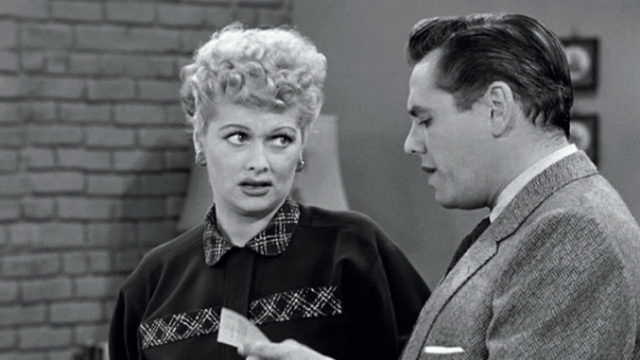
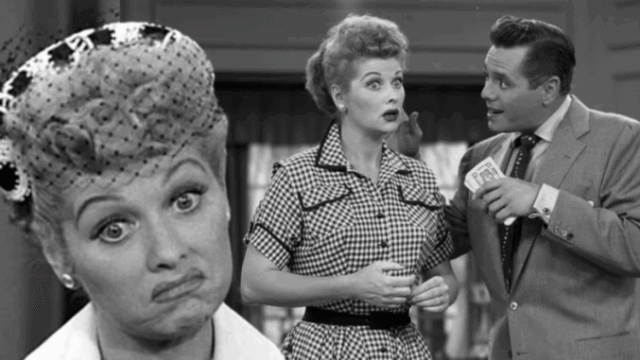
I Love Lucy is one of the most iconic, best-loved sitcoms in television history. The series ran for six seasons from 1951 to 1957 and quickly gained the attraction of most Americans, making it the most-watched show on television. It was all thanks to the fun comedy and, mostly, the stars of the show.

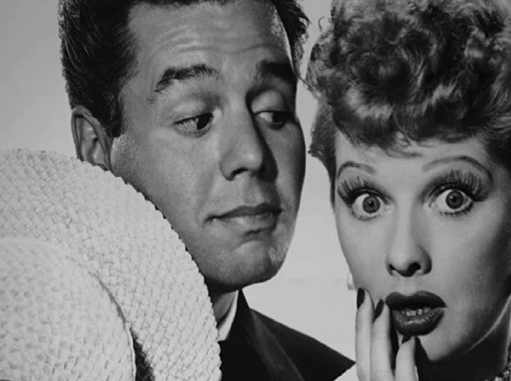
The sitcom starred Lucille Ball (Lucy Ricardo) and her real-life husband Desi Arnaz (Ricky Ricardo). The pair delighted fans with their offbeat relationship, which often involved Lucy getting into trouble and Ricky becoming frustrated with her.

Their fights on I Love Lucy was the stuff of comedy. However, the fights Ball and Arnaz had at home eventually led to the breakup of their marriage in the real world.

Lucille Ball refused to do ‘I Love Lucy’ without her husband

After successfully playing a zany housewife on the radio show My Favorite Husband, CBS network execs offered to develop the program into a television series starring Ball. The actor, who had plenty of experience in B-list films but still hadn’t achieved superstardom, agreed to the role on one condition: she wanted Arnaz to play her husband.

Execs didn’t love the idea. Their biggest issue was Arnaz was Cuban while Ball was a redhead, and they didn’t see audiences responding well to the pairing. Also, they didn’t love the I Love Lucy pilot the couple pitched. Ball and Arnaz took their show on the road as a vaudeville act to convince CBS it would work.

They were right. In a short time, I Love Lucy became the most popular show in the country. Even after the series ended in 1956, the pair went on to star in a series of comedy specials called The Lucy-Desi Comedy Hour, which they produced themselves.

The couple had a ‘horrible’ divorce due to infidelity

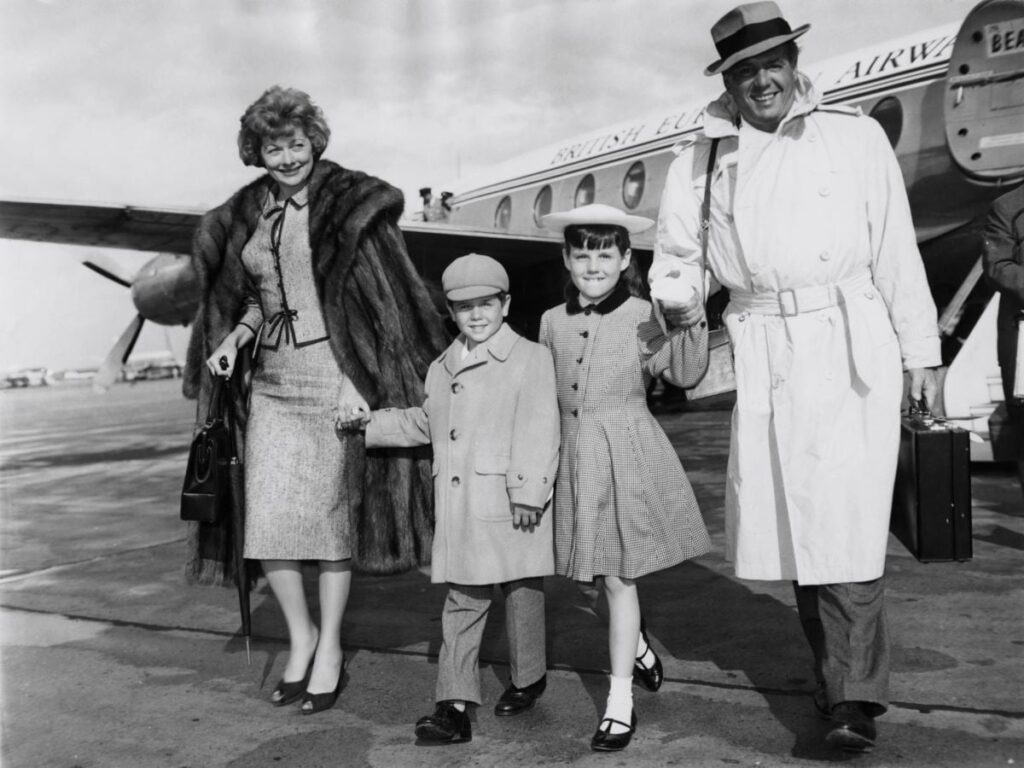
Ball and Arnaz’s daughter, Lucie, revealed to Closer Weekly in 2018 that her parents’ marriage was far from ideal. The couple divorced in 1960 though they stayed friends even after their split.

“There was a lot of anger and screaming. Their divorce was horrible. And then there was the alcoholism. I had preferred those things had never been there,” Lucie said. “We didn’t have any abuse, but we did go through some pretty hard stuff and that’s why my parents didn’t stay together.”

The fighting had a lot to do with Arnaz being unfaithful. “My father loved women, and Latin American countries have a whole different code of ethics,” Lucie explained to Chicago Tribune.

“There’s the home with the wife, and the house with the mistress. Each is highly respected by the other. Unfortunately, my mother was from upstate New York, and my father couldn’t get her to go along with that concept.”

Lucille Ball remarried but never let go of her first love

Ball moved on and married comedian Gary Morton in 1961. The couple remained together until Ball’s death in 1989. However, rumor has it she always carried a torch for her first husband and even claimed to get along with him better after their divorce.

Arnaz also remarried in 1963 but his love for Ball didn’t fade either. “I Love Lucy was never just a title,” the actor said even until his dying day, Mental Floss reported.

‘I Love Lucy’: Desi Arnaz Jr. Began a Whirlwind Romance With an Older Actor – and Lucille Ball Did All She Could to Stop It

The lives of celebrity children are often played out under the unforgiving spotlight of public scrutiny, a truth that the son of television royalty, Desi Arnaz Jr., learned the hard way. Born to the beloved icons Lucille Ball and Desi Arnaz, “Little Ricky” grew up in the most famous family in America. But when he came of age, his turbulent romantic life began to generate the kind of tabloid headlines that his mother, the eternally image-conscious Lucille Ball, desperately sought to avoid.

The most controversial of these early relationships was Desi Jr.’s whirlwind, high-profile romance with actress Patty Duke. The relationship was not only complicated by a significant age gap but soon escalated into a public scandal involving pregnancy and disputed paternity—a situation that pushed Lucille Ball to use every ounce of her considerable Hollywood influence to protect her son’s reputation and ultimately, break up the couple.


The Star-Crossed Lovers: Desi Jr. and the Age Gap

In the late 1960s, Desi Arnaz Jr. was a handsome young man, following his parents into show business and appearing regularly on his mother’s subsequent sitcom, Here’s Lucy. He represented a clean-cut, new generation of Hollywood scions.

Patty Duke, in contrast, was already an established star, known for The Patty Duke Show and her Oscar-winning dramatic role in The Miracle Worker. By the time their paths crossed, Duke was recently divorced and, at 23 years old, was nearly six years Arnaz Jr.’s senior. Desi Jr. was just 17 when the relationship began.

The age disparity was a significant talking point in the press, but it was the scandalous circumstances and the very public nature of their relationship that enraged Lucille Ball.

Lucille Ball’s Priority: Controlling the Narrative

Lucille Ball was fiercely protective of her children’s image and her family’s legacy. Having navigated her own highly public and frequently tumultuous marriage to Desi Arnaz Sr. (which was plagued by his infidelities and alcohol abuse), Ball understood the power of a carefully constructed public narrative.

She had spent years rebuilding her career and her family’s reputation after the divorce from Arnaz Sr., and she was determined not to let her son’s youthful indiscretion destroy the clean image she had worked so hard to maintain.

Ball was a formidable, even intimidating, presence in Hollywood. As the head of Desilu Productions (and later, her own production company), she was one of the most powerful women in the industry. She had little patience for drama that threatened her professional empire, and her disapproval of Duke was immediate and absolute.


The Paternity Scandal and Ball’s Intervention

The relationship between Desi Jr. and Patty Duke was already media fodder, but it exploded into a full-blown scandal in the spring of 1970.

  1. The Breakup: The volatile romance ended, only for Duke to announce shortly afterward that she was pregnant.
  2. The Paternity Claim: Duke initially asserted that Desi Arnaz Jr. was the biological father of her unborn child. Given the public nature of their recent relationship, this claim threw both families into chaos.
  3. The Media Frenzy: The combination of a 17-year-old son of a TV legend being named as the father of a baby born to an older, recently divorced actress was tabloid dynamite. The story was everywhere, and it was precisely the kind of lurid, salacious headline that Ball believed could ruin her son’s promising career before it ever truly began.

For Lucille Ball, this was not just a personal problem; it was an existential threat to her family’s reputation. She reportedly did all she could to discourage the relationship, including outright forbidding her son from continuing to see Duke. Her actions were driven by a desire to shield her son from the consequences of a relationship that she believed was reckless and potentially exploitative of a vulnerable young man.

The Chaotic Aftermath

The scandal continued to spiral out of control, involving other high-profile figures. At one point, to try and quell the relentless press coverage and provide a father for the baby, Duke briefly married a man named Michael Tell. The marriage lasted a mere 13 days before being annulled, further confusing the issue.

Ultimately, Duke married actor John Astin (Gomez from The Addams Family), who graciously accepted the child, Sean Astin (later famous for The Goonies and The Lord of the Rings), as his own son. For years, the paternity remained a murky issue, with Duke at various times telling her son that either Arnaz Jr., Astin, or Tell was his biological father.

The drama only subsided years later when Sean Astin, seeking the truth about his biological roots, had a DNA test done that conclusively proved Michael Tell was his father. Despite the confusion, Sean Astin developed close, loving relationships with all three men, famously referring to them as his “four dads” (including his stepfather, Michael Pearce).


Desi Jr.’s Next Starlet and Lucy’s Continued Interference

The Patty Duke episode was the most explosive, but it was not the last time Lucille Ball attempted to manage her son’s romantic entanglements.

After the dust settled, Desi Arnaz Jr. entered into another highly publicized romance with a celebrity who was again older and part of Hollywood royalty: Liza Minnelli. Liza, the daughter of Judy Garland and director Vincente Minnelli, was 26 years old when she and 19-year-old Desi Jr. began dating in 1971.

The seven-year age gap again raised eyebrows, particularly among the older Hollywood guard. Lucille Ball reportedly disapproved of this relationship as well, wary of the complex, high-wire life Minnelli lived.

However, Arnaz Jr. and Minnelli were serious, moving in together and even discussing marriage. Their romance, while less scandalous than the Duke affair, cemented Desi Jr.’s image as a heartthrob drawn to older, established, and complicated Hollywood starlets—much to his mother’s chagrin. Ball’s inability to fully control her children’s private lives served as a painful counterpoint to her ability to control virtually every aspect of her professional life.


The Legacy of a Protective Mother

In the end, Lucille Ball’s frantic efforts to stop her son’s romances, while perhaps heavy-handed, were born out of a profound and understandable maternal protectiveness. She had lived through the chaos of a Hollywood marriage and didn’t want her children to repeat her mistakes in public.

Desi Arnaz Jr. eventually stabilized his life, stepping away from the Hollywood scene, overcoming his own struggles with addiction, and eventually settling into a long and happy marriage with his wife, Amy Arnaz.

The dramatic chapter with Patty Duke remains one of the most legendary, complicated, and publicly documented celebrity relationships of the era. It serves as a reminder that even the children of television’s most beloved comedian are not immune to the kind of complex, messy, and very real-life drama that a mother, even a queen like Lucille Ball, simply cannot prevent.

My School Bully Applied for a $50,000 Loan at the Bank I Own – What I Did Years After He Humiliated Me Made Him Pale!

I can still remember the smell, even after two decades.

Industrial wood glue. Burnt hair. Fluorescent lights buzzing overhead.

It was sophomore chemistry. I was sixteen — quiet, serious, and doing everything I could to disappear into the back row. Blending in felt safer than being seen.

But he made sure I was seen.

He sat behind me that semester in his football jacket, loud and adored. While Mr. Jensen droned on about covalent bonds, I felt a sharp tug at my braid. I assumed it was nothing.

When the bell rang and I tried to stand, pain ripped across my scalp.

The laughter came before I understood why.

He had glued my braid to the metal frame of the desk.

The nurse had to cut it loose. I went home with a bald patch the size of a baseball. For the rest of high school, they called me “Patch.”

Humiliation like that doesn’t evaporate. It hardens. It settles into bone.

If I couldn’t be popular, I decided I would be powerful.

Twenty years later, I owned controlling interest in the regional community bank. I no longer walked into rooms with my head down. I reviewed high-risk loans personally.

Two weeks before everything shifted, my assistant placed a file on my desk.

“You’ll want to see this one.”

The name froze my fingers.

Mark H.

Same town. Same birth year.

I don’t believe in fate. But I understand irony.

My former bully was asking my bank for $50,000.

On paper, it was an easy denial. Ruined credit. Maxed-out cards. Missed car payments. No collateral worth mentioning.

Then I saw the reason.

Emergency pediatric cardiac surgery.

I closed the file and told my assistant to send him in.

When he stepped into my office, I barely recognized him. The confident linebacker was gone. In his place stood a thin, exhausted man in an ill-fitting suit, shoulders folded inward as though life had pressed him down.

He didn’t recognize me at first.

“Sophomore chemistry was a long time ago,” I said calmly.

He went pale.

“I… didn’t know,” he whispered, glancing at my nameplate. Hope drained from his face. “I’m sorry to waste your time.”

“Sit.”

His hands trembled when he obeyed.

“I know what I did to you,” he said quietly. “I was cruel. I thought it was funny. But please… don’t punish her for that.”

“Your daughter?”

“Lily. She’s eight. Congenital heart defect. Surgery in two weeks. I can’t lose her.”

The rejection stamp sat near my elbow. So did the approval stamp.

“I’m approving the full amount,” I said finally. “Interest-free.”

His head snapped up.

“But there’s a condition.”

I slid the contract toward him and told him to read the handwritten clause at the bottom.

He stared at it and whispered, “You can’t be serious.”

“I am.”

He would speak at our former high school’s annual anti-bullying assembly the next day. He would describe exactly what he did to me — the glue, the humiliation, the nickname — using my full name. The event would be recorded. If he minimized or refused, the loan would be void.

“You want me to humiliate myself.”

“I want you to tell the truth.”

Silence stretched between us.

“Claire… I was a kid.”

“So was I.”

He stared at the page for a long time. Pride fought with fatherhood.

Then he signed.

The next morning, I stood at the back of our old auditorium beneath a banner that read: Words Have Weight.

He walked onto the stage as though stepping into fire.

“I played football,” he began. “I thought popularity made me important.”

He paused — long enough to soften it. To generalize. To protect himself.

Then he saw me.

“I glued her braid to her desk,” he said.

Gasps rippled through the room.

“I led the nickname. I encouraged the laughter. It wasn’t a joke. It was cruelty.”

The auditorium went silent.

“We were old enough to know better.”

Then he looked directly at me.

“Claire. I’m genuinely sorry. You deserved respect. I was wrong.”

It didn’t sound rehearsed. It sounded stripped raw.

“I have a daughter,” he continued. “When I imagine someone treating her the way I treated Claire, it makes me sick. That’s when I understood what I’d done.”

Applause rose slowly, then fully.

Afterward, a teenage boy approached him near the stage. Mark knelt and spoke softly with him. I couldn’t hear the words, but I could see sincerity.

“You did it,” I said when the crowd thinned.

“I almost didn’t,” he admitted. “But I’ve protected the wrong image for twenty years.”

“You fulfilled the condition,” I said. “The hospital will receive the funds within the hour. But come back to the bank with me.”

His brows lifted.

“Some of your debt isn’t recklessness,” I told him. “It’s medical bills and failed contracts. We’ll restructure it. Consolidate the high-interest balances. I’ll oversee it personally. Follow the plan for a year, and your credit will recover.”

“You’d do that?”

“For Lily,” I said. “And because accountability should lead to growth.”

He broke then, tears spilling freely.

“I don’t deserve this.”

“Maybe not before,” I replied. “But now you do.”

We hugged — not to erase the past, but to acknowledge it.

As we left the school, I realized something had shifted inside me. Power isn’t just the ability to deny. It’s the ability to decide who you become when given the chance.

For the first time in twenty years, the memory of that day didn’t sting.

It felt resolved.

So tell me — was I right to make him relive it publicly? Or did I cross a line?

Let’s talk about it.

My Son Threw Me Out With Only a Garage, Inside Was a Secret He Never Imagined

The smell was a suffocating blend of stagnant motor oil and the dry, metallic tang of undisturbed dust. I stood in the dark, my fingers fumbling with a jagged, unfamiliar key while the echo of my son’s final words played on a loop in my mind.

“You’re just a useless old woman, Mom. What would you even do with a real inheritance? Dad knew that.”

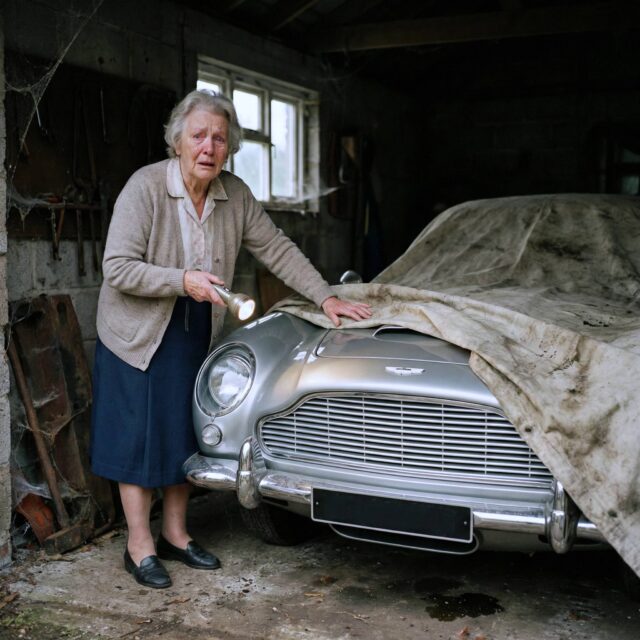
The lock yielded with a heavy, industrial thunk. As I pushed the door open, the hinges screamed in protest, a fitting soundtrack for the wreckage of my forty-two-year marriage. I clicked on my flashlight, expecting to see a graveyard of rusted lawnmowers and forgotten junk. Instead, the weak beam caught a glimmer of silver—a polished, chrome-toothed snarl that froze the air in my lungs.

Before I can tell you what I found, you have to understand how I ended up homeless on my birthday, clutching a single suitcase and a brass key that felt like a mockery of a life spent in service to my family.

The nightmare began that morning in the mahogany-shrouded office of Mr. Hoffman, our family attorney. My son, Jonathan, sat across from me, looking every bit the corporate predator in a tailored Italian suit. I felt small in the black dress I’d worn to my husband Robert’s funeral only three weeks prior.

Mr. Hoffman looked pained as he adjusted his glasses. “Before I read the last will and testament,” he began, “I must state that these instructions were drafted with absolute clarity by Mr. Campbell.”

The reading was a blur of legal jargon until the hammer fell. “To my son, Jonathan Campbell, I leave the penthouse residence and my primary investment portfolio. To my beloved wife, Susan, I leave the property at 1420 Industrial Parkway—the garage and its contents.”

The silence that followed was broken by Jonathan’s smug chuckle. He leaned over, his hand squeezing my shoulder with a pressure that felt more like a threat than a comfort. “Don’t worry, Mom,” he whispered. “I’ll make sure you’re taken care of.”

But “taken care of” meant being shown the door that very evening. Jonathan had dropped my suitcase in the marble foyer of the penthouse we had called home for fifteen years. “I’m turning Dad’s study into a home office. I need you out by tonight. You can go to Aunt Helen’s, or,” he sneered, “there’s always that dump of a garage.”

Driven by a mix of shock and a sudden, burning spark of defiance, I didn’t go to Helen’s. I drove to the industrial district. I drove to the “dump.”

As I stepped further into the structure, my flashlight swept over three shapes draped in custom-fitted cloth. I reached for the first one, my hand trembling as I pulled back the fabric. It slid away like silk to reveal a 1964 Aston Martin DB5 in pristine Silver Birch. It was a masterpiece of rolling sculpture.

I moved to the second: a 1956 Mercedes-Benz 300SL Gullwing, its deep blue paint reflecting my light like a dark ocean. The third was a 1967 Ferrari 275 GTB/4, glowing in a shade of red so deep it looked like a heartbeat.

I found a light switch and the space was suddenly flooded with brilliant, recessed LED lighting. This wasn’t a garage; it was a climate-controlled vault with epoxy floors and high-end security. Taped to the wall was a white envelope with my name scrawled in Robert’s looping hand.

“My Dearest Susan,” the letter began. “If you are reading this, I am gone. Six years ago, when I received my diagnosis, I knew I had to protect you. Not just from the world, but from our own son.”

The letter explained that Robert had watched Jonathan grow into a man who valued assets over people. He knew that if he left everything to me openly, Jonathan would have bullied me into “managing” it until I had nothing left.

“The cars are worth twelve million dollars,” the letter continued. “But they are just the beginning.”

Behind a framed photograph of us in Venice lay a digital safe. Using our anniversary—0614—I opened it to find a leather portfolio that made my head spin. It contained deeds to apartment buildings in Seattle, commercial retail spaces in Chicago, and a boutique vineyard in Northern California. All held in a Living Trust that transferred solely to me the moment Robert passed.

The most poignant discovery was a deed to a small, fully furnished cottage in Carmel-by-the-Sea—the town where we had spent our happiest summers.

I spent that first night in a small, hidden office within the garage complex. Robert had even stocked a closet with clothes in my size, tags still attached. He hadn’t just left me money; he had left me a fortress of dignity.

The next morning, I met with Marcus Weatherby, the curator Robert had hired to maintain the collection. “Robert was methodical,” Marcus told me over coffee. “He wanted to leave you something tangible, something beautiful that increased in value every second it sat in the dark. He called it your ‘Independence Fund.’”

As Marcus walked me through the provenance of the Ferrari, my phone rang. It was Jonathan.

“Mom? Why haven’t you called Aunt Helen? Anyway, I need you at the penthouse by nine to clear out your junk. The designers are arriving.”

“I’ll be there, Jonathan,” I said, my voice steadier than it had been in years.

I arrived at the penthouse precisely at nine. Jonathan was already there, pacing the marble floors and barking orders into his headset. He looked at me with a mixture of pity and annoyance. “Did you sleep in your car, Mom? Honestly, if you’d just listen to me—”

“I’m not here to listen, Jonathan,” I interrupted. I handed him a small, elegant folder.

“What’s this? An invoice for a moving van?”

“It’s a copy of the deed to the property in Carmel,” I said. “And a summary of the Living Trust your father set up. It turns out the ‘garage’ contained more than just stale oil.”

Jonathan flicked through the pages, his face draining of color as he saw the valuations. Twelve million in cars. Forty million in real estate. A dividend income that dwarfed his corporate salary.

“This… this has to be a mistake,” he stammered, his bravado collapsing. “Dad wouldn’t… we need to consolidate this. I can help you manage these properties, Mom. We should move you back in here and—”

“No,” I said, reaching for my suitcase. “You were right, Jonathan. This penthouse is yours. It’s exactly what you deserve—a high-rise box of glass and cold stone. But as for me, I think I’ll go to the coast. I have a cottage to open.”

I walked toward the elevator, but paused at the door. “Your father gave you exactly what you wanted, Jonathan. He gave you the status. But he gave me the life. And just so you know, I’ve already instructed Mr. Hoffman to ensure my estate bypasses you entirely. Since I’m just a ‘useless old woman,’ I wouldn’t want to burden you with the responsibility.”

The doors slid shut on his stunned silence. As I drove my old Toyota out of the city, headed toward the salt air of Carmel, I looked at the brass key on the passenger seat. Robert had played a long game, a masterpiece of foresight fueled by a love I was only beginning to truly measure. I wasn’t just surviving; I was finally starting, with twelve million dollars of vintage steel in my rearview mirror and a horizon that belonged entirely to me.

My Astonishing Playground Discovery Reunited Me With My Missing Twin Son

My name is Lana. For five years, I believed I had buried one of my twin sons before I ever held him.

My pregnancy was fragile from the beginning. Complications confined me to bed rest. When labor began three weeks early, everything moved quickly — lights, urgency, voices I could barely follow. When I woke from the procedure, Doctor Perry sat beside me and told me gently that one baby had survived.

The other had not.

I went home with Stefan in my arms and an absence in my chest that never quite settled. I grieved quietly. I chose not to tell Stefan about the brother he had lost. I wanted his childhood free from sorrow he could not understand.

Five years passed.

One Sunday afternoon at the playground, Stefan froze mid-step. He pointed to a boy on the swings and said he knew him — from his dreams. Before I could respond, he ran toward him.

When I saw the child clearly, the air left my lungs.

The same brown curls. The same eyes. The same birthmark on the chin.

The boys stood facing each other, hesitant for only a second before reaching for each other’s hands. It was instinctive. Familiar.

Then I noticed a woman watching from nearby.

I knew her face.

She had been a nurse in my delivery room.

When I approached her, my voice was steady even though my body was not. I asked her why this child looked exactly like my son.

At first she denied it. Then she folded.

She admitted that my second baby had survived. She admitted she had withheld that truth from the attending physician. She believed I was too weak, too alone, to raise two infants after such a difficult birth. Her sister, Margaret, was struggling with infertility and a failing marriage. In her mind, she had solved two problems at once.

She had not asked me.
She had not told me.
She had decided.

What she called mercy was theft.

I did not scream. I did not strike her. I asked for facts. I demanded a genetic test. I involved attorneys and the hospital administration. Quiet steps, clear boundaries.

The results confirmed what my heart already knew.

The boy named Eli was mine.

When I met Margaret, I saw not a villain, but a woman shaken to her core. She said she had been told I relinquished my child willingly. She had built five years of love on a lie she did not create.

Pain had multiplied — not from cruelty alone, but from arrogance disguised as compassion.

I chose not to tear the boys apart. They had already lost enough. We began therapy. We built a shared custody arrangement that allowed truth to replace secrecy.

The authorities addressed the nurse’s actions through proper channels. I focused on my sons.

For five years, I mourned a child I believed dead.

Now I watch two boys sit side by side at the dinner table — arguing over toys, laughing at private jokes, sharing something wordless that only twins understand.

I cannot recover the years that were taken.

But I can guard the years ahead.

Love does not justify control.
Pity does not grant permission.

And no one has the right to decide what a mother can endure.

I once believed I had lost a son.

Now I know I was denied him — and found him again.

Grief taught me endurance.

Truth taught me courage.

And my boys — together — teach me every day that even broken stories can be rewritten with care

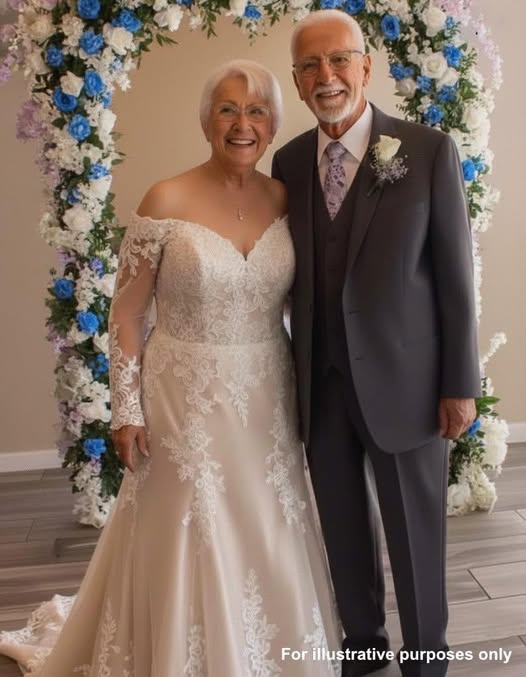
After Losing Our Spouses, I Marrieed My Childhood Sweetheart at 71 – But at the Reception, a Young Woman Warned Me, “He’s Not Who You Think He Is.”

I thought marrying my childhood sweetheart at 71 was proof that love always finds its way back. Then, at the reception, a stranger approached me and said, “He’s not who you think he is.” She slipped me an address. I went there the next day, convinced I was about to lose everything I’d just found.

I never thought I’d be a bride again at 71.

I’d already lived a whole life. I’d loved, lost, and buried the man I thought I’d grow old with.

My husband, Robert, passed away 12 years ago.

After that, I wasn’t really living. Just existing. Going through the motions. Smiling when I was supposed to. Crying when no one was watching.

My daughter would call and ask if I was okay. I’d always say yes. But the truth was, I felt like a ghost in my own life.

I stopped going to book club. Stopped having lunch with friends. I’d wake up each morning and wonder what the point was.

Last year, I made a decision.

I decided to stop hiding.

I joined Facebook. Started posting old photos and reconnecting with people from my past. It was my way of saying I was still here. Still alive.

And that’s when I got a message I never expected.

It was from Walter.

My first love. The boy who used to walk me home from school when we were 16. The one who made me laugh until my stomach hurt. The one I thought I’d marry back then, before life took us in different directions.

He’d found me on Facebook.

There was a photo from my childhood. Me at 14, standing in front of my parents’ old house.

He sent a simple message:

“Is this Debbie… the one who used to sneak into the old movie theater on Friday nights?”

I stared at the screen, my heart skipping.

Only one person on Earth would remember that.

Walter.

I stared at that message for a long time before I replied.

We started talking slowly at first.

Just memories. Small check-ins.

But something about it felt safe and familiar. Like putting on an old sweater that still fit perfectly.

Walter told me his wife had died six years ago. He’d moved back to town just the year before, after retiring.

He’d been alone since then. No children. Just him and his memories.

I told him about Robert. About how much I’d loved him. And how much it still hurt.

“I didn’t think I’d ever feel anything again,” I admitted one day.

“Me neither.”

Before I knew it, we were having coffee every week. Then dinner. Then laughing again in a way I hadn’t in years.

My daughter noticed the change.

“Mom, you seem happier.”

“Do I?”

“Yeah. What’s going on?”

I smiled. “I reconnected with an old friend.”

Six months later, Walter looked at me across the table at our favorite diner.

“Debbie, I don’t want to waste any more time.”

He reached into his pocket and pulled out a small velvet box.

Inside was a simple gold band with a small diamond.

“I know we’re not kids anymore. I know we’ve both lived whole lives without each other. But I also know that I don’t want to spend whatever time I have left without you. Will you marry me?”

I cried happy tears. The kind I thought I’d never cry again.

“Yes. Yes, I’ll marry you.”

Our wedding was small and sweet.

My daughter and son were there. A few close friends.

I wore a cream-colored dress. I’d spent weeks planning every detail myself — the flowers, the music, the vows I’d written by hand.

Because this wasn’t just a wedding. It was proof that my life wasn’t over. That I could still choose happiness.

Walter wore a navy suit. He looked handsome and nervous.

When the officiant said, “You may kiss the bride,” Walter leaned in and kissed me gently. Everyone clapped.

Then, while Walter was across the room, a young woman I didn’t recognize walked straight toward me.

She couldn’t have been more than 30.

Her eyes fixed on mine as if she’d been searching for me.

“Debbie?”

“Yes?”

She glanced over her shoulder at Walter, then back at me.

“He’s not who you think he is.”

My heart raced.

Before I could say anything else, she slipped a folded note into my hand.

“Go to this address tomorrow at 5 p.m., please.”

Then she walked away.

I stood there frozen, staring at the address.

I looked up at Walter. He was laughing with my son, looking happy and innocent.

I smiled through the rest of the reception, but inside I was terrified.

That night, lying beside Walter, I couldn’t sleep.

The next day, I lied and said I was going to the library.

I drove to the address on the note.

When I arrived, I froze.

It was my old school — the place where Walter and I had met all those years ago.

It had been turned into a restaurant.

I walked inside.

Confetti rained down. Music played. Balloons filled the room.

My daughter was there. My son. Friends I hadn’t seen in years.

And there was Walter.

He explained everything.

He told me he’d always regretted leaving before prom. When I mentioned it last year, he knew what he had to do.

The young woman stepped forward. She introduced herself as Jenna, the event planner.

The room was decorated like a 1970s prom.

Walter held out his hand.

“May I have this dance?”

We danced.

For a moment, we weren’t in our 70s.

We were 16 again.

At 71, I finally went to prom.

Love doesn’t disappear. It waits. And when you’re ready, it’s still there.”

Expert shares insight into Melania Trump’s beauty routine

Melania Trump’s path to international recognition began far from Washington, in her native Slovenia, where she first stepped into the world of modeling. As a teenager, she relocated to the United States, determined to build a career in a fiercely competitive industry. The early years were not without obstacles, but persistence eventually opened doors. Decades later, she stands once again as First Lady of the United States, a role she has now returned to with renewed confidence.

At 54, Melania continues to attract attention for her appearance and poised public image. Admirers often note how remarkably youthful she looks, while critics and cosmetic specialists have speculated about possible aesthetic enhancements. Over the years, rumors of Botox, fillers, and surgical procedures have circulated widely—claims she has consistently rejected.

Her return to the White House alongside Donald Trump marks a new chapter. After their departure following the 2020 election loss to Joe Biden, the Trumps have re-entered political life. Melania has indicated that this second tenure feels markedly different.

“The difference is I know where I will be going, I know the rooms where we will be living. I know the process, the first time was challenging,” Melania told Fox. “But this time, I have everything — I already packed, I already selected the furniture that needs to go in. So it’s very different.”

Reports suggest she will divide her time between Washington, Palm Beach, and New York City. Their son, Barron Trump, began studying at Stern Business School at New York University last fall, and Melania has expressed her intention to remain closely involved in his life while he studies in Manhattan.

Those who know her professionally have observed subtle shifts in her demeanor. Regine Mahaux, her longtime photographer, recently described a more assured presence.

“She’s always been hands-on, but she’s more free nowadays to make a statement,” Mahaux shared with Hello! Magazine. “She’s a different person than she was eight years ago and has always been true to herself. This time, it feels like a different energy with new people that the President has surrounded himself with.”

Mahaux also emphasized her commitment to family, describing her as someone comfortable outside the spotlight while prioritizing her husband’s role.

Despite her modeling background and reputation as a natural beauty, public debate over her appearance has remained persistent. Several cosmetic surgeons have offered their professional opinions based solely on photographs.

Dr. Franklin Rose told The Skincare Edit:

“Her face has a stony look from being overfilled and over-botoxed. Melania’s forehead is as smooth as a baby’s rear end, so she’s had liberal amounts of Botox for sure. Her cheeks, along with the nasolabial lines between the nose and corners of the mouth, likely have fillers. [Her rhinoplasty] is a beautiful job. Whoever is treating her now is just a little overzealous with the injectables.”

Similarly, Dr. Dev Patel suggested visible signs of cosmetic intervention, estimating potential procedures could total around $13,000. Other specialists have speculated about rhinoplasty adjustments, lip fillers, forehead contouring, and even buccal fat removal. However, these claims remain conjecture, as no confirmed medical records support them.

Melania has repeatedly denied undergoing such procedures. In a 2016 interview with GQ, she addressed the rumors directly.

“I didn’t make any changes. A lot of people say I am using all the procedures for my face. I didn’t do anything. I live a healthy life, I take care of my skin and my body. I’m against Botox, I’m against injections; I think it’s damaging your face, damaging your nerves. It’s all me. I will age gracefully, as my mom does.”

Beyond speculation, attention has turned toward her skincare and makeup approach. Her longtime makeup artist, Nicole Bryl, emphasized meticulous skin preparation and seamless blending techniques.

“I certainly spend the most amount of time on my client’s skin. Ensuring that there is always a gentle, flawless glow and that everything is blended perfectly is a skill I never tire of perfecting. I would also say I have a gift for customizing individual eyelashes quickly.”

Melania herself previously detailed her routine to Refinery29:

“I take vitamins and use a moisturizer that’s an oxygen cream. Everything is natural. It’s A, C, and E, and I mix them together. It’s so important to care for your skin — inside and out from morning to night (especially in the night!). You need to take makeup off and moisturize!”

Makeup artist Philippa Louise has noted that while heavier makeup is often discouraged for women over 50, it can work effectively when applied correctly and paired with proper skincare. Hydration, glow, and carefully chosen formulations are essential, she explained, adding that consistent skincare habits likely play a central role in maintaining a polished look.

Lifestyle choices appear equally significant. Skincare specialist Amish Patel highlighted the importance of balanced nutrition, hydration, exercise such as Pilates and tennis, and minimizing alcohol consumption. Even hair color, he observed, contributes to a softer, more youthful appearance—particularly the gradual shift toward warmer honey tones that complement mature skin.

Ultimately, the discussion surrounding Melania Trump’s appearance reflects broader conversations about aging, beauty standards, and public scrutiny. Whether the result of disciplined skincare, professional artistry, genetics, or some combination thereof, her image continues to spark debate—one that underscores how closely the world watches those who occupy the highest public roles.

Popular

PRAYERS ARE NEEDED FOR KURT RUSSELL!!

0
Kurt Russell, one of Hollywood’s most respected and beloved actors, has captivated audiences for decades with his charisma, versatility, and memorable performances. From his...