Entertainment

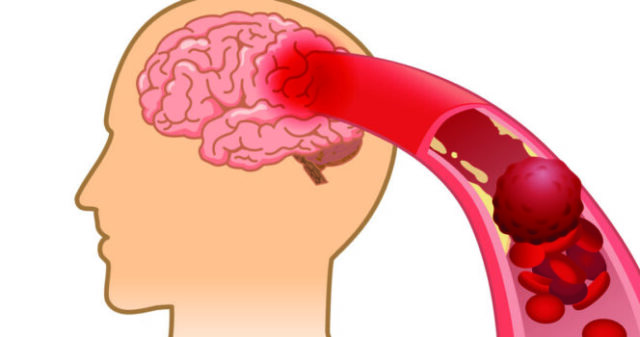
10 signs your arteries might be clogged

In this day and age, with so much information available online, it is important to keep yourself educated on how you can stay in the best of your health.

If you are looking for ways to enhance your health, then you are in the right place. We will look at a few signs that are often overlooked and can prove to be fatal if not addressed.

Keep reading to learn more about what you need to look out for to ensure that you are in the best of health.

Clogged arteries are no joke. They can lead to various health issues which include blood pressure and heart attacks. These issues can prove to be fatal but there are warning signs you can look out for and seek medical attention before it is too late.

Knowing the early signs of clogged arteries can help you avoid potentially fatal situations. Here are 10 warning signs you should keep a look out for.

1. Nausea

Nause is a common symptom for a lot of ailments. It is one of the more common ways our body tells us something is wrong. Feeling nauseous does not mean you have clogged arteries but it is a good idea to talk to your doctor about it.

2. Chest Pain

Another major way our body can signal to us that something is amiss, is chest pain. Chest pain is also known as angina, it results from when blood flow to your heart is reduced due to built-up plaque in the arteries that lead to it. It usually begins in the chest or breast bone and can travel to your left shoulder or left arm, jaw, and upper back. If you keep experiencing these symptoms, you should immediately see a doctor.

3. Shortness of Breath

If you are experiencing shortness of breath, the reason behind it could be clogged pulmonary arteries. Shortness of breath can sometimes be normal, such as when climbing stairs or doing physically strenuous tasks. However, if you experience it frequently, then you need to see a doctor.

4. Weakness or Numbness in One Side of Your Body

If your blood flow is restricted or cut off in your carotid arteries, this can lead to you feeling weakness or numbness in one side of your body. The carotid arteries are the ones that carry blood from the heart to the head and are located on the side of your neck. They split into two and one carries blood to the brain and eyes while the other carries it to the tongue, face, and other parts of the head.

5. Slurring of Words 

If you slur words, then this could be a symptom of a number of conditions. One of these is blocked carotid arteries. This could either be because of the interior branch which takes blood to the brain or the exterior which takes it to the tongue and other areas of the face.

6. Vision Loss

Losing your vision is a major symptom of a clogged exterior branch of your carotid artery. This could happen in either one or both of your eyes. If you suddenly have blurred vision or decreased capacity, you should see a medical specialist immediately.

7. Leg Pain

There are a lot of reasons you might be experiencing leg pain and one of them is clogged peripheral arteries. These exist in your legs and arms. If you experience pain in your leg randomly which is not caused by an injury or something else obvious, you could be suffering from a clogged artery.

8. Cold Feet

When blood is not able to travel through your body properly, your extremities tend to get cold. If you have cold feet regularly, this means the blood flow in your body is restricted and not reaching your feet. This could point towards a blocked peripheral artery.

9. Delayed Healing for Foot Injuries

Your injuries need blood to heal and this sign goes hand in hand with the previous one. If blood does not flow to your legs, this means injuries you sustain on your feet will take longer to heal.

10. Heart Palpitations

If you notice a change in your heart rate, you should immediately seek medical counsel. When your heart beat becomes noticeable and you face palpitations, and your heart is pounding this could be a sign pointing towards irregular blood flow. It usually lasts a few seconds and at times you might even feel it in your neck or throat.

All in all, if you are suffering from any of these symptoms, we suggest you take your health seriously and contact a professional to rule out anything dangerous.

Disclaimer: This is not intended as medical advice. We advise readers to always seek professional medical help for accurate information on their health.

SOTD! KEVIN COSTNER NEWS

Peter Meyer spent decades moving quietly but decisively behind the scenes of Hollywood, shaping careers while sidestepping the spotlight he helped others stand in. When the news broke that he had died at 68 after a five-year battle with sarcoma, the industry felt it like a punch to the ribs.

He wasn’t a celebrity, but he was one of the people who kept the machine running—steady, loyal, unpretentious. His sister put it simply: after fighting with everything he had, he passed surrounded by the people who mattered most. No dramatics. Just a man closing out a long, heavy chapter with dignity.

Meyer’s path in entertainment wasn’t loud or flashy. He built his name the old-school way—patience, grit, and an instinct for reading people better than they read themselves. He spent more than ten years at the William Morris Agency, navigating egos, scripts, and the churn of an industry that burns through talent managers as casually as new coffee pods. Anyone who’s worked at a major agency knows the pace is brutal. You survive if you’re sharp, and you succeed if you’re sharper than the next person in the hallway. Meyer did both.

In 1989, he took the leap and launched Meyer Management. Starting an independent management firm back then wasn’t trendy; it was a gamble. But Meyer always had a gambler’s calm—the kind of guy you couldn’t rattle with a bad deal, a studio meltdown, or a client in free-fall. He built a roster that spanned A-listers, character actors, comedians, and writers. He didn’t chase the loudest stars; he gravitated to people who actually wanted to work. Tom Hanks, Kevin Costner, and others stayed loyal to him for years, and that loyalty doesn’t happen by accident. In Hollywood, loyalty is currency, and Meyer earned it in stacks.

He wasn’t the type to waste time pretending to be something he wasn’t. He didn’t need the big persona, the manufactured mystique, or the empty bravado that packs the parties on Sunset. His clients knew he’d tell them the truth, even when it sucked. That’s why they trusted him. That’s why he lasted.

A memorial service was scheduled for June 13, 2023, at St. Monica’s Catholic Church in Santa Monica—a fitting place for someone who spent decades operating at the edge of the spotlight without ever stepping fully into it. The crowd likely spanned everyone from former studio heads to assistants who’d once relied on a quick call from Meyer to save their job. People like him tend to leave a longer shadow than anyone expects.

While the industry mourned Meyer, one of his most prominent former clients, Kevin Costner, was fighting his own battles—very different ones, but heavy in their own ways. Costner has always had the reputation of a guy who bets big on what he believes in. Sometimes it pays off. Sometimes it detonates. Right now, he’s in the middle of one of the most personal and public stretches of his life: a drawn-out divorce from Christine Baumgartner, plus a massive financial commitment that makes most Hollywood budgets look like grocery lists.

Costner didn’t just invest in his latest project, the Horizon franchise—he threw himself into it with a kind of reckless conviction most people lose by middle age. The man literally mortgaged a 10-acre waterfront property in Santa Barbara to make the film happen. That’s not pocket change territory. That’s “if this goes sideways, you’ll feel the tremor in your bones for years” territory. Reports put his personal contribution as high as $50 million—half of the entire $100 million budget. That’s not something actors do. Studios do that. Financiers do that. People with a safety net do that. But Costner stepped into the storm anyway.

Why? Because he thinks the story matters. Because he thinks the idea is worth the hit. Because, for better or worse, he’s always been the kind of guy who pushes the chips to the center of the table and dares the universe to blink first. And he’s blunt about it—he said straight out that he’ll never put his own money into another movie after these four Horizon films. You don’t drop a line like that unless you’re dead serious or dead tired.

The timing hasn’t been kind, either. Between the divorce, the press noise, the financial risks, and the weight of a franchise that hinges on both artistic ambition and economic gamble, Costner is walking a very thin line. And yet, he’s committed. He’s fully in. That’s something Meyer would’ve understood. Managers like him built their careers on clients who either played it safe or bet their lives on passion projects. Costner has never belonged to the first category.

When you look at both stories—the veteran manager who spent decades fighting for stability and the actor who’s burning through personal fortune to chase a creative vision—you see two very different faces of the same industry. One spent his career keeping other people’s chaos under control. The other is living in the middle of his own storm, still pushing forward because that’s who he is.

The contrast is sharp, but the connection is there. Meyer specialized in grounding people who dreamed too big or spiraled too fast. Costner is the type who dreams big even when it costs him. The industry needs both kinds to function: the stabilizers and the dreamers, the ones who push and the ones who pull back. Meyer spent his life being the anchor. Costner, right now, is the ship fighting waves that don’t care how famous he is.

Hollywood’s memory is short, but its grief is real when it hits the right people. Meyer wasn’t a household name, but he shaped the careers of people who are. That’s impact without the ego. And even as the headlines move on to Costner’s divorce filings, property assessments, and franchise budgets, Meyer’s absence will echo in every meeting, every contract, every moment when someone thinks, “Peter would’ve handled this better.”

He won’t be there to offer advice, to rein in a client, or to push them out of their comfort zone. But the people he guided will keep carrying the lessons—sharp, simple, unromantic, and rooted in reality. The same way he lived.

Costner will keep fighting his battles. The industry will keep moving. But Meyer’s chapter, now closed, leaves its mark. Quietly. Permanently.

They Mocked Me for Being the Garbage Mans Son, But at Graduation, I Grabbed the Mic and Said One Line That Made the Entire Hall Burst Into Tears

Miguel Reyes grew up knowing exactly how the world saw him. Children at school called him “garbage boy,” adults spoke down to his mother without ever meeting her eyes, and people seemed to think poverty was a personality trait rather than a circumstance. What they didn’t know was that behind every piece of trash his mother collected, behind every bottle and scrap of cardboard she dragged home in her cart, there was a dream she refused to let die—her son’s education.

Rosa Reyes woke up every day at 3 AM, long before the rest of the world stirred. She wrapped a frayed scarf around her head, pulled on the same pair of thin gloves she’d patched a dozen times, and pushed her wooden cart through the muddy streets in search of recyclables. She wasn’t ashamed of her work. She understood life in a way others didn’t: everything has value—if not in what it is, then in what it can become. She sorted through other people’s waste with the steady hands of a woman who knew she was trading her body’s exhaustion for her son’s hope.

By the time Miguel woke for school, Rosa was already knee-deep in the day’s labor. Their home was a tiny shack by the river, lit by candles and held together with faith and determination. Miguel studied sitting on an old crate, while his mother counted coins on the dirt floor. Even exhausted, she always found a smile for him. “Work hard, hijo,” she would tell him. “Maybe one day you won’t have to touch garbage like I do.” She didn’t say it out of shame—she said it because she wanted him to have choices she never had.

School, unfortunately, was where Miguel learned that children can be crueler than circumstances. His torn shoes, patched uniform, and the faint smell of the landfill on his clothes made him an easy target. The name “garbage boy” spread quickly, followed by jokes and whispers that grew sharper with age. Miguel fought back at first, then cried, then finally learned the painful art of staying silent. Still, every night he helped his mother sort bottles, because survival doesn’t wait for dignity.

In his early teens, Miguel began lying about his circumstances, not out of arrogance but desperation. He told classmates his mother worked in “recycling,” hoping the word sounded cleaner. He invented stories about family members and their jobs. The lies changed nothing. Kids notice everything. They could tell he didn’t belong to their world of backpacks without holes, lunches without shame, and homes without the sound of dripping water at night.

Only one teacher, Mrs. Reyes, saw what others missed. She gave him space, asked gentle questions, and assigned an essay titled “My Hero.” Most students wrote about athletes, movie stars, or whoever was trending that year. Miguel considered inventing someone else, someone less “embarrassing.” Instead, he wrote the truth.

“My hero is my mother, because while the world throws things away, she saves what’s still good.”

When he read it aloud, the classroom fell silent—not the kind of silence that comes before laughter, but the kind that comes when something honest cracks people open. Even his bullies stared at their desks. The truth, spoken without apology, had disarmed them.

Mrs. Reyes hugged him afterward. “Never be ashamed of where you come from,” she told him. “Some of the most beautiful things come from the trash.” He carried those words with him for years.

High school demanded everything from him. He woke before sunrise to help his mother, attended class fighting sleep, and studied by candlelight late into the night. He kept a photo of his mother pushing her cart tucked inside his textbooks as a reminder of why he couldn’t quit. When he failed a math test once, Rosa simply said, “You can fail today. Just don’t fail yourself tomorrow.” That line became his anchor.

When he finally earned a place at a public university, Rosa sold her cart—the only source of income she had. She pressed the money for his entrance fees into his hands and said, “It’s time you stop pushing garbage. It’s time you start pushing yourself.” It was the largest sacrifice she had ever made, and Miguel never forgot it.

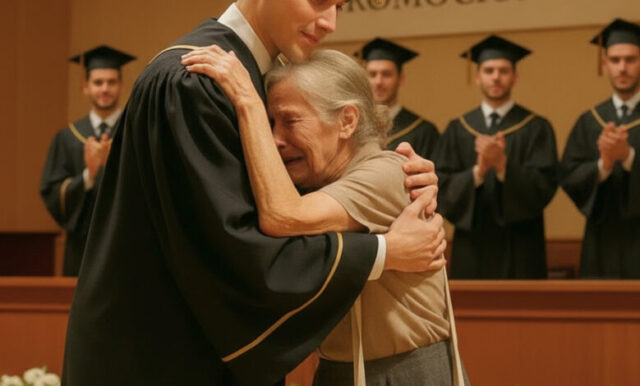
Four years later, Miguel stood at graduation wearing a borrowed pair of shoes and a gown that hung loosely on his frame. His classmates’ families filled the auditorium in suits and dresses; Rosa sat in the front row wearing a simple white dress borrowed from a neighbor, her work-worn hands folded tightly around each other, her eyes shining with pride that needed no translation.

When they called his name—“Miguel Reyes, Bachelor of Education, Cum Laude”—the applause washed over him. But he wasn’t thinking about himself. He was thinking about his mother walking in the dark every morning pushing a cart, about every insult he’d swallowed, every candle burned low, every exam studied for while fighting exhaustion.

He stepped up to the microphone with a speech he had written the night before. But looking out at the crowd, he folded the paper and put it aside.

“You laughed at me because my mother collects garbage,” he said, voice steady. “But today, I’m here because she taught me how to turn garbage into gold.”

The room froze. His voice didn’t crack. He didn’t apologize. He simply spoke the truth of a life built on sacrifice and dignity, not shame.

He turned toward his mother. “Mama, this diploma belongs to you.”

Rosa stood up, tears streaking her face, and held the diploma high above her head. “This is for every mother who never gave up,” she said, her voice breaking. That’s when the applause erupted—loud, raw, emotional. Not polite applause. Not mandatory graduation clapping. This was a release. A recognition. A shift.

Even the classmates who’d mocked him stood and clapped, some wiping their eyes. And the dean, who’d heard hundreds of speeches, later said it was the one moment he’d never forget for the rest of his career.

Miguel became a teacher, building a small learning center out of recycled materials—his tribute to both his mother and the truth she taught him: value isn’t determined by what something looks like; it’s determined by what it becomes. The sign he hung on the wall read: “From Trash Comes Truth.”

He visits the dump every year, not in sadness but gratitude. He listens to the clinking bottles and rolling carts that once embarrassed him, and now understands those sounds for what they always were—the sound of love in motion.

Miguel’s life is proof that dignity doesn’t come from the job you have, or the money you earn, or the place you grow up. It comes from what you do with what you’re given—and who you choose to become despite the world’s assumptions.

His mother worked among garbage. But she raised gold.

No nanny could survive a day with the billionaires triplets, Until the black woman arrived and did what no one else could

When people talked about Ethan Carter, they talked about wealth. Oil fields. Private jets. Deals that shifted entire markets. His mansion in Lagos looked like something lifted out of a dream—marble floors, chandeliers brighter than noon, staff who moved so quietly it was easy to forget they were there. But behind the polished perfection lived three children who didn’t care about any of it.

Daniel, David, and Diana — triplets, six years old, brilliant, stubborn, and wild. Their mother had died giving birth to them, and Ethan had never figured out what to do with the grief that pressed on the walls of his home. So the mansion stayed immaculate… except for wherever the kids stood. Or ran. Or screamed. Or plotted.

In five months, they had burned through twelve nannies. One quit mid-shift and walked out barefoot. Another locked herself in the pantry until security escorted her out. A third left shouting that the children were “tiny demons with trust funds.” Every time, Ethan threw money at the problem, hoping it would fix itself. It didn’t.

Into this chaos walked Naomi Johnson, a thirty-two-year-old widow with calm eyes and a steady posture that suggested she’d seen worse than temper tantrums. Her daughter, Deborah, was in the hospital with a failing heart condition. Naomi didn’t have the luxury of turning down work; every bill mattered. She needed the job, but she also carried a quiet depth — the kind that comes from surviving life’s uglier edges.

The housekeeper, exhausted from training a dozen nannies who didn’t last past lunchtime, handed Naomi a uniform like she was handing her a warning. “Start in the playroom,” she said, voice flat. “That’s where they usually break people.”

Naomi walked in — and it was almost cinematic in its chaos. Juice streaked down the wall like modern art. Toys were scattered in a way that looked less accidental and more tactical. Paper bits covered the carpet like confetti after a riot. And the triplets… well, they were in their own world. Daniel launched a toy truck across the room. David was pouring cereal onto the floor, clearly enjoying the rebellion of it. Diana glared, daring Naomi to react.

Most nannies had started yelling by now.

Naomi did something else.

She tightened her scarf, stepped over the cereal, picked up a mop, and quietly got to work.

Her silence was so unexpected it disrupted their momentum. Daniel’s truck landed with a sad little thud. David froze mid-pour. Diana’s scowl wavered.

“Aren’t you going to stop us?” Daniel demanded.

Naomi didn’t look up. “Children don’t stop because someone yells,” she said calmly. “They stop when no one joins their game.”

That single sentence reset the entire room. The chaos didn’t know how to respond to calm.

From the upstairs balcony, Ethan watched in disbelief. He had seen screaming matches, breakdowns, and bribes. What he had never seen was someone refuse the battle entirely.

The next morning at dawn, Naomi was already sweeping the marble stairs, humming a tune older than the house itself. When the triplets stomped into the dining room demanding ice cream for breakfast, she didn’t flinch.

“If you eat your food,” she said, “we’ll make ice cream together later.”

No anger. No begging. Just steady certainty. And, to everyone’s surprise, the triplets sat down and ate.

But kids, especially ones who’ve lost too much too early, don’t surrender in a day. They tested her again at noon — paint smeared across the walls, toys buried in the garden, tantrums designed like strategic ambushes. Naomi didn’t crack. She didn’t raise her voice. She didn’t trade emotions with them.

When David grumbled, “You’re boring. The others used to scream,” Naomi smiled.

“That’s because they were trying to win,” she said. “I’m not here to win. I’m here to love you.”

Even the triplets didn’t have a comeback for that.

Within days, the energy shifted. Ethan came home one afternoon and paused in the doorway, stunned. His children—his impossible, relentless children—were sitting cross-legged on the floor coloring while Naomi hummed a church song under her breath. The mansion felt different. Not quieter. Just… softer. For the first time in years, it sounded like a home instead of a museum full of heartbreak.

Later that night, Ethan approached her. “How are you doing this?” he asked, genuinely baffled. “No one else lasted.”

Naomi looked him in the eyes. “Children push because they want to see if the world will stay. If you don’t give in, they stop pushing. They just need to feel safe.”

Ethan, a man who had once negotiated billion-dollar deals without blinking, felt something in him shift.

But the moment everything changed came on a rainy Thursday.

The triplets were playing when an argument broke out—quick, loud, messy. A vase shattered, shards exploding across the floor. Naomi moved instantly.

“Stop!” she commanded, her voice calm but sharp enough to cut through panic.

She scooped Diana into her arms just before the little girl stepped onto a sharp piece. The glass carved into Naomi’s hand instead. Blood stained her palm, dripping onto the floor.

Still, she smiled. “It’s okay,” she whispered. “No one’s hurt. That’s what matters.”

The triplets froze. For the first time in their lives, someone had been hurt protecting them—and didn’t yell, didn’t blame, didn’t walk away.

That evening, they hovered close. Daniel touched her bandaged hand gently. David taped an extra bandage over it, as if protecting the protector. Diana leaned against her side, quiet for once.

Ethan walked in and saw his children gathered around Naomi like she was a lighthouse they had finally found after years lost at sea. He didn’t say a word. He didn’t need to.

Later, in the kitchen, Naomi was rinsing her wound. “You should rest,” Ethan said softly.

“A cut heals,” she replied. “Abandonment doesn’t.”

Her voice was steady. “My daughter is in a hospital bed fighting for her life. I know what it means to stay even when it hurts. Children don’t need perfection, Mr. Carter. They need presence.”

Presence. Something money could never buy — and something he had been failing to give.

Weeks passed. Naomi kept showing up. The triplets kept learning. Deborah’s surgery succeeded — paid for quietly by Ethan, who didn’t frame it as charity but as responsibility. When Naomi brought her daughter home, the triplets welcomed her like she’d always belonged.

“Mommy, look!” Deborah cried, smiling. “I have three new friends.”

And just like that, the loneliness in the Carter mansion cracked open.

The triplets clung to Naomi, whispering, “Don’t leave us, Mommy Naomi.”

She didn’t answer right away. She didn’t need to. She had already changed their world.

She hadn’t just tamed them.

She had given them back something they didn’t even know they’d lost — safety. Stability. A sense that love didn’t always disappear.

And somewhere between discipline and tenderness, Naomi learned a truth she’d forgotten:

The strongest kind of love isn’t loud. It isn’t dramatic.

It’s the love that refuses to walk away.

You Won’t Believe What That Pull-Out Cutting Board In Your Kitchen Was Actually Designed For!

If you’re like most home cooks, you probably have a cutting board that you use almost every day — and rarely think twice about. Yet this simple tool, found in nearly every kitchen, has a history that stretches back thousands of years. In fact, the original pull-out cutting boards built into old kitchen cabinetry were designed not for chopping vegetables, but for one sacred culinary ritual: baking bread.

In traditional kitchens, bakers used large wooden pull-out boards to knead dough, shape loaves, and let them rise before baking. The surface was sturdy, smooth, and perfectly suited to working dough by hand — a quiet bridge between raw ingredients and nourishment. Once the loaves were ready, the board slid back in, leaving the kitchen clean and organized.

Today, cutting boards have evolved far beyond their origins. We use them to chop vegetables, slice fruit, trim meat, and serve cheese — transforming them from specialized tools into everyday kitchen essentials. They come in a variety of materials, from bamboo and plastic to rich hardwoods. Yet among all options, maple wood remains a favorite for both home cooks and professional chefs alike.

Maple is a hardwood, naturally dense and durable, which helps it resist deep knife marks and bacterial growth. It’s strong enough to withstand years of use but gentle enough not to dull your knives. Compared to plastic or bamboo, maple boards are also easier to maintain: with proper care, they age beautifully instead of deteriorating.

How to Care for a Wooden Cutting Board
Caring for your board doesn’t require fancy products — just consistency. After each use, sprinkle coarse salt or baking soda over the surface, then scrub gently with half a lemon. Rinse with hot water and dry with a clean towel. Every few weeks, treat the board with food-grade mineral oil or cutting board oil to prevent cracking and preserve its natural finish. With this routine, a good maple board can last for many years, quietly serving as the foundation for countless meals.

A Return to Breadmaking
The story of the cutting board comes full circle when we return to its roots — baking bread. Over the past few years, home breadmaking has seen a joyful revival. The rhythm of kneading dough, the warmth of rising loaves, and the smell of fresh bread have become small rituals of comfort and creativity in many kitchens.

Home bakers like Becca Beach, known for her easy, inspiring recipes, have shown how accessible this craft can be. In her video Homemade Bread – SUPER Easy and Delicious!, Becca demonstrates that anyone can bake a wholesome, fragrant loaf with just a few simple ingredients and a little patience.

There’s something deeply rewarding about baking your own bread. You control what goes into it — no preservatives, no additives — just flour, water, yeast, and care. The process connects us to an ancient rhythm of life: shaping, waiting, and breaking bread with those we love.

A Timeless Kitchen Companion
From the baker’s bench of centuries past to the modern countertop, the cutting board has remained one of the kitchen’s most faithful tools — simple, sturdy, and essential. With proper care, especially when made of maple, it becomes more than just a surface for preparation; it becomes a companion to memory, creation, and nourishment.

So the next time you knead dough or chop vegetables, take a moment to notice that quiet board beneath your hands — the bridge between raw ingredients and home itself. And if you’re looking to rekindle a bit of that ancient craft, roll up your sleeves, dust the board with flour, and let the story of breadmaking begin again.

Biker Pumped Gas Into Crying Girl’s Car And She Begged To Stop As Her Boyfriend Will Kill Her

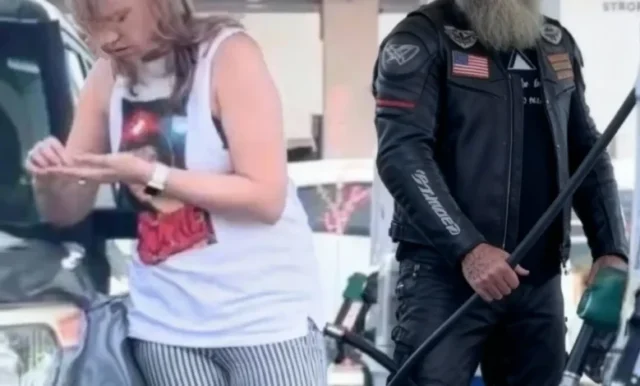
The biker started pumping gas into the crying girl’s car and she begged him to stop before her boyfriend came back. I was filling up my Harley at the station when I heard her panicked voice. “Please, sir, please don’t. He’ll think I asked you for help. He’ll get so angry.”

She was maybe nineteen or twenty. Blonde hair pulled back in a messy ponytail. Mascara running down her face. Standing next to a beat-up Honda with an empty gas tank, counting coins in her shaking hands. She had maybe three dollars in quarters and dimes.

I’d already put my credit card in her pump before I walked over. “It’s already going, sweetheart. Can’t stop it now.”

“You don’t understand.” Her voice dropped to a terrified whisper. “My boyfriend, he doesn’t like when people help me. He says it makes him look weak. He’s inside getting cigarettes and if he sees you—”

“How much does he usually let you put in?” I asked, watching the numbers climb on the pump.

Her face crumpled. “Whatever these coins buy. Usually about half a gallon. Enough to get home.”

I’m sixty-six years old. Been riding for forty-three years. Seen a lot of things. But something about this girl’s fear made my blood run cold. “Where’s home?”

“Forty miles from here.” She was crying harder now. “Please, you have to stop. He’s going to come out any second and he’s going to think I was flirting with you or asking for money or—”

The gas pump clicked off. I’d filled her tank completely. Forty-two dollars’ worth.

She stared at the numbers in horror. “Oh my God. Oh my God, what did you do? He’s going to kill me. He’s literally going to kill me.”
“Why would your boyfriend kill you for someone else putting gas in your car?” But I already knew the answer. I could see it in her eyes. In the way she kept glancing at the store entrance. In the bruises on her arms that she was trying to hide with her sleeves.

“You don’t know him. You don’t know what he’s like when he’s mad.” She grabbed my arm. “Please, can you just leave? Right now? Before he sees you?”

“I’m not leaving you here, sweetheart.” She started backing away from me. “You’re making it worse. You’re making everything worse. He’s going to think I set this up. He’s going to think I wanted you to rescue me.”

“Did you want me to rescue you?” She opened her mouth to answer, but then her whole body went rigid. “He’s coming. Oh God, he’s coming. Please just go.”

I turned and saw him walking out of the gas station. Early twenties. Muscle shirt. Tattoos that looked like he’d gotten them in someone’s garage. The kind of guy who gets bigger when there’s an audience.

He took one look at me standing by his girlfriend, saw the full tank of gas, and his expression turned dark.

“The hell is this?” He walked up fast, got right in her face. “I leave you alone for five minutes and you’re out here begging strangers for money?”

“I didn’t ask him for anything, Tyler. I swear. He just—” Tyler grabbed her arm. Hard. She winced. “He just what? Just happened to fill up our tank? Nobody does that unless someone’s asking.”

I stepped forward. “Son, I filled her tank because I saw a young lady in need. She didn’t ask me for anything. This is on me, not her.”

Tyler looked at me for the first time. Really looked at me. I’m 6’3″, 240 pounds, leather vest with forty years of patches, and a gray beard down to my chest. I look exactly like what I am—an old biker who’s seen some things and isn’t afraid of punk kids.

“Yeah? Well, maybe you should mind your own business, old man. This is my girlfriend and my car. I don’t need your charity.” He yanked the girl toward the car. “Get in. Now.”

She scrambled to obey, but I stepped between them and the car door. “I don’t think she wants to go with you, son.”

Tyler laughed. An ugly laugh. “Are you kidding me right now? Brandi, tell this old dude you want to come with me.”

“Brandi,” I said quietly, not taking my eyes off Tyler. “Do you feel safe with him? Truth. Right now.”

“She feels fine!” Tyler shouted. “Tell him, Brandi. Tell him we’re fine.” But Brandi wasn’t saying anything. She was crying silently, her arms wrapped around herself.

That’s when Tyler made his mistake. He reached past me to grab Brandi’s arm again. And I caught his wrist. “I asked her a question. Let her answer.”

“Get your hands off me!” Tyler tried to jerk away, but I held firm. Not hurting him. Just stopping him.

“Brandi,” I said again. “Do you want to get in that car with him?” She was sobbing now. Full body shaking. And she whispered two words that changed everything: “Help me.”

Tyler exploded. Started swinging. Caught me once in the jaw before I had him turned around and pressed against the car. Forty-three years of riding. Twenty years in construction. Four years in the Marine Corps before that. This kid didn’t stand a chance.

“Let me go! You’re assaulting me! Someone call the cops!” Tyler was screaming. Other people at the gas station had their phones out, filming.

“Great idea,” I said. “Let’s call the cops. Let them see those bruises on your girlfriend’s arms. Let them hear her say she’s afraid of you.”

That shut him up real quick. Brandi had collapsed against the gas pump, crying so hard she could barely breathe. An older woman had rushed over to her, arms around her shoulders.

I heard sirens. Someone had actually called the police. Good. Two squad cars pulled into the station. Officers got out, hands on their weapons until they assessed the situation.

“Sir, release him and step back.” I let Tyler go. He immediately started yelling. “This psycho attacked me! I want him arrested! He put his hands on me first!”

The officer looked at me. “Is that true, sir?” “I stopped him from grabbing his girlfriend. That part’s true. The rest is him trying to cover up the fact that he’s been beating her.”

“That’s a lie!” Tyler shouted. “Brandi, tell them! Tell them this guy is crazy!” But Brandi wasn’t defending him. She was sitting on the curb now, the older woman still beside her, and she was staring at the ground.

The second officer approached her. A woman officer, which was good. “Ma’am, are you alright? Do you need medical attention?”

Brandi shook her head. Then nodded. Then started crying harder. “I don’t know. I don’t know what I need. I just want to go home. To my real home. To my mom’s house.”

“Where does your mom live?” the officer asked gently. “Nebraska. Three states away. Tyler convinced me to move here with him six months ago. Said we’d have a better life. But it’s been…” She couldn’t finish.

The officer looked at Tyler with disgust. Then back at Brandi. “Do you want to press charges? Against him, I mean. Not against—” She looked at me. “What’s your name, sir?”

“Robert Morrison. And no, she probably shouldn’t press charges against me since I just bought her gas and stopped her boyfriend from manhandling her.” The first officer was checking Tyler for warrants. His radio crackled. “We’ve got two active warrants. One for domestic violence in Missouri. One for failure to appear in Kansas.”

Tyler’s face went white. “Those are mistakes. Those aren’t real.” “Uh huh.” The officer turned him around and cuffed him. “You’re under arrest. You have the right to remain silent…”

Brandi watched them put Tyler in the squad car. Watched him scream and curse and promise he’d get out and find her. And I watched her face transform from fear to something else.

Relief.

After they took Tyler away, the female officer sat with Brandi for a long time. Got her statement. Called the local domestic violence shelter. Made arrangements.

I was giving my own statement to the other officer when Brandi walked over to me. “Mr. Morrison, I need to thank you. I need you to know that you saved my life today.”

“Sweetheart, I just filled your gas tank.” She shook her head. “No. You did more than that. You asked me if I felt safe. Nobody’s asked me that in six months. Nobody’s cared enough to ask.”

She pulled up her sleeves. The bruises were everywhere. Handprints on her biceps. Fingerprints on her forearms. “He did this yesterday because I smiled at a cashier. At a cashier. I smiled at a sixty-year-old woman and Tyler said I was flirting.”

My jaw clenched. “How long has this been going on?” “Since the first week we got here. But it started small. Controlling what I wore. Who I talked to. How much money I could spend. Then it got physical.” She looked at her car. “He never let me have more than three dollars for gas. Said if I had a full tank, I might try to leave. Might drive back to Nebraska.”

“Were you going to?” She nodded. “Today. That’s why I was crying. I’d finally decided to leave but I only had three dollars and I knew I wouldn’t make it out of the state. I was trying to figure out how to call my mom without Tyler seeing.”

“And then this angel on a motorcycle filled up my tank and everything changed.” She started crying again. “I don’t even know what to say. How to thank you.”

“You don’t need to thank me. You just need to get yourself somewhere safe.” The domestic violence advocate had arrived by then. A kind-faced woman in her fifties who introduced herself as Patricia. “Brandi, we have a room for you at the shelter. You can stay as long as you need. We’ll help you get back to Nebraska when you’re ready.”

Brandi looked panicked. “But my stuff. All my clothes and my phone charger and my mom’s necklace. Everything is at Tyler’s apartment.”

“We can arrange a police escort to get your belongings,” Patricia said. “You don’t have to see him. You don’t have to go back there alone.” “But the apartment is in his name. I don’t have any money. I don’t have anywhere to go right now.”

I pulled out my wallet. Took out three hundred dollars. Everything I had on me. “Here. This should get you home to Nebraska. Gas money and some food.”

Brandi stared at the money like it was a million dollars. “I can’t take this. You already did so much.”

“You can take it and you will take it. Consider it a gift from an old biker who’s seen too many women hurt by men who don’t deserve them.” She threw her arms around me and hugged me tight. This tiny girl holding onto me like I was a life raft. “Thank you. Thank you so much. I’ll pay you back. I promise I’ll pay you back.”

“Don’t pay me back. Just get yourself home safe. And next time you see someone who needs help, you help them. That’s how you pay me back.” Patricia drove Brandi to the shelter. The police escorted them. I watched them go and felt my hands shaking with anger.

Not anger at Brandi. Anger at Tyler. Anger at every man who thinks it’s okay to hurt women. To control them. To trap them.

I called my wife on the ride home. Told her what happened. She cried. “Bobby, you could have been hurt. That kid could have had a weapon.”

“I know. But I couldn’t walk away, honey. I couldn’t see that girl’s fear and just ride off.” My wife knows me. Knows I’ve never been able to walk away from someone in trouble. “I know you couldn’t. That’s why I love you. Just promise me you’ll be careful.”

“I promise.” But here’s the part I didn’t tell my wife. The part I didn’t tell the police. The part I’ve only told my riding brothers.

That wasn’t the first time I’d seen Brandi. I’d seen her three days earlier at a different gas station. Watched Tyler scream at her for taking too long in the bathroom. Watched him grab her arm and drag her to the car. Watched her flinch like she expected to be hit.

And I’d done nothing. Just watched and drove away. Told myself it wasn’t my business. That couples fight. That maybe I was misreading the situation.

I’d regretted it ever since. Had spent three days thinking about that scared girl and wondering if she was okay. Wondering if I should have done something.

So when I saw her again at that gas station, counting coins with tears running down her face, I knew I couldn’t walk away twice. I knew this was my second chance to do the right thing.

I followed up two weeks later. Called the domestic violence shelter and asked about Brandi. Patricia told me she’d made it safely to Nebraska. Her mom had driven down to pick her up from the shelter. Tyler was still in jail on the warrants.

“She wanted me to give you something,” Patricia said. “Can you stop by the shelter?” I rode over that afternoon. Patricia handed me an envelope. Inside was a letter in Brandi’s handwriting:

“Dear Mr. Morrison, I’m home now. I’m safe. My mom cried when she saw me. She said she’d been worried sick for six months but didn’t know how to help me. Tyler wouldn’t let me call her. Wouldn’t let me talk to anyone from back home. I felt so alone. But then you showed up. This scary-looking biker who turned out to be the kindest person I’ve met in months. You didn’t have to help me. You didn’t know me. But you saw I was in trouble and you did something about it. You gave me back my freedom. My life. My future. I’m enrolling in community college in the fall. Going to study to be a social worker. Going to help other women like me get out of bad situations. Because of you, I get to have dreams again. Because of you, I’m alive. Thank you will never be enough. But thank you anyway. Forever grateful, Brandi.”

I sat in that shelter parking lot and cried. Just sat on my bike and bawled like a baby.

Patricia came out. “She also wanted you to have this.” She handed me a photo. Brandi standing with her mom, both of them smiling. On the back, Brandi had written: “This is what freedom looks like. Thank you for giving it back to me.”

That photo is in my wallet now. Has been for three years. I look at it whenever I need a reminder that one person can make a difference. That speaking up matters. That getting involved can save a life.

Brandi graduated college last year. Got her social work degree. She works at a domestic violence shelter in Nebraska now. Helps other women escape. Other women like she used to be.

She emails me sometimes. Sends updates about the women she’s helped. About the lives she’s saved. About the second chances she’s giving people because someone gave her a second chance.

Last month she sent me a photo of her standing in front of a brand new Honda. “Bought it myself with my first big paycheck. It’s got a full tank of gas. Always will. Thank you for teaching me that I deserved better. That I was worth saving. I’ll never forget you.”

I showed the photo to my riding brothers at our club meeting. Told them the whole story. About Brandi and Tyler and the gas station.

“That’s what we do,” our club president said. “We protect the vulnerable. We stand up to bullies. We help people who can’t help themselves.” He looked around the room at forty bikers. Men who look scary but have the biggest hearts I know. “Every one of you has a story like this. Someone you helped. Someone you saved. Someone whose life you changed just by giving a damn.”

He was right. Every guy in that room had their own Brandi story. Their own moment where they could have walked away but didn’t. Their own second chance to do the right thing.

That’s what real bikers do. We’re not the criminals people think we are. We’re the guys who stop when someone needs help. Who speak up when someone’s in danger. Who give struggling kids gas money and domestic violence victims a way out.

We’re the guys who see something wrong and do something about it. Even when it’s scary. Even when it’s not our business. Even when we could just ride away.

Because that’s what brothers do. And the open road is full of people who need brothers. People like Brandi. People counting their last few coins and wondering if anyone will notice they’re in trouble.

I notice now. Every single time. I learned my lesson. Never again will I see someone in trouble and ride away. Never again will I tell myself it’s not my business.

Because that nineteen-year-old girl counting quarters at a gas station could be someone’s daughter. Someone’s sister. Someone’s future social worker who’s going to save dozens of other lives.

And all she needed was for one person to see her. To really see her. To ask if she felt safe and actually wait for an answer.

The biker started pumping gas into the crying girl’s car. And he changed her entire life. Sometimes heroism looks like that. Small. Simple. Just filling up someone’s tank and asking if they’re okay.

But small acts can save lives. I know. Because I saved one. And Brandi is saving more. One full tank of gas at a time.

German Shepherd Saves Baby From Moving Car in Garage

It was an ordinary Sunday afternoon in a quiet suburban neighborhood in Colorado when a moment of distraction nearly turned into a devastating tragedy. The Johnson family had just returned home from grocery shopping and were unloading their bags in the garage. Their one-year-old daughter, Lily, had recently learned how to walk and was exploring the garage with her usual curiosity.

What happened next would be a story the family  and later, millions online  would never forget. Thanks to the quick thinking of the family’s loyal German Shepherd, Max, a potentially fatal accident was avoided.

The Unexpected Danger

While Mrs. Johnson carried groceries into the house, Mr. Johnson walked to the back of the car to unload more bags. In the middle of the rush, the car  a large SUV — had been left in neutral instead of park. With the slight slope of the driveway, the vehicle began to slowly roll forward into the garage.

Lily, still wobbling on her tiny feet, was directly in the path of the moving vehicle. She was too young to understand the danger, and both parents’ backs were turned at the exact moment the SUV started moving.

That’s when Max, the family’s three-year-old German Shepherd, noticed what no one else did.

A Dog’s Instincts Kick In

Max had been lying on his bed near the entrance of the garage, watching his family with alert, intelligent eyes. German Shepherds are known for their protective instincts, and Max was no exception  he considered Lily his responsibility.

The moment he saw the car rolling toward the toddler, he sprang into action.

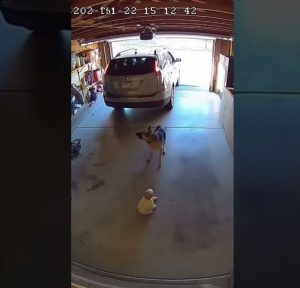
Without hesitating for a second, Max sprinted across the garage, barking loudly to draw attention. His sudden movement startled Lily, who paused just long enough for Max to reach her. With gentle but firm force, he nudged her out of the car’s path, pushing her toward a safe corner by the wall.

Just seconds later, the SUV rolled past the exact spot Lily had been standing.

Overwhelmed With Gratitude

Mrs. Johnson burst into tears, hugging Lily first and then Max, who wagged his tail but remained focused on the situation around him. The shock slowly gave way to overwhelming gratitude.

“We don’t even want to imagine what could have happened,” Mr. Johnson said later. “Max is not just a pet  he’s our guardian, our hero.”

The family reviewed their garage camera footage moments later, and what they saw confirmed everything:
Max noticed the car before the humans did, reacted instantly, and put himself between the danger and the baby.

The video was later shared online by the Johnsons, and within days, it became one of the most heartwarming viral clips of the year.

A Lesson in Awareness and a Reminder of Love

The Johnson family admits the incident was a wake-up call. The smallest oversight  a gear left in neutral  could have led to unimaginable tragedy.

But it also reminded them of something else: the extraordinary bond between humans and their pets. Max didn’t think twice. He didn’t wait for help. He didn’t hesitate. He simply acted out of love.

“We rescued him from a shelter,” Mrs. Johnson said tearfully, “but he ended up rescuing us.”

Perfect Hunting Camp or Year-Round Retreat

“Secluded Country Hideaway Bordering 500+ Acres of State Land – Perfect Hunting Camp or Year-Round Retreat”

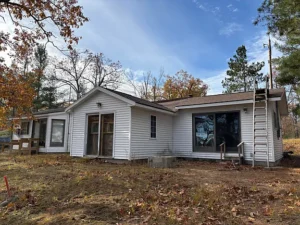
If you’ve been dreaming of peace, privacy, and wide-open spaces, this is the property you’ve been waiting for. Tucked away at the end of Bamma Lane, this unique home offers true seclusion surrounded by nature — a rare find in today’s world of constant motion and noise.

Whether you’re looking for a year-round residence, a private getaway, or the ultimate hunting camp, this property delivers. Adjacent to over 500 acres of State Land, it offers direct access to endless outdoor adventures — hunting, hiking, exploring, and simply enjoying the wild beauty that stretches in every direction.

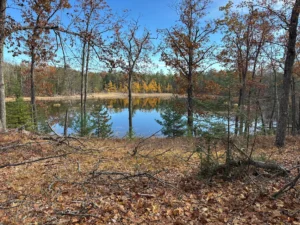
Imagine waking up to the sound of birds in the distance, stepping outside to breathe in crisp, clean air, and watching the morning mist rise over the huge pond just out front. That’s life here — quiet, simple, and grounded in nature.

This property is part of an estate and is being sold AS-IS, presenting a rare opportunity for those ready to bring their tools, creativity, and vision to a place with truly limitless potential.


A Hidden Gem at the Edge of the Wilderness

From the moment you turn down Bamma Lane, you’ll know you’re heading somewhere special. The road winds through scenic countryside, with ridges, forests, and water views on almost every side. As you approach the property, the landscape opens up to reveal a tranquil retreat — the kind of place where you can unplug, unwind, and reconnect with what matters most.

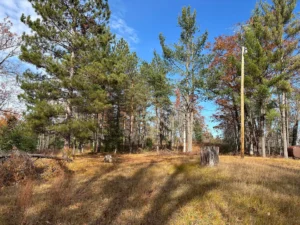
The home sits on a peaceful lot, positioned perfectly to capture views of the large pond out front. It’s the perfect setting for watching wildlife — deer, turkey, ducks, and songbirds are frequent visitors. You can spend your mornings fishing, your afternoons exploring state trails, and your evenings by a campfire under the stars.

With state land directly adjacent, you’ll never run out of places to roam. Whether you’re an avid hunter, an outdoor enthusiast, or simply someone who values space and freedom, this property puts you right on the edge of adventure.


A Home Built for Seclusion and Simplicity

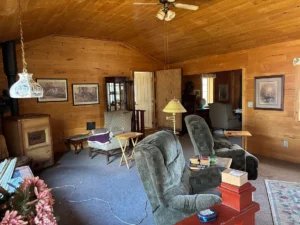
The home itself has served as a year-round residence, but it could easily function as a vacation cabin, off-grid homestead, or hunting lodge. It’s the perfect canvas for anyone looking to create a personalized retreat in the woods.

Inside, the layout provides a comfortable starting point. There’s space for living, dining, cooking, and sleeping — everything you need to enjoy a peaceful stay in nature. Add your own updates and finishes, and you can transform it into a cozy cabin with rustic charm or a simple, efficient getaway for weekends and hunting season.

The house is equipped with power service (not currently on), landline phone access, and satellite TV availability. Heat sources include fuel oil and wood, giving you flexibility depending on the season. (Note: The fuel line appears currently disconnected and may need inspection or reconnection.)

While the condition of the property is unknown and it’s being sold AS-IS, the structure presents a great foundation for anyone with a vision — whether that’s a modernized rustic cabin or a low-maintenance retreat for outdoor living.


An Ideal Hunting Camp Location

Few properties offer direct access to over 500 acres of State Land, making this an absolute dream for hunters and outdoorsmen. From your doorstep, you can head out for deer, turkey, small game, or waterfowl without ever needing to load up the truck.

The combination of woods, ridges, and water provides excellent wildlife habitat, and the pond adds another natural draw for game. The surrounding landscape changes beautifully with the seasons — from vibrant fall colors to quiet, snow-covered winters — giving you a year-round playground for all kinds of recreation.

This isn’t just a hunting property; it’s a self-sufficient retreat where you can live close to nature, enjoy privacy, and still have the basic comforts of home.


Outdoor Living and Natural Beauty

One of the most striking features of this property is the sense of peace and connection to nature. The views are nothing short of breathtaking — rolling ridges, wooded hills, and water nearly everywhere you look. As you drive down the road, it feels like you’re entering a hidden valley of your own.

The large pond in front of the house adds both beauty and function. Whether you’re sitting on the porch enjoying the reflection of the trees in the water, casting a line on a quiet afternoon, or watching the wildlife that gathers along its edge, the pond becomes the heart of your outdoor experience.

The property’s location also means minimal traffic and maximum privacy. Bamma Lane is not county maintained, which helps keep the area peaceful and secluded, yet all the roads leading to it are accessible. It’s the perfect blend of “away from it all” and “easy to reach.”


Included with the Property

The sellers are leaving behind a truck with a plow, ensuring that winter access and snow management will be much easier for the new owners. This thoughtful inclusion makes it simpler to enjoy the property year-round, even in snowy or remote conditions.

The home is equipped with essential connections, though not currently active:

  • Power – available at the property
  • Landline telephone service – accessible if desired
  • Satellite television – available for setup
  • Heating options – fuel oil and wood (fuel line currently disconnected)

These features make the property flexible for both seasonal use and year-round living, depending on how much off-grid independence or modern convenience you want to incorporate.


Endless Potential and Possibilities

This property offers something special — freedom. Freedom to create, to explore, to live on your own terms.

Some possibilities include:

  • Year-round residence – Move in full-time and enjoy the peace and privacy of rural living.
  • Hunting or fishing camp – The perfect basecamp for outdoor adventures with friends and family.
  • Weekend getaway – A quiet escape from city life, just far enough to recharge.
  • Off-grid homestead – Add solar, a wood stove, and a garden for complete self-reliance.
  • Rustic cabin renovation – Restore and modernize the home while keeping its rugged character.

Because the property is being sold as-is, you can approach it however you choose — full renovation, partial improvement, or minimal maintenance for seasonal use.


Why You’ll Love It Here

There’s something uniquely peaceful about places like this. It’s the kind of property that invites you to slow down, breathe, and notice the details — the smell of pine, the shimmer of sunlight on the pond, the distant call of a hawk circling above the trees.

At night, the stars seem brighter, and the quiet feels deeper. You can sit outside by a crackling fire, listen to the sounds of nature, and truly feel disconnected from the stress of everyday life.

Whether you’re an outdoorsman, a nature lover, or simply someone searching for a place to retreat from the world, this property delivers in every way. It’s raw, real, and ready for new life.


Property Highlights

  • Secluded location on Bamma Lane – surrounded by nature and tranquility
  • Borders 500+ acres of State Land – direct access to hunting and recreation
  • Large pond out front – peaceful water views and abundant wildlife
  • Year-round or seasonal use – ideal as a residence, cabin, or hunting camp
  • Power, landline, and satellite TV available (not currently active)
  • Fuel oil and wood heating options (fuel line disconnected)
  • Truck with plow included – perfect for winter maintenance
  • Bamma Lane not county maintained, but roads leading to it are
  • Estate sale – sold AS-IS
  • Condition unknown – buyer responsible for inspection
  • Surrounded by ridges, woods, and water views in every direction

A Rare Opportunity for Privacy and Freedom

In today’s world, true seclusion is becoming harder and harder to find — and that’s what makes this property so remarkable. Here, you can live surrounded by over 500 acres of wilderness, with nothing but the sounds of nature for company.

You can build memories with family, host friends for hunting season, or simply enjoy quiet weekends away from everything. And with basic utilities available, you have the flexibility to live as off-grid or connected as you choose.

This property isn’t just land and a house — it’s an opportunity to build a lifestyle that’s entirely your own.


Final Thoughts

If you’ve been searching for a place that feels truly off the beaten path — where the stars shine brighter, the air feels fresher, and the only traffic comes from deer crossing the field — this is it.

With two acres of private land, a large pond, and direct access to 500 acres of State Land, this secluded retreat is full of possibilities. Bring your tools, your vision, and your love for the outdoors — and transform this hidden gem into your own piece of paradise.

Peace, privacy, and potential — all waiting for you at the end of Bamma Lane.

Listed on Zillow

She Called Me Daddy For A Decade, But One Text Changed Everything

I never expected one text message to change an entire decade of fatherhood. But that’s exactly what happened.

My stepdaughter — Amira — is thirteen now. I’ve been in her life since she was three. She used to call me “Daddy” without hesitation. It was natural. Easy. Like the word belonged to both of us. But life has a way of getting messy, especially when a biological parent drifts in and out when it suits them.

Last night, she was supposed to be spending the weekend with her biological father, Jamal. My wife, Zahra, dropped her off after school on Friday. Everything seemed normal. Then Saturday evening, my phone buzzed with a simple message:

“Hey… can you come get me?”

No explanation. No details. Just that.

I grabbed my keys and drove over. When I pulled up in front of Jamal’s building, she was already standing outside waiting — backpack half-zipped, arms crossed tight against her chest, eyes fixed on my car like she’d been watching the road the whole time.

She didn’t even wait for the car to fully stop before opening the door.

The moment she buckled in, she looked straight at me and asked, quietly, almost afraid of her own voice, “Can I start calling you Dad again? For real?”

I didn’t know if I should laugh, cry, or pull over and hug her. So I did a messy combination of all three. For ten years, I’d been waiting to hear those words again, and she had no idea how much weight they carried.

But to understand that moment, I have to go back.

When I met Zahra, she was a single mom with a toddler. Amira was still wobbling around with pigtails and mismatched socks. Jamal — her biological father — was already disappearing. One month he’d show up with big promises, the next he’d vanish without a word. I never understood how someone could drift in and out of a kid’s life like a breeze and still act offended when the world didn’t spin around him.

I wasn’t trying to replace him. I just showed up. Every day. Every milestone. Every meltdown. I was there for the scraped knees, the preschool graduations, the sick days, the first-day-of-school nerves. I was the one she clung to when she had nightmares. One day, she just started calling me “Daddy,” and it fit, like we’d both been waiting for that moment without realizing it.

For a long time, that was our little world. Simple. Steady. A family built inch by inch.

Then she hit ten, and Jamal decided it was his season to “step up.” Suddenly he wanted weekends, holidays, “bonding time.” He wanted the title without the work. And even though we couldn’t legally stop him, we could see the storm cloud forming above Amira’s head.

She stopped calling me Daddy. Not because she stopped loving me — kids just try to keep the peace in ways adults don’t always notice. It felt like getting cut open with a dull blade, but I swallowed it. I didn’t want her caught between two men tugging on a title.

I pulled back a little. Not from loving her — just from pushing. I kept being there. The lunches, the homework, the drives, the routines. But I told myself if she needed space to sort out her feelings, she’d get it.

Then came her text.

When we got home last night, she went straight to her room. Zahra looked at me, waiting for an explanation I didn’t really have. I just said, “She wanted to come home,” and that was that.

This morning, over pancakes, she finally told us why.

Jamal had brought over a girlfriend Amira didn’t even know existed. They were kissing constantly — she said it “felt like a bad movie.” Then the couple got into an argument loud enough to rattle the walls. The girlfriend called Amira the wrong name. Twice.

And that was enough for her.

Later that day, while working on a school project together, she asked me, “Why didn’t you ever leave?”

The question hit harder than anything I’d felt in a long time. I told her the truth — because I wanted to stay. Because I loved her. Because loving her had never been conditional.

She nodded, pressed a sticker onto the trifold board, and didn’t say anything else. But something shifted.

By Monday morning, she’d changed my name in her phone to “Dad.”

I thought that was the end of the story. A quiet, meaningful victory. But the universe wasn’t done.

That Friday, Zahra got a letter from Jamal’s lawyer: he wanted joint custody. Holidays. Medical decisions. School decisions. The whole package.

Our lawyer explained the ugly truth: since I’d never formally adopted her, I had absolutely no legal standing. On paper, I wasn’t her parent. I was just a stepfather — a glorified guest.

That broke something in me.

Zahra stayed steady. “Let’s fix this the right way,” she said. “If Amira wants you to adopt her, then let’s do it.”

I didn’t dare hope, but Zahra brought it up gently over dinner. “Amira, what would you think about Dad adopting you?”

She blinked like she was confused by the question.

“I thought he already did.”

She said she wanted it. Just like that.

Then came the paperwork. The interviews. The background checks. The endless forms that tried to reduce a decade of love into checkboxes.

The catch? Jamal objected. Loudly. He claimed we were “stealing” his daughter, despite barely showing up for half her life.

The case dragged on for months. I had to explain my bond with her to a courtroom full of strangers, while Amira had to meet with an advocate and talk about her life like it was some documentary interview.

Finally, the judge asked to speak with her directly.

“What do you want, sweetheart?” she asked.

Amira didn’t hesitate. “I want Josh to be my real dad. He already is. He’s the one who stayed.”

The courtroom went silent. The judge nodded, made a note, and said she’d issue her ruling soon.

Six weeks later, the official adoption order arrived in the mail.

I am now Amira’s father — legally, fully, permanently.

We celebrated with cheap takeout and a loud movie she insisted on picking. Halfway through, she leaned her head on my shoulder and whispered, “Thanks for never giving up on me.”

I told her the truth. It never crossed my mind.

Here’s what I know now: biology makes you related. Showing up makes you a parent. Love makes you family.

And sometimes, the most important title in your life is the one a child chooses to give you.

If you want this polished even further, styled like a memoir chapter, or cut into a short viral article, just say the word.

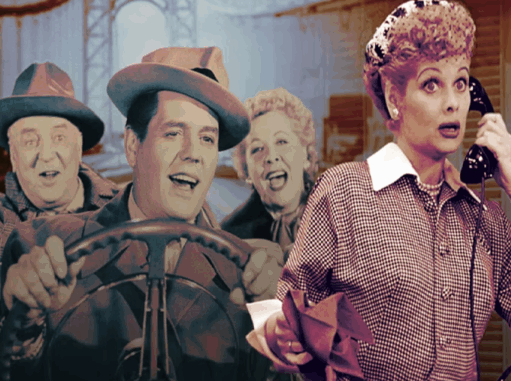
The Time Lucy Got Locked in the Walk-In Freezer!

When it comes to I Love Lucy, few moments capture the perfect mix of slapstick chaos and heart-stopping hilarity quite like the time Lucy gets herself locked in a walk-in freezer!

70 years ago today, the I Love Lucy episode “The Freezer” aired. To go with the walk-in freezer Ethel’s butcher uncle gives them, Lucy and Ethel buy two sides of beef. What they don’t realize is that is 700 pounds of meat and totals $483. Now they must get rid of the meat before Ricky and Fred discover it.This episode was inspired by the wealth of advertisements for home freezers the writers were seeing at the time. Lucy’s sales pitch (“Tell ya what I’m gonna do…”) was parody of comedian Sid Stone’s commercials on Milton Berle’s Texaco Star Theater.

This element of the script was previously featured in the My Favorite Husband episodes “Liz Sells Dresses” and “Selling Dresses.”This was the first episode to credit Desi as executive producer.

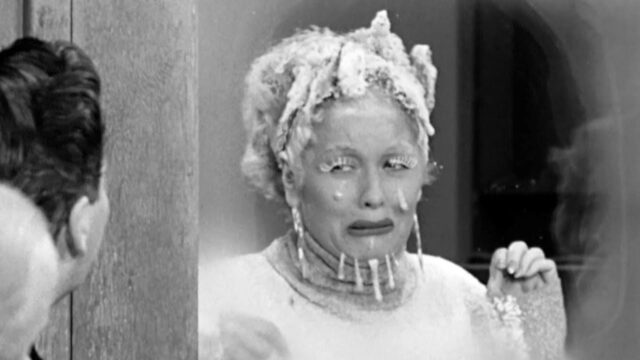
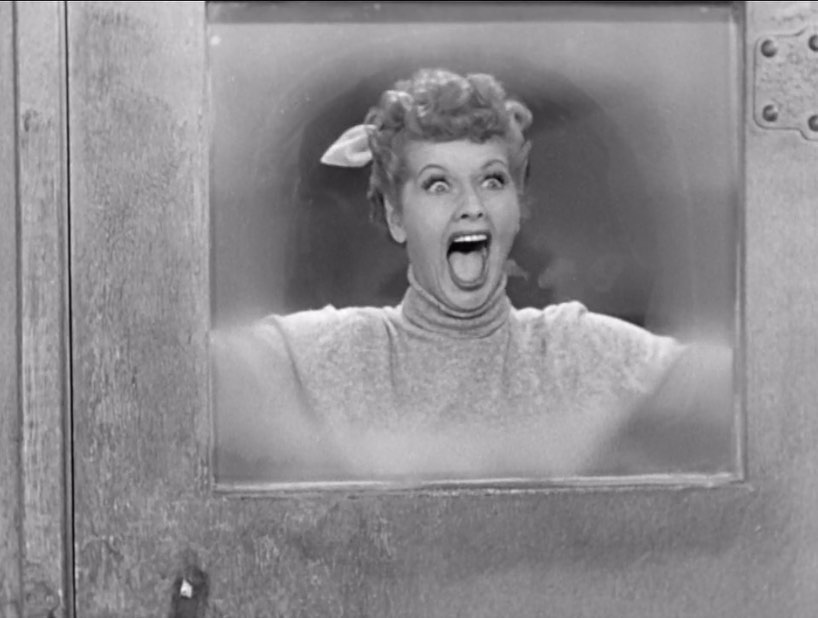
It all starts when Lucy, always eager to help (and maybe snoop just a little), finds herself inside a walk-in freezer — and before she knows it, she’s trapped! 🥶 As the temperature drops, the laughs rise. Watching her try to stay warm, improvise ways to escape, and still keep her trademark comic timing is nothing short of genius.

💬 The Scene That Still Has Fans in Stitches

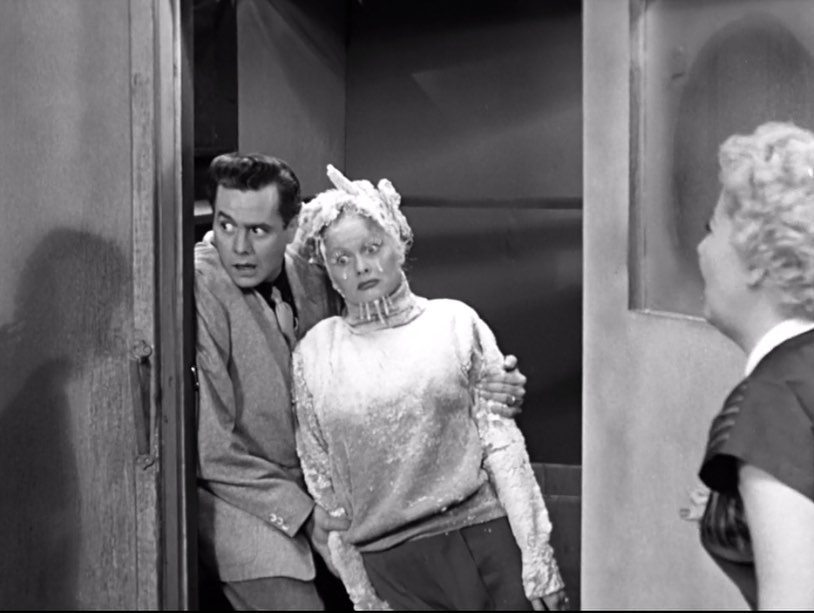
Lucy’s facial expressions, the slow realization of being trapped, and her hilarious “frozen solid” pose have become iconic. The best part? Even covered in frost and bundled like a snowman, she somehow stays adorable and funny.

Lucille Ball’s natural ability to make physical comedy believable (and relatable!) shines through here. No one else could turn being locked in a freezer into a scene that fans are still quoting more than 60 years later!

❄️ Did You Know?

Lucille Ball actually insisted on doing much of her own physical comedy — even in this freezing set. The “frost” on her face and clothes was created using shaved ice and makeup dust to give that real “icy” look. The result? One of TV’s most memorable and genuinely funny near-disasters!

🍇 See Lucy get messy again! Don’t miss her legendary Grape-Stomping Scene ➜ [Click Here]


❤️ Why Fans Love This Scene

  • Classic Lucy panic meets clever problem-solving!
  • It’s one of the most visually iconic scenes of the 1960s sitcom era.
  • Shows her dedication — she’d do anything for a laugh!
  • Vivian Vance’s reaction when she finds her is equally priceless!

💃 Another classic Lucy mishap! Watch her tight-dress moment that had everyone gasping ➜ [Click Here]


💡 Fun Fact

The idea for this scene came from a real incident on the studio lot — one of the crew members accidentally locked themselves in a walk-in freezer, and Lucille Ball turned it into comedy gold. That’s Lucy: turning panic into punchlines!

Popular

Why I Love Lucy Ended Abruptly Without a Proper Finale

0
A staple of American pop culture, whose approach to comedy is still referenced and homaged to this day, I Love Lucy ran for an impressive total...