
Entertainment

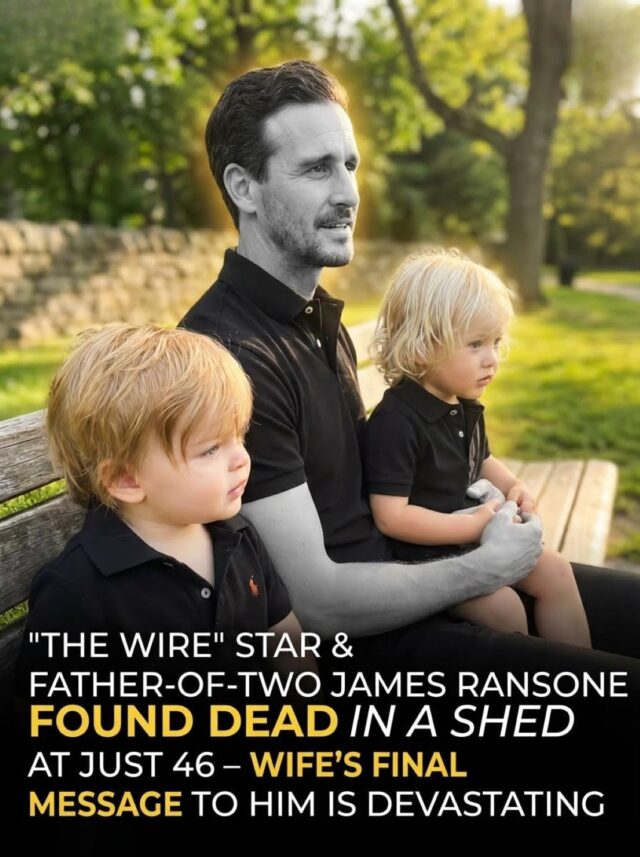
James Ransone, Known for His Role on The Wire, Passes Away at 46

The passing of James Ransone at the age of 46 has prompted an outpouring of reflection from fans, colleagues, and the entertainment industry as a whole. Known for his emotionally intense performances and uncompromising honesty as an artist, Ransone built a career defined by depth rather than fame alone. News of his death has been met with sadness, particularly because he had spoken openly in past years about personal challenges and the work he had done to move forward. In the days since, attention has turned not only to the loss itself, but to the body of work and humanity he leaves behind.

Ransone was widely recognized for his portrayal of Ziggy Sobotka in season two of The Wire, a performance that earned lasting critical praise and cemented his place in television history. The role showcased his ability to bring vulnerability and complexity to characters living on the margins, a quality that became a hallmark of his career. He later returned to HBO in the acclaimed miniseries Generation Kill, where he played a U.S. Marine with humor and emotional realism. Across both projects, Ransone demonstrated a rare commitment to authenticity that resonated strongly with audiences.

Beyond television, Ransone maintained a diverse film career that moved fluidly between independent cinema and mainstream releases. He appeared in notable projects such as Tangerine, Sinister, The Black Phone, and It Chapter Two. Directors and co-stars frequently described him as deeply committed, thoughtful, and fearless in his approach to storytelling. His performances often explored flawed, searching characters, reflecting an actor unafraid to engage with difficult emotional terrain in pursuit of truth on screen.

In his personal life, Ransone was a devoted husband and father, a role those close to him described as central to his identity. Following his passing, his wife shared a heartfelt message honoring their partnership and the family they built together. Tributes also came from HBO and other production companies that worked with him, recognizing his talent and the respect he earned throughout his career. While his life ended far too soon, James Ransone’s legacy lives on through performances that continue to move viewers and remind audiences of the power of honest storytelling. He will be remembered not only for the characters he portrayed, but for the intensity, integrity, and humanity he brought to his craft.

A Night on Our Porch That Changed How We See Others

The night my pregnant neighbor showed up on our porch, the air felt heavier than usual. She stood there quietly at first, arms wrapped around herself, eyes red from crying. She explained through broken words that her fiancé had ended their relationship abruptly and that she didn’t know where else to go. I guided her to the porch steps and sat beside her, listening as she tried to regain her breath. Inside the house, my husband paced near the doorway, clearly uncomfortable with the situation. I could sense his frustration, but I chose to focus on the woman in front of me—someone who needed kindness more than judgment.

When I hugged her goodbye, I slipped a small amount of cash into her hand. It wasn’t a solution, just a gesture meant to remind her she wasn’t alone. She thanked me quietly and walked back to her apartment, shoulders slumped but posture steadier than when she arrived. My husband barely said a word after that, only shaking his head and muttering something about how complicated life becomes when people rely on others. I didn’t argue that night. Sometimes silence is easier than conflict, even when you disagree deeply.

Over the next few weeks, life returned to its routine. I noticed our neighbor slowly rebuilding her days—short walks in the morning, groceries carried carefully, a calm determination in her movements. One afternoon, she waved and smiled for the first time since that night. Then, one month later, my husband came rushing inside, pale and unsettled, telling me to look outside. Parked along the curb were several cars, and a small group of people stood near her building. At first, I worried something had gone wrong. Instead, what I saw surprised me: friends, family, and neighbors gathered together, helping her move boxes and set up a safer place to live.

Later, she came by to thank us. She explained that after that night, she reached out for help she had been too afraid to ask for before. The money I gave her wasn’t what changed everything, she said—it was the feeling of being seen without judgment. My husband listened quietly as she spoke. After she left, he sat down beside me and admitted that seeing her strength made him reconsider his assumptions. He said he had confused vulnerability with weakness, and that moment outside helped him understand the difference. That night reminded me that kindness often returns in unexpected ways—not as repayment, but as growth. Sometimes, the smallest act of compassion becomes the beginning of a much larger transformation, not just for the person receiving it, but for those who witness it too.

Dianne Holechek, First Wife of Chuck Norris, Passes Away

Dianne Holechek, remembered by her family as a devoted mother and a steady presence through decades of change, has passed away peacefully at the age of 84. Though she spent much of her life outside the public spotlight, her story is closely tied to a significant chapter in Hollywood history through her long marriage to Chuck Norris. In the days following her passing, tributes from loved ones have highlighted a woman defined not by fame, but by quiet strength, loyalty, and deep care for her family. Her death has prompted reflection not only on her role in a well-known life, but on the personal legacy she leaves behind.

Dianne met Chuck Norris in high school in Torrance, California, and the two married as teenagers in the late 1950s. Together, they navigated early adulthood, parenthood, and the challenges that came with building a life long before public recognition arrived. They raised two sons, Mike and Eric, both of whom would later pursue their own paths—one in acting and the other in professional racing. Throughout the early years of Norris’s career, Dianne largely chose a private life, focusing on family while supporting her husband’s ambitions during times of uncertainty and financial strain. Their marriage lasted for three decades before ending in divorce in the late 1980s.

As Norris’s public profile grew through martial arts success and film and television roles, Dianne remained intentionally out of view, a choice that reflected her preference for stability over attention. In later years, Norris spoke openly about both gratitude and regret regarding their shared history, acknowledging her support during difficult periods. Despite the challenges their marriage faced, the two maintained a respectful and amicable relationship after their separation, eventually developing a lasting friendship centered on their children. This enduring bond underscored the mutual respect that remained even after their marriage ended.

Following her passing, Norris shared a heartfelt message honoring Dianne’s character, describing her as kind, intelligent, and deeply devoted to her sons. Family members echoed those sentiments, offering personal memories that revealed her warmth and generosity in everyday moments. One tribute from her daughter-in-law recalled Dianne’s compassion and presence during important family milestones, emphasizing the quiet but powerful role she played within the family. Though she lived much of her life away from public view, Dianne Holechek is remembered as a woman whose influence was felt most strongly by those closest to her. Her life stands as a reminder that lasting impact is often found not in recognition, but in love, resilience, and the relationships we nurture over time.

A Small Brass Object With an Unexpected Detail Inside

Sometimes the most meaningful discoveries come from objects so small they almost escape notice. That was exactly the case when I found a tiny brass capsule tucked away among old keepsakes. It was smooth, slightly worn, and heavy for its size—clearly made to last. At first, it seemed decorative, perhaps something picked up long ago and forgotten. But curiosity got the better of me. When I gently twisted it open and found a carefully rolled note inside, the moment instantly felt different. Holding that capsule, I realized I wasn’t just opening an object—I was reopening a memory, one that had quietly waited for the right time to be remembered.

Brass wish capsules have a long and understated history. Long before messages were typed and instantly sent, people took the time to write down thoughts they hoped would last. These capsules were often used to hold wishes, promises, or reflections meant for the future. The process itself carried meaning: choosing the words, folding the paper, and sealing it inside something durable. It wasn’t rushed. It required intention. In many ways, the capsule served as a pause in time, capturing a feeling or hope exactly as it was in that moment, untouched by what came later.

What makes these capsules special is not just what they contain, but how they endure. Brass ages gracefully, developing a patina that reflects years of handling and storage without losing its strength. That durability feels symbolic. Life changes quickly—people grow, plans shift, priorities evolve—but the capsule remains steady. Often exchanged during meaningful occasions such as birthdays, graduations, or personal milestones, it represented a quiet promise that the moment mattered. Even if forgotten for years, the capsule protected what was placed inside, preserving a small piece of someone’s past with remarkable care.

Opening the capsule after so much time can be surprisingly emotional. The handwriting on the note, the choice of words, even the tone can feel like a conversation with a former version of oneself or someone who once mattered deeply. There is no urgency in that moment, only reflection. In a world that moves fast and favors convenience, these small brass capsules remind us of the value of slowing down. They encourage us to honor old dreams, appreciate where we came from, and recognize that even the smallest objects can hold powerful meaning. Sometimes, what we need most isn’t something new—but a quiet reminder of what once mattered and still does.

From Simple Beginnings to Life in a Quiet Forest Home

When Mama Vee chose to step away from city life, her decision was guided by a desire for calm rather than convenience. The constant noise and fast pace no longer matched the life she wanted to live. She found herself craving quiet mornings, open space, and time to think without interruption. Her first step toward that vision was a converted school bus, a small but functional space that allowed her to live simply and independently. It wasn’t luxurious, but it gave her freedom and a sense of control over her daily rhythm. In that modest setting, she began to reconnect with what mattered most to her: peace, purpose, and balance.

As time passed, Mama Vee devoted more of her energy to caring for rescued animals, a responsibility that brought joy but also new challenges. The bus, while meaningful, proved limiting when it came to long-term comfort and practicality—especially with animals needing safe, stable shelter. Just as she began to wonder what her next step might be, help arrived from an unexpected place. A nearby neighbor offered her an old, unused travel trailer that had been sitting idle for years. The trailer showed signs of wear and age, but Mama Vee saw potential instead of problems. It wasn’t just a structure; it was an opportunity to build something lasting.

Restoring the trailer became a shared effort rooted in friendship and patience. With the help of her friends Jamie and Kevin, Mama Vee approached the project one step at a time. There was no rush and no grand budget—only practical goals and steady progress. They focused on cleaning, repairing what was necessary, and making thoughtful improvements that would increase comfort and usability. Gradually, the space transformed. Storage solutions made the small interior feel open and organized, natural light softened the atmosphere, and simple furnishings created warmth without excess. Mama Vee added personal touches along the way, choosing handmade items and arranging cozy areas where her animals could rest comfortably. Each change reflected care rather than perfection.

Today, the trailer rests quietly among trees and open land, surrounded by a sense of calm that once felt out of reach. Outside, Mama Vee cultivated a small garden, blending flowers with edible plants to nourish both body and spirit. Her days now follow a gentle routine—tending to animals, caring for the garden, and enjoying the stillness of her surroundings. What began as a neighbor’s simple act of kindness evolved into a meaningful transformation. Mama Vee’s home stands as a reminder that a fulfilling life doesn’t require excess, only intention. Through community support, patience, and a willingness to embrace simplicity, she created a peaceful place that truly feels like home.

Helen Siff Passes Away at 88: Veteran Actress From Hail, Caesar! Remembered for a Distinguished Career

Veteran actress Helen Siff, best known to modern audiences for her appearance alongside George Clooney in the 2016 Oscar-nominated film Hail, Caesar!, has passed away at the age of 88. Her family confirmed that she died peacefully in Los Angeles on Thursday following complications from surgery after a long illness. The news was met with quiet reflection across the entertainment community, where Siff was admired for her steady presence, commitment to her craft, and enduring professionalism. While she may not have always been in the spotlight, her contributions left a meaningful mark on the many productions she was part of over the years.


Siff’s acting career spanned more than five decades, during which she worked consistently across film, television, and stage. She was known as a dependable character actress who approached every role with care and seriousness, regardless of its size. Colleagues often described her as someone who elevated scenes through subtlety and authenticity rather than spectacle. In an industry that constantly evolves, Siff remained respected for her work ethic and adaptability, earning the trust of directors and fellow performers alike. Her longevity reflected both her talent and her deep love for storytelling.


In a family statement shared with The Hollywood Reporter, loved ones emphasized that Siff was admired not only for her abilities as an actress but also for her character off camera. They noted that she brought kindness, focus, and professionalism to every set she worked on. According to the statement, she believed that each role was an opportunity to add something meaningful to a story, a philosophy that guided her throughout her career. This mindset earned her lasting respect within the creative community.


One of Siff’s most recognizable later roles came in Hail, Caesar!, written and directed by Joel Coen and Ethan Coen. Set in 1950s Hollywood, the film follows a studio fixer navigating scandals and larger-than-life personalities during the Golden Age of cinema. Siff appeared as a Malibu maid, a small but memorable role that reflected her ability to bring authenticity to any character. As fans and colleagues remember her life and work, Helen Siff is being honored as a dedicated artist whose quiet contributions helped shape countless stories across generations.

Can You Identify the Purpose of This Everyday Tool From the Past?

At first glance, it was the kind of object you might easily overlook—quietly resting among other old belongings, unassuming and unfamiliar. Its design felt oddly specific, shaped in a way that didn’t resemble anything commonly used today. It clearly had a purpose, yet that purpose wasn’t obvious. The longer I looked at it, the more questions surfaced. Who made it? Why was it designed this way? And most importantly, what role did it once play in everyday life? That single object sparked a curiosity that quickly grew into a deeper appreciation for tools from a time when practicality and creativity worked hand in hand.

As I began researching, I learned that many items we now consider mysterious were once essential parts of daily routines. Before modern appliances and digital conveniences, people relied on thoughtfully designed tools to cook, clean, repair, and create. These objects were often handcrafted or carefully engineered to solve very specific problems. A curved edge might improve grip, a hollow space might control flow or pressure, and a simple lever could save hours of physical effort. What appears unusual today was, in its time, a brilliant solution shaped by necessity, patience, and hands-on experience.

What makes discovering these forgotten tools so fascinating is the way they bridge the gap between past and present. Holding an object that was once used regularly—perhaps in a kitchen, a workshop, or a quiet home—creates a powerful connection to the people who lived before us. You can imagine someone reaching for it daily, relying on it as part of their routine. These tools remind us that history isn’t just made of major events; it’s also built from small, ordinary moments and the objects that supported them.

In a world filled with fast upgrades and disposable products, these older items invite us to slow down and reflect. The next time you come across an unfamiliar or outdated object, pause before dismissing it. Ask yourself what problem it solved and what story it might hold. Often, the simplest tools reveal the most thoughtful designs. They remind us that ingenuity doesn’t always require advanced technology—sometimes it just requires careful observation, creativity, and a deep understanding of everyday needs.

Michael Douglas reveals heartbreaking exit from acting!!

After almost sixty years of captivating audiences, Michael Douglas has revealed he is stepping away from acting. At 80 years old, the two-time Academy Award winner says the decision was necessary, not because his love for the craft has faded, but because he doesn’t want his life to end on a movie set.

“I realized I had to stop,” Douglas confessed during a conversation at the Karlovy Vary International Film Festival. “I’d been working pretty hard for almost 60 years, and I did not want to be one of those people who dropped dead on the set.”

For someone who has been part of Hollywood’s DNA since the 1970s, the announcement feels like the closing of an era.

From Producer to Star

Born into cinematic royalty as the son of legendary actor Kirk Douglas, Michael Douglas did not initially follow the conventional acting path. At 31, he produced One Flew Over the Cuckoo’s Nest (1975), a daring project his father had long wanted to see adapted for the screen. The film went on to win the Academy Award for Best Picture, earning Douglas his first Oscar—not as an actor, but as a producer.

That success could have marked him as a behind-the-scenes power player, but Douglas soon made his mark on screen as well. Through the 1980s and ’90s, he emerged as a defining face of Hollywood masculinity—layered, flawed, and magnetic.

His turn as the ruthless financier Gordon Gekko in Wall Street (1987) brought him his second Oscar, this time for Best Actor. His “greed is good” mantra became a cultural touchstone, symbolizing the excesses of the era. At the same time, films like Fatal Attraction (1987) and Basic Instinct (1992) cemented his reputation as a leading man who could command psychological thrillers with both charm and menace.

Reinvention and Longevity

Unlike many actors of his generation, Douglas never allowed himself to be boxed in. He proved his versatility repeatedly, balancing Hollywood blockbusters with more intimate projects. In recent years, he surprised critics and fans alike with his performance in The Kominsky Method (2018–2021), a Chuck Lorre comedy that explored aging, friendship, and vulnerability.

“I did The Kominsky Method because I wanted to try some comedy, and I wanted to work with Chuck Lorre,” he explained. The gamble paid off—the role earned him widespread acclaim and a Golden Globe.

He also embraced modern franchises, stepping into the Marvel Cinematic Universe as Dr. Hank Pym in Ant-Man (2015) and its sequels. For younger audiences, Douglas wasn’t Gordon Gekko or Dan Gallagher—he was the brilliant but eccentric scientist guiding Paul Rudd’s superhero. “I had the experience, and I was excited to do it. I’d never done a green screen picture before,” he said.

Health Battles and Perspective

Douglas’ decision to step back is not without context. In 2010, he was diagnosed with stage 4 throat cancer, a grueling ordeal that tested his resilience. “Stage 4 cancer is not a holiday,” he once remarked. Intensive chemotherapy and radiation saved his life, though surgery would have meant losing part of his jaw—and possibly his career.

The experience left him with a renewed sense of gratitude. Surviving such a battle while continuing to work reinforced his dedication, but it also made him acutely aware of life beyond the screen.

A Family Man at Heart

For all his Hollywood glamour, Douglas often emphasizes the importance of family. Married to actress Catherine Zeta-Jones since 2000, he frequently highlights how much joy he takes in supporting her career. “I just like to watch my wife work,” he admitted with a smile.

Their marriage has weathered the spotlight for over two decades, and together they have raised two children. Douglas also shares a deep bond with his eldest son, Cameron Douglas, who has faced his own public struggles. The two recently collaborated on Looking Through Water (formerly titled Blood Knot), an upcoming film still in post-production.

That father-son project may well become one of Michael’s last appearances on screen, serving as both a creative endeavor and a personal milestone.

A Legacy Written in Film

Looking back, Douglas’ career spans genres, decades, and generations of fans. Few actors have managed to reinvent themselves as consistently as he has. From morally complex antiheroes to vulnerable older men navigating the realities of age, his characters have always reflected some facet of the human condition.

But Douglas insists he is not officially retired. Instead, he’s enjoying a hiatus, focusing on his personal life, and choosing projects only if they feel extraordinary. “I say I’m not retired, because if something special came up, I’d go back. But otherwise, I’m quite happy.”

It is a sentiment that reflects both peace and possibility. He is leaving the door slightly open but seems content to step out of the relentless pace that defined his career.

The End of an Era?

For Hollywood, Douglas’ departure signals more than the retirement of a single actor—it’s a reminder that the giants of a golden age are gradually stepping back. He belongs to a generation of performers who straddled the classic and modern eras of cinema, adapting to shifts in technology, storytelling, and audience expectations without ever losing relevance.

His influence stretches beyond acting. As a producer, he helped bring iconic stories to life. As a performer, he redefined masculinity in ways that were often uncomfortable but undeniably compelling. His voice, his presence, and his choices shaped not just his career but the broader landscape of film.

Looking Ahead

What comes next for Michael Douglas may not involve scripts or cameras. Instead, it may be quieter moments spent with family, supporting Catherine Zeta-Jones’ ongoing work, or simply enjoying the life he spent decades too busy to fully embrace.

For audiences, the absence of Douglas on screen will be keenly felt. Yet his body of work remains a towering legacy—one that will continue to inspire actors, entertain viewers, and spark debate about the roles he so fearlessly embodied.

At 80, Douglas is clear about one thing: he doesn’t want to chase Hollywood until his last breath. “I have had a very busy career. Now, I am very happy with taking the time off,” he said. “I did not want to be one of those people who dropped dead on the set.”

And perhaps that is the greatest lesson he leaves us with—not just about acting, but about life itself: knowing when to walk away, on your own terms.

Chuck Norris Announces Heartfelt Farewell!

The legend of Chuck Norris is not merely a collection of cinematic credits or a series of viral memes celebrating his perceived omnipotence; it is a cultural cornerstone that has defined the archetype of the American hero for more than half a century. When news began to circulate regarding Norris’s heartfelt farewell, it felt less like a standard celebrity retirement and more like the shifting of a tectonic plate in the world of entertainment. For decades, the image of Norris—specifically in his career-defining role as Cordell Walker—served as a steadying force in an increasingly chaotic world. To hear the man who once seemed invincible speak with a voice thick with emotion was a profound moment for fans globally. It was a reminder that while the characters may be immortal, the men who breathe life into them are subject to the same passage of time as the rest of us.

“Walker, Texas Ranger” was never just another police procedural. Premiering in the early 1990s, it arrived at a time when the gritty, cynical realism of urban dramas was beginning to dominate the airwaves. Against that backdrop, Norris offered something different: a return to the moral clarity of the classic Western, updated for a modern audience. He played a man of few words but immense action, a practitioner of martial arts who preferred to resolve conflicts with wisdom and restraint until the moment arrived when justice demanded a roundhouse kick. For millions of families, Saturday nights were anchored by the show’s theme song. It became a ritual, a cross-generational gathering point where grandfathers, parents, and children could sit together and find common ground in the simple, powerful triumph of right over wrong.

The emotional weight of Norris’s farewell stems from the unique relationship he built with his audience. Unlike many action stars who maintained an air of detached coolness, Norris always projected a palpable sense of sincerity. His screen presence was defined by a “gentle core” that softened his legendary toughness. He wasn’t just fighting criminals; he was protecting a way of life, defending the vulnerable, and upholding a code of ethics that felt increasingly rare. Off-screen, his commitment to faith, family, and his Kickstart Kids foundation reinforced the idea that the man was not so different from the character. When fans watched him struggle through his goodbye, they weren’t just mourning the end of a television era; they were expressing gratitude for a man who had served as a moral compass for their formative years.

As we examine the legacy Norris leaves behind, it is impossible to ignore the sheer longevity of his influence. Before he was a television icon, he was a world-class martial artist, a pioneer who helped bring Eastern disciplines into the Western mainstream. His transition to film in the 1970s and 80s cemented his status as a powerhouse of the action genre, but it was “Walker, Texas Ranger” that allowed him to enter the living rooms of America as a trusted friend. The show ran for eight seasons and spawned a massive following that persisted long after the final episode aired. The announcement of his departure from the public eye serves as a poignant bookend to a career that was built on the values of discipline, integrity, and resilience.

The grief felt by the public in the wake of this farewell is balanced by a deep, resonant sense of gratitude. There is a specific kind of nostalgia reserved for “comfort television”—those shows that don’t just entertain us, but make us feel safe. For many, Norris represented the idea that someone was always watching the gate, that the “underdog” would always have a champion. This sense of security is what makes his departure feel like the closing of a shared chapter in our collective history. We are forced to confront the reality that the era of the stoic, uncomplicated hero is transitioning into something new. Yet, the lessons Norris imparted through his work—that strength is best used in the service of others and that true power is found in character—remain as relevant as ever.

In the silence that follows his goodbye, the stories begin to take on a new life. Digital archives and reruns ensure that future generations will still encounter the quiet justice of Cordell Walker. They will see the mastery of the martial arts, the iconic Stetson, and the unwavering gaze of a man who stood his ground. But more importantly, they will see the spirit of Chuck Norris himself—a man who proved that you could be the toughest person in the room while still being the kindest. The “legend of Chuck Norris” will continue to evolve, perhaps shedding the humor of the internet memes to reclaim the dignity of the man’s actual contributions to culture and charity.

The farewell of a legend often forces a community to look inward. Fans have taken to social media and forums not just to share their favorite fight scenes, but to share stories of how the show helped them through difficult times, or how they used Norris’s example to teach their own children about respect and perseverance. These testimonials are the true measure of a star’s impact. The glitz of Hollywood fades, and the box office numbers eventually become footnotes, but the way a person made an audience feel stays forever. Norris made his viewers feel empowered. He made them feel that justice was achievable and that one person, standing firm, could truly make a difference.

As the final curtain falls on this spectacular career, the sentiment left behind is one of quiet strength. There is no need for grand pyrotechnics or flashy tributes to understand what has been lost; the weight of the moment is felt in the heart. Chuck Norris is stepping away from the spotlight, but he isn’t truly leaving. He is woven into the fabric of the American mythos. His goodbye is a transition, a hand-off of the values he championed to the audience that watched him all those years. The show is gone, the cameras have stopped rolling, and the set of the Texas Ranger headquarters has long since been cleared, but the essence of the work endures.

The stories of Walker will keep walking on in memory, serving as a reminder that even in a world of constant change, certain truths remain constant. Toughness without heart is just aggression, but toughness guided by love and principle is heroism. Chuck Norris gave us a hero we could believe in, and in his tearful farewell, he gave us something even more precious: a glimpse of the man behind the myth, proving that the greatest strength of all is the courage to be vulnerable and the grace to say goodbye. The era may be closing, but the path he walked is clearly marked for those who wish to follow in his footsteps of integrity and quiet justice. We move forward carrying the simple clarity he provided, honoring a legacy that was earned one kick, one lesson, and one heartfelt moment at a time.

HEARTBREAKING PRAY FOR JENNIFER ANNISTON!

Jennifer Aniston is once again facing heartbreak after the tragic passing of her longtime friend and Friends co-star Matthew Perry. The loss has deeply shaken Hollywood and fans across the globe, reviving memories of one of television’s most beloved ensembles and the tight-knit family they became over a decade of shared laughter.

Matthew Perry, known for his sharp wit and unforgettable portrayal of Chandler Bing on the hit sitcom Friends, passed away on October 28, 2023, at the age of 54. Authorities confirmed that he was found unresponsive at his Los Angeles home. The official cause of death remains under investigation, but early reports indicated no foul play. His death sent shockwaves through the entertainment world, leaving fans and colleagues grappling with grief and disbelief.

For Jennifer Aniston, the loss was particularly devastating. She and Perry had shared a bond that went beyond the screen — one built on years of genuine friendship, mutual respect, and compassion through personal struggles. While they played best friends on TV, in real life they became emotional anchors for each other, supporting one another through career highs and personal hardships.
A Friendship That Survived Fame

Aniston and Perry first met during the early casting days of Friends, long before either of them could have imagined how profoundly the show would change their lives. Over ten seasons, they, along with Courteney Cox, Lisa Kudrow, Matt LeBlanc, and David Schwimmer, formed an inseparable circle. The chemistry that fueled the series’ success wasn’t just great acting — it was a reflection of a real friendship that endured long after the final episode aired in 2004.

Perry often spoke candidly about his battles with addiction and alcoholism. In his memoir Friends, Lovers, and the Big Terrible Thing, he revealed the depth of his struggles and the toll fame took on his mental and physical health. Through it all, Aniston stood by him. He publicly expressed gratitude for her unwavering support, calling her the friend who “never gave up on me.”

In one emotional interview, Perry recalled how Aniston reached out to him at one of his lowest points, gently confronting him about his well-being. “She was the one who really checked in the most,” he said. “That meant the world to me.”

Their bond endured even after the show’s end. Though the Friends cast occasionally drifted apart as they pursued separate careers, their reunions — public or private — always revealed an unmistakable closeness. Perry’s death, therefore, hit Aniston with a force that few outside their inner circle could fully comprehend.
A Private Farewell

Perry’s funeral took place at Forest Lawn Memorial Park in Los Angeles — the same cemetery where many Hollywood legends are laid to rest. The intimate ceremony was attended by close family and friends, including his Friends castmates. Dressed in black and visibly emotional, Aniston joined Cox, Kudrow, LeBlanc, and Schwimmer to say their final goodbyes to the man who made the world laugh for ten years straight.

As the ceremony came to a close, Peter Gabriel and Kate Bush’s haunting song “Don’t Give Up” played — a poignant choice that echoed Perry’s lifelong battle with personal demons and his ongoing message of hope. Those present described the moment as devastating yet beautiful — a farewell filled with love, loss, and quiet remembrance.

In a joint statement following Perry’s death, the Friends cast expressed their heartbreak:

“We are all so utterly devastated by the loss of Matthew. We were more than just castmates. We are a family. There is so much to say, but for now, we’re going to take a moment to grieve and process this unfathomable loss.”

The words reflected what fans already knew — the Friends crew wasn’t just a cast; they were a lifelong family.
Jennifer Aniston’s Silent Grief

For Aniston, this loss came on the heels of another personal tragedy — the passing of her father, actor John Aniston, less than a year earlier. Friends close to her have said she has been struggling with the emotional weight of back-to-back heartbreaks. While she has not made any public statements about Perry’s death, sources close to the actress have described her as “completely shattered.”ed.”

Aniston has always been known for her poise and grace under pressure, but those who know her best say this loss has cut deep. Perry was more than a co-star — he was family, someone who understood the shared pressure of fame and the vulnerabilities that came with it.

“Jen was one of the few people Matthew truly trusted,” a friend of the actress reportedly shared. “She supported him when others turned away. Losing him has been devastating. She’s heartbroken but trying to focus on remembering the good times.”

Remembering Matthew Perry’s Legacy
Matthew Perry’s legacy extends far beyond his unforgettable one-liners and comedic timing. His courage in openly discussing addiction inspired millions. In his later years, he used his platform to advocate for recovery and support programs, hoping to change how people viewed addiction and mental health.

“I want to be remembered as someone who helped people,” Perry once said. “When I die, I don’t want Friends to be the first thing that’s mentioned. I want helping others to be the first thing.”

In that spirit, fans and friends have honored his memory by donating to addiction recovery organizations and sharing stories of how his honesty gave them strength to seek help. Jennifer Aniston, who quietly supported many of these causes alongside him, is said to be considering a foundation or tribute in his name.

The Enduring Power of Friendship
Perry’s death is a painful reminder that even the brightest lights sometimes flicker behind the scenes. Yet it also underscores the beauty of friendship — the kind that endures fame, failure, and time. For Jennifer Aniston, that friendship defined one of the most meaningful chapters of her life.

The world will remember Matthew Perry as Chandler Bing — the sarcastic, lovable guy who made millions laugh. But Jennifer Aniston will remember him differently: as the friend who fought hard, loved deeply, and left too soon.

As Hollywood continues to mourn, one thing is clear — the bond shared by the Friends cast was real, and it remains unbroken, even in loss. In the words of the song that closed Perry’s farewell:

“Don’t give up — you still have us.”

That message, now more than ever, resonates with those who knew him best.

Popular

A Mother’s Love: Vienna’s Journey with a Birthmark

0
Love compels parents to do extraordinary things for their children’s well-being. Celine Casey, a British mother, took remarkable steps to ensure her daughter Vienna’s...