Entertainment

Choose a Beach House and Discover What It Reveals About You!

Imagine being asked to make one peaceful but permanent choice: selecting a single beach house to live in for the rest of your life. This is not a vacation rental or a temporary getaway; it is a final destination. There are no future upgrades, no moving days on the horizon, and no secondary escapes tucked away in the city. There is only one home, one salt-swept horizon, and one daily rhythm dictated entirely by the ebb and flow of the tide and the shifting angles of coastal light. While it initially sounds like a harmless daydream, the house you are instinctively drawn to is rarely a matter of mere aesthetics. It is a psychological mirror, reflecting your deepest emotional priorities, the specific way your soul recharges, and the quiet, unarticulated philosophy you hold about what a “good life” should truly feel like.

Our preferences are rarely random; they are the architectural manifestations of needs we may not always name out loud. To choose a home is to choose a temperament. It is to decide which version of yourself you wish to nourish and which version of the world you are prepared to face every morning.

Those who find their heart tethered to the image of a cozy tropical hut often value warmth, simplicity, and emotional security above all else. This choice suggests a personality that finds profound happiness in small, tactile rituals—the smell of rain on thatched palm, the feeling of sand between toes, and the unhurried pace of a life stripped of corporate artifice. For this individual, a home is not a status symbol but a sanctuary. They are often the “anchors” in their social circles, prioritizing close, authentic relationships over a vast network of acquaintances. Their definition of success is measured in peace of mind and the ability to live in the present moment without the constant vibration of digital anxiety.

In stark contrast, the minimalist modern retreat appeals to those who thrive on clarity, structure, and intellectual order. Featuring clean lines, expansive glass, and an absence of clutter, this home reflects a deep-seated desire for mental calm and total control over one’s environment. These individuals often lead complex professional lives or possess highly active minds; they require a “zero-point” environment to decompress. To them, open space is not emptiness—it is the freedom to think without distraction. Their life is one of intentionality, where every object has a purpose and every window is a frame for a specific, curated view. They seek a life that is streamlined, efficient, and beautifully disciplined.

The classic beachfront home—perhaps a weathered shingle-style cottage with a wraparound porch—attracts the balance-seekers. These are people who appreciate the weight of tradition, the reliability of comfort, and the communal joy of sharing meaningful moments. They are the hosts of the world, finding their greatest fulfillment in a house filled with the laughter of family and the presence of old friends. For them, a beach house is a vessel for memories. They value the familiar over the avant-garde and find beauty in things that age gracefully. Their psychological profile is one of resilience and connection; they understand that a home is only as strong as the people within its walls.

Then there is the elevated rustic escape, perhaps a cabin of timber and stone perched precariously on a cliffside above the shoreline. This dwelling resonates with introspective and deeply self-reliant individuals. This choice points to someone who values perspective over proximity. From their high vantage point, the ocean is not just a place to swim, but a vast metaphor to be studied. Height and distance do not signal coldness or social detachment, but rather a thoughtful, analytical approach to existence. These are the observers of life—people who listen before they speak and reflect before they act. They find solace in the wind and the ruggedness of the landscape, seeing their own internal strength reflected in the durability of the cliffs.

On the other end of the psychological spectrum lies the luxury glass beach house. This architectural marvel draws confident, ambitious, and highly expressive personalities. With its transparency and bold, uncompromising design, it reflects a love of inspiration, visibility, and aesthetic excellence. These individuals do not wish to hide from the world; they wish to engage with it passionately. They see life as an opportunity to be seized and beauty as a standard to be maintained. They are often the visionaries and the risk-takers, comfortable in the spotlight and driven by a desire to experience the world in high definition. For them, the house is a lens that magnifies the brilliance of the sea and the potential of the self.

Finally, the secluded overwater hut, standing on stilts above a turquoise lagoon, speaks to the dreamers and the gentle escapists. This choice reflects a profound longing for emotional peace and a total severance from the pressures of modern society. It is the ultimate expression of choosing calm over chaos and depth over noise. This individual is not seeking isolation in a negative sense; rather, they are seeking a slower, more intentional rhythm where the boundaries between the self and nature are blurred. They are often highly creative or spiritually inclined, needing the literal fluidly of the water beneath them to feel unburdened. To live over the water is to live in a state of constant transition and grace, free from the heavy “grounding” of terrestrial worries.

Taken together, these architectural archetypes reveal a simple but liberating truth: there is no singular “best” way to live. Some of us are born to seek the expansion of the glass walls, while others are destined to find their soul in the enclosure of a tropical hut. Some of us require the grounding of the classic porch, while others need the elevation of the cliffside retreat. Each house represents a valid path toward a personal definition of happiness.

We often spend our lives trying to meet the expectations of others, building “houses” in our minds that fit someone else’s blueprints. Yet, when faced with the permanent choice of a single horizon, our true nature emerges. Sometimes, a single imaginative choice—the simple act of picking a door to open and a view to wake up to for the rest of time—can reveal more about our core identity and our truest needs than any detailed psychological questionnaire ever could. Your beach house is not just where you live; it is a map of where you have finally decided to be at peace.

Judge Delivers Final Ruling, Former First Son Hunter Biden Learns His Punishment!

The legal odyssey of Hunter Biden has reached its final, somber conclusion, marking a fall from grace that is as absolute as it is irreversible. On January 31, 2026, the last remnants of a once-promising legal career were dismantled not by a jury of peers in a criminal court, but by the quiet, deliberate stroke of a judge’s pen. For the Yale-trained lawyer and son of a former president, the day brought a finality that no political maneuver could prevent: the official delivery of his professional punishment. While he may have walked away from the threat of a prison cell due to the expansive reach of executive clemency, he has now been formally exiled from the profession that once conferred upon him legitimacy, purpose, and a seat at the tables of power.

The news of Biden’s disbarment in Connecticut, arriving shortly after he surrendered his license to practice law in Washington, D.C., represents the final closure of a door that had been splintering for years. For a man whose career was once buoyed by one of the most famous last names in American history and fortified by the most elite credentials the Ivy League could offer, the result is a staggering professional erasure. This is the paradox of his current reality: he is a man pardoned yet punished, forgiven by the state yet professionally cast out. The message emanating from the ethics panels and judicial chambers is brutal in its simplicity: some stains do not wash out, even when the highest office in the land intervenes.

The proceedings that led to this moment were stripped of the political theater that defined his public life for the better part of a decade. In the hallowed halls of professional ethics committees, the focus was not on partisan fortunes, family ties, or the complexities of a presidential administration. Instead, the panels weighed the cold, hard metrics of conduct, character, and the sanctity of the public trust. The legal profession, at its core, treats integrity as a non-negotiable prerequisite for admission. While the political world may operate on the currency of influence and optics, the bar associations operate on the currency of credibility. For Hunter Biden, that currency has finally run out.

By agreeing to disbarment, Biden made a strategic choice to sidestep a prolonged and undoubtedly humiliating public hearing. Such a process would have served as a grueling retrospective of his most turbulent years, dragging the details of his business dealings, tax issues, and personal struggles back into the harsh light of public scrutiny. However, by avoiding the spectacle, he accepted a sentence that is arguably more permanent than a term of incarceration. He has been sentenced to a lifetime of professional separation. The work that once gave him a sense of identity—the intricate maneuvers of law and the intellectual rigor of the bar—is now a closed chapter, a territory he is legally forbidden to re-enter.

The public perception of this final ruling remains as fractured as the nation itself. To his detractors, the disbarment is a long-overdue moment of accountability, a signal that even a “First Son” cannot indefinitely evade the consequences of his actions. They see him as a symbol of elite privilege that was eventually dented, if not entirely destroyed, by the very systems designed to uphold the law. To his defenders, he remains a cautionary tale of the devastating intersections of addiction, poor decision-making, and the unrelenting pressure of living in the shadow of power. They argue that his professional demise is the result of a politicized environment where his name became a target, overshadowing the human struggle behind the legal filings.

Yet, beyond the partisan shouting, the lasting message of the judge’s ruling is uncomfortably clear. It serves as a stark reminder that while the law may occasionally bend under the immense weight of political pressure, professional judgment possesses a much longer and more unforgiving memory. A presidential pardon can stop the clock on a prison sentence and erase the threat of a criminal record, but it cannot restore a ruined reputation or force a professional community to accept someone who has violated its foundational codes. Integrity, once surrendered, is rarely returned by executive order.

The details of the disbarment highlight the specific gravity of the situation. In Connecticut, the court noted that the surrender of a law license under these circumstances is a permanent act. There is no easy path to reinstatement, no “second act” in a courtroom for a man who has been formally deemed unfit to represent others. For Hunter Biden, who spent years navigating the high-stakes world of international consulting and legal advisory, the loss of his license is more than just a logistical hurdle; it is the loss of his professional voice. He is now a lawyer in name only—a title tethered to the past rather than the future.

The collapse of his career also serves as a broader reflection on the limits of influence. Throughout his father’s presidency, Hunter Biden was often portrayed as a figure who existed in a gray zone, where the boundaries of private business and public stature were perpetually blurred. This final judicial ruling effectively cleanses that gray zone with a harsh, white light. It asserts that there are realms of American life where a famous name is a liability rather than an asset, and where the rules of the road are applied with a chilling indifference to one’s lineage.

As the dust settles on this final ruling, the Biden family is left to grapple with the reality of a son whose professional life has been extinguished. The narrative of Hunter Biden—once defined by high-powered meetings in foreign capitals and elite social circles—has been reduced to a series of disbarment notices and ethical rebukes. It is a quiet end to a very loud chapter of American history. The law, in this instance, functioned exactly as it was intended: as a final arbiter of behavior that refuses to be ignored, even when it is pardoned.

Hunter Biden’s legacy will likely be debated for decades, but the legal reality of January 2026 is indisputable. The gate has been locked, and the key has been turned. He remains a private citizen, a father, and a son, but he is no longer a member of the bar. He is a man who must now find a new purpose in a world where his previous legitimacy has been stripped away, leaving him to walk a path defined not by his credentials, but by the quiet, difficult work of reconstruction. In the end, the judge’s ruling was not just about a law license; it was a final, public declaration that in the eyes of the legal profession, some bridges, once burned, can never be rebuilt.

Trump Fires Top Copyright Official!

The institutional landscape of Washington, D.C., is currently undergoing a radical and swift transformation as President Trump executes a sweeping mandate to overhaul the federal bureaucracy. On January 30, 2026, the administration signaled a decisive shift in the management of intellectual property and cultural heritage by dismissing the nation’s top copyright official. This move follows the high-profile removal of Librarian of Congress Carla Hayden just days prior, an action that observers characterize as a central component of a broader effort to remove officials perceived as obstacles to the President’s executive agenda.

The notifications were delivered with the clinical efficiency that has defined this administrative cycle: both Dr. Hayden and the Register of Copyrights, Shira Perlmutter, reportedly received their dismissals via email. For decades, the Library of Congress and the Copyright Office functioned with a degree of insulation from the immediate winds of political change, but the current administration has made it clear that no corner of the federal government is exempt from the drive for ideological and operational alignment. To the administration’s supporters, this is a necessary “clearing of the decks” to ensure that the nation’s cultural and intellectual property policies reflect the new direction of the country. To critics, it represents a concerning erosion of the independent expertise that protects the public’s long-term interests in literature, art, and innovation.

As these executive changes ripple through the capital, a parallel story of fiscal accountability has emerged, highlighting the systemic vulnerabilities that the newly formed Department of Government Efficiency (DOGE) was created to solve. Federal prosecutors recently announced charges against Yusuf Akoll, a former employee of the United States Agency for International Development (USAID), for his alleged role in a fraudulent scheme involving pandemic-era relief funds. Akoll is accused of creating a fictitious company to illicitly secure $16,666 in Paycheck Protection Program (PPP) loans—a modest sum that nevertheless illustrates a much larger, more systemic failure of oversight.

The details of the Akoll case serve as a scathing indictment of the lack of basic due diligence within the Small Business Administration (SBA). According to investigators, officials failed to perform even the most rudimentary checks, such as verifying the company’s formation date through easily accessible state records or cross-referencing claimed income against federal tax filings. This “pay and chase” model, which prioritized the rapid disbursement of cash during the height of the COVID-19 crisis, created a fertile environment for opportunists. While the government’s intent was to prevent economic collapse, the lack of front-end verification left the treasury vulnerable to thousands of fraudulent claims.

The fallout from these mismanagement concerns has led to a historic restructuring of America’s foreign aid apparatus. In a move that sent shockwaves through the international development community, USAID was officially shut down, with its remaining essential functions absorbed directly into the State Department. This consolidation was driven by intense pressure from congressional Republicans and the Department of Government Efficiency, who pointed to widespread financial mismanagement and a lack of transparency. Records indicate that employees like Akoll had oversight of hundreds of thousands of dollars destined for foreign countries—funds that were notoriously difficult to track once they left American shores. By absorbing these functions into the State Department, the administration aims to impose a more rigorous, centralized hierarchy on foreign spending.

The political dimension of this fiscal cleanup is equally sharp. The current administration has been vocal in its criticism of the previous Biden administration’s approach to pandemic loan recovery. In 2023, the Biden White House announced that it would not pursue the collection of delinquent loans under $100,000, citing “equity” concerns. While the vast majority of PPP loans were designed to be forgiven if businesses maintained their payrolls, those who failed to meet the criteria remained legally obligated to repay the taxpayer. The decision to abandon these collections was viewed by the current administration as an abdication of fiscal responsibility and a betrayal of those who played by the rules.

This transition toward “aggressive accountability” is the cornerstone of the Department of Government Efficiency’s mission. Led by high-profile reformers, the department is not merely looking for individual bad actors like Akoll; it is seeking to dismantle the very structures that allowed such fraud to occur. They argue that the $16,666 stolen by a single mid-level bureaucrat is just the tip of a massive iceberg of waste and fraud that has accumulated over decades of unchecked bureaucratic expansion.

The removal of officials like Shira Perlmutter and Carla Hayden is closely tied to this theme of efficiency and reform. The administration contends that the Copyright Office and the Library of Congress have become bogged down in antiquated processes and “gatekeeping” mindsets that hinder modern economic growth. By installing new leadership, the President hopes to modernize these institutions, making them more responsive to the rapid pace of the 21st-century digital economy and more aligned with the “America First” directive.

As the State Department begins the complex process of integrating the former USAID programs, the focus remains on “vetting and verification.” The era of “pay and chase” is officially over, replaced by a mandate that requires every dollar to be justified and every recipient to be verified before a single cent is moved. For the federal workforce, the message is clear: the days of operating in silos with minimal oversight are gone. The intersection of personnel purges and criminal prosecutions for fraud signals a new, more combative relationship between the executive branch and the civil service.

In the coming months, the Department of Government Efficiency is expected to release further reports detailing the extent of the “oversight gaps” in other federal agencies. The Yusuf Akoll case, while small in monetary value, is being used as a primary exhibit in the case for a total overhaul of how the government manages temporary relief and foreign aid. As the Librarian of Congress’s chair sits empty and the USAID logo is removed from office buildings, the capital is witnessing a historic recalibration of what it means to be a federal official. The administration is betting that by combining swift dismissals of leadership with a zero-tolerance policy for financial mismanagement, it can create a leaner, more disciplined government. Whether this leads to a more efficient state or a more chaotic one remains the subject of intense debate as the “purge” of 2026 continues to unfold.

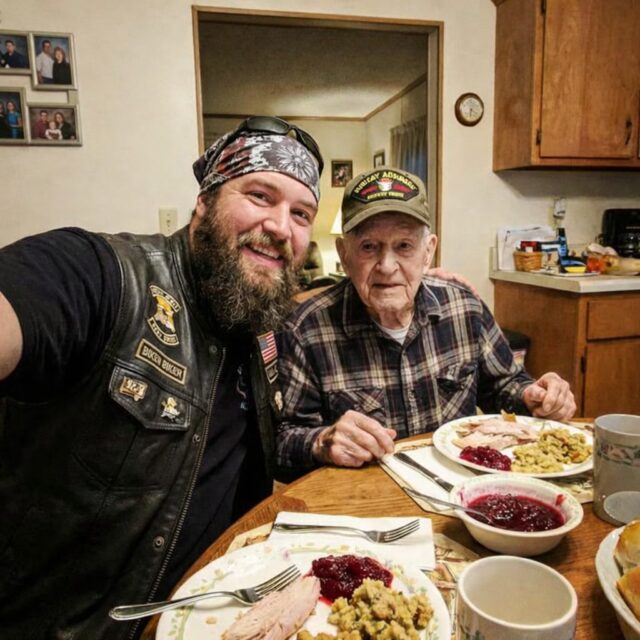
Biker Escaped ICU with a Catastrophic Brain Injury to Keep His Promise to a Dying Child

The biker escaped from the ICU on a Tuesday night with a catastrophic brain injury. The nurses found his bed empty at 11 PM. His hospital gown on the floor. His IV ripped out.

They called security. Called the police. Started searching the building.

They had no idea he was already ten miles away on a stolen motorcycle, riding to keep a promise to a dying child.

His name was Marcus Webb. Forty-eight years old. Former Marine. He’d been in a crash three weeks earlier. T-boned by a drunk driver at sixty miles an hour. The impact threw him thirty feet.

Skull fracture. Brain bleed. Traumatic brain injury. The doctors said he was lucky to be alive. Said he’d need months of recovery. Said he couldn’t walk without help, couldn’t think straight, couldn’t be trusted alone.

But Marcus could remember one thing perfectly. A promise he’d made to a seven-year-old girl named Sophie two months before the crash.

Sophie had leukemia. Stage four. Terminal. Marcus had met her and her mother at a gas station. Sophie was bald from chemo, wearing a pink princess dress, staring at his motorcycle like it was magic.

“When you get better, I’ll take you for a ride,” Marcus had told her. “I promise.”

Three weeks after his accident, a text came through. Sophie’s mother. Sophie was dying. Days left, maybe a week. She kept asking about the motorcycle ride.

Marcus stared at that text for two hours. The doctors said he couldn’t leave. Brain injuries were unpredictable. He could have a seizure, a stroke, could collapse and die.

But he’d made a promise to a dying child.

At 10:45 PM, Marcus pulled out his IV. Got dressed. Walked out past the distracted nurses. Found a motorcycle in the parking lot with keys under the seat.

And he rode.

Every bump sent lightning through his skull. His vision kept blurring. Twice he almost passed out.

But he kept going.

He pulled into the hospice at 11:30 PM. Walked to Room 12. Knocked.

Sophie’s mother opened the door. Saw Marcus in his hospital bracelet and bandaged head. “Oh my God. You came.”

“I promised.”

Sophie’s eyes lit up when she saw him. “You’re here. I thought you forgot.”

Marcus took her tiny hand. “I could never forget you, princess.”

“Can we still go for a ride?”

Marcus looked at the machines. At Sophie’s mother. Sophie wasn’t leaving this room. They both knew it.

But Marcus had made a promise.

“Yeah,” he said. “We can still go for a ride.”

What happened next, no one in that hospice will ever forget.

Marcus asked the hospice staff if he could take Sophie outside. Just for a few minutes. They looked at Sophie’s mother. She was crying but she nodded.

They disconnected the machines. Put Sophie on portable oxygen. Wrapped her in blankets.

Marcus carried her. She weighed almost nothing. Like holding a bird.

They went out to the parking lot. The stolen Harley was sitting there under a streetlight.

“That’s your motorcycle?” Sophie whispered.

“That’s her.”

“She’s beautiful.”

Marcus sat on the bike. Sophie’s mother helped lift Sophie onto the seat.

But, he didn’t start the engine. Couldn’t risk it. His head was pounding. His vision was going dark around the edges. He could feel himself fading.

But Sophie didn’t need the engine.

“Close your eyes,” Marcus said softly. “Can you feel the wind?”

Sophie closed her eyes. Marcus started talking. His voice low and gentle.

“We’re riding now. Can you feel it? We’re going fast. Really fast. The wind is in your hair. The sun is warm. We’re riding through the mountains. Past the lakes. Through the forests.”

Sophie smiled. “I can feel it.”

“We’re flying now. Just you and me. Nothing can catch us. Nothing can stop us.”

“I can see the mountains,” Sophie whispered. “They’re so pretty.”

“Yeah they are. And we’re going to ride forever. As long as you want.”

Sophie’s mother stood a few feet away, sobbing. The hospice staff were crying. Other nurses had come outside. They all stood there watching this biker with a catastrophic brain injury giving a dying child the ride of her life without moving an inch.

Marcus kept talking. Kept describing the ride. The rivers. The valleys. The open road. Freedom.

Sophie’s breathing was slowing down. But she was smiling. Really smiling.

“This is the best day ever,” she said.

“Yeah it is, princess.”

“Thank you for keeping your promise.”

“Thank you for being my riding buddy.”

They sat there for thirty minutes. Marcus describing the journey. Sophie living it in her mind. Both of them somewhere else. Somewhere beautiful.

Finally, Sophie opened her eyes. Looked up at Marcus.

“I’m tired now.”

“That’s okay. We can go back inside.”

“Will you stay with me?”

“As long as you need me to.”

They carried Sophie back inside. Back to her room. Tucked her into bed. She wouldn’t let go of Marcus’s hand.

Marcus sat in the chair next to her bed. His head was screaming. He could barely see straight. But he held Sophie’s hand and he stayed.

Sophie’s mother sat on the other side. Held Sophie’s other hand.

“That was the best ride,” Sophie whispered. Her voice was getting weaker. “I saw everything you said. The mountains. The lakes. The sky.”

“You’re a natural rider,” Marcus said.

“When I get to heaven, I’m going to tell everyone about my motorcycle ride.”

“You do that.”

Sophie looked at her mother. “Don’t be sad, Mama. I got my ride. I got my promise.”

Her mother couldn’t speak. Just nodded and cried.

Sophie looked back at Marcus. “You’re a hero. Like a real superhero.”

“No, sweetheart. You’re the hero.”

“Why?”

“Because you’re the bravest person I’ve ever met.”

Sophie smiled. Closed her eyes. “I love you, motorcycle man.”

“I love you too, princess.”

Sophie took three more breaths. Then she stopped. Just slipped away, quiet and peaceful, holding the hands of the two people who loved her most.

The machines flat-lined. The nurses came in. But there was no emergency. No panic. Just peace.

Sophie was gone.

Marcus sat there holding her small hand. Tears running down his face. His head felt like it was exploding but he didn’t move. Didn’t let go.

Sophie’s mother came around the bed. Wrapped her arms around Marcus. They held each other and cried.

“You gave her everything she wanted,” she whispered. “You kept your promise. She died happy.”

Marcus couldn’t speak. Just held on.

The hospital security found Marcus at the hospice forty minutes later. The police came too. They were prepared for a confrontation. A confused brain injury patient who’d stolen a motorcycle and fled medical care.

Instead they found Marcus sitting in a chair next to a child’s body, barely conscious himself.

The senior officer took one look at the scene and understood. He’d been a father once. Lost his own daughter to cancer years ago.

“Sir,” he said gently. “We need to get you back to the hospital.”

Marcus nodded. Stood up. His legs gave out. Two officers caught him.

Sophie’s mother grabbed the officer’s arm. “He saved her. Do you understand? He escaped a hospital with a brain injury to keep a promise to my daughter. He’s a hero.”

“I understand, ma’am.”

“Please don’t arrest him.”

“We’re not arresting him. We’re taking him to get help.”

They brought a wheelchair. Got Marcus into it. He kept looking back at Sophie’s room.

“I kept the promise,” he said. His speech was slurred. “I kept it.”

“You did, sir,” the officer said. “You absolutely did.”

They took Marcus back to the hospital in an ambulance instead of a police car. Lights but no sirens. The officer rode with him.

When they arrived, the ICU staff was furious. Terrified. Ready to restrain Marcus and sedate him.

But the officer told them what happened. About Sophie. About the promise. About the ride in the parking lot.

The head nurse stood there with tears running down her face. Then she looked at Marcus and said, “You stupid, brave, beautiful man.”

They got Marcus back into bed. Hooked him back up to the machines. Ran tests. He’d made everything worse. The brain bleed had expanded. The swelling was critical.

They rushed him into emergency surgery.

Marcus survived the surgery. Barely. The doctors said it was a miracle. Said he should have died three times over. Escaping the hospital. Riding a motorcycle. The stress of everything.

But he’d lived.

Recovery was long. Brutal. Months of physical therapy. Relearning how to walk. How to think clearly. How to exist in the world with a brain that didn’t work the way it used to.

His brother came to visit every week. Brought updates. News articles. Because the story had gotten out.

Sophie’s mother had posted about it. About the biker who’d escaped the ICU to keep a promise. About the ride in the parking lot. About how her daughter had died happy.

It went viral. National news picked it up. Local stations. People started calling Marcus a hero.

He didn’t feel like a hero. He felt like a guy who’d made a promise to a kid and couldn’t live with himself if he broke it.

But the story resonated. Donations poured in. For Marcus’s medical bills. For Sophie’s memorial fund. For other families dealing with childhood cancer.

The motorcycle Marcus had “borrowed” belonged to another patient’s visitor. When the owner found out why Marcus had taken it, he dropped all charges. Said he was honored his bike had been part of something so important.

The hospital didn’t press charges either. Instead, they put Marcus’s story in their newsletter. Called it an example of the power of human connection.

Marcus didn’t feel worthy of any of it.

But six months into recovery, something arrived in the mail. A package from Sophie’s mother.

Inside was a photo. Marcus and Sophie on the motorcycle that night. Someone had taken it from the hospice window. Sophie was wrapped in blankets, eyes closed, smiling. Marcus had his arms around her, keeping her safe.

Below the photo, Sophie’s mother had written: “You gave my daughter her dream. You showed her that promises matter. That people can be trusted. That even when everything is falling apart, there are still heroes. Thank you for being hers. Love, Catherine.”

Also in the package was Sophie’s pink princess dress. The one she’d been wearing the day they met at the gas station.

And a note in a child’s handwriting. Written before Sophie got too sick to write.

“Dear Motorcycle Man. Thank you for promising to take me for a ride. I know you will keep it. You seem like someone who keeps promises. Love, Sophie.”

Marcus sat on his couch holding that note and cried harder than he’d cried since he was a child.

She’d trusted him. This little girl he barely knew had trusted him. And he’d almost broken that trust. Almost let death and injury and impossibility stop him.

But he hadn’t. He’d kept the promise. And it had cost him everything. His health. Months of his life. His sense of who he was.

But it had been worth it.

Every mile. Every moment of pain. Every second of that ride in the parking lot that never moved an inch but traveled further than any ride he’d ever taken.

Two years later, Marcus stood in a park in Sophie’s hometown. There was a memorial being dedicated. A bench with Sophie’s name on it. A plaque that told her story.

Catherine had invited him. Asked him to speak.

Marcus stood in front of a crowd of people he didn’t know and told them about meeting a little girl in a princess dress at a gas station. About making a promise. About what that promise had cost and why it had been worth every bit of it.

“Sophie taught me something,” Marcus said. “She taught me that promises aren’t just words. They’re bonds. Sacred bonds. And keeping them matters more than convenience, more than difficulty, more than fear.”

He looked at Catherine. She was crying but smiling.

“I was supposed to give Sophie a motorcycle ride. But the truth is, she gave me something much bigger. She gave me purpose. She reminded me what it means to be human. To show up for someone even when everything says you can’t.”

He paused. Looked at the memorial bench. Sophie’s name engraved in brass.

“Sophie lived seven years. Seven short years. But she packed more courage, more love, more joy into those years than most people manage in seventy. And I was honored to be part of her story. Even if just for one night. Even if just for one ride that never left a parking lot but somehow went everywhere.”

The crowd was silent. Even the children.

“If you take anything from Sophie’s life,” Marcus said, “take this: Keep your promises. Show up for people. Love big. And when someone asks you for something impossible, find a way to make it possible. Because that’s what heroes do. And that’s what Sophie deserved. That’s what everyone deserves.”

He sat down. The crowd applauded. Catherine came over and hugged him.

“She’d be so proud of you,” she whispered.

“I hope so.”

After the ceremony, children came up to Marcus. Asked about his motorcycle. Asked if he still rode.

He did. He’d gotten a new bike. A blue one. Sophie’s favorite color.

He rode every week. And every time he rode, he thought about that night. About a little girl in his arms. About a journey that happened entirely in words and imagination.

About the most important ride of his life.

Marcus still has the pink princess dress. It hangs in his garage next to his riding vest. Reminds him every day why he rides. Why he lives. Why promises matter.

He started a foundation. Sophie’s Ride. It grants wishes to kids with terminal illnesses who want motorcycle experiences. Rides. Visits from bikers. Motorcycle-themed parties.

He’s granted forty-three wishes in two years. Forty-three kids who got their dream.

Some of them survive their illnesses. Most don’t.

But every single one of them gets their promise kept.

Marcus doesn’t tell people he’s a hero. He doesn’t think of himself that way.

He’s just a guy who made a promise to a kid and couldn’t live with breaking it.

But the families call him a hero. The kids call him a hero. The media calls him a hero.

Maybe they’re right. Maybe heroes aren’t people who do impossible things easily. Maybe they’re people who do impossible things anyway.

Marcus Webb escaped an ICU with a catastrophic brain injury to keep a promise to a dying child.

He almost died doing it. Lost months of his life recovering. Changed everything about who he was and how he lived.

But he’d do it again. Without hesitation. Without question.

Because some promises are worth everything.

And Sophie was worth the world.

Rest easy, princess. Your motorcycle man kept his promise.

And he’s still riding for you.

After My Husband Passed, I Charged My Stepson Rent, What He Had Been Doing in Silence Broke Me

The silence in the wake of my husband’s passing was a physical weight, a thick, suffocating shroud that settled over the furniture and seeped into the floorboards. For months, our home had been a sanctuary of clinical necessity—the rhythmic wheeze of the oxygen concentrator, the metallic tang of medicine, and the hushed, desperate prayers whispered into the hollows of 3:00 a.m. I had spent years as a sentinel, sleeping on the razor’s edge of the mattress so I wouldn’t jostle his fragile frame, my ears tuned to the frequency of his breathing. When he finally let go, the stillness that followed wasn’t peace; it was a vacuum.

The funeral was a blur of casseroles, damp tissues, and the well-meaning pity of people who would return to their vibrant, living homes by nightfall. I was left with a house that felt too large, a mortgage that felt too heavy, and a grief that didn’t pay the utility bills. My husband had left me the house, but we had liquidated our lives to buy him more time. We had traded our retirement, our rainy-day funds, and our security for a few more sunsets. I didn’t regret a single penny of it—I would have dismantled the roof and sold the shingles if it meant one more hour of his laughter—but love, however profound, is not legal tender.

My stepson, Leo, was nineteen at the time. He was a striking reflection of his father—the same steady jawline, the same way of leaning against a doorframe that made my heart skip a beat in a painful stutter of recognition. He had lived with us throughout the descent, witnessing the grueling reality of my double shifts at the hospital followed by the even more grueling shifts of hospice care at home. He saw the stacks of red-inked envelopes piling up on the kitchen table like a paper graveyard.

One evening, fueled by the sheer exhaustion of trying to keep our heads above water, I sat him down in the kitchen. The air was thick with the smell of stale coffee and the crushing reality of an empty bank account. My hands trembled as I gripped my mug, the heat barely penetrating my cold skin. I told him I needed help. I asked for five hundred dollars a month in rent—a modest sum, really, just to help keep the lights on and the taxes paid.

Leo didn’t offer a sympathetic nod. He didn’t ask how I was doing. Instead, he leaned back in his chair, a smirk playing on his lips that felt like a slap. He laughed—a dry, dismissive sound that echoed off the cabinets I had spent years stocking for him. He told me I was childless and that, by default, he was my retirement plan. He said it was my job to support him, as if my years of mothering him were merely a transactional obligation he had already paid in full just by existing.

The word “childless” felt like a jagged blade. It disregarded the decade of scraped knees I’d bandaged, the heartbreak I’d coached him through, and the way I had poured my soul into a boy who wasn’t mine by blood but was entirely mine by choice. I didn’t argue. I didn’t have the strength left for a civil war. I simply nodded, retreated to my room, and watched the shadows of tree branches dance across the ceiling until the sun rose.

Driven by a cocktail of resentment and survival instinct, I waited until he left for his shift at the local garage the next morning. Then, I called a locksmith. Changing the locks felt like a radical act of self-preservation, a way to seal the borders of my dwindling life. If he viewed me as a utility rather than a mother, I would revoke his access to the service.

To keep the tremors in my hands at bay, I began the somber task of packing his things. I folded his hoodies, boxed his sneakers, and tried to ignore the hollow ache in my chest. While reaching for a stray sock under his bed, my hand struck something heavy. I pulled out a weathered blue duffel bag, tucked so far back it seemed hidden on purpose. Taped to the zipper was a piece of masking tape with my name written in his messy, hurried script.

My breath hitched. I unzipped the bag with fumbling fingers. Inside, I found an old-fashioned savings passbook. I opened it to find a ledger of devotion. The entries were small—ten dollars, fifty dollars, the occasional hundred. They stretched back four years, through his high school graduations, his summer jobs, and the darkest months of his father’s illness. At the top of the very first page, written with a precision that suggested he had practiced the letters, were four words: “Mom’s Future Security Fund.”

He hadn’t called me Mom in years.

Tucked behind the passbook was an unsealed envelope with a note clipped to the front: “For her birthday—don’t chicken out this time.” My birthday was less than a week away. I pulled the letter out, the paper crinkling under my shaking touch.

The letter was a confession. He wrote about watching me from the hallway as I cried over spreadsheets at midnight. He wrote about the guilt he felt watching me trade my youth for his father’s comfort. He told me that every cent he earned had been funneled into that account because he was terrified I would end up alone and destitute. He said he knew I worried about being “replaced” or “forgotten” now that his father was gone, but he wanted me to know that as long as he had a roof, I had a home. He didn’t want to be my “retirement plan” out of obligation; he wanted to be my protector because I was the only mother he had ever known.

The “dismissive” comment at the kitchen table hadn’t been an insult; it had been a poorly executed, nineteen-year-old’s attempt at a joke, a deflection born of the fact that he was five days away from handing me a small fortune of his own sweat and toil. He had been playing the part of the carefree teenager to surprise me with the soul of a man.

I sat on the floor of his empty room, the passbook pressed against my heart, and wept. I had mistaken his silence for selfishness and his bravado for cruelty. In my fear, I had locked out the only person who was actually standing guard over my future.

That evening, I didn’t wait for him to knock. I stood on the porch, the new keys heavy in my pocket, watching for his headlights. When he pulled into the driveway, looking tired and guarded, I didn’t mention the rent. I didn’t mention the mortgage. I walked to his car, handed him the duffel bag, and pulled him into a hug that smelled like motor oil and home. I whispered an apology that carried the weight of my misconceptions, and for the first time since the machines stopped humming, the house felt full. I realized then that a family isn’t built on blood or legal titles, but on the quiet, invisible sacrifices we make for one another in the dark. We weren’t just surviving anymore; we were home.

How movie theaters espond when nobody buys a ticket as Melania film showing gets ‘zero bookings’ – Embarrassing plan to save Melania’s new film as she is mocked online over empty theaters

At the end of January, Melania Trump is set to debut a new documentary film centered on her life and role in the public eye. The project, titled Melania, premieres in U.S. cinemas on January 30, and while Donald Trump has promoted it enthusiastically as a “must-watch,” early indicators suggest that audience interest may be far more limited than expected.

The documentary was first announced just weeks before Donald Trump’s presidential inauguration a year ago. At the time, it was reported that Amazon paid approximately $40 million to license the film, signaling high expectations for its reach and impact. Speaking to Fox when production was underway, Melania Trump described the project as an intimate look at her daily life and responsibilities.

“So I had an idea to make a movie, to make a film about my life. My life is incredible. It’s incredibly busy,” she said, explaining that the documentary would show aspects of her role that “people they don’t really know and they will see it.”

Initially scheduled for release in the final quarter of 2025, the film’s premiere was moved forward. Beginning January 30, Melania will screen in cinemas across the United States. Supporters of Donald Trump have expressed anticipation, and the former president took to X earlier this week to encourage ticket sales.

“MELANIA, the Movie, is a MUST WATCH,” Trump wrote. “Get your tickets today – Selling out, FAST!”

However, available data and social media posts suggest a different reality. Images shared online from theaters in multiple cities show seating charts with large numbers of unsold seats, and in some cases, no tickets sold at all. As a result, the film has become a target of online mockery, with users questioning the gap between promotional claims and actual demand.

According to entertainment journalist Rob Shuter, the slow sales have led to behind-the-scenes efforts to improve appearances. Writing on his Substack, Shuter claimed that Republican clubs in several conservative-leaning areas have quietly purchased blocks of tickets—or even entire screenings—to prevent theaters from appearing empty.

“This isn’t organic demand,” one unnamed insider told him. “It’s about optics. Empty theaters look terrible.”

Other sources alleged that tickets have been distributed at heavy discounts or offered for free through GOP-affiliated websites. Despite these efforts, demand reportedly remains weak.

“They’re struggling to give the tickets away,” another source said, while a third described the situation as feeling “less like a movie night and more like a loyalty check.”

The discussion has also sparked broader curiosity about how movie theaters handle screenings when attendance is minimal or nonexistent. On Reddit, users weighed in on the topic. One former theater employee explained that daytime screenings would typically still run, but late-night showings might be shut down after a short delay if no one arrived.

“They would sometimes turn the lamp off on the projector to save the bulb,” the user wrote, noting that staff would restart the film if a last-minute customer appeared.

Another former cinema worker added that films were often allowed to play for about twenty minutes before being turned off if no tickets were sold, calling those empty auditoriums “my favorite to clean.”

Despite the lukewarm response, Melania Trump has publicly expressed confidence and pride in the project. Following a private screening at the White House on January 25, she shared her thoughts on X.

“MELANIA, the film A Historic Moment… I am deeply humbled to have been surrounded by an inspiring room of friends, family, and cultural iconoclasts at the White House last night,” she wrote.

She went on to describe the event as an honor and emphasized the enduring value of personal stories, framing the documentary as a meaningful contribution ahead of its global launch.

Whether ticket sales will improve after the official release remains to be seen. For now, Melania enters theaters amid mixed reactions, strong promotion from its most prominent supporter, and ongoing debate about public interest in yet another political-adjacent documentary.

As the film rolls out nationwide, audience response in the coming days will ultimately determine whether it gains momentum—or continues to face an uphill climb at the box office.

A Birthday Surprise That Changed the Way I See Everyday Kindness!

On the morning of her thirty-second birthday, Mira woke to the muted, rhythmic hum of a city that didn’t know it was her special day. The sunlight filtered through her apartment blinds in thin, dusty slats, illuminating a room that felt as quiet as her expectations. Her phone screen glowed with the usual clutter of notifications—promotional emails, news alerts, and a few predictable texts from distant relatives—but there were no grand plans on her horizon, no dramatic surprises waiting behind closed doors. She had decided, perhaps out of a weary kind of self-reliance, that this would be a day of quiet observation rather than celebration.

On her way to the office, Mira made her usual detour into “The Corner Bean,” a small, unassuming café she had frequented hundreds of times. The air inside was thick with the comforting, acidic scent of roasted Arabica and the hiss of milk being steamed into foam. As she reached for her wallet to pay for her medium roast, the cashier, a young man whose name tag read ‘Leo’ and who usually barely looked up from the register, paused. He caught a glimpse of her driver’s license as she fumbled with her cards and offered a sudden, genuine grin.

“Hey, it’s your birthday,” he said, sliding her card back across the counter. “This one’s on us today. Happy birthday, Mira.”

She laughed at first, a short, self-deprecating sound, waiting for the punchline. But when Leo simply winked and moved to the next customer, the paper cup in her hand suddenly felt heavier, warmer. It was just a four-dollar coffee, yet it felt like a peace offering from the universe. That small, unprompted gesture of recognition acted as a catalyst, cracking the shell of her planned solitude.

Throughout the workday, a strange curiosity took hold of her. During her lunch break, she found herself spiraling down a digital rabbit hole, researching the quiet, often unadvertised birthday traditions hidden within the city’s service industry. She discovered an entire subculture of “birthday kindness”—restaurants that offered secret desserts, bakeries that tucked an extra pastry into a bag, and family-owned diners that treated birth dates like minor local holidays. The discovery fascinated her, not because she was hungry for free handouts, but because she was intrigued by the psychology of it. In a world increasingly dominated by cold algorithms and transactional efficiency, these small pockets of spontaneous generosity felt like revolutionary acts.

By the time evening rolled around, the rain had begun to slick the streets of the city into a neon-lit mirror. Instead of heading home to a frozen dinner, Mira was inspired to conduct a small social experiment. She walked into “Mama Rosa’s,” a modest Italian eatery where the walls were a mosaic of faded polaroids and the air was heavy with garlic and nostalgia. The restaurant was the antithesis of the modern, glass-fronted bistros downtown; it felt like a place that had survived through the sheer willpower of community.

When the waiter, an older man with a slight limp and a silver mustache, came to take her order, Mira mentioned it was her birthday with a shy, tentative smile. The waiter’s eyes lit up immediately. He didn’t just nod; he clapped his hands together and leaned in. “A birthday? Well, you leave the dessert to me, signorina. I will find something special in the back.”

As Mira waited for her pasta, she found herself truly seeing the room for the first time. Usually, she would be buried in her phone, but tonight she watched the ballet of human connection unfolding around her. She saw a young couple sharing a bowl of soup, their foreheads nearly touching as they whispered secrets; she watched a mother patiently wiping tomato sauce from her toddler’s chin; she noticed an elderly man sitting alone at the bar, nursing a glass of red wine with a look of profound, peaceful contemplation.

When her meal arrived, it was accompanied by a small, off-menu appetizer of bruschetta, arranged with an artistry that felt personal. Tucked under the edge of the plate was a slip of paper—not a bill, but a handwritten note in elegant, looped script: “May your year be as warm as this kitchen. Happy Birthday.”

A lump formed in Mira’s throat. She realized that for years, she had viewed birthdays as lonely markers of time, a countdown of sorts. But tonight, she saw them as invitations—invitations for the world to show its softer side. She realized that kindness wasn’t a rare resource; it was a quiet melody playing in the background of every street corner and storefront, but she had been wearing noise-canceling headphones for far too long.

Over the next few days, Mira’s experiment evolved into a pilgrimage of stories. She visited a bakery where the owner insisted she try a “prototype” cupcake because it was her “birthday week.” She stopped at a bookstore where the clerk, hearing of her recent celebration, pointed her toward a hidden gem on the shelf and shared a twenty-minute conversation about the beauty of forgotten poetry.

Mira began to understand that the real gift wasn’t the caffeine, the sugar, or the discounts. The gift was the “belonging.” Each interaction was a bridge built over the chasm of urban isolation. She realized that people—even strangers behind counters and in aprons—were often looking for an excuse to be kind. By revealing her birthday, she wasn’t asking for a favor; she was giving them an opportunity to practice grace.

On the final evening of her birthday week, Mira sat by her apartment window, watching the city lights flicker like a sprawling circuit board. The “birthday girl” label was gone now, but the perspective it had granted remained. She looked at her neighborhood differently. The laundromat, the hardware store, the bus stop—they were no longer just functional stops in her routine. They were stages for potential connection.

She smiled to herself, reflecting on how a simple cup of coffee from a boy named Leo had dismantled her cynicism. Sometimes, the most profound transformations don’t come from massive life events or grand achievements. They come from the realization that we are seen. She understood now that gratitude isn’t a reaction to what we receive, but a choice in how we listen to the world’s quietest songs. Kindness was everywhere, hidden in plain sight, waiting for someone to be brave enough to mention they were celebrating another trip around the sun. Mira realized she was no longer alone in the city; she was simply one voice in a grand, generous chorus.

I Met A Guy From Another Country Online And Decided To Test His Promises, But His Surprising Response Led Me To A Truth I Never Expected

I met him on one of those dating apps that feels more like scrolling through a catalogue than searching for anything meaningful. I wasn’t expecting much. Then I matched with Soren.

He lived in a small coastal town in Norway. I lived in a cramped flat in Bristol, staring out at endless rain and concrete. While I complained about my dead-end job and the gray sameness of my days, he sent photos of the Northern Lights glowing over snow-covered hills. He’d write things like, “You should come here someday. You’d love it.” For months, those messages were my escape.

We talked constantly. Video calls stretched late into the night, the time difference turning our conversations into something sacred and deliberate. He was thoughtful, attentive, and uncannily good at knowing what to say when I felt invisible or exhausted. He talked about hiking trails, quiet mornings, and working as a freelance translator. It sounded peaceful. Almost unreal.

Still, I stayed guarded. I’d been disappointed before by people who loved the idea of connection more than the effort it required.

After one especially brutal day at work—my boss taking credit for my work again—I decided to test him. I wanted to see if he was serious or just enjoying the fantasy. Without thinking too hard, I typed, “I quit my job. I’m coming. Nothing’s keeping me here,” and hit send.

I hadn’t quit. I just wanted to see what he’d do.

I expected hesitation. An excuse. Instead, his reply came almost instantly. “Finally. I’ll check the train schedule from Oslo. Tell me your flight number so I can get the guest room ready.”

My heart raced. He didn’t pull back—he leaned in.

Then, an hour later, another message arrived.

“Don’t book anything yet. There’s something I need to tell you before you come.”

That familiar dread settled in my chest. I braced myself for a confession about a wife, a double life, or a carefully constructed lie. When he asked to video call, I agreed. His face appeared on the screen, pale and tense, sitting in a stark white office instead of his cozy living room.

“I haven’t been completely honest,” he said. Then he told me the truth.

He wasn’t a freelance translator. He was a lead investigator in a unit that tracked international digital fraud. Our match hadn’t been random. My photos and identity had been used by romance scammers targeting elderly women in Scandinavia, and he’d contacted me to confirm I was real.

I couldn’t speak. It felt surreal, like I’d wandered into a thriller I hadn’t agreed to star in.

Then he admitted something else.

“The investigation ended ten weeks ago,” he said quietly. “I was supposed to stop talking to you. But I didn’t.”

He’d continued messaging me on his own time, using his own resources, because the connection had become real. He was terrified that if I came to Norway without knowing the truth, I’d feel manipulated. So he chose honesty, even if it meant losing me.

Over the next few days, we talked through everything. The house with the Northern Lights existed—but it was his parents’. He lived in a modest city apartment. He wasn’t living a fairy tale; he was just a lonely person who’d found something unexpected.

The irony wasn’t lost on me. I’d been testing him to see if he was real, while he’d spent months proving that I was.

This time, I booked the flight for real.

Walking through arrivals in Oslo, my nerves felt electric. Then I saw him—no uniform, no mystery, just a cardboard sign with my name and a nervous smile. He looked exactly like the man from the screen, only more human.

We spent two weeks traveling through fjords, talking endlessly. There were no secrets left. What started as deception slowly transformed into the most honest connection I’d ever known.

The moment that sealed everything came on my last night. We were sitting in a small bistro when his phone buzzed. He showed me the screen. It was a message from one of the women who’d been scammed using my photos. Soren had tracked down her stolen money and returned it anonymously—using his own time and money.

That’s when I understood. He didn’t just care about me. He respected me enough to protect my name.

I flew back to Bristol changed. We’re now navigating the paperwork for me to move to Norway permanently, and for the first time in my life, I feel certain.

The digital world can be deceptive and dangerous, but it can also reveal something rare when people choose honesty over convenience. We spend so much time testing others, waiting for them to fail. Sometimes, the real reward comes when someone tells the truth even when it would be easier to stay hidden.

Love isn’t built on perfect profiles or flawless beginnings. It’s built on courage—the kind that chooses honesty when it risks everything.

9 Heartwarming Stories That Prove Kindness Still Thrives

The Power of Everyday Kindness

Even in a busy, fast-paced world, compassion quietly thrives. From small gestures to thoughtful acts, these stories show that empathy isn’t lost—it’s alive and transformative. Simple moments, like helping a neighbor o

r offering a kind word, can ripple far beyond what we see, touching lives in unexpected ways.

A Cardigan’s Secret

A young woman inherited a red cardigan from her grandmother. Years later, her daughter discovered hidden concert tickets inside—love quietly passed down, waiting to be found.

Grocery Line Generosity

An elderly man couldn’t cover his grocery bill. A stranger stepped in, preserving dignity and feeding a family with one small act.

City Kindness

A commuter bought a meal for a hungry man outside a deli. For a few dollars, he reminded someone they mattered.

Workplace Compassion

Two coworkers clashed over parking—until one realized the other was recovering from surgery. A small act of empathy changed office dynamics for the better.

Everyday Moments

From holding doors to assisting lost children, kindness shows up in ordinary ways, quietly shaping communities and lives

These stories remind us: legacy isn’t measured by wealth or status but by the care we show others. Even tiny gestures hold immense value, proving that compassion endures when we choose to act.

Young woman puts both babies inside the fir! See now

The morning had begun with a deceptive, heavy stillness—the kind of quiet that usually blankets a neighborhood before the world fully wakes. But that silence was shattered with a violence that few who witnessed it will ever be able to erase from their memory. By the time the first sirens began to pierce the air, screaming through the suburban streets with an urgent, mechanical wail, the worst of the catastrophe had been narrowly, miraculously avoided. It was a scene of raw, unfiltered desperation: a car engulfed in a sudden, terrifying blaze, and two young lives hanging in the precarious balance between life and death.

The salvation of the two small girls did not come from a divine intervention or a stroke of luck, but from the immediate, visceral bravery of the neighbors. These were people who, moments before, had been sipping coffee or checking their mail, only to find themselves thrust into the role of first responders. They forced themselves into motion, acting against every instinct of self-preservation. They plunged toward the heat, pulling the children from the vehicle with a frantic, trembling strength. They refused to let the choking smoke or the mounting confusion of the moment slow them down, governed by a singular, desperate focus: get the babies out.

When the fire trucks finally screeched to a halt, the firefighters moved with the clinical efficiency of their training. They made quick work of the flames, reducing the charred skeleton of the vehicle to a steaming pile of metal and melted plastic. Yet, as the fire died, a different kind of darkness took hold. An emotional weight settled over the block, manifesting as a stunned, suffocating silence. The neighbors stood on the sidewalk, soot-streaked and shaking, unable to fully process how close they had come to a collective tragedy. The visual of the “fire” was gone, but the image of the children’s faces behind the glass remained burned into their minds.

In the harrowing days that have followed, the investigation has shifted from the physical evidence of the scene to the much more complex and haunting question of “why.” The authorities are no longer just documenting a crime scene; they are attempting to map the collapse of a human psyche. At the center of this storm is a young father—a man who, by all outward appearances, had been trying to navigate the turbulent waters of early parenthood. What the world saw as a quiet, perhaps slightly tired father, was actually a man reaching a psychological breaking point. The question that haunts the investigators, and the community at large, is what specific brand of desperation could drive a person to such a terrifying edge.

As the legal system begins its slow, deliberate march, a parallel effort has been launched to address the human wreckage left behind. Mental health professionals have been integrated into the family’s support network, working to untangle the web of trauma that led to that morning. The two little girls, the innocent protagonists of this nightmare, have been placed in a secure and nurturing environment while the state reviews the long-term viability of the family structure. Their physical wounds may be minimal, but the specialists involved are acutely aware that the psychic scars of such an event require a much longer and more delicate period of healing.

The conversation in the neighborhood has undergone a profound transformation. In the immediate aftermath, the air was thick with judgment and the sharp, hot sting of blame. People wanted to know how anyone could be so monstrous. However, as more details about the father’s struggle have surfaced—stories of extreme isolation, the crushing weight of financial instability, and the lack of a traditional support system—the narrative has shifted. Around kitchen tables and on front porches, the talk is no longer about a villain, but about a “pressure cooker” existence that many in the community now realize they had ignored.

The incident has become a somber catalyst for a broader discussion about the invisible crises occurring behind closed doors. The neighbors who pulled the girls from the fire are now reflecting on the “quiet struggles” they may have overlooked in the months leading up to the disaster. There is a newfound, collective realization that a friendly wave in the driveway isn’t enough to gauge the health of a household. The community is beginning to talk about the importance of asking for help long before a struggle explodes into a public emergency, and the equally important responsibility of offering that help without being asked.

This tragedy has highlighted a systemic failure in how society supports young, struggling parents, particularly those who lack the vocabulary or the courage to admit they are drowning. The young father’s actions were inexcusable, yet they were symptomatic of a larger, more pervasive problem: the myth of the “self-sufficient” family. In a world that is increasingly connected by screens but disconnected by physical distance, the isolation of a young parent can become a lethal environment. The “breaking point” wasn’t a single moment; it was the accumulation of a thousand moments where the pressure increased and the escape valves remained closed.

As the charred patch of asphalt where the car once sat begins to fade under the wear of traffic, the residents of the street are finding it difficult to return to their old routines. There is a sense of “before” and “after.” They look at their own children and their own lives with a renewed, fragile appreciation for the stability they once took for granted. They are learning that safety is not just a matter of locks and alarms, but of community and vigilance. The heroism of that morning saved two lives, but the honesty of the conversations happening now might save dozens more.

The story of the young father and the two babies in the fire is not just a headline or a police report; it is a mirrors held up to a society that often waits for the flames to start before it notices the heat. The children will grow, and the father will face the full weight of the law, but the community is left with a permanent reminder of the power of a single moment of intervention. They are choosing to move forward with a commitment to empathy over outrage, and to the radical idea that we are, indeed, our brother’s keeper—especially when that brother is too overwhelmed to say he is lost.

Popular

A Mother’s Love: Vienna’s Journey with a Birthmark

0
Love compels parents to do extraordinary things for their children’s well-being. Celine Casey, a British mother, took remarkable steps to ensure her daughter Vienna’s...