Entertainment

Why sleeping with one foot out might be the key to rest!

You’ve probably done it without even thinking – kicked one foot out from under the blanket to cool down at night. But this common sleep habit isn’t just a quirky comfort move. According to science, it may be one of the simplest and most effective ways to help your body transition into sleep more easily and quickly.

So, what makes the dangling foot trick work so well? It turns out, the answer lies in how your body naturally handles temperature before sleep – and how your feet are uniquely designed to help regulate it.

Heat, feet and sleep

As evening falls, your body begins preparing for rest by lowering your core temperature, a natural part of the circadian rhythm. Experts say that this internal cooling is essential for initiating deep, restful sleep.

“The drop in temperature starts about two hours before you go to sleep, coinciding with the release of the sleep hormone melatonin,” writes the Sleep Foundation. “During sleep, body temperature continues to fall, reaching a low point in the early morning and then gradually warming up as the morning progresses.”

During this cooling process, your body directs warm blood away from the core and toward the surface – particularly your hands and feet. When these extremities are exposed to cooler air, they act as natural heat vents, releasing excess warmth to speed up your body’s transition into sleep mode.

Perfect heat-release tools

Unlike most other parts of your body, your feet (and hands) are rich in specialized blood vessels called arteriovenous anastomoses, which allow heat to escape quickly. These vessels bypass capillaries and send warm blood straight to the surface, making your soles highly efficient at cooling you down.

By sticking just one foot out from under the covers, you create a passive, adjustable cooling system. It’s like cracking a window in a warm room – small, subtle, and incredibly effective.

“I think it’s likely in service of trying to cool our bodies down because we’ve gotten too warm to sleep,” Natalie Dautovitch, a sleep health researcher and professor at Virginia Commonwealth University, told New York Magazine. “Sticking your toe out or your foot out could bring you to a more restorative sleep.”

Fall asleep faster

Researchers also use a measurement called the distal-to-proximal gradient (DPG), which compares the temperature of your extremities (hands and feet) to your core. A higher DPG means more heat is being released, and it’s closely linked to faster sleep onset.

A study in Journal of Physiology found that people with warmer hands and feet – therefore a higher DPG – fell asleep significantly faster than those with cooler extremities.

Exposing one foot can boost this gradient instantly, helping you fall asleep without needing to strip off all your bedding or crank down the thermostat.

Other ways to support natural cooling

Letting one foot breathe is simple and effective, but pairing it with other cooling-friendly habits can make your bedtime routine even more powerful:
Take a warm bath about one to two hours before bed to raise skin temperature and trigger cooling later as you dry off.
For optimal sleep, keep your bedroom cool, ideally between 65 F to 68 F, as recommended by the Sleep Foundation.
Warm your feet before bed if you tend to run cold – using socks or a foot bath – then remove layers if needed to fine-tune comfort.
Dangling foot doesn’t work for everyone
While many people find the foot-out method helpful, it’s not one-size-fits-all. If you tend to have cold feet, suffer from poor circulation, or experience conditions like Raynaud’s disease, exposing your foot might feel uncomfortable. In those cases, gently warming the feet before sleep may work better than cooling them.

Children, older adults, and those sleeping in already cool environments may also benefit more from heat conservation than heat release. The key is to adjust based on how your body feels – and remember that comfort, not perfection, is the goal.

The next time you’re tossing and turning under the blankets, try slipping one foot out. This small action taps into your body’s natural thermoregulation system, allowing heat to escape and gently nudging your brain toward sleep.

Sometimes, better sleep really does start from the ground up!

A long-haul trucker slid into a booth at a busy highway café

A long-haul trucker slid into a booth at a busy highway café and told the brand-new blonde waitress:
“Alright, sweetheart—bring me three blowouts, two high beams, and a couple of side steps.”

The poor girl blinked, nodded politely, and hustled to the kitchen, looking baffled.

She stuck her head in the door and whispered, “There’s a man out there ordering blowouts, high beams, and side steps… Are we supposed to fix his truck or feed him?”

The cook nearly dropped his spatula laughing.

“Relax, kid. ‘Blowouts’ are pancakes, ‘high beams’ are sunny-side eggs, and ‘side steps’ are bacon. Truckers talk in parts.”

Feeling smarter, she plated the order—then spotted a pot of beans and got a mischievous idea. She scooped some on for good measure.

When she delivered the meal, the trucker frowned at the bowl.

“What’s with the beans?”

She flashed her brightest smile.

“Well, sir, I figured if you’re eating tires, lights, and side steps… You might as well tank up while you’re at it!”

LOL!!

Hope this joke will make you smile! Have a nice day!

A Blonde Buys Two Horses

A blonde buys two horses and can’t tell them apart.
So she asks the farmer next door what she should do.

He says to cut one of their tails off.

So she does.

But then the other horse’s tail gets caught in a bush and rips off.

So she can’t tell them apart again.

She asks the farmer for advice a second time.

He tells her to cut one of the horse’s ears.

So she does.

But then the other horse gets its ear ripped in a barbed wire fence.

She is still confused.

She asks the farmer what to do.

He tells her to measure them.

She comes back and says, “The white horse is 2 inches taller than the black horse!”

LOL!!

Hope this joke will make you smile! Have a nice day!!

A blonde walks by a travel agency.

A blonde walks past a travel agency and notices a sign in the window, “Cruise Special – $99!”
She walks in, puts her money on the counter, and says, “I’d like the $99 cruise special, please.”

The agent grabs her, drags her into the back room, ties her to a large inner tube, then drags her out the back door and downhill to the river, where he pushes her in and sends her floating.

A second blonde walks by a few minutes later sees the sign, walks in, puts her money on the counter, and asks for the $99 special.

She too is tied to an inner tube and sent floating down the river.

Drifting into the stronger current, she eventually catches up with the first blonde.

They float side by side for a while before the first blonde asks, “Do they serve refreshments on this cruise?”

The second blonde replies, ” They didn’t last year.”

LOL!!

Hope this joke will make you smile! Have a nice day!!

This is for all the grandfathers out there.

Last week, I took my grandchildren to a restaurant.

My six-year-old grandson asked if he could say grace.

As we bowed our heads he said, “God is good, God is great. Thank you for the food, and I would even thank you more if Grandpa gets us ice cream for dessert. And liberty and justice for all! Amen!”

Along with the laughter from the other customers nearby, I heard a woman remark, “That’s what’s wrong with this country. Kids today don’t even know how to pray. Asking God for ice cream! Why, I never!”

Hearing this, my grand-son burst into tears and asked me, “Did I do it wrong? Is God mad at me?”

As I held him and assured him that he had done a terrific job, and God was certainly not mad at him an elderly gentleman approached the table.

He winked at my grand-son and said, “I happen to know that God thought that was a great prayer.”

“Really?” my grand-son asked.

“Cross my heart,” the man replied.

Then, in a theatrical whisper, he added (indicating the woman whose remark had started this whole thing), “Too bad she never asks God for ice cream. A little ice cream is good for the soul sometimes.”

Naturally, I bought my grand-children ice cream at the end of the meal. My grand-son stared at his for a moment, and then did something I will remember the rest of my life.

He picked up his sundae and, without a word, walked over and placed it in front of the woman.

With a big smile he told her, “Here, this is for you. Shove it up your ass you grouchy old b*tch! ”

Touches the heart doesn’t it?

Bet you didn’t see that coming!!!!!

===================================
Have you ever wondered what the difference between Grandmothers and Grandfathers is?
Well here is the answer:

A friend, who worked away from home all week, always made a special effort with his family on the weekends.

Every Sunday morning he would take his 7—year old granddaughter out for a drive in the car for some bonding time, just him and his granddaughter.

One particular Sunday however, he had a bad cold and really didn’t feel like being up at all. Luckily, his wife came to the rescue and said that she would take their granddaughter out.

When they returned, the little girl anxiously ran upstairs to see her Grandfather.

“Well, did you enjoy your ride with grandma?”

“Oh yes, Papa” the girl replied, “and do you know what? We didn’t see a single a——hole, stupid basta——, or dumb sh—— anywhere we went today!”

Uncovering the Turbulent History of a Hollywood Icon

Growing up in the shadow of one of America’s most famous faces, Ashley Judd always knew she had a legacy to contend with—but she was determined to carve out her own path, to prove that she could define herself on her own terms.

While the world might recognize her as the daughter of country music icon Naomi Judd, and half-sister to the celebrated Wynonna Judd, Ashley’s story is far more complex, filled with trials, perseverance, and ultimately, courage.

Born on April 19, 1968, in Los Angeles, California, Ashley’s early life was intertwined with the arts. Her mother, Naomi Judd, was a homemaker at the time of Ashley’s birth but had ambitions rooted in music.

Her father, Michael Ciminella, worked as a marketing analyst in the horse racing industry. The marriage, however, was short-lived. By the time Ashley was four years old, her parents had divorced, and she and her sister Wynonna moved with their mother to Kentucky.

Life in Kentucky was a far cry from the glamorous image that Hollywood or the music industry might conjure. Money was scarce, and everyday necessities were not guaranteed.

There were periods when the girls’ home lacked electricity or indoor plumbing, forcing the family to endure harsh, spartan conditions in a rural environment.

Clothing was second-hand, hand-me-downs passed between neighbors or purchased frugally, and meals were often based on whatever could be grown or prepared affordably.

Despite these hardships, Naomi worked tirelessly, balancing multiple jobs, first as a nurse and later pursuing her music career, determined to provide for her children in any way she could.

Even as a child, Ashley was acutely aware of instability. In her 2011 memoir All That Is Bitter & Sweet, she recalls attending thirteen different schools before reaching her nineteenth birthday.

With her mother frequently on tour, Ashley experienced the dislocation of being shuffled between an inattentive mother, two sets of elderly grandparents, and a father struggling with substance abuse. Loneliness became a constant companion.

“I loved my mother, but at the same time, I dreaded the mayhem and uncertainty that followed her everywhere,” Ashley wrote. “I often felt like an outsider observing my mom’s life as she followed her own dreams.”

But hardship was not confined to poverty and instability. In her memoir, Ashley revealed the harrowing truth of being sexually abused as a child. She has spoken openly about the trauma she endured:

“I was molested for the first time I remember at the age of seven,” she shared during a speech at the World Congress Against Sexual Exploitation of Women and Girls in New Delhi. Later, she disclosed having experienced two rapes at the age of fourteen, one of which resulted in pregnancy.

Reflecting on that period, Ashley has spoken candidly about the legal and personal challenges she faced:

“As everyone knows, and I’m very open about it, I’m a three-time rape survivor. One of the times I was raped resulted in conception, and I’m very thankful I was able to access a safe and legal abortion.

Because the rapist, who is a Kentuckian like me, resided in Tennessee at the time, I would have had to co-parent with my rapist under the law. The situation was impossible, and it underscores how essential access to safe reproductive care is.”

The dysfunction of Ashley’s family environment extended beyond abuse. She described growing up in a household that was, in her words, “wildly sexually inappropriate in front of both myself and my older half-sister.”

She recounted incidents that would now be recognized as covert sexual abuse, including overhearing loud sexual activity through thin walls, a scenario that left lasting emotional scars.

Yet despite these immense challenges, Ashley Judd demonstrated remarkable resilience. After completing high school, she attended college in Kentucky before making the bold move to Hollywood to pursue acting.

Arriving with no connections, minimal resources—just $250 in her pocket—and no formal training, she began to build a career from the ground up. Her early years in Los Angeles were marked by both struggle and determination.

She worked as a hostess at the iconic restaurant The Ivy, studied acting intensely, and lived in a modest rental home in Malibu, proving early on that ambition and grit could overcome circumstance.

Her breakthrough came in 1993 with the lead role in Ruby in Paradise, an indie film about a young woman seeking independence and escaping an abusive relationship.

Despite the film’s modest budget, Ashley poured her heart into the performance, infusing the character with a raw authenticity that audiences and critics alike could feel.

The role earned her the Independent Spirit Award for Best Actress, marking the beginning of a career defined by intelligence, strength, and emotional depth.

Throughout the late 1990s, Ashley continued to define herself as an actress capable of carrying roles that explored resilience and empowerment.

Films such as Kiss the Girls (1997) and Double Jeopardy (1999) positioned her as a leading woman who refused to be a passive figure, particularly in a Hollywood landscape that often relegated women to secondary or decorative roles.

Her performances were marked by emotional honesty and a refusal to compromise her integrity, qualities that would carry over into her personal life and activism.

Yet beneath the surface of red-carpet appearances and box office success, Ashley continued to wrestle with the trauma of her past. In 2005, she sought professional help to address depression and unresolved emotional wounds—not for substance abuse, but for the deep pain that had lingered since childhood.

“I needed help,” she told Glamour magazine. “I was in so much pain. I was unhappy, and now I’m happy. Even when I’m having a rough day, it’s better than my best day before treatment.”

Her journey toward healing became a lifelong mission, extending far beyond personal therapy. Ashley Judd channeled her experiences into humanitarian work, traveling extensively to support survivors of sexual violence in some of the world’s most challenging environments.

She visited war-torn regions, including Rwanda, the Democratic Republic of the Congo, and Kenya, engaging directly with women and children affected by conflict. She sat on dirt floors, held hands, listened, and advocated—not for headlines, but for real change.

Her personal life has also reflected her thoughtful, socially conscious approach. Ashley married Scottish racing driver Dario Franchitti in December 2001 at the majestic Skibo Castle in Scotland.

The couple chose not to have children, citing the moral dilemma posed by global poverty: “It’s unconscionable to breed with the number of children who are starving to death in impoverished countries,” Ashley explained.

The marriage lasted until 2013, a testament to her dedication to thoughtful, intentional living.

In Hollywood, Ashley faced challenges beyond trauma recovery. She was among the first to publicly accuse Harvey Weinstein of sexual harassment in 2017.

She recounted an incident in which Weinstein, under the pretense of discussing a project, asked her, “Will you watch me take a shower?”

Despite the potential damage to her career—Weinstein wielded immense power in the industry—Ashley chose to speak out, prioritizing justice over personal safety or ambition. Her courage helped catalyze the #MeToo movement, inspiring countless survivors to share their stories.

Harvey Weinstein was not the only figure in Hollywood who tried to exploit Ashley. During the filming of Kiss the Girls, she faced sexual harassment from a high-profile producer, one of the industry’s most influential figures.

Ashley has spoken openly about the early obstacles she faced in auditions as well, recalling that she was once asked to remove her shirt during a screen test. Her refusal—“hell no,” she recalled—exemplifies a lifelong commitment to integrity, even when it jeopardized career opportunities.

Despite occasional returns to acting—her most recent role being in 2024—Ashley has largely redirected her energies toward activism and humanitarian work.

Her dedication has, at times, placed her in physical danger. In 2021, while on a mission in the Congo rainforest, she tripped over a fallen tree and shattered her leg.

Stranded on the jungle floor for hours, she was eventually rescued by villagers who carried her on a handmade stretcher across miles of wilderness.

Medical professionals later confirmed that her survival and ability to keep her leg were nothing short of miraculous. Months later, Ashley was walking again, hiking, and resuming her active lifestyle.

Ashley Judd’s life story is one of extraordinary resilience. She survived abuse, poverty, family dysfunction, and depression, faced harassment in Hollywood, and endured life-threatening injury in the pursuit of humanitarian work. Yet she has consistently transformed pain into strength, adversity into action.

Her story is more than one of survival; it is a roadmap for empowerment, illustrating how courage, integrity, and compassion can coexist with ambition and talent.

Through her films, advocacy, and humanitarian efforts, Ashley Judd has inspired millions, offering hope to survivors and proving that greatness is defined not by circumstances or pedigree, but by perseverance, empathy, and the refusal to remain silent in the face of injustice.

Ashley Judd’s journey—from a turbulent childhood in Kentucky to the heights of Hollywood, and from personal trauma to global activism—is a testament to the resilience of the human spirit.

Her life underscores the enduring truth that even in the face of immense adversity, individuals can choose to rise, to heal, and to make a meaningful impact on the world.

In every sense, Ashley Judd embodies the notion that strength is not merely surviving, but thriving. From the red carpets of Los Angeles to the dirt floors of African refugee camps, she has turned her past into a platform for change, her voice into a beacon for the voiceless.

She has faced down predators, societal pressures, and her own inner demons—and she continues to stand, unwavering.

For fans and newcomers alike, Ashley Judd’s story is a powerful reminder that courage, resilience, and empathy can transform pain into purpose.

Her legacy is not only in the memorable characters she portrayed on screen but in the lives she has touched, the injustices she has confronted, and the hope she continues to instill in a world that too often overlooks the power of survivors.

Ashley Judd is not just an actress. She is an activist, a humanitarian, and above all, a survivor whose life continues to inspire, challenge, and empower people across the globe.

Almost Losing Her Made Him See Love Differently!

I never thought a single night could hold that much terror, that much clarity. It began with pain—sharp, rolling contractions—and ended with a truth that changed the way my husband and I understood love forever. Between those two points was fear so thick I could taste it, and a silence that almost cost us everything.

Earlier that day, my husband and I had argued. Nothing dramatic, nothing explosive—just the kind of disagreement that leaves tension hanging in the air, unresolved and heavy. We went about our evening separately, both convinced we had time to cool off, time to talk later. We always thought there would be a “later.”

Then the contractions started.

At first, I tried to stay calm. I timed them, breathed through them, told myself it was probably still early. But as the pain sharpened and the rhythm tightened, instinct kicked in. I reached for my phone and called him.

No answer.

I called again. Still nothing.

Each unanswered call made the room feel smaller, the fear louder. I texted. I called. I watched the screen light up and go dark over and over, my hands shaking, my heart racing ahead of my body. By the tenth call, I was crying. By the twentieth, panic had settled into my bones. By the thirtieth, I knew I couldn’t do this alone.

My brother arrived within minutes of my call to him. He didn’t ask questions. He didn’t hesitate. He just helped me into the car and drove. His presence was steady, grounding, a quiet anchor in a moment that felt like it was spinning out of control. Every contraction tore through me, but the physical pain wasn’t what hurt the most. What hurt was the absence. The empty passenger seat where my husband should have been. The realization that at the moment I needed him most, I couldn’t reach him.

At the hospital, the lights were too bright, the hallways too long. Nurses moved quickly, voices calm and efficient, while I focused on breathing and not falling apart completely. Between contractions, I stared at my phone, willing it to ring. It stayed silent.

Hours passed like that—pain, fear, waiting. Somewhere in that blur, my husband finally called back.

My brother answered.

His voice broke when he spoke. He didn’t yell. He didn’t explain. He simply said four words that were meant to shock, meant to wake something up that had gone dangerously numb.

“She didn’t make it.”

Those words landed exactly as intended.

My husband later told me he dropped the phone. That his legs gave out beneath him. That every missed call replayed in his head at once, each one a reminder of how careless he’d been with time, with attention, with love. He drove to the hospital in a daze, barely aware of the road, convinced that he had lost me—that his silence had become irreversible.

When he arrived, he sat in the waiting room, hollow and shaking, waiting to be told what he already believed was true. Minutes stretched. Guilt pressed down on him until it was hard to breathe.

Then the doctor appeared.

The words that followed shattered the nightmare and replaced it with something just as overwhelming. I was alive. Exhausted, shaken, but alive. And in my arms was our daughter.

My husband broke down completely.

Relief and guilt collided in him all at once. He sobbed without restraint, holding both of us as if letting go might make us disappear. The words he tried to say—apologies, regret, love—tangled together, raw and unfiltered. My brother’s lie had been brutal, but it had served a purpose. It forced my husband to face how close he had come to losing everything that mattered.

In the weeks that followed, something shifted.

There were no grand speeches, no dramatic promises. Instead, there was presence. Real presence. He was there for the early-morning feedings, even when he was exhausted. He changed diapers without being asked. He learned the rhythms of our daughter’s cries. He held me longer, touched my hand more often, looked at us like he was memorizing every detail.

Love stopped being theoretical.

It became action.

Our relationship didn’t magically become perfect. We still disagreed. We still got tired, still snapped at each other sometimes. But the way we fought changed. The way we listened changed. Silence no longer felt safe. We talked things through because we understood what silence could cost.

Sometimes, late at night, I watch him rock our daughter to sleep. His voice always softens when he talks to her, and there’s a tremor there he doesn’t bother hiding. He whispers the same sentence every time, like a confession and a promise rolled into one.

“I almost lost both of you.”

That night stripped something away from us—pride, distraction, the illusion that time is guaranteed. What it left behind was something sturdier. A love that isn’t loud, but steady. A love that doesn’t assume tomorrow will fix what we avoid today.

I learned something too. I learned that strength isn’t just surviving pain; it’s letting it change you. It’s allowing fear to teach you what matters instead of hardening you. I learned that love isn’t proven in calm moments, but in how deeply it shows up when everything is on the line.

We came frighteningly close to a different ending. One where regret would have been permanent. One where apologies would have arrived too late. That knowledge stays with us—not as a threat, but as a reminder.

Life doesn’t always warn you when a moment will matter forever. Sometimes it just arrives, unannounced, and demands that you pay attention. Almost losing someone can break you. But it can also burn away what’s false and leave behind something honest.

Our love didn’t become flawless that night.

It became real.

And real love—the kind built on presence, humility, and the courage to be vulnerable—is the kind that lasts.

My Family Never Came To My Dialysis For 4 Years But This Biker Was Always There For Me

I have no family, no car; but this biker has driven me to dialysis 3 times a week for 4 years.

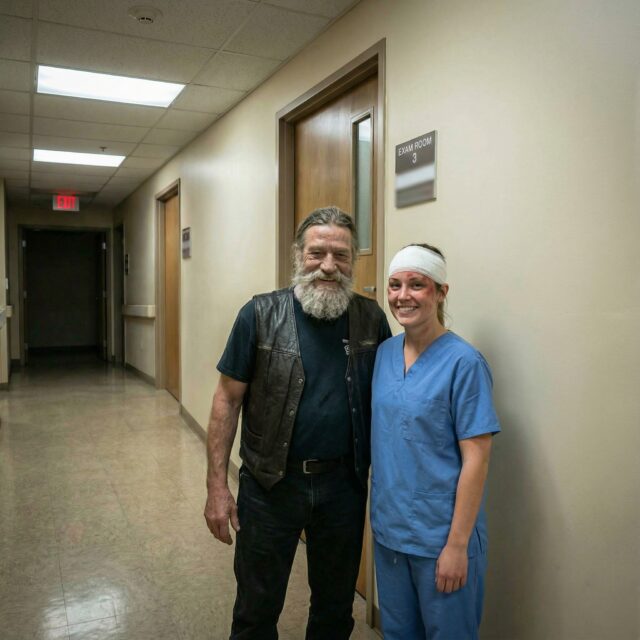
His name is Marcus. He’s 58. He drinks his coffee black. He reads historical fiction. He works night shifts as a hospital custodian so he can be here during my morning sessions.

He’s never missed once.

Not for holidays. Not for bad weather. Not when the center was barely open during a blizzard. Marcus was there.

My family stopped coming after the second month.

My daughter came twice. Then her kids had activities. Then it was too far. Then she stopped calling to explain.

My son came once. Sat for twenty minutes checking his phone. Left before my session was done. Haven’t seen him since.

My ex-wife sent flowers on my birthday. They died before I got home from the hospital.

But Marcus shows up.

I didn’t understand it at first. Thought he was confused. Thought he was waiting for someone else. When I realized he was there for me, I thought he was crazy.

“Why are you here?” I asked him after the third week.

“To keep you company.”

“I don’t know you.”

“Not yet.”

That was four years ago. Now I know his coffee order, his favorite authors, the names of his two grown kids. I know he’s a widower. I know he’s a veteran. I know he volunteers at three different places because staying busy keeps the grief away.

But I still don’t know why he chose me.

The dialysis center has maybe thirty regular patients. Some have family who visit. Most don’t. There are at least a dozen people who sit alone every session, staring at the TV or sleeping through the four hours.

Marcus could have picked anyone. But he picked me.

He brings breakfast sometimes. Nothing fancy. A muffin. A bagel. Things I can eat with my kidney restrictions. He researched my diet without me asking.

He brings books and reads out loud if I’m too tired to read myself. He brought a deck of cards and taught me gin rummy. We’ve played probably 500 games. He’s winning by sixty-three.

When I had a bad reaction to treatment last year and my blood pressure crashed, Marcus was the one who held my hand while the nurses worked. My emergency contact is my daughter. She didn’t answer. But Marcus was there.

The nurses think he’s my brother. I’ve stopped correcting them.

Last week was my four-year anniversary on dialysis. Four years of needles and machines and watching my blood cycle through tubes. Four years of my kidneys failing a little more each month. Four years of wondering if I’ll make it to a transplant list.

Marcus brought a card. He’s not a card guy. But he brought one anyway.

Inside it said: “Four years of fighting. I’m honored to witness it.”

I asked him why he does this. Why he spends twelve hours a week sitting in a medical clinic with someone he didn’t know four years ago.

“You don’t have to keep coming,” I said. “I’ll be okay.”

Marcus looked at me for a long time. Then he said something I wasn’t expecting.

“When my wife was on dialysis, I sat with her every session. For two years. Right up until the end. She died waiting for a kidney that never came.”

“I’m sorry.”

“After she died, I couldn’t stay away from this place. I kept coming back. The nurses asked if I wanted to volunteer. Sit with patients who don’t have anyone.”

“So you picked me?”

“I picked you because the first day I saw you, you were reading the same book she’d been reading when she died. Same exact book. Same bookmark placement. I know because I finished it for her.”

I looked down at the book in my lap. Historical fiction about World War II. I’d bought it at a thrift store.

“I thought it was a sign,” Marcus said. “That maybe I was supposed to be here. For you.”

That was a week ago. I haven’t known what to say since.

But yesterday, something happened that made me understand why Marcus really comes. And it wasn’t about his wife. It wasn’t about the book.

It was about something else entirely. Something he’d been carrying for four years. Something I’d never suspected.

Yesterday started like every other Tuesday. Marcus was already there when they called me back. Chair 7. He’d saved the visitor seat with his jacket.

“Morning, James,” he said. That’s my name.

“Morning.”

The nurse got me set up. Two needles, one in each arm. Blood out, blood back in. Four hours of sitting while a machine does what my kidneys can’t anymore.

Marcus pulled out a book. Different one this time. He’d finished the WWII novel two weeks ago.

“What’s this one about?” I asked.

“Korean War. Memoir. Guy was a medic.”

“Any good?”

“Just started. I’ll let you know.”

We settled into our routine. Marcus read. I watched the numbers on the machine. The minutes ticking by. My blood pressure. My fluid removal rate.

Halfway through the session, a woman came into the dialysis center. She was maybe thirty. Blonde hair. Professional clothes. She looked lost.

She spoke to the front desk. The receptionist pointed toward my section.

The woman walked over. Stopped at my chair.

“James Morrison?” she asked.

“That’s me.”

“My name is Dr. Sarah Kellerman. I’m with the transplant center at University Hospital. Can I speak with you for a moment?”

My heart jumped. “Did you find a match?”

“Can we talk privately?”

Marcus started to stand. I grabbed his arm. “He can stay. Whatever you need to say, he can hear it.”

Dr. Kellerman looked at Marcus, then at me. “All right. Mr. Morrison, we have a kidney for you.”

The world stopped.

“What?”

“A donor kidney became available. You’re a match. We need to get you to the hospital immediately.”

Four years. Four years of waiting. Of hoping. Of watching other patients get called and wondering if my turn would ever come.

“I don’t understand,” I said. “I thought I wasn’t high enough on the list.”

“You’re not on the general list. This is a directed donation. The donor specifically requested you.”

“I don’t know anyone who’d donate to me. My family won’t even visit.”

Dr. Kellerman glanced at Marcus again. “The donor prefers to remain anonymous. But they’ve been tested, cleared, and they’re ready. We can do the surgery tomorrow morning if you’re willing.”

“If I’m willing? Yes. Of course. Yes.”

“Good. I need you to come with me now. We’ll run some final tests and prep you for surgery.”

The nurse started unhooking me from the machine early. My head was spinning.

Marcus stood up. “Congratulations, James.”

“I can’t believe this is happening.”

“You deserve it. You’ve fought hard.”

Dr. Kellerman was filling out paperwork. Talking to the nurses. Everything was moving so fast.

I looked at Marcus. “Will you come? To the hospital?”

“I don’t think they allow visitors before surgery.”

“I don’t care. I need someone there. Please.”

Marcus nodded. “I’ll be there.”

They took me to University Hospital. Ran blood work. Did scans. Checked everything twice. The kidney was healthy. The match was good. Surgery was scheduled for 6 AM.

Marcus showed up at 8 PM. Visiting hours were over but he told them he was my brother. They let him in.

He sat in the chair next to my hospital bed. Same as always.

“How are you feeling?” he asked.

“Scared. Excited. I can’t believe someone would do this for me.”

“People are capable of amazing things.”

“Do you know who it is? The donor?”

“Why would I know?”

“I don’t know. It just seems strange. The timing. After four years, suddenly there’s a kidney and it’s directed specifically to me?”

Marcus didn’t answer right away. He looked at his hands.

“James, there’s something I need to tell you.”

Something in his voice made my chest tighten. “What?”

“The reason I’ve been coming to your dialysis sessions. It wasn’t just about the book. That was part of it. But there’s more.”

“I don’t understand.”

He took a deep breath. “Eight years ago, I made a mistake. I was driving home from work. It was late. I was tired. I looked down at my phone for just a second.”

My stomach dropped.

“When I looked up, I’d drifted into the other lane. There was a car coming. I swerved back but I clipped them. Sent them off the road.”

I couldn’t breathe.

“The driver survived. But she was hurt badly. Internal injuries. By the time the ambulance got there, she’d lost a lot of blood. They rushed her to surgery but the damage was too severe. Her kidneys failed. Acute kidney injury that became chronic.”

“Marcus—”

“I stayed at the hospital. Waited to see if she’d be okay. The police came. Took my statement. I told them everything. Said it was my fault. They cited me for distracted driving. I lost my license for a year. Had to do community service. Pay a fine.”

“Why are you telling me this?”

“Because the woman I hit was named Jennifer Morrison. Your wife.”

The room tilted.

“What?”

“I’m the reason she needed a kidney transplant. I’m the reason her health fell apart. I’m the reason she spent two years on dialysis before she died.”

I stared at him. At this man who’d sat with me for four years. Who’d never missed a session. Who’d brought me coffee and played cards and held my hand when I was scared.

“You killed my wife.”

“Yes.”

“And you’ve been sitting with me for four years? Why? Guilt?”

“At first, yes. I went to Jennifer’s funeral. Saw you there. Saw how destroyed you were. I wanted to apologize but I couldn’t find the words.”

“So you just showed up at my dialysis?”

“I found out you’d developed kidney disease. Asked around and learned you were alone. No visitors. No support. And I thought—I thought maybe I could do something. I couldn’t bring her back but I could make sure you didn’t go through it alone like she did.”

I wanted to be angry. I wanted to scream at him. Tell him to get out. Tell him I never wanted to see him again.

But I thought about the last four years. Every Tuesday, Thursday, Saturday. Every coffee. Every conversation. Every moment he’d been there when no one else was.

“Does my family know?” I asked. “Do they know you’re the one who hit her?”

“No. I never told anyone. The accident report has my name but I don’t think anyone ever looked.”

“Why are you telling me now?”

Marcus reached into his pocket. Pulled out a hospital bracelet.

“Because I’m your donor, James. I’m giving you my kidney tomorrow morning.”

The world stopped again.

“What?”

“I’ve been tested for two years. Waited until I was cleared. Made sure I was a match. Asked the transplant center to keep it anonymous until after you agreed.”

“You’re giving me your kidney.”

“Yes.”

“Why?”

“Because I took your wife’s kidneys. And now I want to give you mine. It won’t bring her back. It won’t undo what I did. But maybe it’ll give you a chance at a life. A real life. Not just four hours in a chair three times a week.”

I couldn’t process it. Couldn’t make sense of it.

“I don’t know what to say.”

“You don’t have to say anything. You can refuse. You can tell them you want a different donor. You can tell me to leave and never come back. But I need you to know—I’ve been here for four years because I owe you. I owe her. And this is the only way I know how to pay that debt.”

We sat in silence. The hospital sounds filled the space between us. Machines beeping. Footsteps in the hallway. Distant conversations.

Finally, I spoke. “Did you love her? Jennifer?”

“I didn’t know her. I only saw her for a second before the crash. But I’ve thought about her every day for eight years. I’ve visited her grave. I’ve talked to her. Apologized to her. Promised her I’d take care of you.”

“She’d probably think this was insane.”

“Probably.”

“She’d also probably think it was the right thing to do.”

Marcus looked up. “What?”

“Jennifer believed in redemption. She believed people could change. Make amends. She would’ve forgiven you years ago.”

“I don’t know if I can forgive myself.”

“Then do the surgery. Give me your kidney. And maybe that’s how you start.”

They took us into surgery at 6 AM. Me in one room. Marcus in another.

I don’t remember much after the anesthesia. Just white lights and voices and the feeling of drifting.

When I woke up, it was afternoon. A nurse was checking my vitals.

“How do you feel?” she asked.

“Tired. Sore.”

“That’s normal. The surgery went well. Your new kidney is already functioning.”

“Where’s Marcus? The donor?”

“He’s in recovery. He’s doing fine.”

“Can I see him?”

“Not yet. But soon.”

They kept me in the hospital for five days. Standard for transplant patients. They monitored the kidney. Made sure my body wasn’t rejecting it. Adjusted my medications.

Marcus was there two days longer. Kidney donation is major surgery. They’d taken one of his organs. He’d need time to heal.

On the third day, they wheeled me to his room. Let us visit for a few minutes.

He looked pale. Tired. But alive.

“Hey,” I said.

“Hey.”

“They tell you it’s working? The kidney?”

“Yeah. They said it’s functioning perfectly.”

“Good.”

We didn’t talk about the accident. Didn’t talk about Jennifer. We just sat there. Two men connected by tragedy and surgery and four years of Tuesday, Thursday, Saturday mornings.

“Thank you,” I finally said.

“You don’t have to thank me.”

“Yes I do. You gave me my life back.”

“I took your wife.”

“And you spent four years making sure I didn’t give up. That counts for something.”

Marcus closed his eyes. “I don’t know if I’ll ever feel like I’ve done enough.”

“Then I guess you’ll just have to keep showing up.”

He smiled at that. Just a little.

It’s been six months since the transplant. My kidney function is normal. I don’t need dialysis anymore. I wake up every morning and I’m not exhausted. I can eat what I want. Drink water without measuring every ounce. Live.

Marcus still shows up. Not three times a week anymore. But he calls. We meet for coffee. Play gin rummy. He’s still winning.

My daughter came to visit last month. First time in four years. She cried when she saw me. Said she was sorry for not being there. Sorry for missing so much.

I introduced her to Marcus. Told her he was a friend. Told her he’d been there through everything.

I didn’t tell her about the accident. About what he’d done. About the kidney.

Maybe someday I will. Maybe someday she needs to know that the man who killed her mother also saved her father.

But for now, it’s enough that he’s here.

Marcus says he still visits Jennifer’s grave. Still talks to her. Still apologizes.

I went with him last week. First time I’d been there since the funeral.

We stood at her headstone. Marcus on one side. Me on the other.

“I’m taking care of him,” Marcus said to her. “Like I promised.”

I put my hand on the stone. “He’s taking care of me too. I think you’d like that.”

We stayed for an hour. Then we went and got terrible coffee at the diner near the cemetery.

Marcus paid. Like he always does.

“You know you don’t have to keep doing this,” I said. “You’ve paid your debt. You gave me a kidney. You’ve given me four years of your life. You don’t owe me anything anymore.”

“I know,” Marcus said. “But I’m not doing it because I owe you. I’m doing it because you’re my friend.”

And that’s the truth of it. Somewhere between the guilt and the grief and the gift of an organ, we became friends.

I don’t know if that’s redemption. I don’t know if that’s forgiveness. I don’t know if Jennifer would approve or if the universe balances these scales or if any of it makes sense.

All I know is that a stranger showed up when no one else would. And he’s still showing up. Not out of obligation. But because that’s what people do for each other when they choose love over guilt. Connection over isolation. Showing up over walking away.

My family didn’t come to my dialysis for four years. But Marcus never missed once.

And now I understand why. He wasn’t there to ease his guilt. He was there because broken people can still show up for each other. And sometimes showing up is how we heal. Both of us. Together.

Tuesday, Thursday, Saturday mornings. We don’t spend them in Chair 7 anymore. But we spend them together. Coffee. Books. Gin rummy.

And that’s enough.

That’s more than enough.

That’s everything.

Expert reveals the 15 US cities that would be first targets in WW3 – some might surprise you!

Fear of large-scale war has a way of settling into society quietly. It doesn’t always arrive with sirens or headlines. Instead, it lingers in the background, shaped by news alerts, diplomatic threats, and a growing sense that the global order is less stable than it once appeared. In recent years, that unease has deepened, fueled by rising political tension, fractured alliances, and increasingly aggressive rhetoric among world powers.

Part of the messaging surrounding the return of Donald Trump to the White House emphasized keeping American troops out of prolonged foreign conflicts. On the surface, that promise appealed to a war-weary public. Yet alongside those assurances came a series of moves and statements that left analysts unsettled. Escalating pressure related to Venezuela, sharp rhetoric toward Iran, and repeated public insistence that the United States should acquire Greenland have contributed to a sense that global stability rests on a thinner margin than many would like to admit.

At the center of public anxiety is the prospect of a third world war. Unlike previous conflicts, a modern global war—particularly one involving nuclear weapons—would not simply redraw borders or shift power balances. It would threaten life on a scale that permanently alters civilization itself. Optimists point to deterrence, treaties, and rational self-interest as barriers against such a catastrophe. More cautious observers counter that history is filled with wars sparked not by long-term planning, but by miscalculation, pride, and moments where restraint failed.

As uncertainty grows, people have begun asking more concrete, uncomfortable questions. Not just whether a global conflict could happen, but what it would look like if it did. That shift from abstract fear to specific scenarios is telling. It reflects a deeper loss of confidence in the systems meant to prevent escalation.

Into that discussion stepped nuclear historian Alex Wellerstein of the Stevens Institute of Technology. Speaking publicly in 2025, Wellerstein explained that in the event of a nuclear conflict, targets would be selected based on strategic goals rather than symbolism alone. The first strikes, he noted, would likely focus on disabling an opponent’s ability to respond.

“If the adversary were Russia and the goal was to prevent U.S. retaliation,” he explained, “command centers and intercontinental ballistic missile sites would be hit first. A different kind of attacker, especially a rogue actor, might focus instead on population centers or symbolic locations.”

That distinction pulls attention away from obvious megacities and places it squarely on smaller, lesser-known locations whose strategic value far outweighs their population.

One such city is Great Falls, home to just over 60,000 residents. Despite its modest size, Great Falls sits near Malmstrom Air Force Base, which controls hundreds of nuclear missile silos. In a nuclear scenario aimed at neutralizing U.S. strike capability, that proximity alone makes the area a high-value target.

A similar logic applies to Cheyenne, which lies close to Francis E. Warren Air Force Base, another critical hub in America’s nuclear missile command structure. Cheyenne rarely appears in discussions of global conflict, yet its strategic importance places it squarely on vulnerability lists.

In Utah, Ogden and Clearfield sit near Hill Air Force Base, a key installation for nuclear weapons storage and aircraft maintenance. Together, these communities have a relatively small combined population, but their location near critical military infrastructure makes them potential targets in a first-strike scenario.

Further south, Shreveport is located close to Barksdale Air Force Base, home to B-52 bombers capable of carrying nuclear payloads. Any strike aimed at disabling that base would almost certainly devastate the surrounding civilian area, regardless of whether it was the intended target.

On the Pacific front, Honolulu remains strategically vital due to its concentration of naval and air forces. The legacy of Pearl Harbor still looms large in military planning, and Hawaii’s geographic position makes it a critical node in U.S. defense strategy across the Pacific.

In the American heartland, Omaha stands out because of its proximity to Offutt Air Force Base, a central command hub for U.S. nuclear operations. Nearby Colorado Springs is home to NORAD, the command responsible for defending North American airspace. Both locations hold immense strategic value despite lacking the global profile of coastal cities.

The Southwest is not immune either. Albuquerque hosts Kirtland Air Force Base, which contains one of the largest concentrations of nuclear weapons-related infrastructure in North America. Its importance makes it another potential early target in a conflict aimed at crippling U.S. capabilities.

Some cities, of course, are obvious. Washington, D.C. represents the political heart of the nation. Seattle, near Naval Base Kitsap and a major global port, carries both military and economic weight.

Other major urban centers appear on vulnerability lists not because of missile silos or command centers, but because of their population density and economic influence. San Francisco, Houston, Chicago, Los Angeles, and New York City are all places where destruction would send shockwaves through global markets, infrastructure, and morale.

None of this analysis suggests that nuclear war is inevitable. Experts are careful to stress that deterrence remains powerful and that multiple layers of safeguards exist to prevent catastrophe. Still, the fact that such discussions feel increasingly relevant says something important about the current moment.

Public anxiety is not rooted solely in fear of weapons, but in fear of judgment. Of leaders misreading intentions. Of alliances cracking under pressure. Of egos overriding caution. History shows that wars often begin not because they are wanted, but because they are mismanaged.

The conversation about potential targets is unsettling precisely because it forces people to confront how interconnected military strategy and civilian life truly are. These cities are not abstract points on a map. They are homes, schools, hospitals, and communities filled with people who have no say in geopolitical calculations.

Whether the world steps back from the edge or drifts closer to it will depend on diplomacy, restraint, and the willingness of leaders to recognize that power without control is a liability. For now, the growing unease reflects a collective awareness that peace is not a permanent state. It is something that must be actively maintained, especially in an era where the cost of failure is unthinkable.

Refrigerate or Leave Out? The Truth About Mayonnaise Storage

Mayonnaise is a common kitchen staple, used both as a condiment and as an ingredient in many recipes. Yet one question continues to cause confusion: does mayonnaise need to be refrigerated, or can it safely sit out? The answer matters, because improper storage can increase the risk of foodborne illness and shorten shelf life.

The science behind mayonnaise

Mayonnaise is an emulsion made from oil, egg yolks, and an acid such as vinegar or lemon juice. The egg yolks contain lecithin, which allows the oil and liquid to stay blended. The acidic component helps slow bacterial growth, but it does not eliminate risk entirely.

Commercially produced mayonnaise is made with pasteurized eggs and often includes preservatives. These factors significantly improve its stability and safety compared to homemade versions. Homemade mayonnaise, which typically uses raw egg yolks and no preservatives, is far more vulnerable to spoilage.

Refrigeration: when it’s necessary

Store-bought mayonnaise: Once opened, it should always be kept refrigerated. Even though it contains acid and preservatives, leaving it at room temperature for extended periods can still allow harmful bacteria to grow.

Homemade mayonnaise: This should be refrigerated at all times and used within a short window, usually 3–5 days.

Leaving mayonnaise out during a meal—such as on a table or buffet—is generally safe for a short period, but it should not be left unrefrigerated for hours. Warm temperatures accelerate bacterial growth, especially once the jar has been opened.

Why proper storage matters

While mayonnaise has a reputation for causing food poisoning, illness is more often linked to cross-contamination—such as using the same utensil for raw foods and then dipping it back into the jar—or prolonged exposure to warm temperatures.

Bottom line

Refrigerate mayonnaise after opening

Keep homemade mayonnaise cold at all times

Avoid leaving it out for extended periods

Use clean utensils to prevent contamination

Proper storage preserves both safety and quality, ensuring mayonnaise remains a reliable and safe part of everyday meals.

The Hidden Meaning Behind Thumb Rings!

Rings have long held meanings that go beyond simple decoration. Across history and cultures, they’ve represented love, loyalty, power, identity, and even spiritual beliefs.

While most people understand the symbolism behind rings on the ring or index finger, the thumb ring remains a more mysterious choice. Its meaning is less talked about, but just as fascinating.

Rings have long held meanings that go beyond simple decoration. Across history and cultures, they’ve represented love, loyalty, power, identity, and even spiritual beliefs. While most people understand the symbolism behind rings on the ring or index finger, the thumb ring remains a more mysterious choice. Its meaning is less talked about, but just as fascinating.

Wearing a ring on the thumb introduces something different. In various cultures, it’s been seen as a sign of strength, independence, or even wealth.

Today, many wear thumb rings as a bold fashion move, yet they often reflect more than style—suggesting a sense of uniqueness and quiet power. It’s a subtle but striking choice.

Whether you realize it or not, the finger you wear a ring on can say something about who you are. A thumb ring might be chosen for its look, or it could signal a desire to stand out, feel empowered, or embrace a free-spirited identity. It’s one small accessory that can speak volumes.

Sprouted Potatoes: What You Need to Know Before Cooking

I was searching through my pantry for a forgotten box of pasta, quietly delaying my chores, when I came across a bag of potatoes I had nearly forgotten. At first glance, they looked normal—until I noticed the long, pale sprouts twisting out from their skins like tiny reaching fingers. My immediate reaction was surprise, followed by concern. Were these potatoes still safe to eat, or had I discovered something better left untouched? What began as a simple kitchen moment turned into a lesson about how food changes over time.

Potatoes sprout when they’ve been stored too long or kept in warm, bright conditions. As they begin to grow new shoots, they naturally produce compounds called glycoalkaloids, including solanine and chaconine. These substances help protect the potato plant from pests, but in large amounts, they can cause discomfort if consumed. Sprouts and green-colored skin are common signs that these compounds may be present in higher levels. While this doesn’t mean every sprouted potato is harmful, it does mean they deserve a closer look before cooking.

The good news is that mildly sprouted potatoes can sometimes still be used. If the potato remains firm, with only small sprouts and no green coloring, you can safely cut away the sprouts and peel off any green areas. Removing soft spots is also important, as they signal decay. However, if a potato feels mushy, looks deeply green, smells unusual, or has extensive sprouting, it’s best to discard it. When in doubt, choosing caution is always the safer option.

Preventing sprouted potatoes in the first place is easier than many people realize. Store them in a cool, dry, and dark space with good airflow—never in direct sunlight or tightly sealed plastic bags. Avoid placing them near onions, as onions release natural gases that encourage faster sprouting. With proper storage, potatoes can stay fresh for weeks. And if you ever find a healthy sprouted potato that’s too far gone for cooking, you can even plant it and grow new ones. Sometimes, a small kitchen discovery can turn into a reminder that food, like life, keeps trying to grow in unexpected ways.

Popular

A Mother’s Love: Vienna’s Journey with a Birthmark

0
Love compels parents to do extraordinary things for their children’s well-being. Celine Casey, a British mother, took remarkable steps to ensure her daughter Vienna’s...