In Boston, a seemingly ordinary day turned into a cautionary tale about responsibility and accountability for pet owners. The case centered around Leticia Jenkins and her dog, Jaylen, whose peaceful walk near a neighbor’s home ended with a sudden, unexpected attack.
On December 16th, around 6 PM, Jenkins and her young son were strolling down a quiet neighborhood sidewalk. Everything seemed normal until Ginger, the dog belonging to their neighbor Patricia Saunders, ran up to Jaylen.
According to Jenkins, Ginger bit Jaylen on the neck and eye without any provocation, causing visible injuries. The sudden attack left Jenkins alarmed and anxious, especially as her son watched helplessly. Concerned for Jaylen’s safety, Jenkins immediately rushed him to a veterinarian, incurring a bill of $653.
The incident didn’t just cause physical harm—it also brought emotional distress. Witnessing a beloved pet being attacked can be traumatic, particularly for children, and Jenkins knew she needed to take action. She decided to file a lawsuit against Patricia Saunders, holding her responsible for the attack and the resulting veterinary expenses.
In court, Saunders defended herself by claiming that Ginger was not aggressive and that the attack was an unfortunate accident. She suggested that Jaylen’s behavior might have triggered Ginger’s reaction, despite admitting that the dogs were previously unfamiliar with each other. Saunders also expressed doubts about the necessity and cost of the veterinary treatment.
Despite these defenses, Judge Marilyn Milian carefully examined the evidence. She noted that pet owners have a legal obligation to ensure their animals do not pose a threat to others, especially in public spaces. The court ultimately ruled in favor of Jenkins, recognizing that Jaylen’s injuries were serious and warranted medical attention. Saunders was ordered to pay the full $653 for veterinary expenses.
This case serves as a significant reminder for all pet owners. Even dogs that seem calm or friendly in private settings can act unpredictably in public. Leash laws, proper supervision, and preventative measures are not just formalities—they are crucial steps to keep the community safe and avoid potential legal consequences. Pet insurance can also play a key role in mitigating the financial burden when such incidents occur.
Moreover, the case highlights the broader lessons of responsibility and accountability. It demonstrates that actions—or inactions—can have lasting consequences and that legal systems can offer protection and remedies for victims. For the Jenkins family, the ruling ensured Jaylen received necessary care and reinforced the principle that pet owners must remain vigilant and responsible at all times.
The Boston dog bite case quickly gained attention across social media and local news outlets. While the story may seem like a simple incident, it resonates deeply because it involves not only the welfare of a pet but also the emotional well-being of a child and the ethical duty of a neighbor.
Ultimately, this incident reminds all pet owners and members of the community that vigilance, precaution, and accountability are essential. Responsible pet ownership is not merely a recommendation—it is a duty. Leticia Jenkins’ proactive actions ensured her dog received proper care, highlighted the legal responsibilities of pet owners, and sparked conversations about public safety and awareness.
In the end, the Boston dog bite case stands as a modern example of how responsibility, law, and compassion intersect in everyday life, showing that sometimes even ordinary walks can teach extraordinary lessons about accountability, care, and respect for others.
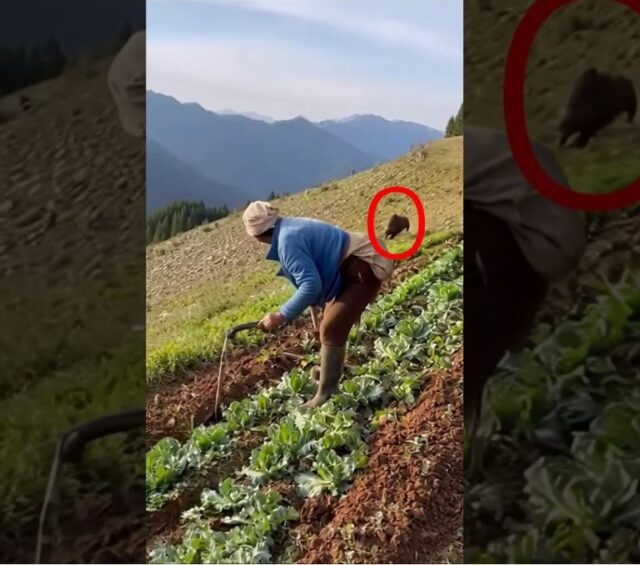
It was a calm autumn afternoon in the countryside. The golden light of the setting sun stretched across the open fields, where farmers worked peacefully, finishing the day’s harvest. The hum of tractors mixed with the soft chirping of birds, and the scent of fresh soil filled the air.
The Sudden Panic
For a moment, everyone froze. Wild boars were known to roam the forest nearby, but they rarely came this close to people. This one, however, looked panicked — its thick black fur bristling, eyes wide, tusks gleaming in the sunlight.
The workers dropped their tools and scattered. One young man, Eli, stood frozen near the edge of the tractor. He had never seen such raw power before. The animal’s hooves pounded the ground, leaving deep marks in the soil as it came straight toward him.
The Moment of Decision
As Eli reached the trailer, he made a split-second choice. Instead of trying to climb it, he darted behind it, crouching low. The boar thundered past, missing him by inches, crashing into the wooden side with a loud crack.
By now, the other workers had found their courage. Two men shouted from across the field, waving their jackets and sticks, trying to draw the animal’s attention away. A third man jumped into the tractor, revving the engine loudly. The sound startled the boar, which turned toward the noise instead of Eli.
The Boar’s Fury
Wild boars are unpredictable. When they panic, they often don’t know where to run — and that makes them even more dangerous. This one began to circle the field, grunting and pawing at the ground. Dust rose around it in clouds.
For several tense minutes, nobody dared move. The animal’s breathing was heavy, its flanks heaving. Then, suddenly, it made another charge — not at the people this time, but toward the tractor. The driver quickly backed away, the engine roaring, keeping a safe distance.
Understanding the Wild Boar’s Behavior
Later, when experts were called to check the area, they explained that wild boars often wander into open fields when searching for food — especially during harvest season when crops are plentiful. However, if they feel cornered or threatened, they will charge to defend themselves or their offspring.
In this case, tracks near the edge of the forest suggested there were two smaller boars that had run off earlier — likely the mother’s young. The adult had charged into the field not out of aggression, but out of fear and instinct to protect them.
A Lesson in Respect
That day became a local legend in the village. People talked about the “charging boar” that had startled an entire construction crew but hurt no one. Yet beneath the laughter and storytelling, there was a deeper lesson.
Conclusion: The Day the Field Roared
The question “What if a wild boar charges from the field?” is no longer just a warning — it’s a reminder. It reminds us that the line between human and wild is thinner than we think, and that every living being, when cornered, deserves understanding, not hatred.
For Eli and his team, the day the field roared was a day they learned both fear and respect — a moment when man and beast met in chaos, and both walked away alive.
The sky was painted in gray, and the first drops of rain began to fall over the quiet outskirts of a small town named Millfield. Most people had already rushed indoors, closing their windows tightly against the growing storm. But on the edge of the town, in a small, weathered wooden house surrounded by fields, one old man was still outside Mr. Thomas Hale, a 72-year-old retired schoolteacher who lived alone with his memories and his garden.
A Heart Too Kind to Ignore
The dogs hesitated, trembling from the cold. But the gentle tone of his voice, the warmth in his eyes, and the small pieces of bread he held in his palm drew them closer. One by one, they crept toward him a small brown puppy, a white mixed breed with a limp, and an older black dog that looked like it had been protecting the others.
The Long Night of Compassion
The rain poured all night. The sound of it hitting the tin roof was almost deafening. Inside, Thomas sat on the floor beside the three dogs, gently drying their fur with an old towel and speaking to them as if they were old friends.
The brown puppy fell asleep first, curled up on his lap. The white dog leaned against the old man’s leg, sighing softly, while the black one lay near the door, still alert but slowly closing its eyes.
A Mission of Mercy
Over the next few days, Thomas took care of the dogs as best as he could. He made them a small shelter beside his garden, fed them warm soup and bread, and talked to them every morning as he watered his plants.
When neighbors passed by, they would smile at the sight the old man walking down the muddy path with three loyal dogs following him in perfect harmony.
Word spread quickly through the town about what he had done. Children began visiting him after school, bringing old blankets, leftover food, and medicine for the dogs. A local veterinarian offered to check them for free.
The Reporter’s Visit
One afternoon, a young reporter from the local newspaper knocked on Thomas’s door. She wanted to feature his story the old man who saved dogs in the rain.
The reporter published his story with the title: “The Man Who Sheltered Hope in the Rain.” It went viral across social media, inspiring people to rescue stray animals, donate to shelters, and adopt instead of buying pets.
A Legacy of Kindness
Years later, when Thomas passed away peacefully in his sleep, the townspeople built a small wooden sign near his home. It read:
“In memory of Thomas Hale — who taught us that love has no limits.”
The three dogs were adopted together by a young family who had once brought him food. They still live in that same village, where children often point to them and say, “Those were Mr. Hale’s dogs the ones he saved from the rain.”
And every time the rain falls in Millfield, people remember him not as a hero in shining armor, but as a kind old man who saw suffering and decided to do something about it.
The Billionaire’s Secret: A Widow’s Discovery on a Rainy Day Unearths a Hidden Family and a Shocking Betrayal
Once upon a time in the heart of Victoria Island, there lived a woman named Amora Oronquo. She was the kind of woman people stopped to stare at when she walked into a room. Not just because she was beautiful, but because she carried herself like a queen. Tall, light-skinned, with sharp cheekbones and eyes that never smiled.
Amora always wore designer clothes and never repeated an outfit twice. She lived in a white mansion surrounded by guards, flowers, and a tall black gate that never opened for strangers. People said she was heartless. They said she had no family, no friends, no one she trusted, just money. And they were right.
Amora was alone. Her husband had died 3 years ago, and they never had children. Since then, she worked, traveled, and came home to silence. That was her life. but that life was about to change. All because of one rainy afternoon. The sky had turned dark that Thursday. Thick gray clouds covered the sun.
Rain started to fall slowly at first, then heavier and louder. The sound of thunder rumbled far away like an angry drum. Amora sat in the back seat of her black Range Rover. Her driver, Caru, was moving slowly through traffic. He glanced at the rear view mirror.
Madam, should I take the ley shortcut? This traffic might hold us till night. Amora didn’t answer at first. She was staring at her phone. A message had just come in from the board. Meeting rescheduled to 5:00 p.m. Please confirm. She sighed and put the phone down. Go through Ozamba. I don’t care if it takes 2 hours. Yes, ma. Caru said and turned the steering wheel.
Outside, the rain splashed hard against the windshield. On the sidewalks, people were running, trying to find shade. Some had umbrellas. Most didn’t. Cars honked. Street vendors shouted. Everyone looked like they were trying to escape something. Then the car stopped. A red traffic light ahead blinked. The wipers moved back and forth. Caru was about to comment on the jam when Amora raised her hand slightly.
“What’s that?” she said, squinting through the window. Carl looked too. What’s what, Mau? There, near that pole. That boy. Carl turned and saw a skinny boy, maybe 12 years old, barefoot and shaking, holding two small babies, one in each arm. The babies were wrapped in what looked like nylon bags. Their clothes were soaked.
Their cries were faint but sharp, even through the glass. The boy was standing in the middle of the road divider, his head bent as rain poured down on all three of them. Caru frowned. They’re always doing this begging trick. Ma, some of them even rent babies. But Amora wasn’t listening. Her eyes were fixed on the baby’s faces. Something about them made her chest feel tight.
She leaned forward as if getting a closer look would explain what her brain couldn’t. She whispered, “Those eyes.” The left twin lifted her face briefly. Her eyes were hazel, the same rare light brown color as her late husband’s. It couldn’t be, Amora thought. She blinked. Maybe it was the rain or the street lights or her mind playing games.
But then the second baby looked up and the same eyes stared back. Her heart jumped. Stop the car, Amorus said quickly. Caru looked confused. Mow. I said, “Stop the car now.” The driver hit the brake and parked by the curb. Amora opened the door and stepped into the rain, ignoring the water that hit her face and soaked her designer dress.
Her heels sank into the muddy ground, but she didn’t care. Carl quickly followed her with an umbrella. “Madam, you’ll catch cold, please.” But Amora was already walking fast straight toward the boy. When she reached him, the boy looked up, his face full of fear and surprise. He didn’t speak. “Who are you?” Amora asked, her voice firm.
He looked down at the babies again, then back at her. “I’m I’m Toby.” She crouched slightly, eyes on the twins. “They are yours.” “Yes,” he said, tightening his grip. “They are mine.” She raised her eyebrows. your sisters. He hesitated. No, my daughters. Amora stepped back slightly. You’re what? He nodded slowly. I’m their father.
Amora stared at him, unsure whether to be angry, shocked, or confused. You’re 12. I’m 13, he said quickly. She shook her head. And where is their mother? He looked away. She died when they were born. The rain kept pouring. The babies shivered. One of them began to cry again, weak and horsearo. Amora’s lips parted, but she didn’t know what else to say.
The boy was clearly lying about something, or maybe everything, but the way he cradled the twins, it didn’t feel like a trick. He didn’t ask for money. He didn’t stretch his hand. He didn’t even move. Amora took a deep breath and looked back at her car. The wipers were still moving. Caru was still holding the umbrella behind her. She turned to him. Bring them in. Ma.
I said, “Carry them into the car.” Caru stood frozen. Amora snapped. You want me to repeat myself in Igbo. No, Ma. Caru stepped forward quickly. Toby looked scared and stepped back. Please don’t take them. Amora raised her hand gently. We’re not taking them from you. You’re coming with us. I don’t want to go to police.
No police, she said, eyes soft. I promise. Toby hesitated. Then slowly, carefully, he followed her to the car. Inside the Range Rover, the heat was turned on. The twins were wrapped in a Morris scarf and one of her shaws. They stopped crying. Toby sat stiffly, water dripping from his hair, eyes darting around like a trapped animal. Caru drove slowly.
Amora didn’t speak much. She just stared at the babies, their hazel eyes closed now, tiny chests rising and falling. She didn’t know what this meant yet. But she knew one thing for sure. This was not a mistake. Something had brought her to them, and she was going to find out why. The car was quiet.
Only the sound of the rain hitting the roof and the gentle hum of the air conditioner filled the space. Amora sat stiffly, her eyes glued to the two babies lying on her lap, wrapped tightly in her soft cashmre scarf. They were asleep now. Their small faces were peaceful, but their skin was cold. She could still feel how weak their bodies were when she carried them into the car.
Toby sat at the edge of the back seat, his hands folded, wet clothes clinging to his thin body. His eyes kept bouncing around the car, from the expensive leather seats to the glowing dashboard lights. He looked nervous, like a child who had entered a palace he had no right to be in. Amora glanced at him, but she said nothing. She didn’t know what to say.
Her heart felt heavy, but her mind was moving fast, too fast. Questions kept piling up in her head, one after another. Who was this boy? Where was he from? How did he end up with twin babies in the rain? And most of all, why did they have her husband’s eyes? The car turned into her estate.
The long curving driveway led to a giant white mansion surrounded by tall palm trees and a wide fence. The gate opened slowly as the security guard recognized the car. Toby’s mouth dropped slightly. He stared at the big house like it was a movie. “You live here?” he finally asked, his voice quiet. Amora didn’t answer. She was still staring out the window.
When the car stopped at the entrance, two uniformed workers ran out with umbrellas. One of them opened Amora’s door. Another reached to carry the babies, but she pulled back quickly. “Don’t touch them,” she said. The worker stepped aside, confused. Amora stepped out carefully, holding the babies to her chest. Her heels clicked against the wet tiles. Toby stepped out slowly, too.
He wiped his feet on the mat like he didn’t want to stain anything. Caru stood by the door, whispering something to one of the guards. The look on his face showed confusion and worry. Inside the house, the lights were warm. The smell of lemons polish filled the air. A giant chandelier hung above the marble floor and soft music was playing from hidden speakers. Toby stopped at the door. He looked down at his muddy feet.
Amora turned around. What is it? He looked up. I’m dirty. She stared at him for a second. Then she walked back and opened a nearby cabinet. She brought out a towel. Step in. He obeyed. She handed him the towel. Wipe your feet. He bent down quickly and did as she said. Then she called out, “Noy.”
A woman in a green housekeeper uniform rushed in. “Yes, madam.
Get a warm bowl of water and tell Dr. Martins to come immediately.
Toby watched everything quietly. His eyes scanned the ceiling, the painting on the wall, the gold trimmings on the staircase. He had never seen anything like this before.
Amore walked to the living room and gently placed the babies on a soft white couch. She took off her scarf and used it to dry their faces again. One of them stirred and let out a small cry. Toby ran over. “Is she okay?” he asked.
Amora looked at him. “You know which one is which?”
He nodded. “That’s Chidma. The other one is Chisum.”
She blinked slowly.
“Chidenma and Chisum,” she repeated as if testing how the names sounded in her mouth. “You named them?”
“Yes,” he said, rubbing his hands nervously.
Amora stared at the babies again. She didn’t know why she brought them here. It had happened so fast. One moment she was heading to a meeting. The next she was cradling twin babies that didn’t belong to her.
Or maybe somehow they did. Her heart didn’t want to believe it. But her eyes couldn’t forget what they saw. Those hazel eyes. Those rare golden brown eyes. Her late husband had them. And now so did these babies. A few minutes later, a middle-aged man in a white coat walked in with a black medical bag.
“Good evening, madam,” he said, bowing slightly.
“Doctor, thank you for coming quickly,” Amora said, standing. “Please check them. They’ve been under the rain.”
The doctor bent over the babies, placed his hand gently on their foreheads, and began his checkup. Toby stood at the corner, watching silently. After 10 minutes, the doctor looked up. They are cold.
Their breathing is shallow, but there’s no chest congestion yet. We’ll need to warm them fast and give them fluids. They’re very weak, probably from hunger.
Are they safe? Amora asked.
They are stable for now, but they need rest, milk, and close care.
Amora nodded. Do what you need to do.
As the doctor set up a small drip bag for each child, Amora turned to Toby. Have they been eating?
He nodded slowly. I try to feed them everyday, but it’s hard.
What do you give them?
Sometimes pap, sometimes soaked bread. If I get money, I buy milk, but most days I don’t get anything.
She stared at him. Where do you live?
Toby lowered his head.
I sleep at the back of the church under the wooden shed.
She blinked slowly. Just you and the babies?
Yes.
How long?
Since Chidimmer and Chisum were born. And before that, we stayed in a woman’s kiosk. But she sent us away after my mommy died.
Amora pressed her lips tightly. She didn’t like the way her chest felt. It was tight, like someone had placed a heavy stone there.
Who was your mother?
Her name was Adessa. She was a teacher.
And your father?
Toby hesitated. I…….I don’t know much. He used to visit sometimes. Not always. Just once in a while.
Amora’s breath caught. Her eyes locked on his. What did he look like?
Toby looked confused. I don’t know. I was small. I just remember his eyes.
What about them?
They looked like like theirs.
He pointed to the twins. Amora didn’t answer. She turned her face away quickly.
That night, the babies were placed in one of the guest rooms. In a clean, soft cribora staff brought down from storage. The heater was turned on. Warm blankets covered them. Toby was given a warm bath and a new change of clothes. An old outfit from one of the gardener’s boys.
He ate rice and stew like someone who hadn’t seen food in days. Then he fell asleep on a small couch near the baby’s room, arms folded around himself. But Amora didn’t sleep. She stood by the window in her bedroom, watching the rain fall on the garden below. She kept thinking about Dyke, her late husband. They had been married for 10 years, 10 whole years. He told her he loved her.
He told her they were in this together. He told her it didn’t matter that they couldn’t have children, that they would travel, grow old together, be happy. But he lied. If these children were his, if that boy was telling the truth, then Dyke had betrayed her in the worst way, and he was not even alive to explain.
At midnight, Amora opened her drawer. She brought out an old photo album, the one she hadn’t touched in years. She flipped through it slowly. There he was. Dyke Kungquo smiling beside her at their wedding. Strong, tall, handsome, with those same hazel eyes. Eyes she used to fall in love with.
Eyes she now saw in twin baby girls. Her hand trembled as she closed the album. She sat down on the bed, her face buried in her palms.
I need to be sure, she whispered. She stood up, picked her phone, and dialed Dr. Martins again. He answered sleepily.
Doctor, I need a DNA test. He sat up quickly.
Madam, I want you to run a DNA test on those babies. Compare them with Dyke’s sample in the records. The one we submitted when doing his autopsy.
Okay.
Yes, I remember. We have it on file.
Good. Start tomorrow.
All right. Ma, are you are you okay?
She didn’t answer that. She ended the call and stood still in the dark. She had just taken the first step.
And deep down she knew the truth was coming. Whether she liked it or not, morning came slowly. The rain had stopped, but the sky was still gray. The house was quiet. A calm kind of quiet that made you feel like something big was coming. Amora sat alone at the long dining table. She wasn’t eating. A plate of untouched toast and eggs sat in front of her.
Her fingers were locked together tightly. Her phone was beside her, face down. She kept staring at the table, but her mind was far away. Last night, she had ordered a DNA test. This morning, she was waiting for the doctor to collect the samples. She hadn’t told anyone, not even the boy. She wanted to be sure first. She needed proof before she even allowed her heart to feel anything.
But the truth was her heart had already started to feel things and that scared her. Footsteps came from the hallway. She looked up. Toby entered the dining room holding a baby in each arm. He was barefoot, still wearing the oversized shirt they gave him last night.
The twins looked much better, clean, dry, and quiet. One of them was sucking her thumb. The other had her head resting on Toby’s shoulder.
Good morning, Ma. He said softly. Amora gave a small nod.
Sit, she said. He moved slowly and sat at the far end of the table. He didn’t reach for the food. You can eat, she said, her voice low.
There’s more in the kitchen. He looked unsure. “Go ahead,” she added. He placed the babies in a blanket on the floor beside his chair and began eating slowly, not rushing like before. He was learning to behave like he didn’t expect the food to disappear. Amora watched him closely.
He ate with both hands, breaking the bread into small bits before putting it in his mouth. He fed one of the babies a few drops of water from a spoon. He didn’t speak unless spoken to, but he didn’t look scared anymore either.
“Are they always this calm?” she asked after a moment.
He nodded. “Yes, if I feed them and hold them close, they don’t cry.”
She looked at him carefully. You said their names are Chidma and Chisum, right?
Yes. Ma,
How old are they?
7 months.
She frowned a bit. And you’re 13.
Yes.
Amora paused. You’re too young to be their father.
He didn’t answer. She leaned forward. Toby, tell me the truth. Did your mother have them before she died?
He blinked quickly. Yes.
So, you’re their brother, not their father.
He looked down. Yes.
She folded her arms. Why did you lie?
He didn’t speak for a long time. Then he said, “People don’t help if you say you’re just a brother. But when I say I’m their father, they listen.”
Amora let out a slow breath. “I don’t like lies,” she said.
“I’m sorry.”
There was silence between them. Then Amora stood. Finish eating. Dr. Martins will be here soon.I want him to check the twins again. He nodded but didn’t look up. An hour later, Dr. Martins arrived with a small black case. He greeted Amora politely and walked to the guest room where the babies had been moved.
He wore gloves, took swabs from the baby’s cheeks, and placed them in labeled containers. Amora stood by the door watching.
Will it take long? She asked.
Two days, he said. Maybe less.
Good. Dr. Martins packed his things. You’re doing the right thing, madam.
She didn’t reply. She just nodded. As he left, Amora turned to the twins and knelt beside them.
They were lying quietly in the crib, looking up at the ceiling with big, curious eyes. Those same eyes again. Hazel, light brown, almost golden in sunlight, just like Dyke. Her fingers touched the edge of the crib. “Who are you?” she whispered.
That evening, Amora went to her late husband’s old study. It was the only room she hadn’t touched since he died. She had locked it up and left everything the way he liked it.
Books on the shelf, photos on the desk, his suits in the closet. She stood by the door for a long time before opening it. The room smelled of dust and something else, something old and quiet. She walked to the desk and Saturday, she opened the drawers one by one. Old bank statements, pens, a halffinish cross word puzzle. Then she found a small wooden box.
Inside it were letters, love letters, not from her, from someone else. She opened one.
Dyke, thank you for coming last weekend. Toby was so happy. I wish you could stay longer. I understand your life is complicated, but I want you to know I don’t expect anything. Just come when you can.
Love, Adessue.
Amora’s chest tightened.
Another letter.
Toby asks about you every day. I tell him you are busy saving the world. I don’t want him to hate you, so I always say good things. But Dyke, sometimes I wish you would just tell her. Tell your wife the truth.
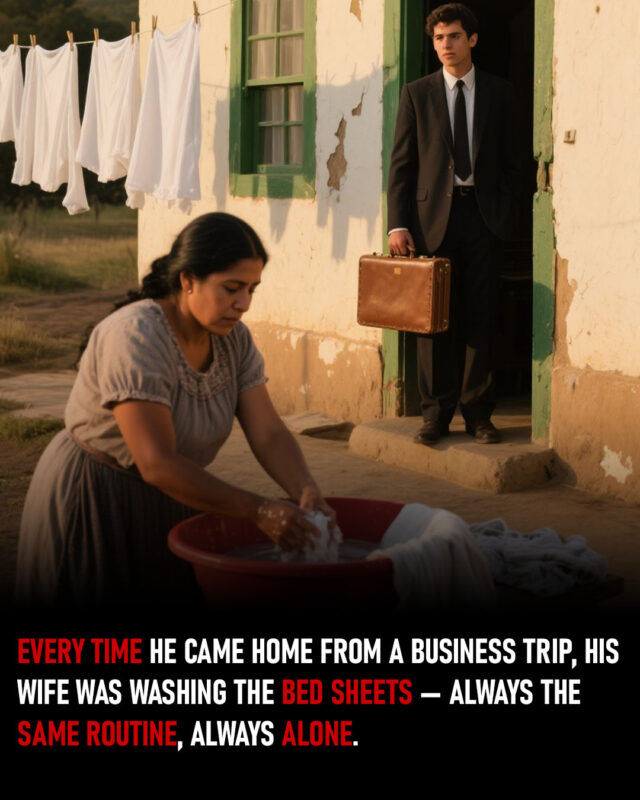
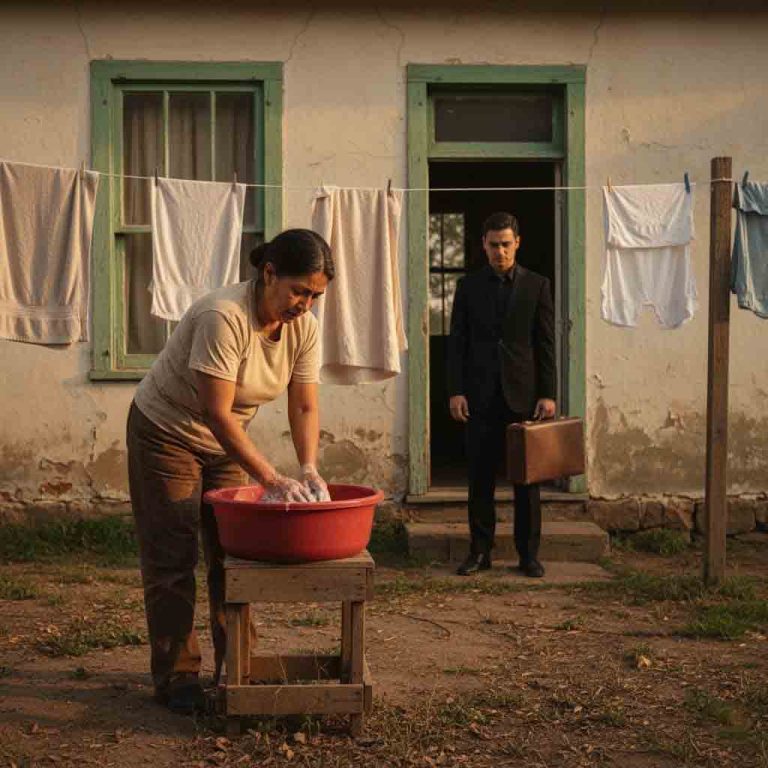
Every time the husband returned from a business trip, he found his wife diligently washing the bed sheets. Curious and uneasy, he secretly installed a camera in their bedroom—only to be devastated by the heartbreaking truth it revealed.
After being promoted to Regional Manager for a construction company in Seattle, Ethan Parker had to go on business trips continuously.
At first, it was only a few days, then gradually it became weeks—sometimes even half a month.
Every time he packed his suitcase and left the peaceful little house in the suburbs of Portland, his wife, Lily Parker, still saw him off with a gentle smile and a tender hug on the porch.
She never complained, never said a word of reproach.
But there was one thing that made Ethan increasingly uneasy.
Every time he returned, Lily was washing the bed sheets — even though the bed was always flat, clean, and smelled of fabric softener.
Once, he jokingly asked, “Are you obsessed with cleanliness? I was gone for a whole week, and the bed still looks the same.”
Lily just smiled faintly and lowered her head. “I have trouble sleeping, so I like to change the sheets for comfort… besides, they were a bit dirty.”
“Dirty?” Ethan thought. Who made them dirty? He hadn’t been home all that time.
A feeling of doubt crept into his heart like a cold wind at the beginning of winter.
That night, Ethan didn’t sleep. Unpleasant scenarios kept appearing in his mind. Was someone else coming here while he was away?
The next morning, he bought a mini camera and quietly mounted it on the bookshelf, pointing it straight at the bed.
He lied to his wife, saying he had to fly to Chicago for a meeting for ten days this time—but in fact, he only rented a small room near their house.
On the second night, he turned on the camera on his phone, his palms cold. The screen showed a scene of a dark bedroom, with only a soft yellow night light glowing in the corner.
10:30 p.m. The door to the room opened. Lily walked in, holding something in her arms. Ethan held his breath.
At first glance, he thought it was a pillow, but when she placed it on the bed, he realized it was—an old shirt. The one he had worn on their wedding day.
The shirt she had kept for more than ten years was now old and wrinkled.
She gently climbed onto the bed, hugging the shirt to her chest as if embracing a person.
Then… she began to talk to herself, her voice choked with tears.
“I miss you again today…I’m sorry I couldn’t keep the baby that day…I was wrong, I’m sorry… please don’t be angry with me anymore…”
Ethan was speechless. Tears welled up in his eyes as he listened to his wife’s trembling voice.
The woman he once doubted, the woman he feared might betray him, was actually still hugging her husband’s old shirt every night, imagining him lying next to her, talking to him as if he were still there—just to ease the ache of her lonely, empty nights.
The bed sheet was wet every night, not because of the sin of an affair, but because of the tears of a wife who still silently loved her husband, missed their lost child, and endured loneliness in quiet strength.
Ethan buried his face in his hands, a wave of guilt rising and choking him.
He realized that while he had been consumed by work and ambition, the woman at home had been quietly keeping their world warm— piece by piece, with steadfast love.
The next morning, Ethan didn’t go on his business trip anymore. He returned home earlier than planned, without saying a word.
While Lily was washing clothes in the yard, he quietly walked over hugged her from behind, holding her tightly.10:30 p.m. The door to the room opened. Lily walked in, holding something in her arms. Ethan held his breath.
At first glance, he thought it was a pillow, but when she placed it on the bed, he realized it was—an old shirt. The one he had worn on their wedding day.
The shirt she had kept for more than ten years was now old and wrinkled.
She gently climbed onto the bed, hugging the shirt to her chest as if embracing a person.
Then… she began to talk to herself, her voice choked with tears.
“I miss you again today…I’m sorry I couldn’t keep the baby that day…I was wrong, I’m sorry… please don’t be angry with me anymore…”
Ethan was speechless. Tears welled up in his eyes as he listened to his wife’s trembling voice.
The woman he once doubted, the woman he feared might betray him, was actually still hugging her husband’s old shirt every night, imagining him lying next to her, talking to him as if he were still there—just to ease the ache of her lonely, empty nights.
The bed sheet was wet every night, not because of the sin of an affair, but because of the tears of a wife who still silently loved her husband, missed their lost child, and endured loneliness in quiet strength.
Ethan buried his face in his hands, a wave of guilt rising and choking him.
He realized that while he had been consumed by work and ambition, the woman at home had been quietly keeping their world warm— piece by piece, with steadfast love.
The next morning, Ethan didn’t go on his business trip anymore. He returned home earlier than planned, without saying a word.
While Lily was washing clothes in the yard, he quietly walked over hugged her from behind, holding her tightly.
Lily was startled, then smiled softly.
“You’re back so early? Is something wrong?”
Ethan buried his face in her shoulder, his voice trembling.
“Nothing. It’s just… from now on, I won’t go on business trips anymore. I’m home.”
She turned around, her eyes surprised and wet.
“What did you say? Are you okay?”
Ethan smiled, though tears still fell down his cheeks.
“I’m okay… and I’m sorry for not realizing you’re the one who stayed, keeping everything from falling apart.”
From that day on, Ethan limited his business trips. He spent more time at home, helping his wife, cleaning the garden, cooking dinner. Every night, when he lay down on the bed, he held Lily’s hand, feeling the real warmth—the warmth he had forgotten.
Now, every time they changed the sheets, they did it together, laughing and talking. No more silent tears, only the scent of laundry detergent, sunlight through the window, and two people who had learned to be together again.
In a world that is too noisy, sometimes what people need most is not sweet words, but the real presence of each other.
And Ethan understood—love does not die because of distance; it only dies when one person no longer wants to come back.
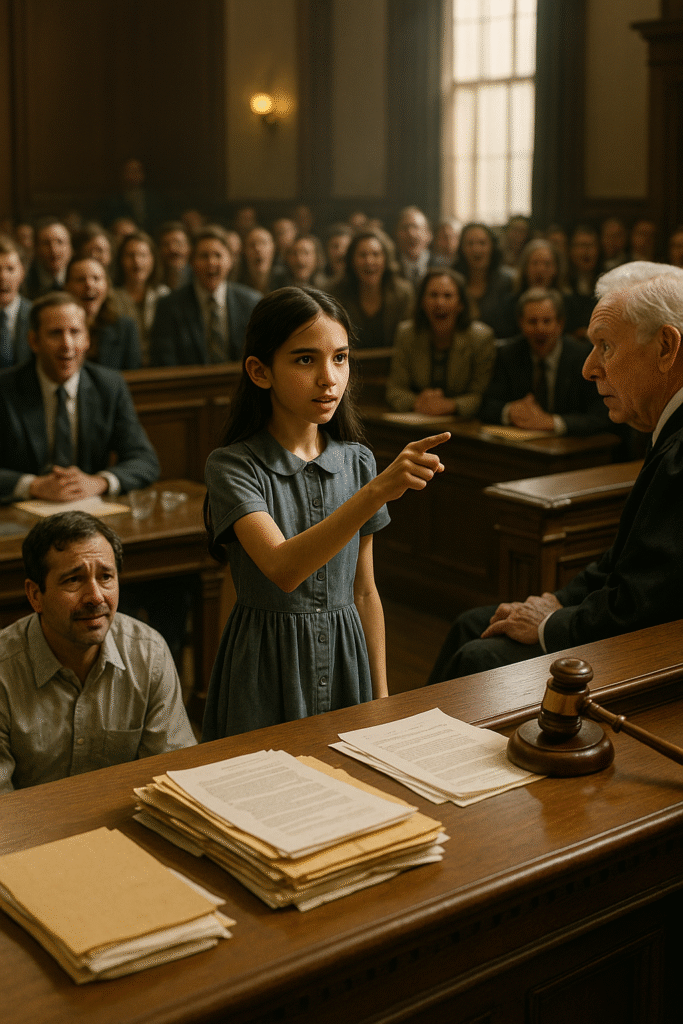
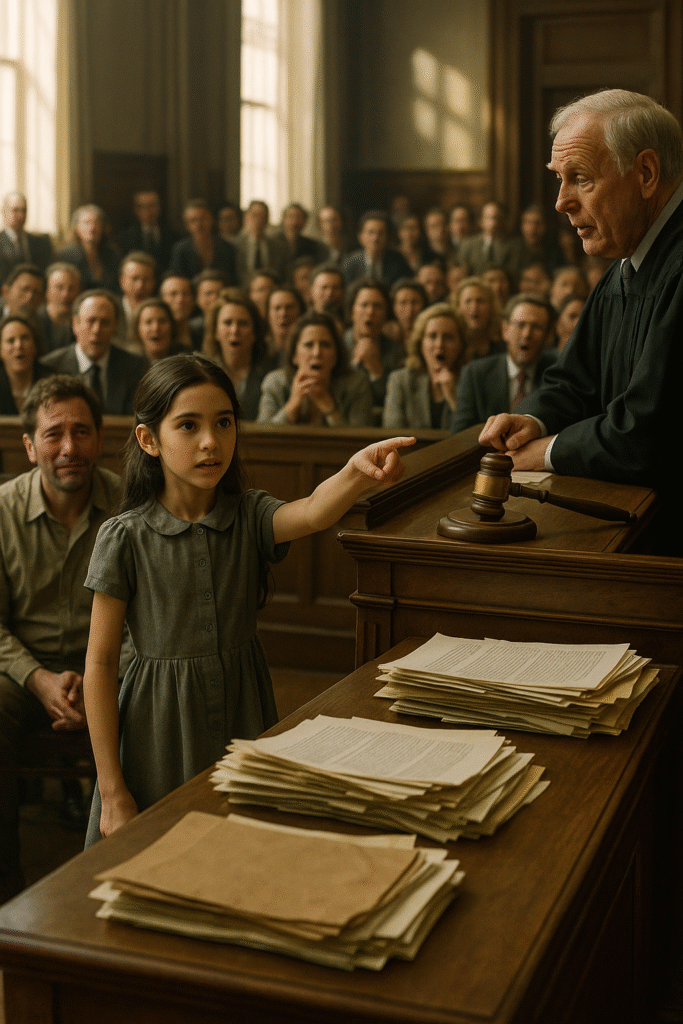
In the heart of a bustling city, where the skyscrapers kissed the clouds and the streets thrummed with life, a young girl named Maya Thompson found herself standing in a courtroom, her heart pounding fiercely in her chest. At just 13 years old, she was about to challenge the very foundations of the legal system. With determination etched across her face, she boldly declared, “Your honor, I object to this entire proceeding! I’m my dad’s lawyer, and I can prove he’s innocent!”
The courtroom erupted in laughter, the sound echoing off the high ceilings, as the adults exchanged incredulous glances. What could a child possibly know about the law? But Maya stood her ground, her small stature belied by an unwavering spirit. Her father, Marcus Thompson, a janitor who had dedicated 20 years of his life to cleaning the offices of Whitmore and Associates, sat in the defendant’s chair, wearing an orange jumpsuit that seemed to swallow him whole. The weight of false accusations hung heavy in the air, but Maya was determined to lift that burden.
Just days before, everything had changed. Marcus had been arrested, accused of stealing confidential documents from the very law firm where he worked. Richard Whitmore III, a partner at the firm, had stormed into the building, his face twisted in rage, demanding justice for the missing files. “Where’s that thieving janitor?” he had shouted, pointing fingers and fanning the flames of a scandal that would engulf their family. Maya had felt her world shatter as she heard the news. The man who taught her the meaning of integrity was now branded a criminal.
As Maya prepared for her moment in court, she reflected on the countless nights spent in the law library, fueled by curiosity and a desire to understand the world her father served. While Marcus cleaned, she devoured legal textbooks, case studies, and transcripts, absorbing knowledge like a sponge. She knew the law better than many first-year law students, and now it was time to put that knowledge to the test.
When the judge, Eleanor Whitmore, took her seat, the atmosphere shifted. Maya had done her research; she knew the judge was related to Richard. This conflict of interest could be her trump card. As the proceedings began, the prosecutor painted a damning picture of Marcus, claiming he had accessed restricted areas and stolen valuable documents. The evidence seemed overwhelming, but Maya felt a fire ignite within her. This was her father’s life on the line, and she wouldn’t let him down.
With each accusation hurled at her father, Maya’s resolve grew stronger. She stood up in the gallery, her voice cutting through the noise. “Your honor, I object! This case is built on lies!” The courtroom fell silent, all eyes on the young girl who dared to speak out. “I have evidence that proves my father’s innocence,” she declared, pulling out documents from her folder. The laughter that had filled the room moments before was replaced by a tense silence.
Maya continued, her heart racing as she cited legal precedents and procedural rules. “Under Michigan Court Rule 2.117, a defendant has the right to effective counsel. My father’s court-appointed lawyer barely met with him! This is a violation of his rights!” The prosecutor, James Crawford, looked flustered, his confidence wavering as Maya laid out her argument with clarity and conviction.
The judge’s expression hardened as she listened to Maya’s impassioned plea. “Young lady, this is a court of law, not a school play,” she warned, but Maya pressed on. “I’m not playing, your honor. My father’s freedom is at stake!” The tension in the room was palpable as she revealed the truth about the security footage that had mysteriously malfunctioned during her father’s shift. “The cameras were broken at the exact time my father was accused of stealing! This is no coincidence!”
As Maya spoke, she could see the doubt creeping into the faces of the jurors. She had their attention, and she wasn’t about to let it slip away. She turned her gaze to Richard, who was visibly sweating under the pressure. “You claim my father stole the Hartley files, but I have proof that they were never even in the building that night! The merger was canceled days before!” The courtroom erupted in murmurs, and Maya felt a surge of adrenaline.
With each revelation, the walls of deceit began to crumble. Richard’s bravado faded, replaced by desperation. “This is absurd! She’s just a child!” he shouted, but Maya stood tall, her chin raised defiantly. “I may be young, but I’ve studied the law and know how to fight for what’s right. You underestimated me and my father!”
The judge, caught between her familial ties and the undeniable truth, felt the weight of her position. She had never encountered a situation quite like this. Maya’s courage was both inspiring and terrifying. “You’re in contempt of court for disrupting these proceedings,” the judge warned, but Maya pressed on. “I’m not here to play games. I’m here to save my dad!”
The courtroom was silent as Maya produced an affidavit signed by her father, appointing her as his legal representative. “He has the right to choose his counsel,” she stated firmly. “And I’m here to defend him!” The tension in the room thickened as the judge weighed her options.
Finally, after what felt like an eternity, Judge Whitmore sighed. “Very well, Miss Thompson. You may continue, but be aware that you will be held to the same standards as any attorney.” Maya nodded, her heart racing with determination. This was her moment, and she would not waste it.
With renewed vigor, Maya called witnesses to the stand, each one revealing more cracks in the prosecution’s case. She uncovered evidence of other key cards accessing restricted areas that night, proving that Marcus was not the only one with access. The prosecution fumbled, their case unraveling before their eyes.
As the trial wore on, the courtroom became a battleground of wits and wills. Maya’s knowledge of the law shone through, and she skillfully dismantled the prosecutor’s arguments, leaving them scrambling for answers. The gallery watched in awe as this young girl took on the legal establishment, her unwavering spirit a beacon of hope.
Finally, the day came when Richard was called to testify. The tension in the room was electric as Maya faced him. “Why did you accuse my father?” she demanded. Richard’s bravado crumbled as he stammered, “I—I had to protect myself. He saw something he shouldn’t have!” The courtroom gasped, and the truth hung heavy in the air.
With one final push, Maya turned to the judge. “Your honor, I request an immediate dismissal of all charges against my father. He is innocent, and this entire case is built on lies!” The judge hesitated, the weight of her decision palpable.
After a long pause, she finally spoke. “The court finds in favor of the defendant. All charges against Marcus Thompson are hereby dismissed!” The courtroom erupted in cheers, and Maya felt tears of joy streaming down her face as she rushed to embrace her father.
In that moment, they had not only won the battle for Marcus’s freedom but had also exposed a web of corruption that extended beyond their case. Maya had proven that even a 13-year-old girl could stand up against injustice and make a difference.
As they left the courthouse, hand in hand, the world outside felt brighter. Maya had not only saved her father but had also ignited a fire within herself to fight for justice for others. She knew this was just the beginning of her journey, and with her father by her side, she was ready to take on the world.
The story of Maya Thompson would resonate far beyond the courtroom, inspiring countless others to stand up for what was right. She had shown that no matter your age, knowledge is power, and the fight for justice is a battle worth waging.
Blackridge Correctional Facility was a fortress of order — cold, efficient, and impenetrable. It was the kind of place where secrets weren’t supposed to exist. Every hallway had a camera, every door an electronic lock, every inmate a digital record that tracked their movements down to the minute.
But in late November, a whisper began to spread through the sterile corridors of Cell Block C. It started with Inmate #241 — Mara Jennings, a 29-year-old convicted of armed robbery — when she reported persistent nausea and fatigue. The prison’s medical staff treated it like routine stress. Nothing about Mara suggested anything out of the ordinary… until the lab results came back.
Pregnant.
Dr. Eleanor Briggs, the facility’s lead physician, stared at the report in silence. It was impossible. Blackridge was a maximum-security prison for women only. No male staff were allowed unmonitored contact, and all inmate interactions were recorded and timed. The only conclusion that made sense was the one no one wanted to believe — something, or someone, was happening beyond the cameras.
The First Shock
Eleanor immediately ordered a second test. Then a third. All confirmed the same result. When she informed Warden Samuel Price, his face drained of color. “That’s not possible,” he muttered. “Run it again.”
But within two weeks, it wasn’t just Mara.
Three other inmates — all from different blocks — tested positive for pregnancy.
The warden ordered an internal lockdown. Interrogations began. Cell inspections were doubled. The women were questioned for hours, accused of smuggling, of making false claims, even of “attention-seeking behavior.” But every test came back real.
“How can this happen in a place with no men?” one guard whispered during the morning briefing. “No men,” another muttered, “that we know of.”
A Web of Fear
The pregnancies began dividing the prison. Some inmates were terrified, others defiant. Rumors exploded: ghosts, experiments, divine intervention. A few even claimed they’d heard noises at night — the sound of vents opening, footsteps when no one was supposed to be there.
Eleanor, unable to accept superstition, demanded the installation of hidden cameras — not the standard security ones, but covert micro-cameras only she and the warden would know about. She placed them near the infirmary, laundry, and storage wings — the only areas where the cameras didn’t have direct angles.
What she discovered weeks later would turn Blackridge into a national scandal.
The Secret Camera Footage
At 2:13 a.m. on a Tuesday, one of the hidden cameras in the laundry corridor caught movement. A shadow slipped through the ventilation grate, followed by a figure wearing a full sanitation suit and mask. The person moved with precision — like someone who knew the blind spots of the security system.
He carried a syringe.
The footage showed him approaching Inmate #317’s cell. The camera, barely the size of a button, captured a faint flash of metal, a prick to the inmate’s neck, and the figure retreating silently back through the vent.
Eleanor watched the replay five times before she could speak. “Someone’s drugging them,” she whispered. “This isn’t an accident — it’s a controlled experiment.”
When she showed the warden, he went pale. “Turn that off,” he said sharply. “Don’t show anyone else.”
But it was too late. The next morning, Eleanor’s office was raided. Her computer was confiscated. The footage vanished from the system.
The Whistleblower
Three days later, Eleanor disappeared. The official statement claimed she’d been “transferred” for security reasons. No forwarding address. No contact.
However, a week after her disappearance, a USB drive arrived anonymously at the local newspaper, The New York Sentinel. On it was a copy of the footage — along with Eleanor’s private notes.
In her journal, she had written:
“It’s not the guards. It’s not the inmates. It’s the program. Someone inside the government is testing a reproductive serum — a formula that allows conception without intercourse. The inmates were chosen because no one would believe them.”
“The injections are scheduled between 2 and 4 a.m. The staff on duty those nights are all contractors, not official employees. Their ID numbers don’t exist in the prison database.”
The report described symptoms consistent with hormonal manipulation — nausea, rapid cell division, unexplained immune responses. According to Eleanor’s final note: “The pregnancies are progressing at twice the normal rate.”
The Fallout
When The New York Sentinel published the story, the country exploded in outrage. Protests erupted outside Blackridge. Families of inmates demanded answers. The government denied involvement, claiming the footage was fabricated. Yet investigators found that several “contractors” listed in Eleanor’s notes had connections to a private biotech firm — GenXCore Laboratories, a company previously accused of illegal gene-editing trials.
Days later, Warden Price resigned abruptly, citing “personal reasons.” His statement to the press lasted only 23 seconds. When a reporter asked if he believed the pregnancies were part of an experiment, he simply replied, “No comment,” and walked away.
Within months, five infants were born inside Blackridge. None of the mothers were allowed visitors. DNA tests were requested — but blocked by federal order. The babies were reportedly taken into “protective custody” under state supervision. Their exact location remains unknown.
The Unanswered Questions
Despite media coverage, the deeper truth remained buried under bureaucracy and silence. No one ever located Dr. Eleanor Briggs. Some believed she’d been silenced. Others claimed she’d entered witness protection.
One anonymous insider from GenXCore later confessed in an encrypted message to a journalist:
“Eleanor was right. It was called Project Genesis. Artificial conception through stem cell activation. They needed hosts — and prisons are perfect. No one asks questions. No one gets out.”
When asked why the experiments stopped, the source replied:
“They didn’t.”
Epilogue
Months after the scandal, a new warden took over Blackridge. The cameras were replaced, and a statement declared that “the facility has returned to normal operations.”
But a night-shift nurse reported something eerie: every few weeks, she found faint scratches on the infirmary walls — small carvings made with a spoon or nail file. Always the same word, repeated over and over:
“Eleanor.”
And once, beside the hospital bed of a newly transferred inmate, she found a folded piece of paper tucked under the pillow.
It read:
“They’re still here. And this time, they’re not stopping.”
Elanor Brooks stood frozen in the doorway of the creeping mansion, unable to tear her eyes away from the chaotic scene. It was unfolding in the once elegant living room. Splatters of red and green paint covered the walls. Plush leather. The armchairs were askew. Shattered ornaments littered the floor, and clouds of white feathers fell from torn pillows. They still hung in the air like snow in midsummer. But it wasn’t the mess that stunned her. It was the intense, angry, desperate stares of the children.
Don’t even think we’ll like you, Jud.
The oldest, about 14, growled, throwing a model airplane at his feet.
We don’t need another maid. We want Mom back.
His younger siblings, Tesa, Noa, Lily, and Son, stood behind him, their faces blotchy and their eyes shining with exhaustion, as if preparing for another intruder to hurt them. In the past eight months, these five children had scared off 20 housekeepers in a matter of hours, and today they were clearly ready to make Eleyanor the next one.
However, as Eleanor looked at their small faces, she didn’t see rude or destructive children. She saw small hearts struggling with pain, terror of being abandoned again, fear that if they started caring for someone, that person would disappear like their mother.
“I know how much you miss your mom,” Eleanor said softly, stepping carefully over the broken toys, not stepping on anything. “But I’m not here to replace her. I’m here because I know what it’s like when everything falls apart.”
The children froze.
No one spoke. No one threw anything. The room seemed to stop for a moment. A few seconds. Yutre closed his eyes, his voice rising.
You know nothing about this house.
Elanar sat down slowly, looking into her eyes. You’re right. I don’t know everything yet, but I know you’re scared, angry, thinking, if you’re bad enough, I’ll disappear like the others.
The children’s hardened gazes began to waver. Tesa bit her lip, and Lilia clutched her broken porcelain doll tighter.
But here’s the thing. Elanar continued, offering him a kind smile. I’m not leaving, and before this day is over, I’m going to show you something you haven’t believed in for a long time.
Jud raised an eyebrow. “What’s that?”
Elanar stood up, brushing. She pulled the feathers from her sleeve. “That it’s okay to let someone care about you, even when your heart is still broken.”
Just then, heavy footsteps sounded at the end of the hall. All five children stiffened.
“Dad’s home,” Noha whispered. “They’re going to be mad when they see this mess.” But what happened next would shock everyone in that house.
Even the man who spent eight months believing no one could help his sons and daughters be themselves again. Eight months ago, Charles Cool sat silently in his glass-walled office on the 52nd floor of Coolly Holdings, staring at the phone that rang shrilly for the third time that morning.
He knew it was either his assistant or the kids’ school, probably both. Amanda’s Mr. Kuliy. A familiar voice came over.
I have bad news and worse news.
Charles sighed, rubbing his temples, his voice muffled. Go ahead.
The bad news is the school.
The kids started a sandwich fight in the cafeteria and locked the gym teacher in the equipment closet.
He closed his eyes.
The worst news. The maid quit this morning. She left a note.
No amount of money would bring it. Call me back. Those children need a priest, not a floor cleaner.
Charles lay back, exhausted. Eight months ago, he was a celebrated billionaire with a happy family, a beautiful wife, five children, and a home full of laughter. But then Valery died in a car accident on his way to a bakery just to buy some. Charles loved the birthday cake. From then on, everything fell into a terrifying silence. Amanda called all the agencies.
Anyone, as long as they take the job.
I’ve called them all, sir. No one dares. The gruesome name is now a warning to the industry.
Charles looked through the glass window at the skyscrapers gleaming in the morning sun. They called him a startup genius, an icon of the new generation. The tech king who could buy anything, but he couldn’t bring back his children’s smiles. He couldn’t bring back Valery’s life, he couldn’t bring back peace.
Nights in a home now empty and gloomy. And what frightened him most, his sons and daughters, whom he once loved more than his wealth, now regarded him as a stranger. Just then, the phone rang again. Amanda Charles answered, unable to hide her exhaustion. “Any news?”
Her voice faltered. “A job. The application came this morning. Her name is Elenor Brooks. She doesn’t work for an agency. She applied directly.”
“What’s your resume?”
She doesn’t have impressive qualifications or references, but I read her cover letter and think you should see it for yourself.
Charles hung up and opened the email. The subject line read, “I know the kids are trying to survive. Not to be mean,” it clicked. The words were brief, but unlike any stiff resume I’d seen. Elenor wrote that she’d spent 12 years in foster care, that she’d once deliberately wrecked everything in a house to see if anyone would still want her.
That he understood the fear of new people, because if you got attached, they’d leave. Charles stopped at the last line. If you need someone who won’t run when it hurts, I’m that person. That afternoon, Charles decided to return home early to meet Elenor. But as he entered the mansion, he only heard a scream to run before a water balloon flew from above and exploded near their feet. The children were in the same situation again.
The air of fish sauce, paint, and chips was like a chemical weapon. He was about to yell at Jud when he saw a woman standing in the living room, upright amid the chaos, calm. She wore her hair neatly coiled and a white blouse, a black skirt, and a strangely calm look.
“Mr. Cowy,” she asked. “I’m Elenor Brooks.”
Charles was stunned. “Did you come in today? I thought if I waited there. Maybe there are no walls left to hold this place up.”
Her voice wasn’t sarcastic or apologetic, just sincere, spoken with uncommon composure. Charles led her into the study, though the screams and crashing objects still echoed from above. “You know my situation, I know it. And you still want this job.”
Elenor met his steady gaze. “I was one of those children once.”
Charles sat with his hand on his forehead. “Children aren’t just naughty, they suffer. But that pain I can’t reach.”
Elenor sat across from him, placing her duffel bag on the table. “That’s because you’re trying to fix it instead of listening.”
Charles gave a tired laugh. “Are you a therapist?”
“No, just someone who threw rocks at the windows of the eighth foster home to get me kicked out.”
That shut Charles up completely. “These kids aren’t bad. They’re testing you. Let’s see who’ll be the first not to abandon them.”
Charles leaned back. A dozen more had failed.
Some gave up after a morning. Some left in tears. Some filed complaints about the boy’s behavior, but this woman, with her weathered eyes and nonjudgmental voice, was the first to make him feel forgiven.
Are you sure?
I’m sure.
I must warn you. Jud trusts no one. Tesa can hurt adults with words. And she hasn’t. She’s spoken since her mother died.
Elenor nodded slowly. “I’m not here to play godmother to Ada. I’m here to show them. Someone will stay even when she moves away.”
Charles closed his eyes. So start tomorrow.
There’s no need to wait, Elenor said, standing up. I brought cookies and I’m ready to cover you in flour.
Just then, as if in Q, a small explosion, a scream, and a shout came from the kitchen. Then Lily’s scream. Son knocked the whole jar of flour to the floor. Elenor smiled. Everyone’s fine. I’ll clean the kitchen.
Charles watched her go. He didn’t seem to be entering hell, just a family with all its disintegration, chaos, and a faint hope that something could start again.
When Elenor entered the kitchen, now covered in a snowy white layer of flour, it looked as if a small explosion had occurred. Expensive tiles, a broken vanilla jar, and milk spilled from an overturned glass. And Sion, the 6-year-old who hadn’t spoken since Valery’s death, was in the eye of the storm. A flowerpot on his head looked like a prince’s crown out of season. The other children turned to Elenor, their eyes ready for battle, waiting for the starting whistle.
But Eleanor didn’t scream, scold, or panic. She stepped in, placed her bag of cookies on the table, picked up a spoon that had rolled under Lily’s feet, and said, “If there was a prize for breaking 3-minute chaos records, I’m afraid you kids just got first place.”
Jud raised an eyebrow. Tesa crossed her arms. Noah narrowed his eyes suspiciously. Lily turned away, feigning indifference, but she was the one who stared at Eleanor the longest.
No smile, no words, just a look. The look of a child also used to adults arriving and then leaving. “I don’t like it. More than keys,”
Jud said in a cold voice. “Fine,”
Elenor replied, pulling out a chair. “I’m not sure if I like you guys either. Luckily for us, I wasn’t hired to be liked. I’m here so I won’t run away.”
“You’ll run,” Tesa interrupted. “Everyone does. They say they’ll stay, but then they leave.”
One even cried when Lily got scared.
She with a plastic spider. “Well, then I should be thankful I’m not afraid of spiders.”
Elenor shrugged, just terrified of losing my mixing spoon. The comment made the five children stop. No one responded, but the air changed as if they were waiting for me to slip up, lose my cool, or give up like in a predictable card game. But Elenor didn’t leave. She silently cleaned up the milk, swept up the spilled flour, then opened the bag of cookies and placed it on the table.
These are gingerbread cookies, my grandmother’s old recipe. I hated them as a child, but every time I got mad at someone, I ate one. It made me feel better.
Noa glanced at the bag. Lily pursed her lips. Jud remained silent, his gaze like knives, but he was the first to take a cookie. He took a slow bite. Chiud still said nothing, but the way he looked at Elenor, fearlessly, without defiance, said it all. Elenor smiled slightly.
Good. Son didn’t nod or shake his head, but he took another, and that was the answer. The children gradually filed away. He was no longer teaching her how to pluck the bowstrings.
Tesa sat first, then Noah, Lily, Jud was last, and when he sat down, those sharp eyes finally accepted that. Elenor wasn’t leaving right away. “You hate adults who come and go,” Elenor said once they were settled. I understand. I was like that as a child.I lived in 37 different houses before I was old enough to fend for myself.
“Are you an orphan?” Lily asked quietly.
Elenor nodded. “My parents died in a fire when I was 7. From then on, I learned that those who come quickly, leave just as quickly. So I did my best to make sure no one stay” she looked at each little face. “And I see you doing exactly the same thing.”
No one spoke. Jud looked down at his hands. Tesa bit her nails, and Son, the boy who hadn’t spoken in 8 months, leaned in.
Her head seemed to memorize every word. “I’m not good at baking,” Elenor continued as if to ease the tension, standing up again. “I don’t know how to cook like your mother, and I’m definitely not as beautiful as her picture on the stairs.” She took a deep breath, but I know what it’s like to lose a mother, to want to scream about it to the world. “Don’t touch me,” she gestured, a small, worn coin from her pocket. “This is the coin my parents left me. I always carry it, not because it’s valuable, but because it’s the last thing I have left.”
She placed the coin on the table. We all have something that keeps us together. If you want, I’ll stay, not as a maid, but as someone who knows when to shut up when you need to and how to clean up when milk is spilled.
Silence. This time there was no tension, just the sound of crunching biscuits and sunlight streaming through the kitchen window onto a floor now cleaner than before. Suddenly, a small horse’s voice spoke from the end of the table.
Can you tell stories?
Elenor looked up. The boy had spoken. All five siblings turned to her in astonishment. Charles, standing in the doorway, couldn’t speak. In eight months, this was the first time his youngest son had made a sound.
Elenor tilted her head. “I can tell stories, but on one condition.”
“What?” Noha asked.
“You have to promise me you won’t throw pillows in my face while I tell him.” The table erupted in laughter. Real laughter.
Elenor Brooks, the woman no one believed was right. She had just taken the first step into the hearts of the children no one dared approach. Charles stood behind the kitchen door, speechless. He’d prepared for an emergency call or another escape in an hour like everyone else. But no, this woman didn’t run or flinch. And the strangest thing was that the children laughed. They sat together, ate crackers.
I heard stories, and God. Zion had spoken. Eight months of experts, therapists, and speech therapists had failed. But a kind question and a patient look from a stranger had opened that door. Charles returned to his study, his heart more troubled than ever. He wanted to believe Elenor was real, someone who could do what no one else could, but he was also afraid. Afraid the children would face another disappointment. He feared Elenor would fall apart like the others.
At 9:00 a.m. the next morning, the house awoke to an unfamiliar smell: toasted bread, almond butter, and a hint of cinnamon. Charles went downstairs and for the first time in months, he heard no noises or shouts. Instead, there were whispers, giggles, and the aroma of freshly brewed coffee. In the kitchen, Elenor stood with her back to him, her hair neatly tied back and wearing an apron, flipping pancakes with one hand while signaling to Siion to wait until they cooled.
Jud was washing dishes. Lily was clearing the table. Tesa was making faces at Noah, making him laugh. On the table was a blackboard. Today is the first day of 24-hour survival. Charles laughed out loud. Elinor turned, saw him, and gave him a friendly smile.
Good morning, Mr. Quully. Your coffee is here, 75% caffeine, 25% hope.
She made it too.
Have you invested in kindness?
If I could, I would have made a keg for the whole house.
Aren’t you exhausted? Charles asked.
They went out onto the back porch to avoid attracting attention. Elenor sat in a wooden chair, still holding her coffee. “Honestly, I don’t feel alive.”
She looked at the children playing in the yard. They don’t need someone perfect. They need someone steady enough to stand firm, even when everything falls apart. Charles watched the children run in silence. “I don’t know how to be a father anymore. Since Valerie died, I just work and don’t fall apart, but I can’t fill that void.”
No one can. Elenor responded softly. The people we lose leave holes. We can’t fill them, but we can learn to live alongside them.
Charles turned to her. You’re not like anyone I’ve ever met. I hear that more than you know.
Elenor took a sip and put down her cup. Give me 24 hours. Not to prove I’m the best, but to show the children that someone doesn’t give up.
Charles nodded. Silently. Something didn’t have much faith, but a spark of hope had been lit.
That afternoon, the real test began. Noah insisted on burying a cartoon cat from a movie in the garden. For a proper funeral, Tesa mixed paint with shampoo, thinking it was art cream. Jud refused dinner because the pasta wasn’t like Mom’s. Lily stuck her hand in an electrical outlet to test the electricity. And Sion—sweet, quiet Sion—cried when she heard a song her mother used to sing. Then she hid in the storage room, but Elenor didn’t lose control.
He spread out a black drop cloth, put on sunglasses, and held a cartoon cat funeral in the backyard mini-garden. He gave Tesa a broom and asked her to clean up every paint stain. As he told the story of a little girl named Tess who once drew on the walls of foster homes, he gave Jud a picture of Valerie that Charles had hidden and asked, “Can you show me how to make that paste?”
She held Son without pushing, without asking. She sang that song softly and slowly until she stopped shaking.
By nightfall, the house was eerily quiet. The children slept huddled together as if afraid someone would disappear in the night. Charles came upstairs and knocked softly on Elanor’s door. She was writing in a notebook with her feet propped up on the bed frame. “You keep a daily log.”
I mean, call it a survival journal,” Elanor said with a soft laugh, just in case he ever needed one. A reminder of why I chose to stay.
Charles came in and sat by the door. Today I think you accomplished the impossible.
No. Elenor shook her head. I just did what Valery did every day, only I came. Later, they brought cookies. They both laughed. And in that instant, the distance of months vanished.
No employer or employee, no multimillionaire housekeeper, just two adults holding their children, learning to trust again. Elenor put down her pen and looked at Charles.
One day isn’t enough to prove anything, you know.
Charles nodded. But it’s enough to make me start believing in you. He stood up, reaching for his sweater. “So, let’s see what 48 hours brings.” Charles smiled. “I’m looking forward to it.”
The next morning, when Elenor came into the kitchen and found Charles there, Tay was about to hold two cups of coffee, one for him, one for her. “I thought I should learn how to make decent coffee if you’re sticking around here,” she said, setting down a cup.
“You just said yes.” Elanar raised an eyebrow, sitting with a smile. “After surviving 24 hours, I think that’s when I’ll stop.”
Charles laughed, a relieved laugh he didn’t realize he’d forgotten. “Did you sleep well?”
Pretty well, except for Lily. She kicked me twice in the ribs when she climbed into my bed in the middle of the night.
“She still does when I dream of Valerie,” Charles said quietly. “I thought time would sort them out, but it didn’t end.”
Elenor understood. Some stories don’t need any more. The sound of footsteps echoed up the stairs, followed by Tesa’s laughter. When Noah stumbled on the bottom step, Elenor left the table to start preparing breakfast with the children while Charles stayed behind, observing the scene from a distance. For the first time in months, the house didn’t feel like an echoing mausoleum; it felt like a family. But when the sunlight streaming through the window touched the dining table, Charles froze in the armchair by the window where Valerie used to sit and read to the children.
Her shawl remained intact, motionless. For eight months. Elenor saw it on her first day, but didn’t touch it. She knew that some wounds needed to remain intact to be respected, not hastily consoled or erased. She too had wounds like these, invisible but ever-present. Around noon, as everyone headed to the garden, Charles received a call from Sion’s therapist. The doctor was surprised to see him. I heard that Son had spoken again. What did he say?
He asked if Elenor could tell stories.
Charles responded, his voice still tinged with emotion. “What do you think?
I don’t think you need any more medication. You need to keep Elenor as long as you can.”
Charles laughed, but the call had barely ended when an email stopped him in its tracks. A reporter from the El Medio Online Pageview sent a barrage of questions about the incidents at the Coole home. Rumors of uncontrollable violence, children, a string of employees quitting, and now an undocumented Black housekeeper, hired in haste. No one knew where the leak came from.
But Charles understood one thing. If the media found out Elanor was here, if they vilified her, she would leave. And if she left, the spark of hope that had barely begun would be extinguished. He spread a black cloth over a beast, wore sunglasses, and held a cartoon cat funeral in the backyard mini-garden. He handed Tesa a broom and asked her to clean up every paint stain while he told a story about a girl named Tes he once drew in a Paredes foster home.
“Mom never cared if she looked ridiculous,” Noah said, his eyes twinkling. “As long as we could hear her.”
“Your Mom, was a warrior,” Elenor said softly. “And her voice was her sword.
Do you have a voice?” Tesa asked.
Elenor laughed. Of course she does, but it’s more like a pan banging against a pot.
The children burst into laughter. Son spoke a second time. “Sing something.” That simple sentence silenced the others, who turned to him as if hearing a miracle.
And Elenor sang, just a short piece. An ancient melody about light in the darkness, not perfect, not soaring, but heartfelt. The children sat around her, and though no one said so, they listened to her as they had once listened to Valery with their hearts. On the other side of the door, Charles had been standing there, listening to it all. And for the first time since Valery’s death, he sat on the steps, covered his face with his hands, and wept.
Not from pain, but because something in him had just healed. Even if it was a little, some wounds are invisible, but with the right help, song, the right hug, and the right patience, they stopped bleeding. Elenor wasn’t trying to replace Valery, but in a way, she was helping them love the parts of themselves they’d forgotten. That afternoon, when Charles returned from a meeting, he intended to tell Elenor about the email, about the brewing media storm, but he stopped mid-stream.
Hallway. Through a half-open door, he saw her sitting on the living room rug, surrounded by the five children, each with their own expression, wounded question, and silent longing. And Elenor wasn’t lecturing or teaching; she just sat there listening. Lily was whispering in her ear, still clutching her broken doll. Zion was drawing a bridge over a chasm with crayons. Tesa was drawing herself, but with giant wings. Jud sat farther back with his chin resting on his hand, but his eyes were no longer cold. And Noah rested his head on Elenor’s leg, his eyes half-closed as if it were the safest place in the world.
Charles knew he couldn’t break that moment with news of the outside world—not now, not when, for the first time, this house wasn’t just a container for pain, but a place where hope was born. But he also knew they couldn’t hide forever.
Just hours later, the news flooded the internet. A headline appeared on the front page of a news site: A Black maid at Culy Mansion. The story behind 18 runaway nannies. The red text plastered over an old photo of the house sparked a wave of comments. Below, people took sides. Some mocked Charles, calling him a father who lost control and let his children become demons. Others defended the children as victims of loss and media cruelty.
But most chilling was the grainy photo of Eleanor taken from a distance, her face in profile as she led the children through the park that morning. Her gentle gaze fell on Noah, who was clutching her hand. “Who is this woman? Is she legal? Did they do a background check?” someone commented. Another Black woman exploited and soon discarded as trash. Another responded, mixing venom with pity. Charles called Eleanor into his office. Her face was tense, her eyes heavy.
You need to know about this, and I need to be honest with you. He showed her the computer screen. She read it slowly and silently. No overreaction, no grimaces, just silence.
I don’t know who leaked this, Charles,” she said quietly. “Perhaps a former housekeeper or someone in the company. But if you feel you need to leave, I’ll understand. I’ll protect you however I can.”
Elenor placed her hand on the sturdy desk. “I’ve lived my whole life under the critical gaze, as an orphan, as a Black woman, as someone without a degree.”
The world always has a label ready for me. He turned to Charles. But those five children don’t need me to leave to protect my reputation. They need me to stay to teach them what to be.
Misunderstood doesn’t mean they’re worthless. Charles froze. It was something Valerie had said almost verbatim. He sank back in his chair, tired. You know, I once thought they were little devils. I said yes. He looked up, but today I saw Son draw that bridge and realized they’re just trying to reconnect something that’s been broken.
Eleanor smiled. Children aren’t born to destroy; they simply respond to destruction in the only language they know: chaos. She paused. The question: Are they neither demons nor people? But who is brave enough to stay and listen to them speak that language?
Outside the hall, the boy’s footsteps tiptoed past. Eleanor knew they were eavesdropping. She opened the door without scolding, simply speaking loudly enough. If you want to know what people say about you, you should also learn to respond with your actions.
Jud stepped forward. His gaze was no longer shifty. “They call us monsters,” he said quietly.
“No.” Elanor came forward, kneeling to greet him. “Eyes. They’re just children who haven’t been properly understood.”
He stared at the group, “So tomorrow we’ll teach them. A little lesson about five children who don’t need sympathy, just a chance to be seen clearly.”
Tesa raised her hand, eyes twinkling. “And what do we do?” Elanor smiled. “We’ll start with the banana. Bread.”
No one can hate someone who gives them a loaf of banana bread. The next morning, Elinor woke the children to the familiar sound of jazz coming from a small speaker in the corner of the kitchen. The smell of banana bread filled the house. And while Son carefully cut the bananas, Lily mixed the dough, Jud read the recipe, and Tesa set the table as if she were performing a play. “Shall we open a bakery?” Noha asked, her hands covered in flour, but her eyes shining with excitement.
No, Elenor replied. We’re opening our hearts. It seemed like a normal morning until a black car pulled up to the door at 9:15. A gray-haired woman stepped out holding a briefcase and a name tag that read “Children’s Services.” “Revolomon.” Charles froze. When he saw her, Elenor wasn’t surprised. She knew this was coming. “Hello, Mr. Cole,” Reba said briskly, her tone neither hostile nor warm. “I’m here following an inspection request after last week’s items, just a standard.”
Living environment assessment. Charles nodded and stepped aside, but Elenor politely interrupted me with a smile. “I have a different proposal, if you don’t mind.” She raised an eyebrow. “I’m listening. Spend the whole day here, no notes, no spot checks. Just be a normal guest.” Reba looked skeptical. “Do you think that will change my conclusions?” “I don’t think so.” “I think,” Elenor said. “I think.” And so Revolon, with 22 years of experience, known for her cold realism about failed rich families, spent a Tuesday at the mansion the media called the hell of five demon children.
But what she saw was completely different. No screams, no broken mirrors, or walls smeared with marker, just a group of children learning to be human. Lily handed her a small, hand-sewn cloth with the word “welcome” embroidered on it. Sion pulled out a chair for her at the table. Jud placed a cup of tea, brewed to her liking, in front of her because Elenor said everyone has a tea that makes them feel heard. She was wary at first, but in the afternoon, when Tesa sat down next to her and asked, “Have you ever felt like no one believed you just because you’re little?” her face softened.
After a long pause, she replied quietly, “Yes.” When I began this work, Elenor didn’t interrupt. She stood back, considering every small moment a sweet victory. She knew that to change a conclusion, one must first change one’s heart. But while things inside the house were improving, outside the doors, the press began to gather. Rumors of Elenor’s sympathetic manipulation of the children spread like wildfire. Some articles ridiculed her, calling her the black fairy godmother.
Others asked point-blank, “If she’s so good, why doesn’t she have formal credentials?” The local television station even sent a reporter to follow the car and take Charles to Noa’s school. When Charles got out, cameras were shoved in his face. Mr. Coley, what do you think about hiring an undocumented woman to care for your children? Charles remained calm, but his eyes flashed with anger. “I didn’t hire a housekeeper,” he said firmly.
I gave my children a chance to survive. Then she walked away, leaving the cameras looking for a scandal, but none came. That night the family sat in front of the television. A short segment was about to air with a catchy title: The children in the mansion. What is the truth? The children. They looked at each other in silence. Tesa clung to Eleanor’s hand. They’re going to call us monsters again, aren’t they? Eleanor knelt down, looking at them all.
They can say what they want, but only those who live together. Every day we know it’s real. Jud spoke softly. So if they’re wrong, who will? Defend us. Elenor smiled. You will. She stood up, turning to Charles. And you, Charles. She nodded, then looked at the children. Tomorrow, if it’s okay with you, we’ll hold a press conference in the backyard—no hiding, no dodging. Anyone who wants the truth can come see for themselves. The children were silent for a moment.
Then Tesa said quietly but clearly, “I’ll wear the red dress.” The dress Mom chose. Lily raised her hand. “I’ll read my poem,” Son nodded. “I’ll read. Draw,” Noé said firmly. “I’ll speak. I’ll say everything.” And that’s how five children, those once called little devils, began preparing to face the world—not to justify, but to truly be seen for the first time. That morning, Elenor woke up earlier than usual. She was wearing a simple white shirtdress tied with an old leather belt that Valerie Cooy had left in a small trunk in the basement.
Elenor didn’t want to attract attention; she simply wanted to be seen as herself, a Black woman without fancy titles, without fame, but with a heart unafraid of five children the world had rejected. Out with the weirdo. The backyard was tidy. A row of white plastic chairs were neatly lined up. A small table sat against the wall with coffee, lemonade, and a tray of banana bread the children had made. On the stone path were Son’s drawings: a house, a hug, teary eyes.
At 8:30 a.m., the first reporter arrived, a man in a gray suit and dark glasses, holding a tape recorder, then a trio from an online news channel. They set up cameras, placed microphones, and began questioning the staff as if uncovering a scandal, but Elenor maintained her smile as light as morning dew. The children sat close together, each in their chosen position, a mixture of nervousness and determination. At 9:00 a.m., Charles left with Elenor.
She didn’t read from a prepared statement, nor did she give a polished explanation. Her speech was a one-liner. “If you want to know what’s going on here, stay all day. Don’t cherry-pick what interests you. Don’t quote anyone out of context. Live with us for a day and you’ll see.” Then she stepped back, letting Eleanor take the microphone. Her warm, firm voice resonated. “I am Eleanor. I was a child. No one adopted me. I was a housekeeper, and no one chose me first. I was a labeled woman.”
It’s not enough. But I’m not here for me today. I’m here for the five children behind me. Children called broken children who just need to be understood. So today I’m not doing interviews. I invite you to live a day as I have with them, cooking, reading, cleaning paint, hearing screams and laughter. If after a day someone still sees these, if the children were a danger, I would keep quiet and leave. The air was still.
A young woman. The reporter stood up. I’m staying. Another followed. Then the camera crew. Elenor turned to the children. Let’s start our day like any other. And so a day with Elenor began without a script, without a perfect performance, just everyday life. Noé manipulated iced tea by spilling it three times. But persisting with pursed lips, Jud led two cameramen through the garden, pointing out each tree his mother had planted and sharing the story of the first time he cried in front of Elenor.
Tesa showed a reporter the red dress she treasured because Mom chose it for me last year when I sang at school. Lily read her poem from the stairs with a trembling but proud voice. And she led a stern man into her private studio, a room where she hung drawings no one had seen, including one of Leanor hugging the five children, her arms like wings, protecting the world. At noon, everyone ate the lunchboxes the children had prepared.
Elenor sat at the outdoor table in the sun, her hands still covered in tomato sauce. No one asked her any more questions. They just sat beside her in silence, as if they were afraid. Talking would break this fragile piece. That afternoon, a minor incident occurred. Jud fell while climbing a tree, scraped his knee, and yelled in frustration. But Elenor didn’t panic. She sat beside him, handed him a cloth to wipe away the blood, and said gently, “Pain is the most real thing in life. Shout it out.” But then we learned to breathe. Through it, Jud leaned on her shoulder, trembling.
That moment was captured by the lens of an unsensational camera, not broadcast immediately, but hours later it became the defining image of the story. A boy clinging to the woman the world had dismissed as an anonymous employee and crying as if he had been allowed to feel weak for the first time. As night fell, the first reporters began to leave.
Some gathered their things in silence, wordless. One stayed behind, bowed his head, and said, “I think I’ll write a different story.” Elenor simply nodded. She knew. That night, as Charles cleaned up in the backyard, he said quietly to Elenor, “I used to think I couldn’t save the children.” Elenor placed a hand on his shoulder. “You don’t have to save them, you just have to stay.” And for the first time in months, Charles smiled. Not out of hope, but out of faith.
That night, with the children asleep, Elenor sat alone in the small kitchen, her hand brushing the crack of a porcelain cup, one that had been there since Valery’s time. Outside, the garden lights flickered like shooting stars. She didn’t want to cry, but soft tears emerged as if the day had been repressed. Emotions eventually needed a crack to escape. A day of life is truly long, especially when burdened with five wounded hearts. Across the world’s gaze.
But Elenor had never taken the easy route. Charles walked in quietly, pouring her a glass of water. He didn’t ask why her eyes were red. He simply sat beside her like a comrade after a long battle. “Today,” he said softly, “you taught me a lesson no teacher ever mentioned.” Elenor looked up. “What’s this about persevering without reason?” Charles asked. He responded by saying how love doesn’t begin with fixing, but with sitting and listening to someone cry.
They sat in silence for a long time. Then Elanor whispered, “Do you ever wish Valerie were still here?” Charles nodded each morning, “But I also know that if she were, I would never have learned to be a father to five children who need me. Not the father I pictured in my head.” Eleanor gave a tired smile. “Sounds like you just graduated, doesn’t it?” Charles said. He had just learned not to cut class. The next morning, Jud sat next to Elanor as she picked vegetables in the garden.
Elanor asked, “Why do adults always hide their tears?” Elanor dropped her bunch of celery, because adults are taught that crying is a sign of weakness. Who taught them that? No one, she said. It’s because no one taught them otherwise. So they believed it. Judas was silent. Then, for a moment, he said, “I think if someone taught children that it’s okay to be sad, the world would be a lot less sad.” Elanor looked at him, her heart sinking.
Words like that don’t come from a 6-year-old, unless they’ve hurt in ways no one should. Just then, Lily approached, clutching a small notebook. “Do you have time?” The Anor nodded. The girl opened it, her voice shaking. “I wrote this yesterday, but I didn’t dare read it. Now I think I need to say it.” Lily took a deep breath. “They say children don’t understand sadness, but I remember the smell of Mom’s hair, the shirt she was wearing when she held me last, the music she played when she washed my hair.
If that isn’t sadness, what is? Her voice cracked on the last word. He threw down his fence. “No one tells you how to feel sad,” he whispered. Just like no one. You tell you when to stop. That afternoon, Son took Charles to see a new drawing. Unlike his usual vibrant colors, this one was in crude black and white pencil. It showed a father standing far from five children, with a half-built bridge between them, bricks scattered about.
“I haven’t determined, Sion,” he said. “This is a tough one.” Charles nodded. “Where does the bridge go?” “To the heart,” Sion replied. “But some days I don’t know where it is anymore.” Charles knelt down to his son’s level. Sion. “I’m not sure I know how to be a perfect father, but I do know one thing. I’ll be here until you finish that drawing.” The boy nodded, touching his father’s shoulder for the first time without flinching. A light touch, but enough to get him started. That night, Elenor told a bedtime story.
It wasn’t a fairy tale, no dragons, no princesses, just a story about a bird with a broken wing who still flew because he knew you don’t fly with wings, but with the desire to reach the sky again. As he reached the end, Jud whispered, “What’s the bird’s name?” Elenor replied, “Your choice.” “I’ll call her Valery,” Jud said. “Because I think Mom tried to fly again, too.” The room fell silent. Then Lily said softly, “So what is Elenor?”
The wind, Tesa answered for her. Because without wind, not even whole wings can fly.” Eleanor stood still, her throat tight. No one teaches 6-year-olds to say things like that. But sometimes the deepest truths only emerge from the most broken hearts. On a rainless morning, there is no sun, but there is enough calm for the oak leaves to fall silently on the porch. Eleanor was hanging clothes in the backyard when she received a call from a stranger.
A cold, polite, and purposeful female voice. We’d like to invite Elenor to a live talk show. We think your story would go viral. Elenor didn’t respond immediately. She looked at the white sheets fluttering in the breeze, then said softly, “I don’t think I have a story worth going viral, just living with the children every day.” But the voice persisted. That’s precisely why we love you. You’re the first domestic worker in five years to be mentioned in the media without causing a stir.
Don’t you think it’s worth sharing? Eleor paused. She was too used to being turned into a phenomenon, but she also knew that if she didn’t tell the story well, someone else might, otherwise they’d tell it wrong. She agreed, but on one condition. No montage. No touching clips. No questions about her salary or any romance with Charles. I’ll only talk about the children, about what adults forget when talking to them. The producer hesitated, but finally nodded.
Three days later, Elenor sat in an interview chair opposite the region’s most famous host, a woman who had interviewed billionaire presidents and CEOs. But today, in front of Elenor, she seemed to soften, as if learning to listen to Miss Johnson. “What made you stay with five children when 17 others gave up?” Elenor smiled, still holding her glass of water. “I don’t think any of them really gave up.”
They simply didn’t see the child hiding behind the anger. What do you mean? When a child throws a chair, it’s not because they’re destructive, it’s because they don’t know how to express their pain. The problem isn’t the chair, it’s the silence that no one taught them how to break. The studio audience fell silent. The host nodded and continued. So what changed those five children? Eleanor looked directly into the camera. I didn’t change them. I stayed long enough for them to believe that someone was worth staying for them.
Who are you in that house? Elenor paused, then answered quietly. I’m the housekeeper. I literally help them clean up messy emotions. As she cleared the dining room table every night, she helped her father see pieces of The Memory of His Wife. He had accidentally forgotten it. She helped a house feel calm without feeling lonely. The program aired that night without special effects, without emotional music in the background, but it shook.
social media. The Black community saw Eleanor as a new symbol of dignity and patience. Single mothers sent thanks, letters expressing what they never had the opportunity to say on television, and above all, children from all over began writing to the Culy household, not for autographs, but for advice. That night, Charles entered the study and found Eleanor reading letters written in handwritten calligraphy. One read, “Honor, how do I stop hating my stepmother?” Another, “I don’t know how to tell my dad that I’m afraid he’ll die like Mom.”
Charles, not speaking, but in his heart. For the first time, he knew it clearly. Elenor was no longer the housekeeper. She was the one who made the world stop at the sound of a child crying. You’ve taught a generation something no school system ever mentioned, Charles whispered. You taught people that loving a child isn’t about controlling them, but about being there when they need to cry. Elenor turned to him, her voice soft.
I didn’t teach them anything. I just remembered what I once wished someone had done for me. Charles looked at her, and in that moment he knew that love needs no words when two people understand the same truth. Sweetness isn’t weakness; it’s the most enduring strength. One autumn evening, a light breeze carried the scent of fallen leaves and the sweet coolness of October through the backyard. Elanor was gathering up the children’s toys to prepare dinner when she saw Charles standing there.
Standing silently beside the sapling Valerie had planted, he wore a white shirt, sleeves rolled up, his face as still as a statue. In his hand was a small box tied with a red ribbon. Not a luxurious diamond case, but an old wooden one that looked familiar, as if he had been keeping it for years, waiting for the right moment. Elenor put down her basket, didn’t speak, just walked. They drew closer until they maintained the distance of all the years they had lived apart.
Charles looked at her with deep eyes. “You know? I thought I’d never love again after Valerie, not because I feared betrayal, but because I feared nothing. One was strong enough to walk through the rubble she left behind.” He paused, his voice soft as a breeze. “Then you came, not as a hero, not to fill a void, not to replace, you simply picked up the pieces, not to rebuild Valerie, but to create a new place for the children, for me, and for you.”
Elenor pressed her lips together. She’d imagined many scenarios if Charles ever proposed to her, but none were like this, pure and real, no stage lights, no roses. Charles whispered softly, but opened the wooden box, revealing a simple silver ring with a stone as green as Jud’s eyes. “I don’t promise. I’ll make you richer. You know I have money, but I promise you’ll never feel abandoned for a single day. You stayed for the children. Now, if you’ll have me, I want you to stay for yourselves.”
Elanor. I laughed. A laugh mixed with tears. Do you know the last time I was proposed to? No, Charles said, frowning slightly. Never, Elanor choked out. No one ever thought I was worth keeping. Charles said nothing more. He knelt, still holding the ring out toward her. Then let today be the first and last time. Elanor Johnson. You will officially become the second heart of this house. The breeze blew, scattering golden leaves over the steps.
Elanor looked at him then at the stone, the bench where the children had once fought over who to sit for their stories. She saw all the moments pass by. Jud’s tears falling, Lily’s smile as she learned her first poem, Son’s serene peace as he drew. Tesa’s small hand clutching his. First night. And Noah’s eyes, cautious, hesitant, but slowly shining like a door creaking open. All those things that no other place in the world could give her.
“I will,” Elenor said softly, her voice trembling but confident. “But on one condition, anything. When we get married, it’s not just you and me. It has to be a wedding for the six of us.” Charles laughed, took her hand, and slipped the ring onto her finger. I was already thinking that the children would demand to officiate. Their engagement didn’t unleash the media storm people had feared. The press had grown weary of the housekeeper proposed by billionaire Angle because they understood that Elenor was no longer with her.
The housekeeper. She was the one who redefined the concept of a family member, and at the simple backyard engagement party with four strings of gold lights and a chocolate cake made by Son and Lily, the five children took turns making toasts. Tesa said, “I thought no one could stay long, but now I want Elanor to stay forever.” Noa nodded. “And if she’s our stepmother, I think Mom would be fine with it.” Charles looked at Elanor, a lump in his throat.
Among the small crowd were close friends, some neighbors, and a woman from the orphanage where Elenor grew up. She took Elenor’s hand and said, “I didn’t think you’d survive this world, but now I see that you didn’t just survive, you made it.” The world took a step back so you could move forward. That night, Elenor sat alone in Valery’s old Vietas Yaz room. She opened the door, and I walked in. For the first time in over a year in this house.
Everything remained the same. The pine armoire, the old comb. Valerie and Charles’s wedding photo. Elenor didn’t touch anything. She just stood in the middle, closed her eyes, and said softly, “I’m not going to replace you. I don’t mean to, but if you’re watching, I hope you know that I will love the children as you did, and I will love Charles like a man who has learned to grieve and still dares to love again.” As she left the room, a breeze from the window lifted the white curtains, and in that brief moment, Elenor felt that Valerie didn’t approve.
But that memory receded, leaving room for a new chapter written by the hands of a table cleaner, a heart-shaker, and someone who knew how to wait for a child to open up. That morning, the garden of Crowy Mansion shone with golden light, sunlight, and the scent of late-flowering roses, without a large white canopy or a sumptuous choir stall. Instead, there were fabric ribbons hung by the children, old wooden chairs polished by Charles and Noa, and a table with a lace tablecloth sewn by Elenor with old scraps from Valery.
On each chair was a handwritten note. Thank you for believing that love doesn’t need to be perfect to be given. Elenor stood. The small room where she had once been a housekeeper. Today, her uniforms were neatly packed in a suitcase. She wore a simple white dress, without a long train, without sequins, but it fitted her slender figure. Its sleeves were cut by Jud from one of Valerie’s old shirts, as if to allow the deceased to be present.
Zion applied her lipstick, careful with each stroke, whispering occasionally, “You’re prettier than the girls on TV.” Outside, Charles was tying Tesa’s shoelaces. She insisted on being the flower girl, but she was afraid no one would. I noticed her walking down the aisle. Charles kissed her forehead and whispered, “Everyone will see you, because you’re paving the way for love to enter.” That made Tesa brave as a warrior.
He grabbed his basket of flowers and stood tall, ready for battle on a rose-strewn lawn. The music began. Not an expensive symphony, but Jud’s guitar, taught its first chords by Eleanor I years ago. Noah and Lily led Eleanor from the door. Her hands trembled slightly, but her eyes were steady, like someone who knew they were walking toward something worthwhile. As they approached the aisle, Charles looked up, and the world seemed to stop—not because of her appearance, but because of how she approached him unhurriedly, unafraid, like someone who had learned to walk through the rubble on her own two feet.
The wedding didn’t begin with a pastor’s words, but with a short video the children made. The backyard screen showed moments: Elenor’s first day cleaning up spilled milk; reading bedtime stories; bandaging Son’s knee; calming Tesa through nightmares; drawing smiley faces on Lily’s fried eggs; and even a moment Jud accidentally filmed: Elenor crying quietly behind the kitchen door. Then the children spoke one by one.
I thought a new mom had to be perfect. I believed that if someone wasn’t blood relative, they would leave. But Eleanor didn’t leave. She stayed until we believed we were worth loving. And today, we want her to officially become a mom. No papers needed. The backyard fell silent. Charles stepped forward, holding Eleanor’s hand. In his hand wasn’t a vows letter, but a letter he’d written during Eleanor’s first month.
They never sent him away, they always kept him in a drawer. Elanor, he began, his voice breaking. When you came into this house, I didn’t need a lover, I needed a miracle, and you became that, not with blazing light, but with a patience that made time itself bend. I swear I’ll never let you cleanse others of pain alone again. From now on, I’ll dry your tears. I’ll sit with you when you’re tired and remind you that you don’t have to be strong forever.
Eleanor squeezed his hand and responded not with a long promise, but with a single line. I never thought I’d have a family. Now you and the kids are everything I dared to dream of, and I promise I won’t let either of us forget it. That’s for the good days and the bad. After the pastor pronounced them husband and wife, the five children ran toward them, wrapping them in a warm, messy hug. No one cried in pain.
They cried because finally, a home had been rebuilt, not with mortar and bricks, but with whispers, patience, and presence. The wedding reception followed, as simple as a family picnic. There was fried chicken prepared by Charles, macaroni and cheese from YouTube, and a three-tiered wedding cake made by the children with crooked icing and wonky letters. Welcome home, Mom. Eleanor. Eleanor sat watching the children play hand in hand with Charles, her gaze not on the past, but on the laughter echoing ahead.
And in that moment, no one spoke of the mother who had left in tears. They spoke with smiles because now love wasn’t just remembered, it was passed on. Five years after the wedding, the Crowley mansion was no longer a cold symbol of vast wealth, but a place resonating with laughter, the smell of freshly baked cookies, and off-key music. Piano notes from the room where Sion practiced, somewhere on the other side of the rainbow.
The walls had new photos, didn’t they? No longer the large wedding portrait of Valerie and Charles in the foyer, but a six-person frame with a hand-carved wooden sign, united not by blood, but by a heartbeat. Elanor stood in the kitchen, one arm cradling a 2-year-old boy. One girl was crying from a fall, the other was stirring soup. Her name was Ava, a tiny gift after years of healing.
Charles once asked Eleanor if she wanted a child of her own, and she responded by hugging him. The five children devouring their birthday cake. I think I have them now. Noa, now a high school student, was taller than Eleanor by half a head. He was quiet, but he’d traded his former weariness for curiosity. Instead of defensive stares, he asked questions before judging. He wrote the speech for last year’s Thanksgiving Assembly. Family isn’t where you’re born; it’s where someone chooses to stay with you, even when they might leave.
The audience gave a standing ovation, but Elenor silently wiped away her tears. Jud became the young guitarist who played at weekend services and sometimes taught chords to neighborhood children. Son won a state children’s art scholarship. He once painted Elenor holding the family in her arms like a gentle giant protecting the world. Tesa remained a dreamer, but she learned to share rather than fear loss.
She no longer cried at the thought that Elenor might leave. Instead, she left I-love-you notes in her stepmother’s pocket every morning. Lily, who had once been afraid of By Lamplight, now bravely led a storytelling club in the school library using the stories Elenor read to her at night. And Charles, once a man ruled by schedules and actions, learned to turn off his phone at 5 p.m.
He revived the neglected backyard garden after Valerie’s death. It had become neglected. For Friday pizza nights, the family would bake, tell silly stories, and wear cartoon pajamas Elenor chose. Charles was no longer the bewildered father struggling with grief. He was a father who laughed at failures and knelt with all his heart when a child was afraid. One day, while cleaning out the storage room, Elenor found an old wooden box.
Inside were unscented letters, written by each child to their father after Elenor’s arrival. Mama, I made Elenor cry today. Mama, she’s not here. She was afraid of me. She stayed. Mama, I called her Mama. Eliaor read each line, tears falling over the heartfelt words. He didn’t need thanks, knowing the children no longer saw love as fragile. It was enough. Every year on Civil War Memorial Day, the family visited her grave.
No one cried anymore. Instead, they brought wildflowers, their favorite almond cookies, and read a shared poem. Thank you for giving us life. Thank you for letting Elenor come. You are not replaced, you are carried on. Sion wrote those words, and this year Ava, the baby girl who was born next, read the poem, completely stumbling over some words. The media once called the children broken crawlers, heirs gone wild. Now they were featured in articles titled “Five Kids No One Wanted to Teach, Now Teaching the World.”
How to love? Not with notes, but with small acts. Jud wrote music for autistic children. Son painted to raise funds for women’s shelters. Lily led a book club for immigrant students. Noa volunteered at summer camps, and Tesa embraced each new friend as if she needed a fresh start. Elenor saw everything as a song rewritten from its first wrong notes. Family isn’t born, it’s chosen, it’s built from the act of not giving up when pressure is put on us.
And what made her proud wasn’t the house, the title, or the marriage to a billionaire. It was the warm look in the little girl’s eyes when they called her mom. That night, with Ava asleep on her shoulder, Elenor sat in the backyard, golden lights flickering. Charles put his arm around her and asked softly, “Did you do it? Did you ever think you’d have all this?” She smiled. I didn’t think my life would just happen to others.
Doors, scrubbing floors, and moving on. Charles kissed her hair. Now you have the whole house, and we’ll all scrub the floors with you when you need us to. They sat there for a long time. No more words were needed, because when love is deep enough, silence becomes its own language. The story. No maid survived a day with the billionaire’s five children until the Black woman came along and made them beg her to stay. It’s not only an emotional journey of a seemingly broken family, but a profound reminder of the value of patience, empathy, and the power of choosing love in today’s American society.
In a country where single-parent, blended, and adoptive families are increasingly common, the story of Eleanor, a Black woman with no real titles but a loving, frayed heart, is becoming more common. It shows that family doesn’t have to be bound by blood, but by a connection built through presence, listening, and not giving up. Specifically, the five children, once labeled as unmanageable problems, were seen by Eleanor through a different lens—not as problems to be solved, but as hearts in need.
Furthermore, Eleanor faces media scorn and social doubt. But choosing to stay and love with a family other than her own sends a powerful message. Judge a person by their inner qualities, not their skin, credentials, or background. In a nation still struggling for justice and equality, this story affirms that what makes someone worthy isn’t a perfect resume, but choosing, loving, staying, and changing lives with their whole being.
The Connecticut night was unnervingly quiet, the kind of silence that made every sound—the ticking of a clock, the faint rush of cars on the I-95—echo with a heavier weight. Laura Mitchell sat curled on her sofa, a cup of tea clutched in her trembling hands. It was long past midnight. Her husband, Daniel, was supposed to be home hours ago. Ten unanswered calls later, she sat in a fog of dread, her heart pounding with every creak of the empty house.
At 2 a.m., her phone finally rang. Relief flooded her—until she heard the voice. It wasn’t Daniel. It was the state police.
“Mrs. Mitchell,” the officer said carefully, as if rehearsing a line, “your husband’s vehicle was found wrecked near the riverbank. No body was recovered, but… all signs suggest he didn’t survive.”
The tea cup slipped from Laura’s hands and shattered. His words sliced through her like glass. No body? Didn’t survive? The phrases clanged in her head, leaving her gasping in disbelief. Within hours, neighbors appeared with casseroles, friends whispered condolences, and the house transformed into a shrine of sorrow. For days, Laura drifted through shadows, haunted by absence.
But grief has layers—and beneath her despair, cracks began to form.
The Discovery
A week later, as Laura sorted through Daniel’s paperwork for insurance claims, a receipt slid out from a folder. Motel, New Jersey. Dated two days after his supposed death. Signed in his unmistakable handwriting.
Her pulse quickened. At first, she prayed it was a clerical error. But dread twisted in her stomach. Daniel wasn’t gone. He was hiding.
The deeper she dug, the clearer the truth became. His bank account showed withdrawals across state lines. A neighbor casually mentioned seeing his car parked at a rest stop days after the accident. Piece by piece, the puzzle formed a horrifying picture: Daniel had faked his own death.
But why? And more importantly, what was she going to do with this truth?
Laura’s Awakening
Shock gave way to fury. She thought of the sleepless nights, the sacrifices she’d made for their marriage, the way she’d stood by him through every struggle. And now—this? Not just betrayal, but entrapment. If she filed the insurance knowing he lived, she’d be complicit in fraud. He had left her to drown in grief and liability.
Instead of breaking her, it lit a fire. Daniel thought he could script her role as the grieving widow. He thought wrong.
Laura hired Mark Donovan, a retired cop turned private investigator. With his help, she mapped Daniel’s trail. They followed credit card slips, storage unit records, and whispers of his aliases. Inside a Baltimore storage unit registered to “David Monroe,” Laura discovered stacks of cash, burner phones, and fake IDs. Her knees buckled. This wasn’t a desperate man. This was a calculated coward.
The Hunt
Two weeks later, Mark called. “He’s in Charleston, South Carolina. Working off the books at a marina under one of those fake names.”
Laura’s decision was instant. She boarded a plane.
When she arrived, she saw him—tanned, thinner, hauling ropes along the dock, laughing with strangers as if he’d never had a wife, a home, or a life he left in ruins. Watching from the shadows, Laura’s grief solidified into iron resolve.
That night, staring at her reflection in the hotel mirror, she knew she had a choice. She could let the authorities take him quietly. Or she could face him herself—force him to see the woman he underestimated.
Laura chose confrontation.
The Showdown
She knocked on his shabby apartment door.
When Daniel opened it, a towel slung around his neck, his face drained of color. “Laura…”
“Surprise,” she said coolly, stepping inside uninvited. The room reeked of whiskey and salt air.
“You weren’t supposed to find me,” he muttered.
“You staged your death, Daniel,” Laura spat, her voice trembling but unflinching. “Do you know what it’s like to bury a ghost? To console friends, to explain to your family that you’re gone—while you’re here, drinking cheap whiskey in another man’s name?”
He stammered excuses about debts, about danger. But Laura knew better. She had seen the ledgers, the gambling losses, the secret loans. His escape wasn’t about survival. It was about selfishness.
“You didn’t vanish to save me,” she cut in sharply. “You vanished to save yourself.”
Daniel tried to reach for her hand. She pulled back. From her bag, she spread photographs on the table—evidence of his storage unit, his fake identities, his cash stashes. Daniel’s face blanched.
“You tracked me…” he whispered.
“That’s right,” Laura said. “And now, you’re going to face what you tried to run from.”
Justice
The next morning, Daniel was in handcuffs. Fraud, false identity, faked death—the charges piled up. He glared at Laura as the police led him away, but she didn’t flinch.
News spread quickly. “Connecticut Man Fakes Death—Outsmarted by Wife.” The media camped outside Laura’s home, neighbors gossiped, friends marveled. But what shocked them most wasn’t just that she exposed him—it was what she did next.
Laura refused to hide in shame. Instead, she wrote about her journey. Her memoir became a bestseller. She stood on stages across the country, speaking about betrayal, resilience, and the courage to rise when someone tries to bury you.
Epilogue
Months later, Laura stood before a crowded auditorium. “Sometimes the people closest to us write our tragedies,” she told them, her voice steady. “But we decide whether to remain characters in their story—or authors of our own victory.”
The crowd erupted in applause.
Laura Mitchell smiled, no longer haunted by the ghost of Daniel’s lies. She had turned her darkest chapter into a story of strength.
My Father Broke My Title and Trophy at Graduation… But What Happened After Changed Everything
I didn’t hear the moment the room fell silent. I only heard my name.
“Sophie Hart, Valedictorian.”
The principal’s voice rang bright under the gym’s lights, bouncing off banners and folded bleachers lined with parents in summer shirts. It smelled like roses and floor wax. I felt the tassel brush my cheek, felt the weight of the medal at my collarbone, the burn in my calves from standing in the same heels for too long.
I walked up the steps to the stage with my speech tucked in my palm and a smile that was equal parts pride and sheer disbelief. I had made it—through midnight dishwashing shifts at the diner, through coffee stains on textbooks, through that exhausted blur of dawn bus rides and late-night essays.
When the principal placed the crystal trophy in my hands, the world narrowed to light and gratitude. I lifted it. My classmates cheered. For a heartbeat, I felt so buoyant I could have floated.
Then the doors at the back slammed open.
You can tell when a storm walks in. Heads turned. Whispers snapped like twigs. My father’s boots clapped against the polished wood as he strode down the aisle in a sun-faded work shirt. I felt my smile freeze. Dad had promised me he wouldn’t come. “Graduations aren’t for people like us,” he had said that morning, wiping his hands on a rag dark with grease. “They’re for people who never got their hands dirty.”
Still, he came. I told myself that meant something.
He mounted the stage like he had a right to, like this was his workshop and we were his apprentices. The principal stepped forward, uncertain. My father didn’t look at him. He looked at me—right through me, really—and at the trophy in my hands. For a moment, I believed he was going to lift my hand, raise it higher, say something that sounded like pride.
Instead, he closed his fingers around the slender stem of the trophy and wrenched. The crystal shifted in my hands—then snapped. Gasps scattered through the gym like birds. The top fell, striking the plank with a sweet, awful sound and skittering across the varnish. He took the nameplate from the principal’s trembling hand, tore it in half like paper, and let the halves flutter to the floor.
“Garbage doesn’t deserve success,” he said, not loud, but the microphone carried the words like pebbles tossed into still water, rippling outward. “People who forget where they come from—garbage.”
I didn’t cry. Not then. My body knew enough to hold me upright. I watched my father walk off the stage, down the aisle, out into the afternoon, and I felt the gym widen around me, a great hollow where sound used to be.
Later, of course, people tried to fix it. The principal stammered apologies. My friend Ava grabbed my shoulders and asked if I was okay. My calculus teacher—the one who’d written my recommendation letter by hand because she thought it meant more that way—pressed a steady palm to the small of my back. The custodian gathered the crystal shards, careful as a jeweler. I nodded and smiled and said thank you.
I delivered my speech anyway, each sentence rising from a place so deep that even my shaking couldn’t reach it. I joked about caffeine and resilience. I thanked the teachers and the cafeteria ladies who always slipped me extra fruit. When I finished, they clapped long and hard, like maybe clapping could stitch something back together.
Afterward, I didn’t go to the parties. I walked home through streets bright with sunsets that felt too beautiful for my mood. Our house looked the same as always—peeling paint, a stoop we’d meant to fix, a tomato plant crawling bravely up its trellis. The front door stood open to the heat.
Inside, my father sat at the small kitchen table like a boulder, elbows on knees, staring at his boots. A mechanic’s hands, big and cracked, rested together as if he was praying to a god neither of us believed in.
I set my cap on the chair and stood across from him. “You came,” I said.
He didn’t look up. “Your ma would’ve wanted me to.”
We hadn’t said her name out loud in months. Grief had taught us the quiet way.
I waited. The clock ticked. Outside, a dog barked. When he finally met my eyes, I saw something raw behind the hardness—fright, maybe, or that old loneliness I remembered from childhood when the bills piled up and the engine in the pickup sounded wrong.
“How much did the dress cost?” he asked, like that was the calculus that would decide if I deserved joy.
“It was borrowed,” I said. “From Ava’s sister.”
He grunted. “Figures.”
“Why did you do that?” I asked, my voice smaller than I wanted. “In front of everyone?”
He shook his head, jaw working. “You don’t get it, Soph. These people, they clap for you now, but when the world chews you up, they won’t be there. I was—” He broke off, swallowed. “I was making sure you remembered who you are. Not some fancy—” He waved a hand at the space where the trophy had been. “Thing. Not some title.”
“I know who I am,” I said. “I’m your daughter. I’m Mom’s daughter. And I worked hard.”
He flinched at her mention, then masked it. “Hard work’s not the same as success. Success makes you soft. Makes you look down on your own.”
“I don’t look down on you.”
He stood abruptly, the chair scraping. “I heard you tell someone you were leaving. For the city. For that internship.” He said the last word like it was a disease. “You didn’t tell me.”
“I tried,” I said. “Every time I mentioned it, you changed the subject to the truck or the mortgage.”
His hands curled into fists and released. “I can’t lose you, too.”
It was the first true thing he’d said all day. The words settled between us, fragile as blown glass.
“I’m not leaving you,” I said. “I’m going to learn. To work. To come back stronger. Mom wanted that.” My throat tightened. “She used to say, ‘Bring back what you learn and teach the town how to dream bigger.’ You remember?”
He did. It moved across his face like light behind clouds. He sank back into the chair as if something heavy had been lifted. “Your ma believed in you,” he said. “Always did.”
“So did you,” I said softly. “Just in your way.”
He didn’t answer. The silence stretched, a road we could choose to walk or not. Finally, he nodded at the counter. “There’s cake,” he said, as if that were an apology. “From the bakery that doesn’t charge you when you sweep their stoop.”
I laughed, and the sound surprised us both. We ate forkfuls in the warm kitchen while fireflies woke in the yard. Later, under a lamp that buzzed faintly, I pieced together the trophy with clear glue and patience. The cracked lines remained, slender rivers under glass. I set it on the windowsill where the morning sun could find it.
The internship was in the city, yes—two buses away and a skyline that looked like steel teeth. I answered phones and scheduled meetings and typed notes for a nonprofit that built community workshops. I learned that ideas needed hands and hands needed places to gather.
I learned that change was slow and required the kind of stubbornness my father had in spades. I sent him postcards: photos of bookmobiles, a mural of a wrench sprouting flowers. He pinned them to the wall above the phone with the pushpins we saved for important things.
Every Friday night, I came home for the weekend. I worked the breakfast shift at the diner and stopped by the shop to bring my father a thermos of coffee. We argued about small things—how long to steep tea, whether city pigeons count as birds—and we avoided the subject of the stage and the trophy and what words can do when amplified by microphones.
One evening, the nonprofit director, a quiet woman named Ms. James who wore silver rings on every finger, asked if I would present at a small grant meeting about starting a maker space in our town. “You know the place better than anyone,” she said. “You know its strengths.”
I knew its cracks, too—the way opportunity fell through them and vanished. But I also knew the people who held the cracks closed with their bare hands. So I said yes.
The meeting happened in September in the school library, long tables pushed together, a projector that refused to cooperate until the custodian gave it a stern talking-to. Half the town came—teachers, parents, retirees with notebooks, teenagers leaning against the stacks with skeptical eyes. And my father, sitting stiff in a clean shirt, grease stains like badges on his wrists.
I talked about how we could turn the old feed store into a space with tools and mentors, where kids could learn to fix engines, sew clothing, code simple apps, weld repair parts. I talked about how proud I felt when I learned to change a carburetor in our driveway, how knowledge lived in hands as much as in books. I said, “We don’t have to leave to do big things. We can bring big things here.”
At the end, there was a pause. Then the questions came—about zoning and budgets and safety. We answered as best we could. When the meeting adjourned, people drifted toward the cookies. My father didn’t move. He sat a long time, staring at the photograph of the feed store on the screen, as if trying to see the future through the faded wood.
He found me outside under the first stars. The air smelled like dry leaves and hope.
“I got something for you,” he said, and handed me a cardboard box. Inside lay a plaque, handmade from sanded walnut, the letters carved with the careful stubbornness I recognized from a thousand repaired machines.
SOPHIE HART BUILDER
I traced the grooves with my finger. The word rang through me like a bell.
“I can’t give you fancy titles,” he said, rubbing the back of his neck. “But I can tell the truth. You build things. You built yourself. And you’re building this town something I don’t know how to name yet.”
He cleared his throat. “I was scared,” he added. “That day. In the gym. Scared that success would take you away. That it would tell you I wasn’t worth coming back to. I thought if I broke the thing, it would break the spell.”
“Dad,” I said, and my voice trembled, “success doesn’t take me away. Love brings me back.”
He looked at me the way he used to look at engines, searching for the part that mattered. Then he stepped forward, and in the quiet of the schoolyard, he pulled me into a hug that smelled like metal and soap and something softer I couldn’t name. “I’m sorry,” he murmured, against my hair. “I was wrong.”
The maker space opened the following spring, with secondhand benches and a wall of donated tools. My father taught Saturday classes on small engine repair. Kids who had never liked school stood around him, faces intent, learning to listen to the music an engine makes when it’s almost right. Ms. James taught grant writing at a folding table in the back. Ava started a sewing circle that turned old curtains into work aprons. The town hummed with the sound of hands learning.
On the first day we opened, my father carried in a small glass case. Inside it, on a square of dark cloth, sat the repaired trophy. The cracks shone like gold in the morning light.
“We keep it here,” he said. “Not because it tells us who you are. Because it reminds us of what we almost broke and what we decided to fix.”
He set the walnut plaque beside it—BUILDER—and nodded at me. People filed into the room, curious and bright-eyed. Someone turned on the radio, and a song about beginnings spilled into the space.
Later, when I spoke to the crowd, I didn’t mention the words said into that microphone. I talked instead about what we choose to amplify now: the sound of saws and laughter, of questions asked without fear, of apologies whispered and answered with grace. I told them the truth I had learned the hard way—that no trophy, broken or whole, defines a life. We do that, together, by what we build and who we become while building it.
When I finished, the room erupted in that same long, hard clapping. I looked over the heads and saw my father leaning against the tool wall, eyes bright, palms beating time. And I thought: success isn’t a crystal that shatters. It’s a room we make and a door we hold open. It’s the courage to walk back through it, hand in hand, and start again.
Note: This piece is inspired by stories from the everyday lives of our readers and written by a professional writer. Any resemblance to actual names or locations is purely coincidental. All images are for illustration purposes only.
The disappearance of Nancy Guthrie has transitioned from a private family tragedy into a sprawling narrative that has gripped the collective public consciousness. This...