

Entertainment

Weeknight-Ready Ground Beef Tortilla Wraps with Simple Ingredients

There’s something universally comforting about tortilla wraps filled with warm, seasoned ground beef and fresh, colorful toppings. In many homes, this dish isn’t just another quick meal—it’s a shared experience that brings everyone to the table. Ground beef tortilla wraps are especially loved because they balance rich, savory flavors with cool, crisp textures, all wrapped up in a soft tortilla. They’re simple enough for busy weeknights, yet satisfying enough to feel like a special treat when you want something homemade and reliable.

The heart of these wraps is the ground beef filling. Cooking begins by gently sautéing finely chopped onion in olive oil until soft and aromatic, followed by a brief stir of fresh garlic. Once the ground beef is added, it’s browned until tender and evenly cooked, creating a flavorful base. Tomato paste and warm spices such as smoked paprika and cumin deepen the flavor, while a touch of chili powder can add mild heat if desired. Letting the beef simmer for a few minutes allows the seasoning to fully coat the meat, resulting in a filling that is juicy, fragrant, and full of depth without being overpowering.

While the beef cooks, preparing the fresh ingredients makes assembly quick and smooth. Shredded lettuce adds crunch, diced tomatoes bring freshness, and grated cheese melts slightly against the warm beef for extra comfort. Tortillas are best warmed just before serving, which makes them softer and easier to fold without tearing. Once everything is ready, each tortilla is layered with the beef mixture and finished with toppings like sour cream or Greek yogurt, guacamole or sliced avocado, and a splash of hot sauce for those who enjoy a little kick. This build-your-own style makes the meal especially fun for families, as everyone can customize their wrap to their own taste.

Folding the wrap is simple: the bottom edge is brought up over the filling, the sides are tucked in, and everything is rolled tightly into a neat bundle. Served warm, these wraps are satisfying without being heavy and feel just as good for a casual dinner as they do for a relaxed weekend meal. They’re also easy to adapt—adding rice or beans for extra heartiness, increasing the spice level, or even swapping tortillas for lettuce leaves if you prefer a lighter option. With minimal prep and endless flexibility, ground beef tortilla wraps are the kind of recipe that earns a permanent place in the family rotation, offering comfort, flavor, and togetherness in every bite.

Two Weeks in the Hospital That Taught Me the Power of Honest Support

The room felt unusually quiet for a hospital wing that never seemed to sleep. Machines hummed softly, lights glowed dim and steady, and the walls smelled faintly of disinfectant and warm linens. I had given birth earlier than expected, my body exhausted and my emotions stretched thin by worry and hope in equal measure. My baby had been taken to the neonatal unit, and I was told rest was important. Each day, my husband sat beside me, holding my hand and telling me how beautiful our child was, how strong, how perfect in every tiny way. His voice was calm and reassuring, and I clung to his words like a lifeline, trusting them completely.

Days passed slowly, marked by nurses checking vitals and doctors offering brief updates filled with careful language. I asked when I could see my baby, and I was gently told, “Soon.” My husband continued to paint vivid pictures—tiny fingers curling, peaceful sleep, quiet strength. He spoke with such certainty that I stopped asking questions. I believed him because believing was easier than facing the fear that lingered just beneath the surface. In those moments, hope became my comfort, and his presence felt like a shield against everything I didn’t want to imagine.

Two weeks later, feeling stronger, I finally gathered the courage to ask a nurse if I could visit the neonatal unit. The words barely left my mouth before her expression changed. She paused, her face losing color, and she looked at my chart again as if searching for clarity. The silence stretched longer than any answer should. When she spoke, her voice was gentle but firm, and it carried a weight I couldn’t immediately understand. There had been a misunderstanding, she explained carefully, one that no one had corrected sooner. The image I had held onto for days suddenly felt fragile, as if it might dissolve at any moment.

What followed wasn’t anger or blame, but a deep reckoning with truth and trust. I learned that love sometimes tries to protect us by softening reality, even when honesty is what we truly need. My husband had wanted to spare me pain during my weakest moments, but silence had its own cost. In time, we talked openly, letting fear and guilt give way to understanding. The experience changed how I saw strength—not as the absence of hardship, but as the courage to face it together. And in that honesty, I found a new kind of peace, rooted not in perfect words, but in shared resilience and the quiet promise to never face uncertainty alone again.

How to Support Peace Lily Growth and Flowering Naturally

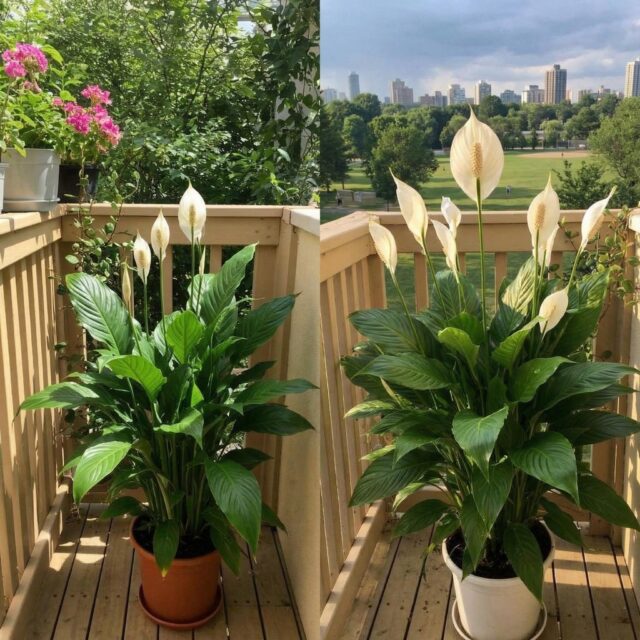
Peace Lilies are loved for their elegant white blooms and deep green leaves, but getting them to flower consistently can sometimes feel challenging. The image above shows a healthy, well-cared-for Peace Lily producing multiple blooms—something many plant owners hope to achieve. While no single trick guarantees flowers, gentle, natural care methods combined with the right environment can significantly support a plant’s overall health and encourage blooming over time. Patience and consistency are key, especially with indoor plants that respond slowly to changes.

One simple and budget-friendly approach some plant owners use is diluted rice water as an occasional supplement. This is prepared by blending plain rice with water until the liquid becomes cloudy, then straining it thoroughly to remove all solid particles. The strained liquid can be used to water the plant lightly, ensuring the soil becomes moist but never waterlogged. This method should be used sparingly and only as part of a balanced care routine. For recently purchased Peace Lilies or plants entering a new growth phase, applying it once or twice a week may support leaf vitality. Older plants that have not bloomed in some time may also benefit when combined with proper light and watering habits.

Equally important is the plant’s environment. Peace Lilies prefer bright, indirect light and tend to struggle when placed in direct sunlight, which can scorch leaves and weaken blooms. A spot near a window with filtered light is ideal. The soil should remain consistently moist, but excess water must be able to drain freely to avoid root stress. Peace Lilies are good indicators of their own needs—slightly drooping leaves often signal it’s time to water. Maintaining steady humidity and avoiding sudden temperature changes can also help the plant stay strong and resilient.

Long-term success with Peace Lilies comes from gentle care rather than frequent changes. Occasional use of mild organic soil enrichments, careful watering, and proper placement all contribute to steady growth. When conditions are right, Peace Lilies often respond with fuller foliage and periodic flowering similar to what’s shown in the photo. While results vary from plant to plant, a calm, consistent approach allows these elegant houseplants to thrive naturally, adding beauty and freshness to any indoor space without relying on harsh treatments or unrealistic promises.

The Rally Dry Shaver: A Curious Experiment in Grooming History

The Rally Dry Shaver is a fascinating reminder of a time when grooming products reflected bold ideas and a willingness to experiment. During the mid-20th century, manufacturers were eager to rethink everyday routines, including shaving, which had followed largely the same methods for generations. This was an era defined by optimism about innovation, when inventors believed that almost any task could be made quicker and easier with the right design. The Rally Dry Shaver emerged from this mindset, standing out as an unconventional attempt to simplify personal care while appealing to consumers eager for modern solutions.

What made the Rally Dry Shaver especially distinctive was its approach to shaving without water, soap, or traditional blades. Instead of relying on sharp edges and lather, it used a rolling, toothed cylinder that was passed across the face. The mechanism worked through a shearing motion, trimming hair in a way similar to scissors rather than slicing it at skin level. The idea was to offer a clean, straightforward shave with minimal preparation, eliminating the need for sinks, mirrors fogged with steam, or electrical outlets. For busy users or travelers, this concept sounded both practical and appealing at the time.

This design represented a clear break from long-established grooming traditions. For centuries, wet shaving with straight razors and later safety razors had been the standard, emphasizing closeness and ritual. As electric shavers began to appear, they promised speed and convenience while still offering a reasonably smooth result. The Rally Dry Shaver attempted to position itself between these worlds, offering portability and simplicity without cords or complex parts. It reflected the broader cultural trend of the period, where household items were being reinvented with a focus on novelty and efficiency, even if that meant challenging familiar habits.

Despite its creative engineering, the Rally Dry Shaver struggled to win lasting approval from users. Many found that it did not deliver the smooth, close shave they were accustomed to, especially compared to safety razors or emerging electric models. Comfort and precision were also concerns, which limited its appeal in a market where personal preference and daily comfort matter greatly. As a result, the product faded from mainstream use. Today, it survives mainly as a curiosity and a collectible, valued less for practicality and more for what it represents—a moment in grooming history when inventors dared to rethink the ordinary. The Rally Dry Shaver stands as a reminder that progress often involves experimentation, and even ideas that don’t endure can offer insight into the creativity and optimism of their time.

Fifteen Years Later, a Quiet Encounter Changed Everything

Fifteen years is a long time to live with unanswered questions. When my sister vanished, the days that followed were filled with phone calls, searches, and conversations that never seemed to lead anywhere. I replayed the missed call over and over in my mind, wondering what she might have said if I had answered. Life moved forward because it had to, but that quiet ache never fully left. Every holiday, every milestone, there was an empty space where her laughter should have been, and with time, hope faded into something softer and more careful.

Two nights ago, I boarded a late train after a long workday, grateful for the stillness that usually comes with night travel. The carriage was half-empty, lit by soft overhead lights and the gentle rhythm of the rails. As I settled into my seat, I glanced across the aisle and felt my breath catch. The girl sitting there looked up at the same moment. Her eyes were unmistakable, familiar in a way that sent a shiver through me. Then I noticed the small scar on her neck, one I remembered from childhood accidents and shared summers. Without thinking, I said her name aloud, my voice louder than intended.

She stood up slowly, her expression a mix of surprise and uncertainty. For a moment, we simply stared at one another, both afraid to move, as if the slightest gesture might break the fragile reality forming between us. She didn’t run or deny it. Instead, she took a few careful steps closer and asked my name, as if testing a memory she wasn’t sure belonged to her. When I answered, something softened in her face. She explained, haltingly, that the years since we last saw each other had been complicated, filled with changes and choices she hadn’t known how to explain back then.

We talked for the rest of the journey, sharing pieces of our lives in small, careful sentences. There was no dramatic revelation, no instant resolution to everything we had lost. What mattered was the quiet understanding that grew between us, the sense that time hadn’t erased everything after all. When the train reached her stop, we exchanged numbers and a promise to meet again, this time in the daylight. As she stepped onto the platform, I felt something I hadn’t felt in years—not closure, but possibility. Sometimes, healing doesn’t arrive all at once. Sometimes it begins with a familiar face in an unexpected place and the courage to start a conversation you thought was lost forever.

A Journey of Motherhood, Courage, and Unexpected Truths

She had always been certain of one thing: love, in the romantic sense, was no longer her destination. After years of rebuilding herself, what she wanted was simpler and braver at the same time—to become a mother. She prepared carefully, quietly, choosing independence over convention. When the time came, she packed her life into boxes, hugged familiar streets goodbye, and stepped into the unknown with nothing but determination and hope. Becoming pregnant felt less like a miracle and more like a promise fulfilled, one she had made to herself on nights when the world felt too quiet. Raising her son far from her hometown, she built a life shaped by routine, laughter, and the steady confidence that she had chosen this path intentionally.


Years passed in a blur of school mornings, scraped knees, bedtime stories, and small victories that only a parent notices. Her son grew into a thoughtful, observant child, comfortable in his own skin, curious about everything. Their home was full of warmth, even without extended family nearby. Yet, as life often does, it began to whisper about unfinished chapters. She felt an unexpected pull toward the place she once left behind—the town that knew her before motherhood reshaped her identity. It wasn’t regret that brought her back, but a desire for closure, and perhaps reconciliation with her past. She wanted her son to know where she came from, to understand that roots can stretch without breaking.


When they arrived, the town seemed unchanged on the surface, but people’s reactions told a different story. Old friends smiled a little too tightly, lingered a second too long, or looked away as if caught off guard by something they hadn’t anticipated. Their eyes kept drifting to her son, studying him with curiosity that bordered on disbelief. She noticed it immediately—the way conversations paused, the way glances were exchanged. Her son, unaware of the silent questions swirling around him, greeted everyone with the same calm politeness he always carried. To him, nothing felt strange. To her, something felt unfinished, like a sentence that had been left hanging for years.


Understanding came slowly, settling in with equal parts clarity and ache. The town wasn’t reacting to her independence or her choices—they were reacting to resemblance, to memory. Her son carried echoes of a past she thought she had left behind, reflections of someone she never expected to see again in this form. It wasn’t scandal that filled her chest, but acceptance. Life, she realized, has a way of weaving truth into unexpected shapes. Standing there, watching her son laugh freely among people who saw more than he knew, she felt no shame. Only gratitude. She had built her life on courage, and whatever truths emerged now would be faced the same way—honestly, gently, and without fear.

What Your Body Tries to Tell You When You Need More Water

Water is often described as essential, yet in the rhythm of everyday life it is easy to overlook. Between long work hours, repeated cups of coffee, and constant distractions, many people forget to drink enough throughout the day. Water may seem ordinary, but it is the body’s primary source of support. Unlike other beverages, it works quietly in the background, keeping systems running smoothly. When intake is low, the effects are not immediate or dramatic at first. Instead, the body sends gentle signals that are easy to dismiss, even though they are important indicators of overall balance.

Water is present in every cell and supports nearly every function in the body. It helps transport nutrients through the bloodstream, supports digestion, regulates body temperature, and allows organs to work efficiently. Without sufficient hydration, these processes begin to slow down. Many people rely on thirst as their reminder to drink, but thirst usually appears after dehydration has already started. By the time you feel thirsty, the body is already working harder to maintain stability. Understanding hydration as a daily habit rather than a reaction can make a noticeable difference in energy and comfort.

The body often communicates early signs of low hydration in subtle ways. Dark-colored urine can indicate that the kidneys are conserving water, a sign they need more support. Fatigue or reduced concentration may appear because the brain is especially sensitive to changes in fluid balance. Dry skin or lips can also signal that the body is redirecting water to more vital organs. These signs are not causes for alarm, but they are reminders that the body depends on consistent hydration to function at its best.

Making hydration a regular part of the day is a simple yet powerful step toward better well-being. Drinking water consistently helps support physical comfort, mental clarity, and long-term health. Needs can vary depending on activity level, climate, and lifestyle, but paying attention to the body’s signals is key. Keeping water accessible, taking small sips throughout the day, and choosing water alongside meals can help build a lasting habit. In the end, water is not just a drink—it is a daily investment in the body’s ability to stay balanced, energized, and resilient.

Why I Set a Boundary During the Holidays This Year

For years, Christmas at my stepmother’s house followed the same unspoken script. The invitations always sounded warm and generous, filled with talk of family, tradition, and togetherness. But once we arrived, the reality was very different. While her relatives settled into armchairs by the fireplace, laughing and exchanging stories, I found myself in the kitchen from morning until night. I cooked meals for nearly twenty people, kept track of dietary requests, washed endless stacks of dishes, and cleaned as I went. No one ever asked if I needed help. No one noticed how tired I was. I told myself it was just one day a year and that keeping the peace mattered more than speaking up.

Over time, the pattern wore me down. Each holiday left me feeling less like a guest and more like unpaid staff. I watched others relax while I missed conversations, laughter, and even the simple joy of sitting down to eat while the food was still warm. When I hinted that it was overwhelming, my concerns were brushed aside with jokes about how “good I was at it” or how much everyone appreciated my effort. Appreciation, however, never translated into shared responsibility. I began to dread the season that once brought me comfort, and I realized how quietly resentment had been growing inside me.

This year, the invitation came again—sweetened with an offer of free flights, as if convenience might erase the past. For the first time, I paused instead of automatically agreeing. I thought about what Christmas meant to me and how I wanted to feel during it. Then I said no. The silence on the other end of the call was heavy. Her voice changed, dropping its cheerful tone, replaced by surprise and disappointment. She asked why, as if the answer hadn’t been building for years. I explained calmly that I wanted a holiday where I could rest, connect, and feel included rather than obligated.

Saying no felt terrifying, but it also felt honest. That decision didn’t magically fix our relationship, and it didn’t come without guilt. Yet it gave me something I hadn’t had in a long time: choice. I learned that boundaries are not acts of cruelty but acts of care—for yourself and, sometimes, for others. This Christmas, I stayed home, shared a simple meal with people who helped cook it, and felt present instead of exhausted. The holiday wasn’t perfect, but it was peaceful. And for the first time in years, it truly felt like mine.

What Spiritual Traditions Teach About the Soul’s Transition After Life

Across history, people from many cultures have reflected on what happens when physical life comes to an end. Rather than seeing it as a complete stop, most spiritual traditions describe it as a transition—a shift from one state of existence to another. These perspectives suggest that awareness does not disappear, but instead continues in a different form. When the physical body is no longer able to function, the non-physical aspect of a person is believed to separate from it. Some traditions describe this moment symbolically, using ideas such as an energetic connection gently dissolving. Beyond the physical world, existence is no longer limited by space or time, and consciousness is thought to enter a realm focused on understanding, clarity, and renewal.

Many teachings describe this transition as calm and natural. Freed from physical limitations, the soul is believed to release emotional weight such as stress, pain, and fear. In this state, learning and reflection continue, often described as a return to a familiar and peaceful environment. Growth does not end; instead, it takes on a new form. Some traditions believe this phase allows awareness to expand and gain perspective on life experiences. Compassion, insight, and balance are emphasized as guiding qualities. This view brings comfort to many, as it frames the end of physical life not as loss, but as movement toward harmony and understanding.

Not all traditions believe this transition happens instantly for everyone. Some suggest that strong emotional connections, unresolved concerns, or confusion can delay the process. Time, in this context, is thought to feel very different than it does in the physical world. Experiences that seem lengthy to the living may be brief from a spiritual perspective. In these teachings, lingering awareness is not portrayed as negative or threatening, but as a temporary state that reflects human emotions such as love, concern, or hesitation. Ultimately, every soul is believed to move forward naturally once emotional balance is restored and clarity is reached.

Many people report subtle experiences that feel like reminders of continued connection—such as meaningful dreams, comforting sensations, or unexpected moments of familiarity. These experiences are often interpreted as gentle reassurance rather than something to fear. Spiritual traditions emphasize that the natural direction of the soul is toward peace and completion. For those who remain physically present, the healthiest response is said to be calm remembrance, gratitude, and emotional openness. Letting go with love allows both the living and the departed to find peace. In this way, transformation is seen not as separation, but as a continuation of connection through understanding and compassion.

When a Bold Message Became a Moment of Reflection

The red notice appeared on my screen one quiet morning, bold and urgent, demanding attention before I had even finished my coffee. Its message spoke confidently about abundance and favorable days ahead, but instead of excitement, it stirred a pause in me. I had seen messages like this before—short, certain, and tempting. Yet something about it made me reflect rather than react. It reminded me how easily people look outward for reassurance, hoping that a sign, a phrase, or a prediction might explain where life is heading. The word “attention” lingered in my mind, less as a command and more as an invitation to look inward.

I thought about how often people associate prosperity with sudden change, as if success arrives all at once, announced in bright colors. In reality, meaningful progress usually moves quietly. It grows through patience, consistent effort, and thoughtful choices rather than dramatic moments. The image made me consider how belief systems—whether cultural, personal, or symbolic—often serve as motivation rather than instruction. They don’t create outcomes on their own, but they can inspire people to act with confidence. Sometimes, believing that better days are possible helps someone take the steps they’ve been avoiding.

As the day went on, I noticed how differently people respond to messages of hope. Some dismiss them entirely, while others hold onto them as encouragement. Neither approach is wrong. What matters is what follows. Optimism alone doesn’t replace planning, learning, or responsibility, but it can support them. When people feel hopeful, they are more likely to notice opportunities, manage challenges calmly, and stay focused during uncertain times. In that way, messages like the one on the screen function more like mirrors than maps, reflecting what a person already believes about their potential.

By the evening, the image no longer felt like a prediction at all. It felt like a reminder that attention itself is valuable. Where attention goes, effort follows. When people focus on growth—personal, professional, or emotional—they tend to make choices that support stability over time. Progress doesn’t arrive because a message promises it, but because someone chooses persistence over distraction. The most meaningful abundance comes not from waiting for signs, but from building habits that support long-term well-being. And sometimes, all it takes is a simple reminder to pay attention and move forward with intention.

Promoted Content

Popular

A Mother’s Love: Vienna’s Journey with a Birthmark

0
Love compels parents to do extraordinary things for their children’s well-being. Celine Casey, a British mother, took remarkable steps to ensure her daughter Vienna’s...