Entertainment

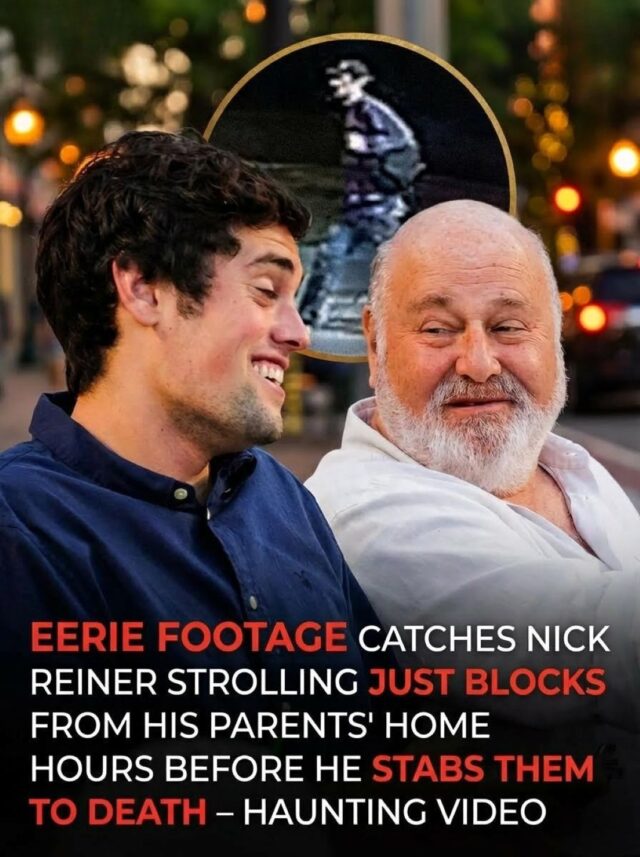
Footage Captures Rob Reiner’s Son in Neighborhood Before Family Tragedy

In the hours before a devastating family tragedy came to light, a brief piece of video footage quietly entered the public record and quickly drew widespread attention. The clip shows Nick Reiner walking calmly along a residential street not far from his parents’ home in Brentwood. There is nothing dramatic in the scene: no hurried movements, no visible distress, no indication that anything unusual was about to occur. Yet the timing of the footage, captured shortly before authorities were alerted to the deaths of his parents, has made it a focal point for public discussion. What stands out most is its ordinariness—a snapshot of routine life that now carries heavy significance in hindsight.

As details of the case emerged, investigators began reconstructing a timeline of events surrounding the deaths of Rob Reiner and his wife, Michele Singer Reiner. According to authorities, the couple were found inside their home by a family member, prompting an immediate emergency response. Law enforcement secured the residence and launched an investigation, treating the situation as suspicious from the outset. Emergency dispatch audio later revealed how quickly responders recognized the seriousness of the scene, underscoring the abrupt shift from a private family space to the center of a major investigation.

Throughout the day, additional moments added emotional context to the unfolding story. It was reported that one of the Reiners’ daughters had shared a supportive public message earlier that same day, expressing pride and encouragement toward her father, with no indication that anything was amiss. Friends of the family, including well-known figures from the entertainment world, were later seen arriving briefly at the home, visibly shaken by the news. These quiet gestures—short visits, restrained reactions, and simple words—highlighted how suddenly normal routines gave way to grief. The contrast between earlier expressions of everyday support and the events that followed has resonated deeply with many observers.

Authorities later confirmed that Nick Reiner had been located and taken into custody near the University of Southern California, allowing investigators to proceed with the next phase of the case. The Reiner family released a brief statement acknowledging their loss and requesting privacy as they process the situation. As the investigation continues, public interest remains focused not only on confirmed facts but also on the human elements surrounding the timeline: a calm walk through a neighborhood, a supportive message shared too soon, and a family forever changed in a single day. Together, these moments form a stark reminder of how quickly ordinary life can shift, leaving behind questions, grief, and the difficult work of seeking understanding through careful investigation rather than speculation.

Bondi Beach Hero Faces Long Recovery as New Details Emerge About His Injuries!

In the aftermath of the Bondi Beach tragedy, as Australia struggled to process shock, grief, and unanswered questions, one name rose above the chaos as a symbol of instinctive bravery and moral clarity. Ahmed Al-Ahmed, a 43-year-old Sydney shop owner and father of two, did not set out to become a national hero. He acted because, in a moment where seconds mattered and fear could have paralyzed anyone, he chose to move toward danger instead of away from it. What followed was not only an act that likely saved lives, but the beginning of a long, painful recovery that is now revealing the true physical cost of that courage.

Video footage that spread rapidly across social media and major news networks showed Al-Ahmed approaching an armed attacker from behind, restraining him, and helping to secure the weapon. Security analysts and witnesses have since stated that his intervention almost certainly prevented further loss of life during what has been described as one of the most confronting public safety incidents Australia has faced in decades. In those few seconds, without protective gear, training, or hesitation, he placed himself directly in harm’s way for strangers he did not know.

As public praise surged and tributes poured in, the focus remained largely on the heroism of that moment. Only later did a quieter, more sobering reality come into view. According to people close to Al-Ahmed, the injuries he sustained are far more severe than initially reported. He remains under intensive medical care at St George Hospital, where doctors are continuing to assess and treat multiple wounds that will require long-term rehabilitation.

His former migration lawyer, Sam Issa, who has remained in close contact with the family, confirmed that Al-Ahmed has already undergone several medical procedures. One of the most concerning complications is reduced sensation in one arm, raising the likelihood of nerve damage caused during the attack. Medical specialists are proceeding cautiously, aware that nerve injuries can take months—or even years—to fully evaluate and treat. For a man whose livelihood depends on physical work and whose identity is rooted in providing for his family, the uncertainty adds another heavy layer to an already difficult recovery.

Despite the pain and the mounting physical challenges, Issa has described Al-Ahmed as calm, composed, and unwavering. Those closest to him say he has expressed no regret for his actions. On the contrary, he has reportedly stated that he would act the same way again if faced with a similar situation. His response was not driven by impulse or ego, but by an instinctive sense of responsibility to protect others when no one else could.

The incident unfolded during Hanukkah by the Sea, a peaceful community gathering where families had come together to celebrate tradition, faith, and togetherness. What should have been a joyful event turned into a scene of terror and confusion when violence erupted. Amid the panic, Al-Ahmed made a decision that would define him in the eyes of a nation. Family members later shared that in the moments before intervening, he quietly asked that a message be passed on to his loved ones, fully aware that he might not survive.

Al-Ahmed immigrated to Australia from Syria more than a decade ago, building a life through hard work, small business ownership, and devotion to his family. A Muslim by faith, he later explained that his actions had nothing to do with identity, politics, or ideology. He could not stand by while innocent people were in danger. For many Australians, his story has become a powerful counterpoint to narratives of division, reminding the country that shared humanity often emerges most clearly in moments of crisis.

As details of his recovery have emerged, so too has an outpouring of support that extends far beyond Sydney. Prime Minister Anthony Albanese publicly praised Al-Ahmed’s bravery, calling it a reflection of the best of Australia—ordinary people stepping up for others without hesitation. New South Wales Premier Chris Minns described him as a genuine hero whose actions undoubtedly saved lives. Messages of gratitude and solidarity have arrived from across the globe, underscoring how deeply his actions resonated beyond national borders.

Crowdfunding efforts and community support initiatives have also gained traction, reflecting public recognition that heroism does not end when the cameras stop rolling. Recovery from traumatic injuries—especially those involving nerve damage and multiple wounds—is often long, painful, and emotionally taxing. Medical experts emphasize that physical healing is only part of the process; psychological recovery, family support, and financial stability play critical roles in long-term outcomes.

Al-Ahmed’s case has reignited broader conversations around public safety, emergency response, and the role of civilians in violent incidents. While authorities continue to stress that people should not put themselves at unnecessary risk, his actions have also highlighted how quickly ordinary individuals can be forced into extraordinary circumstances. In discussions about national security, violent crime, and community resilience, his story now serves as a real-world example of how courage often emerges without warning.

For his family, the journey ahead remains uncertain. Doctors have not offered a definitive timeline for his recovery, and each stage of treatment will require patience and resilience. His children have visited him in hospital, a poignant reminder of both what he risked and what he is fighting to return to. Friends say that while the physical toll is undeniable, his spirit remains intact.

As Australia continues to reflect on the Bondi Beach tragedy, Ahmed Al-Ahmed’s story stands as more than a viral video or a headline. It is a reminder that behind every act of heroism lies a human being who must live with the consequences long after public attention fades. His recovery is not just a medical process; it is a testament to endurance, sacrifice, and the enduring strength of compassion.

In a world increasingly defined by division and fear, Al-Ahmed’s actions—and his ongoing struggle to heal—offer something rarer and more enduring: proof that humanity can still rise when it matters most, and that true courage often comes at a cost few are prepared to pay.

The Simple Evening Kitchen Habit That Could Improve Home Safety

Why This Simple Air Fryer Habit Can Keep Your Kitchen Safer

Air fryers have quietly become a staple in modern kitchens, always ready to whip up quick, fuss-free meals. Their speed, versatility, and promise of healthier cooking make them a favorite in busy households. But behind the convenience, air fryers are powerful electrical appliances—and a small, often overlooked habit can significantly improve kitchen safety.

Why Extra Care Matters

Air fryers combine high heat, strong internal fans, and electrical components. Even with built-in safety features, no appliance is completely immune to wear and tear:

Cords can loosen over time

Internal parts can age
Minor electrical issues can go unnoticed
In rare cases, residual heat or electrical activity can persist even when the unit appears “off.” Experts emphasize mindful use beyond just cooking time.

Risks of High Heat in a Compact Space

Air fryers focus intense heat in a small area, so even minor problems can become dangerous:

Grease buildup inside the appliance
Frayed cords or loose outlets
Placement near flammable items such as paper towels, curtains, or cabinets
For these reasons, safety professionals recommend unplugging your air fryer after every use, especially before bedtime or leaving the house. This simple step reduces electrical load and lowers the risk of accidents.

Easy Safety Habits

Keeping your air fryer safe doesn’t have to be complicated:

Clean regularly to prevent grease buildup
Inspect cords and plugs for wear, discoloration, or heat
Follow manufacturer instructions and allow proper ventilation
Avoid extension cords to ensure stable power
Unplug after use—a quick step that adds peace of mind
Air fryers make daily cooking convenient and enjoyable, but safety comes from consistent habits. With regular maintenance and the simple act of unplugging, you can enjoy your air fryer worry-free while keeping your kitchen safe and secure.

How a Simple Cafe Visit Brought Meaning Back to My Life After Retirement!

Retirement is frequently marketed as a golden era of leisure, but for many, the reality is a stark transition into social isolation. At sixty-four, I found myself standing on the threshold of this new chapter, only to realize that the silence of an empty house was deafening.

Without the structure of a career, children to raise, or a spouse to share the quiet moments, I became a prime demographic for those researching “senior loneliness and mental health.” My world had shrunk to the four walls of my home, until I discovered a local café that would eventually serve as the setting for a profound emotional awakening.

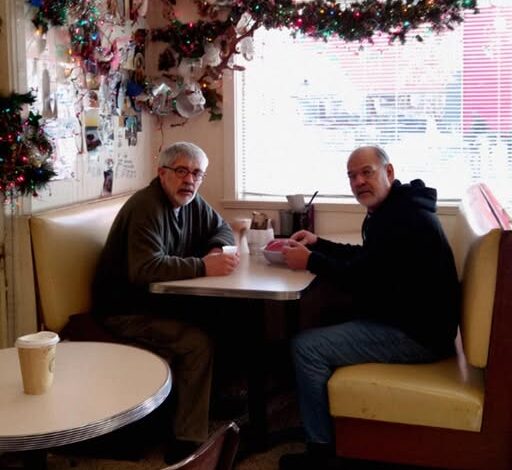
For months, my daily ritual involved visiting this modest establishment, primarily for the human connection provided by a waitress named Elena. She possessed an intuitive grace, remembering not just my standing order, but the nuances of my mood. In my state of “social displacement,” I began to project a parental narrative onto our interactions. I viewed her kindness through the lens of a “surrogate daughter,” a common psychological coping mechanism for seniors seeking “emotional fulfillment after retirement.” Her presence was the anchor in my drifting life, a consistent point of contact in an increasingly digital and disconnected world.

The stability of this routine was shattered when Elena suddenly vanished from the café. After a week of staring at an empty station, a wave of “separation anxiety” compelled me to do something uncharacteristic. I obtained her address from a former coworker—a move that, in any other context, might have required “private investigation services”—and drove to the outskirts of town. I found myself in front of a weathered apartment complex, a far cry from the vibrant environment of the café. When the door opened, the woman standing there looked nothing like the cheerful waitress I remembered. Her eyes were rimmed with exhaustion, and the vibrant energy I had relied on was replaced by a weary, polite surprise.

The ensuing conversation was a masterclass in “intergenerational empathy.” Elena invited me in, and over a cup of tea that mirrored our café interactions, she revealed the “caregiver burden” she had been carrying in secret. Her father had suffered a debilitating health crisis, requiring around-the-clock “home health assistance” that she simply could not afford while working long shifts. She hadn’t quit out of a desire to move on; she had stepped away to fulfill a “familial obligation” that many in the “sandwich generation” face every day.

In that cramped, dimly lit living room, the illusion I had built began to dissolve. I realized that while I had been using her kindness as a “therapeutic intervention” for my own loneliness, she had been fighting a silent battle for survival. I had turned her professional courtesy into a “destiny-driven connection,” failing to see the human being behind the apron. This realization brought with it a profound sense of humility. I apologized for my “unsolicited intrusion” and for the selfishness of my assumptions.

What followed was a shift in our “relationship dynamics.” We moved past the artificial roles of “server and patron” and began to speak as two individuals navigating the complexities of “life transitions.” I spoke candidly about the “fear of irrelevance” that haunts many retirees, and she shared the crushing weight of “financial insecurity” and “medical debt.” It was a raw, honest exchange that no “professional counseling session” could have replicated. By the time I left, the heavy “existential dread” I had been carrying for months had lifted, replaced by a grounded, authentic connection.

This experience taught me that “sustainable happiness in retirement” isn’t about finding people to fill the voids left by our past lives; it’s about engaging with the world as it actually exists. My loneliness didn’t vanish because I found a daughter; it faded because I allowed a real friendship to take root in the soil of mutual respect. We began to navigate a new rhythm—sometimes meeting for coffee, sometimes checking in via “digital communication tools,” but always with the understanding that our connection was a “voluntary bond” rather than an assigned role.

I have since returned to my daily café visits, but the experience is fundamentally different. I no longer scan the room for a “lifeline.” Instead, I practice “mindful engagement” with the staff and fellow patrons, recognizing that everyone is carrying a story I may never fully understand. I’ve become an advocate for “community-based senior support,” encouraging other retirees to look beyond their own “social isolation” and find ways to offer support to those around them.

The economic reality of “aging in place” often overlooks the “social capital” required to maintain a high “quality of life.” While “wealth management” and “estate planning” are critical, they cannot purchase the sense of being “seen and heard.” Elena’s father eventually moved into a “subsidized senior living facility,” thanks in part to some “legal advocacy” I was able to assist with using my professional background. In return, Elena provided me with something far more valuable: proof that “human connectivity” is the ultimate “anti-aging treatment.”

As I look back on that December morning, I realize that my “unplanned intervention” was the turning point I desperately needed. It forced me to confront the “judgmental nature of loneliness” and embrace the “vulnerability of genuine friendship.” I didn’t find the family I thought I was missing; I found the “social resilience” I didn’t know I possessed.

Our story is a testament to the idea that “meaningful connections” can be found in the most “unconventional places,” provided we are willing to look past our own needs. Retirement isn’t the end of the narrative; it’s a “pivotal plot shift” that allows for new characters and unexpected subplots. Loneliness is a “manageable condition,” not a “permanent diagnosis.” It fades when we stop assigning roles to people and start allowing them to be themselves. Today, my life is filled with a “quiet, healthy connectivity” that I wouldn’t trade for the busiest career or the most crowded house. I found proof that kindness is a “universal currency,” and that as long as we are willing to step outside our comfort zones, our stories are far from over.

Forgotten Word, Unforgettable Night!

In the high-stakes arena of “nationally televised game shows,” where “viral moments” are manufactured with the precision of a “digital marketing strategy,” what occurred on a recent December evening in 2025 was something far more authentic and profound. The air within the studio felt like it shattered the moment the contestant opened his mouth. It was a single, seemingly insignificant word—the kind of “linguistic hurdle” that occupies the space between a “life-changing jackpot” and a “public failure.” As the clock ticked with the “relentless cadence” of a “metronome,” the polished floor and blinding stage lights transformed the set into a “high-pressure environment” where millions of viewers were tethered to a single “emotional outcome.”

The contestant, a man whose “professional background” was rooted in the honest, “tangible labor” of carpentry, had walked onto the stage with the “humility and quiet hope” that often defines the “human interest stories” of middle America. He was more accustomed to “structural engineering” and the “scent of sawdust” than the “high-definition glare” of a “multi-camera production.” Yet, as the game progressed, he demonstrated an “intuitive mastery” of the “cognitive puzzles” presented to him. His “strategic risk-taking” and “patience” began to turn the room; the audience, initially mere spectators in a “broadcast event,” became “active stakeholders” in his success. This was a “narrative arc” that “social media algorithms” crave—the “underdog story” finding its “fragile foothold” under the most “unforgiving spotlights.”

However, as many “psychological studies on performance anxiety” suggest, the “human mind” is an unpredictable variable. When the “final puzzle” appeared, it looked like a “low-difficulty layup,” a “plain and simple victory” that would secure a “luxury SUV” and a “six-figure cash prize.” The phrase was “glaringly familiar,” yet the “neural pathways” required to retrieve that “forgotten word” were momentarily blocked. The “buzzer” eventually sounded, a “tonal punctuation mark” that signaled the “end of the competition.” But what followed was a “masterclass in emotional intelligence” and “grace under pressure.”

Instead of collapsing into “public despair” or the “performative frustration” so common in “competitive television,” the man bent over laughing. It was a “self-deprecating sound” that resonated with “genuine warmth” and “resilience.” He chose to “applaud the winner” with a sincerity that made the “loss of the prize” seem secondary to the “gain of dignity.” In the world of “online reputation management,” where “clips of failure” are often weaponized for “clicks and engagement,” this footage became something else entirely: a “testament to the human spirit.” It wasn’t a “meme of failure”; it was a “demonstration of character” that “brand consultants” and “life coaches” would later cite as a “pivotal lesson in leadership.”

The “cultural impact” of this “viral video” speaks to a collective “hunger for authenticity.” In an age of “curated perfection” and “algorithmic influence,” seeing a person “lose publicly and gracefully” is a “refreshing counter-narrative.” The “carpenter’s reaction” reminded the “global audience” that “success” is not always measured by “tangible rewards” like “jackpots” or “trophies.” Sometimes, the most “unforgettable night” is the one where we “lose the reward” but “find our humanity.” This “shared experience” across “digital platforms” acted as a “communal catharsis,” proving that “personal integrity” is a “high-value asset” that transcends “monetary gain.”

From a “sociological perspective,” the “shared breath” of millions of viewers highlights the “power of live television” to foster “social cohesion.” Whether people were watching in “high-end bars,” “private living rooms,” or via “mobile streaming apps,” they were united by a “singular emotional frequency.” The “carpenter of ordinary life” had become a “symbol of resilience,” demonstrating that “dignity” is a “choice” made in the “seconds following a setback.” This is the “essence of peak performance”—not the “absence of failure,” but the “mastery of the response” to it.

The “economic value” of such a moment for a “broadcasting network” is immense, but the “intrinsic value” for the audience is even greater. In a “competitive society” where “second place” is often viewed through the “lens of inadequacy,” this “forgotten word” became a “catalyst for a new perspective.” It encouraged “viewers at home” to evaluate their own “internal responses” to “professional disappointment.” By walking away from the “jackpot” with a smile, the contestant proved that his “self-worth” was not “contingent on a prize,” but “rooted in his presence.”

As the “digital discourse” around this “memorable event” continues to trend, “SEO experts” and “content creators” are analyzing why this “specific clip” resonated so deeply. The answer lies in the “transcendence of the moment.” It wasn’t just a “game show clip”; it was a “luminous example” of how to “transform a fleeting defeat” into something “timeless and unforgettable.” The “Jeep” and the “money” were “temporary incentives,” but the “grace” displayed by the “unassuming contestant” became a “permanent impression.”

The “forgotten word” and the “unforgettable night” serve as a “profound reminder” that the “most expensive rewards” in life are those that “cannot be bought.” “Resilience,” “grace,” and “humility” are the “currencies of a life well-lived.” As the “studio lights” were eventually dimmed and the “carpenter” returned to his “ordinary life,” he left behind a “legacy of presence” that remains far more “impactful than a grand prize.” He walked away “larger than the reward itself,” a “victor in the realm of character,” and a “guiding light” for anyone navigating the “unpredictable puzzles of the human experience.”

In the final analysis, this “broadcast moment” from December 2025 will be remembered not for what was “lost on the scoreboard,” but for what was “gained in the heart.” It was a “miracle in slow motion,” a “celebration of the fragile foothold” we all seek when the “lights are at their brightest.” The “truth” that exploded across every “viewer’s mind” was simple: “some victories are not measured in trophies,” but in the “ability to smile” when the “world expects you to cry.” This is the “unforgettable truth” of a “forgotten word,” a “lesson in grace” that will continue to “linger in the collective memory” long after the “final buzzer” has faded into silence. WOULD YOU LIKE ME TO help you explore more stories of resilience or provide tips on practicing grace in high-pressure situations?

I Misunderstood My Father for Years — A Hospital Visit Changed Everything

I despised my dad for most of my childhood, even though he was the only parent I had. He raised me alone and worked endlessly, yet our life always felt like a struggle. We lived paycheck to paycheck, counting every dollar, and I grew up painfully aware of what we lacked compared to others. At school, I watched friends show off new gadgets, clothes, and vacations, while I learned how to pretend I didn’t care. One day, when a friend excitedly talked about his brand-new iPad, something inside me snapped. I went home angry and hurt and said words to my father that still echo in my mind—accusing him of failing me because he couldn’t give me more. I saw his face fall, saw the pain he tried to hide, but pride kept me from apologizing.

A week later, everything changed. My dad suffered a heart attack, and I rushed to the hospital terrified, replaying my cruel words over and over in my head. While waiting in the hallway, a man approached me and introduced himself as my father’s boss. He didn’t know who I was at first, but when he realized I was his son, his expression softened. He told me things about my dad that I had never known—how he was the first to arrive and the last to leave, how he often took extra shifts no one else wanted, and how he had turned down better-paying opportunities because they required moving farther away or working hours that would leave me alone too much. Listening to him felt like having a veil lifted from my eyes.

When I finally sat beside my dad’s hospital bed, I noticed details I had always ignored: the deep lines on his face, the roughness of his hands, the exhaustion etched into his posture even as he slept. For the first time, I understood that his life hadn’t been small or unsuccessful—it had been consumed by responsibility and sacrifice. He had chosen stability over comfort, presence over ambition. When he woke up, he tried to reassure me, saying everything would be fine. I couldn’t hold back anymore. I apologized through tears, admitting how unfair I had been and how little I had understood. He didn’t blame me. He simply told me that he had always wanted me to have a better life, even if that meant he went without.

That moment reshaped the way I saw him—and the way I measured success. Over time, my dad recovered, and so did our relationship, slowly and honestly. I learned that love doesn’t always come in the form of gifts or visible achievements. Sometimes it looks like long hours, silent worry, and choices no one applauds. Today, I’m grateful I was given the chance to see the truth before it was too late. My father wasn’t a failure; he was a man who carried the weight of two roles without complaint. And the lesson he taught me, without ever intending to, is one I carry with me still: the greatest sacrifices are often the quietest ones.

The Day Compassion Spoke Louder Than Words

An old lady of about 80 years old was standing in line before me, holding cereal and milk. She could barely stand and leaned against the counter. She saw that I had only a can of soda and said, “Son, you go before me.” It made me feel warm. So, I made up a cunning plan I paid and pretended tofumble with my wallet as if I had forgotten something important. I stepped aside, letting the cashier scan my soda while I quietly watched the old woman from the corner of my eye. Her hands trembled slightly as she adjusted her grip on the box of cereal, and her smile lingered in a way that suggested kindness was a habit, not a decision. When my receipt printed, I didn’t leave.

Instead, I stayed close, pretending to read a notice on the wall, waiting for the right moment to act without drawing attention or embarrassing her.When the cashier finished ringing up her items and announced the total, I smoothly slid my card forward and said, “It’s together with mine.” The old lady looked startled and tried to protest, her voice soft but firm, insisting she could pay for herself. I leaned in and whispered that she had already paid me back with something far more valuable than money. Confused, she paused, and in that moment the cashier completed the transaction. The receipt printed again, and the moment passed before she could object any further.

As we walked out of the store together, the evening air felt lighter. She stopped near the door, looked up at me, and asked why I had done it. I told her the truth—that her simple gesture of letting me go first had reminded me how easy it is to be kind, and how rare it sometimes feels in a busy world. She nodded slowly, her eyes shining, and said she hoped I would do the same for someone else someday. Before parting ways, she placed her hand on my arm, steady and warm, as if to seal the lesson.

Driving home, I realized the plan hadn’t been cunning at all. It was simple, almost obvious, yet it changed the entire tone of my day. The soda was long forgotten, but the memory stayed vivid. Kindness, I learned, doesn’t need recognition or reward; it just needs a moment and a willing heart. That old lady probably never knew how much she gave me in that short line at the store. And ever since, I’ve tried to stay alert for those quiet chances to pass it on, one small act at a time.

Heartbreaking comment paramedic made to Rob Reiner’s daughter after she found him dead!

According to the New York Times, 27-year-old Romy arrived at the home, located in Los Angeles, on the afternoon of Sunday, December 14. She had reportedly been contacted by a massage therapist who couldn’t get into the property for a scheduled appointment.

After accessing the house, Romy found the body of her father, beloved actor-director Rob Reiner. People Magazine report that she then fled the property without realizing that her mother, Michele, also lay dead inside.

A family source revealed to the Times she was later informed by a paramedic that Michele had also been murdered.

The deaths of the couple sent shockwaves around the world. Both Rob, 78, and Michele, 68, were said to have been found with lacerations consistent with the use of a knife.

Hours following Romy’s aforesaid discovery, police apprehended Nick Reiner, the couple’s son, near the University of Southern California campus.

The 32-year-old, speculated to have a history of mental health issues and alleged substance abuse, was witnessed in a heated argument with his father the night before the slayings, at Conan O’Brien’s Christmas party.

On Tuesday, December 16, Nick was charged with two counts of first-degree murder with special allegation of using a knife. If convicted, he faces life in prison without the possibility of parole, while prosecutors have not yet made a decision regarding whether or not he might face the death penalty.

Rob Reiner’s career in Hollywood spanned more than five decades. He rose to fame portraying Michael “Meathead” Stivic on All in the Family from 1971 to 1979 before becoming a successful director.

His films included When Harry Met Sally, The Princess Bride, and This Is Spinal Tap, as well as the 1986 adaptation of Stephen King’s Stand by Me. He received an Academy Award nomination for A Few Good Men in 1992.

Beyond entertainment, Reiner was a major political figure in Hollywood. For example, he co-founded the American Foundation for Equal Rights.

Michele Singer Reiner later became a producer, working on projects such as Shock and Awe, Albert Brooks: Defending My Life, Spinal Tap II: The End Continues, and God & Country.

MELODY THOMAS SCOTT BAD NEWS!

The entertainment world recently held its collective breath following a series of cryptic headlines regarding daytime television’s most enduring icon, Melody Thomas Scott. For over four decades, Scott has anchored the top-rated CBS soap opera The Young and the Restless as the indomitable Nikki Newman. However, recent whispers of “bad news” have sent ripples through the fan community, sparking intense speculation about the future of Genoa City’s leading lady. To understand the gravity of these reports, one must look beyond the tabloid sensationalism and delve into the intricate realities of a high-stakes television career, the physical demands of long-term production, and the inevitable transitions that face even the most successful figures in Hollywood.

When news breaks regarding a star of Scott’s magnitude, the digital landscape reacts with lightning speed. The intersection of celebrity culture and personal injury attorney discourse often arises when fans speculate about health scares or on-set accidents. While the “bad news” surrounding Scott has fortunately not involved a car accident lawyer or a wrongful death attorney, the frantic search for information highlights how deeply invested the public remains in her well-being.

For a woman who has spent more time in front of a camera than almost any other living actress, the toll of a grueling production schedule is a legitimate concern. The “bad news” often cited by insiders usually points toward contract negotiations or the natural desire for a legendary performer to finally seek the mesothelioma lawyer levels of financial security and retirement peace that come after forty-five years of continuous employment.

Melody Thomas Scott’s journey is a masterclass in resilience. Entering the industry as a child actress—most notably appearing in Alfred Hitchcock’s Marnie—she transitioned into adulthood with a grace that is rare in the fickle world of show business. Her portrayal of Nikki Reed, a girl from the wrong side of the tracks who transformed into a socialite powerhouse, mirrored the complexity of a business software architecture; it required constant updates, bug fixes, and a robust core to survive the changing seasons of television trends.

When reports surface suggesting a health crisis or a departure, the impact is felt by the network’s bottom line, much like a sudden shift in cloud computing stocks affects the tech sector. The show’s narrative framework is built around her chemistry with Eric Braeden’s Victor Newman, and any news suggesting an end to that era is viewed as a catastrophic “system failure” by loyal viewers.

The specific “bad news” that recently trended involved Scott’s candid reflections on her past struggles, which she detailed in her memoir, Always Young and Restless. While some outlets framed her revelations as a current tragedy, they were actually a courageous look back at a life defined by overcoming trauma. In the world of high-value digital marketing, keywords like insurance and loans dominate the financial space, but in the realm of celebrity biographies, the “currency” is emotional honesty.

Scott’s willingness to discuss her difficult upbringing and the predatory nature of early Hollywood serves as a beacon for others. It reminds us that behind the mortgage-free mansions and the glitz of the Daytime Emmys, there is a human being who has navigated the same legal and emotional complexities that might require a divorce lawyer or a bankruptcy attorney in a less charmed life.

Furthermore, the industry itself is changing. The rise of online classes and streaming platforms has shifted the way soap operas are produced and consumed. The “bad news” for veteran actors often involves the tightening of production budgets. As networks look to maximize their donated cars to charity-style tax breaks and streamline their overhead, veteran salaries are often the first items on the chopping block. Fans fear that the news regarding Scott might be a precursor to a reduced “recurring” status, a move that would be as jarring as a sudden data recovery loss in a critical corporate server. Nikki Newman is not just a character; she is an institution. To lose her presence would be to lose the very soul of the program.

The digital hysteria surrounding “Melody Thomas Scott Bad News” also highlights the dark side of the internet’s search algorithms. Clickbait sites often use aggressive tactics, utilizing high-CPC terms related to credit and banking to lure unsuspecting fans into galleries filled with advertisements. They frame a standard contract hiatus as a terminal illness or a dramatic firing. For those seeking the truth, it is essential to look toward reputable sources that treat her legacy with the same precision a medical malpractice lawyer treats a complex case. Scott has remained a pillar of strength, often taking to social media to reassure her “Twitter family” that she remains in good spirits, even when the rumor mill is spinning out of control.

Looking toward the future, the narrative of “bad news” often transitions into a story of reinvention. Whether Scott chooses to scale back her hours to spend time with her family or continues to dominate the screen, her legacy is secure. Just as a hosting service provides the foundation for a website, Scott has provided the foundation for The Young and the Restless. Her career longevity is a testament to her talent and her ability to adapt to an industry that has seen the rise and fall of countless stars. If the bad news is simply that time is passing and chapters are closing, it is a reminder to appreciate the legends while they are still in our midst.

In the final analysis, the flurry of concern for Melody Thomas Scott serves as a powerful testament to her impact. In an age where we are constantly bombarded with information about treatment options for various ailments or the best software for remote work, the human element remains the most compelling. We care about Nikki Newman because we have grown up with her. We have seen her survive kidnappings, cults, and countless marriages. The “bad news” is often just a reflection of our own fear of losing a constant in an ever-changing world. As long as the lights are on at CBS Television City, and as long as Scott continues to bring her unique blend of vulnerability and steel to the role, the real news is that she remains the undisputed queen of daytime. Her story is not one of tragedy, but of a triumphant, long-running success that defies the standard expiration dates of Hollywood stardom. We should view the headlines not with dread, but as an opportunity to celebrate a career that has been as lucrative and impactful as the most successful legal firm or tech giant in the country.

Rare Fixer-Upper Opportunity on Golf Course Road: A Future Showcase Cabin in Caledonia

Opportunities like this do not come along often—especially for buyers who recognize potential, appreciate unique locations, and are willing to invest vision and care into a truly special property. Offered as-is, this fixer-upper cabin on Golf Course Road in Caledonia presents a rare chance to transform a solidly situated structure into what could become one of the top showcase cabin sites in the area once renovations are complete.

The value of this property begins with its exceptional location. Positioned directly opposite the #2 Fairway, the cabin enjoys a setting that is both scenic and distinctive. Golf Course Road is known for its tranquil atmosphere, natural beauty, and close connection to the recreational character of Caledonia. The surroundings immediately set the stage for a cabin retreat that blends rustic charm with an enviable location—something that simply cannot be replicated through new construction alone.

At the heart of the cabin is its living room, a space that already offers architectural features many buyers actively seek. The vaulted ceiling creates a sense of openness and volume, making the room feel larger, brighter, and full of possibility. This open living space is centered around a large stone hearth, which serves as both a visual focal point and a symbol of the cabin lifestyle—warm, inviting, and ideal for gathering after a day outdoors. With thoughtful renovation, this area could become the defining feature of the entire cabin, anchoring the interior with character and timeless appeal.

While the property is clearly a fixer-upper, its foundational attributes provide a strong starting point for the right buyer. The layout, ceiling height, and central hearth offer a canvas upon which new owners can build their vision. Whether the goal is to restore classic cabin charm, introduce modern rustic finishes, or blend the two styles, the bones of this structure allow for flexibility and creativity. This is not merely a repair project—it is a chance to reimagine and elevate a cabin in a highly desirable setting.

It is important to note that the property is being sold strictly as-is, and buyers should be prepared for renovation and repair work. There are several cautions that must be observed when visiting and touring the site, and all visitors are advised to be careful while on the property. This is a project for buyers who understand the realities of restoration and are comfortable proceeding with due diligence and care.

A critical component of this sale involves the DCNR (Department of Conservation and Natural Resources) Ground Lease. To be eligible, the buyer must be a Pennsylvania resident or have a Pennsylvania resident agent in order for the DCNR lease to be transferred. The sale is contingent upon DCNR approval and the successful transfer of the DCNR ground lease to the buyer. This requirement is non-negotiable and should be carefully reviewed by all prospective purchasers prior to submitting an offer.

For buyer convenience and transparency, the DCNR inspection report, cabin lease, and campsite guidelines are now available on Bright. These documents provide essential information regarding the condition, requirements, and regulations associated with the cabin and the leased land. Buyers are strongly encouraged to review all available materials thoroughly to understand both the responsibilities and opportunities associated with ownership.

An important consideration for renovation plans is that DCNR will consider a smaller cabin footprint if required to accommodate the buyer’s proposed repairs or improvements. This flexibility can be a significant advantage for those planning substantial renovations. Buyers wishing to pursue this option should submit a sketch of the proposed footprint changes with their offer, allowing DCNR to evaluate the concept as part of the approval process.

This property is being offered through a Call for Offers, emphasizing the competitive and unique nature of the opportunity. The deadline for offers is 8:00 PM on June 29, 2025. Offers should begin at the asking price and must be contingent upon DCNR lease transfer approval. This structured process ensures fairness while giving motivated buyers the chance to present strong, well-prepared proposals.

The seller has indicated that responses to offers will be provided by July 1, allowing buyers a clear and timely decision window. Given the location, potential, and rarity of this type of offering, interested parties are encouraged not to wait until the last moment to prepare their submissions.

From a broader perspective, this cabin represents more than just a renovation project—it is an investment in place and possibility. Caledonia cabins are known for their community, history, and connection to outdoor recreation. A renovated cabin in this specific location, facing the fairway and situated along Golf Course Road, has the potential to stand out among its peers as a true destination retreat.

Imagine the future: a restored stone hearth crackling with warmth, the vaulted living room filled with natural light, and views across the fairway creating a sense of openness and calm. With thoughtful planning and execution, the end result could be a cabin that not only meets personal expectations but becomes admired by others as one of the most impressive sites in the area.

In summary, this fixer-upper cabin sold as-is offers a rare blend of location, character, and opportunity. It is ideal for buyers who value setting as much as structure, who are prepared to navigate DCNR requirements, and who see renovation not as a burden but as a chance to create something exceptional. With clear guidelines, available inspection materials, and defined timelines, this offering invites serious, capable buyers to step forward.

If you are seeking a project with genuine upside—one rooted in an outstanding location and supported by strong foundational features—this Caledonia cabin deserves your attention. Bring your vision, your planning, and your respect for the process, and you may find yourself creating a future showcase cabin in one of the area’s most desirable settings.

From  Zillow 

Popular

A Mother’s Love: Vienna’s Journey with a Birthmark

0
Love compels parents to do extraordinary things for their children’s well-being. Celine Casey, a British mother, took remarkable steps to ensure her daughter Vienna’s...