Entertainment

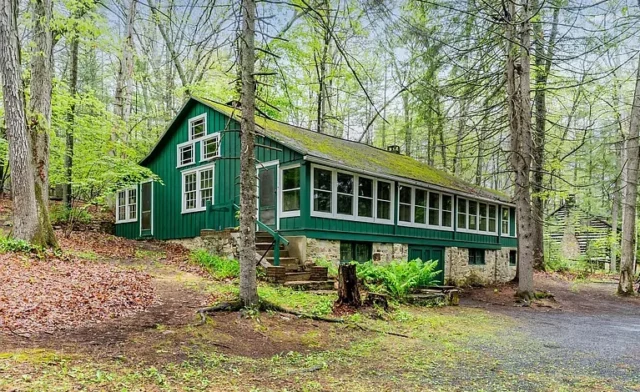
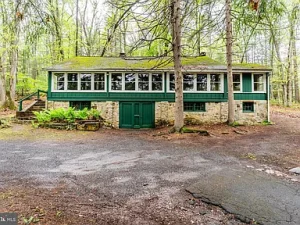
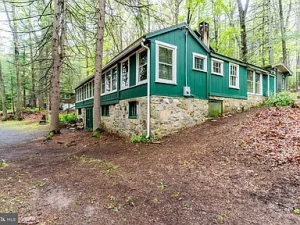
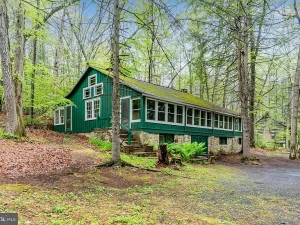
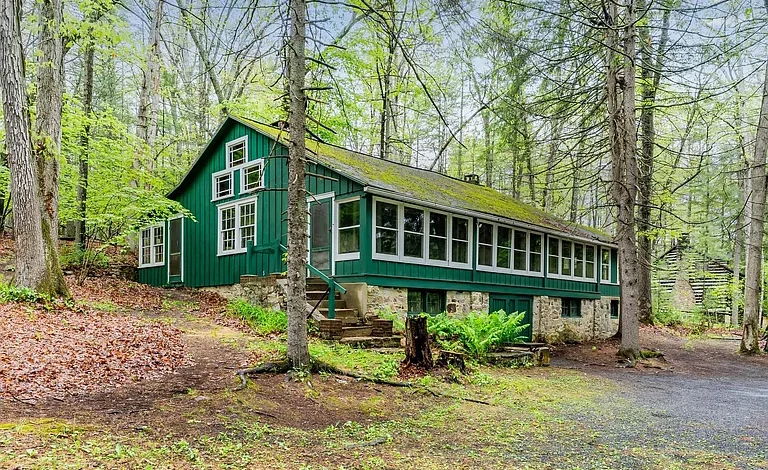
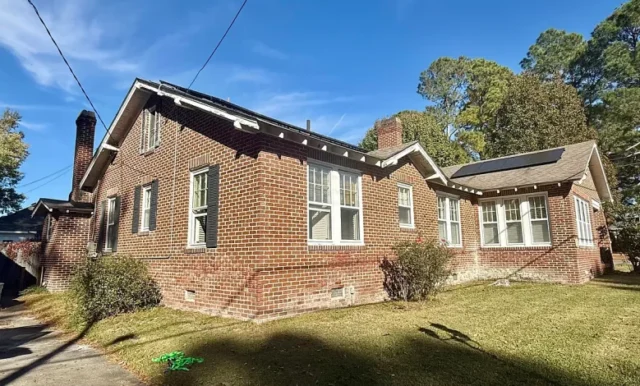
1935 Storybook Home with Timeless Charm Near Downtown Bethel, NC

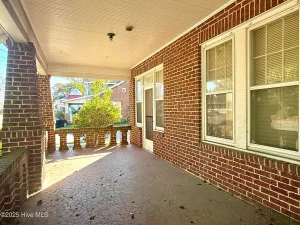
Step back in time to an era defined by dependable quality, thoughtful craftsmanship, and enduring beauty with this truly special storybook home, ideally located on a corner lot near downtown Bethel, North Carolina. Built in 1935, this rare and character-rich residence stands as a testament to a time when homes were constructed to last, blending architectural elegance with everyday functionality. Properties like this are becoming increasingly scarce, making this home a genuine treasure for buyers who appreciate originality, charm, and timeless design.

From the moment you approach the property, it’s clear that this is no ordinary house. The home’s classic exterior and inviting presence immediately evoke a sense of nostalgia, warmth, and pride of ownership. Set in a desirable location close to town amenities, yet offering privacy and comfort, this property presents an exceptional opportunity to own a piece of Bethel’s architectural history.


A Warm & Welcoming First Impression

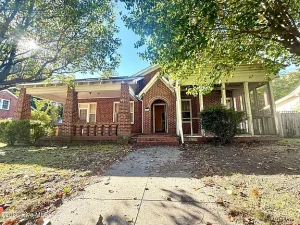
An arched front entryway welcomes you into the home, setting the tone for the thoughtful details found throughout. This charming architectural feature immediately draws the eye and invites you to explore further. Inside, you’re greeted by original hardwood floors that flow beautifully through the living spaces, paired with elegant café shutters that filter natural light while preserving privacy and style.

These original elements have been lovingly preserved, showcasing the craftsmanship and materials that have stood the test of time.


Formal Living & Dining Spaces with Classic Appeal

The formal living room serves as a cozy yet refined gathering space, anchored by an inviting fireplace that adds warmth and character. This room is ideal for quiet evenings, hosting guests, or simply enjoying the charm of a classic home environment.

Adjacent to the living room is the formal dining room, which features beautiful double glass French doors. These doors enhance the room’s elegance while allowing natural light to flow freely between spaces. Whether hosting holiday meals, dinner parties, or intimate family gatherings, this dining room offers a setting that feels both welcoming and timeless.


Sunroom – A Space Filled with Light & Possibility

Just off the main living area, the sunroom provides a versatile and serene space that captures both morning and afternoon sunlight. This room can easily serve as:

  • A home office
  • A library or reading nook
  • A sitting room or creative studio

With its abundant natural light and tranquil atmosphere, the sunroom is a perfect place to relax, work, or simply enjoy the changing seasons.


A Kitchen Full of Vintage Character

The heart of the home is enriched with charming vintage features that blend form and function. A standout element is the butler’s pantry, complete with swinging doors and built-in cabinetry—a rare and delightful nod to classic home design. This space adds both character and practicality, offering storage and prep space while preserving the home’s historic charm.

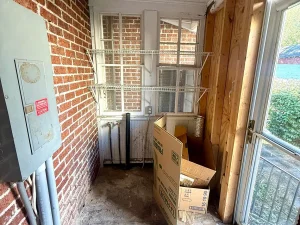
In addition, the kitchen boasts a separate, generous walk-in pantry, providing ample room for storage, organization, and everyday convenience.

Adding a whimsical and conversation-worthy detail is a hideaway folding ironing board tucked neatly into the kitchen wall—a delightful example of the thoughtful utility common in homes of this era.


Comfortable Bedrooms & Thoughtful Layout

The home offers three bedrooms and two bathrooms, arranged in a layout that maximizes both comfort and efficiency.

The primary and secondary bedrooms share:

  • A spacious walk-in closet
  • A Jack-and-Jill bathroom, offering convenience and privacy

Both bathrooms feature classic black-and-white tiled floors, a timeless design choice that perfectly complements the home’s vintage aesthetic.


Custom Details That Set This Home Apart

Throughout the home, you’ll discover thoughtful, built-in features that elevate both functionality and charm, including:

  • A cedar-lined hallway closet, ideal for storage and seasonal items
  • Integrated bench seating with storage, blending practicality with design

These custom elements highlight the careful planning and craftsmanship that went into the home’s original construction.


Outdoor Living Spaces for Every Season

North Carolina’s beautiful climate can be enjoyed to the fullest thanks to multiple outdoor living options. The home features:

  • A screened-in patio, perfect for relaxing without the bother of insects
  • An open, covered patio, ideal for entertaining or enjoying fresh air year-round

Whether sipping coffee in the morning, hosting friends, or unwinding in the evening, these outdoor spaces provide comfort and versatility.


Fenced Backyard & Detached Garage

The fenced-in backyard offers privacy, security, and room to enjoy outdoor activities, gardening, or pets. Completing the property is a detached garage, providing additional storage and parking convenience while maintaining the home’s classic aesthetic.


A Corner Lot with Prime Location

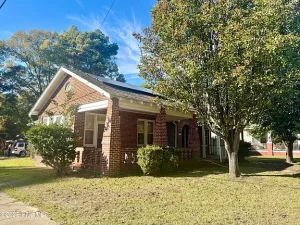
Situated on a corner lot, this home benefits from enhanced curb appeal, added light, and a sense of openness. Its location near downtown Bethel means you’re just minutes away from local shops, dining, and community amenities—offering the perfect balance between small-town charm and everyday convenience.


A Home Full of Potential

While this home already shines with character and originality, it also offers exciting opportunities for future enhancements. Whether you envision subtle updates, thoughtful restoration, or simply preserving its current charm, the home provides a solid foundation for your vision.

This is a property that rewards those who appreciate:

  • Historic architecture
  • Unique details
  • Craftsmanship that has endured for generations

A Rare Opportunity

Homes like 7511 Main Street are becoming increasingly rare. Built in an era where quality and longevity mattered, this property stands apart from modern construction with its authenticity, personality, and timeless appeal.

It is patiently waiting for the perfect buyer—someone who values history, creativity, and the joy of owning a truly unique home.


Final Thoughts

This 1935 storybook home near downtown Bethel, NC, offers charm, character, and potential that simply cannot be replicated. From its arched entryway and original hardwood floors to its vintage pantry, sunroom, and thoughtful built-ins, every corner tells a story.

Schedule your showing today and begin planning the next chapter of this remarkable home—its possibilities are as timeless as its design.

Listed on Zillow

Biker Found His Missing Daughter After 31 Years But She Was Arresting Him

The biker stared at the cop’s nameplate while she cuffed him—it was his daughter’s name.

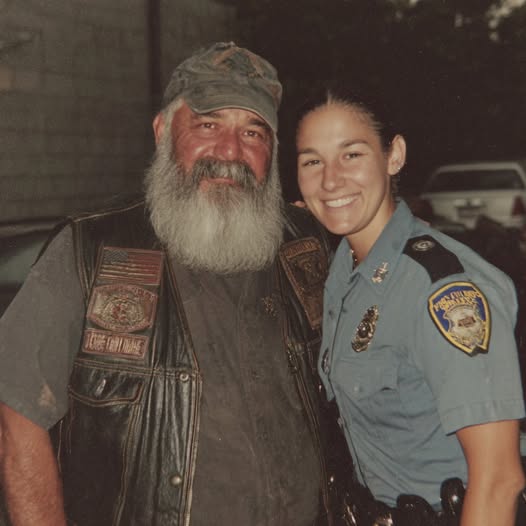
Officer Sarah Chen had pulled me over for a broken taillight on Highway 49, but when she walked up and I saw her face, I couldn’t breathe.

She had my mother’s eyes, my nose, and the same birthmark below her left ear shaped like a crescent moon.

The birthmark I used to kiss goodnight when she was two years old, before her mother took her and vanished.

“License and registration,” she said, professional and cold.

My hands shook as I handed them over. Robert “Ghost” McAllister.

She didn’t recognize the name—Amy had probably changed it. But I recognized everything about her.

The way she stood with her weight on her left leg. The small scar above her eyebrow from when she fell off her tricycle. The way she tucked her hair behind her ear when concentrating.

“Mr. McAllister, I’m going to need you to step off the bike.”

She didn’t know she was arresting her father. The father who’d searched for thirty-one years.

Let me back up, because you need to understand what this moment meant.

Sarah—her name was Sarah Elizabeth McAllister when she was born—disappeared on March 15th, 1993.

Her mother Amy and I had been divorced for six months. I had visitation every weekend, and we were making it work.

Then Amy met someone new. Richard Chen, a banker who promised her the stability she said I never could.

One day I went to pick up Sarah for our weekend, and they were gone. The apartment was empty. No forwarding address. Nothing.

I did everything right. Filed police reports. Hired private investigators with money I didn’t have.

The courts said Amy had violated custody, but they couldn’t find her. She’d planned it perfectly—new identities, cash transactions, no digital trail.

This was before the internet made hiding harder.

For thirty-one years, I looked for my daughter. Every face in every crowd. Every little girl with dark hair. Every teenager who might be her. Every young woman who had my mother’s eyes.

The Sacred Riders MC, my brothers, they helped me search. We had connections in every state.

Every time we rode, we looked. Every charity run, every rally, every long haul—I carried her baby picture in my vest pocket.

The photo was worn soft from thirty-one years of touching it, making sure it was still there.

I never remarried. Never had other kids. How could I?

My daughter was out there somewhere, maybe thinking I’d abandoned her. Maybe not thinking of me at all.

“Mr. McAllister?” Officer Chen’s voice brought me back. “I asked you to step off the bike.”

“I’m sorry,” I managed. “I just—you remind me of someone.”

She tensed, hand moving to her weapon. “Sir, off the bike. Now.”

I climbed off, my sixty-eight-year-old knees protesting. She was thirty-three now. A cop.

Amy had always hated that I rode with a club, said it was dangerous. The irony that our daughter became law enforcement wasn’t lost on me.

“I smell alcohol,” she said.

“I haven’t been drinking.”

“I’m going to need you to perform a field sobriety test.”

I knew she didn’t really smell alcohol. I’d been sober for fifteen years. But something in my reaction had spooked her, made her suspicious.

I didn’t blame her. I probably looked like every unstable old biker she’d ever dealt with—staring too hard, hands shaking, acting strange.

As she ran me through the tests, I studied her hands. She had my mother’s long fingers. Piano player fingers, Mom used to call them, though none of us ever learned.

On her right hand, a small tattoo peeked out from under her sleeve. Chinese characters. Her adoptive father’s influence, probably.

“Mr. McAllister, I’m placing you under arrest for suspected DUI.”

“I haven’t been drinking,” I repeated. “Test me. Breathalyzer, blood, whatever you want.”

“You’ll get all that at the station.”

As she cuffed me, I caught her scent—vanilla perfume and something else, something familiar that made my chest ache.

Johnson’s baby shampoo. She still used the same shampoo. Amy had insisted on it when Sarah was a baby, said it was the only one that didn’t make her cry.

“My daughter used that shampoo,” I said quietly.

She paused. “Excuse me?”

“Johnson’s. The yellow bottle. My daughter loved it.”

“Sir, stop talking.”

But I couldn’t. Thirty-one years of silence were breaking. “She had a birthmark just like yours. Right below her left ear.”

Officer Chen’s hand instinctively went to her ear, then stopped. Her eyes narrowed. “How long have you been watching me?”

“I haven’t been. I swear. I just—” How could I explain? “You look like someone I lost.”

She pushed me toward her cruiser, rougher now. “Save it for booking.”

The ride to the station was agony. Twenty minutes of staring at the back of my daughter’s head, seeing Amy’s stubborn cowlick that no amount of gel could tame.

She kept checking the mirror, probably wondering if she had a stalker in her backseat.

At the station, she passed me off to another officer for processing.

But I saw her watching from across the room as they took my prints, my photo, ran my record.

Clean except for some minor stuff from the ’90s—bar fights during the angry years after Sarah disappeared.

The breathalyzer came back 0.00. The blood test would too. Officer Chen frowned at the results.

“Told you I was sober,” I said when she came back.

“Why were you acting so strange?”

“Can I show you something? It’s in my vest. A photo.”

She hesitated, then nodded to the desk sergeant who handed her my belongings.

She went through my vest pockets—the knife, the challenge coins from my Marine days, some cash. Then she found it. The photo worn soft as cloth.

Her face went white.

It was Sarah at two years old, sitting on my Harley, wearing my oversized vest, laughing at the camera.

Amy had taken it two weeks before they disappeared. The last good day we’d had as a family, even divorced.

“Where did you get this?” Her voice was sharp, professional, but underneath, something else. Fear? Recognition?

“That’s my daughter. Sarah Elizabeth McAllister. Born September 3rd, 1990, at 3 AM. Eight pounds, two ounces.

She had colic for three months and only stopped crying when I rode her around the neighborhood on my bike. Her first word was ‘vroom.’”

Officer Chen stared at the photo, then at me, then back at the photo. I saw the moment she saw it—the resemblance. The same nose, the same stubborn chin.

“My name is Sarah Chen,” she said slowly. “I was adopted when I was three.”

“Adopted?”

“My adoptive parents told me my biological parents died in a motorcycle accident. Said that’s why I was scared of bikes.”

The room spun. Amy hadn’t just taken her. She’d killed us in Sarah’s mind. Made us dead so she’d never look for us.

“Your mother’s name was Amy,” I said.

“Amy Patricia Williams before she married me. She had a scar on her left hand from a kitchen accident. She was allergic to strawberries. She sang Fleetwood Mac in the shower.”

Sarah’s hand was trembling now. “My adoptive mother… her sister Amy… she died when I was five. Car accident.”

“No.” The word came out broken. “No, she took you. March 15th, 1993. I’ve been looking—”

“Stop.” Sarah backed away. “This isn’t— My parents are Richard and Linda Chen. They raised me. They—”

“Call them,” I said. “Ask them about Amy. Ask them if she was really Linda’s sister. Ask them why there are no pictures of you before age three.”

“You’re lying.”

“DNA test. I’ll pay for it. Rush it. Please.”

She was crying now, this tough cop who’d cuffed me an hour ago.

“My parents said my biological parents were drug addicts. Bikers who died doing something stupid.”

“I’ve been sober fifteen years. Before that, yeah, I drank. But never drugs. Never. And I never stopped looking for you. Not one day in thirty-one years.”

She left the room. I sat there in holding for three hours before she came back, phone in hand, face destroyed.

“They admitted it,” she whispered.

“My parents. Adoptive parents. Whatever they are. Amy was Linda’s sister.

She showed up with me when I was two, said my father was dangerous, that we needed new identities.

They helped her hide us. When Amy died in that car accident, they just… kept me. Kept the lie.”

“Sarah—”

“They said you were in a motorcycle gang. That you were violent.”

“I’m in the Sacred Riders. We raise money for veterans’ kids.

Every penny I could spare after searching for you went to children who lost parents in the service. I thought… I thought if I helped enough kids, karma would bring you back.”

She sat down across from me, this stranger who was my daughter. “The scar above my eyebrow?”

“Tricycle. You were trying to pop a wheelie like you saw me do on my bike. Needed three stitches.

You were so brave, didn’t cry once. The nurse gave you a Tweety Bird sticker.”

“I still have it,” she said quietly. “In my baby book. The one thing that didn’t make sense—a Tweety Bird sticker from a hospital I’d never heard of.”

“Mercy General in Sacramento. It closed in ’95.”

“Why didn’t you… why didn’t anyone find us?”

“Your mother was smart. Richard had connections, money. They knew how to disappear.

And after Amy died, there was no trail at all. You were just Sarah Chen, adopted daughter of respectable people.”

She pulled out her phone, showed me a photo. Two kids, both young. “These are my sons. Your… your grandsons. Tyler is six. Brandon is four.”

They looked like me. Both of them had the McAllister chin, the same crooked smile I saw in the mirror every morning.

“They love motorcycles,” she said, laughing through tears.

“Drive my husband crazy. Always asking to see the bikes when we pass riders. I never let them. Said they were dangerous.”

“They’re only as dangerous as the person riding them.”

“I became a cop,” she said suddenly. “I became a cop because I wanted to find dangerous bikers.

The ones who abandoned their kids. The ones my parents said… the ones they said you were.”

“Did you find any?”

“Some. But more often, I found bikers helping broken-down motorists. Bikers raising money for cancer kids. Bikers protecting abuse victims. It didn’t fit the story I’d been told.”

“Sarah—” I reached across the table, stopped. “Can I… can I touch your hand? Just to know you’re real?”

She reached out slowly. Our hands met—mine weathered and scarred from decades of searching, hers strong and steady. The moment our skin touched, she gasped.

“I remember,” she whispered. “Oh God, I remember. You used to trace letters on my palm before bed. The alphabet. You said it would make me smart.”

“You learned your letters before you could properly walk.”

“There was a song. Something about wheels?”

“‘Wheels on the Bike.’ I changed the words to the bus song. You made me sing it every night.”

She was sobbing now, this tough cop, my lost daughter. “The calls. There were calls, when I was young. Linda would hang up. Say they were telemarketers.”

“I never stopped trying. Even when the numbers changed, I kept trying.”

“Thirty-one years?”

“Thirty-one years, two months, and sixteen days.”

“You counted?”

“Every single one.”

The desk sergeant knocked. “Chen, everything okay in there?”

Sarah wiped her face. “I need a minute, Tom.”

“The guy’s prints came back clean. Just some old bar stuff. You pressing charges?”

She looked at me. “No. No charges. Misunderstanding.”

After he left, we sat in silence for a moment.

“I don’t know how to do this,” she said. “You’re a stranger, but you’re not. You’re my father, but Richard raised me. You’re a biker, and I’m a cop.”

“We go slow,” I said. “Coffee first. Maybe lunch. You can bring your boys if you want. Or not. Your choice. Everything is your choice.”

“My husband’s going to freak out.”

“He can come too. I’ll answer any questions.”

“My parents—the Chens—they’re good people. They just…”

“They loved you. They raised you. I’m grateful for that, even if they kept you from me. You turned out amazing. That’s what matters.”

She stood up, helped me to my feet. “Your bike’s still on Highway 49.”

“My brothers will get it.”

“Brothers?”

“The Sacred Riders. They’ve been looking for you too. Every run, every state. Uncle Bear, Uncle Whiskey, Uncle Tango—they never gave up either.”

“I have uncles?”

“Twenty-seven of them. They’ve been saving birthday presents for three decades. Whiskey’s got a whole storage unit full. Kept saying when we found you, you’d have thirty-one birthdays at once.”

She laughed—the same laugh she’d had as a baby. “That’s insane.”

“That’s family.”

She walked me out of the station. In the parking lot, under the harsh fluorescent lights, she turned to me.

“The DNA test. Let’s do it. Just to be sure.”

“Already sure,” I said. “But we’ll do it.”

“How can you be sure?”

“You bite your lower lip when you’re thinking, just like my mother. You stand with your weight on your left leg, like me. You use Johnson’s baby shampoo even though you’re thirty-three years old. And when you were arresting me, you hummed. Same tune you hummed as a baby when you were concentrating.”

“What tune?”

“‘Rhiannon’ by Fleetwood Mac. Your mother’s favorite song.”

She broke down completely then. I opened my arms, and my daughter—my lost daughter, my found daughter, my cop daughter who’d arrested me—fell into them.

“I’m sorry,” she sobbed. “I’m sorry I didn’t look for you.”

“You were a baby. Then you were a kid who thought we were dead. Nothing to be sorry for.”

“I hated you. Hated someone who didn’t exist.”

“Now you know the truth.”

“Dad?” she said, and that word—that one word I’d waited thirty-one years to hear—nearly killed me. “Dad, I want my kids to meet you.”

“I’d like that.”

“They’ll love your bike.”

“I’ll teach them about motorcycles. The right way. Safe way.”

“Tyler’s been begging for a leather jacket.”

I laughed. “I know a guy.”

She pulled back, looked at me. Really looked at me. “You look exactly like your photo. The one the Chens had. From before.”

“What photo?”

She pulled out her phone, showed me. It was my Marine portrait from 1973. Young, clean-shaven, formal.

“Amy kept that?”

“The Chens found it in her things. Only picture she had of you. I used to stare at it, wondering what kind of man my father had been.”

“Now you know. Just an old biker who never stopped looking for his little girl.”

“Found her though.”

“You found me, technically. Arrested me, even.”

“Best arrest I ever made.”

That was six months ago. The DNA test confirmed what we already knew. Sarah Elizabeth McAllister was Sarah Chen was my daughter.

The integration hasn’t been easy. The Chens were angry at first, felt betrayed by my appearance.

But we worked through it. They’re still her parents too. They gave her a good life, education, values. I’m grateful.

Sarah’s husband Mark was skeptical until he met the Sacred Riders. Hard to be scared of twenty-seven bikers who cry when they meet your wife, who’ve been carrying her picture for three decades.

Bear gave her thirty-one birthday cards, one for each year missed. Whiskey really did have a storage unit—filled with stuffed animals, dolls, bikes, everything a growing girl might have wanted.

We donated most to charity, but Sarah kept a few things.

Tyler and Brandon, my grandsons, they’re natural riders. Tyler can already identify bike models by sound.

Brandon wears his tiny Sacred Riders vest everywhere—we made him an honorary member.

Sarah still worries, but she lets them sit on my bike, lets me teach them about engines and honor and brotherhood.

Last month, Sarah did something that healed thirty-one years of hurt. She showed up at our clubhouse, in uniform, during church (our weekly meeting).

“I need to say something,” she announced.

Twenty-seven bikers went silent.

“You looked for me when no one else would have. You kept faith when faith seemed stupid. You’re the uncles I never knew I had, the family I was denied.

I was raised to fear you, to arrest people like you. But you’re heroes. My heroes. Thank you for never giving up.”

Then she pulled out something from behind her back—a leather vest. Not a full cut, but a supporter vest. “I know I can’t be a member. But maybe…”

“You were born a member,” Bear said. “You’re Ghost’s daughter. That makes you Sacred Riders royalty.”

She wears it sometimes, off duty. My cop daughter in her leather vest, bridging two worlds that shouldn’t meet but do.

The Chens come to some family dinners now. Awkward, but we’re trying.

They’re good people who did a bad thing for what they thought were good reasons. Forgiveness is harder than anger, but more useful.

Amy died thinking she’d saved Sarah from me. I forgave her the day I held our daughter again. The dead don’t need our anger, and the living need our love.

Sometimes Sarah and I ride together—her on her department Harley, me on my old Road King.

Two generations, two worlds, one blood. We don’t talk much on those rides. Don’t need to. The thirty-one years of silence said everything.

She’s starting a program—cops and bikers working together for missing kids. Using both networks, both perspectives.

She says it’s professional, but I know better. She’s trying to save other fathers from thirty-one years of searching. Other daughters from thirty-one years of lies.

“I arrested my father,” she tells the groups she speaks to. “Best mistake I ever made.”

I keep the arrest paperwork framed in my apartment. Officer S. Chen arresting Robert McAllister for suspected DUI.

The document that ended thirty-one years of searching. The traffic stop that brought my daughter home.

Sometimes the universe has a sense of humor. Sometimes it takes a broken taillight to fix a broken heart. Sometimes you have to be arrested by your daughter to finally be free.

And sometimes, just sometimes, the lost get found in the most impossible ways.

Tyler asked me last week, “Grandpa, why do they call you Ghost?”

“Because for thirty-one years, I was haunting someone who didn’t know I existed.”

“But ghosts aren’t real.”

“No,” I said, looking at Sarah as she helped Brandon with his toy motorcycle. “But resurrection is.”

She heard me, looked up, smiled—my mother’s smile, my smile, her sons’ smile. The smile I’d searched for in every crowd for three decades.

Found you, baby girl. Finally found you.

Even if you had to arrest me first.

When Recovery Brought Clarity: A Story of Strength and Self-Discovery

At 52, I had a stroke just three days before our Maldives anniversary trip — paid for from my savings. One moment I was folding laundry and thinking about turquoise water and quiet mornings, and the next I was waking up under bright hospital lights, my body heavy and unresponsive. The doctors spoke gently, but their words carried weight: rest, recovery, uncertainty. As I lay there, struggling to move my fingers, my phone buzzed with my husband’s name. I assumed he was worried, maybe even scared. Instead, the conversation drifted toward logistics, costs, and timing. When he explained that postponing the trip was expensive and that he didn’t want the money to go to waste, I listened in stunned silence. By the time he mentioned offering the trip to someone else, my heart sank in a way that had nothing to do with my medical condition.

The days that followed were quiet, filled with the soft beeping of machines and the slow rhythm of physical therapy. Nurses came and went, offering encouragement and small smiles. Friends sent messages, checking in and reminding me I wasn’t alone. My husband’s calls became shorter, less frequent, always rushed. I began to realize that the shock I felt wasn’t just about the trip—it was about understanding where I stood in my own life. Lying there, unable to walk without assistance, I had more time than ever to think. I thought about years of compromise, about moments I brushed aside because they seemed too small to matter. Recovery, I realized, wasn’t only about my body; it was about clarity.

One afternoon, with trembling hands, I made a call of my own. It wasn’t fueled by anger, but by resolve. I spoke calmly, asked questions, and listened closely to the answers. What I heard confirmed what my heart already knew: some distances are revealed only when life slows you down. With the help of a social worker and supportive family members, I began planning my next steps. Paperwork replaced postcards, and therapy sessions replaced travel itineraries. It wasn’t dramatic or vengeful—it was practical, thoughtful, and necessary. For the first time in a long while, I was making decisions with my well-being at the center.

Weeks later, as my strength slowly returned, so did my confidence. I learned to walk again, to laugh again, and to imagine a future shaped by self-respect rather than habit. The trip I missed no longer felt like a loss; it felt like a turning point. I understood that life doesn’t always give us the moments we expect, but it does give us moments that matter. Healing taught me patience, but it also taught me courage. Sometimes the biggest surprises aren’t waiting at an airport or a beach—they’re waiting within us, quietly urging us to choose ourselves when it matters most.

A new Army recruit was on the rifle range.

He fired 50 shots and completely missed the target with every shot!

His Drill Instructor called him to attention and got in his face.

“What’s the matter with you?” shouted the DI. “Why can’t you hit the target? What were you in civilian life?”

“I was a Cable TV repair man,” replied the recruit, “and I don’t know why I can’t hit the target. Let me see…”

The man checked his rifle, checked his rifle again and then checked his rifle a third time. He then put his finger in front of the muzzle, pulled the trigger and blew the end of his finger off!

“Well,” the phone man said, writhing in pain, “the bullets are leaving this end here fine. The trouble must be on the other end!”

A kindergarten class had a homework assignment to find out something exciting and relate it to the class the next day.
When the time came to present what they’d found, the first little boy the teacher called on walked up to the front of the class, and with a piece of chalk, made a small white dot on the blackboard and sat back down.

Puzzled, the teacher asked him what it was. ‘It’s a period,’ he replied.

‘I can see that,’ said the teacher, ‘but what is so exciting about a period?’

‘Darned if I know,’ chirped the little boy, ‘but this morning my sister was missing one, my mother fainted, my dad had a heart attack, and the boy next door joined the Navy!’

A man goes to the doctor and says, “Doctor, wherever I touch, it hurts.”
The doctor asks, “What do you mean?”

The man says, “When I touch my shoulder, it really hurts. If I touch my knee –

OUCH! When I touch my forehead, it really, really hurts.”

The doctor says, “I know what’s wrong with you – you’ve broken your finger!”

One day an old woman walked into a shop and got some dog food,
she went to pay for it and the cashier said you can’t buy that dog food we need evidence that you have a dog, so she bought in her dog and she got the dog food.

The next day the same old lady went to get some cat food and the cashier said you can’t have that cat food we need evidence that you have a cat, so she went home and got her cat and she got the cat food.

Next day the same old lady went in again and she had a box, she told the cashier to put her finger in it, so she did.

She said it felt warm and soft, the little old lady then said now you’re satisfied can I have some toilet paper please!

The Cheap Ring That Changed Everything

I was walking home from a late shift when I noticed her huddled by the takeaway window.
A teenage girl, maybe seventeen, hugging herself against the cold like she was trying to keep from shattering.
Her hoodie was too thin, her face too pale, and her shoes looked like they’d given up months ago.

It was the kind of winter night that made you question every life choice that led you out of a warm bed.
The wind cut straight through my jacket, and I was only out there because the bus was late again.
I almost kept walking.

Then she looked up at me.
Her eyes were red from the cold and maybe from crying, but she held herself with this stubborn pride that felt too heavy for someone her age.
She stepped forward.

“Excuse me,” she said softly, “could you maybe… help me buy some soup?”
Her voice shook in a way that wasn’t dramatic, just exhausted.
She held one hand against her belly, and that’s when I saw she was pregnant.
Really pregnant.

“How far along?” I asked.
“Seven months,” she whispered.
Then she added quickly, “I’m not trying to take advantage. I’ve just not eaten since morning.”

Honestly, I wanted to be home already.
But there was something about the way she asked that made it impossible to keep moving.
No tricks. No begging. Just a kid trying to survive the night.

“Come on,” I said, pushing open the takeaway door.

Warm air hit us instantly, along with the smell of fried chips and spices.
She inhaled like she hadn’t smelled hot food in a long time.
I ordered her vegetable soup, a big portion of chips, a bread roll, and—because I’m not totally heartless—a hot chocolate with extra cream.

“You don’t have to do all that,” she murmured.
“I know,” I said. “But I’m doing it anyway.”

While we waited, I noticed her shivering.
My own coat wasn’t fancy, but it was warm.
I handed it to her.

She shook her head. “I can’t take your coat.”
“Yes, you can,” I said. “I’m five minutes from home. You’re not.”

She slid into it slowly, like she expected someone to yank it away.
The shoulders relaxed. The trembling eased.
“Thank you,” she whispered. “Seriously… thank you.”

When the food came, she sat on the bench and ate like someone who hadn’t had a warm meal in days.
Between bites, she introduced herself as Isla.
She’d left home months back. Her mum’s boyfriend didn’t want her around. The baby’s father was long gone.
She’d been couch-surfing until the couches stopped existing.

“Do you have somewhere to stay tonight?” I asked.
“Sort of,” she said, which meant “no.”

I suggested a women’s shelter, but she shook her head.
“Last one I stayed in… someone stole my things. I didn’t sleep. I can’t do that again.”

We finished the food in silence for a moment.
When she put her spoon down, she looked at me with a strange mixture of relief and guilt.
Then she pulled a ring off her finger.

“I want you to have this,” she said.
I stared at it. The ring was thin, with a dull stone. Looked like something from a market bin.

“I don’t need your ring,” I said.
“It’s all I have,” she said. “And you helped me. Please.”

I hesitated, but she pressed it into my palm.
Her hand was freezing.
“Keep it,” she said. “So you remember you were kind to someone.”

I didn’t know what to say, so I didn’t say anything.
We stepped outside, and she waved once before walking into the shadows, my coat wrapped tight around her belly.

I kept the ring.

A year passed.

Life didn’t magically turn into a feel-good montage.
I still worked long shifts.
Bills still showed up with the enthusiasm of stray cats.
But every now and then, I’d find myself turning that little ring over in my hand.

It reminded me that small kindnesses mattered.
Even when they didn’t fix anything.

One Saturday, I was cleaning out my room, trying to convince myself I wasn’t a hoarder.
The ring fell out from between some receipts.
I slipped it on out of curiosity.

The metal felt heavier than I remembered.

On the way to the supermarket, I passed a tiny jewellery shop with a sign:
“FREE RING CLEANING & CHECKS.”

Why not, I thought.
Worst-case scenario, the jeweller would laugh and confirm it was fake.

Inside, the shop was warm and quiet.
A man in his fifties with wire-frame glasses stepped out from behind the counter.
“What can I do for you?” he asked.

I handed him the ring.
“Someone gave this to me. Thought I’d see if it’s worth cleaning.”

The moment he looked at it, his expression changed.
He brought it under a lamp, turning it slowly.
Then he reached for a magnifying glass.

“Where did you get this?” he asked, voice tight.

I blinked. “Uh… from a girl. About a year ago. She was pregnant and needed food. I bought her soup. She gave me the ring.”

His hands trembled slightly as he turned it over.
“This ring,” he said slowly, “belonged to my daughter.”

My skin prickled.

“She asked me to make it for her when she turned eighteen,” he continued.
“She didn’t want anything flashy. Just something simple with meaning. The stone is a pale sapphire. Understated. Just like she was.”

He looked up, eyes wet.

“She died eight years ago,” he said quietly.
“And I buried her wearing this ring.”

The room felt suddenly too small.
“That’s… impossible,” I said. “I’m telling you, a girl gave me this. A teenager named Isla.”

His breath caught.
“What was her mother’s name?”

“She didn’t know. She said she was adopted out after her mum died.”

He sat down hard.

“My daughter gave birth shortly before she passed,” he said.
“A baby girl. The hospital said she’d been taken into care. By the time we tried to find her, she was gone. Lost in the system.”

He lifted the ring again, his eyes shining with something between hope and fear.

“How old was the girl you met?”
“Seventeen.”
“And she was pregnant?”
“Yes.”

He closed his eyes.
“That’s her,” he whispered. “She must be.”

He gave me his number.
“If you ever see her again,” he said, “for any reason… call me.”

I promised.

He placed the ring back in my hand.
“If she trusted you with it,” he said, “so will I.”

I didn’t expect to ever see Isla again.
Life scatters people.
Especially people with nowhere steady to land.

But two months later, during a rainy Thursday shift at the drop-in centre where I volunteered, the door opened—and there she was.

Older.
Tired.
Stronger somehow.
Holding a baby boy wrapped in a patchwork blanket.

“Hi,” she said shyly.
“Didn’t think you’d remember me.”

I laughed.
“I gave you my coat. Hard to forget.”

She smiled, shifting the baby.
“This is my son,” she said. “His name’s Callum.”

He looked up at me with wide brown eyes, and something warm twisted in my chest.

“I’ve been staying at a hostel,” she said. “Trying to get things sorted. It’s… slow.”

We sat together while she ate a sandwich the volunteers had set out.
She told me the past year in bits and pieces—couch-surfing, temporary rooms, paperwork, nights spent in waiting areas just to stay warm.

Then she looked at my neck, where the chain with the ring hung.

“You kept it,” she said softly.

“I did,” I said. “And I found out something about it.”

I told her about the jeweller.
Her grandfather.
Her mother’s ring.
The fact that she had family searching for her without ever knowing where to start.

At first, she just stared at me, stunned.
Then her eyes filled, and she pressed a hand to her mouth.

“I thought I didn’t belong to anyone,” she whispered.
“I thought my mum didn’t care.”

“She cared,” I said gently. “She loved you enough to leave you something. And your grandfather? He’s been wishing for you for years.”

I phoned him.

He arrived in less than half an hour, out of breath, looking like he’d run the whole way.
When he saw Isla holding her baby, he froze.
Something broke open inside him.

He didn’t rush.
He didn’t grab.
He just looked at her like she was a miracle he didn’t trust himself to touch.

“Hello,” he said softly.
“I’m your mum’s dad. If… if you want me to be.”

Isla swallowed hard.
“This was hers?” she asked, holding up the ring.

“Yes,” he said.
“And now it’s yours.”

She placed the ring in her palm like it was the most fragile thing in the world.
Then she lifted the baby slightly.

“This is Callum,” she said.
“Your great-grandson.”

He cried.
The silent kind of crying that shakes a person to the core.

Isla let him hold the baby.
Callum grabbed his finger immediately, and something in the old man’s expression softened like melting ice.

They talked quietly for a long time.
About Isla’s mum.
About the years they’d both spent feeling like they were missing pieces of themselves.
About starting over.

Before he left, he offered her a place to stay.
Not forever—just until she got stable.
A spare room. A warm bed.
A cot that once belonged to the mother Isla never got to know.

On the walk out, Isla stopped beside me.

“I don’t know what happens next,” she said.
“But for the first time in a long time… I don’t feel alone.”

“You never were,” I said.
“You just hadn’t been found yet.”

She hugged me quickly, awkwardly, warmly.
“Thank you,” she said.
“For buying soup. For keeping the ring. For… everything.”

“It was just one small kindness,” I said.

“Small to you,” she replied. “Huge to me.”

Life has a way of circling back in ways we never expect.
A coat on a cold night.
A bowl of soup.
A cheap-looking ring.
Each one can become a bridge to something bigger.

We can’t fix the whole world.
But we can show up for one person at the right moment.
And sometimes, that’s enough to change everything for them—and for the ones they haven’t even met yet.

If this story moved you, share it.
Someone else might need the reminder that even the smallest kindness can rewrite a life.
And give it a like so more people can feel that spark of hope too.

Old Biker Held Drowning Girl Above Water For Three Hours While His Own Body Was Dying

Old Biker held drowning teenager above floodwater for 3 hours with a broken arm and never told her he was dying.

Sixty-eight-year-old “Tank” Morrison had been riding home from a memorial run when he heard the screaming – a school bus swept off Highway 9, kids trapped inside as water rose.

While other cars kept driving through the rain, this leather-clad veteran dove into the churning brown water without hesitation.

He pulled seven kids out before the current took the bus, but fourteen-year-old Emma got caught in debris, dragged downstream where Tank found her clinging to a tree branch that was breaking.

“Don’t let go!” he’d roared over the storm, fighting the current to reach her. When the branch snapped, he caught her, used his body as a raft, his motorcycle boots kicking against the flood.

Advert: [Motorcycle insurance is one of the most important investments a rider can make. Beyond basic liability, consider full coverage that protects against theft, collision, and uninsured motorists. Many companies offer motorcycle insurance discounts for safety courses, multiple policies, or clean driving records. Comparing motorcycle insurance quotes online often reveals big differences in premiums. Some riders save hundreds per year by switching providers. Be sure to ask about roadside assistance, medical coverage, and replacement cost policies. The right motorcycle insurance policy can protect both your bike and your finances if an accident or injury ever occurs on the road.] Advert

For three hours, he held her above water while she clung to his shoulders, his strength the only thing between her and death.

But Tank was hiding something from the terrified girl on his back – his left arm was broken from hitting submerged debris, and he was bleeding badly from a gash in his side.

Every minute holding her up was agony, but he kept talking to keep her calm, telling her about his granddaughter, making her promise to try out for the school softball team, anything to keep her fighting.

When rescue boats finally spotted them, Tank’s strength was gone. The moment Emma was pulled to safety, he slipped under the surface. What happened next would make national news, but not for the reason anyone expected……..

The rescue team pulled Tank’s unconscious body from the water. No pulse. Not breathing. The EMT, a young guy named Rodriguez, worked on him for fifteen minutes while Emma screamed his name.

“He’s gone,” Rodriguez finally said. “I’m calling it. 3PM.”

“No!” Emma broke free from the blanket someone had wrapped around her, threw herself on Tank’s still form. “You can’t die! You promised to teach me to ride! You promised!”

She’d never met him before that day. But for three hours in hell, he’d become everything – protector, hope, the voice that kept her from giving up.

The rescue boat captain, an older man, pushed Rodriguez aside. “You don’t call it on a brother.” He pointed to Tank’s vest, visible under the rescue blanket. “Iron Horsemen MC. Original member, from the patches. These guys don’t quit.”

He started compressions again, harder, desperate. Other boats had arrived, word spreading that one of their own was down. Bikers who’d been helping with rescue efforts converged on the scene.

“Come on, Tank!” someone shouted. “Your brothers are here!”

Emma held his cold hand, whispering prayers she half-remembered from Sunday school. The rain kept falling. The river kept rising. And Tank stayed dead.

Four minutes. Five. Six.

Then Emma felt it – the slightest squeeze of her hand.

“He squeezed! He squeezed my hand!”

Water erupted from Tank’s lungs. Coughing, choking, but alive. Barely alive, but breathing.

The first thing he said when his eyes focused: “The kid okay?”

Emma burst into tears. “I’m okay. You saved me. You saved me.”

“Good.” He closed his eyes again. “Tell my wife… tell her I kept my promise.”

The rescue team didn’t understand, but Emma would learn later. Tank’s own daughter had drowned in a flood thirty years ago. He’d been stuck in traffic, couldn’t reach her in time. He’d promised his wife on their daughter’s grave that he’d never let another child die in water if he could help it.

He’d kept that promise seven times over that day.

At the hospital, the full extent of Tank’s injuries became clear. Broken arm, four broken ribs, punctured lung, severe hypothermia, and a concussion. He’d been dying the entire three hours he held Emma up.

“I don’t understand how he stayed conscious,” the doctor told Emma’s parents. “The pain alone should have made him pass out. And holding someone above water with these injuries… it’s not possible.”

“He did it,” Emma said firmly. “He did the impossible.”

The story went viral. The image someone captured from a news helicopter – Tank holding Emma above the flood, his gray beard flowing in the water, her arms wrapped around his neck – became iconic. The headline wrote itself: “Biker Becomes Guardian Angel in Flood.”

But the real story was what happened after.

Emma’s parents came to thank Tank in the hospital. Her father, a bank executive who’d always crossed the street when he saw bikers, stood awkwardly in the doorway.

“You saved our daughter,” he said stiffly. “We owe you… we owe you everything.”

Tank, tubes running everywhere, bandages covering half his body, just nodded. “Anyone would’ve done it.”

“No,” Emma’s mother said sharply. “They wouldn’t. We passed three cars that drove around the bus. Nobody else stopped. Only you.”

Emma pushed past her parents, sat on Tank’s bed despite the nurses’ protests. “Why?” she asked. “Why did you risk everything for kids you didn’t know?”

Tank looked at her for a long moment. This fourteen-year-old with her whole life ahead, who’d almost lost everything to brown water and indifference.

“Because that’s what we do,” he said finally. “Bikers, I mean. We stop. We help. We don’t leave people behind.”

“Even if it kills you?”

“Especially then.”

Emma’s father cleared his throat. “Is there anything we can do? Anything you need?”

Tank smiled weakly. “Actually, yeah. Emma said something about wanting to learn to ride?”

Her father’s face went pale. “Absolutely not. Motorcycles are—”

“The reason I’m alive,” Emma interrupted. “If Tank hadn’t been on his bike, if he’d been in a car with windows up and music playing, he wouldn’t have heard us screaming. He wouldn’t have stopped.”

The room went quiet.

“She’s got a point,” her mother said softly.

Two months later, when Tank was finally healed enough, he kept his promise. Emma’s first motorcycle lesson was in a parking lot, her parents watching nervously as Tank taught her the basics on a small Honda.

“Fear’s good,” he told her. “Keeps you sharp. But panic kills. When the water had you, you didn’t panic. That’s why you survived.”

“I panicked,” she admitted.

“No. You held on. You trusted me. That’s not panic, that’s courage.”

The lessons continued weekly. Emma’s parents gradually relaxed as they watched Tank’s patient teaching, his emphasis on safety, respect, responsibility. They started to see motorcycles differently – not as death machines, but as tools that, in the right hands, could mean freedom, community, even rescue.

The other kids Tank had saved started showing up too. Their parents, initially horrified at their children wanting to associate with a “biker gang,” watched as the Iron Horsemen MC welcomed these kids, taught them not just about motorcycles but about honor, service, standing up for others.

Advert: [Choosing the right credit card can save bikers money on gas, gear, and travel. Many credit cards offer cash back on fuel purchases, roadside assistance benefits, or extended warranty coverage on motorcycle equipment. Riders planning road trips may benefit from travel rewards credit cards that earn airline miles, hotel points, or rental car insurance. Some cards provide sign-up bonuses worth hundreds of dollars if you meet spending requirements. Always compare APR rates, annual fees, and reward categories before applying. A well-chosen credit card helps riders manage expenses while earning valuable rewards that can be redeemed for future trips.] Advert

“We’re not a gang,” Tank explained patiently to one worried mother. “We’re a brotherhood. We’re veterans, firefighters, EMTs, mechanics, teachers. We just happen to ride motorcycles.”

The woman looked at the clubhouse walls, covered in photos from charity rides, toy runs, benefit concerts for wounded veterans. “I didn’t know,” she admitted. “I’m sorry.”

“Most people don’t,” Tank said. “They see the leather and make assumptions.”

A year after the flood, the town held a ceremony. Seven kids stood on stage, alive because one old biker stopped when no one else would. Emma spoke for all of them.

“Tank Morrison died for four minutes saving me,” she said into the microphone. “He broke bones holding me up. He bled into flood water so I could breathe air. He made my parents see that heroes don’t always wear uniforms or drive nice cars. Sometimes heroes wear leather vests and ride Harleys and have gray beards and tattoos.”

She looked directly at Tank, sitting in the front row in his Iron Horsemen vest, his wife beside him finally at peace with their daughter’s death because her husband had saved seven others.

“You taught me that real strength isn’t about being tough,” Emma continued. “It’s about being willing to break yourself to save someone else. Every biker I’ve met since that day has shown me the same thing – that your community doesn’t just ride together, you die together if that’s what it takes to protect the innocent.”

The crowd erupted in applause. Tank tried to stand, to leave – he hated attention – but the other kids surrounded him. Seven teenagers, all wearing t-shirts that said “Tank’s Survivors,” all alive because one man lived by a code that said you stop, you help, you never leave anyone behind.

The photo from that ceremony – Tank surrounded by the kids he saved, all of them now wearing motorcycle jackets their parents had bought them – replaced the flood photo as iconic. It showed something more powerful than rescue. It showed transformation. Understanding. Bridge-building between worlds that had always viewed each other with suspicion.

Emma’s now seventeen, licensed to ride. She volunteers with water rescue teams, specializing in flood response. She rides a Harley her parents bought her – something they never could have imagined before Tank.

She still visits him every Sunday. They ride together, mentor and student, survivor and saved. Sometimes they pass the spot where the bus went under, now marked with a memorial plaque.

“Any regrets?” she asked him once, stopping at the memorial.

“Just one,” Tank admitted. “I could only hold one kid at a time. If I’d been stronger, faster…”

“You saved seven lives,” Emma reminded him. “And changed hundreds more. Every parent who sees bikers differently now, every kid who knows help can come from unexpected places, every person who stops instead of driving by – that’s your legacy.”

Tank nodded, looking at the memorial, then at the young woman beside him who’d grown from a terrified fourteen-year-old into a confident rider and rescue volunteer.

“Your mom still nervous when you ride?” he asked.

Emma laughed. “Terrified. But she says if I’m going to ride, at least I was taught by the best. By someone who understands that with great power comes great responsibility.”

“That’s Spider-Man,” Tank said.

“That’s bikers,” Emma corrected. “At least, the ones worth knowing.”

They rode home as the sun set, two generations bound by water and rescue, by a promise kept in the worst possible circumstances. Tank’s broken bones had healed, but they ached when it rained. A reminder of the price of keeping promises, of living by a code that says you stop, you help, even if it kills you.

Especially if it kills you.

Because that’s what separates the real riders from the posers, the brotherhood from the wannabes, the ones who live the code from those who just wear the patches.

Tank Morrison died for four minutes in a flood saving a stranger’s child.

But in those four minutes, he lived more than most people do in a lifetime.

And Emma? She made sure everyone knew it. Made sure the world understood that the scary old biker who dove into death without hesitation was the kind of man everyone should aspire to be.

Leather vest and all.

A Look Inside Rob Reiner’s Family Life With Wife Michele and Their Four Children Over the Years

For decades, Rob Reiner was celebrated not only as a groundbreaking filmmaker but as a storyteller deeply interested in human connection, lasting relationships, and the complexities of family life. From This Is Spinal Tap to beloved classics like When Harry Met Sally… and The Princess Bride, his work often explored imperfect people searching for meaning and love. Away from film sets and award ceremonies, those same themes shaped his personal life, where marriage, parenthood, and creative partnership played a central role. Alongside his wife, Michele Singer Reiner, Rob built a life grounded in shared values, creativity, and family, largely shielded from public attention despite his Hollywood prominence.

On the afternoon of December 14, 2025, emergency responders were called to a private residence in the Brentwood area of Los Angeles to provide medical assistance to an elderly couple. According to authorities, the individuals were later identified by multiple sources as Rob Reiner, 78, and his wife Michele, 68. Officials confirmed that both were found unresponsive at the scene. Law enforcement agencies stated that an investigation was underway, emphasizing that no conclusions had been publicly released at the time. Out of respect for privacy and due process, officials declined to provide further details as inquiries continued. Family members have not made public statements beyond acknowledging the loss.

Beyond the circumstances surrounding their passing, Rob and Michele Reiner are remembered for a decades-long partnership that extended well beyond the spotlight. Michele, a photographer and creative professional, was known to be a steady influence in Rob’s personal and professional life. In past interviews, Rob openly credited her with shaping his outlook on love and commitment, most notably influencing the ending of When Harry Met Sally…, which he revised after meeting her. The couple raised four children together, including Rob’s adopted daughter from his previous marriage, forming a blended family that balanced creative ambition with private family life.

Their children pursued varied paths, reflecting the individuality Rob often celebrated in his films. Some followed creative careers in film, photography, and storytelling, while others chose professions outside the entertainment industry. Despite growing up connected to Hollywood, the family largely maintained a grounded presence, sharing moments quietly rather than publicly. In the wake of this loss, many in the film community and beyond have chosen to focus on Rob Reiner’s enduring contributions to cinema and Michele’s quiet but meaningful influence behind the scenes. Together, they leave behind a legacy defined not only by professional achievement, but by partnership, family, and a lifelong belief in the power of connection.

Five Things to Know About Rob Reiner’s Son, Nick Reiner, Amid an Ongoing Investigation

The son of acclaimed filmmaker and actor Rob Reiner has lived much of his life in the public eye, often speaking openly about personal struggles that included addiction, instability, and a complicated family dynamic. In recent days, Nick Reiner, 32, has become the focus of national attention following his arrest in connection with the deaths of his parents, Rob Reiner and Michele Singer Reiner. Authorities confirmed that Nick was taken into custody by the Los Angeles Police Department on Sunday evening as part of an ongoing investigation. Officials emphasized that the legal process is still unfolding and that further details will be determined through the courts.

Long before these developments, Nick Reiner had publicly discussed his challenges with substance use and recovery. In past interviews, he described entering treatment for the first time as a teenager and cycling through multiple rehabilitation programs over the years. He also spoke candidly about periods of homelessness, explaining that he lived without stable housing in several states during his lowest moments. Those experiences, while deeply difficult, became central to how he understood his own life story and later informed his creative work. At various points, Nick said he sought recovery not only to regain stability but to better understand himself outside the expectations attached to his family name.

Nick’s relationship with his father, Rob Reiner, was something he described as distant during his early years. In interviews surrounding their collaboration on the 2016 film Being Charlie, Nick explained that they did not share a close bond while he was growing up. That changed later in adulthood when they worked together on the project, which drew heavily from Nick’s experiences with addiction and resistance to treatment. The film became a rare opportunity for father and son to communicate more openly, with Nick later saying the collaboration helped bridge years of emotional distance and allowed them to see each other in a new light.

In recent statements, law enforcement officials have confirmed that Nick Reiner remains in custody as prosecutors review evidence and determine whether formal charges will be filed. Authorities have stressed that the investigation is active and that no final conclusions have been announced publicly. Representatives for the Reiner family have asked for privacy as they navigate this painful moment. As the legal process continues, many observers have noted the importance of separating verified facts from speculation. For now, attention remains focused on the ongoing investigation, while the broader public reflects on the complex intersections of family, mental health, and accountability that this case has brought into sharp focus.

Horrifying discovery in Nick Reiner’s hotel room after the suspected murder of his parents

Nick Reiner was apprehended on Monday on suspicion of murdering his parents, Rob Reiner and Michele Reiner, in the family’s Brentwood home on Sunday. He had checked in at a hotel early Sunday morning after arguing with his father at a Christmas party. What hotel staff found in his room made them call the police.

Police officers responded to Rob and Michele Reiner’s Brentwood, Los Angeles home at around 3:40 p.m. on Sunday. The couple was pronounced dead on the scene.

Later that evening, their son, Nick Reiner, 32, was found in South LA, near USC, and is being held on suspicion of murdering his parents. The arrest took place at around 9:15 p.m.

“Our hearts go out to the family and friends of the Reiners,” Los Angeles Police Chief Jim McDonnell said at a news conference Monday, calling the situation “a tragic incident.”

Exactly what has happened and why is still unclear. However, several news outlets report that Rob and Nick got into an argument at Conan O’Brien’s Christmas party on Sunday evening.

Nick Reiner checked into a hotel the night before his parents were murdered

Rob Reiner and his 32-year-old son reportedly had a “very loud argument.” Nick has cycled in and out of rehab centers as he’s used drugs for years, as well as being homeless.

Per the NY Post, he’s been to rehab at least 17 times since the age of 15. The news outlet also reported that Nick was possibly back on drugs, and that the argument was about his refusing another stint at a treatment facility.

“Nick was supposedly off drugs,” but then talk surfaced that he was “not so much off them,’’ a neighbor told the NY Post. He explained that it was Rob Reiner’s son’s lowest point over the years was when he was “badly addicted to a combo of opiates and heroin.”

Shower “full of blood” in Nick Reiner’s hotel room: report

After the Christmas party, Nick left and decided to check into a hotel. Per TMZ, he checked into The Pierside Santa Monica at 4 a.m. early Sunday. He used his credit card to check in, but he never checked out.

TMZ cited an eyewitness who was Nick Reiner checking into the hotel. They said he seemed “tweaked out,” but showed no signs of having been in a violent confrontation.

He had no blood stains or cuts on his body, per TMZ. However, on Sunday morning, staff made a shocking discovery as they reportedly found the shower “full of blood” and blood on the bend. Moreover, the window was covered by bed sheets.

On Monday, LAPD Robbery-Homicide detectives were at the hotel to gather evidence and also interview employees.

Rest in peace, Rob and Michele.

‘Everlasting Love’ singer Carl Carlton Dead at 72

American singer Carl Carlton has passed away at the age of 72.

Best remembered for his infectious hits during the disco era, Carlton first captured the nation’s attention with his 1974 cover of “Everlasting Love”.

Often compared to Stevie Wonder

For countless fans, Carl Carlton’s music was the soundtrack of their childhood and remains beloved to this day. His version of “Everlasting Love” was breathtaking — the soaring melody and genuine emotion made it impossible not to be swept up in its romance.

Born Carlton Hudgens in Detroit, he launched his music career as a preteen under the name “Little Carl Carlton” and quickly signed with the Texas label Back Beat. There, he released early singles like “Competition Ain’t Nothin’”, “Drop by My Place”, and “I Can Feel It”.

Although these tracks didn’t make him a household name in the U.S., they became cherished favorites within the Northern Soul club scene in the U.K.

But with his bright, flexible vocals often compared to Stevie Wonder, Carlton finally broke into the American mainstream with the 1974 hit “Everlasting Love.”

The strings-driven, near-disco track climbed to No. 6 on Billboard’s Hot 100, establishing him as a major R&B presence.

His persistence paid off

By the late 1970s, now in his late 20s, Carlton fought to exit his initial recording contract and signed with 20th Century Fox Records. Reflecting on his early career, he told the Detroit Free Press in 1981, “This business is very tricky, especially if you’re young. When you’re young, you’re excited, and you’ll sign anything. That’s what happened to me.”

His persistence paid off. Carlton became a key figure in Detroit’s post-Motown R&B scene, a status cemented in 1981 with “She’s a Bad Mama Jama (She’s Built, She’s Stacked),” which reached No. 2 on Billboard’s soul chart.

He followed that success with a 1982 reggae-infused cover of the Four Tops’ “Baby I Need Your Loving,” which cracked the R&B top 20, further showcasing his versatility and enduring appeal.

By the 1990s, Carlton’s recording output had slowed, but he remained active as a live performer, appearing at venues across metro Detroit as well as fairs and festivals nationwide. Throughout his career, Carlton collaborated with music legends such as Smokey Robinson, Rick James, Teena Marie, Stevie Wonder, The Commodores, and Chaka Khan.

“He was definitely entertaining, without a shadow of a doubt. He always did a great rendition of ‘Bad Mama Jama,’ whether you wanted him to or not,” said Phil Dick, founder of Detroit A Go Go. “He didn’t crave the spotlight, but when it shone on him, he didn’t want to get away from it.”

Suffered a stroke in 2019

Carlton had been dealing with complications from a stroke he suffered in 2019. He passed away on December 14, 2025, at the age of 72, according to Rolling Stone.

His son, Carlton Hudgens II, confirmed the news on Sunday. “RIP Dad, Legend Carl Carlton singer of She’s a Bad Mama Jama. Long hard fight in life and you will be missed,” he wrote on social media alongside a photo of his father.

Carl is surely singing in heaven now. Rest in peace, sir, and thank you for all the unforgettable memories. What a talent he was! Everlasting Love will remain a timeless classic ❤️

Popular

A Mother’s Love: Vienna’s Journey with a Birthmark

0
Love compels parents to do extraordinary things for their children’s well-being. Celine Casey, a British mother, took remarkable steps to ensure her daughter Vienna’s...