Entertainment

How Simple Visual Challenges Spark Curiosity and Conversation

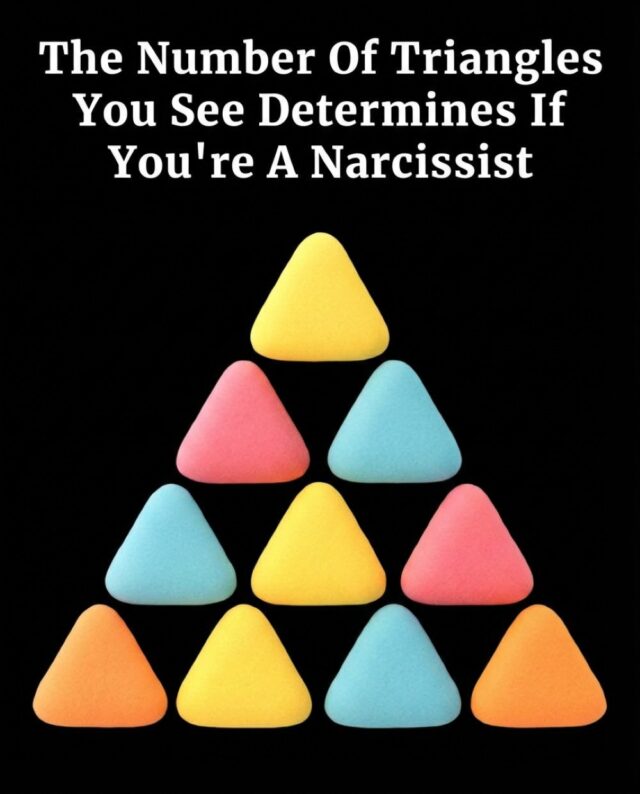
At first glance, the image looks simple: a neat arrangement of bright, colorful triangles stacked into a pyramid. But the longer you look, the more complex it becomes. Some people count only the most obvious shapes and stop at nine, while others begin spotting larger triangles formed by combining smaller ones. With a bit more attention, the total can rise into the teens or even beyond twenty. This simple visual challenge has spread widely online because it invites people to slow down and question their first impression, proving that what we see is often influenced as much by perception as by logic.

The reason this puzzle fascinates so many people lies in how the human brain processes patterns. Psychologists often explain this through Gestalt principles, which describe our natural tendency to see whole forms rather than isolated parts. When faced with the triangle image, some viewers focus on individual pieces, while others instinctively group shapes together into larger patterns. Neither approach is right or wrong; they simply reflect different ways of organizing visual information. In everyday life, this same process helps us make quick decisions, recognize faces, and understand complex scenes without consciously analyzing every detail.

People who count a smaller number of triangles usually pay attention to what is immediately visible. This suggests a practical and grounded mindset, one that values clarity and straightforward information. Those who arrive at a mid-range number often balance detail with context, noticing connections without losing sight of the overall structure. Viewers who spot a very high number of triangles tend to enjoy exploring possibilities and looking beyond the obvious. They may naturally experiment with ideas, imagine alternative interpretations, and enjoy creative problem-solving. These tendencies are best seen as preferences, not labels, and they can shift depending on mood, experience, or even how much time someone spends examining the image.

Ultimately, visual puzzles like this are meant to be fun, not definitive tests of character or intelligence. They offer a lighthearted way to reflect on how differently people can experience the same thing. Whether you noticed a handful of triangles or dozens, the exercise highlights an important truth: perception is personal. Our brains constantly interpret the world based on habits, expectations, and curiosity. That diversity of perception is what fuels creativity, discussion, and discovery, reminding us that even the simplest shapes can reveal how wonderfully varied human thinking can be.

When a Holiday Tradition Changed, We Had an Honest Conversation

Every year me and my husband host a Fourth of July BBQ at our place. It’s a tradition that grew naturally over time—something we both looked forward to as summer arrived. I handled the decorations, side dishes, and desserts, while he took charge of the grill and fireworks. Family from both sides would come by, along with a few neighbors, and the backyard would fill with laughter, folding chairs, and familiar stories retold under string lights. That rhythm felt like ours, a small but meaningful way to celebrate togetherness. So when he suggested, casually and without much thought, that this year he wanted a “guys-only” barbecue at our house, it caught me off guard. I tried not to show how much it stung. Wanting space is normal, I told myself. Still, the house felt oddly quiet as I packed an overnight bag and went to stay with my parents, leaving behind a few homemade dips in the fridge as a quiet peace offering.

At first, the evening passed uneventfully. My parents’ house was calm, familiar, and safe, yet my thoughts kept drifting back to the glow of our backyard and the sound of fireworks I wasn’t there to hear. I reminded myself that relationships change, traditions shift, and compromise matters. Then, a few hours in, my phone buzzed. It was a message from our neighbor, Claire—polite, hesitant, and clearly uncomfortable. She asked if I was aware of what was happening at our place and attached a photo. I stared at the screen longer than I meant to, my heart beating faster, not from anger but from confusion. The image didn’t show anything inappropriate—just a backyard far more crowded than expected, filled with people I didn’t recognize, including several women I’d never met.

After the initial surprise faded, something else took its place: clarity. This wasn’t about a party getting out of hand or broken rules. It was about communication. The issue wasn’t who was there—it was that I hadn’t been included in the decision or the truth. I didn’t rush home or confront anyone that night. Instead, I sat quietly and thought about how easy it is for small misunderstandings to grow when left unspoken. Traditions aren’t just events; they’re agreements built on shared expectations. When those expectations change, the way we talk about it matters more than the change itself.

The next morning, we talked. Not loudly, not defensively, but honestly. He admitted he hadn’t thought through how his words would land or how excluding me—even unintentionally—might feel. I shared how the situation made me question whether “ours” still meant what I thought it did. We listened, really listened, and by the end of the conversation, nothing dramatic had happened—but something important had. We reset. Traditions can evolve, but respect has to stay constant. That Fourth of July didn’t end our marriage or spark a dramatic turning point. Instead, it reminded us that the strongest relationships aren’t built on perfect moments, but on the willingness to pause, reflect, and choose each other again—clearly, and together.

Everyday Phone Buttons and the Features Many People Overlook

The volume buttons on your phone aren’t just for sound. Most people tap them dozens of times a day without giving them a second thought, assuming their only job is to make music louder or silence an incoming call. In reality, those slim buttons along the side of your phone are quietly doing far more than you realize. Designed for convenience, they have become shortcuts that can save time, improve accessibility, and even help in moments when speed matters. Understanding what they can do transforms an everyday habit into a smarter way to use the device already in your hand.

Beyond controlling audio, volume buttons often act as quick-access tools for common actions. On many smartphones, pressing them while the camera app is open works as a physical shutter button, making it easier to take steady photos without awkward screen taps. In other situations, they can help you zoom in or out, scroll through images, or quickly silence alerts without unlocking the phone. These small features may seem minor, but together they reduce friction and make everyday interactions smoother, especially when you’re multitasking or using your phone with one hand.

Accessibility is another area where volume buttons quietly shine. For users who rely on assistive features, these buttons can activate screen readers, adjust text-to-speech volume, or trigger emergency functions when pressed in specific combinations. Some devices allow users to customize what happens when the buttons are pressed multiple times in a row, such as launching a health or safety feature. This thoughtful design means that help or essential tools can be reached quickly, without navigating menus or searching through settings in a stressful moment.

Ultimately, the hidden value of volume buttons reflects a broader truth about modern technology: many of the most useful features are the ones we overlook. Learning how your phone’s physical controls work gives you more confidence and control over your device. It also encourages a more intentional relationship with technology, where convenience serves you instead of distracting you. The next time your fingers instinctively reach for those buttons, remember they’re not just changing the sound—they’re offering simple, practical ways to make everyday digital life a little easier.

A Quiet Moment That Redefined My Path Forward

I never imagined I would be sitting across from the wife of the man who had promised me a future. When her call came, my heart raced with fear and guilt, yet I agreed to meet because avoiding the truth felt worse. We chose a quiet café on a cloudy afternoon, a neutral place that seemed to soften the weight of what we were about to face. She arrived with her children, and instead of anger, I saw exhaustion in her eyes—the kind that comes from carrying too much for too long. The children stayed close to her, polite and observant, and I became deeply aware of my own vulnerability and the life I was carrying. The silence between us felt overwhelming, heavier than any accusation could have been.

What I didn’t expect was for her daughter, no older than ten, to speak first. She looked at me calmly and asked, “Are you scared too?” The question caught me off guard, not because it was unkind, but because it was honest. I nodded instinctively, realizing in that moment how much fear we all shared, even if it looked different for each of us. The girl explained that she had heard quiet arguments at night and sensed uncertainty long before adults tried to hide it. She wasn’t upset, she said—just confused. Her words changed the atmosphere completely, shifting it away from blame and toward understanding, as if truth itself had decided to sit with us.

Her mother spoke next, and her voice was steady, not confrontational. She explained that her marriage was ending, but not in the simple, dramatic way I had been led to believe. There were years of shared history, responsibilities, and children whose lives would be shaped by every decision made from that point forward. She wasn’t there to negotiate or to demand explanations. She wanted honesty, clear boundaries, and time—time to help her children adjust and to rebuild a sense of stability. Listening to her, I felt something settle inside me. The promises I had clung to suddenly seemed fragile, overshadowed by the reality of lives already deeply connected.

When we finally left the café, there were no raised voices or tidy conclusions. Yet, I walked away with a clarity I hadn’t had before. I understood that my future could not rest on promises made in uncertainty or on choices that caused quiet harm to others. The child’s question echoed in my mind long after the day ended. Yes, I was scared—but I was also responsible. Responsible for choosing honesty over hope built on illusion, and compassion over resentment. That meeting didn’t resolve everything, but it redirected my path. Sometimes the most powerful truths come not from those who create confusion, but from those learning to navigate it with courage and grace.

An Ordinary Notification With an Extraordinary Meaning

The notification came quietly, the way ordinary things do, and that was what made it unbearable. Eight days had passed since the funeral, eight days of learning how silence could have weight. When the charge appeared from the joint bank account—a car rental, of all things—it felt like a hand reaching out from a sealed room. Grief turned instantly into panic. I drove to the rental office on instinct alone, carrying her photo on my phone like proof against a mistake. I told myself there had to be an error, a delayed transaction, some boring explanation that would collapse under logic and let the world return to its rules.

The clerk listened politely at first, the way people do when they expect to apologize. But when I showed him her picture, his face changed. Not shock exactly—something slower and heavier, like recognition arriving where it shouldn’t. He leaned back, eyes flicking toward the office door behind him, then back to me. “This woman was here,” he said quietly. “She didn’t seem confused. She knew what she was doing.” He added details I hadn’t asked for: the time of day, the way she smiled when handed the keys, the destination she mentioned in passing. Each word landed wrong, as if reality itself had misfiled a memory.

I left without arguing, because there was nothing left to say. Outside, the afternoon went on with embarrassing normality. People laughed, traffic flowed, the sky kept its calm blue. I sat in my car and stared at the steering wheel, realizing that certainty can fracture without making a sound. Maybe the clerk was mistaken. Maybe grief had sharpened my fear into something theatrical. Or maybe the truth wasn’t dramatic at all, just unfinished. My wife had always believed that some doors don’t close when we think they do, that life leaves echoes behind when we’re not paying attention.

That night, I didn’t chase explanations. Instead, I opened old messages, reread notes she’d left on grocery lists, listened to voicemails I’d saved without reason. The charge was still there, unchanged, but it no longer felt like an accusation. It felt like a question. I understood then that closure isn’t a locked box you put things into; it’s a choice you make each day. Whether the clerk was right or wrong didn’t matter as much as this: love doesn’t vanish on schedule. Sometimes it lingers, sometimes it startles you, and sometimes it reminds you that the story you thought had ended may simply be learning how to speak in a different way.

How Color Preferences Can Reflect Your State of Mind

When you look at an image filled with many different colors, your attention almost always settles on a few shades first. This happens naturally and doesn’t mean there is any kind of test result or psychological evaluation involved. Instead, it can be viewed as a gentle reflection of what is already present in your thoughts and emotions. Colors are closely tied to everyday experiences, memories, and moods, so noticing which ones stand out can offer a quiet moment of self-awareness. By simply observing your visual preferences, you give yourself a chance to better understand how you’re feeling without pressure or judgment.

Often, the colors that catch our eye are connected to what we are emotionally drawn toward at that moment. Warm tones such as yellow, red, or orange may feel appealing when you are seeking energy, encouragement, or a sense of positivity. On the other hand, cooler shades like blue, green, or purple might stand out when you are craving calm, balance, or mental clarity. This doesn’t suggest that something is missing or wrong in your life. Instead, it highlights where your attention and emotions are gently focused right now. Color preferences can simply act as visual reminders of what feels supportive or comforting to you in the present.

Paying attention to the first few colors you notice can also reveal different layers of your current mindset. One shade might represent responsibilities or pressure you’ve been managing, while another may point to a desire for rest or emotional space. A third color could reflect curiosity, creativity, or hope for something new. These observations don’t require analysis or interpretation in a strict sense. Rather, they encourage you to pause and ask yourself simple questions: How am I feeling today? What has been on my mind lately? What do I need more of right now? This kind of reflection can help you reconnect with yourself in a thoughtful and meaningful way.

At its core, this color-focused exercise is about mindfulness and self-check-in. It invites you to slow down, notice your reactions, and acknowledge your inner state with kindness. If a particular color stood out to you, consider it a small prompt to reflect rather than a message to decode. Whether it inspires you to seek relaxation, motivation, creativity, or connection, awareness is always a helpful first step. Sometimes, noticing something as simple as a color is enough to remind you to listen to yourself, care for your emotional well-being, and move through your day with a little more intention.

UPDATE! SAD NEWS ABOUT TERRY BRADSHAW!

Terry Bradshaw has spent most of his life in the public eye as a champion quarterback, a Hall of Famer, and a familiar voice on NFL broadcasts. What he kept private until recently was one of the toughest battles he has ever faced—one that had nothing to do with football, stadiums, or scoreboards. Over the past year, Bradshaw quietly fought two separate cancers: bladder cancer and Merkel cell carcinoma, a rare and aggressive form of skin cancer. Today, he says he is cancer-free.

The revelation surprised many fans, not because Bradshaw lacks toughness, but because of how completely he carried on as if nothing was wrong. While viewers saw the same humor, energy, and confidence on television, behind the scenes he was navigating diagnoses, treatments, surgeries, and the constant uncertainty that comes with a cancer fight. It was a season of life defined not by wins and losses, but by resilience, patience, and faith.

Bradshaw has never been one to dramatize adversity. When he spoke about his experience, he did so plainly. The treatments were hard. The waiting was harder. There were moments of fear and exhaustion that tested him in ways football never did. But he credits a strong medical team, early detection, and the unwavering support of family and friends for carrying him through. He also leaned heavily on his faith, which he says gave him clarity and steadiness when the path ahead felt unclear.

Bladder cancer was the first diagnosis. It required treatment and monitoring, and just as Bradshaw was working through that process, doctors discovered Merkel cell carcinoma on his neck. Unlike more common skin cancers, Merkel cell carcinoma is rare, fast-moving, and potentially deadly if not treated early. Bradshaw underwent surgery and radiation. The physical toll was real, and so was the mental weight of facing a second cancer before fully putting the first behind him.

Despite it all, Bradshaw kept showing up. He continued working. He continued laughing. He continued being the Terry Bradshaw fans have known for decades. What people did not see were the long days of recovery, the medical appointments, and the quiet moments where optimism had to be a choice rather than a feeling. He has since said that he did not want sympathy or headlines while he was still in the middle of the fight. He wanted to focus on getting better.

When Bradshaw finally shared his story publicly, the response was immediate and overwhelming. Fans from every generation reached out with messages of encouragement, gratitude, and respect. Fellow athletes and broadcasters praised him not just for surviving, but for his honesty and composure. Many said his story gave them courage to face their own health struggles or to finally schedule checkups they had been putting off.

One recurring theme in the reactions was admiration for Bradshaw’s refusal to let illness define him. He never presented himself as a victim. Instead, he framed the experience as a reminder that life is fragile and time is not guaranteed, even for those who seem larger than life. He encouraged people to pay attention to their bodies, to take symptoms seriously, and to understand that early detection can save lives.

Bradshaw’s message landed because it was real. There was no motivational spin, no forced positivity. He acknowledged the fear. He acknowledged the difficulty. But he also emphasized gratitude—gratitude for modern medicine, for skilled doctors, for family, and for the chance to keep living a full life. He spoke about how illness strips away distractions and leaves you with what truly matters.

Those close to Bradshaw say the experience deepened him. The jokes are still there, the charisma unchanged, but there is a quieter perspective underneath it all. Friends describe him as more reflective, more appreciative of ordinary moments. Winning Super Bowls brought pride. Beating cancer brought humility.

Now cancer-free, Bradshaw is focused on recovery and moving forward. He plans to continue his broadcasting career and remain active, but with a renewed sense of purpose. He has said he wants to use his platform to raise awareness about cancer screenings and preventive care, particularly for men who often avoid doctors until something is seriously wrong. If sharing his story convinces even one person to get checked early, he considers it worth it.

Bradshaw’s journey is not a story of invincibility. It is a story of vulnerability handled with strength. It is a reminder that no amount of fame, success, or physical toughness makes someone immune to illness. Champions get sick. Legends struggle. What matters is how they respond when the fight is no longer public and the stakes are deeply personal.

In a career filled with dramatic comebacks and iconic moments, this chapter stands apart. There were no crowds cheering, no trophies at the end, no highlight reels. Just a man confronting his mortality and choosing to keep going. Choosing hope. Choosing trust in others. Choosing to believe that life after cancer could still be meaningful and full.

Bradshaw has said that you never know what life will throw at you, but you can choose how to face it. His choice was not denial or bitterness, but courage grounded in realism. He did the work. He endured the treatments. He accepted help. And now, on the other side, he speaks with the authority of someone who has been tested in the most personal way possible.

For millions who grew up watching him play and later listening to him on Sundays, this story adds depth to the legend. Not because it is tragic, but because it is human. It shows that strength is not about never being afraid. It is about moving forward even when you are.

Terry Bradshaw’s cancer battle did not happen under stadium lights, but it may be one of the most meaningful victories of his life. He emerged not just cancer-free, but grounded, grateful, and determined to make the time ahead count.

Reports here, unbelievable earthquake with large magnitude tsunami warning just!

Late Wednesday night, the ground beneath southern Alaska reminded everyone how fragile normal life can be. At approximately 10:15 p.m. local time, an immense 8.2-magnitude earthquake struck offshore, roughly 75 miles southeast of Chignik. Within minutes, tsunami warnings and watches rippled across the Pacific, stretching from coastal Alaska to as far as Hawaii. For a tense stretch of hours, millions waited, watched, and wondered whether the night would end in catastrophe.

According to the U.S. Geological Survey, this was the most powerful earthquake to strike the United States in half a century. The shaking was felt across vast distances, including Kodiak Island and large portions of the Alaska Peninsula, as confirmed by the Alaska Earthquake Center. While the tsunami threat was ultimately lifted, the psychological impact of the event lingered long after the ground stopped moving.

As alerts lit up phones and sirens began to wail, residents in Kodiak reacted immediately. People evacuated homes and businesses, moving quickly toward higher ground and designated shelters. Schools opened their doors. Streets filled with hurried footsteps and headlights cutting through the dark. For many, muscle memory took over—Alaska lives with earthquakes, but this one felt different.

Homes rattled violently. Lodges, cabins, and campgrounds shook. Objects crashed to the floor. In some areas, the motion was so intense it felt less like trembling and more like being lifted and rolled by invisible waves.

On Woody Island, a short boat ride from Kodiak, Questa Harper was ending her day at Camp Woody, where she works as a caretaker. Sitting in a rocking chair, she initially thought the movement was her own doing. The chair felt as though it was sliding sideways instead of rocking normally. The sensation was subtle at first, strange but not alarming—until emergency alerts began flooding phones across the camp.

Suddenly, the reality set in.

Staff quickly gathered the 69 campers on site. With no time to hesitate, they guided everyone out of the buildings and into the darkness. The group moved across the campus and up a long wooden staircase toward a hill that offered higher elevation. To keep fear at bay, staff members led the group in song as they climbed, voices steady despite the uncertainty pressing down on them.

Once on higher ground, they prepared for a long night. Sleeping bags, water, snacks, and fuel were hauled up the hill. A generator was dragged into position. Vehicles and four-wheelers were moved to safer spots. With only a limited number of cabins available, many people laid out sleeping bags under the open sky. The night, Harper later recalled, was surprisingly dry and warm, a small mercy in the middle of chaos. No one slept much. Everyone waited for the all-clear.

Hundreds of miles away, in Cold Bay, another Alaskan community felt the quake in its own way. Michael Ashley, the 21-year-old manager of the Cold Bay Lodge, was preparing to turn in for the night when the floor beneath him seemed to swell and roll.

“It felt like being on a boat,” he later said. “Like riding over a wave.” The motion continued for at least a full minute, long enough to unsettle even those accustomed to seismic activity.

Ashley quickly thought of the lodge’s most valuable items, including shelves of old Japanese glass floats—rare relics once used by fishermen to keep nets afloat. Beachcombers still find them along Alaskan shores, and Ashley had recently acquired a particularly large one. He secured what he could, but panic never fully took hold.

Earthquakes, after all, are part of life in the Aleutians.

Most of the lodge’s patrons were gathered at the bar at the time, and compared to past events, this quake didn’t feel as violent to those on site. Ashley recalled leaving the building during a previous earthquake the year before, which felt far more aggressive. Experience doesn’t erase fear, but it tempers it.

Alaska is one of the most seismically active regions on Earth. In 2020 alone, more than 49,000 seismic events were recorded in the state and surrounding areas. The Alaska Earthquake Center notes that Alaska regularly experiences some of the strongest earthquakes on the planet, including the largest and third-largest earthquakes ever recorded worldwide.

The southern stretch of Alaska, from Anchorage through the Aleutian Islands, sits along a volatile geological boundary. According to seismologist Stephen Holtkamp, the Pacific tectonic plate is constantly pushing northward, diving beneath the North American continental crust. This immense collision builds pressure over time, which is eventually released in powerful earthquakes.

Holtkamp explained that seismic activity earlier in the region likely played a role in Wednesday night’s quake. When one earthquake occurs, it can increase stress on nearby faults, raising the likelihood of additional events. That chain reaction appears to be what unfolded off Alaska’s coast.

Despite its massive magnitude, the earthquake caused surprisingly little immediate damage. One key reason was its depth. The quake occurred roughly 30 kilometers beneath the Earth’s surface. Even directly above it, communities were far enough away from the epicenter to avoid the worst structural impacts. The sparsely populated nature of the Aleutian region also limited the potential for widespread destruction.

Still, the danger was real.

At least two dozen aftershocks followed the main quake, including a significant 6.1-magnitude aftershock near the Alaska Peninsula, about 70 miles southeast of Perryville. Each tremor kept nerves on edge, a reminder that the Earth hadn’t fully settled.

For nearly two hours, the National Tsunami Warning Center maintained alerts for south Alaska, the Alaska Peninsula, and the Aleutian Islands. In Hawaii, a tsunami watch was briefly issued before being canceled a little over an hour later. The National Weather Service warned that “widespread hazardous tsunami waves are possible,” reinforcing the seriousness of the situation even as officials worked to assess the true risk.

Tsunamis are most often triggered by large earthquakes beneath or near the ocean floor. When massive sections of seabed shift suddenly, they displace enormous volumes of water, sending waves radiating outward across entire ocean basins. These waves can travel at jetliner speeds, reaching distant shores hours after the initial quake.

This time, Alaska and the Pacific were spared the worst.

The scale of the earthquake inevitably drew comparisons to history. The most powerful earthquake ever recorded in North America struck south-central Alaska in 1964, measuring 9.2 in magnitude. That quake shook the ground violently for more than four minutes, killed over 125 people, devastated Anchorage, and destroyed much of the state’s infrastructure. Its legacy still shapes Alaskan preparedness today.

Wednesday night’s earthquake didn’t reach that level of destruction, but it served as a stark reminder of Alaska’s raw geological power. For those who felt the ground roll beneath their feet, heard sirens cut through the darkness, and spent the night waiting for answers, it was an experience that won’t fade quickly.

By morning, the warnings were lifted, the shelters emptied, and life slowly resumed. But beneath the calm surface, the message was clear: in Alaska, the Earth is always moving. And when it decides to remind people of that fact, it does so without warning, without mercy, and without regard for how prepared anyone thinks they are.

More Than Jewelry: A Story of Pride, Memory, and Meaning

My stepmom wore thrift-store jewelry with pride. Her daughter mocked her, “Mom is sparkling like a cheap Christmas tree.” I remember the way my stepmom smiled anyway, fingers brushing the beads at her neck as if they were pearls pulled from a royal vault. She believed beauty wasn’t about price tags but about stories—who owned a thing before you, where it had traveled, what joy it had already witnessed. On weekends we’d visit secondhand shops together, laughing over tangled necklaces and mismatched earrings. She’d say every piece deserved another life, just like people did. Those afternoons taught me that dignity doesn’t depend on approval, and that quiet confidence can shine brighter than cruelty ever could.

After my stepmom died, the house emptied faster than grief could settle. Her daughter pushed my dad and me out with sharp words and locked doors, as if love could be evicted. I was young and had no power to argue, so I took only what fit in my bag. Tucked between sweaters was a small box of jewelry—plastic bangles, tarnished chains, and a brooch missing a stone. It wasn’t worth money, but it was worth memory. Each piece held her warmth: the clink of bracelets while cooking, the sparkle she wore to the grocery store, the quiet joy of choosing herself despite judgment. Those pieces became my anchor when everything else felt taken.

Years later, my cousin came to visit my tiny apartment. As we talked, he noticed the jewelry displayed on a simple tray by the window. He went silent, his eyes fixed on a familiar shape. Leaning closer, he whispered, “Do you even know it’s…” and stopped himself, as if the words carried weight. He explained that my stepmom had once helped his mother through a hard time, selling handmade pieces at flea markets to pay for groceries, refusing repayment. One necklace, he said, had been made from beads passed down through women in our family—symbols of resilience, not wealth. The “cheap” shine was actually a language of survival.

That night, I rearranged the jewelry with new care, not because its value had changed, but because my understanding had. I wore one bracelet the next day and felt my stepmom’s lesson settle gently on my wrist: worth is not assigned by mockery or loss. It’s claimed by meaning, by kindness carried forward. The daughter who once laughed is now only an echo, but the woman who wore joy without permission still speaks. In every glimmer, I remember that love outlasts judgment, and that even the humblest sparkle can light a way home.

What Your Birthday Can Symbolically Reflect About Your Strengths

Many people enjoy reflecting on their birthdays as more than just a date on the calendar. Across cultures and generations, there has been a long-standing curiosity about whether the day someone is born might symbolically reflect aspects of their personality or natural tendencies. While modern science does not support these ideas as factual explanations, traditions such as numerology and symbolic date interpretation continue to be popular for personal reflection. For many, these concepts are not about predicting the future, but about finding language to describe strengths, emotions, and values they already recognize within themselves. When approached thoughtfully, birthday symbolism can be a positive and enjoyable way to explore self-awareness.

Certain birth dates, especially those with repeating or mirrored numbers like April 4, July 7, October 10, or December 12, are often associated with the idea of balance. In symbolic traditions, these dates are thought to represent harmony between logic and emotion. People who resonate with these interpretations often describe themselves as calm under pressure, thoughtful in decision-making, and capable of seeing multiple perspectives at once. While these qualities are not caused by the date itself, reflecting on them can encourage individuals to value patience, emotional stability, and clarity. These traits are commonly admired in leadership, teamwork, and everyday relationships, making the symbolism appealing even when viewed purely as inspiration.

Other dates are traditionally linked with specific personal strengths. For example, those born on the 1st of any month are often associated with independence and initiative, reflecting a comfort with leadership and originality. Birthdays on the 2nd are commonly connected with empathy, cooperation, and emotional awareness, qualities that support strong communication and trust. The 5th is frequently described as symbolic of curiosity and adaptability, appealing to people who enjoy learning and change. Meanwhile, the 16th is often linked with introspection and thoughtful analysis, suggesting a balance between intellect and intuition. These interpretations are not meant to limit or define anyone, but rather to provide a creative framework for self-reflection.

Some dates hold special significance in numerological traditions due to their symbolic meaning. The 22nd is often referred to as a “master number,” representing the ability to turn ideas into meaningful results through discipline and long-term focus. The 25th is commonly associated with analytical thinking paired with emotional depth, encouraging both problem-solving and strong personal connections. February 29, the Leap Day birthday, stands out for its rarity and is often symbolized as a celebration of uniqueness and creativity. Ultimately, whether or not someone believes in numerical symbolism, exploring birthday meanings can serve as a gentle reminder that everyone brings different strengths and perspectives into the world. Used thoughtfully, these ideas can promote confidence, appreciation, and a deeper understanding of personal growth.

Popular

A Mother’s Love: Vienna’s Journey with a Birthmark

0
Love compels parents to do extraordinary things for their children’s well-being. Celine Casey, a British mother, took remarkable steps to ensure her daughter Vienna’s...