Entertainment

Winter Olympics Athlete Sent Home After Breaching Team Regulations

An athlete competing at the 2026 Winter Olympic Games has reportedly been sent home after violating team and competition regulations, bringing unexpected controversy to what has otherwise been an exciting tournament. This year’s Games, hosted across Milan and Cortina, have attracted global attention, with athletes from around the world delivering memorable performances and fierce but fair competition. Norway currently tops the medal standings with an impressive haul of gold, silver, and bronze medals, while host nation Italy follows closely behind with strong results of its own. Team Great Britain has also celebrated success, earning gold medals in several events thanks to standout performances from its athletes.

Despite the celebratory atmosphere surrounding the Games, reports surfaced on Tuesday that a member of the French ice hockey team had been removed from the tournament following an on-ice incident. According to media coverage, French player Pierre Crinon became involved in a heated exchange during a match against Canada. Tensions reportedly escalated during the game after physical contact between players, leading officials to intervene before the situation could worsen. Olympic ice hockey rules strictly prohibit fighting, emphasizing player safety and sportsmanship throughout competition.

During the exchange, Crinon allegedly pushed Canadian player Tom Wilson to the ice amid growing tensions that had begun moments earlier. Officials quickly stepped in, removing both players from the game to restore order. However, French team officials later decided to take additional disciplinary action, reportedly sending Crinon home from the tournament. The decision underscored how seriously teams and governing bodies treat conduct during international events, particularly when athletes represent their countries on such a global stage.

In an official statement, the French Ice Hockey Federation emphasized that players wearing the national jersey are expected to uphold strong values, including respect, discipline, and responsibility. The organization stated that behavior conflicting with the Olympic spirit and the core principles of the sport could not be overlooked, especially during such a high-profile event. As a result, Crinon will not participate in the remaining Olympic matches. The situation serves as a reminder that while competition can become intense, maintaining respect and sportsmanship remains central to the Olympic experience, ensuring the focus stays on athletic excellence and unity among nations.

Community Mourns Young Cheer Athlete Following Tragic Incident During Competition Trip

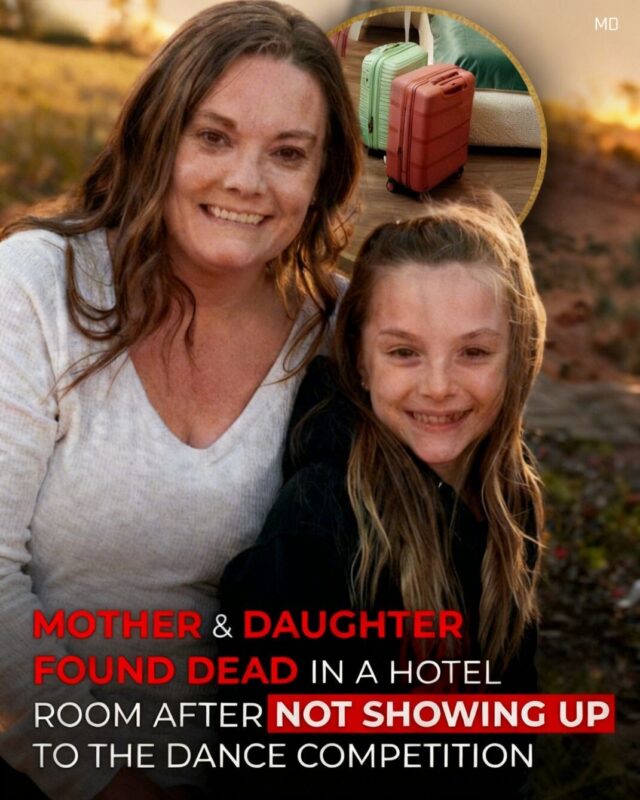
A trip to Las Vegas for a youth cheerleading competition has turned into a heartbreaking story for families and communities in both Utah and Nevada. Tawnia McGeehan had traveled with her 11-year-old daughter, Addi Smith, to attend the event, where Addi was expected to compete with her team from Utah Xtreme Cheer. When the pair failed to appear at the competition, coaches and family members quickly grew concerned. The team reported them missing, prompting authorities to conduct a welfare check at the hotel where they were staying.

Police officers responded to the hotel after receiving reports from worried relatives and team representatives. When repeated attempts to contact the occupants of the room were unsuccessful, hotel security later entered the room and discovered the mother and daughter deceased. Authorities described the incident as a tragic situation and stated that an investigation remains ongoing as officials work to fully understand what happened. Law enforcement also expressed condolences to the family and community affected by the loss.

Addi was remembered by coaches and teammates as a bright and encouraging presence within the cheer program. According to gym owner Kory Uyetake, she often helped motivate teammates and brought positive energy to practices and competitions. The cheer organization later shared a tribute honoring her memory and expressing support for the family and teammates who are coping with the loss. Many parents and athletes connected to the program have since shared messages highlighting how much Addi’s kindness and leadership meant to those around her.

In the days following the incident, attention has also turned toward supporting Addi’s father and extended family as they navigate an extremely difficult period. A fundraising campaign organized by family members aims to help with funeral expenses and provide assistance as they grieve. Community members, friends, and supporters have responded with messages of sympathy and donations, showing how deeply the young athlete touched people’s lives. Authorities have not yet released further details, and the investigation continues. For those who knew Addi best, she is remembered as a young girl who encouraged others, supported her teammates, and brought warmth and enthusiasm wherever she went β€” a legacy that her cheer community says will not be forgotten.

Snoop Dogg’s Restaurant Visit Turns Into a Heartwarming Winter Games Moment

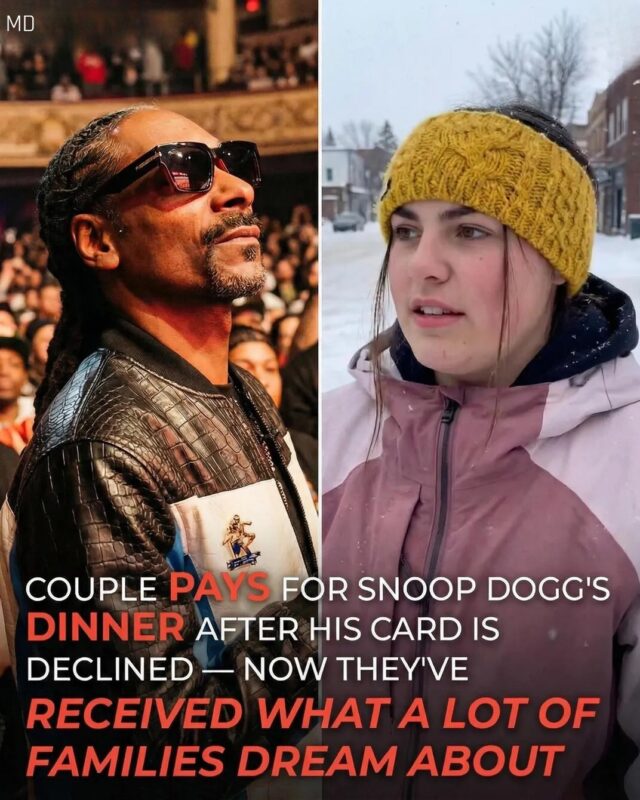
A routine takeout stop in northern Italy turned into a memorable moment during the excitement surrounding the Winter Games when entertainer Snoop Dogg visited a small local restaurant while working with NBC’s Olympic coverage team. Taking a break from his busy schedule in Livigno, he stopped in to order a simple meal, choosing familiar favorites like a cheeseburger, chicken wings, nuggets, and fries. Nothing about the visit seemed unusual at first, but an unexpected issue at checkout soon created a situation that neither the restaurant staff nor the famous guest anticipated.

When members of Snoop Dogg’s team attempted to pay for the order, the card transaction repeatedly failed to process. Despite several attempts, the payment would not go through, creating what could have become an uncomfortable moment during a busy evening service. Instead, the restaurant owners calmly reassured the group that it was not a problem and allowed the meal to go ahead without immediate payment. For the family-run business, the gesture was simply an example of everyday hospitality β€” trusting that the situation would work itself out rather than making a guest feel uneasy.

The story, however, did not end there. The following day, the restaurant owners received an unexpected thank-you. In appreciation for their kindness, Snoop Dogg arranged for the family to receive tickets to attend one of the most anticipated events of the Winter Games β€” the men’s snowboard halfpipe final. For the owners, who had simply shown patience during a small payment inconvenience, the invitation turned into an unforgettable experience and one of the highlights of the international sporting event happening in their region.

Beyond this friendly exchange, Snoop Dogg’s presence at the Games reflects another step in his evolving career, blending entertainment, sports coverage, and support for Team USA athletes. Over the years, he has often spoken about the unexpected directions his life has taken, making moments like this feel even more meaningful. What began as a minor payment issue ultimately became a reminder that simple acts of kindness often return in surprising ways. In Livigno, a brief restaurant visit became a story shared far beyond the town itself, highlighting how generosity and goodwill can create lasting memories during even the busiest global events.

Friends Share Memories of Nancy Guthrie’s Final Days Before Her Disappearance

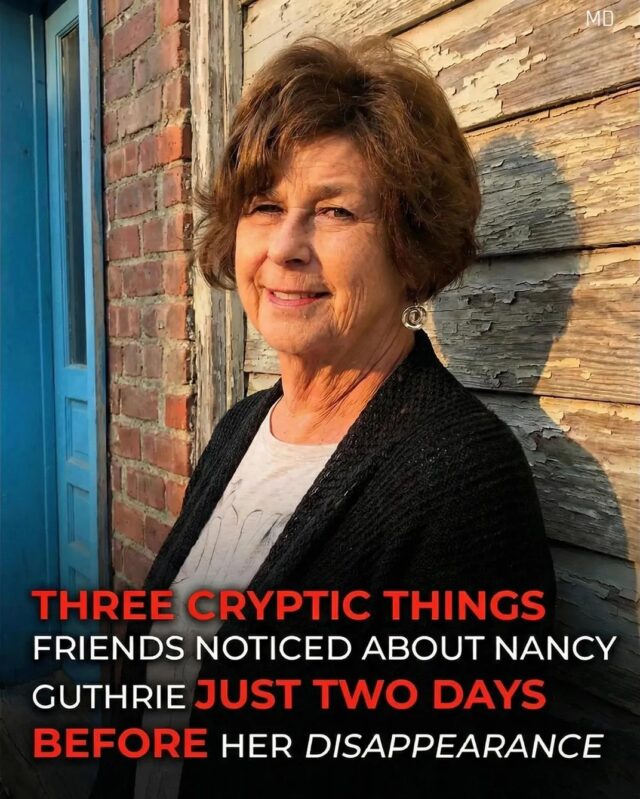
Just days before her disappearance, Nancy Guthrie was enjoying the familiar routines that had long defined her social life. Friends recall her laughing around the mahjong table, making plans, and welcoming visitors with her usual warmth. Nothing about those final gatherings suggested that they would soon become cherished last memories. On a chilly January afternoon, Nancy sat comfortably at home with friends she had once taught to play the game, sharing stories and laughter as a fireplace crackled nearby. Her relaxed mood and lively spirit reflected the strong friendships she had maintained throughout her years in Tucson.

Plans were already set for the coming weekend. Nancy confirmed arrangements to join friends for their usual Sunday gathering, where they would watch a recorded church service and share communion together, a tradition she rarely missed. When she failed to arrive, concern quickly spread among her circle. Calls and messages went unanswered, prompting her family to check on her home, only to find it empty. The unexpected silence left loved ones worried and searching for answers. What had begun as an ordinary weekend soon turned into a troubling situation that drew attention across the community.

In the days leading up to her disappearance, Nancy had been celebrating her birthday with close friends and family. One friend left balloons and treats at her door, while others prepared favorite meals and desserts to mark the occasion. Just one evening before she vanished, Nancy shared dinner and games with her daughter and son-in-law, enjoying the simple comfort of family time. Those close to her now reflect on those moments, remembering her welcoming smile and the kindness she showed everyone who visited. Even as she faced some health challenges in recent years, Nancy remained active, attended book club meetings, played online word games, and continued to enjoy social connections.

Investigators later focused attention on footage recovered from a camera installed at Nancy’s home, originally set up simply to observe wildlife in the surrounding desert. Authorities released images showing a masked individual approaching the property, leading to new investigative leads. Experts note that certain technical circumstances may have helped preserve crucial video evidence. Law enforcement officials continue working to determine what happened, emphasizing that information will be shared as developments occur. For Nancy’s friends and family, hope remains that the investigation will bring clarity while honoring the memory of a woman remembered for her warmth, independence, and enduring friendships.

At A Pennsylvania Event Trump Was Shot In The Ear But His Campaign Claims He Is Okay!

The political landscape of the United States was irrevocably altered on a humid Saturday afternoon in Butler, Pennsylvania, when an assassination attempt was made on President Donald Trump. This event, occurring just days before he was set to formally accept the Republican nomination for a third time, sent shockwaves across the globe and sparked an immediate national security crisis. The rally, held at a local agricultural fairground, was intended to be a high-energy gathering of supporters in a key swing state; instead, it became the site of the most significant act of political violence against a major presidential candidate in decades.

The atmosphere at the rally was initially one of typical campaign fervor. Thousands of attendees had gathered to hear the former president speak, many having waited for hours in the summer heat. However, the routine of the political event was shattered by the sharp, rhythmic crack of gunfire. As the first shots rang out, a flurry of panic swept through the crowd. Eyewitnesses described a moment of chilling confusion before the reality of the situation set in. On stage, Donald Trump was seen reaching for the side of his head before ducking behind the podium as Secret Service agents, trained for such a catastrophic breach, swarmed him in a human shield.

In the harrowing moments that followed, the world watched as a bloodied Trump was hoisted to his feet by his security detail. Despite the evident injury to his right ear and the streaks of blood across his face, the former president paused before being hustled to his armored SUV. In a moment that has already become an indelible image in American political history, he pumped his fist defiantly toward the crowd, shouting the word β€œFight” as his supporters transitioned from screams of terror to chants of β€œU-S-A.” This display of resilience was a calculated signal of strength to his base, even as the gravity of the security failure began to settle in.

In the immediate aftermath, Trump’s campaign team released a statement confirming that the former president was β€œfine” and was being checked at a local medical facility. Trump later took to social media to provide a first-hand account of the experience, describing the terrifying sensory details of the attack. He recounted hearing a β€œzipping sound” and feeling the β€œbullet ripping through the skin” of the upper portion of his right ear. He noted that the immediate and heavy bleeding made him realize the severity of the situation instantly. This direct communication served to stabilize his supporters and clarify the nature of his injuries while the nation awaited further details from law enforcement.

The tragedy of the day extended beyond the attempt on the former president’s life. The gunfire directed at the stage inevitably struck members of the audience. Officials confirmed that one attendee was killed in the crossfire, while two others suffered serious, life-threatening injuries. The victims were later identified as men who had come to the rally to participate in the democratic process, only to be caught in a moment of extreme violence. The Secret Service confirmed that their counter-sniper teams acted swiftly once the threat was identified, neutralizing the gunman at the scene. The death of the suspect brought an end to the immediate threat but left a void of unanswered questions regarding his radicalization and the logistical failures that allowed him to gain a clear line of sight to the podium.

The political ramifications of the Butler shooting are profound. Coming so close to the Republican National Convention, the event fundamentally shifted the tone of the election cycle. While political rhetoric in the United States has been increasingly polarized, the actual manifestation of such violence forced a momentary, if fragile, pause in the vitriol. Leaders from across the political spectrum, including President Joe Biden and high-ranking Democrats, issued statements condemning the attack and emphasizing that there is no place for political violence in America. However, the event also ignited a fierce debate regarding the safety of political figures and the effectiveness of the agencies tasked with their protection.

In the days following the event, the focus shifted to the β€œButler Farm Show” grounds, where investigators painstakingly reconstructed the scene. Questions arose about how a gunman could gain access to a rooftop within 150 yards of the stageβ€”a distance well within the range of a standard rifle. Local law enforcement and the Secret Service faced grueling inquiries regarding the coordination of the security perimeter and the communication between different tactical units. This security breach is expected to lead to a complete overhaul of protective protocols for high-profile political events, especially as the country moves deeper into a contentious election year.

The image of Trump’s bloodied face and raised fist has become a powerful symbol for his campaign, likely to be used as a rallying cry for his supporters throughout the remainder of the race. For many, it solidified his image as a fighter who is willing to endure physical danger for his cause. Conversely, for critics and those concerned with the stability of the nation, the event served as a dark reminder of the volatility currently inherent in American society. The assassination attempt has not only impacted the trajectory of the 2024 election but has also forced the American public to confront the escalating tensions that lead to such desperate and violent acts.

As the investigation into Thomas Matthew Crooks continues, the nation remains on edge. The FBI has stated that while the shooter acted from an elevated position, they are still searching for any potential co-conspirators or ideological influences that may have guided him. The search of his home and vehicle yielded further evidence, but the β€œwhy” behind the act remains the most elusive piece of the puzzle. For now, the town of Butler is left to heal from a day that started as a celebration of political engagement and ended in a tragedy that nearly changed the course of history. The resilience of the survivors and the memory of the fallen attendee stand as a testament to the high stakes of the current American moment, as the country grapples with how to move forward from a Saturday that will never be forgotten.

Lucille Ball Didn’t Just Love Lucy β€” She Also Loved Star Trek

While many people remember actor, comedian, producer, and studio executive Lucille Ball for her time playing wacky housewife Lucy Ricardo on the classic CBS sitcom β€œI Love Lucy,” she also played a massive role in shaping the future of television behind-the-scenes. Along with her then-husband, Desi Arnaz, Lucille Ball created the television production company Desilu, which would produce a number of shows throughout the 1950s and 1960s, including β€œI Love Lucy,” β€œThe Untouchables,” β€œMission: Impossible,” β€œThe Lucy Show,” β€œStar Trek,” and β€œWestinghouse Desilu Playhouse,” which had an episode that ended up serving as the pilot episode of the TV classic β€œThe Twilight Zone.”Many of the shows were developed under Ball’s guidance alone, as she and Arnaz divorced in 1960 and in 1962 she bought him out and became sole president of the company.

During her tenure as president of Desilu, Lucille Ball championed β€œStar Trek” time and again. She allegedly helped finance a reshoot of the controversial pilot so that NBC might reconsider not picking up the series, and even ended up eventually selling the company in part in order to try and ensure the series’ continuation after budgets had exceeded her studio’s financial capabilities. Without the dedication of Lucille Ball, sitcom legend and TV production innovator, β€œStar Trek” probably never would have existed.

Lucille Ball believed in Star Trek’s potential

According to stories told by writer Marc Cushman in β€œThe Fifty-Year Mission: The Complete, Uncensored, Unauthorized Oral History of Star Trek: The First 25 Years,” edited by Mark A. Altman and Edward Gross, Lucille Ball really believed in β€œStar Trek” and did her best to get it on the air and keep it there. He elaborated:

β€œLucille Ball lost her studio because of β€˜Star Trek.’ She had gambled on the show, and you can read the memos where her board of directors is saying, β€˜Don’t do this show, it’s going to kill us.’ But she believed in it. She moved forward with it, and during the second season, she had to sell Desilu to Paramount Pictures.”

While there was probably plenty of dissent among the board of directors surrounding the financial considerations of β€œStar Trek,” it wasn’t the only series losing Desilu money, and in the 1960s, shows often had to lose money to begin with in order to establish themselves. What’s known for certain is that Ball sold Desilu to Gulf & Western Industries in 1967 in a move that would impact the world of television production forever. Not only will β€œStar Trek” get to continue, but it will be among the first shows under the new Paramount Television banner.

Star Trek’s high costs led to Lucille Ball selling the studio

Cushman went on to explain that while Lucille Ball wanted to continue to make β€œStar Trek” under Desilu, she just couldn’t afford to do so, saying that she β€œinstincts were right about β€˜Star Trek,’ that it would become one of the biggest shows in syndication ever. The problem was that her pockets weren’t deep enough. They were losing $15,000 an episode, which would be like $500,000 per episode today.” There’s just one thing: Cushman’s math is off and his numbers are, too. According to financial reports from Desilu at the time, β€œStar Trek” was actually losing them more than $28,000 per episode, while β€œMannix” somehow lost a whopping $32,000 per episode. So maybe it wasn’t entirely β€œStar Trek” that led to the sale, but it had to contribute.

Desilu was actually in good financial shape when she decided to sell Desilu to Gulf & Western for $17 million in company stock, with the most net revenue reported to shareholders in a decade, but it’s likely that she (and the board) saw the writing on the wall for these big-budget genre shows. The newly formed Paramount TV division will be a good home for shows like β€œStar Trek” and β€œMission: Impossible” because they were already much more cinematic than their television peers, and in the end it will work out incredibly well for almost everyone involved.

Lucille Ball’s sacrifice saved Star Trek (and several other shows)

Regardless of the level of Lucille Ball’s personal investment in β€œStar Trek” and β€œMission Impossible,” she was the president of Desilu and therefore the one with the most power to make or break the shows. When she eventually sold the company it meant letting go of the very last piece of her time with her ex-husband, for better or worse, which could have been a pretty big sacrifice. It’s not easy to leave behind something you built, especially if there were early fond memories to go with it.

Both β€œStar Trek” and β€œMission: Impossible” are still a part of the Paramount machine and have become massive franchises with spin-off shows and a whole slew of movies, something that might have been harder to accomplish under Desilu. Paramount has gone through plenty of its own sales, mergers, and corporate malarky over the years and is currently trying to sell to Skydance even at the cost of its long-running β€œLate Show,” so here’s hoping that these franchises continue to survive and thrive after the change, just like they did almost 60 years ago.

The Forged Reassurance: A Family Mystery Stamped in Silence

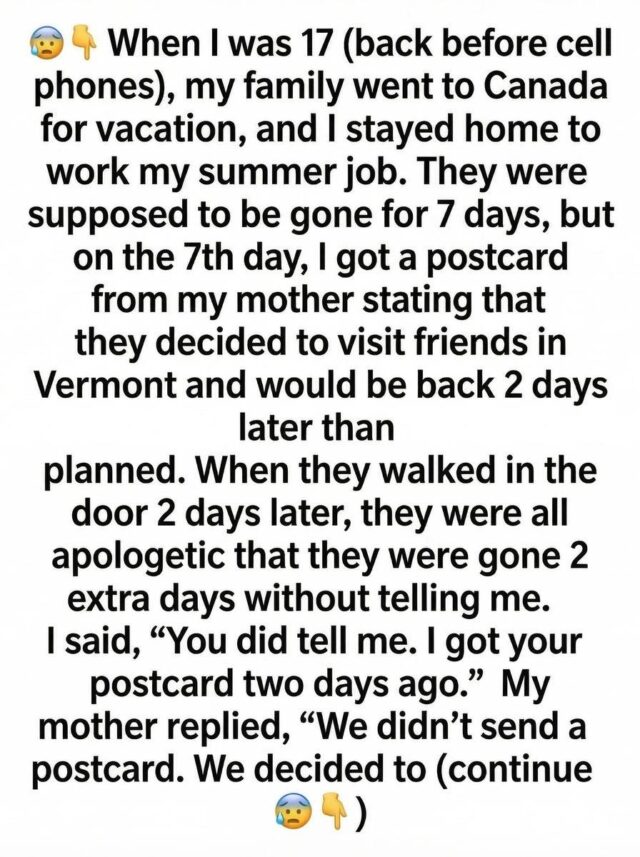
When I was seventeen, my family left for a summer trip to Canada and trusted me with the house. I told myself I was excited for the independence, but the first night made it clear how loud quiet can be. The rooms felt larger than they ever had, and time seemed to move by the sound of the clock rather than by moments. I ate alone, watched the same shows twice, and went to bed earlier than usual just to escape the stillness.

By the seventh day, the loneliness had settled deep enough that even small things felt heavy. That afternoon, a postcard slid through the mail slot.

It was from my mom.

Her looping handwriting filled the card with cheerful updates and a simple message: they had decided to take a quick two-day detour to Vermont before coming home. Nothing dramatic. Just a change of plans.

I remember the physical relief of it β€” like finally breathing out after holding air in too long. The house felt warmer. Safer. The quiet didn’t seem so endless anymore.

Two days later, they walked through the front door.

Happy. Tired. Sunburned.

When I joked about their surprise Vermont adventure and held up the postcard, the air in the room changed.

My mom stared at it slowly.

She told me she had never sent it.

They hadn’t gone to Vermont. They had driven straight back from Canada, exactly as planned.

We stood there reading it again. The handwriting was perfect. The stamp was real. The date matched.

But it wasn’t hers.

No one could explain how it got there.

There were no other strange letters. No missing mail. No clues. Just that one card β€” arriving precisely when I was most alone, saying exactly what would calm me.

That was what unsettled me most.

It wasn’t a threat.
It wasn’t a prank.

It was comfort.

Someone β€” or something β€” had noticed the gap and filled it with reassurance.

For nights afterward, I lay awake thinking about how easily I had trusted it. How quickly peace had come just because it looked familiar and sounded like love.

Over the years, I stopped searching for a concrete answer. There never was one.

What stayed with me was the quiet lesson hidden inside it.

When we’re uncertain, the mind reaches for safety wherever it appears. We accept what feels warm. We rest in what resembles care.

Sometimes comfort isn’t truth.
Sometimes it’s simply what we need in the moment.

That postcard never harmed me. It gave me two calm days in a lonely house.

Yet knowing it wasn’t real changed the way I understand reassurance.

Not everything that feels safe comes from where we think it does.

And sometimes the strangest moments in life aren’t about fear β€”
they’re about how deeply human it is to long for peace.

I never learned who sent that card.

But I learned something about vulnerability, trust, and how quietly the heart reaches for familiar light when the world feels too large and too still.

SUSPECT IDENTIFIED! Arizona police have now revealed who they believe is behind the abduction.

Arizona Authorities Announce Investigative Breakthrough in Nancy Guthrie Case

Arizona law enforcement officials have confirmed a significant development in the ongoing investigation into the disappearance of Nancy Guthrie, mother of television journalist Savannah Guthrie.

Authorities say they have identified an individual they believe may be connected to the suspected abduction. Officials described the development as an important investigative step but emphasized that the case remains active and that no final conclusions have been reached.

Person of Interest Identified β€” Investigation Continues

According to law enforcement statements, the individual is currently under investigation as detectives continue analyzing surveillance footage, forensic findings, digital data, and witness accounts.

Officials have not released the person’s name, citing the need to protect the integrity of the case and avoid compromising ongoing investigative efforts. They also clarified that identifying someone as a person of interest does not equate to a formal charge or determination of guilt.

Investigators stressed that all evidence must be carefully reviewed before any legal action is taken.

Public Attention and Responsible Reporting

The case has received widespread national attention, in part due to Savannah Guthrie’s public profile. Authorities acknowledged the heightened public interest but urged caution against speculation or online rumor.

Law enforcement continues to encourage residents and members of the public to submit credible information through official channels. Investigators noted that community cooperation can play a critical role in resolving complex cases.

Focus on Safety and Due Process

Officials reiterated that their primary priorities remain:

Determining Nancy Guthrie’s whereabouts and ensuring her safety

Preserving evidence and maintaining investigative integrity

Upholding due process for all individuals involved

Authorities emphasized that developments will be shared publicly when appropriate, and they cautioned against drawing premature conclusions while the investigation continues.

Anyone with relevant information is urged to contact local law enforcement or the FBI tip line.

The case remains ongoing, and further updates are expected as verified information becomes available.

I Lost One of My Twins During Childbirth β€” but One Day My Son Saw a Boy Who Looked Exactly Like Him

I was certain I had buried one of my twin sons the day they were born.

For five years, I carried that grief like a quiet scar beneath my skin. Then one ordinary Sunday at a playground split my world wide open.

My name is Lana. When I was pregnant, I was told from the beginning it wouldn’t be easy. By 28 weeks, I was on modified bed rest for high blood pressure. Dr. Perry kept repeating, β€œStay calm, Lana. Your body’s working overtime.”

Every night, I placed my hands on my stomach and whispered, β€œHold on, boys. Mom’s right here.”

The delivery came three weeks early. I remember bright lights, urgent voices, someone saying, β€œWe’re losing one,” and then nothing.

When I woke up, weak and disoriented, Dr. Perry stood by my bed with that careful, distant look doctors wear when they’re about to change your life.

β€œI’m so sorry, Lana. One of the twins didn’t make it.”

They placed only one baby in my arms. Stefan.

I never saw the other.

I signed forms I barely understood. A nurse guided my hand. β€œYou need to rest,” she murmured. β€œYou’ve been through enough.”

I believed them.

I never told Stefan about his twin. I told myself silence was protection. Why give a child a ghost to carry?

So I poured everything into loving him. Sunday walks became our ritual. Ducks by the pond. Sticky ice cream fingers. His brown curls bouncing as he ran ahead of me.

He had just turned five when it happened.

We were walking past the swings when he stopped so abruptly that I nearly collided with him.

β€œMom,” he said quietly.

β€œWhat is it, sweetheart?”

He was staring across the playground.

β€œHe was in your belly with me.”

My breath caught.

β€œWhat did you say?”

He pointed.

On a swing at the far end sat a little boy in a thin jacket, jeans worn at the knees. But it wasn’t the clothes that froze me in place.

It was his face.

Brown curls. The same eyebrow arch. The same narrow nose. The same habit of biting his lower lip.

And on his chin, a crescent-shaped birthmark identical to Stefan’s.

The world tilted.

β€œIt’s him,” Stefan whispered. β€œThe boy from my dreams.”

β€œThat’s nonsense,” I said automatically, though my voice sounded far away to my own ears. β€œWe’re leaving.”

But Stefan had already pulled free and run toward the boy

The two of them stood face to face, staring.

Then the other boy held out his hand.

Stefan took it.

They smiled at the same time β€” the same exact smile.

I felt dizzy.

A woman stood nearby, watching them. Early forties, guarded posture, tired eyes.

β€œI’m sorry,” I began, struggling to stay composed. β€œOur kids just look… incredibly similar.”

She turned toward me.

And I knew her.

It hit me like cold water.

The nurse.

The one who had been in my hospital room.

β€œHave we met?” I asked carefully.

A beat too long of hesitation.

β€œI don’t think so,” she replied.

β€œYou worked at St. Matthew’s,” I said. β€œFive years ago. I delivered twins.”

Her shoulders stiffened.

β€œI meet a lot of patients.”

β€œMy son had a twin,” I said. β€œThey told me he died.”

The boys were still whispering to each other, hands clasped like they had always belonged that way.

β€œWhat’s your son’s name?” I asked.

β€œEli.”

β€œHow old is he?”

β€œWhy does that matter?”

β€œBecause you’re hiding something,” I said, my voice shaking.

She glanced around the playground. β€œWe shouldn’t do this here.”

β€œYou don’t get to decide that.”

Eventually, she exhaled and motioned toward a bench.

β€œYour labor was traumatic,” she began. β€œYou lost a lot of blood.”

β€œI remember.”

β€œThe second baby wasn’t stillborn.”

Everything inside me went silent.

β€œWhat?”

β€œHe was small,” she said. β€œBut he was breathing.”

β€œYou’re lying.”

β€œI’m not.”

β€œFive years,” I whispered. β€œFive years I believed my son was dead.”

She looked at the ground.

β€œI told the doctor he didn’t survive,” she said quietly. β€œHe trusted my report.”

β€œYou falsified medical records?”

β€œI convinced myself it was mercy,” she said, tears spilling. β€œYou were unconscious. Alone. I thought raising two babies would break you.”

β€œYou didn’t get to decide that!” I shouted.

Heads turned.

β€œMy sister couldn’t have children,” she continued. β€œHer marriage was collapsing. When I saw the opportunity… I told myself it was fate.”

β€œYou stole my son.”

β€œI gave him a home.”

β€œYou stole him.”

She finally looked at me. β€œI thought you’d never know.”

I turned toward the swings. Stefan and Eli were laughing together, moving in perfect rhythm.

I felt grief. Rage. And something else β€” clarity.

β€œI want a DNA test,” I said.

She nodded. β€œYou’ll get one.”

β€œAnd then lawyers.”

The following weeks were a blur. Records pulled. Administrators questioned. Her nursing license suspended.

The DNA results were undeniable.

Eli was mine.

When I met her sister β€” Margaret β€” she was shaking. β€œI was told you gave him up,” she said. β€œI would never have taken him if I knew.”

I believed her fear.

I looked at my sons sitting on the floor together, building a tower from wooden blocks. Stefan passed Eli pieces without hesitation.

β€œI lost five years,” I said quietly. β€œBut I won’t make them lose each other.”

Margaret burst into tears.

We chose therapy. Shared custody. Honesty.

Legal consequences followed for the nurse. I left those to the system.

My focus was on my sons.

That night, Stefan climbed into my lap.

β€œAre we going to see him again?”

β€œYes,” I said. β€œHe’s your twin brother.”

He wrapped his arms around my neck.

β€œYou won’t let anyone take us away from each other, right?”

I kissed his curls.

β€œNever.”

For five years, I mourned a child who was alive. I cannot get those years back.

But I can make sure there are no more secrets.

And now, when I watch my boys run side by side, I don’t see what was stolen.

I see what was found.

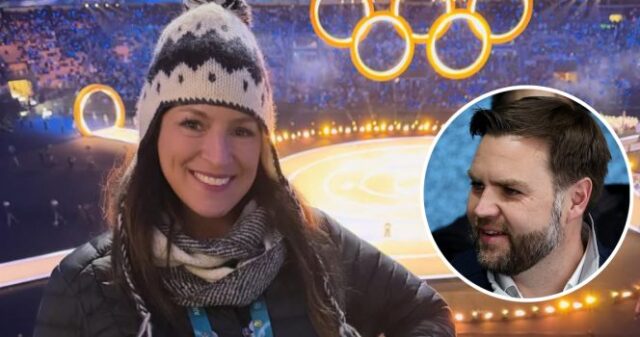
Ex-ESPN star reveals why she felt β€˜ill’ sitting next to JD Vance at Winter Olympics

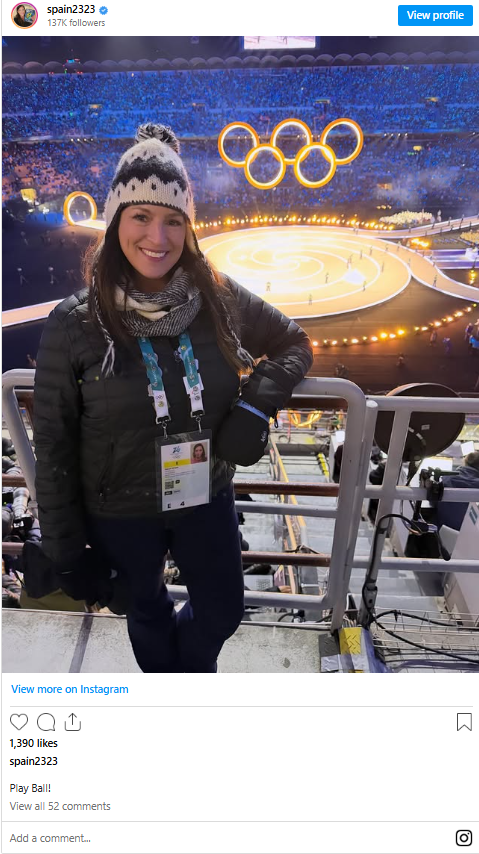
Former ESPN star Sarah Spain has opened up about her unsettling experience sitting near Vice President JD Vance at the Winter Olympics. On her podcast, the journalist recalled how she felt β€œill” when sitting next to the VP at a hockey game between Team USA and Switzerland, and how Secret Service agents destoryed her experience.

The incident happened during the opening ceremony in San Siro earlier this month, where Vance and his wife Usha were seen waving American flags.

Cameras captured the moment, but the reception wasn’t exactly warm β€” Vance was met with boos, and the scene was described as a mix of jeers and applause by CNN commentators.

One commentator said: β€œThere is the vice-president JD Vance and his wife Usha – oops, those are not … uh … those are a lot of boos for him. Whistling, jeering, some applause.”

Former ESPN journalist Sarah Spain says she felt β€œill” sitting next to JD Vance
Spain, who hosts the popular podcast Good Game With Sarah Spain, said she was just 20 metres away from Vance and Secretary of State Marco Rubio while they stayed behind after the ceremony to watch the US women’s hockey team face the Czech Republic.

Speaking on her podcast, Good Game, she recalled: β€œTwelve minutes into the first period, that area suddenly is awash with large men in suits with earpieces. And here comes JD Vance carrying a child and a bunch of security, and eventually Marco Rubio.”

She added a vivid detail that’s sure to raise eyebrows: β€œWhen I see JD Vance’s eyeliner face, I literally feel ill, like a basilisk had looked you in the eye and death was awaiting you on the other side.”

β€œI said, β€˜I feel like I just looked at a demon,’ like the devil, and I don’t even believe in that,” Spain added, stating she was in discomfort.

β€œAnd I don’t even believe in that, but my body felt like when you’ve been spooked, and you have a little tingle that feels like, β€˜ooh, something’s not right.’ That’s what my body felt like. And I was in no way prepared to see him.”

β€œIt made me so angry,”

The US team won 5-0 against the Swiss. However, Sarah Spain didn’t see it all. She claimed that she was furious over the Secret Service agents blocking her view.

β€œIt made me so angry,” she continued. β€œNot just because his f****** Secret Service were blocking half the ice.. like, we’re trying to watch a hockey game. You ruined it.”

JD Vance led the US delegation at the Olympic opening ceremony last week.

He spoke with members of Team USA ahead of the games, saying, β€œI hope you just soak it all in. I hope you win as many medals as possible, but most of all, I just hope you enjoy the experience. The whole country β€” Democrat, Republican, Independent β€” we’re all rooting for you, and we’re cheering for you, and we know you’re going to make us proud,” Vance said.

What’s your take on this? Please share your thoughts in the comment box!

Popular

The Rising Discussion About Fear of Poverty and Emotional Well-Being!

0
In the hyper-accelerated landscape of 2026, success is frequently quantified by a relentless series of visible metrics: career peaks, digital influence, and the curated...