
Entertainment

Do You Often Find Yourself Waking Up Between 3 am and 5 am?

For many, waking up between the hours of 3:00 a.m. and 5:00 a.m. feels less like a momentary interruption and more like a recurring, uninvited guest. You may have retired to bed at a reasonable hour, seeking the restorative embrace of a full night’s sleep, only to find yourself suddenly, sharply awake in the predawn stillness. The world outside is silent, but your internal world is anything but. The heart beats with a rhythmic urgency; the mind begins to navigate a labyrinth of wandering thoughts; and the blue light of the digital clock confirms the time: 3:14 a.m. Despite your best efforts to fluff the pillow and descend back into slumber, you remain suspended in a state of high-alert restlessness. By sunrise, you are left with a heavy sense of fatigue that lingers like a persistent fog, forced to navigate your day on the fumes of a fragmented night.

While it is easy to blame modern culprits like late-night caffeine or the habitual scroll of a smartphone, sleep researchers and psychologists suggest that consistent awakening during this specific window is rarely random. Instead, it represents a profound intersection of human physiology, emotional processing, and subconscious activity. This “witching hour” before the dawn is a unique period where ancient wisdom and modern science converge to reveal surprising insights into the state of our mind, body, and spirit.

Historically, this time was recognized long before the advent of sleep laboratories. In Scandinavian folklore, it was dubbed the “Hour of the Wolf”—a term popularized in the 20th century by filmmaker Ingmar Bergman. It was described as the period when nightmares feel most visceral, when the majority of births and deaths occur, and when the metaphorical veil between reality and the subconscious is at its thinnest. It is the time when the “sleepless are haunted by their deepest fears,” and the mind confronts what the distractions of daylight usually keep buried. Even in 2026, this phrase resonates because it accurately captures the strange emotional gravity of being awake while the rest of the world sleeps.

Physiologically, this window aligns with the lowest point of our circadian rhythm. During these hours, the body is in its most vulnerable state: core body temperature drops to its minimum, blood pressure falls, and circulation slows significantly. Cortisol, the hormone that eventually surges to wake us up, is at its lowest baseline before it begins its gradual morning ascent. In this physiological lull, the body is deeply relaxed, yet the mind becomes hyper-sensitive to any disruption. A minor sound, a slight dip in blood sugar, or a single intrusive thought can jolt the system into full alertness. Because our energy reserves are at their lowest, the body struggles to transition back into deep sleep, leaving us stranded in a state of “early morning awakening.”

From a psychological perspective, waking during this time often serves as an “emotional audit.” Between 1:00 a.m. and 4:00 a.m., the brain is busy consolidating memories and balancing hormonal levels. However, if the subconscious is burdened by unprocessed stress, grief, or anxiety, this delicate regulation system falters. Instead of moving smoothly through sleep cycles, the mind triggers a stress response. This is why predawn thoughts are rarely logical or productive; instead, they tend toward regret, worry about the future, or the replaying of past conversations. These thoughts haven’t arrived at 3:00 a.m.—they have been present all day, simply waiting for the silence of the night to be heard.

Traditional Chinese Medicine (TCM) offers an additional layer of insight through the concept of the “organ clock.” In this framework, the hours between 3:00 a.m. and 5:00 a.m. are governed by the lungs. Emotionally, the lungs are associated with grief and the process of letting go. Waking during this time may signal an emotional blockage or a subconscious need to release sadness or attachment. While Western medicine focuses on cortisol and glucose, the symbolism remains strikingly similar: this is a time of transition, a moment when the body is meant to breathe deeply and prepare for renewal.

Modern lifestyle factors frequently exacerbate these natural rhythms. Stress remains the primary biological trigger for early awakenings. When the brain perceives a state of ongoing stress—whether from financial pressure, relationship strain, or professional burnout—it disrupts the hormonal dance of sleep. Cortisol begins its morning rise prematurely, and melatonin, the hormone of darkness and rest, tapers off too soon. Other hidden triggers include the “rebound effect” of evening alcohol, which fragments deep sleep, and blood sugar fluctuations. A carb-heavy dinner can cause glucose to plummet in the early hours, prompting the body to release adrenaline to stabilize itself, which inadvertently wakes the brain.

Addressing this pattern requires a shift from frustration to curiosity. Sleep experts suggest that the most detrimental reaction to waking early is panic. Checking the clock and calculating how much sleep you are losing only reinforces the stress response, making sleep even more elusive. Instead, practicing the “4-7-8” breathing technique can help activate the parasympathetic nervous system, lowering cortisol and signaling to the brain that it is safe to rest. If sleep does not return within twenty minutes, it is often better to leave the bed and engage in a calming, low-light activity like reading or journaling until drowsiness returns.

Beyond the biological and psychological, there is a spiritual dimension to this predawn wakefulness. Many traditions view these hours as a “sacred window” when intuition is sharpest and the mind is clearest. Monks and mystics have long utilized this time for prayer and meditation, believing that the silence of the world allows for a deeper connection to one’s inner self. If you find yourself awake, it may not be a malfunction of your body, but an invitation to pause and listen to what your life is trying to tell you.

Ultimately, waking between 3:00 a.m. and 5:00 a.m. is a reminder that our physical health is inseparable from our emotional and spiritual well-being. It is a call to tend to our stress during the daylight hours so that our nights can remain peaceful. Whether the cause is a dip in body temperature, a surge in cortisol, or a subconscious whisper of grief, the predawn hour offers a mirror into the inner world. By approaching these moments with tenderness rather than irritation, we can learn to navigate the dark and eventually find our way back to the quiet restoration of sleep.


70 year old man k!lls his own wife after discovering that she was M! see it!

A community remains in a state of profound disorientation following a domestic tragedy that transformed a milestone of enduring love into a horrific crime scene. In a quiet residential enclave, where neighbors are more accustomed to the sounds of celebration than the sirens of emergency vehicles, a 70-year-old man was taken into custody following the death of his wife of thirty-five years. The incident occurred just hours before the couple was set to commemorate their coral anniversary—a milestone representing more than three decades of shared history, family, and commitment. Instead of a celebration of longevity, the residence has become the focal point of a complex criminal investigation that has left family members and friends grappling with an unbearable sense of grief and betrayal.

The narrative of the evening began with the ordinary preparations associated with a major anniversary. Tables were reportedly set, and invitations had been finalized for a gathering that was meant to honor a marriage many in the community viewed as a blueprint for stability. However, the atmosphere of anticipation was shattered by a confrontation that escalated with terrifying speed. According to preliminary reports and statements from those close to the family, the victim had recently uncovered a devastating truth regarding her husband’s private life—a revelation so significant that it fundamentally dismantled the foundation of their thirty-five-year union in a matter of moments.

The discovery of this “shattered reality” led to a heated dispute within the home. Investigators are currently working to reconstruct the final minutes of the victim’s life, attempting to determine the exact sequence of events that led a man in his eighth decade to resort to lethal violence. When first responders arrived at the scene, they were met with a somber tableau: a home filled with the decorations of a party that would never happen, and a family matriarch who could not be revived. The cruel irony of the timing—losing a life on the very eve of a thirty-five-year milestone—has resonated deeply with the public, highlighting the fragile nature of domestic peace and the unpredictable volatility of human emotion.

As the 70-year-old suspect remains in police custody, the focus has shifted to the psychological and forensic dimensions of the case. Criminologists often note that “crimes of passion” occurring within long-term marriages are frequently the result of a sudden, catastrophic breach of trust that the perpetrator feels unable to manage or conceal. In this instance, the weight of the uncovered truth acted as a catalyst for a total collapse of restraint. Law enforcement officials are meticulously reviewing the husband’s digital and financial history to understand the nature of the secret that proved so fatal. They are seeking to understand if the violence was a spontaneous reaction to being caught or the culmination of a long-simmering resentment that boiled over under the pressure of the upcoming anniversary.

The impact on the couple’s extended family has been described as a “double mourning.” Not only have they lost a beloved mother and grandmother, but they are also forced to reconcile that loss with the fact that the perpetrator is a man they had loved and respected for decades. This type of domestic tragedy creates a unique form of trauma for survivors, who must navigate the legal proceedings against a patriarch while simultaneously grieving the matriarch he stands accused of killing. Counselors and family advocates have been brought in to support the children and grandchildren, who find themselves caught in the middle of a nightmare that has effectively erased the happy memories of the last thirty-five years.

In the broader community, the event has sparked a difficult conversation about the hidden realities of long-term domestic life. To the outside world, the couple appeared to be the embodiment of success and stability. They were seen at local events, were active in their neighborhood, and were often cited as a testament to the idea that love can survive the trials of time. The revelation that such intense violence could exist beneath the surface of a thirty-five-year marriage has triggered a sense of collective vulnerability. It serves as a stark reminder that the “sanctuary of the home” can, in an instant, become a place of extreme danger when the truth is used as a weapon.

The investigation is expected to be a lengthy process as authorities wait for the final results of the autopsy and the completion of the forensic report. The medical examiner’s findings will be crucial in establishing the exact cause of death and whether there were any indications of a struggle that might suggest the attack was not as sudden as it initially appeared. Meanwhile, the legal system must determine the suspect’s mental competency and whether his age or any potential cognitive decline played a role in the loss of impulse control. For now, the charges remain severe, and the suspect is being held without bail as the community prepares for a trial that will undoubtedly be as painful as it is high-profile.

As the family prepares for a funeral instead of an anniversary party, the house stands as a silent monument to a life cut short. The candles that were meant to be lit in celebration have been replaced by a growing memorial of flowers and notes left by neighbors on the sidewalk. These messages, written in hushed tones of disbelief and sorrow, reflect a community trying to find meaning in the meaningless. The story of the 70-year-old man and his wife is no longer a story of a milestone reached; it is a cautionary tale about the devastating power of secrets and the irreversible nature of a single moment of rage.

The legal proceedings in the coming months will likely reveal more about the “devastating truth” that the victim uncovered. Whether it was a financial betrayal, a long-term infidelity, or a hidden criminal past, the result remains the same: a family shattered and a thirty-five-year legacy ended in violence. The authorities continue to urge anyone with information regarding the couple’s recent interactions to come forward, hoping to provide the family with the answers they need to begin the long process of healing.

Police are urging everyone to stay away from this area! See it!

In a rapidly escalating development that has paralyzed local transit and cast a shadow of uncertainty over the surrounding community, law enforcement officials have issued an urgent directive for all civilians to remain clear of a designated high-risk zone. What began as a localized response has blossomed into a full-scale tactical operation, as officers converge on the scene to manage what is officially being described as an active and potentially life-threatening situation. Emergency services have moved with calculated precision to establish a wide, multi-layered perimeter, effectively sealing off major arteries and restricting access to all but essential personnel. This exclusion zone is not merely a logistical necessity; authorities emphasize that the warning is being issued out of an abundance of caution, aimed squarely at mitigating the risk of civilian casualties while the incident remains unresolved.

The visual landscape of the area has been transformed by a heavy police presence, with dozens of units—ranging from standard patrol vehicles to armored tactical transports—securing the perimeter. Witnesses and local residents have reported a rhythmic influx of emergency sirens, punctuated by the arrival of specialized units specifically trained in high-stakes negotiation and rapid response. While law enforcement officials have maintained a disciplined silence regarding the specific nature of the threat, the deployment of such high-level assets suggests a situation of significant gravity. The strategic lockdown of nearby buildings and the redirection of commuters highlight the proactive measures being taken to ensure that the “footprint” of the danger is contained.

As the situation continues to unfold, the vacuum of information has been filled by the meticulous work of emergency responders. Law enforcement agencies are currently operating in a coordinated joint-task-force capacity, ensuring that communication remains seamless between police, medical teams, and fire rescue services. The objective is twofold: to neutralize the core threat while simultaneously safeguarding the surrounding civilian population. Officials have acknowledged that the situation is exceptionally fluid, meaning that the boundaries of the secured area may expand or contract without warning as new tactical data becomes available.

Residents in the immediate and surrounding neighborhoods have been placed under a de facto “shelter-in-place” advisory. Local police spokespeople have been frequenting airwaves and digital platforms to urge the public to remain indoors, lock their doors, and stay away from windows that face the street. The psychological strain on the community is palpable, yet the directive remains clear: the safest place for a civilian during an active police incident is behind a closed door. “Please give our officers the physical and operational space they need to do their jobs safely and effectively,” a department spokesperson reiterated during a brief press update. The emphasis is on total cooperation; any unauthorized presence within the cordoned area not only endangers the individual but also creates a significant distraction for officers who must remain focused on the primary objective.

In an age of instant digital communication, authorities are also grappling with the secondary challenge of misinformation. As the incident trends on social platforms, a wave of unverified claims, speculative theories, and “citizen journalism” has begun to circulate. Law enforcement has issued a stern reminder that the spread of false information can have real-world consequences, potentially causing unnecessary panic or, worse, compromising the safety of officers on the ground. The public is being asked to rely exclusively on official channels for updates and to refrain from broadcasting tactical movements that might be visible from residential windows. The integrity of the operation relies on a degree of tactical obscurity, and officials are urging the community to act as responsible partners in the interest of public safety.

For those trapped outside the perimeter, the logistical impact is significant. Commuters have been forced into long detours, and local businesses within the “red zone” have shuttered their doors, leaving the streets eerily silent except for the hum of idling engines and the occasional crackle of a police radio. This silence, however, is a sign of the perimeter’s effectiveness. By clearing the area, law enforcement has created a “sterile environment” in which specialized units can operate without the complicating factor of pedestrian traffic or civilian interference. This is a textbook response to a high-risk scenario, prioritizing the preservation of life over the convenience of movement.

As the clock ticks and the standoff or investigation persists, the focus shifts toward the resolution phase. Tactical commanders are reportedly analyzing every shred of intelligence, from thermal imaging to localized surveillance feeds, to determine the most effective path forward. The goal in any active situation is a peaceful resolution with zero loss of life, but officers are prepared for every eventuality. The deployment of medical triage units just outside the primary perimeter serves as a somber reminder of the stakes involved. Every resource is on the table, and every contingency has been planned for, from a negotiated surrender to a more dynamic intervention.

Updates are being promised on a rolling basis, though officials have made it clear that “thoroughness will not be sacrificed for speed.” The complexity of the scene dictates a slow, methodical approach. In the meantime, the police department has expressed gratitude for the community’s patience and cooperation. They are encouraging anyone who may have relevant information regarding the origins of the incident—perhaps something seen or heard just before the perimeter was established—to reach out via official tip lines. Such information, even if it seems trivial to a bystander, can often provide the “missing piece” needed by tactical analysts to bring the situation to a close.

The road to reopening the area will likely be gradual. Once the immediate threat is neutralized, a secondary sweep will be required to ensure no secondary hazards—such as discarded weapons or environmental risks—remain. Only after a final “all clear” is issued by the commanding officer will the barricades be moved and the rhythm of the city allowed to return to normal. Until then, the perimeter stands as a hard border between a community in waiting and a police force in action.

The incident serves as a stark reminder of the critical role played by emergency responders in maintaining the thin line of public safety. As the sun sets over the secured streets, the flashing lights remain the only constant, signaling to all that the situation is far from over, but is being handled by those best equipped for the task. The public is urged to remain vigilant, stay informed through legitimate news outlets, and continue to honor the restrictions that have been put in place for their own protection.

Missing girl is found in the bush, her grandfather!

The resolution of a high-stakes search operation has sent waves of profound relief and unsettling questions through a community that had, for the last several hours, been held in the grip of a parent’s worst fear. A young girl, whose disappearance triggered an immediate and massive mobilization of law enforcement and local volunteers, has been found alive in a stretch of dense, unforgiving bushland. The discovery, while a testament to the tireless efforts of search and rescue teams, has opened a new chapter in an investigation that is now shifting its focus from the frantic mechanics of a rescue to the complex task of reconstructing the events that led a child into the heart of the wilderness.

The search itself was a masterclass in coordinated emergency response. As the sun dipped below the horizon, the quiet outskirts of the town were transformed into a tactical hub. Police cruisers, ambulances, and the private vehicles of hundreds of volunteers lined the access roads to the bush, their headlights cutting through a mounting sense of dread. The terrain in question is notorious among locals—a labyrinth of thick scrub, uneven limestone ridges, and visibility-smothering vegetation that makes even a short trek during the day a challenge. To lose a child in such an environment is to enter a race against time, temperature, and the elements.

Investigators have revealed that the breakthrough came from a synthesis of digital tracking and localized tips. After hours of combing through high-probability zones with no success, search coordinators utilized fresh data that allowed them to narrow the radius to a remote sector previously deemed difficult to access. It was there, amidst the heavy silence of the bush, that a search team heard the sound that every rescuer prays for: a response. The girl was located in a sheltered pocket of vegetation, conscious but visibly shaken by her ordeal. The image of her being carried out—wrapped in a thermal blanket and surrounded by a phalanx of exhausted but jubilant searchers—has already become a symbol of the community’s resilience.

However, the “wave of relief” that followed the rescue has been tempered by a clinical and thorough police inquiry. In the immediate aftermath of such events, the priority is always medical stabilization. The child was fast-tracked to a local hospital for a comprehensive evaluation to address dehydration, exposure, and any potential physical trauma. While she recovers, forensic teams have remained on-site, cordoning off the area where she was found. Their goal is to determine if the girl wandered into the bush of her own volition—an act that would suggest a lapse in supervision—or if she was transported there by a third party, a scenario that would elevate the case into the realm of criminal intent.

As part of this fact-finding mission, attention has inevitably turned to those closest to the child. In a move that has sparked intense local discussion, authorities confirmed that the girl’s grandfather was among the first family members to be formally questioned. Police have been quick to characterize these interviews as “routine” and “procedural,” a necessary step in establishing a clear timeline of the hours preceding the disappearance. In missing persons cases involving minors, the inner circle is always the starting point for investigators, not necessarily out of suspicion, but because they hold the keys to the child’s habits, recent behavior, and any unusual interactions that might have occurred.

The grandfather’s involvement in the search was, by all accounts, desperate and proactive. Neighbors described him as one of the first on the scene, vocal in his pleas for help and active in the early search parties. Yet, the forensic reality requires that his movements be verified with the same rigor as any other lead. Detectives are currently reviewing CCTV footage from nearby properties and analyzing cellular data to cross-reference the family’s statements. The investigation is operating on a dual track: one focusing on the physical evidence found at the “discovery site” in the bush, and the other on the digital and testimonial evidence gathered from the family home.

The community, while celebrating the child’s safety, is grappling with the “shock” mentioned in initial reports. The quiet nature of the neighborhood makes such an event feel like a violation of the unspoken contract of safety that residents rely on. Public sentiment is a mix of gratitude for the successful rescue and a demand for transparency regarding how a child could end up in such a precarious position. Authorities have praised the public’s cooperation, noting that without the dozens of residents who provided doorbell camera footage and localized knowledge of the bush tracks, the outcome might have been far more tragic.

Moving forward, the focus remains on the “well-being” of the survivor. Child psychologists note that the trauma of being lost—or taken—into a wild environment can have lasting effects that require careful, specialized support. For the family, the road ahead involves not just physical recovery but the navigation of a formal investigation that will likely continue for weeks. The police have urged the public to refrain from speculation on social media, emphasizing that “premature conclusions” can damage the integrity of the case and cause unnecessary harm to a family already in crisis.

Ultimately, the story of the girl found in the bush is a reminder of the thin line between an ordinary day and a life-altering tragedy. It highlights the indispensable role of coordinated emergency services and the power of a community that refuses to look away. As the forensic teams pack up their equipment and the floodlights are finally turned off, the bush returns to its silent, shadowed state. But for the girl, her family, and the investigators still searching for the “why” behind the “where,” the echoes of this night will remain. The search for the person may be over, but the search for the truth is only just beginning.

Breaking New Body found confirmed to be that of!

The architectural serenity of a modest Chicago neighborhood was irrevocably shattered this week as law enforcement officials confronted a crime scene of such staggering brutality that it has challenged the emotional fortitude of even the most seasoned investigators. What began as a standard welfare check, prompted by the quiet observations of concerned neighbors, escalated within minutes into the discovery of a domestic massacre. Inside a residence that showed every sign of being a typical, loving home, authorities discovered the lifeless bodies of six members of a Mexican family. The victims, spanning multiple generations, included two young children, leaving the community paralyzed by a level of violence that seems impossible to reconcile with the ordinary family photos still hanging on the walls.

As the first responders entered the premises, they were met with what one source described as a “sea of blood.” The victims were found scattered across different rooms of the house, suggesting a chaotic and terrifying sequence of events that unfolded with lightning speed. There were no obvious signs of a forced entry, a detail that has led detectives to hypothesize that the perpetrator was either known to the family or possessed a sophisticated means of access. In some areas of the home, life appeared frozen in time—half-finished meals sat on the table, and furniture remained perfectly placed—while other rooms bore the violent scars of a desperate struggle for survival.

The only surviving member of the immediate nuclear family is the father, who was notably absent during the window of time when the killings occurred. While he has not been named as a suspect, he remains a central figure in the investigation, occupying the harrowing dual role of a grieving widower and a key witness. Reports indicate that he is cooperating fully with the Chicago Police Department and the Cook County Medical Examiner’s office, providing background on the family’s daily routines and any potential conflicts that might have simmered beneath the surface of their quiet lives. For now, he is a man adrift, facing a future where his entire support system has been eradicated in a single night of inexplicable rage.

Neighbors, many of whom had lived alongside the family for years, have struggled to provide a coherent narrative of the days leading up to the discovery. Some recalled a strange silence emanating from the house, while others admitted to hearing muffled, unusual sounds that they dismissed as the typical thumps and bumps of a household with young children. The realization that those sounds may have been the final moments of their neighbors has cast a heavy pall of guilt and shock over the block. Community members described the family as the embodiment of the American dream: hardworking, unassuming, and deeply devoted to one another. The two children, both of elementary school age, were familiar fixtures on the sidewalk during the summer months, their laughter once a staple of the neighborhood’s ambient noise.

The forensic challenge presented by this case is immense. Throughout the first forty-eight hours, the home was illuminated by high-intensity floodlights as specialized units methodically mapped the blood spatter and collected hundreds of pieces of physical evidence. Investigators are particularly focused on the “geometry of the scene,” using blood pattern analysis to reconstruct the movements of both the victims and the assailant. The level of violence directed toward the victims suggests a deeply personal grievance or a “frenzied” state of mind, which often points toward a perpetrator with a specific, albeit twisted, motive. Forensic psychologists have been consulted to assist in profiling the type of individual capable of such a wholesale slaughter of a family unit.

In the wake of the tragedy, Chicago’s social infrastructure has mobilized to address the secondary trauma radiating from the crime scene. Counselors have been embedded in the local elementary schools to assist children who are returning to classrooms where two desks now sit empty. Crisis intervention teams are working with the neighbors, many of whom are now fearful of their own shadows in a neighborhood they once considered a sanctuary. The mayor’s office and high-ranking law enforcement officials have made frequent public appearances, not only to pledge that every available resource will be utilized to solve the case but to plead for calm and patience as the painstaking work of DNA sequencing and digital forensics continues.

The investigation has expanded its reach into the digital lives of the deceased. Detectives are currently sifting through years of cell phone records, social media interactions, and financial statements, looking for the “invisible” thread that might connect the family to a potential threat. They are investigating whether there were any recent disputes involving extended family, business associates, or acquaintances that could have escalated into targeted mass murder. At the same time, surveillance footage from a three-block radius is being meticulously reviewed. Every delivery driver, every passing vehicle, and every pedestrian captured on a doorbell camera during the suspected time of death is being identified and vetted.

This tragedy highlights the terrifying vulnerability of the domestic space. In the field of criminology, the home is referred to as a “primary sanctuary,” and when that sanctuary is breached with such lethality, it triggers a unique form of societal anxiety. The lack of a clear motive in the early stages of the investigation has only exacerbated this fear. While police have stated there is no “immediate threat to the broader public,” the phrase offers little comfort to residents who are now double-locking their doors and installing new security systems.

A makeshift memorial has grown on the sidewalk outside the yellow police tape, a vibrant and heartbreaking display of candles, plush toys, and handwritten prayers in both English and Spanish. These offerings serve as a testament to the family’s impact on their community, despite their quiet nature. The memorial is a place of mourning but also of silent protest against the senselessness of the act. As the city waits for the autopsy reports to provide clarity on the exact nature of the injuries and the precise timeline of the massacre, the house stands as a dark monument to the lives lost within its walls.

The Chicago Police Department has emphasized that “justice for the six” is their singular focus. They are operating under the assumption that someone, somewhere, holds a piece of information that seems insignificant but could be the final puzzle piece. Whether it is a slight inconsistency in a statement or a memory of a strange vehicle parked blocks away, authorities are urging the public to come forward. Behind the clinical language of the police briefings lies a deep-seated determination to bring closure to a father whose life has been reduced to a series of forensic markers and a neighborhood that will never again feel truly at peace. The investigation remains one of the most active and resource-intensive in the city’s recent history, a race against time to ensure that the perpetrator of this Chicago horror is held to account before the trail goes cold.

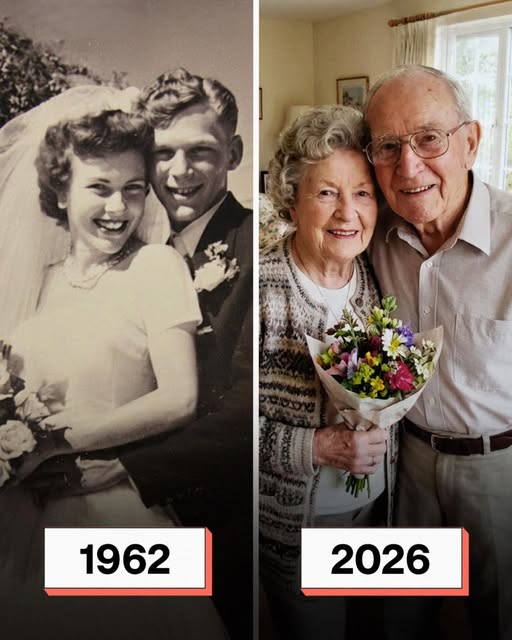
For 63 Years, My Husband Gave Me Flowers Every Valentine’s Day – After He Died, Another Bouquet Arrived, Along with Keys to an Apartment That Held His Secret

My name is Daisy. I’m 83 years old, and I’ve been a widow for four months.

Robert proposed to me on Valentine’s Day in 1962. We were just two college kids sharing a dorm kitchen that always smelled faintly of burned toast. That night he made spaghetti with jarred sauce and garlic bread that was charred on one side. He handed me a small bouquet of roses wrapped in newspaper and a silver ring he’d paid for with two weeks of dishwashing wages.

From that day forward, he never missed a Valentine’s Day.

Not once.

Some years it was wildflowers he’d picked himself when money was tight. Some years it was elegant long-stemmed roses when his business was doing well. The year we lost our second baby, he brought me daisies instead of roses.

“Even in the hard years, I’m here,” he whispered when I cried into his chest.

The flowers were never just flowers. They were a promise. Through arguments, grief, illnesses, and all the ordinary storms of marriage, he always came back with flowers.

Robert died in the fall. A heart attack. The doctor said it was quick.

Quick for him.

Not for me.

The house grew unbearably quiet. His slippers stayed beside the bed. His coffee mug still hung on its hook. Every morning I set out two cups of tea out of habit before remembering there was only one pair of hands left to hold a cup.

When Valentine’s Day arrived, I expected nothing but silence.

I lay in bed that morning staring at the ceiling, bracing myself for the emptiness of the first February 14th without him. I made my tea and sat at the kitchen table, staring at his empty chair.

Then someone knocked.

I wasn’t expecting anyone.

When I opened the door, there was no one there. Just a bouquet of roses on the mat. Wrapped in brown paper and tied with twine. Just like in 1962.

My hands trembled as I carried them inside. Tucked between the stems was an envelope. Inside was a letter in Robert’s unmistakable handwriting.

And a key.

“My love,” it began, “if you’re reading this, I am no longer by your side.”

I had to stop and breathe.

“There is something I have hidden from you our entire life. I’m sorry, but I couldn’t do otherwise. In this envelope is the key to an apartment. You must go there.”

Hidden?

My mind raced back over decades. Business trips. Late nights. A phone call once taken outside in the rain. I had asked him, long ago, if there was anything he wasn’t telling me.

“Nothing you need to worry about,” he’d said, kissing my forehead.

Had there been someone else?

The thought made me physically ill.

Still, I needed the truth.

I called a taxi and sat in the back seat, barely hearing the young driver’s attempts at small talk. We drove across town to a quiet neighborhood I’d never visited.

The brick building had a green door. I stood on the sidewalk for several long minutes before unlocking it.

The smell hit me first.

Polished wood. Old paper. Something faintly sweet and dusty.

Then I knew.

Sheet music.

When I turned on the light, my breath left me.

In the center of the room stood a beautiful upright piano. Dark wood, gleaming. The walls were lined with shelves filled with sheet music, music theory books, and neatly labeled recordings.

On the piano bench sat a stack of pages.

I picked one up.

“Clair de Lune.”

My favorite piece. I had mentioned that once, decades ago, when we were young and I still played.

On the stand was “Moonlight Sonata.” Another favorite.

On a small table were dozens of recordings, each labeled in careful handwriting: “For Daisy – December 2018.” “For Daisy – March 2020.” They stretched back years.

My throat tightened.

Beside them were medical reports. Dated six months before he died.

Severe heart condition. Limited time.

Robert had known.

There was also a contract with the building’s caretaker instructing him to deliver the flowers and key on the first Valentine’s Day after Robert’s death.

He had planned even that.

A journal lay nearby. I opened it.

“Today Daisy mentioned her old piano,” one entry read, dated twenty-five years ago. “She said she once dreamed of being a pianist. She laughed, but I saw the sadness.”

I remembered that moment. I had found my old sheet music in a box and tucked it away again. Life had been too full of children, bills, responsibilities.

He hadn’t forgotten.

“I’ve decided to learn piano,” another entry said. “I want to give her back the dream she gave up.”

I covered my mouth and sobbed.

Page after page described his lessons. His embarrassment at being the oldest student in the room. His frustration at stiff fingers. His determination.

“Daisy never gave up on me. I won’t give up on this.”

Then, near the end:

“My hands shake now. The doctor says I’m running out of time. I must finish one more piece.”

The final entry was dated a week before he died.

“I’m sorry, my love. I couldn’t finish.”

On the music stand was a handwritten composition titled “For My Daisy.”

It was beautiful. Tender. Intricate.

And unfinished.

It stopped halfway down the second page.

I sat at the bench. It creaked beneath me. Dust floated in a thin beam of light.

My fingers hovered uncertainly above the keys. They hadn’t touched a piano in sixty years.

The first notes were hesitant.

Then something inside me remembered.

Muscle memory returned like an old friend. The melody Robert had written unfolded beneath my hands—full of longing and quiet devotion.

When I reached the unfinished measure, I paused.

Then I kept playing.

I let my hands find the notes he hadn’t had time to write. I resolved the melody, softened the tension, completed the phrase the way I believed he meant it to end.

When the final chord settled into silence, I sat there with tears running down my face.

Behind the music stand was one last envelope.

“My darling Daisy,

This piano is yours. This studio is yours. Play again.

Even though I’m gone, I am still here. In every note. In every chord.

I loved you at twenty. I loved you at eighty. I will love you forever.

Always yours, Robert.”

I pressed the letter to my chest.

He hadn’t hidden another life.

He had built a secret dream for me.

Now I visit the studio twice a week. Sometimes I practice scales like a stubborn beginner. Sometimes I listen to his recordings and imagine him, hunched over the keys, determined and slightly off-tempo.

Last week, I recorded my first piece in sixty years.

My hands are slower now. The notes aren’t perfect. But I labeled it carefully: “For Robert.”

I placed it on the shelf beside his.

For 63 years, he brought me flowers.

This year, from beyond, he brought me back to myself.

A Surprise Phone Call That Turned a Quiet Afternoon into a Memorable Moment

It was a calm afternoon at the country club, where members relaxed after a round of golf while quiet conversations and soft laughter filled the lounge. One guest had just settled into his chair when a smartphone on a nearby table began to ring. Seeing no one around to claim it, he picked it up, intending to answer so he could return the phone to its owner. What followed, however, turned into one of the most amusing moments anyone present had witnessed in a long time—one that guests would later recount with smiles.

On the other end of the call was a woman who warmly greeted the person she believed was her husband. She explained that she was shopping and had found an elegant coat she wanted to buy, asking if it was all right to make the purchase. Thinking quickly, the man decided to respond casually and play along. Encouraged by his approval, the caller continued, mentioning other expensive items she had seen, including a luxury handbag and even a new car she liked at a dealership. Each time, the man calmly agreed, and people nearby began listening with growing amusement as the list of potential purchases kept expanding.

The conversation continued with even bigger plans when the caller excitedly mentioned a beautiful home she had recently visited and asked if they should consider buying it. Without hesitation, the man again approved, suggesting she negotiate a good price before moving forward. Those in the lounge struggled to hide their laughter as the conversation grew more extravagant, yet the caller remained completely unaware that she was speaking to a stranger. When the call ended with warm goodbyes, the man placed the phone down and paused for a moment.

Then, with perfect timing, he looked around the room and asked, “Does anyone know whose phone this is?” The lounge burst into laughter as everyone realized what had just happened. The harmless mix-up turned an ordinary afternoon into a shared moment of humor. Stories like this are remembered because they show how unexpected situations can bring people together. Sometimes, all it takes is a small misunderstanding and a bit of quick thinking to create a memory that leaves everyone smiling long after the moment has passed.

What Your Favorite Colors May Reveal About Mood and Personality

Colors often communicate feelings in ways words cannot, influencing mood and perception without us even noticing. A single shade can spark memories, create comfort, or energize a space almost instantly. Because color connects so closely with emotion, the hues people feel drawn to can sometimes reflect their current state of mind. The first colors that naturally catch your attention may offer small clues about what you are feeling or seeking at a particular moment, making color preference more than just a visual choice.

Take red, for example. It is frequently associated with energy, excitement, and motivation. People drawn to red may be experiencing a burst of enthusiasm or a desire for action and confidence. Blue, by contrast, is often linked with calmness and reliability. Those who gravitate toward blue may be seeking balance, relaxation, or a sense of order in their surroundings. Purple, meanwhile, is commonly connected to creativity and imagination, suggesting openness to change or interest in personal growth and new ideas.

Color choices can act like subtle reflections of our emotional needs. Without thinking about it, people often select colors in clothing, décor, or art that match how they want to feel. Bright tones may be chosen when someone needs a boost of optimism, while softer shades can provide comfort during stressful times. These preferences are not fixed and can shift depending on life circumstances, making color a quiet but meaningful part of everyday expression.

Our relationship with color is shaped by both biology and culture. Scientifically, colors can influence brain responses connected to mood and memory, which helps explain why certain shades feel calming while others seem energizing. Cultural traditions also give colors different meanings around the world, shaping how people interpret them in celebrations, fashion, and design. Together, these influences make color more than a visual experience; it becomes part of how people communicate emotion and identity. Paying attention to the colors we enjoy can offer simple insights into our moods and remind us how even small visual choices can brighten daily life and create a sense of connection with the world around us.

A Simple Guide to Making Perfect Baked Potatoes with Tasty Topping Ideas

Baked potatoes remain a favorite comfort food because they combine simplicity with satisfying flavor and texture. With their crisp skin and soft, fluffy interior, they can serve as either a hearty side dish or the main attraction of a meal. One of the reasons baked potatoes are so popular is how easy they are to prepare. They require only a few ingredients and basic cooking steps, yet the result feels warm and comforting. Their familiar taste and versatility make them a reliable choice for busy weeknights, family dinners, or relaxed weekend meals.

Another reason baked potatoes are so appealing is how easily they adapt to different tastes and dietary needs. On their own, they are naturally low in fat while providing nutrients like fiber, potassium, and vitamins C and B6. Choosing the right type of potato makes a big difference, with starchy varieties such as russet potatoes producing the lightest and fluffiest texture when baked. A light brushing of olive oil or butter and a sprinkle of salt help create a golden, crispy skin that adds flavor without overpowering the potato itself. From there, the potato becomes a versatile base ready for many topping options.

Preparing baked potatoes at home is straightforward and requires little effort. Begin by heating the oven to 400°F (200°C). Wash the potatoes thoroughly and dry them completely to ensure the skin crisps nicely. Use a fork to poke several holes in each potato so steam can escape during cooking. If desired, rub the skins with a small amount of oil or butter and season lightly with salt. Place the potatoes directly on the oven rack or on a baking sheet and bake for about 45 to 60 minutes, depending on their size. The potatoes are ready when the inside is tender and the skin feels firm and crisp.

Once the potatoes are baked, the fun begins with choosing toppings. Classic options like cheese, sour cream, and fresh herbs offer comforting flavors, while vegetables such as broccoli, tomatoes, or grilled peppers add freshness and color. For lighter or plant-based meals, toppings like beans, sautéed vegetables, or dairy-free sauces can turn a simple potato into a filling dish. Baked potatoes also store well, making leftovers easy to reheat for another meal. Their lasting appeal comes from how effortlessly they fit into any kitchen and any season, proving that simple food can still be both nourishing and deeply satisfying.

I Followed My Family One Evening and Discovered a Heartwarming Secret

For years, I believed my husband and our thirteen-year-old son simply shared interests that I didn’t. They bonded over sports, weekend projects, and long conversations I was rarely part of. When they started leaving together every Friday evening for what they called soccer practice, I didn’t question it. It seemed natural that as our son grew older, he leaned more on his father. Still, a quiet distance formed between us, and sometimes I wondered if I was slowly being left out of an important part of his life without realizing it.

Everything changed one Friday when I decided to surprise them at practice. I arrived at the field carrying snacks, only to learn from the coach that my son had never trained there. Confused and uneasy, I returned home and waited. That night, when I casually asked how practice went, my son answered cheerfully, just as he always did. I didn’t confront them. Instead, curiosity and worry kept me awake, and I decided that the following week, I would follow them to understand what was really happening.

The next Friday, I stayed a short distance behind their car. My mind raced with possibilities, none of them comforting. After several turns, they stopped not at a sports complex, but outside a modest community center on the edge of town. I watched as they stepped out carrying boxes from the trunk and walked inside. Unsure, I followed quietly. Through the open doors, I saw something that instantly softened every fear I had been carrying. Father and son were helping serve meals to families and elderly neighbors who needed assistance. My husband patiently guided our son as they handed out plates and shared friendly conversations with people who seemed grateful just to be seen and heard.

Later that evening, I finally asked about their secret outings. My husband admitted he didn’t want to make a big deal out of it or embarrass our son, who had suggested volunteering after learning about families in need at school. They worried I might feel hurt for not being included, so they kept it quiet until they felt ready to invite me. Instead of anger, I felt pride and relief. The following Friday, I joined them. Watching my son learn compassion and generosity reminded me that sometimes the truth behind secrecy isn’t betrayal—it’s kindness growing quietly, waiting for the right moment to be shared.

Popular

Elsa Patton’s face was ‘ruined’ by plastic surgeon: Pictures of the...

0
Elsa Patton became a beloved personality on The Real Housewives of Miami. The television star appeared on the show between 2011 and 2013, and because...