Fans around the world were saddened by news confirming the passing of actor James Van Der Beek, best known for his role in the television series Dawson’s Creek. A message shared on his official social media account announced that he passed peacefully at the age of 48, surrounded by loved ones. The statement described his final days as filled with courage and gratitude, while the family asked for privacy as they mourn his loss.
Van Der Beek rose to international fame in 1998 portraying Dawson Leery, a character that became a defining part of late-1990s television. Over the years, he expanded his career with film and television roles while also focusing on family life. Friends and fans often praised his openness and humor, qualities that helped him maintain a strong connection with audiences long after his early success.
In recent years, the actor had spoken about facing a serious health challenge, sharing that he was undergoing treatment while remaining hopeful and appreciative of support from his family and fans. Despite health setbacks, he continued to engage with supporters and even appeared in a recorded message for a cast reunion event when he was unable to attend in person.
Beyond his professional achievements, Van Der Beek was known as a devoted husband and father who frequently celebrated family milestones online. Tributes from fans and colleagues highlight the lasting impact of his work and the kindness he shared throughout his career, ensuring his legacy will continue to resonate with audiences worldwide.
Lindsey Vonn’s final Olympic appearance was meant to mark a triumphant close to one of skiing’s most celebrated careers. Determined to compete despite recent injury concerns, the legendary American skier took to the course in Cortina d’Ampezzo, hoping to deliver one last memorable performance. At 41, Vonn showed the determination that has defined her career, even as challenges mounted before the race began.
Moments after starting her run, however, Vonn clipped a gate and crashed, leaving spectators stunned. Medical teams quickly responded, and she was transported by helicopter to a nearby hospital, where doctors later confirmed she had suffered a broken leg requiring surgery. Event officials later reassured fans that her condition was stable and that she was receiving expert medical care.
Following the accident, tributes and supportive messages poured in from fans, fellow athletes, and Olympic organizations. Team USA praised her lasting impact on American skiing, while event organizers highlighted her status as a champion whose achievements continue to inspire athletes worldwide.
Vonn’s family also shared their concern and relief that she was receiving proper care. Her sister described the frightening moment of seeing medical teams rush to help but expressed hope for a strong recovery. Despite the painful ending, Vonn’s legacy remains secure as one of the most accomplished alpine skiers in history, admired for both her talent and perseverance throughout a remarkable career.
New developments have emerged in the ongoing investigation into the disappearance of 84-year-old Nancy Guthrie, as authorities continue to examine new evidence and follow incoming tips. Recently released surveillance footage from outside her Tucson home has drawn public attention, providing investigators with new material to analyze while the search effort continues.
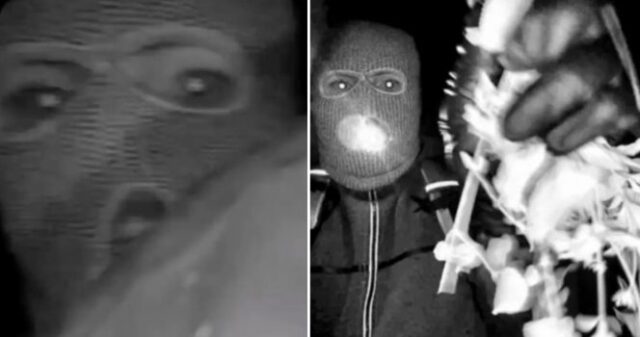
The images, recovered through technical reconstruction of security system data, show an unidentified masked individual near the residence on the morning Nancy Guthrie was reported missing. Officials say the footage was difficult to retrieve because certain recordings were not automatically saved, requiring specialists to recover remaining data from backend systems. Authorities have not confirmed the identity of the person shown.
Former law enforcement experts reviewing the footage publicly noted that some actions visible in the video may suggest inexperience, particularly the way the individual handled equipment and approached the security camera. Analysts also observed attempts to block the camera using nearby objects, rather than bringing tools typically used to disable surveillance devices, which some experts say could indicate limited preparation.
Meanwhile, investigators continue to evaluate multiple leads and persons of interest. One individual questioned earlier this week was released without charges. Authorities emphasize that the investigation remains active and encourage anyone with useful information to come forward, while federal officials continue offering a reward for tips that could help locate Nancy Guthrie and clarify what occurred.
Bad Bunny’s Super Bowl LX halftime performance on February 8 delivered a colorful tribute to Puerto Rican culture, featuring energetic choreography, elaborate stage designs, and guest appearances that kept millions of viewers watching. The lively production sparked conversation across social media, with fans praising the vibrant visuals and celebratory atmosphere that highlighted music, dance, and cultural pride on one of television’s biggest stages.
One surprising detail quickly captured online attention: parts of the stage set that appeared to be tall grass were actually performers dressed in plant-themed costumes. Among them was Andrew Athias, one of approximately 500 dancers who helped bring the performance to life. Athias later explained that performers wore heavy costumes and were required to remain mostly still, blending into the scenery while supporting the overall visual effect.
He also shared that strict confidentiality agreements prevented participants from discussing the show beforehand. Despite the demanding rehearsals and costume requirements, Athias said the experience of performing at such a major event made the effort worthwhile. Another performer described the moment of standing on the field as unforgettable, calling the opportunity a once-in-a-lifetime experience.
The halftime show blended music and storytelling, incorporating scenes inspired by everyday life and cultural traditions. Millions of viewers tuned in, and discussions about the performance continue online, highlighting how large productions rely on hundreds of behind-the-scenes performers whose contributions help create memorable moments for audiences worldwide.
A woman in southern Arizona is speaking out after authorities searched her home as part of the ongoing investigation into the disappearance of Nancy Guthrie. The search took place at a residence in Rio Rico, where law enforcement officers spent several hours gathering evidence. During the operation, the homeowner, Josefina, said her son-in-law was detained for questioning while officers conducted their investigation.
According to Josefina, her son-in-law, Carlos, was working as a delivery driver when authorities stopped and questioned him. She maintains he had no connection to the case and described him as a hardworking family man with no history of violent behavior. Josefina also expressed concern about how the search was handled, saying her home was left damaged and several family members’ phones were temporarily taken as part of the process.
Authorities earlier released surveillance images related to the investigation, but Josefina disputes that the person shown resembles her son-in-law. She stated that details such as clothing and personal items seen in the footage do not match him and said the family had no prior connection to Nancy Guthrie or her household.
Carlos later told reporters he was questioned and released without charges, saying he does not know Nancy Guthrie and hopes the situation is clarified soon. Meanwhile, investigators continue their efforts to locate the missing 84-year-old as officials review evidence and encourage anyone with information to come forward while the case remains active.
Authorities continue to investigate the disappearance of 84-year-old Nancy Guthrie as the case enters its second week, with renewed law enforcement activity drawing attention to developments in Tucson, Arizona. Late on the evening of February 7, investigators returned to the home of Nancy’s daughter, Anne Guthrie, and her husband, Tommaso Cioni. Officers remained inside for several hours, photographing multiple areas of the property while vehicles surrounded the residence. Officials have not publicly explained the purpose of the return visit or what items, if any, were collected.
Reports indicate investigators were seen carrying equipment cases and evidence bags as they concluded their search. Former law enforcement experts noted that such materials are commonly used for collecting and documenting potential evidence, though authorities have not confirmed specific findings. Earlier investigative steps included activity at Nancy’s own home,
where officers removed items and continued reviewing surveillance footage connected to the timeline of her disappearance.The investigation has also expanded to surrounding areas, including inspection of infrastructure near Nancy’s residence. Experts suggest such searches are routine when investigators seek to ensure no possible evidence has been overlooked. Officials have emphasized that these efforts are part of a thorough and ongoing review rather than conclusions about any individuals connected to the case.
Meanwhile, federal authorities have released surveillance images of a person believed to be involved and have asked the public for assistance while warning the individual may be dangerous. Savannah Guthrie has publicly appealed for information, expressing hope that her mother will be found safely as investigators continue their search.
Since the FBI released chilling surveillance images in the kidnapping of Nancy Guthrie, many online have zeroed in on what they believe is a crucial detail — the suspect’s eyes
Bombshell photos
The newly recovered photos show a masked, armed figure outside the 84-year-old’s Tucson, Arizona, home in the early morning hours of her disappearance.
With the search for “Today” show host Savannah Guthrie’s 84-year-old mother now entering its 11th day, the chilling images and video released Thursday represent the first major public breakthrough in the case, offering potential clues about the attacker.
In the images shared by FBI Director Kash Patel, the individual appears to be tampering with the video doorbell camera while dressed in a balaclava, gloves, a zipped jacket, and a backpack.
FBI
Nancy Guthrie has now been missing for 10 days. Two ransom deadlines demanding $6 million in bitcoin have already passed. The note reportedly did not include a direct threat about what would happen if payment wasn’t made.
Releasing the images, Patel wrote:
“Over the last eight days, the FBI and Pima County Sheriff’s Department have been working closely with our private sector partners to continue to recover any images or video footage from Nancy Guthrie’s home that may have been lost, corrupted, or inaccessible due to a variety of factors – including the removal of recording devices.
“The video was recovered from residual data located in backend systems.
The eyebrows and eye shape
“Working with our partners – as of this morning, law enforcement has uncovered these previously inaccessible new images showing an armed individual appearing to have tampered with the camera at Nancy Guthrie’s front door the morning of her disappearance.”
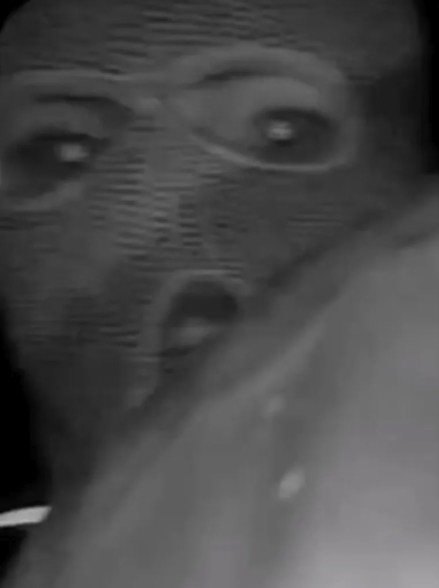
While authorities have not identified a suspect, social media users quickly began analyzing the photos, particularly the visible eye area between the mask and hood.
Some believe the eyebrows and eye shape suggest the suspect may not be male.
One person commented: “Arched eyebrows. I would say female.”
“Eyes look like a woman’s eyes to me,” said a second.
A third person wrote: “Sure that’s not a woman?”
Others, however, pointed to body language in the accompanying video footage, arguing the suspect’s gait appears more masculine. A few have even speculated about the outline of facial hair beneath the mask. At this stage, law enforcement has not confirmed the gender of the individual seen in the footage.
The release of the images marks the most significant development in the case since Nancy disappeared on Feb. 1 after being dropped off at home by her son-in-law following dinner with family.
Authorities are receiving a surge of tips after the FBI released unsettling footage showing a masked individual tampering with Nancy Guthrie’s home-security camera the morning she disappeared, CNN reported.
A former FBI agent has suggested the suspect’s clumsy handling of both the gun and the Nest camera indicates he may be inexperienced.
“This is a very non-conventional way to carry a firearm. Very non-conventional,” former agent Mark Harrigan told the New York Post, referring to the suspect seemingly holstering the gun at the front.
“He has it in the open, which is unusual, because normally you would want it concealed when you’re going to do a crime, so you’re not calling attention to yourself with an exposed firearm,” Harrigan explained.
“That’s potentially somebody that’s not normally armed or carrying a firearm around in public. Normally, you’d have it on the hip,” he added, noting his experience as the former chief of the FBI’s Firearms Training Program.
“You don’t carry it on your hip bone because it’s uncomfortable. He may have had it concealed in his backpack and decided then to put it on his waist when he got close to the door,” Harrigan said.
Authorities detained one individual
Up until now, authorities had provided little public insight into who may have taken her. But on Tuesday, a man was detained and questioned in connection to the case.
Carlos, the man briefly detained, said he and his wife were driving when they noticed police following them. They pulled over, he stepped out, and was taken in for questioning, he told reporters.
However, Carlos was later released, telling reporters: “I told them, I work in Tucson for GLS, I might have delivered a package to her house but I never kidnapped anybody. They hold me from 4:00 p.m. till now.”
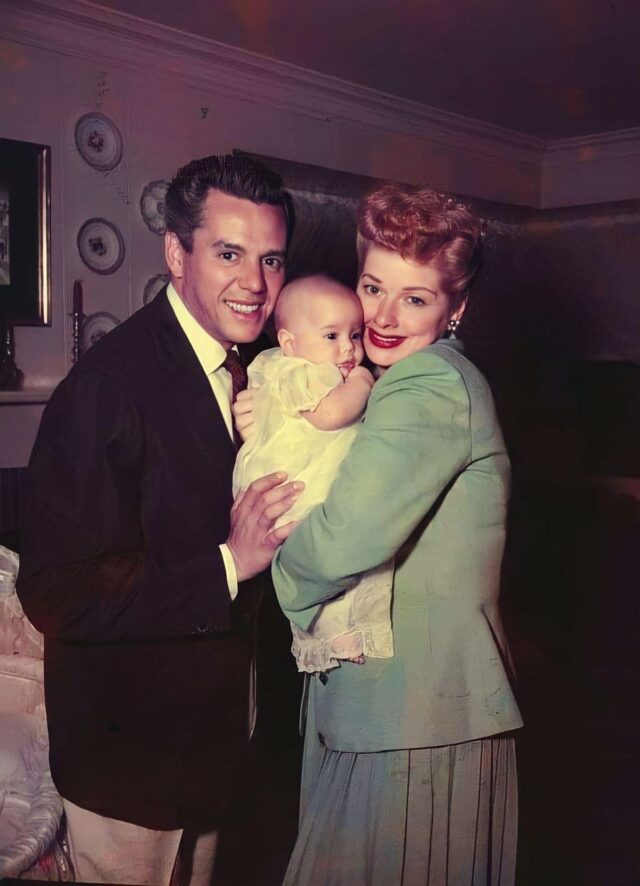
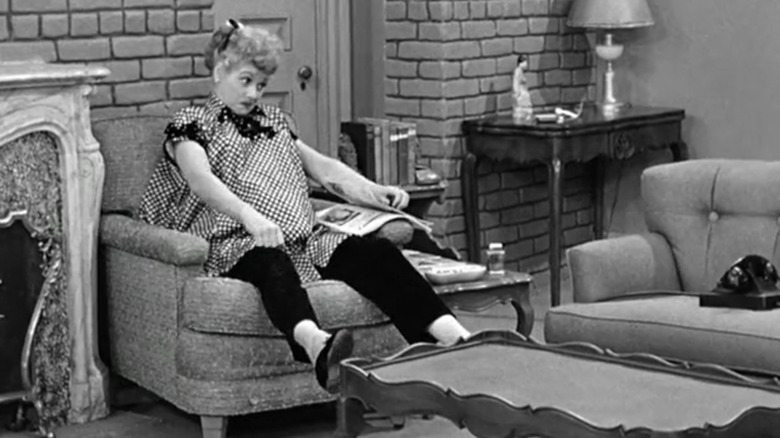
When Lucille Ball’s real-life pregnancy was written into I Love Lucy in 1952, it marked a seismic shift in what American television dared to portray. At the time, the word “pregnant” couldn’t even be said on air. Yet Lucy Ricardo’s onscreen journey to motherhood became a cultural milestone, ushering in a new era of realism on TV.
CBS’s Reluctance and Religious Oversight
Ball’s pregnancy was a reality CBS couldn’t ignore—she was too central to the show to hide it for long. Still, the network was nervous. Executives consulted clergy from different faiths to ensure the depiction of pregnancy wouldn’t offend religious viewers. It was ultimately agreed that the storyline could proceed, as long as euphemisms like “expecting” were used in place of “pregnant.”
America’s First TV Birth
On January 19, 1953, over 44 million viewers tuned in to watch Lucy give birth to “Little Ricky”—a number far exceeding the audience for President Eisenhower’s inauguration the next day. It was the first scripted birth of a major TV character and became a shared national experience. Despite the limited language and the conservative framing, I Love Lucy made pregnancy not only acceptable on TV—but essential storytelling.
Legacy Beyond Laughter
Ball’s bold move opened the door for future series like The Dick Van Dyke Show, The Cosby Show, and Friends to tackle pregnancy with more openness. While Lucy never showed a bare belly or discussed labor in detail, her storyline humanized a previously hidden part of women’s lives—and did so in front of tens of millions of homes.
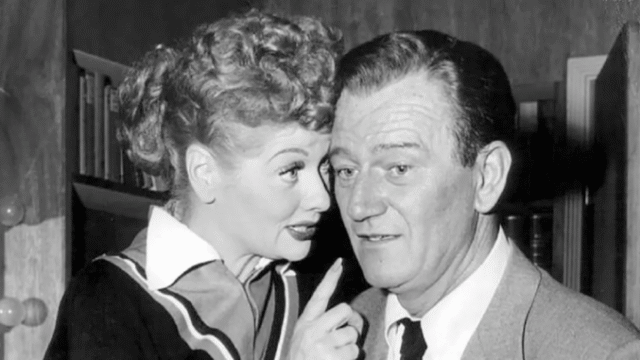
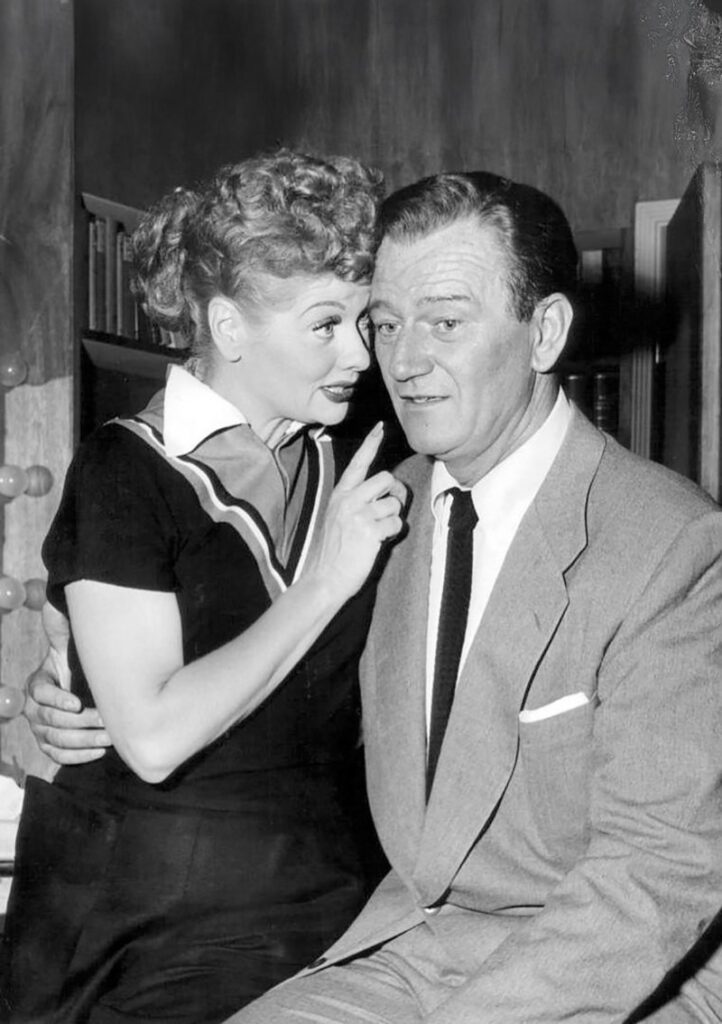
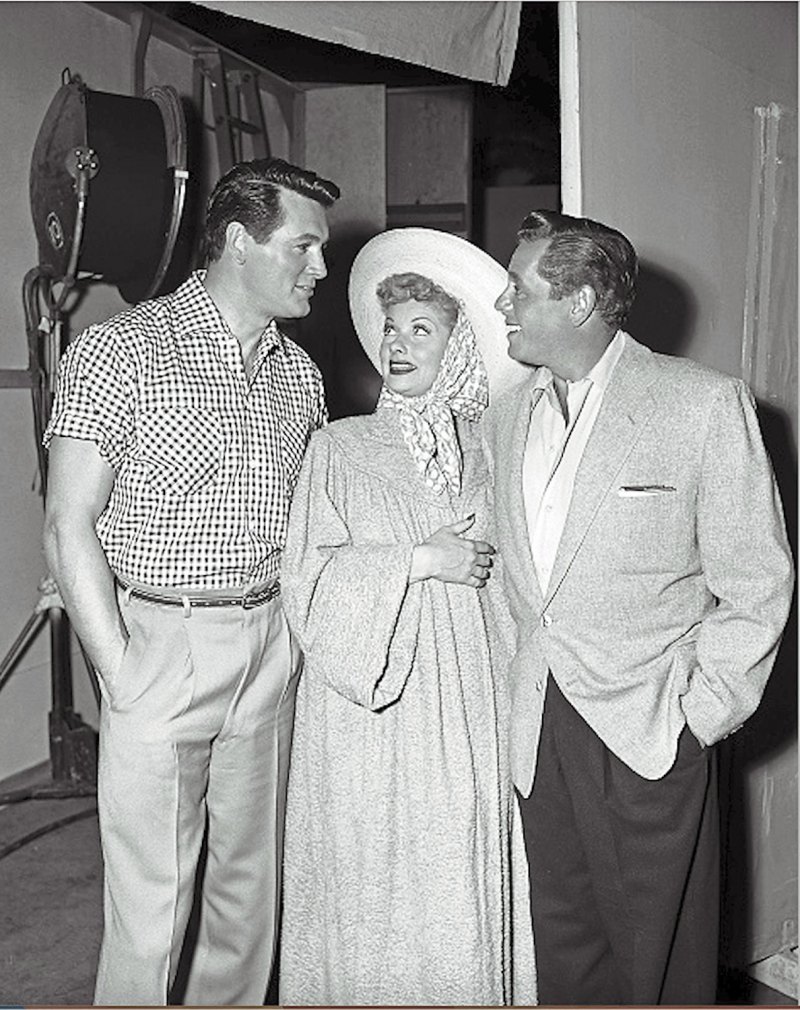
Film and television stars in the 1950s lined up to do a guest spot on America’s favorite comedy, I Love Lucy, alongside Desi Arnaz and Lucille Ball, who portrayed Ricky Ricardo and Lucy Ricardo.
John Wayne
The acclaimed western actor was a fan of I Love Lucy and requested to be on the show. In the fourth season, Lucy and Ethel are jailed for trying to steal Duke’s footprints from Grauman’s Chinese Theatre in Hollywood, so Ricky appeals to the star to recast his prints. FUN FACT: John accepted a payment of just $280 for the appearance.
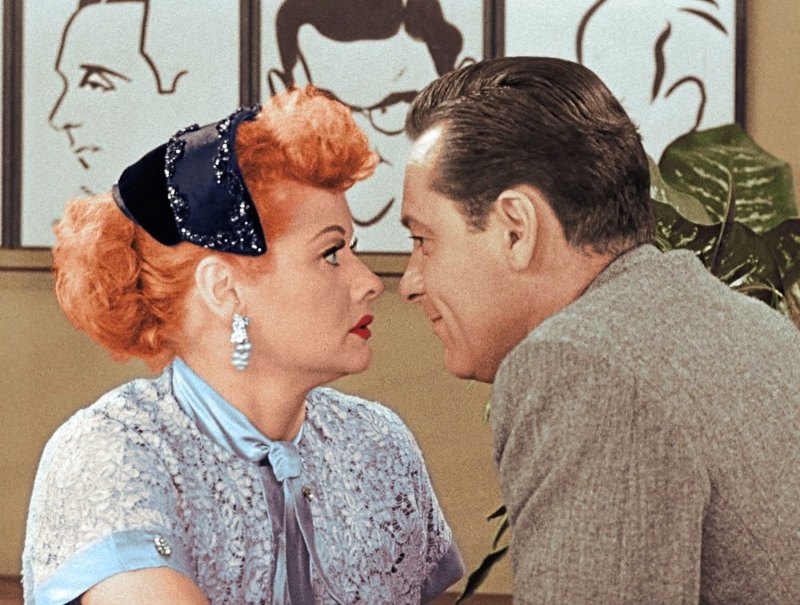
William Holden
Lucy ruins the actor’s lunch at the Brown Derby by staring and causing a waiter to drop food on William. Later that day, when Ricky tries to introduce her to the star, Lucy wears a silly (and flammable!) putty nose as a disguise.
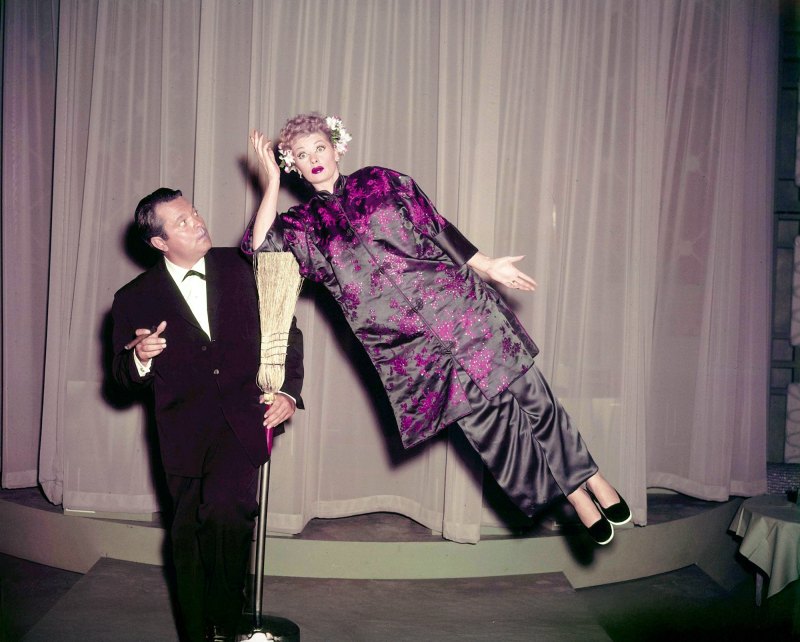
Orson Welles
In this season six episode, Lucy spots Orson in a sporting goods store and becomes his assistant in a levitating magic act. FUN FACT: The Citizen Kane star earned a whopping $15,000 for the show!
Rock Hudson
On a girls’ trip to Palm Springs to get away from their annoying husbands, Lucy and Ethel meet Rock Hudson by the pool. The actor tells them a story about a bickering husband and wife that makes them realize that they miss Ricky and Fred.
Harpo Marx
Lucy and Harpo brilliantly reenact the pantomime mirror scene from Duck Soup in this 1955 episode. “She refused to do it unless it was absolutely perfect,” said Doris Singleton, who played Lucy’s friend Caroline.
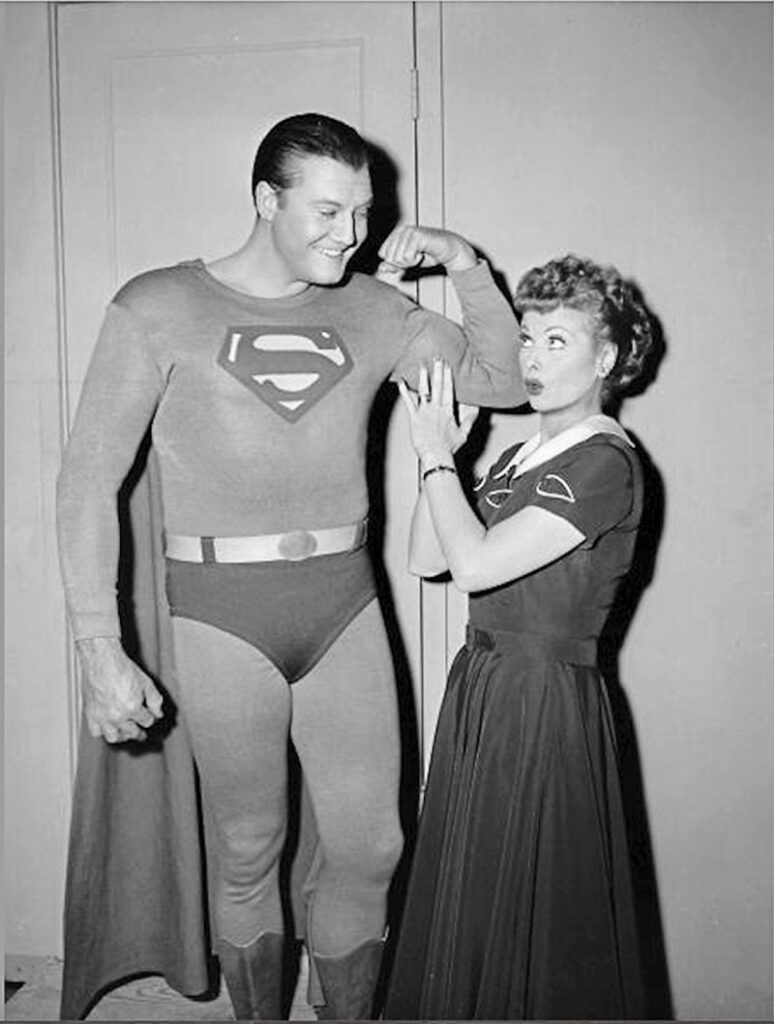
George Reeves
After Lucy’s desperate plot to get the Adventures of Superman actor to appear at her son Little Ricky’s 5th birthday party goes nowhere, she gets trapped on the ledge of her New York apartment building in the pouring rain. Guess which Man of Steel shows up to save the day?
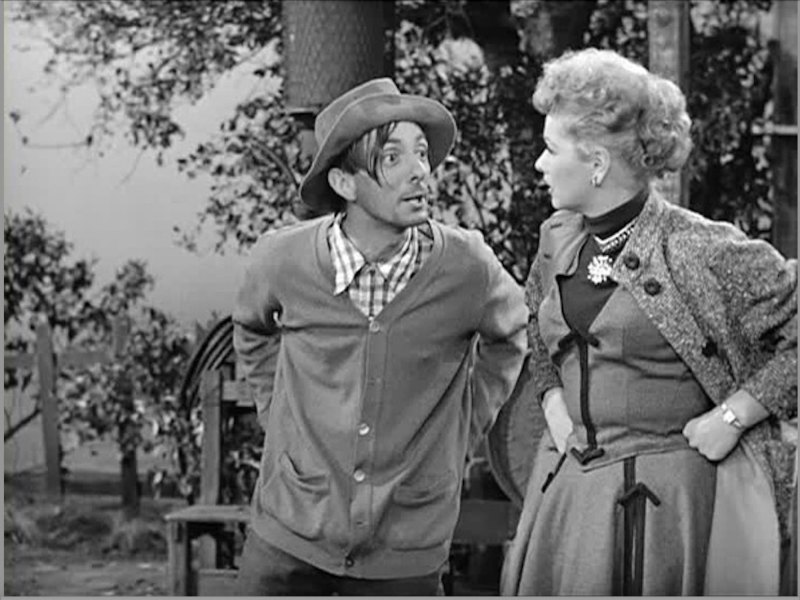
Aaron Spelling
Future Charlie’s Angels producer Aaron Spelling shows up as a gas station attendant in a 1955 episode where Lucy gets pulled over for speeding in Tennessee.
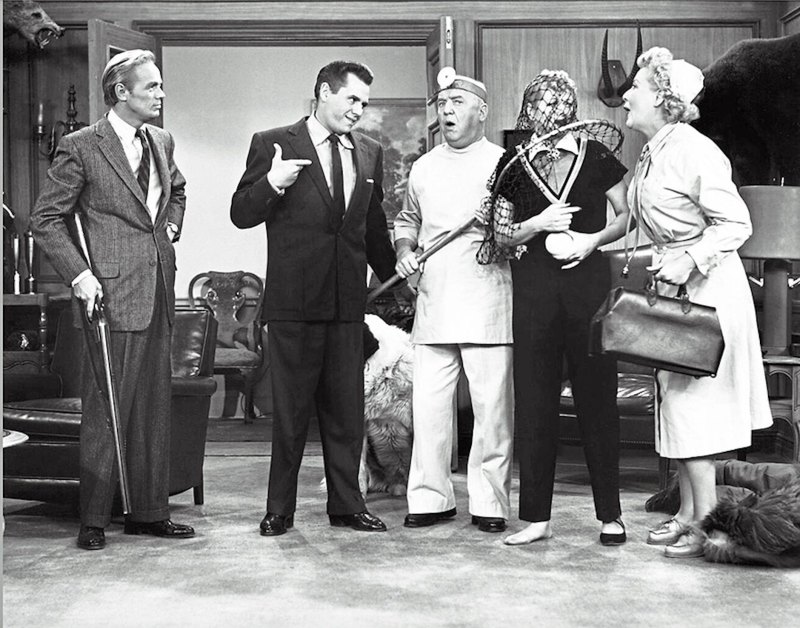
Richard Widmark
On a Hollywood bus tour of celebrity houses, Lucy wants a souvenir and gets trapped in the home of Richard, who returns with his lunch partner, Lucy’s husband, Ricky. When Lucy gets caught, Richard is kind about the intrusion, but she certainly has some ’splainin to do!
Hedda Hopper
In hopes of receiving some good publicity, Lucy pretends to drown at the hotel pool and is “saved” by Ricky. Unfortunately, Hedda, an influential Hollywood gossip columnist, is less than impressed.
Van Johnson
Lucy displays her dancing skills when she persuades Van to let her be his partner in his nightclub act to impress one of her friends. The pair dance to “How About You?” a tune from Babes on Broadway. FUN FACT: The episode was originally written for Ray Bolger.
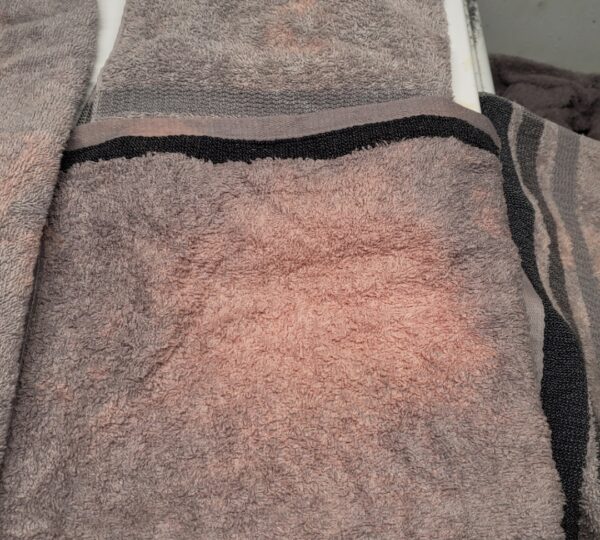
I’ll never forget the morning I first noticed it. I had just pulled a gray towel from the stack in my linen closet, one I had used countless times without issue.
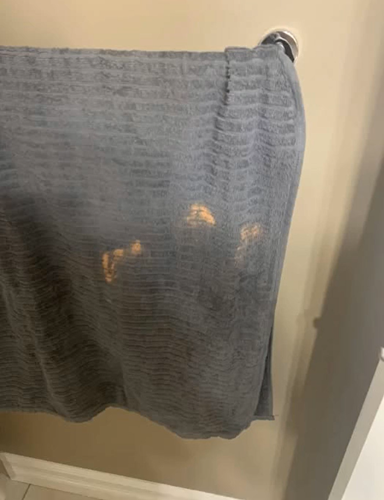
And then, there it was: a bright, almost neon orange blotch glaring up at me from the fabric. The color was so vivid, so unnatural, that for a moment I questioned whether my eyes were playing tricks on me.
It was as if someone had carelessly swiped the towel with a fluorescent marker, leaving a glaring imperfection in the middle of what had always been a soft, comforting piece of fabric.
At first, I assumed it was a spill or perhaps a rust stain from the old metal towel rack in my bathroom. These things happen occasionally, after all, and I wasn’t too concerned.
I brushed off the blotch mentally, telling myself it was a one-time occurrence that would surely disappear in the wash.
With that in mind, I tossed the towel into the washing machine, adding an extra dose of detergent and even a bit of stain remover, fully expecting the offending mark to vanish.
But when the cycle ended and I pulled the towel out, the orange blotch remained stubbornly intact — bright, bold, and completely unyielding. That was the moment I realized that this wasn’t going to be a minor problem. This was something far more perplexing.
In the weeks that followed, the orange blotches began to spread. Towels that I rarely used suddenly exhibited the same vivid, unnatural stains.
Pillowcases, hand towels, and even a few of my favorite shirts weren’t spared. At first, the spread was subtle — a few flecks here and there — but over time, it seemed as if my laundry room had been sprinkled with orange confetti, random blotches that didn’t make any sense.
I couldn’t understand why this was happening. I washed the items carefully, used multiple cycles with strong detergents, and even tried specialized stain removers, yet nothing made a difference.
Determined to solve the mystery, I turned to research. I scoured forums and blogs, spoke to friends, and read every article I could find on fabric discoloration.
That’s when I began to discover the surprising truth behind these marks. The first major revelation was that the orange blotches weren’t stains in the traditional sense.
They weren’t caused by food, rust, or an external spill. Instead, the primary culprit in many cases was a chemical called benzoyl peroxide — a powerful ingredient found in many over-the-counter and prescription acne treatments.
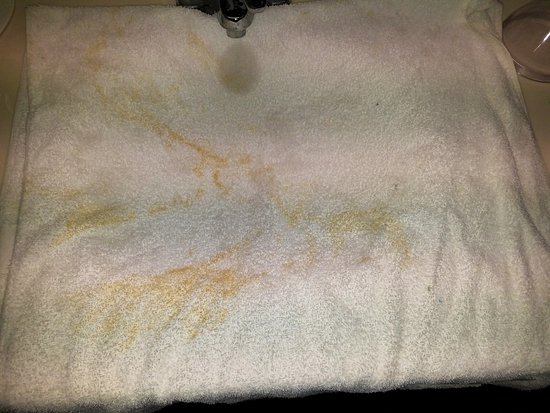
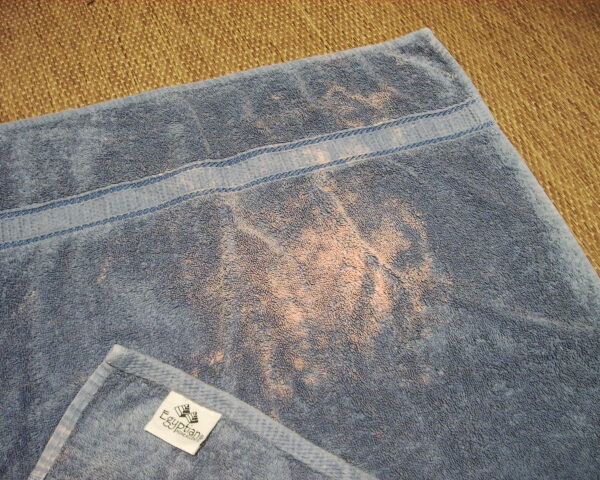
Benzoyl peroxide doesn’t add color to fabric in the way a marker or spilled juice would. Instead, it acts as a bleaching agent, breaking down the dye in fabric fibers and leaving behind permanent orange or yellowish patches.
In other words, rather than depositing color, it strips it away, leaving a vivid discoloration that can’t be washed out. This explained why no amount of detergent or stain remover had worked on my towels: I wasn’t dealing with a traditional stain at all. I had been witnessing chemical bleaching in action.
With this knowledge in hand, I became much more careful about how I used skincare products containing benzoyl peroxide.
I started designating specific towels solely for skincare use and switched to white towels for that purpose. Using white towels meant that any bleaching caused by the chemical wouldn’t be noticeable — the orange or yellowish patches would blend in, making it a practical solution for managing the problem.
Yet benzoyl peroxide wasn’t the only culprit. My research also uncovered high iron content in household water as a major source of orange discoloration on fabrics.
For homes with well water or older plumbing systems that use iron pipes, the mineral can leave reddish-orange deposits on laundry over time.
Unlike the large, uneven patches caused by benzoyl peroxide, these iron stains tend to appear as smaller, scattered dots and often worsen with repeated washing. Over time, these mineral deposits create the same sense of frustration I felt with my towels and linens.
Certain hair care products, self-tanners, and even some tinted shampoos also contributed to the problem. These products contain pigments that transfer to fabric during use.
While the color may be invisible on wet fabric, it becomes more prominent once the fabric dries, appearing as faint blotches or streaks that mimic the look of staining. Additionally, some cleaning sprays, bathroom cleaners, and other household products contain hidden bleaching agents or peroxide compounds.
These can leave behind discoloration long after use, creating a confusing trail of “phantom stains” that are difficult to trace back to their source.
Armed with this knowledge, I experimented with preventive measures to stop the orange blotches from appearing in the first place.
One of the simplest yet most effective changes I made was to separate towels and linens used with chemical-based skincare products. I began reserving older or white towels for these tasks, ensuring that any bleaching would be less noticeable.
Additionally, I developed the habit of allowing all skincare products to fully dry before coming into contact with fabrics. This reduced the likelihood of accidental transfer.
For hair treatments and other personal care products likely to leave pigment on fabric, I switched to using older towels I no longer minded ruining.
Over time, these small adjustments drastically reduced the frequency of new discoloration, giving me more control over my linens and towels.
Another important change was installing a water filtration system designed to reduce iron content. The difference was immediate and dramatic.
Rust-like orange spots became far less frequent, and the fabrics that had previously suffered from mineral deposits looked fresher and lasted longer.
It was a reminder of how often the smallest environmental factors — like minerals in water — can have an outsized impact on everyday life.
As I gained experience, I also learned to read the orange marks to identify their likely source. Large, irregular patches of bright orange or yellow generally indicated bleaching from benzoyl peroxide or similar chemicals. Smaller, scattered dots with a rusty or reddish hue often pointed to iron deposits or other mineral buildups.
Understanding these visual cues allowed me to quickly decide whether the fabric could be salvaged, repurposed, or dyed to cover the discoloration.
Unfortunately, some damage is permanent. Once a bleaching patch appears, no amount of washing or scrubbing can restore the original color. Over the years, I developed strategies to manage permanently discolored fabrics:
Repurposing: Towels with unavoidable orange patches often found a second life as cleaning rags or dust cloths.
Dyeing: I experimented with dark dyes to restore a uniform look to bleached towels. This not only covered the orange spots but also created unique designs in some cases.
Creative bleaching: Occasionally, I chose to intentionally bleach an entire towel to achieve an even, light-toned effect that blended the original color with the accidental orange patches.
These solutions minimized waste and extended the life of my fabrics significantly, reducing frustration and saving money over time.
Beyond physical solutions, this experience gave me a new sense of understanding and patience. Where I had once panicked at the sight of an orange blotch, I now calmly assess each occurrence, quickly identifying whether it’s a chemical bleach mark, a mineral deposit, or transferred pigment.
This sense of clarity has transformed a previously stressful situation into one that I can manage confidently.
The lesson extended beyond fabrics. It showed me how important it is to understand the root cause of seemingly random problems in our everyday lives.
When we take the time to identify the underlying factors — whether it’s chemical reactions, water quality, or product interactions — we gain control over what initially seems uncontrollable.
In practical terms, the strategies I developed over the years include:
Separate-use towels: Designating specific towels for chemical or cosmetic use to prevent bleach marks.
Product drying time: Waiting until skincare products are completely absorbed before contact with fabrics.
Older towel use: Using older, expendable towels for hair or pigment-heavy treatments.
Water filtration: Installing filters to remove iron and reduce mineral-based discoloration.
Fabric assessment: Learning to identify types of discoloration and respond appropriately.
By combining these measures, I transformed my home laundry routine from a source of constant anxiety into a system of predictability and control. Towels and linens that once seemed doomed now last longer, look fresher, and require less frequent replacement.
I also learned to embrace the creativity that comes from imperfection. When some fabrics inevitably suffered orange patches, dyeing or repurposing them turned a frustrating situation into an opportunity for innovation.
Towels that were once ruined could become colorful cleaning rags, unique hand towels, or artistic pieces that added character to my home.
Ultimately, the experience taught me that knowledge is the key to managing frustration. Understanding exactly what causes orange blotches on towels and fabrics — benzoyl peroxide, iron in water, pigment transfer, or hidden bleaching agents — allows anyone to approach laundry with confidence.
Rather than panicking or wasting hours scrubbing, one can now assess, prevent, and manage discoloration with targeted solutions.
The orange blotches that once seemed random and impossible to explain have become manageable, almost predictable. I no longer see them as an annoyance but as a signpost, a clue about the substances and environmental factors interacting with my fabrics.
In a sense, they’ve become a learning tool, reminding me of the importance of careful product use, water quality awareness, and the small yet impactful details that influence everyday life.
Every time I pull a towel from the closet or a shirt from the laundry basket, I think about how far I’ve come from that first shocking encounter with neon orange on a gray towel.
The frustration has been replaced with understanding, my laundry system has been optimized, and I’ve gained a measure of peace over something that once felt completely uncontrollable.
In the end, this experience reinforced a simple truth: when faced with confusing or frustrating problems, understanding the cause is the first step toward regaining control.
From bright orange blotches on towels to other challenges in daily life, insight and knowledge transform fear and irritation into practical solutions and long-term strategies. And sometimes, the things that initially seem like small annoyances — like a stubborn stain — can teach lessons that extend far beyond laundry.
Elsa Patton became a beloved personality on The Real Housewives of Miami. The television star appeared on the show between 2011 and 2013, and because...