Entertainment

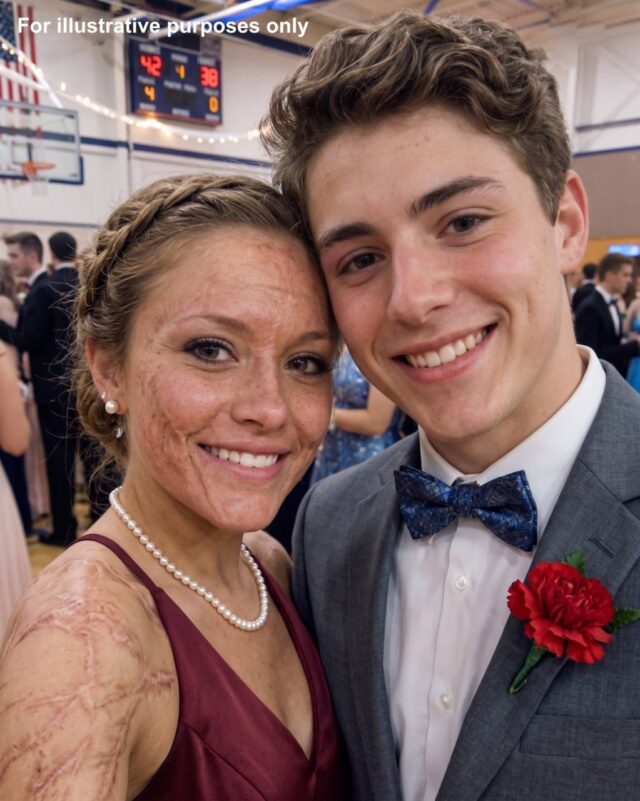
Ilka Brühl was born with rare facial defect – now she’s breaking beauty standards with her modeling career

No person should ever be treated differently just because they look different.

Unfortunately, this is something that happens all the time, among both children and adults, and it is never acceptable. Just ask Ilka Brühl, who was born with ectodermal dysplasia, a rare genetic disorder that affected her facial structure.

The German girl was called evil names in school, and in the end wished for a way to make herself invisible. At the same time, she was a fantastic student, and ultimately realized that she could help others by telling her own story.

Today, Ilka is a model and published author. Through social media and a podcast she runs, she aims to help encourage people to see their own beauty and accept one another for who they are.

This is her incredible story, and what she looks like today, aged 30.

Now, I want you, the person reading this, to take a moment to reflect on your life at 16. Personally, I have plenty of memories from that time – both good and bad. But overall, it was a time when many things were changing. There were more hormones, an overload of emotions, and sometimes even mental challenges that I had to combat.

Ilka Brühl – born with ectodermal dysplasia

Overall, I hope it was a positive time in your life, as it was in mine.

Now, imagine that at 16 years of age, you were called “Freak,” “Alien,” or “Pig Nose.” Just imagine that no one wanted to play with you at school, and when other children saw you, they pointed and laughed.

Most of us have never been subjected to such cruelty. For German girl Ilka Brühl, however, it was an every day reality.

Ilka was born with a cleft nose and lips. It’s called ectodermal dysplasia, a rare genetic disorder that affects one’s facial structure.

She suffered from the deformity for a long time before undergoing surgery to fix it.

Afterwards, though, she came to realize that her looks weren’t defined by her deformity at all. Instead, Ilka realized that beauty could not be created through surgery – and managed to accept her face as it was.

These days, Ilka is a role model for millions of people worldwide. Through her own work, she wants to help others.

Ilka Brühl – early life

Right up to the day she was born, in January 1992, Ilka Brühl’s parents thought their daughter was completely healthy. In fact, she was. However, doctors noticed that the little girl had trouble breathing. The airways in her nose had, for some reason, become blocked.

This meant emergency surgery, and surgeons operated on her cleft palate. By then, it was clearly apparent that something was “different” with little Ilka.

School can be a very harsh place for many children worldwide. Unfortunately, Ilka came to understand that better than most. Children at her school didn’t understand that she was just like everyone else, even if her face looked slightly unusual.

As per reports, kids at school asked questions about her looks and laughed at her. 

“At first I thought: How else am I supposed to look like? That’s how I am! But then I consciously looked in the mirror and realized that my nose is different. Then you start questioning yourself,” she told German newspaper Kurier.

Even though she was a beautiful little girl, bullies at school were relentless. They called her names like “Freak,” “Alien,” or “Pig Nose” and never wanted to play with her.

“As a child, I often had eye infections because my tear duct was not developed, and headaches because my paranasal sinuses were very susceptible to moisture,” Ilka said.

“But I was always able to live with the symptoms.”

Didn’t want photos of herself at home

She added: “My parents always gave me the feeling that I was right the way I was. As a child, I could confidently counter stupid sayings or looks. Nevertheless, the question came up during puberty: ‘If I’m supposed to be so normal – why don’t you see people like me anywhere?’”

Ilka even intentionally made faces in photos, so her parents wouldn’t hang up pictures of her at home.

“That was my avoidance strategy,” she said. “If I look at photos so stupidly that my mom doesn’t hang it up, then I don’t have to see it either.”

When Ilka became a teenager, she developed even more self-doubt. Not only because of what she heard at school, but also through commercials on television. Companies constantly put out ads that gave people social ideas of what beauty was, she recalled, and Ilka felt she wasn’t represented anywhere. As a result, the girl felt ashamed of showing her face, saying it was even more shameful than showing herself naked.

Though she heard plenty of mean things in school, however, she refused to let anyone get under her skin. Ilka was a straight A-student, and got the best grades in her year. 

“It was like a kind of double life,” she recalled.

Everything changed before photoshoot

As for her low self-esteem and self-confidence, Ilka had a hard time making friends.

She underwent ten operations, and though she had trouble accepting herself, things eventually started to change for the better. She realized she wasn’t worth less than anyone else, and soon turned into a confident woman who wanted to be an inspiration for others.

Everything changed in 2014 when she was on her way to her first photoshoot.

“On the way to [the photographer], I was on the verge of turning around several times because I was so terrified that she would laugh at me when she saw me in real life,” she wrote, as reported by Insider.

“Being in front of the camera has shown me: Every defect and every mistake is a part of you, and that’s okay too. You just have to make the most of it,” she added.

When Ilka was 20, she underwent nose correction surgery. It was mostly for medical reasons, but up until the operation, Ilka thought the procedure would finally give her the courage to love herself.

After the surgery, though, things went a different way.

“If you accept yourself, then you can shine from within”

“As soon as the wounds had healed, I noticed the next blemish. At that moment I realized: Beauty cannot be created on the operating table,” Ilka told BILD.

“For me, [beauty] is all about appearance. If you accept yourself, then you can shine from within and that’s nicer than the most perfect person who doesn’t like themselves.”

Instead of undergoing more surgeries, Ilka realized there were other things she could do instead of changing her appearance. It wasn’t about others seeing her as a “normal” person, but rather learning to better accept herself.

“I approached people more openly and learned to like myself. And noticed: The others don’t withdraw from me at all, I withdraw from them!”

Ilka knew that she looked “different,” but this was nothing negative. Instead, she wanted to embrace her differences. The German-born woman realized she could help others accept themselves for who they are, and wanted to give insights into her life and struggles.

So Brühl released a podcast, one focused on how she handles her self-doubt. She also gives tips on how one can be more self-loving. She’s even published her book, Differently Beautiful – How I Learned to Love Myself.

Back in 2018, she and a couple of friends started Project Grenzenlos, which can be translated to Project Limitless. The campaign’s purpose is to highlight the beauty of those who live with deformities and other differences. For Ilka Brühl, it aligns with her perception of beauty.

Ilka Brühl today – pictures

On Instagram, she wrote: “I think EVERYBODY is beautiful in his own way,. I often read comments like ‘You are not pretty just because you’re different,’ [and] that’s totally right! I am pretty because EVERYBODY is pretty. Never mind if you are a classic beauty, tall, small, stout, thin, black, white.”

Ilka shares her story, as well as insights into her life, through her blog and on Instagram. Recently, she’s worked on a children’s book, and on a couple of occasions, she’s shared pictures of herself as a child.

“I decided to show a baby photo of me. Because you see my ‘defect’ there better. Furthermore, I get many direct messages with the question of why I look like I do,” she wrote.

“At first, I hesitated because some of you think that’s too much. But that is wrong, it should be as normal as every other baby picture.”

She added in a Facebook post: “Everyone who knows me can confirm that it is really important for me and that I want to help others. Want to help the ones with some defects, as well as the parents of babies who are afraid if their child will be accepted in the world.”

Moreover, after Project Grenzenlos aired in 2018, Ilka has done more and more modeling jobs – and she sure looks fantastic!

Today, Ilka has become a significant role model for many. Her journey is highly inspirational, and through her social media, people worldwide get to take part in her daily life. As of today, she has over 33,000 followers on Instagram.

Married her beloved Philip

Not only has Ilka become a role model for others, as well as accepted her own appearance. She’s also found the love of her life.

Last year, she and her now-husband Philip married. And they look so happy together!

Ilka shared a picture of herself on Instagram, wearing her wedding dress.

“The wedding itself was indescribably beautiful for me. When I woke up the next day, I couldn’t believe how great everything went,” Ilka wrote.

“Sunny weather, everyone was in a good mood and my husband (still want to say friend) looked so amazing. I was so emotional and shed so many tears. Loving someone so much is a great privilege and I am infinitely grateful for it. I’m so looking forward to everything that’s to come. I just can’t believe how lucky I am to be able to call such a great person my husband now.”

No person is perfect. But though some people might look “different” or have a disability, we should always treat one another with respect. 

Ilka Brühl is an inspiration for others, and her story deserves recognition, most importantly because it can help people. Please share this article with friends and family on Facebook to honor Ilka Brühl.

Savannah Guthrie Speaks From the Heart in Difficult Update!

The morning television landscape, typically characterized by its rapid-fire delivery, vibrant studio lighting, and the polished composure of its anchors, recently underwent a profound transformation. Savannah Guthrie, a staple of NBC’s news coverage and a journalist known for her unwavering professionalism, momentarily stepped away from her role as a reporter of global events to speak directly from the heart. In a rare and moving departure from the standard broadcast script, Guthrie shared a somber update regarding her personal life, transforming the television screen into a space for raw human connection. Known for guiding the public through some of the most turbulent headlines of the modern era, she stood before the nation not as a detached observer, but as a woman navigating the heavy, quiet corridors of profound grief. This moment served as a poignant reminder that those who provide a steady hand for the public during collective tragedies are often quietly weathering their own private storms.

The emotional address took place during a live broadcast, where the air in the studio seemed to shift as Guthrie began to speak. Her career has long been defined by a unique blend of intellectual rigor and approachable warmth, yet this specific moment carried a weight of sincerity that felt distinctly different. She took a hiatus from the headlines to offer a message of gratitude, thanking both her colleagues and the millions of viewers who have welcomed her into their homes for years. She described the current period of her life as significantly difficult and challenging, a time marked by a depth of loss that she chose to treat with both transparency and a protective sense of privacy. While she did not delve into the specific mechanics of her bereavement, the cadence of her voice and the stillness of her posture communicated a narrative of sadness that required no further elaboration.

Guthrie noted that the days leading up to this update had been particularly trying for her and her family. She spoke with a quiet intensity about the necessity of leaning on the pillars of one’s life—faith, friendship, and family—when the ground beneath feels uncertain. In an industry that often prioritizes the “next big thing,” Guthrie’s meditation on the importance of mourning and the vital need for communal support struck a chord with a diverse audience. The scene within the studio was just as evocative as the words being spoken; her co-hosts and the behind-the-scenes crew, many of whom have worked alongside her for a decade, offered a visible net of solidarity. This display of professional and personal kinship underscored the reality that the chemistry viewers see on screen is often rooted in genuine bonds that sustain these public figures when the cameras are finally turned off.

This event represented a significant role reversal for Guthrie. For years, she has been the architect of difficult conversations, the one asking the probing questions and reporting on the world’s most heartbreaking stories with a balanced sense of empathy and objectivity. To see her on the other side of the news cycle—as the subject of the story rather than its narrator—was a stark and humanizing transition. This authentic glimpse into her personal resilience showcased the person behind the professional persona. Her decision to be open about her struggles, rather than retreating into a sterile silence, was met with widespread praise. Media critics and regular viewers alike saw it as a testament to her courage, proving that vulnerability in a high-profile setting is not a sign of weakness, but a profound form of strength.

The public response to Guthrie’s update was immediate, overwhelming, and deeply reflective of the unique bond she has cultivated with her audience. Social media platforms were quickly filled with messages of compassion, as people from all walks of life shared their own experiences with grief and offered words of encouragement. This outpouring of sympathy highlighted the parasocial yet meaningful relationship that morning show hosts share with the public. Because they are a consistent presence in the lives of viewers during the most intimate parts of the day—over morning coffee or while preparing for work—there is a sense of shared community. For many, Guthrie is more than just a news anchor; she is a familiar face whose openness about her own hardships reinforced a sense of shared humanity in an increasingly fragmented world.

As she drew her message to a close, the heaviness of the moment was balanced by a resilient sense of hope. Guthrie expressed a profound gratitude for the support system that had risen to meet her in her time of need. Despite the gravity of her situation, her final words were not of defeat, but of a belief in the process of healing and the eventual arrival of brighter days. She reaffirmed her commitment to her professional responsibilities and to the audience she serves, even as she acknowledged that the path forward would require time and the space to process her loss. The announcement stood as a powerful testament to the dignity required to face life’s most difficult chapters and the grace found in acknowledging one’s own limits.

In the period following the broadcast, the conversation surrounding Savannah Guthrie has shifted focus. It is no longer just about the news she shared, but about the profound manner in which she shared it. By speaking from a place of genuine emotion, she demonstrated that professional excellence and personal vulnerability are not mutually exclusive. Throughout her career, she has sought to connect with the stories of others, and in this moment of personal trial, that connection was reciprocated by a nation that felt her pain as if it were their own. The grace she displayed continues to serve as a hallmark of her journey, providing a sense of comfort to others who may be navigating their own “difficult updates” in the privacy of their own lives. Her story remains a reminder that beneath the accolades and the high-definition cameras, the most important news we ever share is the truth of our own human experience.

Ultimately, Guthrie’s address served as a bridge between the world of global events and the intimate world of the human heart. It reminded us that grief is a universal language, one that ignores professional boundaries and social status. By allowing the public to see her in a moment of transition and trial, she reinforced the idea that we are all, in some way, walking each other through the darker chapters of our lives. Her return to the news desk in the days that followed was marked by the same steady hand she has always possessed, but with an added layer of depth that only comes from having walked through the fire and emerged with one’s integrity and spirit intact. The legacy of this moment will likely be remembered not for the tragedy itself, but for the poise and honesty with which it was met, setting a standard for how public figures can engage with their audiences in a way that is both professional and profoundly personal.

Don’t Ch:eat. Pick The Odd One Out To See How ‘Lucky’ You Really Are

At first glance, the image seems like a light, almost playful challenge—six clovers, each slightly different, and one simple task: choose the one that doesn’t belong. But the more you look at it, the less straightforward it becomes. The exercise stops being about finding a correct answer and starts revealing something deeper about how you think, what you notice, and how you make decisions.

We often associate four-leaf clovers with luck, as rare and fortunate discoveries in nature. Yet in this case, every clover appears “special” in its own way. That’s where the illusion begins to shift. Instead of a single correct choice, the puzzle quietly turns into a reflection of personal perception.

The human brain is naturally built to search for patterns. When faced with a question like this, it immediately begins comparing shapes, colors, textures, and symmetry. But not everyone prioritizes the same details. Some people are drawn to color differences first, while others notice structural balance. Some focus on shine or surface texture, and others rely almost entirely on instinct.

That variation is what makes the test compelling. It subtly reveals how individuals interpret visual information and how they navigate uncertainty.

If you were drawn to the first clover, it may suggest a preference for simplicity and authenticity. There’s often a grounded way of thinking behind that choice—a tendency to trust what feels natural rather than what stands out.

Choosing the second might reflect a more analytical mindset. It often points to someone who values balance and pays attention to small, nuanced differences before making a decision.

The third option tends to appeal to those who are attracted to boldness. If that one stood out, it could indicate an appreciation for uniqueness, even when it challenges expectations or breaks from what feels conventional.

The fourth choice often resonates with people who notice layers—texture, depth, and subtle complexity. It can suggest a creative perspective, someone who tends to see more than what’s immediately obvious.

If the fifth felt like the “right” answer without a clear explanation, that often signals a strong reliance on intuition. It reflects a way of thinking that trusts internal signals over structured reasoning.

The sixth option typically stands out to those who prefer clarity and efficiency. It can point to a practical mindset—someone who values straightforwardness and decisive thinking over ambiguity.

What makes this exercise interesting is that it doesn’t actually measure luck. Instead, it highlights how perception shapes decision-making. What we often describe as luck is frequently a combination of awareness, interpretation, and the ability to act on what we notice.

So the question shifts slightly. Rather than asking whether you are lucky, it becomes more meaningful to ask how you see the world—and how that perspective influences the choices you make.

There isn’t one correct answer hidden among the clovers, and that’s intentional. The value lies in the process, not the result. Much like life, the meaning comes from interpretation.

And perhaps that, more than anything else, is what people really mean when they talk about luck.

More people are coming out as Orchidsexual – here is what it means!

Desire is no longer obeying the old rules.

Across forums and group chats, people are whispering a new word that splits attraction from action—and it’s making some furious while saving others’ sanity. Orchidsexuality is forcing an uncomfortable question: what if you can want no sex at all and still not be asexual?

In a culture that treats desire as a straight line from spark to bedroom, this identity is radical. It says attraction doesn’t owe anyone action, that a fulfilled life can include sexual feelings without sexual behavior. The orchidsexual flag, the term, the online threads—these are lifelines for people who thought they were broken. Whether the label spreads or stays niche, its message reaches far beyond one microlabel: language can turn isolation into community, confusion into clarity, and quiet difference into a valid way of being.

orchidsexual identity has a small but active online community where people share experiences, flags, and discussions—mostly on platforms like Reddit (e.g., r/orchidsexual and threads in r/asexuality), Tumblr, asexual forums (like asexuality.org), and scattered posts on Facebook groups or Instagram. It’s still a niche microlabel on the asexual spectrum, so you won’t find huge crowds or mainstream visibility, but there are real people identifying with it and finding validation in the disconnect between feeling sexual attraction and having zero desire (or even aversion) to act on it.

From what people share:

Many describe it as a relief after years of feeling “broken” for experiencing attraction without wanting sex—similar to your story’s point about turning confusion into clarity.
Some came from identifying as graysexual or another ace-spec label before landing on orchidsexual, realizing the key was the lack of desire/action rather than attraction itself.
Others note it’s the “opposite” of cupiosexual (wanting sex without attraction), and it helps explain sex-repulsion or aversion while still feeling aesthetic/sexual pull toward people.
There’s occasional debate in ace spaces about whether it fully belongs under the asexual umbrella (since attraction is present), but most agree it’s welcome and useful for community-building.

Examples of real voices (paraphrased/anonymized from public posts):

One person: “I’ve always identified as graysexual, but digging deeper, I’m actually orchidsexual. I’m sexually attracted to people but have zero desire to act on it or be in sexual relationships—it finally feels whole.”
Another: “Orchidsexual means I experience sexual attraction but no want for a sexual relationship. It’s as close to allosexual as I get without being there—one foot in each world.”
In a Threads post: “I am Orchidsexual… I experience sexual attraction, but have no desire to act on it. I like spicy stories, but no desire to act them out with anyone.”

The community often overlaps with broader ace/aro spaces, where people appreciate how it challenges the “attraction must lead to action” norm.

Every country that has rejected Donald Trump’s call to join the war against Iran – and one surprising country that agreed

Donald Trump has faced a notably cautious response from allies after seeking support for “Operation Epic Fury,” a U.S.-led move targeting Iran. Despite calls for international backing, many nations have either declined involvement or responded with hesitation, raising questions about how widely the operation will be supported.

Across Europe, several key allies have made their positions clear. The United Kingdom, historically one of Washington’s closest partners, has ruled out taking part in further military action linked to the operation. Prime Minister Keir Starmer emphasized that Britain would not be drawn into a broader conflict, while still leaving the door open for diplomatic engagement toward a “viable plan.” He also dismissed suggestions that NATO would intervene, stating that such involvement has not been considered.

Similarly, Italy has signaled it will not participate militarily. Foreign Minister Antonio Tajani confirmed that direct involvement is not being considered.

In Germany, officials have taken a firm stance as well. Chancellor Friedrich Merz stated that there had been no joint agreement on intervention, making military participation unlikely. While he acknowledged concerns about Iran’s leadership, he also suggested that escalating through bombing campaigns would not be an effective solution. Defense Minister Boris Pistorius went further, questioning both the strategy and expectations placed on European forces, particularly in relation to operations in the Strait of Hormuz.

Elsewhere on the continent, countries such as the Netherlands, Lithuania, and Estonia have expressed uncertainty, focusing on the broader purpose and potential consequences of the mission. Greece has also confirmed it will not take part in any military operations connected to the initiative.

Outside Europe, a similar pattern has emerged. Australia, South Korea, and Japan have all indicated they do not plan to participate at this stage. Australian Transport Minister Catherine King stated plainly that her country would not be deploying naval assets to the Strait of Hormuz, despite acknowledging its strategic importance. South Korea has taken a more reserved approach, saying it will continue discussions with the United States.

The position of China remains less defined. While no formal commitment has been made, U.S. officials have suggested that China could play a constructive role, particularly given its reliance on oil shipments passing through the region. Trump himself has pointed to this, noting China’s significant dependence on energy routes linked to the strait.

Amid the widespread hesitation, Ukraine has offered a contrasting response. Despite its ongoing war with Russia, President Volodymyr Zelenskyy has reportedly indicated a willingness to assist, particularly in countering drone-related threats.

The mixed international reaction appears to have caused some frustration within the U.S. administration. Trump has suggested that allies’ decisions—whether to support or decline—will not be forgotten, underscoring the political weight of the moment

For now, the situation remains uncertain. While the United States moves forward with its plans, the reluctance of many traditional allies highlights a broader hesitation about escalation, leaving open questions about how the conflict could evolve and whether additional countries may eventually shift their stance.

I Made My Prom Dress From My Dad’s Army Uniform in His Honor – My Stepmom Teased Me Until a Military Officer Knocked on the Door and Handed Her a Note That Made Her Face Turn Pale

The first night I tried to stitch the dress together, my hands wouldn’t stop trembling.

The needle slipped, and I drove it straight through my thumb.

I swallowed the cry before it could escape, wiped the blood against an old rag, and kept going, careful not to let a single drop touch the olive fabric spread across my quilt. That fabric wasn’t just cloth. It still smelled faintly like him—aftershave, metal, something warm and familiar that hadn’t quite faded.

If Camila or her daughters ever caught me with it, I knew exactly how it would go. Laughter first. Then comments that lingered long after.

So I worked in silence.

Each cut of the scissors, each pull of thread, felt less like sewing and more like holding myself together.

There were nights I pressed the jacket to my face just to breathe him in again, remembering the way he used to guide my hands at the sewing machine, patient, steady, like nothing in the world could ever go wrong as long as he was there.

After he married Camila, everything shifted.

Her kindness came in flashes—only when he was watching. The moment he left for duty, the warmth drained out of the house. My chores doubled overnight. Laundry piles appeared outside my door like quiet demands. Lia and Jen moved through the house like it already belonged to them.

Sometimes, I’d stand in his old room, clutching that jacket, whispering into the silence.

I told myself he could still hear me.

And somehow, in that quiet, I could almost hear him answer.

Wear it like you mean it, Chels.

That was when the idea came to me.

Not just to wear the uniform… but to transform it. To take what he left behind and turn it into something that belonged to me.

Something that told our story.

For weeks, I worked late into the night, long after the house went quiet. I stitched under a dim lamp, hiding every piece of fabric the second I heard footsteps in the hallway. Once, Jen barged in without knocking, arms full of dresses, eyes already searching for something to mock.

I covered everything just in time.

She called me “Cinderella” with a smirk, dropped more work on my bed, and left like I wasn’t worth another thought.

When the door clicked shut, I pulled the blanket back and let myself smile.

Stealth sewing, Dad would’ve called it.

Three nights before prom, I nearly gave up.

The stitches weren’t perfect. My fingers ached. A drop of blood stained the inner seam.

For a moment, I stared at it all and thought maybe they were right. Maybe I didn’t belong at prom. Maybe this was a mistake.

But then I slipped the dress on.

And when I looked in the mirror, I didn’t see the girl they ignored.

I saw him. I saw me. I saw something whole.

So I finished it.

The night of prom arrived loud and chaotic, like everything else in that house. Camila barked orders from the kitchen. Lia and Jen argued over makeup and accessories like the world might end if they got it wrong.

No one asked about me.

Upstairs, alone, I fastened the last button with shaking hands. The fabric settled against me like it remembered where it came from. His tie, now a sash, rested at my waist. The small silver pin caught the light.

For a second, doubt crept in.

Then I heard their voices drifting up the stairs—laughing, guessing I’d show up in something cheap, something ridiculous.

Something less.

I inhaled slowly, opened the door, and walked down.

Silence hit first.

Then the laughter.

“You made that from a uniform?” Lia scoffed.

Camila’s lips curled. “He left you rags, Chelsea. And it shows.”

The words landed harder than I expected, but I didn’t let them break me. Not this time.

“I made something out of what he left me,” I said, steady.

They laughed louder.

And then the doorbell rang.

Three sharp knocks that cut through everything.

Camila opened it with visible irritation, but whatever she was about to say died in her throat.

A military officer stood on the porch, dressed in full uniform. Beside him, a woman with a briefcase.

They stepped inside, and suddenly the house felt smaller.

Quieter.

“Which one of you is Chelsea?” the officer asked.

My voice felt distant when I answered.

“I am.”

His expression softened, just slightly.

He explained why they were there—my father’s instructions, written long before, meant to be delivered tonight. Not tomorrow. Not later.

Tonight.

Camila opened the letter, her voice unsteady as she read.

The words filled the room, heavy and undeniable.

The house had never been hers.

It had always been mine.

She had only been allowed to stay as long as she kept her promise—to take care of me, to make sure I never felt alone.

A promise she hadn’t kept.

The silence afterward was absolute.

“I have been mistreated,” I said quietly.

It didn’t feel dramatic. It felt like truth finally being spoken out loud.

The attorney confirmed everything. Papers were placed on the table. Instructions were clear. Camila and her daughters would have to leave.

And just like that, the balance shifted.

For the first time, they had nothing to say.

Outside, a car waited.

The officer turned to me, his voice gentler now. My father had planned that too. He didn’t want me to miss prom.

I stepped out into the night, the air cool against my skin, the weight of everything still settling inside me.

The man waiting by the car saluted me like I mattered.

And for the first time in a long time, I believed it.

At school, heads turned. Whispers followed.

I braced myself for more laughter.

But instead, someone clapped.

Then another.

And suddenly, the room filled with it.

Not pity. Not mockery.

Recognition.

I danced that night—not perfectly, not like the girls who had dreamed of it their whole lives—but freely. Like I had finally stepped into something that belonged to me.

Later, when I returned home, the house was quiet.

Suitcases by the stairs. Papers spread across the table. No laughter. No sharp voices.

Just stillness.

On the table, there was one more envelope.

My name written in his handwriting.

I opened it slowly.

Chels, if you’re reading this, it means you made it.

You’re braver than you think.

I held the note against my chest, standing in the middle of a house that finally felt like mine again.

Not because of the walls.

But because, somewhere along the way, I had taken my story back.

I Bought a Birthday Cake for a Little Boy Whose Mom Was Crying in the Bakery – the Next Week, My Sister Called Screaming, ‘Do You Know Who That Was?’!!

I bought a birthday cake for a little boy whose mom couldn’t afford it at the grocery store, thinking it was just a small act of kindness. A week later, my sister called me screaming, “Do you know who that was?” What happened next completely changed my life, and even now, I still cry when I think about it.

My name is Alice. I’m 48, and for the past three years, I’ve been running on fumes.

Life as a single mom with two kids has felt like one endless to-do list with no pause button. Three years ago, my husband, Ben, left without warning. I came home from work one evening to find a note on the kitchen counter.

“I need to figure some things out. Don’t wait up.”

That was it.

He never came back.

Two days later, I drove to his office, desperate for answers. The receptionist looked at me with pity and told me he’d quit two weeks earlier. He’d already collected his final paycheck. He’d already planned his exit.

I stood there in that lobby, clutching my purse, forcing myself not to cry in front of strangers. That was the moment it truly sank in: I was on my own.

A month later, my sister Megan moved in to help with rent. She’s been my lifeline ever since.

That afternoon, I stopped at the grocery store on my way home from work. I was exhausted, mentally calculating how far my paycheck would stretch, and planning a dinner that didn’t require much thought.

As I passed the bakery section, I noticed a woman standing at the counter with a little boy beside her. He was holding a pack of birthday candles—the kind shaped like the number six.

“Just the chocolate one,” the woman said quietly. “The small one in the corner.”

The cashier rang it up.
“Twenty-two fifty.”

The woman swiped her debit card.

Declined.

She tried again, her hands visibly shaking.

Declined.

“I’m sorry,” she said, forcing a smile that didn’t quite hold. “I thought I had enough.”

The little boy looked up at her and said softly, “It’s okay, Mommy. We don’t need a cake.”

But his eyes told a different story.

My chest tightened. I’d seen that look before—on my own kids’ faces when I had to say no.

The woman started to slide the cake back toward the cashier.

Without thinking, I stepped forward.
“Wait,” I said. “I’ve got it.”

She turned to me, eyes wide, already filling with tears.
“You don’t have to do that.”

“I know,” I said. “But I want to.”

Before I could talk myself out of it, I handed my card to the cashier. It wasn’t a huge expense, but the relief on that woman’s face made it feel like so much more.

“Thank you,” she whispered. “You have no idea what this means.”

The little boy grinned at me. “It’s my birthday today. I’m six!”

I smiled back. “Happy birthday. Every six-year-old deserves a cake.”

The woman squeezed my hand, thanked me again, and walked away with her son and the cake. I stood there for a moment afterward, feeling like maybe—just maybe—I’d done one good thing in an otherwise overwhelming week.

That night, I told Megan about it while we folded laundry.

“You remember when my card got declined at Lucy’s birthday party?” I asked.

She looked up. “And someone covered the cake for you.”

“Exactly. Today, I got to do that for someone else.”

Megan smiled. “That was really kind of you, Alice.”

“I just remembered how scared I felt back then. How embarrassed. I don’t want anyone to feel invisible like that.”

I thought that was the end of it.

A week later, I was at my desk at work when my phone rang. Megan’s name flashed on the screen.

I answered, and she practically screamed, “DO YOU KNOW WHO THAT WAS?!”

“What? Who?” I asked, pulling the phone away from my ear.

“The woman at the grocery store! The cake!”

“Megan, what are you talking about?”

“Alice, sit down. I’m sending you something right now.”

A moment later, my phone buzzed. It was a video link. I clicked it.

The video showed me at the bakery counter. Someone had filmed the whole thing—the declined card, the little boy, me stepping forward. The caption read: “Faith in humanity restored.”

Then the video cut to the same woman—but she looked completely different. Polished. Confident. Standing in what looked like a studio.

“Kindness is rare these days,” she said to the camera. “But when you find it, you hold onto it. People like Alice remind us why generosity still matters.”

I stared at my phone, heart racing.

“How does she know my name?” I whispered.

An hour later, Megan called again. “You need to come home. Now.”

When I pulled onto my street, there were several black SUVs parked in front of my house. Men in suits were carrying boxes up my steps.

Inside, my living room was filled with supplies—groceries, cleaning products, things I hadn’t bought in years.

And standing there was the woman from the bakery.

She introduced herself as Kylie. Her son sat on my couch, swinging his legs.

She explained everything.

She was a philanthropist. For her son’s sixth birthday, she’d staged the declined card to see who would help without being asked. Most people, she said, looked away.

I hadn’t.

She told me she’d learned about my life afterward—my husband leaving, my struggle to keep everything together. Then she handed me an envelope.

Inside was a check for $35,000.

I couldn’t breathe.

She told me it was enough to clear my debts, fix my car, and finally give me some breathing room. She’d also arranged months of groceries and set up education funds for my kids.

I cried harder than I had in years.

“You gave my son his birthday without hesitation,” she said. “Now I want you to stop just surviving.”

That night, after everyone left, I sat at my kitchen table staring at the check. For the first time in three years, I didn’t feel like I was drowning.

All I’d done was buy a cake.

But somehow, that small moment changed everything.

And it reminded me that sometimes, the smallest kindness can echo back in ways you never imagine.

My Husband Died, Leaving Me With Six Children — Then I Found a Box He Had Hidden Inside Our Son’s Mattress

When my husband died, I thought I had already met the hardest thing life could hand me. Grief felt like the final edge—the place where everything breaks and nothing else could possibly hurt more.

I was wrong.

Four days after we buried Daniel, our son couldn’t sleep in his own bed. And that was the moment everything I believed about my life began to unravel.

Daniel and I had been married for sixteen years when cancer took him.

Sixteen years of ordinary, beautiful routines that felt unshakeable. Saturday mornings meant pancakes and cartoons. He always flipped them too early, and Caleb would laugh every time.

“Dad, you don’t wait long enough.”

Daniel would just grin.

“Patience is overrated.”

I used to roll my eyes, but quietly, I loved him for that—steady, dependable, the kind of man who made a life feel safe. Bills paid on time. Cabinet doors fixed without being asked. Every birthday remembered.

He was a good husband. A devoted father.

Then the diagnosis came, and everything tilted.

For two years, our lives revolved around appointments, medications, quiet fear. I became the planner, the one who held everything together. Daniel stayed strong in front of the kids, but at night, when the house went still, he would grip my hand like he was holding on to the last piece of ground beneath him.

“I’m scared, Claire.”

“I know. But we’re not giving up.”

Even on his worst days, he sat on the floor building Lego towers, pausing only long enough to catch his breath when the pain cut too deep. He never let them see it.

I believed I knew him completely.

Three weeks before everything came apart, he died at 2 a.m. in our bedroom. The oxygen machine hummed softly beside him as I pressed my forehead to his and begged for more time.

“You can’t leave me.”

He smiled—barely there, but still him.

“You’ll be okay. You’re stronger than you think.”

I didn’t feel strong. I felt like the ground had disappeared.

After the funeral, I forced life to keep moving. Lunches packed. Homework checked. Smiles borrowed and worn like armor. But at night, I wandered the house, touching his things, trying to hold onto something that still felt real.

There was one detail I couldn’t shake.

During his illness, Daniel had become strangely protective of certain parts of the house. Especially the attic. He insisted on handling it himself, even when he was too weak to carry a box.

At the time, I told myself it was pride.

Now, it felt like something else entirely.

Four days after the funeral, Caleb came into the kitchen while I was making eggs.

“Mom, my back hurts.”

I checked him. Nothing visible. No bruises. No swelling. I told myself it was nothing—maybe a strain from baseball.

But the next morning, he stood in my doorway, pale and frustrated.

“I can’t sleep in my bed. It hurts.”

That was when something shifted.

I went into his room and checked everything. The frame. The mattress. It all looked normal—until I pressed my hand across the center and felt something that didn’t belong.

Something solid.

Hidden.

I flipped the mattress over and saw it—faint stitching, darker thread, hand-sewn where no factory seam should exist.

My stomach tightened.

“Caleb, did you cut this?”

His eyes widened.

“No! I swear, Mom.”

I believed him.

After I sent him out of the room, I stood there for a long moment, staring at the seam, feeling a strange resistance inside me. Part of me didn’t want to know.

But not knowing felt worse.

I cut it open.

My fingers brushed against cold metal.

A small box.

I carried it into my bedroom and sat on the edge of the bed, holding it like it might disappear if I moved too quickly. Inside were documents, two unfamiliar keys, and a letter with my name written in Daniel’s handwriting.

I stared at it for a long time before opening it.

“My love, if you’re reading this, it means I am no longer with you. There was something I couldn’t tell you while I was alive. I’m not who you thought I was…”

The words blurred.

He wrote about a mistake. About someone he had met years ago. About answers I didn’t yet have.

And then, almost cruelly, he stopped.

“If you choose to look for the rest, use the smaller key. The first answer is in the attic. Please don’t stop there.”

I sat there, numb, staring at those lines.

He hadn’t told me the truth.

He had left me a trail.

I almost didn’t go upstairs.

But I knew I wouldn’t sleep again if I didn’t.

The attic ladder creaked as I pulled it down. Dust hung in the air, thick and unmoving. I searched for nearly an hour before I found it—a cedar chest tucked against the back wall.

The small key fit.

Inside were letters. Bank receipts. And something wrapped carefully in tissue paper.

My hands trembled as I opened it.

A hospital bracelet.

Pink.

Eight years old.

The exact month Daniel and I had separated for three months after one of our worst fights.

My breath caught.

“No… no, no…”

The name read: Ava.

The letters told the rest.

A woman named Caroline. A child who asked questions Daniel couldn’t answer. Pleas for him to choose a life he never left—but never fully abandoned either.

He hadn’t left us.

But he had lied. Every day. For years.

There were bank transfers—monthly payments, steady, quiet, hidden.

And then one final letter.

“I told myself it was temporary… Ava didn’t ask to be born into my failure. Please meet her. Please help her if you can.”

I sank to the attic floor, the weight of it pressing down harder than grief ever had.

This wasn’t just loss.

It was betrayal wrapped inside it.

“You don’t get to leave me this,”

I whispered into the empty space.

“You don’t get to die and make this mine.”

But he had.

And now it was.

There was an address on one of the letters. Birch Lane. Twenty minutes away.

I didn’t let myself think. I asked my neighbor to watch the kids, grabbed my keys, and drove.

The house was modest. Blue with white shutters.

When the door opened, my breath caught.

Caroline.

Not a stranger at all—but a woman who had once lived three houses down. The same one who had brought banana bread when Emma was born.

She looked at me like she’d seen a ghost.

“Claire…”

Behind her, a little girl peeked out.

Dark hair.

Daniel’s eyes.

My knees nearly gave out.

“Where’s Daniel?”

she asked.

“He’s gone,”

I said.

“And he left me this.”

Her face crumpled.

She tried to explain. Tried to apologize. Said she never meant to destroy anything.

“You asked him to leave us,”

I said.

“I loved him.”

“He didn’t love you enough.”

The truth landed heavy between us.

The payments had stopped. She’d already guessed something was wrong.

I looked at the child again.

Ava.

Innocent. Unaware. Uninvolved in any of it.

And something inside me shifted—not forgiveness, not even understanding—but something quieter. Something steadier.

Choice.

“The payments will continue,”

I said.

“But that doesn’t make us family.”

Caroline stared at me, stunned.

“I’m angry,”

I continued.

“I don’t know how long I will be. But she didn’t do anything wrong. And I…”

I exhaled slowly.

“…I get to decide who I am now.”

That night, driving home, the silence felt different.

Not empty.

Not crushing.

For the first time since Daniel died, I didn’t feel like everything had been taken from me.

I felt like something had been placed in my hands instead.

And for better or worse—

it was mine to choose.

Kate Hudson And Goldie Hawn Enjoy A Sweet Mother-Daughter Night At The 2026 Oscars

A glamorous arrival at the 98th Academy Awards quickly turned into one of the night’s most talked-about moments—not for a dramatic speech or award, but for a brief, puzzling interaction between Kate Hudson and her mother, Goldie Hawn.

The pair stepped onto the red carpet at the 98th Academy Awards in Hollywood looking effortlessly coordinated, blending elegance with a hint of vintage glamour. At first glance, everything about their appearance suggested a polished, affectionate mother-daughter outing. But as cameras lingered, a fleeting moment shifted the tone—and ignited online debate.

A Statement in Style

Hudson’s look immediately drew attention. She embraced classic Hollywood drama in a jade-toned Giorgio Armani Privé gown from the Spring 2026 runway collection. The structured bustier silhouette, plunging sweetheart neckline, and intricately embroidered detailing created a refined yet bold presence.

Her styling elevated the ensemble further. Adorned with more than 41 carats of rare green diamonds—including a striking 15-carat ring—the jewelry added a cinematic, almost regal dimension to her appearance.

Standing beside her, Hawn brought a contrasting yet complementary aesthetic. Her black gown shimmered with delicate silver embellishments, enhanced by a fitted silhouette and a sheer illusion neckline. Paired with opera gloves and her signature soft bangs, the look carried echoes of her iconic ’70s-era glamour.

Together, they appeared visually in sync—two generations of Hollywood style meeting seamlessly on the same carpet.

The Moment That Shifted Attention

What began as a standard red carpet pose quickly evolved into something more intriguing.

As Hudson approached photographers, she leaned into a playful, almost flirtatious walk, fully embracing the performative energy of the moment. Hawn, meanwhile, appeared more composed, waiting for her daughter with a noticeably restrained expression.

When they came together, they wrapped their arms around each other and posed as expected. But then came a small, unexpected gesture—Hawn briefly sticking out her tongue.

It lasted only a second.

Yet in the hyper-observed world of celebrity appearances, it was enough.

Social Media Reacts
Once images and video clips began circulating, reactions quickly split into two camps.

Some viewers remained focused on the fashion, praising the duo’s coordinated elegance and red carpet presence. Comments highlighted their chemistry, with a number of users calling them among the best-dressed of the evening.

Others, however, zeroed in on the interaction itself.

A few questioned the tongue gesture directly, asking what it meant or whether it hinted at something unusual. Others interpreted the body language more broadly, suggesting a subtle tension or lack of ease between the two.

Remarks ranged from lighthearted curiosity to more speculative interpretations, with some viewers reading discomfort into what may have simply been a fleeting, unguarded moment.

A Familiar Dynamic—or Misread Moment?
Public perception of celebrity interactions is often shaped by seconds-long clips removed from broader context. In this case, the contrast between Hudson’s playful energy and Hawn’s more reserved demeanor may have created an impression of imbalance.

At the same time, Hawn’s brief gesture—whether spontaneous, humorous, or simply incidental—became the focal point of interpretation.

It is worth noting that the two have appeared together publicly for decades, often expressing warmth and admiration for one another in interviews and appearances. A single moment, particularly on a highly scrutinized stage like the Oscars, can easily be magnified beyond its original intent.

Kindness Goes Viral: Community Raises Over $900K for 78-Year-Old Delivery Driver Working to Afford Wife’s Medical Bills!

A Small Act of Kindness Turns Into Life-Changing Support for a 78-Year-Old Delivery Driver

A brief moment of compassion has grown into an extraordinary story of generosity for a 78-year-old food delivery driver whose situation moved millions of people online.

The story began when Brittany Smith from Manchester, Tennessee noticed that her daughter’s father had ordered Starbucks for their child earlier that week

“At first I was actually annoyed,” Smith said. “He orders Starbucks for her a lot, but we try to treat it more like a reward. That was already the third time that week.”

But when she checked the footage from her Ring doorbell camera, her perspective quickly shifted.

Instead of focusing on the drink delivery, she noticed the elderly driver slowly making his way up the stairs to deliver the order. The man appeared to struggle just to reach the porch.

Smith later explained that her daughter’s father is a quadriplegic and often orders items to the house because he cannot go out himself. Watching the older driver working so hard to complete the delivery made her realize how physically demanding the job might be for him.

A Doorbell Video Goes Viral

Wanting to do something kind, Smith tried to increase the driver’s tip through the delivery app. Unfortunately, the order had already been completed and the tip could not be adjusted.

So instead, she shared a short 20-second clip from her doorbell camera on social media. The video showed the elderly man carefully climbing the steps to deliver the order.

Within hours, the video began spreading online and quickly gained widespread attention.

One Facebook user recognized the driver immediately. She mentioned that he frequently delivered orders to her workplace and shared his first name—Richard—which helped Smith identify him.

After some searching, Smith eventually located Richard’s home when she spotted his delivery vehicle parked in the driveway. She knocked on the door and personally handed him a $200 cash tip.

According to Smith, Richard hesitated before accepting the money, wanting to make sure she was comfortable giving it to him.

Why He Was Still Working at 78

During their conversation, Richard explained why he had taken on delivery work at his age.

His wife had recently lost her job, leaving the couple struggling to afford her prescription medications. After paying their basic bills and medical expenses, very little money remained each month.

To help cover those costs, Richard began working as a delivery driver, accepting food delivery requests whenever possible.

Online Fundraiser Raises Nearly $1 Million

After returning home, Smith discovered the video had also gained traction on TikTok. Thousands of people began reaching out, asking how they could help Richard.

Seeing the overwhelming response, she created a GoFundMe fundraiser titled “Give Richard a Chance to Rest Again.”

In the fundraiser description, Smith explained that Richard had started delivering food solely to cover his wife’s medical needs and everyday living expenses.

The response from the online community was immediate.

Donations quickly began pouring in from people across the country who were moved by the story. Within days, the fundraiser reached an astonishing $930,000, with the total continuing to grow.

Smith said Richard has been deeply touched by the generosity.

“He told me he hasn’t slept in two days because he keeps watching the donations come in,” she said.

Meeting him in person made the experience even more meaningful for her.

“He’s even more wonderful in person,” Smith said. “I’m really glad I had the chance to meet him.”

A Reminder of the Power of Kindness

The story shows how even a small moment—captured in a short doorbell camera video—can inspire a wave of compassion across the internet.

What began as a simple coffee delivery has turned into a life-changing moment for a retired couple facing serious medical expenses.

Sometimes, a single act of kindness can spark something far greater than anyone expected.

Popular

The Heartbreaking Reason First Lady Jill Biden Is Devastated Today

0
The White House has been cast into a somber silence following the heartbreaking news that First Lady Jill Biden is mourning the profound loss...