Entertainment

Paprikas ingredients left people on social media stunned! sotd!

In the sprawling, interconnected world of social media, where trends usually revolve around high-stakes drama or revolutionary technology, a surprisingly domestic revelation recently sent shockwaves through the digital landscape. The subject of this viral phenomenon was not a celebrity scandal or a political upheaval, but rather a humble staple of the spice rack: paprika. For many, the discovery of what paprika actually is—and where it comes from—triggered a collective moment of “culinary vertigo.” It turns out that a vast majority of the population had been seasoning their food for decades based on a fundamental misunderstanding of the botanical world.

The catalyst for this widespread “Paprika Shock” was a viral post by the Australian influencer brand Nutra Organics, which posed a simple but devastatingly effective question regarding the origin of the bright red powder. The realization that paprika is not harvested from a unique, exotic “paprika tree” but is instead merely dried and ground red bell peppers (capsicum) hit the internet with the force of a revelation. The confession from the influencer echoed the sentiments of thousands: “I don’t know why I thought there was a paprika tree somewhere.” This admission opened the floodgates for a hilarious and vulnerable outpouring of digital disbelief, as users across the globe realized they had all been subscribers to the same imaginary botanical myth.

The reaction was immediate and explosive. Comments sections became a confessional for people who had spent their lives imagining vast orchards of paprika trees, perhaps growing alongside “cumin bushes” or “cinnamon vines.” The shock stemmed from a realization of how rarely we question the origin of the things we consume daily. We buy the small tin, we sprinkle the smoky or sweet dust over deviled eggs or roasted potatoes, and we simply trust that the spice exists as its own independent entity. Learning that paprika is essentially a dehydrated and pulverized version of a common vegetable made the culinary world feel suddenly, almost disappointingly, accessible.

To demystify the spice, one must look at the botanical truth: paprika is derived from various cultivars of Capsicum annuum. This is the same species that gives us bell peppers, chili peppers, and jalapeños. While there are specifically bred varieties of peppers used to create different grades of paprika—such as the world-renowned Hungarian varieties or the smoky Spanish pimentón—the core ingredient remains the same. It is a pepper that has been allowed to reach full, vibrant ripeness until it is a deep, saturated red. There is no secret pod, no mysterious bark, and certainly no mythical tree. It is simply a humble red pepper that has undergone a transformation through the ages.

The manufacturing process is a testament to the power of traditional preservation methods. To create the spice that fills our pantries, ripe red peppers are harvested and subjected to a drying process. Historically, this was done naturally by hanging the peppers in long, vibrant strings under the sun or in well-ventilated barns. In modern production, air-drying or industrial dehydrators are used to remove every trace of moisture, leaving behind a brittle, concentrated version of the original fruit. These dried shells are then ground into a fine powder. If the variety is “smoked paprika,” the peppers are dried over slow-burning oak fires, which infuses the flesh with that distinct, earthy aroma before it is milled.

This revelation has inspired a wave of DIY culinary experimentation. Making paprika at home has become a new trend for those looking to reclaim a sense of connection to their food. The process is remarkably straightforward and offers a flavor profile that is often superior to the store-bought versions that have been sitting on shelves for months. By taking ripe red bell peppers, slicing them thin, and drying them in a low-temperature oven or a dehydrator until they are “cracker dry,” anyone can produce their own spice. Once ground in a mortar and pestle or a dedicated spice grinder, the resulting powder is surprisingly fragrant and potent. While it may lack the specific intensity of high-grade commercial varieties without the right pepper cultivars, it provides a sense of accomplishment and a fresher, more vibrant taste.

Why, then, does this feel so surprising to so many people? The answer likely lies in the way spices are marketed and perceived. For centuries, spices were the ultimate exotic commodity—mysterious substances that traveled thousands of miles from “The Orient” or “The New World.” They were associated with ancient trade routes, secret recipes, and high costs. Even in the modern supermarket, spices are separated from the “produce” section, housed in uniform tins and jars that strip away their botanical identity. We have been conditioned to see a red bell pepper as a vegetable and paprika as a “spice,” never stopping to consider that they are, in fact, the same thing in different states of matter.

Does this knowledge change the way we cook? Practically speaking, it shouldn’t. Paprika still provides that essential warmth, that subtle sweetness, and that foundational earthiness required for everything from a traditional Hungarian goulash to a modern BBQ rub. However, on a psychological level, it changes the “vibe” of the kitchen. The culinary world feels a little smaller, a little more understandable, and perhaps a little more magical because of its simplicity. It serves as a reminder that some of the most complex and beloved flavors in our repertoire are actually the result of taking a single, simple ingredient and treating it with time and heat.

The next time you reach for that tin to add a final flourish to a dish, you might look at that red powder with a new sense of respect. It is a reminder of human ingenuity—the ability to take a seasonal vegetable and turn it into a shelf-stable, flavor-concentrated tool that can be used year-round. It is not magic, but it is a form of culinary alchemy. The “paprika tree” may not exist in reality, but the humble red pepper is doing a job that is arguably even more impressive: hiding in plain sight as one of the world’s most popular and versatile spices.

Donald Trump Gives White House Reporter a Controversial Nickname, Hints at Legal Action

Donald Trump has once again turned his attention toward a prominent journalist, renewing a pattern that has defined much of his relationship with the media over the past decade. This time, the target is Maggie Haberman, a Pulitzer Prize-winning White House correspondent for The New York Times, whose reporting on Trump has long placed her at the center of both political scrutiny and public debate.

On March 6, 2026, Trump used his Truth Social platform to deliver a sharply worded post criticizing Haberman, referring to her in derogatory terms and suggesting that she could be included in an ongoing Florida-based lawsuit involving The New York Times. While the language of the post was consistent with Trump’s past rhetoric toward journalists he views as unfavorable, what stood out was not only the intensity of the attack, but the absence of a clearly defined trigger. Trump did not specify which article or report prompted his remarks, leaving observers to interpret the context rather than respond to a concrete dispute.

This lack of specificity is not unusual in Trump’s public criticism of the press. Throughout his presidency and post-presidency, he has frequently challenged journalists and media organizations in broad terms, often framing coverage as biased or inaccurate without engaging directly with individual claims. The New York Times, along with outlets such as CNN and The Washington Post, has repeatedly been positioned within his rhetoric as part of a media environment he considers hostile. Within that framework, figures like Haberman—whose reporting has consistently examined internal political dynamics, policy decisions, and controversies—have become recurring focal points.

Haberman’s career has been built on detailed investigative reporting, often involving extensive sourcing, document analysis, and insider accounts. Her work has covered a wide range of subjects, including Trump’s political strategy, internal White House operations, and connections between key advisors and broader policy decisions. In 2022, she published Confidence Man: The Making of Donald Trump and the Breaking of America, a biography that further cemented her role as one of the most closely associated journalists covering Trump’s public and private trajectory. Her reporting has been widely cited across major media platforms and remains influential in shaping public understanding of political developments.

At the same time, Trump’s criticism of Haberman fits into a broader pattern of confrontational interactions with journalists, particularly those who challenge his narratives or pursue investigative angles he disputes. In recent months, similar exchanges have occurred with reporters such as Kaitlan Collins of CNN and Natalie Allison of The Washington Post, both of whom faced public criticism from Trump during interviews or press interactions. These incidents, while varying in tone and setting, reflect a consistent dynamic in which journalistic inquiry is met with personal and institutional pushback.

Media analysts note that such interactions serve multiple functions. On one level, they reinforce Trump’s direct communication style, allowing him to bypass traditional media channels and speak directly to his audience. On another, they shape public perception by framing journalists and outlets within a narrative of opposition or bias. This approach can strengthen support among his base while simultaneously intensifying polarization within the broader media landscape.

Legal experts, meanwhile, emphasize that Trump’s references to potential lawsuits involve significant procedural and evidentiary hurdles. Defamation claims in the United States require a high standard of proof, particularly when public figures and established media organizations are involved. While Trump has previously pursued legal action against news outlets, many cases have faced dismissal or have not resulted in precedent-setting outcomes. As a result, public mentions of legal action are often interpreted as part of a broader communication strategy rather than an immediate legal trajectory.

The recurring tension between Trump and journalists like Haberman highlights a deeper structural reality within modern political life. The relationship between public figures and the press has always carried elements of conflict, particularly when reporting challenges official narratives or exposes internal dynamics. However, the scale, frequency, and tone of these exchanges in recent years reflect a shift in how that relationship is conducted—more public, more personal, and increasingly intertwined with social media platforms that amplify both message and reaction.

For journalists, this environment presents a dual challenge. It requires maintaining professional standards of verification, sourcing, and editorial oversight while operating under heightened public scrutiny and, at times, direct personal criticism. For audiences, it introduces an added layer of complexity in interpreting information, as reporting, reaction, and political messaging often unfold simultaneously and influence one another in real time.

Within this context, Haberman’s continued reporting represents a continuation of the traditional role of investigative journalism: to examine power, provide context, and document developments that may not be fully visible through official channels. Her work, along with that of other high-profile reporters, contributes to a broader record of political activity that extends beyond immediate headlines and into longer-term analysis and historical understanding.

Trump’s latest remarks, while consistent with his established approach to media criticism, serve as another example of how political communication, journalistic inquiry, and public perception intersect in the current landscape. The exchange itself may not resolve any underlying disputes, but it reinforces the ongoing tension between two institutions that operate with fundamentally different objectives—one seeking to shape narrative and maintain influence, the other to investigate, interpret, and inform.

In that sense, the significance of the moment lies less in the specific language of the criticism and more in what it represents: an continuation of a dynamic that continues to define the boundaries—and the friction—between political authority and the press in contemporary American life.

Iran’s new supreme leader delivers worrying threat in first statement

The new leader of Iran, Mojtaba Khamenei, has reportedly issued his first public message since assuming power after the death of his father, Ali Khamenei, the longtime Supreme Leader of the Islamic Republic. The statement, broadcast on Iranian state television, signaled a hardline stance toward Iran’s enemies and raised fresh concerns about potential escalation in the region.

First public message after leadership transition

The message was delivered by a news anchor on Iranian state TV while a still image of Mojtaba Khamenei appeared on screen. The new leader himself did not appear in the broadcast, and no official explanation was provided for his absence.

This was widely interpreted as his first public communication since reportedly taking over leadership following the death of his father, Ali Khamenei, who Iranian sources say was killed during an Israeli strike earlier in the conflict.

Since the announcement of the succession, Mojtaba Khamenei has not appeared publicly, fueling speculation about his condition and role behind the scenes.

Conflicting reports about his health

Several unverified reports have circulated regarding the new leader’s health. Some sources cited by British tabloid The Sun claimed he suffered serious injuries during the attacks and was receiving treatment at Sina University Hospital, allegedly in a coma.

One source reportedly claimed severe physical injuries, including damage to internal organs and limb loss.

However, other Iranian sources have strongly rejected these claims. According to those accounts, Mojtaba Khamenei sustained only minor injuries while sheltering in a secure location during the attack.

No official medical confirmation has been released by Iranian authorities, leaving the situation unclear.

Strong warning in the televised statement

In the statement broadcast on state television, Mojtaba Khamenei vowed that Iran would retaliate for those killed during the conflict.

According to reporting by CBS News, he declared:

“I assure everyone that we will not refrain from avenging the blood of your martyrs.” </blockquote>

He added that the retaliation would not be limited to the killing of his father but would apply to every Iranian casualty.

Every member of the nation who is martyred by the enemy constitutes a separate case in the file of revenge.”

Praise for Iranian forces

Khamenei also praised Iranian military forces, saying they had defended the country against what he described as unjust aggression.

“Our sincere thanks go to our brave fighters who… have blocked the enemy’s path with their powerful blows and dispelled their illusion of dominating our beloved country.”

The statement framed the conflict as a defensive struggle against foreign pressure and emphasized national unity during wartime.

Strategic threats and economic pressure

One of the most concerning parts of the message involved warnings about economic retaliation and strategic military moves.

Khamenei suggested Iran could target the assets of its enemies if compensation was not provided.

He also referenced the possibility of closing the Strait of Hormuz, one of the most critical global shipping routes for oil exports.

Disrupting traffic through the strait could have major consequences for global energy markets and international trade.

The statement further hinted that Iran might open additional military fronts against adversaries in areas where they might be vulnerable.

Personal reflection on his father’s death

In a more personal portion of the message, Mojtaba Khamenei described seeing his father’s body after the attack.

“I had the honor of seeing his body after his martyrdom… What I saw was a mountain of steadfastness.”

He also said several members of his family were killed during the same strike.

A tense regional moment

The statement comes at a time of heightened tension in the Middle East, with analysts warning that retaliation from Iran could significantly escalate the ongoing conflict.

While the full details surrounding Mojtaba Khamenei’s health, leadership authority, and future strategy remain uncertain, his first public message signals a continuation of Iran’s confrontational stance toward its adversaries.

For now, much of the world is watching closely to see whether the threats outlined in the statement translate into concrete military or economic actions in the weeks ahead.

My Daughter Cooked for Three Days for My Moms Birthday and One Text Exposed Everything

My name is Rachel Morgan, and something shifted inside me last weekend in a way I’m still trying to understand. My daughter Emily is seventeen, quiet and thoughtful, the kind of person who expresses herself most honestly through food. When my mother’s seventieth birthday approached, Emily insisted on preparing the entire meal herself for twenty-three guests—not just a dish or two, but the whole table. I told her it was far too much work and that she didn’t owe anyone that level of effort. She only smiled and said she wanted Grandma to feel special. For three days the kitchen became her universe—dough resting on towels, pots simmering late into the night, handwritten recipes scattered everywhere. She slept in short stretches on the couch, waking again to keep cooking.

By Saturday afternoon the house carried the comforting scent of hours of care and patience. Emily was carefully arranging trays, and the pride in her eyes tightened something in my chest. Then, at 4:12 p.m., my phone buzzed with a message from my father. He said they had decided to celebrate at a restaurant instead, and that it would be adults only. I read the message over and over, feeling heat rise to my face. It didn’t feel like a change of plans—it felt like a door quietly closing. When I told Emily, she went still. She took the phone from my hand and read the message once, her shoulders sinking as she looked around at everything she had made with nowhere to bring it. She didn’t cry. She simply asked, in a small voice, why they would do that. I didn’t have an answer that wouldn’t hurt more. I hugged her and promised that none of her work would be wasted, though inside I felt something deeper breaking—the hope that my parents knew how to love her the way she deserved.

That evening, while my parents were dining at their restaurant, we opened our own doors instead. I posted in a local community group offering a free homemade meal to anyone who might need one. Within an hour people began arriving—elderly neighbors, tired parents, strangers carrying quiet exhaustion in their eyes. Emily served every plate herself. At first she was shy, but with each thank-you and each compliment about the food, she seemed to stand a little straighter. Bit by bit, the pride that had faded returned. Watching her that night, I realized our kitchen had transformed from a place of disappointment into something meaningful. We had created a celebration far richer than the one my parents had chosen to attend.

The next morning my parents appeared at our door, angry—not because Emily had been hurt, but because the situation had made them look bad. My mother walked in criticizing the idea of feeding strangers and posting online, while my father hovered behind her trying to calm the situation. In that moment something inside me settled into clarity. When my mother dismissed Emily as just a child who would eventually forget, I saw plainly how easily she minimized my daughter’s feelings. I told them that the community had given Emily the appreciation they refused to offer, that respect was not optional, and that they would not be welcome back until they could treat her as a granddaughter rather than an inconvenience.

After they left, Emily asked quietly if everything had been her fault. I held her and told her it wasn’t, and that I was finished letting anyone decide whether she deserved to belong. In the days that followed, messages from neighbors continued to arrive praising her cooking. Emily began researching culinary schools with a new spark of hope. Eventually my father returned alone, offering a sincere apology and a small gift meant to support her future.

Through all of it, I came to understand something both painful and liberating: family can sometimes wound you, but it does not get to determine who your child becomes.

I Thought She Did Nothing All Day — Then One Box Changed My Mind

When Anna mentioned her high school reunion, I barely looked up.

The kitchen was loud — one child missing a shoe, another stuck on math homework, the baby drumming a spoon against the tray like he had somewhere important to be. It felt like our usual chaos. Full. Busy. Important in its own way.

“They’re doing a ten-year reunion next month,” she said, twisting her hair into that loose knot she ties when something matters more than she lets on. “I was thinking about going.”

I laughed.

“Why?” I asked.

She paused. “Why not?”

“So you can tell everyone you stay home with the kids all day?” I said. “Your friends are probably surgeons, lawyers, executives. What are you going to say? That you’re just a stay-at-home mom?”

The word landed heavier than I intended.

Just.

Her shoulders tightened. Her voice lowered. “Oh. Okay.”

No argument. No scene.

She didn’t go.

In the days that followed, she still ran the house like clockwork. Lunches appeared. Schedules flowed. Homework got done. But the warmth between us cooled. At night, she faced the wall. I told myself she was overreacting. I told myself I was being practical.

Then the box arrived.

Her name written neatly on top. No return address.

I opened it before she got home.

Inside was a framed photo of her graduating class — smiling faces, signatures written along the edges. On the back, a note:

We missed you. Maria told us what happened. Being a mom isn’t small — it’s massive. You’re raising three humans. That’s harder than any title we carry. Come next time. We’ll save you a seat.

Maria — the surgeon I had casually held up as a measure of “real success.”

I sat there longer than I expected.

Thinking about the nights Anna walked the floors with colicky babies so I could sleep before work. The birthday parties she organized with ridiculous precision. The tiny socks she matched. The endless patience she gave when no one was applauding.

I had taken something foundational and reduced it to a dismissive word.

When she came downstairs and saw the open box, she didn’t explode.

“You opened it,” she said quietly.

“I’m sorry,” I said. And I meant it in a way that felt uncomfortable and necessary. “What I said was careless. I forgot what actually keeps this family steady.”

She ran her fingers along the signatures.

“They didn’t forget me,” she whispered. “I thought they did.”

That sentence held more than pride. It held fear — the quiet fear of disappearing while serving everyone else.

“I won’t make you feel small again,” I told her.

She didn’t immediately smile. She didn’t rush to forgive. But she stepped closer. And that small movement felt like grace.

The photo hangs in our hallway now.

Not as proof that she could have been something else — but as proof that she never stopped being someone whole.

Next time there’s a reunion, I won’t make jokes.

I’ll make plans.

I’ll watch the kids. I’ll tell her to take her time. I’ll remind her that the work she does — unpaid, unseen, relentless — is not “just” anything.

Because respect isn’t about public titles.

It’s about recognizing the weight someone carries every day — and choosing never to belittle it again.

SOTD – Exclusive, Savannah Guthries husband breaks silence on missing mother-in-law Nancy

In the eye of a relentless media storm and an agonizing federal investigation, Michael Feldman, the husband of NBC’s Savannah Guthrie, has broken his silence regarding the disappearance of his mother-in-law, Nancy Guthrie. His public statement, delivered with a somber yet steadfast resolve, marks a pivotal moment in a case that has captivated the national consciousness. While the world watches the headlines and scrutinizes the grainy surveillance footage released by the FBI, Feldman’s words serve as a grounding reminder of the human toll exacted by such a profound mystery. Speaking through a family representative, he described the experience as “overwhelming and deeply personal,” a sentiment that strips away the polished veneer of a high-profile news story to reveal the raw, private grief of a family in crisis.

Feldman’s emergence into the public discourse was not an act of seeking the spotlight, but rather a strategic and emotional necessity. Since Nancy Guthrie was reported missing from her Tucson home, the digital landscape has been flooded with a mixture of genuine concern and reckless speculation. By speaking out, Feldman sought to anchor the narrative in reality, emphasizing that the family’s primary focus is the integrity of the ongoing search. He has reportedly been a constant presence behind the scenes, acting as a liaison between the family and law enforcement. His cooperation with investigators has been exhaustive, involving the painstaking reconstruction of timelines, the vetting of household records, and the constant encouragement of any potential witnesses to step forward. Those close to the family describe him as a “calm, steady hand,” providing the emotional scaffolding necessary to support Savannah as she balances her public-facing career with the private devastation of a missing parent.

The tone of Feldman’s statement was notably measured, reflecting a man who understands the gravity of the legal process. He expressed profound gratitude for the tireless efforts of the FBI and the local Tucson authorities, as well as the volunteers who have scoured the rugged Arizona terrain. This acknowledgement of the boots-on-the-ground effort is more than a courtesy; it is a plea for continued momentum. In the vacuum of information that often follows the initial days of a disappearance, energy can flag and public interest can wane. Feldman’s intervention serves to reignite that energy, framing the search not just as a police matter, but as a collective mission of a community united by empathy. He noted that the persistence of these officers and volunteers has been one of the few sources of comfort during the long, sleepless hours that have come to define their daily lives.

One of the most poignant aspects of the statement was Feldman’s direct appeal to the public regarding the spread of misinformation. In the age of viral social media cycles, rumors can often outpace facts, creating a chaotic environment that hinders actual investigative progress. Feldman thanked supporters for their compassion but underscored the need for restraint. He asked that the public allow the authorities the space and silence required to follow leads without the interference of armchair detectives and baseless theories. This request for “patience and faith” highlights the unique struggle of a family that lives in the public eye; they are forced to mourn and hope under a microscope, where every facial expression or social media post is dissected for hidden meaning. Feldman’s words were a gentle but firm boundary, reclaiming the family’s right to a focused, dignified search.

As the investigation enters a more complex phase involving forensic analysis and expanded geographic searches, the unity within the Guthrie-Feldman household remains their greatest strength. Friends of the couple suggest that Michael has taken on the role of the “practical navigator,” handling the logistics of the crisis so that Savannah can focus on the emotional needs of their children and the broader family. This division of labor is a testament to their partnership, showing a united front against an unthinkable situation. The statement underscores that while Savannah is the face the world knows, she is supported by a domestic foundation that is unshakeable even in the face of a “grim new twist” or a frustrating lack of closure.

The broader context of the Nancy Guthrie case is one of technological intrigue and forensic challenge. With the FBI recently publishing doorbell camera footage of a “purposeful” unidentified individual near the Guthrie property, the pressure on the family has only intensified. Feldman’s decision to speak now is seen by many as a way to bolster the FBI’s call for information. By humanizing the victim through the eyes of a son-in-law, the investigation gains a renewed sense of urgency. Nancy Guthrie is not just a name on a missing person flyer; she is a mother, a mother-in-law, and a grandmother whose absence has left a tangible void. Feldman’s “measured but emotional” message bridge the gap between the clinical details of a police report and the heart-wrenching reality of a fractured family.

The path forward for the investigation remains clouded with uncertainty, but the family’s resolve is clearer than ever. They are navigating a landscape where “miraculous survival” stories and “body found” rumors circulate with alarming speed, requiring a constant vigilance to separate truth from fiction. Feldman’s statement acts as a North Star in this fog, pointing back to the core values of cooperation, respect, and persistence. He acknowledged the difficulty of seeing their private pain become a topic of national debate, yet he also noted that the outpouring of concern has served as a reminder that they are not alone. This duality—the burden of fame and the blessing of widespread support—is a central theme of their current existence.

Ultimately, Michael Feldman’s first public comments on the disappearance of Nancy Guthrie mark a transition from shock to a sustained, high-stakes search for the truth. His words were an appeal for clarity and a testament to the power of a family’s love. As the FBI continues to analyze every frame of video and every scrap of forensic evidence, the family waits with what Feldman described as “cautious hope.” They are prepared for a long journey, but they are bolstered by the belief that every lead followed and every question asked brings them one step closer to an answer. For now, the focus remains on the practical steps: the next search warrant, the next witness interview, and the next day of holding onto the hope that Nancy will be found. In the silence that follows his statement, the message resonates clearly—this is a family that will not stop until the mystery is solved and their mother is brought home.

The search for 18-year-old twins Carolina and Luiza is over, they were dea… See more

Search for Missing Twins Ends in Tragedy


What began as a desperate and hopeful search has ended in heartbreak. Authorities have confirmed that 18-year-old twins Carolina and Luiza, who had been missing for several days, were found deceased in a remote area on the outskirts of the city.

For days, police, volunteers, and family members worked side by side, combing through neighborhoods and surrounding areas, holding onto the hope that the sisters would be brought home safely. Each hour carried both fear and faith. Each update was followed closely by a community that refused to give up.

The discovery has now brought that search to a painful end.

An Investigation Still Underway
Officials have stated that there are no immediate signs of foul play, but they emphasized that the investigation remains active. Forensic teams are conducting full examinations, and autopsy results are pending to determine the exact cause of death.

Investigators are reviewing phone records and speaking with individuals who last saw the twins. They are working carefully to reconstruct the sisters’ final movements and understand what led to this outcome.

Police have urged the public to remain patient, noting that thorough investigations take time — especially in cases where answers are not immediately clear.

Every detail matters.

Remembering Carolina and Luiza
Carolina and Luiza were widely known for their close bond and gentle spirits. Teachers and classmates described them as bright, compassionate, and deeply supportive of one another.

They were rarely seen apart.

Friends remember their laughter, their kindness, and their plans for the future — plans that now remain unfinished. Their sudden loss has left classmates staring at empty desks and teachers struggling to hold back tears.

For many, it is difficult to understand how lives so full of promise could end so suddenly.

A Community United in Grief
In the wake of the tragedy, residents have come together in quiet solidarity. A candlelight vigil is being planned, where friends, neighbors, and classmates will gather to honor the twins’ memory.

Candles, flowers, and handwritten notes have already begun appearing near gathering places and community centers. These small gestures speak of shared sorrow — and shared love.

Community leaders have praised the outpouring of compassion, saying it reflects the same empathy and warmth that Carolina and Luiza showed to others during their lives.

In grief, the town is choosing togetherness.

Holding On to Truth and Healing
Authorities continue to encourage anyone with information to come forward, reminding the public that even small details may prove important.

For the family, friends, and neighbors, the waiting is painful. Closure does not come easily. Answers are still needed. Understanding is still incomplete.

Yet amid the sorrow, there is also a quiet resolve — to honor the twins not only through mourning, but through kindness, support, and remembrance.

As the investigation continues, the community remains united in grief and hope.

Hope for clarity.
Hope for peace.


Hope that, in time, truth will help a family forever changed find a measure of healing.

Carolina and Luiza will not be remembered only for how their story ended — but for the love, light, and connection they brought to those who knew them.

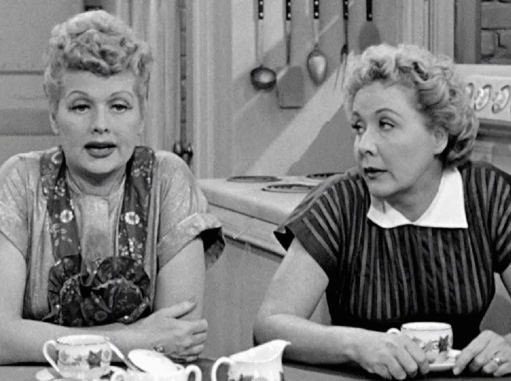
They Love Lucy! See Debra Messing, Kelly Ripa, Pink and More Celebrities Dressed Up As Lucille Ball

In honor of the legendary comedian, we’ve rounded up some of her most famous fans who prove that imitation is the sincerest form of flattery.

Everybody loves Lucy — including these famous faces!

Lucille Ball created one of the most iconic female comedy characters of all time: Lucy Ricardo, a housewife with a desperate penchant for scheming her way into show business via her husband’s club.

Each year, on October 15, her beloved character is celebrated with National I Love Lucy Day. From Debra Messing’s Will & Grace recreation of some of Lucy’s most belly-laugh-inducing scenes to celebrities like Lisa Rinna and Kelly Ripa mimicking her perfectly coiffed updo and arched eyebrows for Halloween, here are some of our favorite ways the stars have tipped their hat to one of the original queens of comedy.

Nicole Kidman

backgrid

The Australian actress is set to play Lucille Ball in the Aaron Sorkin-directed Being the Ricardos, which is currently in post production. Kidman stars opposite Javier Bardem, who takes on the role of her former husband and costar Desi Arnaz. The couple’s daughter Lucie Arnaz visited the set and called Kidman’s performance “spectacular.”

Debra Messing

Dave Bjerke/NBC

Another famous redhead in comedy, Messing was the spitting image of Ball’s I Love Lucy persona for an episode of Will & Grace — even recreating some of the sitcom’s most famous scenes, from working on a chocolate conveyor belt to filming the Vitameatavegamin commercial.

Kelly Ripa

For Halloween in 2018, Live with Kelly and Ryan‘s Ripa and Seacrest channeled the classic comedy for an episode of I Love Lucy-ish, playfully incorporating some modern elements into the show (like Lucy becoming a famous YouTuber). For the hilarious bit, Ripa enlisted her husband Mark Consuelos to take on the role of Ricky Ricardo — while Seacrest channeled the TV couple’s son, Little Ricky.

Pink

pink/instagram

2018 also saw Pink channel the comedian, donning Lucy’s signature red updo and a retro dress to pose for a photo with husband Carey Hart beside their decked-out Christmas tree. “I really do love Lucy,” the singer captioned the shot.

Amanda Bynes

Bynes, who was a comedy prodigy in her own right on the popular All That and later on The Amanda Show, imitated Lucy in this adorable ’90s skit called I Luv Lucy, featuring All That costar Kenan Thompson as the Ricardos’ neighbor and close friend, Fred Mertz.

Lisa Rinna

lisa rinna/instagram

The Real Housewives of Beverly Hills star and her husband, Harry Hamlin, did their best Lucy and Ricky impression for a Halloween party in 2010. Rinna shared the throwback photo to Twitter in 2016, adding, “I love #Halloween.”

Diane Guerrero

Ilya S. Savenok/Getty

The Orange Is the New Black star hit Heidi Klum’s legendary Halloween party dressed as Lucy — wearing a classic polka dot dress and Lucy’s go-to red lip — in 2014.

Kathie Lee Gifford & Hoda Kotb

Richard Drew/AP/Shutterstock

For Halloween in 2010, the former Today show co-hosts and real-life BFFs paid homage to Lucy’s onscreen friendship with Ethel Mertz, as well as their iconic grape stomping scene.

Desi Arnaz Jr. Speaks About Father’s Alcoholism, Divorce from Lucille Ball in Rare Interview

In his new book ‘Desi Arnaz: The Man Who Invented Television,’ biographer Todd S. Purdum delves deep into the life of the man most know as Ricky Ricardo

Desi Arnaz Jr. is opening up about his father, Desi Arnaz, and offering a rare look at a man who lived to entertain — but wrestled with his demons behind the scenes.

In his new book Desi Arnaz: The Man Who Invented Television, biographer Todd S. Purdum delves deep into the life of the man most know as Ricky Ricardo — or, perhaps, as Mr. Lucille Ball.

In interviews with the couple’s children — Desi Jr. and daughter Lucie — Purdum offers glimpses into the behind-the-scenes life of Arnaz and the tumultuous relationship of the I Love Lucy stars, who divorced in 1960, after 20 years of marriage.  

The book offers a rare look at Desi Jr., who was — at the time of his birth in January 1953 — arguably the most famous baby in America. Desi Jr.’s birth was even incorporated into the show, and while he had his own foray into showbiz early on, he later retreated from the public eye and now rarely speaks to the press.

While audiences were delighted by his parents’ relationship, Desi Jr. told Purdum that behind the scenes, Lucy and Desi were incredibly argumentative

“It wasn’t good for anyone,” Desi Jr. told the author in the book. “And we’ll always remember when they sat us down and said, ‘Look, you know, things aren’t working.’ I mean, I remember word for word.”

Desi Arnaz, Lucille Ball, Desi Jr., Lucie’, 1953. CBS Photo Archive/Archive Photos/Getty

In interviews with the author, the now-adult children explained how different their parents were. Lucie recalled how her mother “took it personally” when one of the children would disappoint her. Desi, by contrast, “was not like that,” she described.

“He would get really angry and blow his stack, and be loud, but then he’d be done and it would be like it never happened,” Lucie said. “Like a storm just passed. The storm never said, ‘I’m sorry,’ the storm never left a note saying, ‘I’m sorry, that wasn’t your fault.’ But it stopped, right? My mother would get personally offended by childhood behavior or what you said, because you should have known not to say that somehow, even though no one’s taught you what to say. And she would emotionally separate from you for however long she wanted to. And it would be sometimes days, sometimes weeks.”

Lucille Ball and her husband Desi Arnaz, with their children Lucie and Desi Jr., 1959. J. Wilds/Keystone/Hulton Archive/Getty

When the children were involved in their parents’ work, by attending weekly shootings of I Love Lucy, they weren’t always happy.

Speaking to the author, Lucie detailed how she would “hide under the bleacher” when her mother introduced her to the audience.

Desi Jr., meanwhile, “was very much embracing the whole thing,” he said.

But theirs was not a normal life, instead hallmarked by the stardom of their parents and the strange upbringing that comes with being born to fame.

In one pivotal moment in the book, Johnny Aitchison, Desi’s secretary, described how strange it was to see a young Lucie and Desi playing with paper dolls of their own parents. “And it was the most natural thing in the world to watch these kids playing with that, just your normal kids having a good time, but playing with paper dolls of their parents.”

Lucille Ball, Desi Arnaz, Desi Jr. Michael Ochs Archives/Getty

Of course, the highs of their star power were at times eclipsed by the lows, with the book detailing Desi’s descent into alcoholism.

It was his son, Desi Jr. — who himself had struggled with addiction and was thrust into the spotlight as a teen amid well-publicized romances with Patty Duke and Liza Minnelli — who helped him seek treatment.

Four years after Desi Jr. sought treatment (in 1981 at the Scripps Clinic near San Diego), his father came to him for advice. In 1985, Desi himself entered an alcohol rehabilitation program at the Scripps McDonald Center in La Jolla, where he registered under the name “Bill Sanchez” to protect his privacy.

“It was really nice,” Desi Jr. said, “because whatever I was going through, it was paying off. I said, ‘I can’t do anything for you, but there’s a place that can.’ He understood that.”

As Desi Jr. explained to the author, it was in fame where his father felt the most lonely: “That’s when he realized the emptiness—at the crest of his success. He didn’t stop drinking. He didn’t know what the real poison was. This is a temporary life.”

Desi Arnaz: The Man Who Invented Television (Simon & Schuster) is now available.

Desi Arnaz Jr. Breaks Silence on His Father’s Demons and the Fallout From ‘I Love Lucy’

A rare interview reveals the personal cost of being Hollywood’s first TV royalty.

Desi Arnaz Jr. has spent most of his life avoiding the spotlight that once lit up every corner of his childhood. But People reported that in a rare interview for the new biography Desi Arnaz: The Man Who Invented Television by Todd S. Purdum, he opens up about growing up in the eye of a cultural storm, and the toll it took.

Born into America’s most famous television family, Desi Jr. was thrust into the public eye before he could walk. His birth was written into I Love Lucy, and he grew up on the set as his parents, Lucille Ball and Desi Arnaz, redefined entertainment. But while audiences adored their onscreen chemistry, their real-life relationship was crumbling behind closed doors.

“It wasn’t good for anyone,” Desi Jr. said of the constant arguing. He and his sister, Lucie, vividly remember the moment their parents told them the marriage was over. Lucie described their mother as deeply sensitive, often emotionally distant when hurt, while Desi Sr. was volatile but quick to move on—an emotional storm with no apology.

The children’s backstage experiences were just as complex. Lucie recalled hiding under bleachers when introduced to the audience. Desi Jr., by contrast, embraced the attention. Still, the pressure of fame left deep marks. Both siblings struggled to find stability in the shadow of legends.

One of the most poignant moments in the book comes when Desi Jr. recounts helping his father seek treatment for alcoholism. After battling his own addictions, he guided his father toward rehab in 1985—a move that may have saved his life.

“He didn’t stop drinking,” Desi Jr. said. “He didn’t know what the real poison was.”

This biography isn’t just about a television pioneer. It’s about the fractured reality of fame and the complicated love between parents and children navigating a world built on performance.

Popular

The Heartbreaking Reason First Lady Jill Biden Is Devastated Today

0
The White House has been cast into a somber silence following the heartbreaking news that First Lady Jill Biden is mourning the profound loss...