
Entertainment

Why Bad Bunny won’t be paid at all for his incredible Super Bowl halftime show

Bad Bunny may have just delivered one of the most memorable Super Bowl halftime shows in recent memory, but he won’t be walking away with a sack of money one could argue he deserves.

That’s because Super Bowl halftime performers, irrespective of how big a name they are, don’t get paid for what is essentially a stadium show.

Any experienced artist will tell you of the old “exposure” trick, wherein someone wanting them to play has offered them the chance to get “great exposure”, instead of paying them money for their time and skill.

Usually it’s seen as being nothing short of a con – and not a subtle one – but in this instance, since the Super Bowl draws the eyes of millions and the attention of much of the world, I suppose there’s an argument to be made that “exposure” really is a thing.

As originally reported by NME, NFL covers all production and travel costs for whichever artist is performing the Super Bowl’s halftime show. This means that while Bad Bunny won’t necessarily be richer immediately after tonight’s successful performance, he also won’t be any poorer, despite the fact he put on a blockbuster show.

What’s more – as per sports business writer Joe Pompliano – Apple Music is said to pay the NFL around $50 million a year to sponsor the Super Bowl halftime show. Included in that deal is the artist’s budget of roughly $15 million when it comes to spending on production.

That money is for all things production-related, including set design and dancers, security, marketing, and thousands of part-time workers. A wage for the artist who is performing, however, is not included.

Again, the crux of the matter lies in the fact that not receiving a sum for the show itself can be weighed against the boost it gives to an artist’s career. Not only do they get the honor of delivering a show only entrusted to the world’s biggest, most successful performers, but they also tend to see a spike in record sales and sales of tour tickets.

Last year, for example, Kendrick Lamar’s halftime offering was watched by a staggering 133.5 million viewers (making it the most-watched halftime show in history).

In the days after 2025 Super Bowl, the rapper enjoyed a huge spike in his music across various streaming platforms.

Bad Bunny, it’s been reported, saw a similar result even before he took the stage for the Super Bowl halftime show this year. Data from Sudoku Bliss revealed that searches for ‘Bad Bunny tour’ jumped by 1,567 percent in the 24 hours following his Grammy wins last weekend as excitement around his upcoming Super Bowl show began to build.

Bad Bunny also gained more than 900,000 new Instagram followers after the Grammys. He now boasts more than 50.9 million.

What did you make of Bad Bunny’s halftime show? Let us know in the comments.
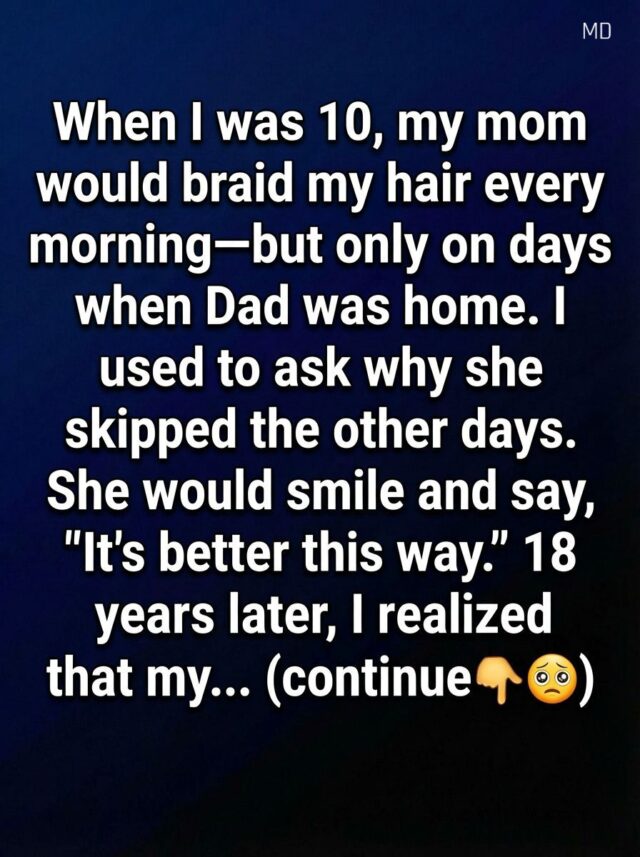
The Meaning Behind My Mother’s Morning Routine Finally Made Sense Years Later

When I was 10, my mom would braid my hair every morning—but only on days when Dad was home. I used to ask why she skipped the other days. She would smile and say, “It’s better this way.” Back then, I thought it was just one of those mysterious grown-up answers, something parents said when they didn’t want to explain things to children. I didn’t question it much. I simply enjoyed the gentle tug of her fingers through my hair, the quiet moments we shared before school, and the feeling that everything in our small world was perfectly normal.

On the mornings Dad traveled for work, Mom seemed more relaxed. We ate breakfast slowly, sometimes laughing over spilled cereal or a silly story from the radio. My hair stayed loose, and we rushed out the door together, carefree and unhurried. I never noticed the difference in her mood until much later. To me, she was just being practical, saving time when it was just the two of us. Childhood has a way of hiding adult worries behind ordinary routines.

Eighteen years later, while helping her sort old photos, I casually mentioned how pretty my braids looked in those childhood pictures. She smiled, then grew quiet. After a long pause, she explained that my father, though loving, believed appearances mattered deeply and expected everything in the house to look orderly, including me. On the days he was home, she woke earlier to braid my hair so mornings would stay calm and peaceful. On the days he was away, she allowed herself—and me—a little freedom and extra rest.

In that moment, I finally understood what she meant by “It’s better this way.” She had quietly balanced everyone’s needs, protecting the harmony of our home while still giving me small pockets of ease and comfort. Those braids were never about hairstyle alone—they were her silent way of keeping our family steady. Now, whenever I braid my own daughter’s hair, I remember those mornings and recognize the quiet strength in the small things parents do, often unnoticed, simply to keep love at the center of everyday life.

A Small Pink Box, a Family Misunderstanding, and the Start of Healing

The hospital room was quiet except for the soft hum of machines and the distant footsteps in the hallway. Elena stared at the bouquet of lilies on the windowsill, their sharp fragrance filling the air. The card attached to them carried words from her mother-in-law that felt colder than the sterile walls around her, suggesting that some family lines were better left to end. After her second loss, Elena felt fragile, and the absence of her husband only deepened the ache. He hadn’t visited, hadn’t called—just silence where comfort should have been. When she finally left the hospital, she packed a small suitcase and returned to her parents’ home, unsure of what her marriage or future even looked like anymore.

The next morning, while she sat at the kitchen table trying to regain a sense of normalcy, a courier delivered a small pink box addressed in her mother-in-law’s neat handwriting. Elena hesitated before opening it, her mind racing through possibilities. After the harsh message that came with the flowers, she expected another cruel gesture, perhaps an attempt to assign blame or deepen the wound. Her mother urged her to ignore it, but curiosity mixed with lingering hurt pushed Elena to tear open the package anyway. For a moment, she braced herself, expecting something painful. Instead, what she found inside made her breath catch in surprise.

Inside the box lay a delicate silver bracelet with a tiny engraved charm and a folded letter. The message was nothing like the earlier card. Her mother-in-law admitted her words at the hospital came from shock and fear, not cruelty. She wrote about her own past losses—ones she had never spoken of—and the guilt she still carried. The bracelet, she explained, was meant to honor hope rather than loss, a reminder that healing takes time and that family, even flawed family, sometimes struggles to express love properly. Elena felt a mix of confusion and relief, realizing that grief had twisted everyone’s reactions in different ways.

Later that evening, Elena sat alone, turning the bracelet in her hands. She understood that forgiveness wouldn’t come instantly, and trust would need rebuilding—especially with her husband, whose distance still hurt. But the letter reminded her that pain often hides behind harsh words and silence. She decided that her next steps would focus on her own healing first, not on pleasing others or carrying blame that wasn’t hers. The pink box, once a symbol of dread, became an unexpected turning point. For the first time in weeks, Elena allowed herself to believe that even after heartbreak, new beginnings could still find their way into her life.

Nancy Guthrie Case Update: Authorities Review New Message as Search Efforts Continue

For several days, the disappearance of Nancy Guthrie, mother of a well-known television anchor, has unfolded through limited updates, careful police briefings, and growing public concern. Late Friday, however, investigators returned to her Tucson-area home, signaling a possible shift in the pace of the investigation. Authorities have not publicly explained what prompted the renewed activity, but the visible law enforcement presence, including the removal of a vehicle from the property, drew attention from nearby residents and news crews. Officials continue to stress that the case is being handled methodically and that verified evidence — not speculation — is guiding their actions.

Nancy Guthrie was reported missing after disappearing from her home on January 31, 2026. Investigators believe she may have been taken against her will, though no suspects have been publicly identified. As national attention intensified, officials worked to balance public interest with the need to protect the integrity of the investigation. Complicating matters, a message claiming knowledge of Nancy’s disappearance was sent to a local news outlet and later shared with authorities. Investigators are examining the message cautiously, noting that similar communications can sometimes be attempts to mislead or gain attention during high-profile cases.

At the same time, federal authorities announced the arrest of a California man accused of sending disturbing messages to members of the Guthrie family during the search. Officials clarified that the messages were not connected to any ransom demand and that the individual is not believed to be involved in Nancy’s disappearance. Prosecutors emphasized that the suspect is presumed innocent while legal proceedings continue. Law enforcement agencies have also addressed public questions about missing security footage from the home, explaining that technical limitations prevented recordings from being saved during the crucial time frame.

Meanwhile, Nancy’s family has made emotional public appeals, asking for compassion and assistance while urging caution around unverified information circulating online. They described Nancy as a devoted mother and grandmother who is currently in fragile health, increasing concerns for her well-being. Authorities continue to encourage anyone with credible information to contact law enforcement, reiterating that verified tips remain crucial in advancing the investigation. As officials follow leads and review evidence, the community and the family wait anxiously for clarity, hoping for safe answers as the search continues.

A Difficult Dinner Conversation Helped Us Become a Family Again

I never imagined dinner could become the hardest part of the day. When my stepson, Daniel, moved in half the week, I tried my best to make our house feel welcoming. I learned his favorite foods, kept snacks he liked, and made sure he always had a place at the table. But every evening, he walked through the door carrying containers from his mom’s house and quietly ate alone, refusing even to taste what I prepared. At first, I told myself he just missed his routine. Still, night after night, the distance grew heavier, and I began to wonder if there was room for me in his life at all.

The frustration finally spilled over one evening after I’d spent hours cooking a meal I hoped everyone would enjoy together. When Daniel set his takeout box on the table again, something in me snapped. I raised my voice, saying this was our home, not a restaurant where everyone brought their own food. The words came out harsher than I meant them, fueled by months of feeling invisible. The room fell silent. My husband looked stunned, and Daniel froze, clearly hurt. I instantly regretted my tone, but pride kept me from taking the words back.

Daniel slowly looked up and said something that caught me off guard. He explained that bringing food wasn’t meant to reject me. At his mom’s place, cooking together was the one thing that still felt normal after their divorce, and eating her meals helped him feel connected when he missed her. He admitted he wasn’t sure how to balance two homes and worried that accepting my cooking might seem like he was choosing sides. Hearing that shifted everything. I realized his actions came from confusion and loyalty, not dislike or disrespect.

That night, we talked longer than we ever had before. I apologized for yelling, and he admitted he hadn’t meant to push me away. We agreed that sometimes he’d bring leftovers, and other nights we’d cook together, blending traditions instead of competing with them. The next weekend, Daniel helped me prepare dinner, teaching me one of his mom’s recipes while I showed him one from my own childhood. Slowly, the tension eased, replaced by laughter and shared stories. I learned that families don’t always come together easily, but patience and understanding can turn misunderstandings into bridges—and sometimes, healing begins with simply listening.

U.S. Olympic Athlete Revives a Once-Banned Move from 1977, Surprising Fans

The Milan-Cortina Winter Games delivered unforgettable moments that reminded fans why the Olympics remain one of the world’s most compelling sporting events. Among the highlights was a performance that blended athletic skill with a touch of history. American figure skater Ilia Malinin thrilled the crowd during the team event by successfully landing a backflip, a move rarely seen at the Olympic level for decades. The audience erupted as he completed the daring maneuver, marking a symbolic return of a technique once considered too dangerous for competition.

The backflip had long been banned after concerns over safety, with the last legal Olympic version dating back to the 1970s. Although skaters occasionally attempted it in exhibition settings, strict rules kept it out of official routines for years. The rule change allowing the move again opened the door for Malinin to showcase his creativity on one of sport’s biggest stages. Even though he ultimately finished second in the event, his performance captured global attention and quickly became one of the Games’ most talked-about moments.

Yet the Olympics also remind audiences of the discipline and sportsmanship expected from athletes. During a separate competition, a high-profile judo match ended in controversy when emotions boiled over after a decisive bout. Officials quickly intervened, later confirming disciplinary action and emphasizing that respect for opponents remains central to the sport. The incident served as a strong reminder that Olympic competition is not only about winning medals but also about upholding values that inspire viewers around the world.

Meanwhile, the Games also carried moments of concern when a decorated American skier suffered a serious crash during a downhill event. Medical teams responded immediately, transporting the athlete for evaluation while fans and fellow competitors expressed support. The incident highlighted both the physical risks elite athletes face and the resilience required to compete at such a demanding level. Together, these moments — triumph, controversy, and perseverance — illustrate why the Winter Games continue to capture the world’s attention, offering stories of courage, discipline, and unforgettable athletic achievement that extend far beyond the medal podium.

Hospital Shares New Update on Lindsey Vonn as Team USA Official Provides Statement

Concern spread across the Winter Olympics after American skiing icon Lindsey Vonn suffered a serious crash during the women’s downhill final in Cortina. The incident occurred shortly after the start of her run when contact with a course gate caused her to lose balance at high speed. Vonn fell heavily and slid down the slope before coming to a stop, prompting immediate medical attention from on-site teams. Due to the impact of the fall, officials decided to transport her by helicopter to a nearby medical facility for further evaluation and treatment.

Medical staff later confirmed that Vonn sustained a fracture in her left leg and underwent surgery to stabilize the injury. Hospital representatives stated that the procedure was successful and that she is now being cared for by a team of specialists overseeing her recovery. Earlier updates from Team USA reassured fans that she remained in stable condition following the accident, easing initial fears about the severity of her injuries. Reports also indicated that she would continue her recovery in Cortina rather than being transferred to a larger hospital, suggesting that doctors felt confident in managing her condition locally.

The crash was especially heartbreaking given Vonn’s determination to compete despite already dealing with a recent knee injury. Just days before the Olympic race, she had torn her ACL in a separate event but chose to continue training in hopes of competing in what could have been her final Olympic appearance. Team USA officials praised her resilience while cautioning that recovery from the latest injury would take time. They emphasized the demanding nature of alpine skiing, reminding viewers of the intense speeds and risks athletes face each time they take to the course.

Support for Vonn poured in from across the sporting community, including from her teammates competing in the same event. Fellow American skier Breezy Johnson, who went on to win gold after the competition resumed, shared that Vonn had been cheering from the helicopter while being transported for treatment. Moments like these highlight both the dangers and the strong camaraderie within winter sports. While the road ahead may involve a lengthy recovery, fans around the world continue to send encouragement to one of skiing’s most celebrated figures, hoping to see her healthy and smiling again soon.

Today Show Adjusts Schedule as Melvin Chooses to Support Friend Over Olympics Assignment

The 2026 Winter Olympics in Milan were set to be a major broadcasting moment for the Today show, promising live coverage, athlete stories, and familiar anchors reporting from one of the world’s biggest sporting events. Viewers expected to see the show’s well-known hosts on location, sharing the excitement from Italy. However, plans changed when longtime anchor Craig Melvin announced he would not be traveling for the Olympic coverage, surprising many fans who look forward to seeing the team together during major global events.

At first, many assumed the change was due to normal scheduling adjustments or production decisions. However, it soon became clear that the reason was deeply personal rather than professional. Co-host Savannah Guthrie stepped away from her duties due to an urgent family matter involving a loved one, leading her to remain close to home during a difficult period. The situation understandably shifted priorities for the show’s team, as personal responsibilities took precedence over work commitments.

According to reports, Melvin chose to adjust his own plans in order to support his colleague during this challenging time. Rather than traveling abroad, he decided to remain available to help manage responsibilities at home and offer personal support. The decision was not reportedly mandated by the network, but instead reflected the strong friendships and trust developed among the team after years of working closely together. Behind the scenes, broadcast teams often form bonds that extend beyond professional roles, and Melvin’s choice demonstrated how those relationships can influence important decisions.

While some viewers may miss seeing the usual on-site lineup during Olympic coverage, many have expressed appreciation for the values reflected in the situation. The decision highlights how even in high-profile careers, personal well-being and support for colleagues can take priority over professional appearances. In a world where public figures are often expected to keep working regardless of circumstances, moments like this serve as a reminder that empathy and compassion matter. Sometimes, the most meaningful choices happen away from cameras and headlines, showing audiences that friendship and humanity remain important, even in the fast-paced world of live television.

Savannah Guthrie and Her Siblings Take Urgent Action as Search Continues for Their Mother Nancy

Nearly a week after Nancy Guthrie was reported missing, her family continues to face an emotional and uncertain situation that has drawn widespread public attention. What began as a quiet appeal soon became a series of public messages as loved ones searched for answers and hoped for safe contact. Savannah Guthrie and her siblings have spoken openly about the strain of waiting without clear information, describing how the silence surrounding their mother’s disappearance has been one of the most difficult parts of the ordeal.

The family’s first public message came from Nancy’s son, Camron, who addressed anyone with information and asked for communication that could help confirm her well-being. His calm but urgent statement focused on establishing contact rather than making demands. Family members emphasized their desire simply to know their mother was safe. Observers noted the careful tone of the appeal, which avoided emotional escalation while expressing the deep concern felt by the entire family.

Days later, Savannah Guthrie appeared alongside her siblings in another video message, where they shared that they had received communication connected to the case and pleaded for their mother’s safe return. The siblings, visibly emotional, spoke about Nancy’s importance to their family and the hope of seeing her again soon. While experts often advise caution in situations involving possible demands, the family’s message reflected the emotional toll of the uncertainty and their focus on bringing their mother home safely.

Meanwhile, investigators continue reviewing tips and evidence as the search moves forward. Authorities have confirmed they are examining all available leads while urging the public to avoid speculation as the investigation continues. Officials have also clarified that certain reports circulating online are unverified, emphasizing that conclusions will depend on confirmed facts. As the case unfolds, Savannah Guthrie and her family remain focused on cooperation with authorities while continuing to appeal for information. Their public messages reveal not only concern but also the difficult choices families sometimes face when hope, fear, and uncertainty collide, leaving loved ones waiting for news and praying for safe answers.

A Widow’s Choice: Finding Strength and Setting Boundaries After Loss

At thirty-two, my life looked very different from what many people expected. My husband, Daniel, and I had agreed early in our marriage that we would live childfree, choosing travel, quiet evenings, and shared dreams instead. He respected that choice, and we built a loving partnership around mutual understanding. When Daniel passed away unexpectedly, my world collapsed overnight. The house felt empty, and even ordinary routines reminded me of everything I had lost. I was still learning how to breathe through the grief when a new conflict appeared—one I never imagined facing while mourning.

A few weeks after the funeral, my mother-in-law asked to visit. I assumed she wanted to share memories or find comfort in family, but the conversation took an unexpected turn. She insisted Daniel would have wanted a child and claimed there was still a chance to make that happen using materials he had preserved before his passing. I was stunned. Daniel and I had made our decision together, and I felt that honoring his memory meant respecting the life we had chosen. When I gently but firmly refused, she reacted emotionally, accusing me of denying her the chance to see a part of her son live on. I left the conversation shaken, unsure how things had escalated so quickly.

The following day brought an even bigger shock. I learned she had contacted a fertility clinic without my knowledge, asking about possibilities and presenting herself as if decisions had already been made. That discovery hurt deeply, not because of the medical details, but because it crossed a personal boundary during a time when I was already vulnerable. I realized that grief can push people toward desperate hopes, but it doesn’t justify taking away someone else’s choice. I decided to speak to her calmly, explaining that while I understood her pain, my life and future could not be decided by anyone else.

That conversation was difficult but necessary. Over time, emotions cooled, and we began to understand each other’s perspectives better. She eventually admitted that fear of losing the last connection to her son had clouded her judgment. I, in turn, recognized that grief affects people differently. We may never fully agree, but we learned that compassion works best when paired with clear boundaries. As I continue rebuilding my life, I carry Daniel’s memory with me—not through obligation or pressure, but through the love we shared and the choices we made together. And sometimes, healing begins when we learn to protect our own peace while still acknowledging the pain of others.

Popular

Words From Nancy Guthrie Change Everything for the Family!?

0
The disappearance of Nancy Guthrie has transitioned from a private family tragedy into a sprawling narrative that has gripped the collective public consciousness. This...