
Entertainment

Everything Changed in One Call, Savannah Guthrie Shaken as FBI Delivers Grim New Twist in Mothers Disappearance Case

For over a decade, Savannah Guthrie has been a fixture of American morning television, serving as a beacon of composure and journalistic integrity for millions of viewers. As the co-anchor of NBC’s Today show, she has navigated the country through some of its most turbulent moments—political upheavals, global health crises, and the harrowing details of national tragedies. Her professional hallmark has always been a rare blend of steely resolve and profound empathy, a steady hand that guides the audience through the complexities of the news cycle. However, in a jarring and heartbreaking reversal of roles, the woman who has spent her career reporting the news has suddenly become the focus of it.

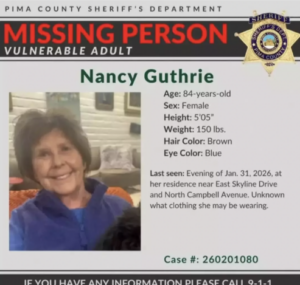
The disappearance of Nancy Guthrie, Savannah’s 84-year-old mother, has evolved from a frantic local search into a sophisticated federal criminal investigation. What began as a terrifying but seemingly straightforward “Silver Alert” in a quiet, sun-drenched Arizona neighborhood has taken a grim turn that has sent shockwaves through the law enforcement community and the public alike. For the Guthrie family, the transition from hopeful searching to the realization of criminal intent has been a slow-motion nightmare, one that defies the tranquil retirement life Nancy had built for herself.

Nancy Guthrie was a pillar of her community, known for her warmth, intellectual curiosity, and an unwavering devotion to her children and grandchildren. When she was first reported missing weeks ago, the initial working theory focused on the vulnerabilities of age. Investigators and family members alike feared a medical emergency or a sudden bout of disorientation—common but devastating occurrences for families with elderly loved ones. Search parties moved with urgency through the desert brush and suburban streets, hoping to find her sheltered nearby, perhaps confused but safe.

But as the days stretched into weeks, the narrative of a wandering senior began to crumble under the weight of a total absence of evidence. There were no sightings, no digital footprints from credit cards or phones, and no physical clues suggesting she had simply walked away from her life. The silence from the Arizona desert was deafening, and it forced a chilling pivot in the investigation. “She didn’t just walk out,” authorities eventually conceded, as forensic teams moved back into the Guthrie residence. The home, once a sanctuary of family memories, was cordoned off with yellow tape and officially reclassified as a crime scene.

On February 4, the public saw a version of Savannah Guthrie they had never witnessed before. Standing before microphones not as an interviewer, but as a grieving daughter, she addressed the nation. Gone was the polished armor of a seasoned broadcaster, replaced by a raw, visible fragility. Through a voice thick with emotion, she revealed that the FBI had been formally brought into the case, bringing with them a “grim new twist” that changed the trajectory of the search forever. “I wasn’t ready for this,” she whispered, her words echoing the sentiments of every family who has ever felt hope slipping through their fingers. “You hold onto hope as long as you possibly can, even when the weight of the silence feels like it’s pulling you under.”

The involvement of federal authorities signals a level of complexity and danger that transcends a standard missing persons case. Law enforcement sources close to the investigation have indicated that newly recovered forensic data and surveillance footage from neighboring properties suggest a high degree of premeditation. The language used by officials has shifted from the vocabulary of “recovery” to the language of “accountability” and “justice.” The case is now being treated as a suspected criminal abduction, with evidence pointing toward a planned kidnapping rather than a random act of violence.

Senior officials involved in the briefing described the situation as a “nightmare scenario,” citing signs of criminal intent that suggest Nancy was targeted. Federal agents are currently reconstructing a minute-by-minute timeline of the night she vanished, scrutinizing suspicious vehicle reports and anomalous activity in the area. The realization that an 84-year-old woman could be forcibly taken from the perceived safety of her own home has sparked a national conversation about the profound vulnerability of our elderly population, particularly those living in isolated or quiet communities where the sense of security can often be an illusion.

The outpouring of support for Savannah and her family has been immense, transcending the usual boundaries of celebrity interest. Within the halls of NBC, colleagues have rallied around her, describing her as the “emotional backbone” of the newsroom. For those who work alongside her, watching a woman of such immense strength endure this specific brand of agony is almost unbearable. The Today show team, usually tasked with maintaining a sense of normalcy, has had to navigate the surreal experience of seeing their friend’s private tragedy play out on the very screens they inhabit every morning.

This case highlights the particular cruelty of the “unanswered question.” For the Guthrie family, the lack of closure is a persistent, gnawing pain. In the absence of definitive answers, the mind wanders into the darkest possibilities, fueled by the cold facts provided by the FBI. Yet, even in the face of such a “grim twist,” a flicker of determination remains. The investigation is now a multi-state effort, utilizing the full technological and tactical weight of the federal government to find the individual or individuals responsible for this breach of peace.

As the sun sets over the Arizona landscape, the search for Nancy Guthrie continues, though its nature has fundamentally changed. It is no longer just a search for a person; it is a pursuit of the truth in its most difficult form. The story has become a haunting meditation on the bonds of family and the suddenness with which a life can be upended. Savannah Guthrie, a woman who has spent her life seeking the truth for others, is now waiting for a truth of her own—one that may be the most difficult story she will ever have to process.

For now, the country watches and waits with her. The headlines continue to scroll, and the news cycle moves relentlessly forward, but for a daughter in Arizona, time has slowed to a crawl. She waits in the quiet spaces between the breaking news alerts, holding onto the memory of her mother’s voice and the fragile, unyielding hope that even in the darkest investigations, light can eventually be found. The nightmare in the desert is far from over, but the resolve to bring Nancy Guthrie home—or to bring her captors to justice—remains an unshakable force against the silence.
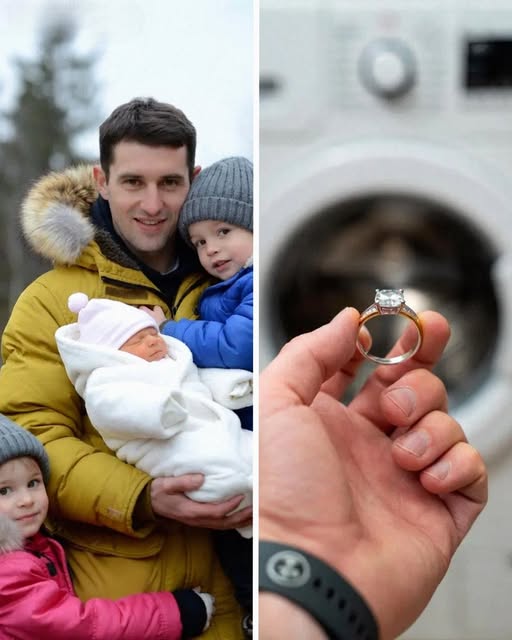

I Found a Diamond Ring on a Supermarket Shelf and Returned It to Its Owner — the Next Day, a Man in a Mercedes Showed Up at My Door!!

When a widowed father of four finds a diamond ring lying in a grocery store aisle, he ends up making a choice that costs him nothing, yet changes everything. What unfolds is a quiet reminder that in a world full of hardship, honesty still matters — and sometimes life gives back in ways you never see coming.

It began with a knock on the door and a man in a suit standing beside a black Mercedes. Just that morning, I had been doing what I always do — juggling four children, one broken appliance, and the general chaos of our home.

Grace was crying over a lost teddy. Lily was upset because her braid looked “lumpy.” Max had managed to drizzle maple syrup across the tiles while the dog followed happily behind him. And Noah, being nine, was already asking what was for dinner even though breakfast dishes were still in the sink.

I wasn’t expecting anything beyond the usual marathon of mess and noise.

My name is Lucas. I’m 42, a widower, and a father trying to keep a household running with tape, prayer, and whatever strength I have left. Two years ago, shortly after our youngest was born, my wife Emma was diagnosed with cancer. We thought it was exhaustion from the newborn phase. It wasn’t. It was brutal. It was fast. And in less than a year, she was gone.

Now it’s just me and four kids: Noah at nine, Lily at seven, Max at five, and two-year-old Grace. I work full-time at a warehouse and take whatever extra jobs I can on nights and weekends. The house leaks when it rains. The dryer has to be kicked twice before it works. Our minivan rattles like it’s holding itself together out of habit. Still, the bills get paid. The kids are fed. They’re safe. They know they’re loved — that’s all that matters to me.

One Thursday afternoon, after school pickups and daycare runs, we stopped at the grocery store for the basics. Milk, cereal, apples, diapers — and whatever I could stretch the week’s budget to cover.

Max had squeezed himself into the lower rack of the cart, narrating our trip like a car race. Lily was critiquing bread rolls as if she were a judge on a baking show. Noah had knocked over a display and muttered “my bad.” And Grace was sitting in the seat, singing the same line of “Row, Row, Row Your Boat” while dropping crumbs everywhere.

I was steering the cart one-handed, trying to maintain order, when something gleaming between the apples caught my eye.

It was small, gold, and unmistakably real. A diamond ring.

I picked it up carefully. It was heavy in a way no toy ring ever could be. I glanced around, but the aisle was empty. No one frantic. No one searching.

For a moment — one brief, quiet moment — I thought about what that ring could do for us. Brakes for the van. A working dryer. Groceries without worry. The braces Noah would need soon. The possibilities went through me like an ache.

But then I looked at my kids — at Grace, sticky-haired and laughing, at Lily watching me with curious eyes, at Max wedged in the cart, at Noah drumming his fingers on the cart handle. And I knew.

This wasn’t mine. And I couldn’t be the kind of father who even hesitated in front of them.

I slipped the ring into my pocket, ready to return it to customer service, when a trembling voice pushed through the aisle.

“Please… please, it has to be here…”

An older woman came around the corner — distressed, frantic, almost in tears. Her cardigan was slipping off, her purse was spilling, and her eyes were darting desperately across the floor.

“Ma’am? Are you alright?” I asked gently.

When she turned toward me, her gaze landed on the ring in my hand. She gasped — a raw, broken sound.

“My husband gave me that ring,” she whispered. “On our 50th anniversary. He passed away three years ago. I wear it every day. It’s all I have left of him.”

She reached for it with trembling fingers. For a moment, she just held it against her chest as if she were trying to breathe life back into her own heart.

“Thank you,” she managed. “You don’t know what this means to me.”

“I know what it’s like to lose someone,” I said quietly.

She noticed the kids behind me and offered a soft smile. “They’re beautiful. You’re raising them with a lot of love.”

Then she asked my name, nodded as if memorizing it, and walked away, clutching the ring like she’d just been given her husband back.

I thought that was the end. We went home. I squeezed groceries into what was left of the budget. I wiped syrup off Max’s face. I tucked everyone in. Life went back to the usual.

The next morning, someone knocked on the door — sharp, deliberate. A man in a charcoal coat stood on my porch, the black Mercedes idling behind him.

“Lucas?” he asked. “I’m Andrew. You met my mother, Marjorie, yesterday.”

He explained that his mother had told him everything — how she’d lost the ring, how devastated she’d been, and how returning it had restored a hope she hadn’t felt since losing her husband.

“She’s been barely holding herself together,” he said. “That ring was his last gift to her. Losing it nearly shattered her.”

He reached into his coat and handed me an envelope.

“Before you open that,” he said, “my mother asked me to tell you something. She said your wife would be proud of the man you are.”

I didn’t have any words. I don’t think I even breathed.

He nodded at my kids behind me, then walked back to his car. “Whatever you choose to do with it,” he said gently, “just know it meant something.”

After dropping the kids off, I opened the envelope in the minivan. Inside was a check for $50,000, and a note:

“For your honesty. For giving my mother back a piece of her heart. For reminding her — and me — that good people still exist.

Use this for your family.

—Andrew”

I pressed my forehead against the steering wheel and let the quiet, heavy relief wash through me.

Within a week, the brakes were fixed. The fridge was full. Grace had new bedding that helped her eczema. Lily declared a pizza night “the fanciest night of her life.” We made a “vacation jar,” its sides plastered with the kids’ colorful drawings.

“Are we rich now?” Max asked.

“Not rich,” I said. “But safe.”

That night, I pulled all four kids into my arms and held them close.

Sometimes life takes too much. Sometimes it breaks you in half. But sometimes — when you least expect it — it gives something back.

Something you didn’t know you were still hoping for.

Donald Trump breaks silence on disappearance of Savannah Guthrie’s mom

President Donald Trump has shared his thoughts on the disappearance of TODAY show host Savannah Guthrie’s mother, Nancy, labeling the ordeal “terrible”.

During a press briefing on Tuesday, February 3, Trump was asked about the situation that has dominated headlines in the U.S. over the past few days.

Nancy has been missing since Saturday, January 3, while local police have refused to rule out that she was abducted from her own home in Catalina Foothills, north of Tucson, Arizona.

Police have conducted a search for the 84-year-old both from the air and on the ground. On Monday, Pima County Sheriff Chris Nanon confirmed that the case is now being treated as a criminal investigation.

“At this point, investigators believe she was taken from the home against her will, possibly in the middle of the night. Taken against her will includes possible kidnapping or abduction,” Nanos said.

“We have an 84-year-old woman who went to bed Saturday night and came Sunday morning; she’s gone,” the Country Sheriff continued. “We know, at least we believe, and I believe we know, she did not walk out of that home on her own.”

Authorities have also revealed that blood was found at the home.

In response to a question asked about the situation, Trump said he was planning to call TODAY host Savannah Guthrie.

“I think it’s terrible,” Trump told reporters. “I’m going to call her later on.”

He added: “It’s a terrible thing. I always get along well with Savannah. Very unusual situation, but we’re going to find out…”

The President also pledged to extend federal assistance to Arizona law enforcement in their bid to bring Nancy safely home.

Meanwhile, Sheriff Namos urged the public to come forward if they have any information relating to Nancy’s whereabouts, highlighting that she suffers from a number of health problems that make finding her swiftly all the more critical.

“We don’t need another bad, tragic ending. We need some help,” Nanos said.

“This is an 84-year-old lady who suffers from some physical ailments, has some physical challenges, is in need of medication — medication that, if she doesn’t have in 24 hours, it could be fatal.”

Savannah Guthrie was absent from the Today show on Monday, but thanked everyone for their support. Later, on Instagram, the 54-year-old posted a picture with the caption, “Please Pray.”

“We believe in prayer. We believe in voices raised in unison, in love, in hope. We believe in goodness. We believe in humanity. Above all, we believe in Him,” Savannah Guthrie wrote.

“Thank you for lifting your prayers with ours for our beloved mom, our dearest Nancy, a woman of deep conviction, a good and faithful servant. Raise your prayers with us and believe with us that she will be lifted by them in this very moment.”

The post concluded, “We need you. He will keep in perfect peace those whose hearts are steadfast, trusting in the Lord.” A verse of Isaiah for all time for all of us. Bring her home.”

In a quiet but deeply emotional development, Savannah Guthrie’s br!!

Her last message was never meant to carry weight.

It was brief. Ordinary. The kind of sentence people send every day without a second thought. Something that should have faded into the background of life.

Instead, it has become the quiet center of a storm no one in Savannah Guthrie’s family ever imagined facing.

Investigators now regard it as a fragile thread—one small human gesture pulling gently at the fabric of truth. Three simple words. One ordinary moment. And then, everything changed.

When Ordinary Words Become Sacred
In the days after the message resurfaced within the family, its meaning shifted.

What once sounded like a routine check-in now reads like something else entirely: a subtle warning, a hesitant reaching out, a feeling she may not have fully understood herself. It has become a quiet echo—asking to be heard long after the voice that sent it has fallen silent.

Those words now force everyone to look again.

At timelines.
At conversations.
At moments once dismissed as insignificant.

They remind us how often meaning hides inside simplicity—and how easily we overlook it until it is too late.

Not for Attention, but for Truth
When Savannah’s brother chose to share the message, it was not to invite speculation. It was an act of preservation.

A refusal to let their mother’s final attempt at connection disappear into sealed files and forgotten archives.

For the family, this was not “evidence” first.

It was love first.

Love trying to speak.
Love trying to protect.
Love trying to remain present in uncertainty.

They understand that the public will never fully carry the weight of those words. How could they? Words spoken between family members hold layers no outsider can measure.

Fear and tenderness intertwined.
Concern wrapped in restraint.
Hope whispered through uncertainty.

A Sign We Often Miss
In spiritual tradition, there is a quiet wisdom: not every warning arrives as thunder.

Some come as whispers.

Some come as small unease.
Some as brief hesitation.
Some as three ordinary words sent at the right—or wrong—moment.

We are tested not only in crisis, but in attentiveness.

Do we listen to subtle signals?
Do we honor discomfort?
Do we pause when something feels “slightly off”?

Often, we do not.

And later, we wish we had.

Between Evidence and Prayer
For investigators, the message is part of a case file.

For the family, it is something closer to a prayer that almost reached its destination.

It stands now between two worlds:

Between law and love.
Between analysis and memory.
Between what can be proven and what can only be felt.

It is both evidence and elegy.
Both clue and confession.
Both record and remembrance.

The Quiet Mercy of Persistence
What the Guthrie family has shown throughout this ordeal is not rage, nor bitterness, nor revenge.

It is patience.
It is restraint.
It is dignity.

They continue searching without surrendering their humanity.

They seek truth without abandoning mercy.
They wait without closing their hearts.

This is strength rarely celebrated.

But it is strength nonetheless.

Conclusion: When Small Things Outlive Us
In the end, that final message teaches a humbling truth.

We often think our most important words will be grand.

They are not.

They are usually simple.
Unpolished.
Sent without ceremony.

Yet sometimes, they become our last testimony.

A final sign that we loved.
That we noticed.
That we tried.

For Savannah and her family, those three words now carry a lifetime.

And for all who witness their story, they offer a gentle reminder:

Listen more closely.
Honor quiet instincts.
Treat ordinary moments with care.

Because in God’s unseen wisdom, even the smallest message may one day speak louder than anything else.

And nothing sincere is ever truly lost.

The Unexpected Father’s Day Surprise That Brought Our Family Closer!

The moment Lily said it, something inside me shifted.

We were inching through traffic after daycare, the radio low, the day almost over, when her voice floated up from the back seat, casual and unguarded.
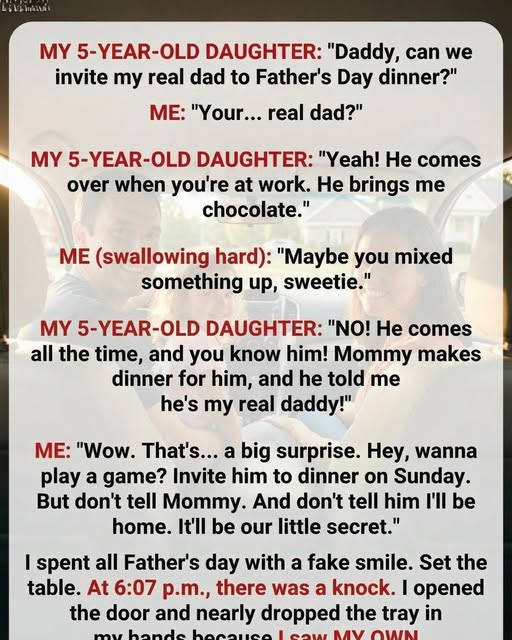
“Daddy, can we invite my real dad to dinner on Father’s Day?”

I let out a small laugh that sounded normal enough, even to me. “What do you mean, sweetheart?” I asked, tightening my grip on the steering wheel.

She was five—legs swinging, completely unaware of the weight she’d just dropped into the car. She explained it simply. A man came by sometimes when I was at work. He brought chocolate. He sat with Mommy. He told her he was her “real daddy.”

My chest thudded hard. I kept my voice steady, told her she might be confused. She shook her head.
“No, Daddy. He said it. And Mommy knows him.”

That night, sleep didn’t come. The words replayed again and again. Children imagine things—but Lily didn’t embellish. She was precise, consistent, stubbornly honest. And the longer I lay there, the more I understood this wasn’t confusion.

By morning, I knew I needed the truth. But confronting my wife without clarity felt like lighting a match in a closed room. So I did the one thing that scared me more than anger: I stayed calm.

I turned Lily’s words into a suggestion.
“What if we invite your real dad to our Father’s Day dinner?” I said lightly. “As a surprise. We won’t tell Mommy. Just our secret.”

Her face lit up. She clapped her hands, thrilled. Watching her excitement felt like something breaking quietly inside me.

The day moved slowly. I cooked, cleaned, set the table, every motion deliberate, as if I were underwater. Each minute echoed.

At 6:07 p.m., there was a knock.

I opened the door to a man about my age, holding a small gift bag. Chocolate was visible at the top. Lily ran past me like this was routine, wrapped her arms around his leg, said his name.

My wife appeared in the hallway. The color drained from her face. No words were needed.

I stepped aside and let him in. Lily washed her hands for dinner, humming, oblivious.

When she was out of the room, I asked him why he was there. His hands shook. He told me there had been a brief relationship years ago. He knew Lily was his. He stayed away because he believed letting me raise her was the right thing to do.

My wife cried quietly. No denial. No defense.

Dinner was calm. Almost ordinary. Lily laughed. Plates were passed. After she went to bed, the truth came out fully—fear, guilt, regret—spoken without shouting, without doors slamming. I listened, feeling parts of myself fracture in unfamiliar ways.

The weeks that followed were hard. Lawyers. Counselors. Long nights. Anger and grief came in waves. But something else surfaced too: clarity.

Fatherhood isn’t biology alone. It’s early mornings, scraped knees, school drop-offs, bedtime stories. It’s staying when leaving would be easier.

We rebuilt carefully. Lily deserved honesty, but she also deserved stability. Truth without chaos. Boundaries without cruelty.

Father’s Day came and went—not how I once imagined. But when Lily hugged me and said, “Happy Father’s Day, Daddy,” I understood something fully.

Families don’t survive through perfection. They survive through choice. Choosing to stay. Choosing responsibility. Choosing love when it costs something.

That night, standing in the doorway with a stranger and the truth between us, I made a promise.

No matter what changed, I would not leave.

And I didn’t.

My Son’s Coach Turned Out to Be Someone From My Past — A Reunion I Never Expected

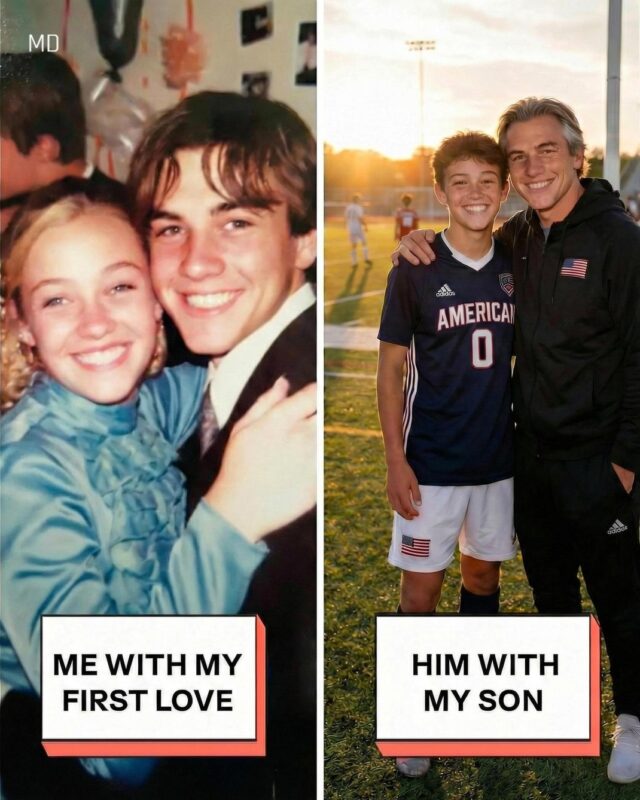
My teenage son Daniel had finally found joy again through soccer after a difficult few years following his father’s departure. He talked endlessly about his new coach, praising how supportive and encouraging he was. Curious and grateful, I attended one of Daniel’s games, only to come face to face with someone I never expected to see again—Charles, my first love. Sixteen years had passed since he suddenly left my life without explanation, leaving behind heartbreak and unanswered questions. Seeing him again stirred emotions I thought I had buried long ago, yet Daniel’s happiness mattered more than my discomfort, so I stayed silent and focused on my son’s progress.

Just as Daniel’s confidence began to grow, an unfortunate accident during a tournament changed everything. A fall left him with a serious knee injury that ended his hopes of playing competitive sports. Watching my son struggle with disappointment was painful, and during those difficult days, Charles continued to support him. One evening at the hospital, Charles asked to speak with me privately and handed me an old envelope with my name on it. Inside was a graduation-day proposal he had planned but never delivered, along with a letter from my father demanding he leave town and cut all contact or risk ruining my future opportunities. My father had forced him away without my knowledge, believing he was protecting me.

The discovery shook me deeply. Years of confusion suddenly made sense. Charles had left not out of indifference, but because he thought sacrificing our relationship was the only way to protect my dreams. Confronting my father later that night revealed how his interference had shaped much of my adult life, including a marriage that eventually failed and left me raising Daniel alone. Soon afterward, my ex-husband attempted to return, claiming he wanted to rebuild our family. But Daniel, hurt by years of absence, spoke honestly about the pain his father had caused. Realizing I needed to protect my son and move forward, I chose to close that chapter for good.

Over the following months, Charles remained part of our lives, supporting Daniel as he adjusted to new goals beyond sports. Gradually, Charles and I began rebuilding trust, taking time to understand each other as the people we had become. What once felt like unfinished heartbreak transformed into a second chance built on honesty and maturity. Eventually, Charles proposed again—this time without secrets or interference—and I happily accepted. Daniel celebrated alongside us, excited to see his mother happy again. For the first time in years, life felt peaceful. Our journey taught me that even when the past seems lost, truth and patience can lead us back to the happiness we were meant to find.

What It Really Means When Your Dog Looks Into Your Eyes

Have you ever noticed your dog gazing into your eyes as if trying to communicate without making a sound? That quiet moment can feel emotional and mysterious at the same time. Many pet owners wonder what their dog is trying to say during these silent exchanges. In reality, this behavior often reflects a strong emotional connection rather than a simple request for food or attention. Dogs communicate in many subtle ways, and eye contact is one of the most meaningful. When your dog looks at you calmly, it often signals trust, affection, and a desire to connect with you on a deeper level.

Scientists have found that mutual eye contact between dogs and their owners can trigger the release of oxytocin, sometimes called the “bonding hormone.” This same hormone plays an important role in strengthening emotional ties between parents and children. When a dog looks into your eyes in a relaxed way, it is often expressing comfort and security. Over time, these small moments of connection help build a strong relationship between pets and their owners. For many dogs, maintaining eye contact is simply their way of saying, “I feel safe with you,” or “I enjoy being near you.”

However, not every stare carries the same meaning. A dog’s body language provides important clues about what they are feeling. A soft gaze paired with a relaxed posture, gentle tail wagging, or a playful head tilt often indicates happiness or an invitation to interact. Dogs also learn to recognize daily routines, so they may watch you closely when it is almost time for a walk or meal. In those situations, their gaze becomes a quiet form of communication, showing anticipation or curiosity about what will happen next. Observing these signals helps owners better understand their pets’ needs.

On the other hand, a fixed or tense stare may suggest discomfort or uncertainty. If your dog’s body seems stiff, ears are raised, or breathing appears faster, it may be a sign that something in the environment is causing stress. In such cases, speaking calmly and giving the dog space can help them relax. Overall, positive interaction with pets, including eye contact, playtime, and walks, benefits both humans and animals by reducing stress and promoting emotional well-being. When you take the time to understand your dog’s signals, your relationship grows stronger. Those quiet moments of connection remind us that pets communicate in ways beyond words, offering loyalty, companionship, and unconditional affection to those willing to pay attention.

Why Some Experts Suggest Not Flushing After Every Bathroom Visit

Flushing the toilet is such an automatic habit that most of us rarely question it. Yet for simple urination, flushing every single time may not always be necessary, especially when considering how much clean water is used in the process. Many people are surprised to learn how much drinking water is consumed with each flush. By becoming more aware of our daily routines, we may discover small changes that help conserve valuable resources without sacrificing cleanliness or comfort at home.

Each time a toilet is flushed, between three and nine liters of treated drinking water are used. That water has already gone through a purification process, only to be immediately sent down the drain. In an average household, toilets are used many times a day, meaning hundreds of liters of water may be consumed weekly for flushing alone. Over the course of a year, this can add up to tens of thousands of liters of water. In many parts of the world, access to safe drinking water remains limited, making conservation efforts increasingly important on a global scale. Even modest changes in household habits can contribute to reducing unnecessary waste.

Some environmentally conscious households follow a simple rule: flush when necessary rather than automatically every time. Since urine itself is generally low risk when toilets are cleaned regularly, some families choose to delay flushing when practical, especially in private homes. Of course, cleanliness remains essential. Regular cleaning of the toilet bowl and bathroom ensures hygiene is maintained, and flushing should always be done when needed to avoid odors or discomfort. Small measures such as proper ventilation or natural air fresheners can also help maintain a pleasant environment.

Saving water does not require expensive renovations or complicated equipment. Simple awareness and thoughtful use of household resources can make a noticeable difference. Modern dual-flush toilets, which allow users to choose between smaller and larger flush volumes, also provide an effective long-term solution. Ultimately, each household should choose what feels comfortable and respectful for everyone living there. By paying attention to everyday actions, families can reduce water consumption while keeping their homes clean and functional, showing that responsible habits can begin with the smallest routines.

What the First Letter of Your Name Might Reveal About Your Personality

Since ancient times, people have searched for meaning in the symbols that surround them, and names have always held a special place in many cultures. A name is more than a simple label—it often represents identity, family history, and personal story. In various traditions, special attention is given to the first letter of a person’s name, which is sometimes seen as a symbolic gateway to personality and character. While these interpretations are not based on scientific proof, they remain popular as tools for reflection and self-understanding. Many people enjoy exploring what their name might suggest about how they relate to the world and the people around them.

A name is one of the first things a person learns to recognize as their own, and it follows them throughout life. Because of this deep connection, some symbolic traditions suggest that the first letter carries a kind of emotional or cultural imprint. In ancient societies, including Greek, Hebrew, and various Eastern cultures, letters were often connected to numbers, ideas, and spiritual symbolism. Over time, this led to the belief that certain letters could represent qualities such as strength, creativity, sensitivity, or determination. Today, these interpretations are usually seen as a fun and thoughtful way to explore personal traits rather than strict definitions.

Many popular interpretations group initials into symbolic categories. Some letters are associated with leadership, independence, and initiative, suggesting individuals who are confident decision-makers. Other initials are linked with empathy and emotional awareness, describing people who are thoughtful and sensitive to others. Certain letters are often connected to creativity and self-expression, symbolizing imagination and communication skills. Meanwhile, other initials are traditionally tied to discipline, responsibility, and perseverance, representing people who value stability and long-term goals. These meanings are not rules, but rather ideas that encourage personal reflection and self-discovery.

Ultimately, no single letter can define a person’s destiny or personality. Life experiences, upbringing, personal choices, and environment shape who we become far more than any symbolic interpretation. Still, many people find value in exploring these ideas as a way to better understand their strengths and motivations. The true meaning of a name lies in the story built around it—the actions, relationships, and memories that give it life. While the first letter may serve as a symbolic starting point, it is each individual’s journey, decisions, and character that truly define who they are and how their story unfolds.

The Hidden Purpose Behind Traditional Church Pews

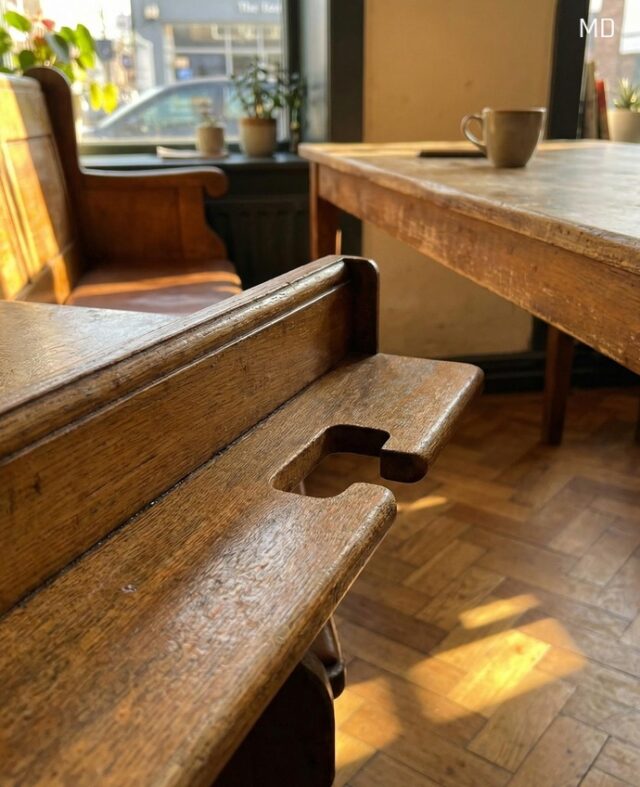
At first glance, the photograph appears to capture nothing more than a simple wooden bench inside a church. Yet small details often carry quiet stories, and this carved opening along the pew reveals how thoughtfully such spaces were designed. Churches have long been places where communities gather not only for worship but also for reflection, comfort, and connection. Every element within these buildings, from stained glass windows to wooden seating, was often crafted with both purpose and care. The smooth, worn wood seen in the image suggests years of use, countless visitors sitting, standing, and kneeling in shared moments of hope and contemplation.

The carved slot in the pew may seem unusual to modern visitors, but it serves practical purposes rooted in tradition. Many church pews include features that help support worshippers during services, such as spaces for hymn books, prayer guides, or personal belongings. In some designs, openings allow easier movement or create room for kneeling during prayer. These details reflect how architecture and furniture evolved to accommodate both comfort and ceremony. Over time, small touches like this became part of the experience, helping people focus less on discomfort and more on the quiet purpose that brought them there.

Beyond practicality, objects like this pew often carry emotional weight. Generations of families may have sat in the same spot, celebrating weddings, baptisms, holidays, and moments of remembrance. The polished surface, shaped by years of use, tells a story of community continuity. While modern seating in many buildings prioritizes efficiency or minimal design, older handcrafted furniture reminds us of a time when durability and warmth mattered deeply. Each mark and softened edge is evidence of shared human experiences that unfolded within those walls.

Ultimately, the photograph encourages us to notice how even ordinary objects can hold layers of meaning. What might seem like a simple detail becomes a reminder of tradition, craftsmanship, and the importance of communal spaces. In today’s fast-moving world, places designed for quiet reflection remain valuable. The pew, with its modest yet purposeful design, symbolizes how thoughtful construction can support moments of stillness and connection. Sometimes, the smallest features quietly preserve the memory of countless stories, inviting us to slow down and appreciate the environments that continue to bring people together.

Popular

Words From Nancy Guthrie Change Everything for the Family!?

0
The disappearance of Nancy Guthrie has transitioned from a private family tragedy into a sprawling narrative that has gripped the collective public consciousness. This...