Entertainment

Authorities Visit Home of Nancy Guthrie’s Relatives — What We Know So Far

What first appeared to be a straightforward missing person case has developed into a complex investigation as authorities continue to examine every detail surrounding Nancy Guthrie’s disappearance. The 84-year-old was last seen after spending an evening with family members in the Tucson, Arizona, area. As investigators review timelines and statements, small clarifications have shifted the understanding of her final known movements, prompting renewed attention to the sequence of events before she vanished. Officials emphasize that the investigation remains active and that conclusions are not being drawn prematurely.

According to law enforcement updates, Nancy was out to dinner with family members on the evening of January 31, 2026, and was later driven home. Authorities initially reported that one family member was the last person to see her, but later clarified that another relative personally ensured she entered her home safely before leaving. Investigators now believe the crucial window in the case spans from late that night until late the following morning, when relatives realized Nancy was missing and contacted authorities. Sheriff Chris Nanos described the situation as deeply concerning, particularly given Nancy’s age and health, prompting an extensive response from investigative teams.

As part of ongoing efforts, law enforcement officers were later seen visiting the home of relatives connected to the timeline. Reports indicated that multiple investigative units assisted in reviewing potential evidence, though officials stressed that the presence of certain specialized units does not imply specific criminal activity. Authorities also made clear that, at this stage, no suspects or persons of interest have been publicly identified. Investigators continue to examine digital records and other materials in an effort to piece together Nancy’s final known hours while maintaining that they do not currently have evidence confirming harm.

Public interest in the case has grown, with online discussions reflecting both concern and speculation as new updates emerge. Officials, however, continue to urge patience while they work carefully through the investigation. For Nancy’s family, the uncertainty remains painful as search efforts continue. Law enforcement agencies state they are using every available resource to retrace events and close gaps in the timeline, hoping to bring clarity to what happened. For now, the case remains unresolved, with authorities focused on facts rather than assumptions as they continue searching for answers and encourage anyone with information to come forward.

Olympic Crowd Reacts Strongly During Team USA’s Opening Ceremony Entrance

The 2026 Winter Olympics officially opened in Milan with a colorful ceremony at the historic San Siro Stadium, bringing together athletes and spectators from around the world. Musical performances and cultural showcases highlighted the spirit of unity that the Games aim to promote. Yet, in the days leading up to the event, public discussions and demonstrations related to international political issues added tension to what is normally a celebratory occasion. Organizers emphasized that the ceremony should remain a moment focused on sport and mutual respect among nations.

As athletes from different countries entered the stadium, attention turned to the arrival of Team USA. Representatives from the United States government attended in place of the president, and the moment drew a strong reaction from sections of the crowd when officials were shown on stadium screens. While many spectators applauded the athletes themselves, others voiced criticism connected to broader political concerns. Social media quickly reflected mixed reactions, with viewers debating whether sporting events should remain separate from political disagreements.

Protests in parts of the city ahead of the ceremony also drew attention, with demonstrators expressing their views on international policy matters. Some athletes used their personal platforms to share opinions about issues affecting their home countries, sparking further conversation about the balance between personal expression and the Olympic movement’s long-standing principle of political neutrality. Olympic officials reiterated that athletes are encouraged to respect guidelines designed to keep competition focused on sport while still allowing personal voices to be heard in appropriate spaces.

Despite the surrounding controversy, the opening ceremony ultimately celebrated the start of another global sporting event where athletes dedicate years of preparation to represent their nations. For many participants and fans, the Games remain an opportunity to celebrate talent, perseverance, and cultural exchange beyond political differences. As competitions begin, organizers hope attention will shift from off-field debates to the achievements and inspiring stories unfolding across the venues. The coming weeks promise moments of excitement, sportsmanship, and shared pride as athletes compete on the world stage, reminding audiences why the Olympics continue to bring people together, even during challenging times.

“Something’s off”: Former NYPD hostage negotiator shares chilling suspicion about Nancy Guthrie case

A former New York Police Department hostage negotiator has come forward with a chilling theory about what may have happened to Savannah Guthrie’s missing mother, and it paints a disturbing picture.

Wallace Zeins, who spent years negotiating high-stakes abductions for the NYPD, believes that 84-year-old Nancy Guthrie was likely taken by more than one person from her Tucson, Arizona home late Sunday night.

Speaking in an interview on Tuesday, February 3, Zeins said Nancy’s physical condition alone makes a solo abduction highly unlikely.

“She is 150 pounds, 5 feet 5, waking up in the middle of the night, not in the best health, cannot walk or run, so I would think there is more than one person involved in this particular crime,” Zeins told CNN.

What investigators know so far

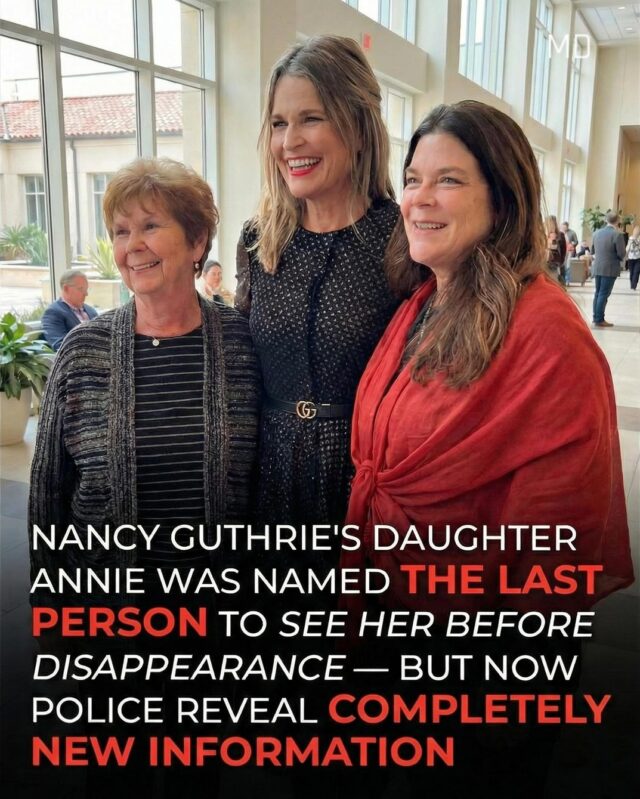
Nancy was last seen Saturday evening, January 31, when she had dinner with Savannah’s sister, Annie. Annie dropped her off at home around 9:30 p.m.

By Sunday morning, concern began to grow. Nancy failed to attend church, something family members say was completely out of character. By noon, she was officially reported missing.

Pima County Sheriff Chris Nanos has publicly ruled out the idea that Nancy wandered away on her own, stressing that she does not suffer from dementia or cognitive impairment.

Savannah Guthrie / Instagram

”She is as sharp as a tack. Her family wants everybody to know, this is not somebody that just wandered off,” Pima County Sheriff Chris Nanos said.

When deputies searched her home, they discovered her Apple Watch left behind.

A law enforcement source later revealed that Nancy’s pacemaker stopped syncing with the device around 2:00 a.m. Sunday, a detail that has deeply unsettled investigators. There are also videos showing blood traces outside Nancy’s door, although police have not confirmed whether they belong to the 84-year-old woman.

A plea from law enforcement

As concern escalated, Sheriff Nanos issued a direct and emotional plea to whoever may be responsible.

“Just call us. Let her go. Just call us,” he said on Monday, February 2.

“We do not need another bad, tragic ending.”

Investigators are now trying to piece together critical unanswered questions — including what Nancy was wearing, whether she was taken in a vehicle, and why a security camera from the front of her home appears to be missing.

Fingerprints and DNA evidence collected from the house have been sent to labs for testing.

Ransom notes raise even more alarms

Adding to the mystery, multiple media outlets — including TMZ, CNN Tucson affiliate KOLD, and KGUN — reported receiving alleged ransom notes demanding millions of dollars in Bitcoin in exchange for Nancy’s safe return.

The notes reportedly referenced specific details from inside Nancy’s home, though Sheriff Nanos has declined to confirm whether that information matches evidence found at the scene. He did confirm that the notes were shared with Savannah.

Zeins believes the ransom demands themselves could ultimately help investigators. He noted that a request for Bitcoin suggests the perpetrators are digitally savvy and possibly active on social media.

If the notes were handwritten, they could yield DNA. If typed, Zeins said, they may leave an electronic trail — an area where federal authorities excel.

CNN correspondent Josh Campbell has warned that the “high-profile” nature of Nancy Guthrie’s disappearance could prompt the public to send police misleading or even “sinister” tips.

“In these high-profile situations, authorities are often flooded with tips — some turn out to be credible, some not so credible and some downright sinister,” Campbell told TV host Jake Tapper on Wednesday.

Former FBI criminal profiler Candice DeLong added context about kidnappings of the elderly, noting that the “vast majority” of victims actually know their abductor.

“There is one thing I’d like to add about kidnapping of elderly people, especially people over 80. In the vast majority of cases, the offender is known to the victim,” DeLong told Tapper on Wednesday.

Search intensifies near the home

Police helicopters have been seen combing the desert near Nancy’s residence as part of what Zeins described as a “grid search.” The method involves systematically searching every section of terrain to ensure nothing is overlooked.

Investigators may be trying to determine whether Nancy was moved through nearby fields or taken directly from the area, Zeins explained.

President Donald Trump said Wednesday night that he had spoken with Savannah and that he is “deploying all resources to get her mother home safely.”

Savannah Guthrie’s new plea

As the search continues, Savannah Guthrie has stepped back from her professional commitments, including her planned role hosting the 2026 Winter Olympics opening ceremony in Italy.

NBC Sports confirmed she would no longer participate, saying she is focusing on being with her family during the crisis.

Savannah Guthrie issued an emotional plea Wednesday night for the safe return of her mother, Nancy, telling whoever may be holding the 84-year-old that her family is “ready to talk.”

In a video shared on Instagram alongside her siblings, Savannah said the family was aware of reports about a possible ransom letter and wanted to open a direct line of communication.

“At the same time, we live in a world where voices and images can be easily manipulated,” Savannah said. “We need to know, without a doubt, that she is alive and that you have her.”

As one stunned observer summed it up online:
“Targeting an elderly person like this is really sick.”

Anyone with information is urged to contact the Pima County Sheriff’s Department at 520-351-4900. The FBI is offering $2,500 for tips that lead to helpful information.

Why ‘I Love Lucy’ Icon Lucille Ball Called Eddie Murphy and Buddy Hackett’s HBO Specials ‘Inexcusable’

Comedy legend Lucille Ball of ‘I Love Lucy’ fame had some choice words for the type of humor used by comics in the 80s.

Lucille Ball of the legendary sitcom I Love Lucy is still considered an icon over 30 years after her death. The infamous redhead became the queen of comedy during the show’s six-season run and made her an authority on getting laughs.

Maintaining high standards when it came to keeping comedy classy, Ball had some choice words for a certain Saturday Night Live star when it came to his standup routine on cable.

Lucille Ball of ‘I Love Lucy’ | CBS Photo Archive/Getty Images

Lucille Ball didn’t like comedy shows in the 80s

In a 1984 interview with the Christian Science Monitor, Ball was asked her thoughts on TV sitcoms at the time. The comedy star was a fan of shows like Three’s Company and Cheers, and always tuned in to anything from comedians Carol Burnett and Goldie Hawn. Despite a few favorites, Ball noted a lack of originality and pressure for instant success in television.

“There’s not much new stuff, a sameness,” Ball remarked. “And there’s too much too choose from – we used to have a few channels and that was it. Also, now nobody gets a chance to prove himself anymore. If the show isn’t an instant success, the network yanks it off the air so it never has a chance to find an audience.”

Yet Ball noticed a strong content shift when the controversial show All in the Family hit the airwaves in 1971. With the introduction of the character Archie Bunker (Carol O’Connor), an unfiltered working-class father with strong opinions that he never sugar-coated, Ball felt the material involving bigotry created a negative influence.

”My whole lifetime I never called anybody (derogatory ethnic names),” The Lucy Show star explained. “Those words had been put out of our vocabulary. And in one night, they were put back in by Archie Bunker, and kids began using them again. Now they’re still there. Despite the success of the show, it has left a legacy of those awful words.”

‘I Love Lucy’ star comments on Eddie Murphy’s HBO special

While Ball was a trailblazer of comedy in the 50s, she never opted to even hint at the use of profanity. Though censors at the time wouldn’t allow curse words, the I Love Lucy legend felt such language would never be appropriate on the air.

“Those four-letter words keep pouring out on the cable stations,” she noted of cable’s rise at the time. HBO was reaping ratings gold by featuring uncut standup routines, complete with graphic vulgarity. When Ball was asked about Eddie Murphy’s Delirious special and Buddy Hackett’s Live and Uncensored, which both aired on HBO in 1983, she didn’t hide her disdain.

”Inexcusable,” Ball remarked. “Why should we glorify that by watching it? How can we stop it? It’s making money, and as long as they’re making a buck they don’t seem to care. Nobody cares anymore!”

Lucille Ball adjusts to life out of the spotlight

The comedy queen was grateful that her shows stood the test of time thanks to the traditional way of shooting a sitcom.

”You know, we did all our shows on film, so we were able to preserve them,” Ball explained. “It was a great innovation at the time. But now we have them to show to different generations. What if it had all been down the drain? Wouldn’t it be awful if we lost those last 30 years?”

Ball had been off the small screen for quite awhile by the time she had her interview with the Christian Science Monitor. The iconic redhead revealed the adjustment to a more open schedule was tough at first, but soon she was able to enjoy the extra time on her hands.

”It was absolutely traumatic,” Ball admitted. “I’d gotten up at 5 o’clock in the morning for the previous 35 years and looked forward to every minute and suddenly there was nothing to look forward to. Soon, I realized that was not true, of course. I had a lot to be grateful for. My health, my children, a great husband. And I got myself started again.”

The Flower Shop Owner Who Changed a Grieving Boys Life!!

I was twelve years old the first time I stole something, and it wasn’t because I wanted to break rules or feel rebellious. I stole flowers because my mother was dead, and I didn’t have anything beautiful left to give her.

She had been gone for less than a year, but it already felt like a lifetime. Our house was quieter than it had ever been, the kind of quiet that presses in on your chest. My father worked longer hours after she died, partly because we needed the money and partly because being home reminded him of everything we had lost. Grief settled into our lives like dust, coating every surface no matter how often we tried to clean it away.

Every Sunday, I walked to the cemetery alone. I didn’t tell anyone where I was going. It felt like something private, something fragile. I would kneel by my mother’s headstone and talk to her in a whisper, telling her about school, about my dad, about how I was trying to be brave even when I wasn’t. At first, I brought wildflowers I picked from empty lots and roadside ditches. They were small and uneven, sometimes already wilting by the time I arrived. I hated how inadequate they felt.

One Sunday, on my way to the cemetery, I passed a flower shop I had walked by hundreds of times before. The windows were filled with color—deep reds, soft pinks, bright yellows—flowers that looked alive in a way nothing else in my world did. For the first time, I stopped and stared. I thought about my mother, how she used to keep fresh flowers on the kitchen table whenever she could afford them. How she loved roses, especially pale ones.

I knew we didn’t have the money. I also knew my dad would never forgive himself if he spent grocery money on flowers for a grave. So I stood there, heart pounding, until the shop looked empty. I slipped inside, hands shaking, and lifted a small bouquet from a low display near the door. I told myself I would be quick. I told myself no one would notice.

I was wrong.

As I turned to leave, a gentle voice stopped me.

“Hey,” the woman said softly. Not angry. Not loud.

I froze, my face burning, the bouquet clutched against my chest like evidence. I expected shouting. I expected the police. I expected shame to swallow me whole.

Instead, she stepped closer and looked at the flowers, then at my face. Her expression changed, not into suspicion, but into something like understanding.

“She deserves better,” she said quietly.

I didn’t know how she knew. I hadn’t said a word. But suddenly I was crying, the kind of crying that feels like it’s been waiting for permission. I told her everything in broken sentences—that my mom was gone, that we were broke, that I just wanted to bring her something nice for once.

The shop owner didn’t interrupt. She didn’t rush me. When I finished, she gently took the bouquet from my hands, adjusted a few stems, and wrapped it properly in paper.

“Come back on Sundays,” she said, leaning down so we were eye level. “I’ll make something for you. No charge.”

I stared at her, sure I had misunderstood.

“For my mom?” I asked.

“For her,” she said. Then she smiled at me. “And for you.”

That was the beginning of a ritual that quietly saved me.

Every Sunday after that, I went to her shop. She always had a bouquet waiting—sometimes roses, sometimes lilies, sometimes flowers I didn’t even know the names of. She never rushed me out, never made me feel like charity. Sometimes she asked about school. Sometimes she just squeezed my shoulder and wished me a good day.

I took those flowers to the cemetery every week. Over time, the grave didn’t feel quite as cold. Grief didn’t disappear, but it softened. The kindness of a stranger gave me something to hold onto when everything else felt uncertain.

Years passed. I grew up. Life moved forward in the way it always does, whether you’re ready or not. I finished school. I got a job. I fell in love. Grief became something I carried instead of something that crushed me.

Eventually, I stopped going to the flower shop every Sunday. Not because I forgot, but because life pulled me in other directions. Still, I never forgot her.

When it came time to plan my wedding, there was no question where I would get the flowers. I walked into the shop one afternoon, now brighter and more modern than I remembered, overflowing with plants and light. The woman behind the counter was older, her hair streaked with silver, but her eyes were the same.

She didn’t recognize me.

Not at first.

I told her I needed a bridal bouquet. We talked colors and flowers and dates. She was warm, professional, kind in the way some people just are by nature. As she wrote things down, I finally said, “You probably don’t remember me.”

She looked up, curious.

“Years ago,” I continued, my voice unsteady, “I was a kid who tried to steal flowers from this shop. For my mother’s grave.”

She stopped writing.

Her eyes searched my face, and suddenly they filled with tears.

“Oh,” she whispered. “You grew up.”

I nodded.

She came around the counter and took my hands the same way she had all those years ago. “I wondered how you were,” she said. “I hoped life would be kind to you.”

“I’m here because of you,” I told her. “You helped me more than you know.”

When my wedding day arrived, the bouquet she made was perfect. Soft, elegant, exactly what I had imagined. But there was more. She handed me a small additional arrangement, wrapped carefully in familiar paper.

“For your mom,” she said.

The morning after my wedding, my husband and I went to the cemetery. I placed the flowers at my mother’s grave, just like I had all those Sundays as a child. The grief was still there, but so was gratitude.

Some people sell flowers.

Others give something far more lasting.

She gave a grieving boy dignity when he had none, kindness when he expected punishment, and hope when life felt unbearably heavy.

And that changed everything.

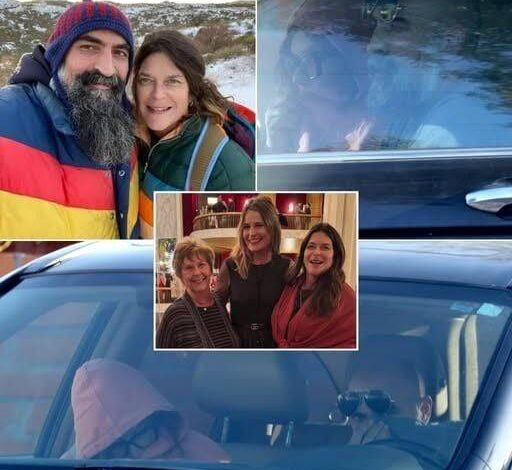
Savannah Guthrie’s sister and brother-in-law were photographed for the first

Annie Guthrie could barely lift her head. Her husband pulled his sweatshirt over his face as cameras drew closer. Nearby, Savannah Guthrie stood at the center of a crisis she had never imagined facing herself. Her mother was missing. Her Arizona home was sealed. Investigators were searching for answers. And the family’s private anguish had suddenly become public.

They drove through Tucson with their faces half-hidden, but there was no escaping what had already unfolded. Annie and her husband, poet Tommaso Cioni, found themselves unexpectedly placed at the edge of a growing investigation. He had taken his mother-in-law home after dinner. By morning, she was gone.

Inside the house, authorities reported signs of disturbance and evidence that raised serious concern. Outside, investigators followed a trail that suggested confusion and struggle. Local law enforcement, working alongside the Federal Bureau of Investigation, mobilized quickly. Search teams, analysts, and specialists worked methodically, while the family waited—caught between fear and hope.

For Savannah, the shift was profound. Accustomed to covering other people’s crises on Today, she now stepped away from her professional role to focus entirely on her family. She returned home, setting aside public life to pray, to wait, and to search for answers.

A ransom note added another layer of distress. Its specific demands suggested careful observation and planning. Investigators treated it with seriousness, while withholding details to protect the integrity of the case and avoid unnecessary speculation.

As days passed, tension settled over the family’s life. Every phone call carried weight. Every unfamiliar sound stirred worry. Hope and dread existed side by side, neither fully overcoming the other.

Authorities continue to pursue every possible lead—reviewing footage, interviewing neighbors, and coordinating searches throughout the region. The investigation remains active, cautious, and deliberate.

For the Guthrie family, this season has become a test of endurance and faith. They lean on one another, drawing strength from prayer, patience, and shared resolve. Each hour reminds them how fragile certainty can be—and how deeply human the longing for reunion and peace.

Behind the headlines and speculation lies a simple truth: a family is waiting. A community is watching. And every careful step toward truth matters.

From Ammonia and Vinegar to Cinnamon Oil, Garlic, and Lemongrass, These Seven Strong Scents May Help Deter Snakes Around Your Home—But Experts Explain Why No Smell Works Forever, How to Use Them Safely, and What Real Prevention Steps Matter Most for Keeping Snakes Away Long-Term

Snakes have long stirred both curiosity and fear, especially when they appear near human homes. Though they play an important role in nature—helping control rodents and insects—most people prefer they remain far from porches, gardens, and living spaces. When a snake is spotted nearby, the first instinct is often not to harm it, but simply to encourage it to move on.

Many natural deterrents focus on scent, because snakes rely heavily on chemical sensing rather than sight or hearing. Their awareness of the environment comes through subtle signals that humans rarely notice, making strong odors especially disruptive.

Ammonia is frequently mentioned for this reason. Its sharp smell can overwhelm a snake’s senses and prompt it to retreat. When placed carefully outdoors near sheds, crawl spaces, or entry points, it may discourage lingering. However, it evaporates quickly and must be reapplied often. It can also be harmful to pets and people if misused, so caution and restraint are essential. It should never be used indoors.

Essential oils such as cinnamon and clove are another popular option. These contain natural compounds that temporarily overstimulate a snake’s sensory system. When mixed with water and applied along foundations, doorways, or garden borders, they may create a short-term barrier. Rain and humidity reduce their effectiveness, reminding us that such methods require patience and consistency.

Garlic and onions are also commonly used. When crushed, they release sulfur-based compounds with strong odors that can confuse snakes and make an area less inviting. Some homeowners plant marigolds, which reduce insect and rodent activity, indirectly removing a major food source. Rather than forcing nature away, this approach quietly shifts the balance.

Other natural options include vinegar, lemongrass, and citronella. Vinegar works best in damp areas, while citrus-based plants and oils interfere with scent tracking. These methods are generally safer for the environment, though they require ongoing care and attention.

In the end, scent deterrents alone are rarely enough. Long-term prevention comes from removing shelter, sealing gaps, clearing debris, and managing rodents. When the environment is orderly, unwanted visitors naturally move elsewhere.

There is wisdom in choosing solutions that protect both our homes and the life around us. Fear often leads to destruction, but understanding leads to balance. With thoughtful maintenance and gentle deterrence, it is possible to live safely while respecting the role each creature plays in the wider design of nature.

Small acts of care—cleaning a yard, sealing a crack, choosing a natural solution—may seem minor. Yet together, they create harmony between human space and the world beyond it.

The little girl in this photo grew up to become the richest actress in the world!

The little girl in the faded photograph looks like countless others from mid-century America—wide-eyed, ordinary, and far removed from the glamour of Hollywood. Nothing about the image suggests extreme wealth, let alone a fortune that surpasses every actress in the film industry. Yet that child grew up to become the richest actress in the world, eclipsing names most people would instinctively guess.

Ask someone to name Hollywood’s wealthiest actress and they will usually point to global superstars: long careers, award shelves, billion-dollar franchises. The assumptions feel logical. Fame, after all, is often mistaken for fortune. But in this case, the truth belongs to someone far quieter, far more private, and far more strategic.

That woman is Jami Gertz.

Before the billions, before private equity and sports ownership, she was just a girl growing up in Glenview, Illinois. She attended public school. Her father worked as a builder and contractor. There were no elite prep academies, no Hollywood parents, no obvious pipeline to stardom. Her early life was comfortable but unremarkable, rooted in normal routines and Midwestern stability.

Her path changed abruptly when she was discovered in a nationwide talent search as a teenager. There was no slow, calculated climb. She was pulled directly into the industry and put to work. As she later described it, she was “found at a search, thrown right in, and that was it.” The transition was sudden, and the stakes were real.

By the early 1980s, she was landing roles that would later become cultural touchstones. Her performances were natural and emotionally accessible, the kind audiences instantly connected with. She appeared in films that defined the era, movies that decades later would still be replayed, quoted, and remembered with affection. Her presence was never flashy, but it was grounding. She felt real.

As her career gained traction, the financial imbalance between her and her family became apparent. By the time she was sixteen, she was earning more than her father. She has spoken openly about how that kind of early success reshapes family dynamics and personal identity. Money arrives before maturity, before perspective. It forces decisions faster than most teenagers ever face.

Throughout the 1980s and into the early 1990s, her career remained steady. She moved fluidly between film and television, appearing in popular sitcoms and dramas that further cemented her visibility. She was respected, recognizable, and consistently working. Yet she never chased stardom for its own sake. She did not build her identity around celebrity, nor did she mold her life around publicity.

That restraint proved pivotal.

Instead of leaning into Hollywood’s endless cycle of exposure, she stepped back. Privacy mattered. Stability mattered. A future beyond acting mattered. And it was during this period that she met a young financier named Tony Ressler—someone who, at the time, was far from wealthy and largely unaware of her acting résumé.

They married in 1989. At the beginning of their life together, she was the primary earner. She paid for their first house. She paid for their first vacation. There was no illusion about who was supporting whom. Years later, she would address the persistent assumption that she “married rich” with blunt clarity, pointing out that when they met, the opposite was true.

Then came the inflection point.

In 1990, her husband co-founded Apollo Global Management, a firm that would grow into one of the most influential private equity companies in the world. Later, he co-founded Ares Management, expanding further into finance, credit, and large-scale investment. Over time, this included ownership stakes in major sports franchises, most notably the Atlanta Hawks.

What often gets overlooked is her role during this transformation. She did not simply observe from the sidelines. She was involved, informed, and strategically aligned. While raising their four children, she also helped shape the philanthropic and business philosophy that accompanied their growing wealth. Their financial rise was not accidental, nor was it one-sided.

As their net worth climbed into the billions, they chose to direct significant resources toward giving. In 2012, they were recognized as the top charitable donors of the year after contributing more than ten million dollars to their foundation. Their philanthropy spans education, healthcare, the arts, and Jewish organizations. She also serves on the board of the Melanoma Research Alliance, the largest nonprofit funder of melanoma research worldwide.

Despite the scale of their wealth, she has consistently rejected the idea that her success is merely derivative. Her acting income came first. Her financial independence came early. The foundation of their life together was built before the money exploded. The choices that led to their fortune were mutual, deliberate, and long-term.

Today, her estimated net worth exceeds three billion dollars, making her the richest actress alive. Not because she dominated box offices for decades, but because she made disciplined decisions, avoided the trap of constant visibility, and partnered in building institutions that outgrew Hollywood entirely.

Her story disrupts the usual narrative. It shows that wealth does not always track fame. That stepping away can be as powerful as leaning in. That influence does not require constant attention. And that credit matters—especially when women’s financial contributions are routinely minimized or rewritten.

The little girl in the photo did not grow up to be the loudest star in the room. She grew up to be something rarer: someone who understood timing, leverage, and long-term value. And that is precisely why Jami Gertz now holds a title few ever expected—and none can dispute.

Grandma Left Me Nothing In Her Will – Until My Aunt Gave Me The Box She Hid

The lawyer folded his papers and cleared his throat. Around the table, my cousins leaned toward one another, already whispering about who would get what. Someone mentioned the lake house. Someone else grinned about the antique cars. Aunt Linda clutched her purse, smiling when the jewelry was mentioned.

My name never came up.

Not once.

I sat there, hands folded in my lap, my ears ringing. I had driven Grandma Rose to every doctor’s appointment for three years. Fixed her porch steps when they cracked. Cleaned her gutters every fall. I stayed up with her on sleepless nights, listening to the same stories about Grandpa until two in the morning, never once rushing her.

And yet—nothing.

In the parking lot, my mother touched my arm. “Maybe she forgot,” she said gently.

Forgot.

I went home, closed the door, and cried into a bag of stale pretzels like a child who didn’t know where else to put the hurt.

Four days later, there was a knock at my door.

It was Aunt Linda.

She looked nervous, glancing back toward her car as if she might bolt at any second. In her hands was a small wooden box, carved with roses, no bigger than a shoebox.

“Can I come in?” she asked.

I stepped aside. She didn’t sit. She just held the box out to me.

“Your grandma told me to give this to you,” she said. “But only after the will reading. She made me promise.”

“Why?” I asked.

Her hands trembled. “She said it would cause a scene. She said you’d understand once you opened it.”

I took the box. It was heavier than it looked.

Linda turned to leave, then stopped. “For what it’s worth,” she said softly, “I think she loved you most.”

The door closed behind her.

I sat on the couch staring at the box for a long time. There was no lock. Just a simple latch.

When I opened it, my breath caught.

Inside were dozens of envelopes. Fifty at least. Every single one addressed to me in Grandma’s shaky handwriting. None of them mailed.

I picked up the top one. The date was fifteen years old.

“My dearest Darlene,” it began. “If you’re reading this, I’m gone. I need you to know the truth about why I couldn’t leave you the house…”

My stomach dropped.

Beneath the letters was a folded legal document. I unfolded it carefully.

It was a deed.

Not to Grandma’s house.

To a property in Montana—two states away. A place I’d never heard of.

Clipped to it was a black-and-white photograph. A young woman stood in front of a large farmhouse, holding a baby. She looked hauntingly familiar.

She looked like me.

I flipped the photo over.

Written in faded pencil:
“Your real mother. 1968. The family can never know.”

My hands went cold.

At the very bottom of the box, wrapped in tissue paper, was a key. And beneath that—my birth certificate.

The name on it wasn’t Darlene Murphy.

It was Eleanor Vance.

I spread everything across the coffee table and untied the ribbon holding the letters together. I read them in order, by date, as Grandma Rose intended.

She wrote that the house was never meant for me—that it was full of ghosts and bad memories. My real inheritance, she said, was somewhere I could breathe.

Another letter spoke of my tenth birthday. Of how I’d asked why there were no photos of my mother as a child. Of how “Sarah” had squeezed her hand and changed the subject.

Sarah. The woman who raised me.

She wasn’t my mother.

She was my aunt.

The letters unraveled everything.

My grandmother had three children: Robert, Sarah, and the youngest—Eleanor. My real mother.

Eleanor was the artist. The dreamer. The one who fell in love with a carpenter named Thomas Vance. My grandfather despised him. Said Eleanor was throwing her life away. Threatened to disown her.

She chose love anyway.

They fled to Montana with two suitcases and a little money Rose secretly gave them. They built the farmhouse themselves. They were happy—briefly.

Then Thomas died in an accident.

Eleanor was left alone with a baby. Me.

She wrote letters begging for help. For a ticket home. For mercy.

My grandfather burned them.

Rose never knew until it was almost too late.

When she finally reached Eleanor, she found her starving, freezing, and exhausted. Eleanor placed me in her arms and begged her to take me home. To raise me until she could stand again.

She never got the chance.

The last letters explained everything. The fake adoption. The lies meant to protect me. The truth hidden because my uncle Robert had been draining Rose’s money for years. If my name appeared in the will, he would have destroyed me in court.

So she left me something better.

The truth.

A home.

A week later, I quit my job, packed my car, and told Sarah everything. She cried. She apologized. I didn’t hate her. She had been young and afraid, too.

Montana stretched wide and endless as I drove. When I reached the address, the farmhouse rose from the land like a memory brought to life.

The key fit perfectly.

Inside, everything was covered in white sheets. Dust danced in the light. The house smelled like lavender and time.

In the upstairs bedroom, I found my mother’s journals.

She wrote about love. About loss. About sending her baby away to keep her safe. About saving money to come back for me.

She never did.

A cough took her. Pneumonia. Fast and cruel.

The next morning, a pickup truck pulled into the drive. A man stepped out and introduced himself as George Abernathy—the son of the neighbor my mother had written about.

His father had loved Eleanor. Had kept her house. Had saved her money. Had built a future for a daughter he hoped would one day return.

And then Uncle Robert arrived.

Furious. Desperate. Claiming everything as his.

But this time, the truth stood in front of him.

He left empty-handed.

When the dust settled, I stood in the barn holding a legacy that wasn’t just land or money—but love that had waited decades to reach me.

I came looking for an inheritance.

I found my name.

My home.

And the truth that finally set me free.

Texas just got its answer and the Democrats who fled won’t like it one bit.

The legislative corridors of Austin, Texas, have transformed into a theater of high-stakes political brinkmanship as a long-simmering procedural war reaches a fever pitch. In a move that has sent shockwaves through the state’s political landscape, leadership within the Texas House of Representatives has officially moved to impose aggressive financial sanctions on Democratic lawmakers who have fled the state to prevent a quorum. This escalating confrontation is no longer merely a dispute over policy; it has evolved into an existential battle over the mechanics of governance, institutional authority, and the personal livelihoods of elected officials.

The decision to weaponize the House’s disciplinary powers follows weeks of a legislative standstill. By absenting themselves from the chamber, the minority party has effectively utilized the “quorum break”—a maneuver requiring two-thirds of the House members to be present for official business—to stall several high-profile Republican-led initiatives. In response, the House leadership has shifted from verbal rebukes to economic enforcement. Under the newly implemented measures, absent members now face the immediate suspension of their state-issued salaries. Furthermore, daily fines have been authorized, which could potentially drain thousands of dollars from the personal accounts of those refusing to return to the floor.

House leadership has framed this move as an essential restoration of order. From their perspective, the responsibility of an elected representative is, first and foremost, to be present and participate in the democratic process. They argue that prolonged walkouts do not constitute legitimate protest but rather an abdication of duty that effectively holds the state government hostage. “Accountability is not a suggestion; it is a requirement of the office,” one proponent noted. For the majority, the financial penalties are a necessary corrective to ensure that taxpayers are not subsidizing what they characterize as a deliberate subversion of the institutional function.

However, the perspective from the dissenting side is one of profound alarm. Critics and the absent lawmakers themselves contend that these financial penalties are an egregious overreach of power. They argue that by attacking the personal financial stability of lawmakers, the House leadership is attempting to coerce political submission through economic duress. From this viewpoint, the measures set a dangerous precedent: the idea that a majority party can utilize the state treasury as a cudgel to break the will of a minority. They maintain that the walkout is an act of last resort, a desperate attempt to protect the interests of their constituents against legislation they view as fundamentally harmful.

This dispute is particularly pointed when examined through the lens of political and demographic representation in Texas. The Democratic caucus in the Texas House is notably more diverse than its Republican counterpart, reflecting a broad cross-section of the state’s rapidly changing population. While the Republican caucus is predominantly white—comprising approximately 88% of its members—the Democratic caucus is composed of approximately 42% Hispanic members, 28% Black members, and 4% Asian American members. To many observers, the financial targeting of these lawmakers is seen as an indirect attack on the representation of minority communities who historically have faced greater economic and political barriers. By imposing fines that could disproportionately affect those without independent wealth, leadership is accused of attempting to silence the voices of the most diverse districts in the state.

The pressure on these lawmakers is now mounting from every direction. On a professional level, they face the threat of arrest by the Sergeant-at-Arms should they step foot back on Texas soil before a resolution is reached. On a personal level, the loss of salary and the accumulation of fines create an immediate strain on their families and personal obligations. Meanwhile, leadership in Austin faces its own set of pressures. They must answer to a base that demands the swift passage of their legislative agenda, while also navigating questions from legal scholars about the constitutionality and long-term consequences of these disciplinary actions.

This conflict reflects a recurring tension inherent in democratic systems: the delicate balance between the majority’s right to govern and the minority’s right to resist. Historically, legislative walkouts have been used as a dramatic tool of protest in several states, including Oregon, Wisconsin, and Indiana. However, the move to impose direct financial penalties marks a significant shift in how such standoffs are managed. It transforms a battle of ideals into a battle of endurance and financial resources.

The demographic reality of Texas further complicates the narrative of “legitimacy.” As of the 2020 Census and subsequent 2024-2025 estimates, the state has reached a “majority-minority” status. Non-Hispanic white residents make up approximately 39.1% of the population, while Hispanic residents account for 40.2%, and Black residents roughly 13.1%. The political standoff in Austin is seen by many as a microcosm of a larger struggle to define the future of a state where the voting habits of urban and minority populations are increasingly at odds with the legislative goals of rural and suburban majority-held districts.

Whether this standoff ends through a negotiated compromise, a ruling from the Texas Supreme Court, or simple political fatigue, the scars left behind will be deep. The move to withhold pay and levy fines has poisoned the well of collegiality that is often necessary for a functioning legislature. When the absent members eventually return—as they must at some point—the challenge will not simply be resuming the roll call. The real work will be rebuilding the working relationships and institutional trust that have been scorched in this fire of mutual mistrust.

In the end, the central question looming over the Texas State Capitol is not just who will win this specific battle of wills. It is whether the institution itself can preserve its legitimacy in the eyes of a deeply divided public. When the tools of governance are used as weapons of political warfare, the line between maintaining order and exercising tyranny becomes dangerously thin. Austin has gotten its answer for now, but the true cost of this confrontation may not be known until the next election cycle, when the voters of Texas decide if they prefer a legislature of compromise or one of calculated economic pressure. For now, the chamber remains quiet, the fines continue to accrue, and the future of the Lone Star State hangs in a precarious balance.

Popular

Words From Nancy Guthrie Change Everything for the Family!?

0
The disappearance of Nancy Guthrie has transitioned from a private family tragedy into a sprawling narrative that has gripped the collective public consciousness. This...