
Entertainment

What is Making Super Bowl 60 Contentious – Political Criticism, Trumps Comments, and Questions About ICE!

By the time Super Bowl 60 kicks off at Levi’s Stadium, it will be far more than a championship game. For many Americans, it has already become a pressure point—where sports, politics, immigration, and identity collide in ways that feel impossible to separate. What was supposed to be a carefully managed spectacle has instead turned into a mirror reflecting the country’s anxieties, divisions, and unresolved tensions.

In the weeks leading up to the game, a viral NFL graphic—once dismissed as a harmless coincidence—has taken on a darker resonance. Labeled by some online as “prophetic,” it now feels less like trivia and more like symbolism. The Super Bowl, traditionally sold as a unifying national ritual, is unfolding against a backdrop of political confrontation that no halftime show can distract from.

At the center of the controversy is Donald Trump, whose public criticism of the event and the league reignited a debate that never truly cooled after his presidency. Trump’s remarks framed the Super Bowl not as a celebration, but as an example of cultural decay and political signaling, language that immediately polarized fans and critics alike. Supporters echoed his claims, while opponents accused him of deliberately turning a sporting event into another battlefield in America’s culture wars.

Adding fuel to the fire were reports and speculation surrounding Immigration and Customs Enforcement. While federal officials have been careful with their wording, the possibility of increased ICE activity around the Super Bowl has sent waves of fear through immigrant communities in the Bay Area. Even the perception of heightened enforcement has been enough to alter plans for thousands of people who would otherwise see the game as a moment of joy rather than risk.

Community organizations and immigrant advocacy groups responded quickly. Hotlines were set up. Legal observers were placed on standby. Local officials issued statements reminding residents of their rights and reaffirming California’s limits on cooperation with federal immigration enforcement. For many families, these preparations were not theoretical. They were necessary precautions in a climate where attending a football game could feel like a gamble.

The tension intensified further when Bad Bunny, one of the most influential artists of his generation, openly pushed back against the narrative surrounding the event. Through cryptic posts and pointed statements, he made it clear that the Super Bowl, like American culture itself, does not belong to one group alone. His stance resonated deeply with younger fans and immigrant communities, while critics accused him of politicizing entertainment. The irony was not lost on anyone: the Super Bowl had already been politicized long before he spoke.

As the debate grew louder online, the ground-level reality in the Bay Area became more complicated and more human. Some fans decided to stay home, not out of disinterest, but out of caution. For them, skipping the game was an act of self-protection. Others chose the opposite approach. They coordinated rides, shared locations, and attended in groups, framing their presence as a quiet form of resistance. Showing up, cheering, and claiming space became its own statement.

Bay Area officials found themselves navigating an impossible balance—promoting safety without stoking fear, welcoming visitors while acknowledging the concerns of longtime residents. Public statements emphasized preparedness, coordination, and respect for local laws, but the underlying message was clear: this Super Bowl was not happening in a vacuum.

Even the matchup itself added to the symbolic weight of the night. When the Seattle Seahawks and the New England Patriots take the field, fans will see more than two franchises battling for a title. The teams represent different regions, histories, and fan cultures, each bringing its own emotional baggage into an already charged atmosphere. The game may last three hours, but the conversations surrounding it have been building for months.

Levi’s Stadium, designed to host tens of thousands in shared celebration, now carries a heavier responsibility. Security measures have been expanded, coordination between agencies intensified, and messaging carefully calibrated. Yet no amount of planning can fully control how people feel. Fear does not disappear because officials say everything is under control. Neither does defiance.

What makes Super Bowl 60 especially contentious is not any single factor, but the convergence of many. Politics did not intrude suddenly; it arrived because the country brought it with them. Immigration fears did not emerge out of nowhere; they reflect lived realities. Celebrity voices did not create controversy; they amplified what was already there.

In quieter moments, away from the noise of social media and cable news, fans are having different conversations. Parents are deciding whether it’s safe to bring their children. Friends are debating whether to wear jerseys or keep a low profile. Some are coordinating exit plans before kickoff. Others are planning tailgates with an added layer of vigilance alongside food and music.

This is not the Super Bowl mythology the NFL prefers—the one where sports transcend politics and everyone comes together under a shared flag. But it may be the more honest version. America has changed, and so has the meaning of its biggest cultural events.

When the game finally begins, the scoreboard will measure yards gained, passes completed, and points scored. It will not measure the unease some fans feel scanning the crowd. It will not capture the quiet relief of those who make it home safely. It will not record the small acts of solidarity exchanged between strangers in the stands.

Super Bowl 60 will be remembered not just for who wins, but for who felt welcome, who felt watched, and who felt brave enough to show up anyway. In that sense, the night is already historic. The question is not whether the game will be played, but what it will reveal about the country watching it.
Sleeping On Your Left Side Affects Your Health In Ways You Would Have Never Thought!

The human body is a marvel of biological engineering, an intricate network of systems that never truly powers down, even when the conscious mind surrenders to sleep. While we often focus on the quantity of our rest—the elusive eight hours—or the quality of our mattress, we frequently overlook one of the most fundamental variables of our nocturnal recovery: the physical orientation of our bodies. Emerging research and ancient wellness traditions alike suggest that the simple act of choosing to sleep on your left side can act as a silent catalyst for a myriad of health benefits, optimizing the way your organs process waste, circulate blood, and manage digestion.

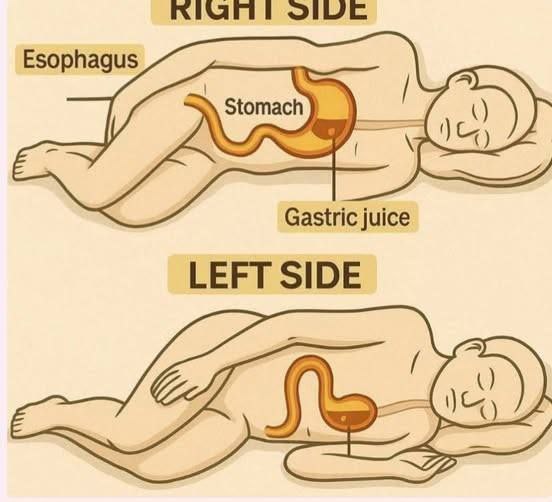
To understand why the left side is the preferred orientation for the human frame, one must look at the asymmetrical layout of our internal anatomy. Our organs are not centered; they are strategically positioned in a way that makes certain postures more advantageous than others. When we lie on our left side, we are essentially working in harmony with gravity rather than against it. This structural alignment begins with the most common nocturnal complaint: acid reflux and Gastroesophageal Reflux Disease (GERD). The stomach is shaped like a curved pouch, situated primarily on the left side of the upper abdomen. By resting on the left, the gastric juices remain pooled at the bottom of the stomach, well below the esophageal sphincter. This gravitational positioning creates a natural barrier, making it significantly more difficult for stomach acid to creep back into the esophagus and cause the painful burning sensation of heartburn.

Moving deeper into the body’s filtration and defense mechanisms, the left-side orientation plays a crucial role in supporting the lymphatic system. Often described as the body’s secondary circulatory system, the lymphatic system is responsible for draining fluid and filtering out toxins, cellular waste, and pathogens. The dominant side of the lymphatic system is the left side, where the thoracic duct—the largest lymphatic vessel in the body—is located. By sleeping on the left, you facilitate a more efficient drainage of lymph fluid into this duct, allowing the body to process and eliminate metabolic waste products with greater ease. This subtle assist to the immune system can lead to a more refreshed feeling upon waking, as the body has had an optimized “cleanup” cycle during the night.

The benefits extend to the body’s heavy-duty filtration organs: the spleen and the liver. The spleen, which is a vital component of the lymphatic system and a primary filter for blood, is nestled on the far left side of the body. Gravity-assisted blood flow to the spleen during left-side sleep allows it to operate with peak efficiency, sifting through impurities and maintaining a healthy blood count without undue strain. On the opposite side of the abdomen sits the liver, the body’s primary detoxification center. When we sleep on our right side, the weight of the stomach and other organs can press against the liver, potentially leading to congestion and sluggish processing. Shifting to the left side alleviates this pressure, allowing the liver to neutralize toxins and manufacture bile more freely, which in turn supports the body’s overall metabolic health.

Digestion, the long and winding process of turning food into fuel and waste into exit, is perhaps the most obvious beneficiary of the left-side habit. The transition of waste from the small intestine to the large intestine occurs at the ileocecal valve, located in the lower right abdomen. From there, waste moves up the ascending colon, across the transverse colon, and finally down the descending colon on the left side. By sleeping on the left, gravity assists the movement of food waste from the transverse colon into the descending colon. This creates a “seamless movement” of waste products toward the exit, promoting regularity and reducing the likelihood of morning bloating or constipation. It is a mechanical solution to a biological process, ensuring that the morning routine is as efficient as the night’s rest.

For pregnant women, particularly as they enter the final trimester, the left-side position is more than a recommendation—it is often a medical necessity. As the uterus grows, it can exert significant pressure on the inferior vena cava, the large vein that carries blood back to the heart from the lower body. This pressure can impede circulation, potentially leading to swelling in the legs and reduced blood flow to the placenta. By reclining on the left side, the mother-to-be removes the weight of the uterus from this vital vein and the liver. This optimization of blood flow ensures that the heart can pump more effectively, delivering a steady supply of oxygen and nutrients to the developing fetus while maintaining the mother’s own energy and comfort levels.

Despite these compelling advantages, many people find that switching their lifelong sleeping habits is a challenge. The body has a “muscle memory” for its preferred positions, and a person who has spent decades as a “right-sider” or a stomach sleeper may find the transition to the left to be initially jarring. However, the body is remarkably adaptive. Using a body pillow or placing a firm pillow against the back can prevent the subconscious roll-over during the night, eventually training the nervous system to accept the new orientation.

The shift toward left-side sleeping represents a broader philosophy of “passive wellness.” It is the idea that health is not only found in the active choices we make—the gym sessions, the salads, the supplements—but also in the quiet, structural choices that define our periods of inactivity. If we spend a third of our lives asleep, then the posture we maintain during those thousands of hours is one of the most influential “long-term contracts” we sign with our bodies. By simply turning to the left, we provide our heart with a clearer path, our stomach with a safer reservoir, and our lymphatic system with a more direct route for purification.

In the end, the wisdom of the left-side sleep position is a testament to the fact that our health is often a matter of geometry. When we align ourselves with our own anatomy, we reduce the internal friction that leads to disease and discomfort. We allow the silent work of the night to happen without interruption, turning sleep into a true restorative ritual rather than just a period of unconsciousness. The wake we leave behind as we move through the day is a reflection of how well we rested the night before, and by choosing the left side, we ensure that the reflection is one of vitality, balance, and ease.

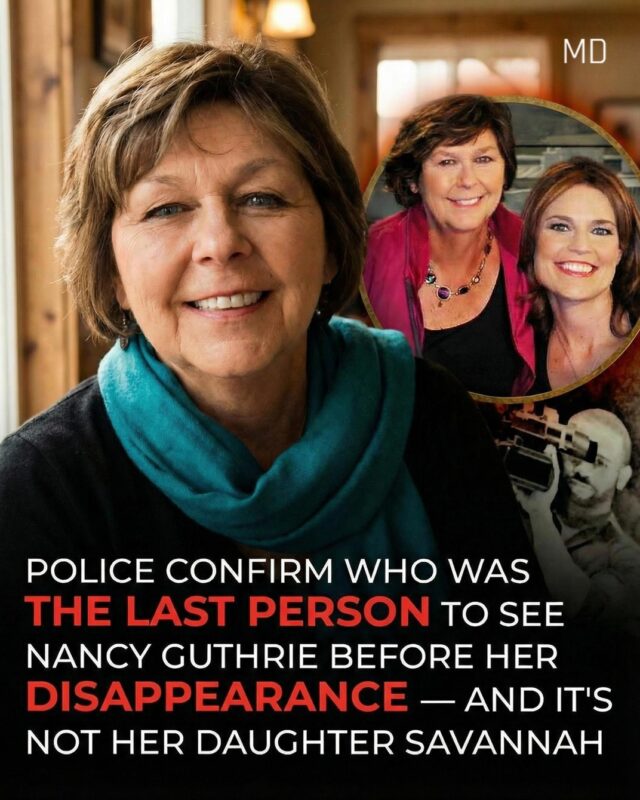
Ransom note found with chilling demand for the return of Savannah Guthrie’s mother!

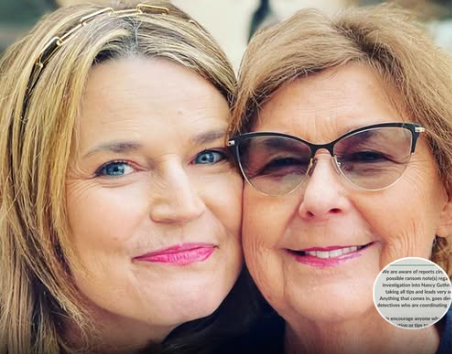
The search for Savannah Guthrie’s mother has taken a darker and more unsettling turn, as investigators now examine what appears to be a possible ransom demand tied to her disappearance.

More than 48 hours after 84-year-old Nancy Guthrie was reported missing from her home in Tucson, Arizona, authorities say time is becoming a critical factor. With the FBI now involved and federal officials urging the public to remain alert, law enforcement is working around the clock to determine what happened to the longtime Catalina Foothills resident.

Pima County Sheriff Chris Nanos said the situation is increasingly urgent, especially given Nancy’s health needs.

“It’s a race against time,” Nanos told NBC. “I hope that window hasn’t closed.”

He added that Nancy depends on daily medication, raising serious concerns about her well-being the longer she remains missing.

As investigators pursue multiple leads, a new and alarming development emerged Tuesday when TMZ reported receiving an email that appears to be written as a ransom note connected to the case. According to TMZ founder Harvey Levin, the message contains details that suggest insider knowledge.

“So, we got something in our email that looks like a, it’s written like a ransom note for Savannah Guthrie’s mother,” Levin said.

Levin explained that the message allegedly demands a “very specific” amount of money and includes details about Nancy’s home and what she was wearing, seemingly intended to prove authenticity.

“At the bottom there are certain things they’re saying about what she was wearing and damage to the house to say, ‘It’s us,’” Levin added. “So, we have contacted the sheriff’s department and we want to get them this letter.”

TMZ emphasized that it cannot verify whether the note is genuine. However, the language and details prompted the outlet to immediately forward the information to authorities. According to the report, the note demands a substantial ransom — allegedly in the millions — to be paid in Bitcoin and sets a deadline, accompanied by a vague but threatening “or else.”

Law enforcement has acknowledged awareness of possible ransom-related communications but has stopped short of confirming their legitimacy.

“We are taking all tips and leads very seriously,” Sheriff Nanos said. “We have all kinds of investigative leads we’re working on.”

Investigators are also reviewing surveillance footage from the surrounding area and examining individuals with criminal histories nearby, including registered sex offenders, as part of standard procedure. While police have not officially confirmed certain details, multiple law enforcement sources cited by the Los Angeles Times reported signs of forced entry at Nancy’s home, along with the discovery of blood. Nancy’s phone, wallet, and car were reportedly left behind.

Another troubling detail involves Nancy’s pacemaker. Authorities revealed that the device stopped syncing with monitoring equipment around 2 a.m., suggesting that something may have occurred during the early morning hours. Without her medications and regular medical care, officials warn that her life could be in immediate danger.

Nancy Guthrie was last seen Saturday night after being dropped off at her home by Savannah Guthrie’s sister. She was reported missing Sunday morning when she failed to attend church, prompting a large-scale search involving local deputies, search dogs, drones, and federal partners.

Savannah Guthrie has remained out of the public eye as the search continues but issued a statement expressing gratitude for the widespread support.

“On behalf of our family, I want to thank everyone for the thoughts, prayers and messages of support,” she said. “Right now, our focus remains on the safe return of our dear mom.”

Authorities continue to urge anyone with information, no matter how small it may seem, to come forward. As investigators work to determine whether the alleged ransom note is authentic or a hoax, the focus remains on one goal: finding Nancy Guthrie and bringing her home safely.

Our thoughts remain with the Guthrie family as this deeply distressing situation continues to unfold.

Scatter biscuits and these 2 ingredients over beef for a baked dinner I’ll happily repeat

This 3-Ingredient Ground Beef and Biscuit Bake is the ultimate “emergency” dinner—perfect for those nights when you need a hot, filling meal on the table with zero fuss. It’s essentially a simplified shepherd’s pie, using refrigerated biscuits as a fluffy, golden “crust” and condensed soup to create an instant savory gravy. It’s warm, beefy, and the definition of cozy kitchen simplicity.


3-Ingredient Ground Beef and Biscuit Bake


Ingredients:


IngredientAmountGround beef (80/90% lean)1 lbRefrigerated biscuit dough1 (10/16 oz) canCondensed cream of mushroom or chicken soup1 (10 1/2 oz) canSalt and black pepperTo taste


How To Make 3-Ingredient Ground Beef and Biscuit Bake:


Step 1: Prep the Oven and Pan: Preheat your oven to 375°F. Lightly grease a 9×9-inch baking dish with cooking spray or a little oil.


Step 2: Brown the Beef: In a large skillet over medium-high heat, cook the ground beef for 6/8 minutes until fully browned.


Step 3: Make the Instant Gravy: Reduce the heat to low and stir the undiluted condensed soup into the beef. Let it simmer for a minute until it’s bubbling gently. Add a pinch of salt and pepper here to boost the flavor of the soup.


Step 4: Layer the Filling: Transfer the beef and soup mixture into your prepared baking dish, spreading it into an even layer so it supports the biscuits evenly.


Step 5: Top with Biscuits: Open the can of biscuits and separate them. Arrange them in a single layer on top of the beef. Don’t worry if they don’t cover every single inch; they will puff up and spread out as they bake.


Step 6: Bake to Golden: Bake for 18/22 minutes. You are looking for the biscuits to be a deep golden brown on top and the beefy gravy to be bubbling up around the sides.


Step 7: The Rest: Let the dish rest for 5 minutes before scooping. This allows the gravy to “set” so it clings to the beef and biscuits perfectly.

The Childhood Visits to My Grandfather That Made Sense Only Years Later

When I was seven, visiting my grandfather was part of my weekly routine, a small adventure that felt important in ways I didn’t yet understand. I would walk proudly beside him from the corner store to his modest home at the end of the street, holding his hand as though I were guiding him rather than the other way around. Inside, our time followed a comforting pattern. He would gently take my hands, study my face with quiet focus, and then smile before pouring us each a glass of grape juice. He wasn’t a man of many words, but his calm attention made me feel special and safe. To my young mind, it was simply our shared ritual, a peaceful pause in the rhythm of ordinary days.

As I grew older, life gradually filled with new responsibilities and distractions. School, friends, and later work took priority, and my visits became less frequent. My grandfather seemed quieter each time I saw him, and I assumed it was just part of aging. When he eventually passed away, I felt a lingering sadness mixed with regret for not spending more time with him. Still, the memories of our afternoons together remained warm and comforting, tucked away among childhood recollections. I never questioned the meaning behind those simple routines. They felt like small, happy fragments of the past, pleasant but uncomplicated, until years later when a conversation with my mother changed how I understood those moments.

During a family discussion about our past, my mother revealed something I had never known. At the time of my visits, my grandfather had already been facing memory problems. Some days he struggled to remember ordinary details—where he placed things or what he had done earlier. Yet he always remembered that I was coming to see him. Holding my hands and studying my face was his way of making sure he wouldn’t forget me. The grape juice we shared, she explained, was something his doctors encouraged him to drink with his medication. By turning it into a shared treat, he transformed something medical into something joyful, preserving dignity and warmth in a situation that could have easily felt clinical or frightening.

Hearing this reframed those childhood memories in the most emotional way. What once seemed like a harmless routine was actually his quiet effort to hold onto the people he loved while he still could. He wasn’t simply greeting me; he was storing each moment carefully, hoping those memories would last longer than the illness allowed. Now, when I think of him, I picture the gentle squeeze of his hands and the kindness in his smile, as though he was saying goodbye long before either of us understood why. It reminds me that love often hides in simple, everyday gestures—small routines that children accept without question, only to recognize their true meaning years later.

A Late-Night Knock Led to an Unexpected Lesson in Kindness and Community

It was late evening when frantic knocking shattered the quiet in our home. When I opened the door, our neighbor stood there trembling, visibly distressed and heavily pregnant, one arm held awkwardly against her body. Tears streamed down her face as she struggled to explain that she needed help getting to a clinic after a fall at home. Before I could even respond, my mother-in-law, who had come to see what the noise was about, dismissed her coldly and told her to leave. The door closed, but the fear in the young woman’s eyes stayed with me. I couldn’t ignore someone in obvious need, so I stepped outside, wrapped a blanket around her shoulders, and tried to comfort her while figuring out how to help.

She was embarrassed, apologizing repeatedly as if asking for help was a burden. She explained that her partner was away for work, she had slipped, and now had no one nearby to assist her. I helped her sit down, called for transportation to take her to urgent care, and quietly handed her some cash to cover immediate expenses. It wasn’t a grand gesture, just what I could spare at that moment. She squeezed my hand, grateful yet clearly overwhelmed, and promised she would repay me someday. I told her there was no need — that sometimes people simply have to help each other through difficult moments.

A week later, I spotted her again while running errands. For a moment, I almost didn’t recognize her. She looked calmer, her arm secured in a proper cast, and she was smiling as she stepped out of a small community center nearby. When she saw me, her face lit up with relief and gratitude. She explained that after that night, a local support program helped her find temporary assistance, medical care, and counseling. She told me my kindness had given her enough courage to reach out for broader help rather than trying to struggle alone.

Walking home afterward, I kept thinking about how small decisions can ripple outward in ways we never expect. What felt like a simple act of compassion turned into a turning point for someone else. I also reflected on how easy it can be to judge situations without knowing the full story, and how much difference empathy can make in someone’s darkest hour. Since then, whenever someone knocks at my door in need, I remember that night — and how sometimes the smallest kindness can help someone find their footing again when life feels uncertain.

Authorities Share New Timeline Details in the Case of Missing Arizona Resident Nancy Guthrie

What began as an ordinary evening in Tucson quickly turned into a deeply troubling situation that has left both a family and an entire community searching for answers. On the morning of February 1, 2026, relatives realized that 84-year-old Nancy Guthrie could not be found in her home, prompting a call to emergency services. Authorities soon recognized the situation required urgent attention, as nothing about Nancy’s absence appeared routine. Known as a devoted mother and grandmother, Nancy was last seen the night before after returning home from dinner. Her family initially noticed nothing unusual, yet by the next morning, concern grew as attempts to reach her went unanswered, leading loved ones to alert law enforcement.

Investigators later established that Nancy had been dropped off at her residence between 9:30 and 9:45 p.m. on January 31. According to officials, there were no immediate warning signs during her final known interactions, and family members reported that she seemed in good spirits. However, the timeline between that evening and the following morning has now become central to the investigation. Authorities noted that Nancy was not reported missing until late morning, compressing crucial hours that might have provided additional clarity. Detectives began reviewing events from earlier in the evening and examining possible activity around the home, hoping that small overlooked details might help reconstruct what occurred during those quiet hours.

As officers examined the scene, the investigation shifted from a routine welfare concern to a more serious inquiry. Law enforcement officials stated that evidence suggested Nancy did not leave voluntarily, prompting a broader response from specialized investigative teams. Surveillance footage and neighborhood security recordings are now being carefully reviewed, and authorities have asked residents to share any footage from the night in question. Officials also confirmed that Nancy lived independently and remained mentally sharp, though her age and need for daily medication have heightened urgency around the case. Search efforts that initially focused on surrounding areas have since evolved, as detectives concentrate on uncovering what may have taken place inside or near the home.

For Nancy’s family, including her daughters Savannah and Annie and son Camron, the uncertainty has been especially difficult. Publicly, they have expressed gratitude for the support and encouraged anyone with information to contact authorities. Savannah Guthrie has previously spoken about her mother’s encouragement and strength, recalling how Nancy urged her children to pursue their dreams while remaining a steady source of support. As investigators continue working around the clock, officials stress that even the smallest piece of information could be important. For now, loved ones and investigators remain focused on one goal: bringing clarity to what happened and hoping for answers that will bring peace to a family waiting anxiously for news.

Neighbor Shares Observations as Investigation Continues Into the Disappearance of Savannah Guthrie’s Mother

Life in the Tucson foothills neighborhood where Nancy Guthrie lived was once defined by routine and calm. Longtime residents describe it as a quiet community filled with retirees and families who valued the peaceful desert surroundings. Nothing unusual ever seemed to disturb the steady rhythm of daily life, making Nancy’s sudden disappearance all the more unsettling. On the morning she was reported missing, neighbors quickly realized that something serious had occurred as law enforcement vehicles began lining the normally quiet streets. What began as concern for a missing neighbor soon grew into a much larger investigation, leaving residents shaken by how rapidly the situation escalated.

One neighbor, Morgan Brown, recalled how the atmosphere shifted almost overnight. Patrol cars were soon joined by investigative vehicles, and residents were asked to review home security footage for anything unusual that might help authorities. Investigators focused on a narrow overnight window when Nancy was last believed to be at home. Helicopters later circled overhead as part of early search efforts, an unusual sight for an area better known for early morning walkers and desert wildlife. The rugged terrain surrounding the neighborhood, filled with cactus and uneven ground, made residents question whether Nancy, who relied on a cane for mobility, could have wandered away on her own. For many, the scene unfolding outside their doors felt deeply out of character for the community they knew.

As officials processed Nancy’s home, authorities confirmed that the case had grown more complex than initially believed. Investigators reported signs suggesting forced entry, prompting a shift from a search effort to a broader criminal investigation. Specialized teams were brought in, and federal agencies began assisting with technical and analytical support, including reviewing video and phone data. Authorities also examined additional evidence connected to the case, though many details remain undisclosed as detectives continue following leads. A reward was announced for information that could help move the investigation forward, and officials emphasized that even small tips could prove important.

Meanwhile, Nancy’s family continues to hope for answers as the investigation unfolds. Savannah Guthrie publicly thanked supporters and asked the public to keep her mother in their thoughts while encouraging anyone with information to contact authorities. Law enforcement officials have assured residents that they do not believe the community faces an immediate threat, yet the mystery surrounding Nancy’s disappearance continues to weigh heavily on neighbors who once felt insulated from such events. What remains clear is how quickly an ordinary weekend turned into a situation that has drawn national attention, reminding many that even the most peaceful places can face unexpected challenges. For now, the community waits, hoping clarity and resolution will soon bring comfort to Nancy’s loved ones and restore a sense of calm to the neighborhood.

Jamie Foxx and Chappell Roan’s Grammys Red Carpet Interaction Draws Attention Online

Even before the first award was presented at the 2026 Grammy Awards, one brief red-carpet moment had already become a highlight of the evening. As celebrities arrived at Los Angeles’ Crypto.com Arena, cameras captured singer Chappell Roan making a memorable entrance that quickly caught the attention of fans online. Known for her bold artistic style, Roan drew interest not only for her striking fashion choice but also for a short, friendly exchange with actor and musician Jamie Foxx and his daughters, which soon became one of the most shared clips from the night.

Roan, who gained major recognition after winning Best New Artist at the previous year’s ceremony, returned to the Grammys with multiple nominations and a reputation for unforgettable appearances. Staying true to her creative image, she wore a dramatic custom Mugler outfit that blended high-fashion design with theatrical flair. The look reflected her performance-driven aesthetic and ensured that photographers and fans alike were eager to capture every angle as she walked the carpet. Her appearance quickly sparked conversation across social media platforms, with viewers praising her willingness to take creative risks.

The buzz grew even stronger when Jamie Foxx, attending the event with daughters Corinne and Anelise, crossed paths with Roan during the arrivals. Cameras recorded Foxx warmly introducing the singer to his daughters and mentioning that his younger daughter admired her music. The exchange lasted only a few moments before Roan moved on to continue interviews and photos, but the friendly interaction spread quickly online as fans shared and discussed the clip. Many viewers appreciated the relaxed and genuine nature of the moment, which stood out amid the fast-paced atmosphere of the red carpet.

Reactions online varied, with some celebrating the encounter as a sweet and spontaneous interaction, while others debated the excitement surrounding such a short exchange. Still, the clip gathered millions of views in less than a day, proving once again how quickly moments from major events can capture public attention. As the awards ceremony continued inside the arena, it became clear that the Grammys are not only about performances and trophies but also about the unexpected interactions that unfold along the way. In just a few seconds, a simple greeting helped shape the online conversation surrounding one of music’s biggest nights, reminding audiences that sometimes the smallest moments leave the strongest impressions.

Neighbor Shares What Happened in the Area After Savannah Guthrie’s Mother Went Missing

A quiet neighborhood in the Tucson foothills has been shaken after the sudden disappearance of longtime resident Nancy Guthrie, leaving neighbors searching for answers and authorities working around the clock. Residents say their street was once known for its calm atmosphere, where retirees and families lived peacefully and little ever disturbed the routine. That sense of normalcy changed quickly after Nancy was reported missing, as law enforcement activity transformed the normally quiet area into the center of an intense investigation. Neighbors recall seeing multiple police vehicles, investigative teams, and even aerial search efforts, scenes rarely witnessed in their community.

One nearby resident explained that the rapid escalation of the response signaled that investigators were dealing with more than a routine missing-person case. Authorities asked residents to review home security footage for unusual activity, focusing on a narrow overnight timeframe when Nancy was last believed to be at home. Helicopters circled overhead, and specialized vehicles arrived as officials carefully processed the scene. The rugged desert landscape surrounding the neighborhood added complexity to search efforts, with thick vegetation and rocky terrain making travel difficult even for able-bodied individuals. Neighbors familiar with Nancy noted she relied on a cane, making it unlikely she would have wandered far on her own.

As details slowly emerged, authorities confirmed that evidence collected from the home suggested Nancy did not leave voluntarily. Officials reported signs of forced entry and announced that the investigation was now being handled as a criminal matter rather than a search operation. Investigators have not released specific evidence details but confirmed that all tips and leads are being actively pursued. Federal authorities are assisting local law enforcement by reviewing video and communication data to help reconstruct the events surrounding Nancy’s disappearance. A reward has also been offered for information that may help bring clarity to the case.

Meanwhile, Nancy’s family has publicly appealed for support and information as they await answers. Her daughter, television journalist Savannah Guthrie, traveled to Arizona to be with relatives and shared an emotional message asking for prayers and hope for her mother’s safe return. Authorities emphasize there is currently no indication that the broader community is in danger, but they continue urging anyone who may have seen or heard something unusual to contact investigators. What began as a concerning missing-person report has grown into a case drawing national attention, with neighbors, friends, and loved ones holding onto hope that answers will soon bring resolution to a deeply unsettling situation.

Popular

Words From Nancy Guthrie Change Everything for the Family!?

0
The disappearance of Nancy Guthrie has transitioned from a private family tragedy into a sprawling narrative that has gripped the collective public consciousness. This...