Entertainment

Donald Trump claims parents of 6 killed in Iran war had request

President Donald Trump has revealed an emotional request made by the families of U.S. service members who died during the recent military conflict with Iran.

The comments came after Trump attended a solemn military ceremony honoring six American soldiers who were killed during the early stages of the escalating confrontation.

Escalating conflict after airstrikes

The fighting intensified following joint airstrikes carried out by the United States and Israel against Iran on February 28. During those strikes, Iran’s Supreme Leader, Ali Khamenei, was reportedly killed.

Iran responded with a series of missile and drone attacks targeting U.S. assets and allies across the region, including sites in Israel, Bahrain, Kuwait, Qatar, Jordan, and the United Arab Emirates. Since then, tensions have continued to rise as both sides exchange threats and military actions.

Fallen service members honored at Dover

Trump recently attended a dignified transfer ceremony at Dover Air Force Base, where the remains of American service members killed in combat are returned to the United States.

The six soldiers died on March 1 when an unmanned aerial attack breached air defenses and struck a command center in Port Shuaiba.

The fallen personnel were identified as:

Chief Warrant Officer 3 Robert M. Marzan, 54

Major Jeffrey R. O’Brien, 45

Captain Cody Khork, 35

Sergeant Noah Tietjens, 42

Sergeant Nicole Amor, 39

Sergeant Declan Coady, 20

A seventh American service member, Army Sgt. Benjamin N. Pennington, 26, was also later reported killed during the conflict.

In a public statement, Daniel Driscoll honored the sacrifice of the soldiers.

“These men and women all bravely volunteered to defend our country, and their sacrifice will never be forgotten.”

Families’ message to the president

Speaking with reporters after meeting the families of the fallen soldiers, Trump described the encounter as deeply emotional.

He explained that many of the grieving relatives shared the same request with him during the ceremony.

“When you have conflicts like this, you always have death. And I was at Dover yesterday. I met the parents, and they were unbelievable people.”

Trump then revealed what he said each family told him.

“They all had one thing in common. They said to me one thing, every single one: ‘Finish the job, sir, please finish the job.’”

Trump claims U.S. is ahead in the conflict

The president also suggested that U.S. forces had already significantly weakened Iran’s military capabilities.

In an earlier interview with CBS News, Trump stated that he believed the United States was progressing rapidly toward ending the conflict.

“I think the war is very complete, pretty much.”

He added that Iran’s military infrastructure had been heavily damaged, claiming that the country had lost much of its naval, communication, and air capabilities.

Calls for an end to the war

Despite the ongoing fighting, Trump emphasized that his goal is to bring the conflict to a close as soon as possible.

“Wrapping up is all in my mind, nobody else’s.”

As the conflict continues to unfold, the loss of American service members has become a central point in the national conversation, with many closely watching how the situation develops in the coming weeks.

The story has sparked strong reactions from the public, particularly regarding the families’ request and the future direction of the conflict.

My Twin Brother Passed Away Saving Me in a House Fire When We Were 14 – 31 Years Later, a Man Who Looked Exactly like Him Knocked on My Door!

The architecture of grief is often built on a foundation of silence and the heavy, unyielding stones of guilt. For Regina, that structure had stood for thirty-one years, ever since the freezing morning of December 14th when her childhood home was consumed by fire. She had spent over three decades believing that her twin brother, Daniel, had perished because of her own hesitation. In her memory, she was the girl frozen in the hallway, lungs burning with smoke, while Daniel—the hero, the protector—dragged her to safety only to run back into the inferno to save their golden retriever. He never emerged, and Regina had carried that loss like a physical weight, a penance for surviving when he did not.

On her forty-fifth birthday, a day she usually spent in the quiet isolation of the local cemetery, the foundation of that grief was shattered by a knock at the door. When Regina opened it, she was confronted by a living ghost. The man standing on her porch possessed Daniel’s sharp jaw, his crooked smile, and eyes that mirrored her own. For a terrifying second, her mind retreated into the impossible. But as the stranger shifted his weight, she noticed a distinct, settled limp in his right leg—a physical detail Daniel had never possessed. The man was not her dead brother, but he was undeniably her blood.

His name was Ben. The revelation he brought with him was a tectonic shift in Regina’s personal history: she and Daniel had not been twins, but triplets. Their parents, overwhelmed by the financial and emotional prospects of raising three children—one of whom was born with a significant leg defect—had made a cold, pragmatic choice. They had kept the “healthy” twins and placed Ben with another family when he was just three weeks old. Ben had only discovered the truth after his adoptive parents passed away, finding his original adoption papers tucked away in a forgotten filing cabinet.

However, Ben hadn’t come just to claim a sister; he had come to deliver a message from the past. Through a retired firefighter named Walt, who had been the last person to speak to Daniel as the house collapsed, Ben had uncovered the true origin of the fire. As Daniel lay in the smoke, using his final breaths, he hadn’t been calling for his dog. He had been desperately trying to leave a message for Regina about their mother.

The confrontation at their parents’ house was a surgical removal of decades of lies. Regina watched as her mother’s face went pale at the sight of Ben—a living reminder of the son she had discarded. Under the weight of Regina’s demand for the truth, the story finally unraveled. The fire hadn’t been a freak accident or the result of Regina’s slowness. It had started because their mother, distracted by the rush to buy birthday presents, had left a cake in the oven. Daniel had reminded her, but she had brushed him off. When the oven sparked and the kitchen ignited, their parents hadn’t just lost a son; they had engaged in a coordinated effort to cover their tracks. They had paid an investigator to alter the report and allowed Regina to spend thirty years believing she was responsible for her brother’s death to shield themselves from their own negligence.

Regina did not find the energy to scream. The betrayal was too deep for noise. She realized that Daniel hadn’t run back into the fire for a pet; he had likely been trying to stop the blaze his mother had started, or perhaps he was simply trapped by the very secrets the family had lived on for years. He had died trying to tell her that it wasn’t her fault—that it was “Mom.”

Stepping out of her parents’ house, the air felt different. The guilt that had defined Regina’s identity for her entire adult life didn’t just vanish; it transformed into a quiet, burning clarity. She looked at Ben, the brother she had never known she had, and saw a reflection of the resilience that had clearly run through all three of them. Ben wasn’t a replacement for Daniel, but he was a witness to the truth. He had spent his life with a limp that his biological parents thought was too much to handle, yet he was the one who had walked back into Regina’s life to set her free.

They didn’t go home. Regina led Ben to a local bakery, where she purchased a simple white cake with blue lettering. For the first time in her life, when the woman behind the counter asked who the cake was for, Regina didn’t hesitate. “It’s for my brother,” she said. “We’re triplets.”

The cemetery was perched on a hill that caught the full, biting force of the December wind. They found Daniel’s grave in the fading afternoon light, the gray stone standing beside a smaller marker for Buddy, the dog Daniel had supposedly died to save. Regina set the cake on top of the headstone. As the snow began to fall—soft, unhurried flakes that settled on the blue frosting—she realized that she was no longer alone in this ritual. For thirty-one years, she had visited this spot as a survivor burdened by a debt she couldn’t pay. Now, she was there as a sister reclaimed.

Regina and Ben stood in the stillness, two people who had grown up as strangers but were bound by the same DNA and the same tragic beginning. They cut the cake with a plastic knife, the snow dusting their shoulders. It was a birthday celebration thirty-one years overdue—a recognition of the brother who died to protect the truth and the brother who lived to tell it.

“Happy birthday, Daniel,” they said together, their voices carrying through the quiet rows of markers.

As Ben put his arm around her shoulders, Regina finally let go of the stone she had been carrying. The fire had taken Daniel’s life and Ben’s childhood, but it could no longer take Regina’s peace. Standing at the grave of one brother with the hand of another in hers, she understood that the legacy of a family isn’t found in the names on a deed or the secrets kept in a filing cabinet. It is found in the courage to speak the truth and the willingness to stand together in the cold until the candle goes out.

An hour before my wedding, as I trembled with pain with our son still inside me, I heard my fiancé whisper the words that shattered everything: ‘I never loved her… this baby doesn’t change anything.’ My world went silent.

An hour before my wedding, I stood barefoot in the bridal suite of St. Andrew’s Chapel, one hand pressed against the small of my back and the other resting protectively on my swollen belly. At seven months pregnant, even standing still felt like work. My body was heavy, slow, constantly reminding me that another life depended on me now.

A sharp pain flickered across my stomach and faded again. I breathed through it and leaned against the vanity.

Emily, my maid of honor, had gone downstairs to check the flowers, and my mom was in the reception hall rearranging place cards for the third time that morning. For the first time all day, I was alone.

Then I heard Ethan’s voice in the hallway.

I smiled automatically. We weren’t supposed to see each other before the ceremony, but Ethan always joked about traditions like that. I assumed he was nervous, maybe coming to steal a quick look at me before everything began.

I moved toward the door, already planning to tease him.

But just as my fingers touched the handle, another voice joined his.

Connor.

Ethan’s best man.

Ethan laughed quietly and said, “After today, it won’t matter anymore.”

Something about the way he said it made my chest tighten.

Connor sounded hesitant. “Are you really going to do it?”

Ethan exhaled like a man tired of repeating himself.

“What other choice do I have? Her father already paid half the deposit on the apartment. And once the baby’s born, she’ll be too busy to ask questions.”

The air vanished from my lungs.

Connor lowered his voice, but I still heard the next word clearly.

“And Vanessa?”

There was a pause.

A long one.

Then Ethan said the sentence that shattered everything.

“I never loved Claire. The baby doesn’t change anything. Vanessa is the one I want. I’m just doing what’s most convenient for me right now.”

My knees nearly collapsed beneath me.

I clapped a hand over my mouth to keep from making a sound, but tears were already sliding down my cheeks. My baby shifted inside me, strong and sudden, and another stab of pain ripped through my abdomen.

I leaned against the wall, dizzy.

Humiliated.

Standing there in a white dress that suddenly felt like a costume someone else had put on me.

The man I loved.
The father of my child.
The man waiting for me at the altar.

He wasn’t nervous.

He wasn’t excited.

He was calculating.

Downstairs, the first notes of the wedding music drifted up through the chapel.

I looked at myself in the mirror. My mascara had smudged slightly, my hands trembled, and my whole future had just cracked open.

I wiped my face.

And made the most dangerous decision of my life.

I was still going to walk down that aisle.

I should have left.

Any sensible person would have.

Slip out a side door. Call my brother. Disappear before the guests even realized the wedding wasn’t happening.

But as I stood there shaking in my wedding dress, one truth settled in my mind with cold clarity.

If I ran away, Ethan would control the story.

He would tell everyone I panicked. That pregnancy hormones made me unstable. That I humiliated him without explanation.

And people would believe him.

Ethan had always been talented at one thing—turning lies into something that sounded reasonable.

So instead of running, I called Emily back upstairs.

The second she saw my face, she stopped cold.

“Claire… what happened?”

I closed the door and told her everything.

Every word I had heard.

Every sentence.

By the time I finished, the color had drained from her face and fury replaced it.

“Oh my God,” she whispered. “Claire, you can’t marry him.”

“I’m not going to,” I said.

My voice surprised me. It sounded calmer than I felt.

“But I am going downstairs.”

She stared at me for two long seconds.

Then she nodded once.

“Tell me what you need.”

That question saved me.

Ten minutes later my father came upstairs.

I expected anger—shouting, slammed doors, maybe a storm down the chapel aisle to drag Ethan out by his collar.

Instead he listened quietly.

His jaw tightened, but he didn’t interrupt.

When I finished, he took my hands carefully, as if I might break.

“Are you sure you want to do this in front of everyone?” he asked.

“No,” I admitted.

Then I lifted my chin.

“But I need witnesses.”

He nodded once.

“Then you won’t be there alone.”

When the coordinator knocked and said it was time, the room seemed to tilt around me.

Emily placed the bouquet in my hands.

My father offered his arm.

The contractions—if that’s what they were—had eased enough that I could walk.

And when the chapel doors opened, every guest rose to their feet with smiles and cameras ready, expecting to witness the happiest moment of my life.

At the altar, Ethan looked exactly the way I had imagined in a hundred dreams.

Handsome.

Confident.

Perfect.

He smiled when he saw me.

That smile almost destroyed me.

The ceremony began. The officiant spoke. The guests laughed politely during the opening remarks.

Ethan even squeezed my hand once.

I forced myself not to pull away.

Then the officiant turned to him.

“It’s time for the vows.”

Ethan unfolded a piece of paper and cleared his throat.

“Claire, from the moment I met you—”

“Stop.”

My voice rang through the chapel.

Every head turned.

Ethan blinked in confusion.

“What?”

I reached out, gently took the microphone from the stunned officiant, and faced him.

My hands trembled.

But not enough to stop me.

“You cannot stand here and lie to me in front of everyone,” I said.

Silence crashed over the room.

Ethan’s face went pale.

“Claire… what are you doing?”

I held his gaze.

“An hour ago, I heard you tell Connor something very different.”

The guests leaned forward.

I repeated his words slowly, clearly.

“You said, ‘I never loved Claire. The baby doesn’t change anything. Vanessa is the one I want.’”

A collective gasp swept through the chapel.

Then a chair scraped loudly against the floor.

A woman stood up in the third row.

Vanessa.

For one suspended moment, nobody moved.

Vanessa stood frozen in a dark green dress, her hand pressed against her chest, her face ghost-white.

I had met her before—an “old family friend,” Ethan had said.

Pretty. Polished. Harmless.

Now every memory of her clicked into place like puzzle pieces snapping together.

The hug at our engagement party that lasted too long.

The late-night phone calls Ethan said were work.

All the tiny moments I had ignored.

Ethan leaned closer to me, lowering his voice.

“Claire, please,” he whispered urgently. “You’re upset. Sit down and we’ll talk about this privately.”

There it was.

The strategy.

No denial.

No apology.

Just control.

I raised the microphone again.

“No,” I said calmly. “You had privacy when you said it. Now you can have honesty.”

Connor looked like he wanted the ground to swallow him. My mother was crying openly in the second row.

My father stepped closer beside me.

Silent.

Solid.

The entire room watched Ethan and Vanessa, piecing the truth together.

Vanessa spoke first.

“You told me she knew,” she said to Ethan, her voice shaking. “You said your relationship was basically over.”

Ethan turned on her instantly.

“Vanessa, not now.”

Her eyes hardened.

“No, Ethan. Right now.”

And in that moment, I knew he had lost.

Not because I exposed him.

But because the two lives he had been juggling had just collided in front of everyone.

I slipped my engagement ring off my finger and placed it in his hand.

“You’re never going to teach our child that this is what love looks like,” I said quietly. “You don’t get a wife. And you don’t get this wedding.”

Then I turned to the guests.

“I’m sorry you all came here to celebrate something that isn’t real,” I said. “But thank you for witnessing the truth.”

After that, I did the only thing that still felt dignified.

I walked away.

Not dramatically.

Not triumphantly.

Just one painful step after another, my father beside me and Emily behind us carrying the train of a dress I no longer needed.

Three weeks later, I gave birth to a healthy baby girl.

I named her Lily.

The wedding deposits we lost became an expensive lesson.

Ethan tried calling.

Then texting.

Then sending long messages about confusion, pressure, mistakes, bad timing.

I answered only the ones about child support and custody.

People still ask if humiliating him in public was worth it.

The truth is, I didn’t do it for revenge.

I did it because silence would have haunted me for the rest of my life.

That day I chose a clean, honest pain instead of a comfortable lie.

And sometimes that’s the bravest decision a person can make.

At Almost 103 He is the Oldest Living Star!!!

In a world obsessed with the new, the fast, the trending, there’s something timeless about the men and women who shaped the entertainment industry long before social media, streaming platforms, or modern celebrity culture existed. As 2025 rolls on, some of the oldest living stars in Hollywood and beyond remain powerful reminders of where modern entertainment came from — and how much of it was built on their shoulders. Nearing 103, standing at the edge of an entire century of cultural change, these icons continue to pull audiences in with the same gravity they carried decades ago.

One of the most remarkable names on that list is Ray Anthony, now 103 years old. A legendary bandleader and the last surviving member of the original Glenn Miller Orchestra, he embodies a piece of American music history that most people today only know through films or dusty vinyl collections. His career stretches back to the golden age of big band music — the era of elegant dance halls, grand orchestras, and the unmistakable sound of swing that defined a generation. Anthony didn’t just live through that time; he helped build it. And even now, well past the age when most people slow down, he remains a symbol of that music’s staying power.

Then there’s June Lockhart, whose presence on television shaped childhoods across multiple generations. From Lassie to Lost in Space, she brought a mix of warmth and authority that made her one of the most recognizable faces in classic TV. Her performances became comfort viewing long before the term existed. Lockhart’s legacy is more than nostalgia — it’s proof of how certain characters stay lodged in people’s hearts forever.

Eva Marie Saint is another powerhouse of longevity and grace. An Oscar-winning actress who stood alongside giants like Marlon Brando and Cary Grant, she was part of Hollywood’s most defining moments — including On the Waterfront and Hitchcock’s North by Northwest. Her career is a masterclass in subtlety, emotional intelligence, and quiet control. At an age when most would retreat from public life, she continues to inspire young performers who study her work the way musicians study sheet music.

And of course, there is Dick Van Dyke — still performing, still dancing, still charming audiences with the same spark he had in Mary Poppins and The Dick Van Dyke Show. Few entertainers have bridged generations the way he has. His energy defies age in a way that borders on surreal, and his ability to make people laugh without trying is a talent that modern comedy rarely replicates.

These are just some of the names who continue to carry the torch of old Hollywood. There’s Elizabeth Waldo, born in 1918, whose life’s work preserves the sounds of indigenous cultures and weaves them into unique musical compositions. She is more than a musician — she’s a historian, an archivist, and a storyteller whose influence reaches far beyond any single genre. Karen Marsh Doll, often overlooked but deeply respected in film circles, worked on sets that generations now consider sacred — titles like The Wizard of Oz and Gone with the Wind. Her memories form part of Hollywood’s earliest living record.

Then there are the legends who remain active, productive, and relentlessly creative even in their 90s. Mel Brooks, the comedic mastermind behind classics like Blazing Saddles and Young Frankenstein, is still writing, still joking, still shaping comedy decades after he first broke every rule and every boundary the industry tried to put in front of him. His influence is found in every modern parody, every sharp-witted comedy, every irreverent line that audiences now take for granted.

William Shatner continues to defy expectations in his own way. More than Captain Kirk, more than a pop-cultural icon, he’s a performer who refuses to slow down — even going to space at an age when most people have trouble climbing stairs. Barbara Eden, forever linked to her role in I Dream of Jeannie, still appears at fan events and interviews with the same grace and sparkle that made her a star.

Few actors embody longevity like Clint Eastwood. In his 90s, he continued directing feature films — not small indie pieces, but major studio productions with the intensity and confidence of a man half his age. His storytelling remains sharp, stripped down to essentials, and unmistakably his own. Sophia Loren carries the same magnetism she had in her youth, still representing an era of global cinema no one has ever replicated. Michael Caine, with his unmistakable voice and gravitas, remains a towering presence in film even as he steps back from acting.

Julie Andrews, despite losing the singing voice that made her legendary, still holds an unmatched place in cinematic history. She continues shaping new generations through narration, writing, and appearances that remind people of the dignity and heart she brought to every role. Shirley MacLaine remains as bold and outspoken as ever, a blend of spiritual curiosity and fierce independence. Al Pacino and Jane Fonda — two icons from the explosive, rebellious era of 1970s film — continue to act, speak, push boundaries, and use their platforms to advocate for causes they believe in.

These men and women didn’t simply participate in culture — they shaped it. They carried entire industries during their prime, and they continue to influence artists who weren’t even born when they delivered their most famous performances. Their longevity isn’t just about survival; it’s about relevance. They’ve adapted, evolved, and stayed connected to audiences across eras defined by wildly different tastes, technologies, and expectations.

What makes their presence in 2025 so striking is that they form a living link between the past and the present — a reminder of where entertainment came from and why it still matters. They performed before digital editing, before CGI, before social media turned actors into brands. Their careers were built on raw talent, persistence, and a kind of endurance that feels almost unreal now.

As the years pass, their numbers shrink, and each birthday they reach becomes a milestone not just for them, but for the history of film and music. They are the last witnesses to eras that shaped the world. They are proof that brilliance doesn’t fade with age — and that true artistry leaves a mark no amount of time can erase.

I Buried My Son 10 Years Ago – When I Saw My New Neighbors’ Son, I Could Have Sworn He Looked like Mine Would If He Were Alive Today

For ten years, I believed I had buried my son.

Daniel was nine when he died. One careless moment near the school gate, a car turning too fast off the side street, and our lives split into before and after. One moment he was there—laughing, chasing a ball, full of the ordinary noise of childhood. The next moment, the world had gone quiet.

People say grief softens with time. It doesn’t. It just changes shape. It becomes a scar you learn to live around, something that aches in strange moments—when you hear children playing, when you pass the schoolyard, when a soccer ball rolls across the street and your heart jumps before your mind remembers.

For years after Daniel died, I still turned my head when I heard boys laughing down the road. For half a second, I expected to hear the bounce of a ball in our driveway again.

Friends suggested we have another child.

“It might help,” they said.

But my heart couldn’t do it.

So Carl and I became quiet people living in a quiet house, and eventually that silence became our normal.

Then the moving truck arrived next door.

Carl stood at the front window with his arms folded, watching as men carried boxes into the house.

“Looks like we’ve got neighbors again,” he said.

I nodded from the kitchen doorway.

“I’ll bake something for them,” I replied automatically.

It was more habit than excitement.

That afternoon I made an apple pie, just like the ones I used to bake when Daniel was little. When it cooled enough to carry, I took it across the lawn.

I knocked on their door.

It opened almost immediately.

I smiled politely as I looked up—

And then everything went wrong.

The pie slipped from my hands and shattered on the porch.

But I barely noticed.

All I could see was the boy standing in the doorway.

He had Daniel’s face.

The same slightly curly hair. The same sharp chin.

And then I saw his eyes.

One blue. One brown.

Heterochromia.

Exactly like Daniel.

Exactly like the condition Daniel inherited from my mother

“Oh my God, are you okay?” the boy asked, stepping forward carefully around the broken pie plate.

I stared at him.

“Daniel?”

He blinked in confusion.

“Ma’am? Did you burn yourself or something?”

His voice was different. Deeper. Older. But his face… his face was my child’s face grown up.

“How old are you?” I whispered.

He tilted his head.

“Uh… nineteen.”

Nineteen.

The exact age Daniel would have been.

Before I could say another word, a woman’s voice called from inside the house.

“Tyler? Is everything okay? I heard something break.”

The boy turned toward the hallway.

“I’m fine, Mom. A neighbor dropped something.”

Mom.

Hearing him call someone else that felt like someone twisting a knife inside my chest.

He knelt to pick up pieces of the broken plate as the woman stepped into view behind him.

I forced myself to smile.

“I’m sorry about the mess,” I said quietly. “My son… if he had grown up, he would have looked very much like your boy.”

Tyler straightened politely.

“I’m really sorry for your loss. Don’t worry about the plate.”

But the woman didn’t respond.

She had gone completely still.

Her eyes moved from my face to Tyler’s… and then to his eyes.

Her expression changed instantly.

“I’m sorry for your loss,” she said stiffly. “But we’re very busy right now. You should go.”

Before I could respond, she pulled Tyler gently back into the house and closed the door.

I stood on that porch for several seconds, unable to move.

Inside, I could hear muffled voices—urgent, confused—but the door stayed shut.

Finally, I turned and ran home.

Carl was sitting in the living room reading when I burst through the door.

“You’re back already?” he asked casually.

I sat down beside him, shaking.

“Carl… the boy next door.”

He lowered his book.

“What about him?”

“He looks like Daniel.”

Carl froze.

“The same hair,” I continued. “The same face. Carl, he has Daniel’s eyes. One blue, one brown. He’s nineteen. Exactly nineteen.”

Carl slowly closed the book.

In all the years I’d known him, I had never seen the expression that crossed his face in that moment.

Fear.

“I thought…” he whispered. “I thought that was buried.”

My heart skipped.

“What does that mean?”

He covered his face with both hands.

“I thought I buried that secret along with Daniel.”

“What secret?” I demanded.

Carl looked up, tears in his eyes.

“When Daniel was born… he wasn’t alone.”

The room tilted.

“What are you saying?”

Carl’s voice shook.

“He had a twin.”

I stared at him.

“You never told me that.”

“You were unconscious,” he said quickly. “You were losing blood. The doctors were trying to stabilize you. One baby was healthy—Daniel. But the other… he wasn’t breathing properly. They rushed him to the NICU.”

I felt like the air had vanished.

“A social worker came to talk to me,” Carl continued. “She explained there was a placement program for babies with very poor chances of survival. Families who were willing to adopt them if the biological parents couldn’t face the risk.”

“And you signed?” I asked.

“I signed what they put in front of me,” he said weakly. “You were fighting for your life. I didn’t even know if either baby would survive.”

“When I woke up,” I whispered, “you told me only Daniel made it.”

“I thought it was true,” he said. “But a week later the hospital called. I went back.”

“And?”

“He was still alive.”

The words hit me like a blow.

“Then why didn’t you tell me?”

Carl’s voice cracked.

“Because I couldn’t watch you lose him twice. The social worker said a couple was ready to take him if I allowed the placement to continue.”

“You gave him away,” I said slowly.

Carl looked down.

“I thought I was sparing you.”

I stood up.

“The boy next door,” I said.

Carl nodded weakly.

“It has to be him.”

“Then we’re going back over there,” I said.

We crossed the lawn together.

This time I knocked firmly.

The woman opened the door. When she saw me, the color drained from her face.

“Nineteen years ago,” I said, “did you adopt a baby boy from a hospital placement program?”

Behind her, Tyler stepped into the hallway.

“What’s going on?” he asked.

Carl looked at him.

“When is your birthday?”

Tyler answered.

It was the same day Daniel had been born.

An older man appeared behind them and sighed heavily.

“We always knew this day might come,” he said.

They invited us inside.

Tyler had spent months in neonatal care before coming home with them. The hospital had arranged everything. They were told the biological parents believed the baby wouldn’t survive.

Tyler listened quietly.

“So I had a brother?” he finally asked.

“Yes,” I said softly.

“What happened to him?”

“He died when he was nine.”

Tyler lowered his head.

For a moment he said nothing.

Then he looked up again.

“That seems unfair,” he said quietly. “He was the healthy one… and I wasn’t. But I’m still here.”

His adoptive mother wrapped an arm around his shoulders.

I watched him lean into her, and my heart broke again.

He was my son.

And yet he wasn’t.

I had lost him a long time ago—just not in the way I believed.

Later that evening there was a knock at our door.

When I opened it, Tyler stood there nervously shifting his weight.

“I don’t know what to call you,” he said.

I wiped my eyes.

“You can just call me Sue,” I replied. “I haven’t earned anything else.”

He gave a small, uncertain smile.

“This is… complicated.”

“Yes,” I said.

“But maybe it will get easier.”

He took a deep breath.

“Can you tell me about my brother?”

I stepped aside and let him in.

That night, for the first time in years, I opened the box of Daniel’s photos.

I told Tyler about the drawings Daniel made in kindergarten, about the spelling bee he won in second grade, about how he used to laugh so hard he snorted.

I cried while I told the stories.

But for the first time in a decade, those tears didn’t feel like pure grief.

They felt like the beginning of something healing.

A Valentine’s Evening That Led to an Unexpected Life Lesson

A Valentine’s Lesson in Love, Communication, and Respect

Valentine’s Day has always carried a quiet charm for me, even in its simplest forms. That year, my boyfriend surprised me with plans for dinner at one of the city’s most elegant restaurants. The atmosphere was warm and intimate—soft music drifting through the room, candlelight reflecting across the tables, and a calm, romantic glow surrounding us. We spent the evening talking, laughing, and enjoying each other’s company. For a while, everything felt perfectly arranged.

Then the bill arrived.

It was higher than I expected, and he casually suggested we split it evenly. I paused, a little surprised. After all, the evening had been his idea—his invitation, his choice of restaurant. Gently, I explained that I didn’t feel comfortable dividing the bill in this situation, since I hadn’t taken part in planning the evening.

The atmosphere changed slightly, though no voices were raised. He quietly paid the full amount, stood up, and left the table. For a moment, I remained seated, wondering whether I had been too firm or simply honest about how I felt.

A few minutes later, the waitress approached and handed me a small folded note he had left behind.

In the note, he explained that the dinner had not only been meant as a celebration. In a way, it was also meant to see how we respond when an unexpected disagreement appears. Moments like these, he wrote, reveal how people communicate, how they listen, and how they hold their ground without turning against one another.

Reading the note, I felt my perspective shift. The evening had not been ruined, nor had it been a test to embarrass anyone. It had simply become one of those small moments where two people discover how they handle difference—whether with frustration or with calm honesty.

Relationships, after all, are not measured by evenings when everything goes smoothly. They are shaped in the quieter moments when expectations clash and people must choose patience, respect, and clarity.

Sometimes a simple dinner becomes something more: a reminder that understanding is built slowly, through small acts of honesty and restraint.

💬 Have you ever learned an unexpected lesson about life or relationships from an ordinary moment?

Meaning Behind the Tradition of Coins Gravestones!!

If you’ve ever strolled through a cemetery on a quiet morning or at sunset, you may have noticed a small glint of metal resting atop a gravestone. At first glance, it looks like someone simply left loose change behind—a penny, a nickel, a dime, maybe even a quarter. But these small coins are far from random. Each carries a meaning that goes beyond its face value. They are messages of remembrance, tokens of respect, and silent promises that the person buried beneath that stone has not been forgotten.

The tradition of leaving coins on the graves of fallen soldiers has become an enduring custom in the United States, passed along quietly through generations of veterans and their loved ones. It may seem like a small gesture, but in the world of military service, where loyalty and sacrifice define lives, a coin is more than currency—it is a language of remembrance. Every denomination tells a different story, a way of marking the relationship between the visitor and the deceased. Together, they form a code of grief, honor, and unspoken solidarity.

Why coins, though? Flowers fade. Notes can blow away in the wind. Trinkets may not withstand the weather. But coins endure. They are simple, sturdy, universal, and recognizable. Anyone who passes by knows that a coin left on a gravestone isn’t there by accident. It’s deliberate. And once you understand what each coin means, every small piece of metal takes on a weight far heavier than its size.

The penny is perhaps the most common coin left behind. On its own, it carries the most straightforward message: someone was here. A penny says, “You are remembered. Your life mattered.” It might not seem like much, but to a grieving parent, child, or sibling, that small copper coin can mean the world. It confirms that strangers, comrades, or friends continue to carry the memory of their loved one. It whispers that even years after the burial, their sacrifice still resonates.

A nickel carries more significance. It means the person who left it trained with the fallen soldier, often during boot camp. Anyone who has gone through that experience knows that it forges unbreakable bonds. Grueling mornings, relentless drills, and the shared struggle to endure transform strangers into brothers and sisters-in-arms. Leaving a nickel is like saying, “We started this journey side by side, and I still carry those memories with me.”

A dime goes a step further. It tells the family and the world that the visitor served directly alongside the deceased. They may have stood shoulder to shoulder in combat, shared long nights during deployment, or protected each other in moments of danger. A dime is intimate. It says, “I was there with you. I fought beside you. I carry the same scars, and I will never forget.”

And then there is the quarter—the most profound of all the coins. A quarter means the person who left it was there at the time of death. They were present in the soldier’s final moments, whether on the battlefield, in a hospital, or even holding a hand as the last breath was taken. That quarter represents not just memory, but witness. It is a way of saying, “I was with you when it mattered most, and I will carry that moment with me forever.”

This tradition, though deeply tied to military culture, is not widely known outside those circles. For families who stumble upon these coins without understanding, learning their meaning often brings both tears and comfort. It assures them that their loved one’s service continues to be recognized long after official ceremonies have ended. It reminds them that strangers still visit, still honor, still remember. For parents, spouses, and children, those coins are proof that their grief is shared and their loss acknowledged.

Walk through a veterans’ cemetery, and you may find gravestones dotted with coins—sometimes a single penny, sometimes a scattering of nickels and dimes, sometimes an entire collection representing decades of visits. Each one is a thread in a tapestry of remembrance. Together, they create a mosaic of loyalty and honor. In some cases, families even choose to collect the coins left behind, keeping them as sacred mementos that tell the story of ongoing love and respect.

The practice also underscores the lifelong bonds formed in military service. For veterans, leaving a coin is not just about honoring the dead—it’s about fulfilling an unspoken oath to never forget those who sacrificed everything. It’s a continuation of camaraderie that doesn’t end with death. Even after years, a single coin placed on a gravestone reaffirms that connection. It is a ritual of belonging, a way of saying, “You’re still one of us.”

What makes this tradition powerful is that it speaks without words. It doesn’t matter what background you come from, what language you speak, or what politics you hold. A coin on a gravestone cuts through all of that. It’s an act of respect that transcends boundaries. Whether on Memorial Day, Veterans Day, or a quiet weekday afternoon, each coin says the same thing: You are not forgotten.

There’s also something humbling about the simplicity of the act. A coin doesn’t cost much. It’s ordinary. But placed with intention, it becomes extraordinary. It becomes a symbol of sacrifice, service, and memory. That is the paradox at the heart of this ritual: something so small carries a meaning so immense.

Next time you find yourself wandering through a cemetery, pause if you see a coin resting quietly on a headstone. Take a moment to reflect on what it represents. It’s not just spare change left behind by chance. It’s a story still being told. A life still being honored. A bond that even death could not break.

In the end, these coins remind us that remembrance doesn’t have to be grand or elaborate. Sometimes, the simplest gesture—a penny, a dime, a quarter—can hold the weight of love, loyalty, and legacy. And in that silence, we find something profound: proof that sacrifice is never forgotten, and memory is never lost. One coin at a time, the stories of those who served live on.

The Real-Life Chemistry of Lucy and Ricky: Lucille Ball and Desi Arnaz’s Love Story ♥️

On-screen, Lucy and Ricky Ricardo had one of the most entertaining marriages in television history—full of hilarious misunderstandings, musical numbers, and Lucy’s endless schemes. Off-screen, the relationship between Lucille Ball and Desi Arnaz was just as passionate, dramatic, and influential.

Their romance became the foundation for one of the most iconic sitcoms ever created, I Love Lucy. But behind the laughter that millions of viewers enjoyed every week was a real-life love story filled with ambition, cultural barriers, groundbreaking achievements, and emotional challenges.

Their partnership didn’t just entertain audiences—it changed television forever. 📺


A Hollywood Romance That Started Fast

Lucille Ball and Desi Arnaz first met in 1940 on the set of the musical film Too Many Girls. At the time, Ball was already working steadily in Hollywood, while Arnaz was a charismatic Cuban bandleader whose musical performances were gaining attention in the United States.

The attraction between them was immediate.

Within months of meeting, the couple married in November 1940. Their relationship was passionate and energetic from the beginning. Arnaz’s lively personality and musical charisma complemented Ball’s quick wit and comedic instincts. Friends described their relationship as intense but deeply affectionate.

However, their early marriage was far from easy. Arnaz toured frequently with his orchestra, while Ball continued building her acting career in Hollywood. The constant travel and time apart created tension, and their relationship faced several difficult moments early on.

Despite these challenges, the connection between them remained strong.


Fighting for a Shared Dream

By the late 1940s, Lucille Ball had become well known through radio, particularly for her role in the hit program My Favorite Husband. When the show’s success led to the possibility of a television adaptation, Ball had one condition: she wanted Desi Arnaz to play her husband.

At the time, television executives were skeptical. Many believed that American audiences would not accept a Cuban-born actor as the husband of a red-haired American woman on prime-time television. It was an era when interracial and intercultural relationships were rarely portrayed on mainstream TV.

But Ball refused to compromise.

To prove the idea would work, the couple took their act on the road as a vaudeville-style comedy show. Their live performances demonstrated their undeniable chemistry and comedic timing. Audiences loved them.

Eventually, the network agreed—and television history was about to change.


The Birth of I Love Lucy

When I Love Lucy premiered in 1951, it quickly became a cultural phenomenon.

The show followed the adventures of Lucy Ricardo, a housewife determined to break into show business, and her bandleader husband Ricky. Lucy’s outrageous plans constantly landed her in hilarious trouble, while Ricky struggled to maintain order.

What made the show special was the genuine connection between its stars. Because Lucille Ball and Desi Arnaz were married in real life, their interactions felt natural, spontaneous, and full of authentic emotion.

Audiences weren’t just watching actors—they were watching a real couple navigating comedy together.

Some of the show’s most famous moments, including Lucy’s wild disguises and unforgettable slapstick scenes, remain legendary in television history. Episodes such as the famous chocolate factory scene became timeless examples of physical comedy.

The show quickly rose to the top of the ratings and remained one of the most watched programs in America throughout its run.


Revolutionizing Television with Desilu

Lucille Ball and Desi Arnaz were not only performers—they were pioneers behind the scenes.

Together, they founded Desilu Productions, which became one of the most influential studios in early television history.

Arnaz, who had a keen business mind, helped introduce several innovations that shaped the way TV shows are produced today.

These included:

  • The multi-camera filming technique, allowing scenes to be recorded from multiple angles at once
  • Filming in front of a live studio audience, capturing genuine laughter and reactions
  • High-quality film recording instead of live broadcast, which allowed episodes to be rerun later

At the time, many television shows were broadcast live and disappeared after airing. Desilu’s decision to film episodes created the foundation for the modern concept of TV reruns and syndication.

This innovation ultimately made I Love Lucy one of the most profitable shows in television history.

Desilu Productions later produced other famous television programs, including Star Trek and Mission: Impossible, proving that the company’s impact extended far beyond Lucy and Ricky.


Fame, Pressure, and Personal Struggles

While the couple achieved extraordinary professional success, their personal life became increasingly complicated.

The intense workload of running a television empire, combined with the pressures of fame, put a strain on their marriage. Arnaz’s touring lifestyle and the demands of production often kept them apart.

Over time, their relationship faced growing difficulties.

Despite the challenges, they shared deep affection for each other and were devoted parents to their two children, Lucie Arnaz and Desi Arnaz Jr..

Even as their marriage struggled, their professional partnership remained strong enough to keep the show thriving.


The End of a Marriage, But Not the Bond

In 1960, after nearly twenty years of marriage, Lucille Ball and Desi Arnaz divorced.

The decision was painful for both of them, but it marked the end of a chapter that had shaped television history. Although their romantic relationship ended, the respect and admiration between them never completely disappeared.

In later interviews, both Ball and Arnaz spoke openly about the love they had shared. Arnaz once described Lucille as the greatest talent he had ever known, while Ball credited Arnaz for much of the business success behind their television empire.

Their relationship had been imperfect—but also deeply meaningful.


A Legacy That Changed Television Forever

Today, the impact of I Love Lucy is still felt across the entertainment industry.

The show helped establish many of the storytelling patterns and production techniques used in modern sitcoms. More importantly, it demonstrated that a multicultural marriage could be presented on American television in a positive and humorous way—something that was groundbreaking in the early 1950s.

Lucille Ball went on to become one of the most powerful women in Hollywood, eventually running Desilu Productions herself and helping bring new shows to life.

Desi Arnaz remained a respected producer and television innovator whose ideas influenced generations of filmmakers and showrunners.

Together, they proved that creativity, determination, and love could reshape an entire industry.


Love, Laughter, and an Unforgettable Partnership

The story of Lucille Ball and Desi Arnaz is more than just a Hollywood romance. It is a story about ambition, cultural barriers, innovation, and the complicated realities of love.

Their marriage may not have lasted forever, but the magic they created together certainly did.

Decades later, Lucy and Ricky Ricardo continue to make audiences laugh around the world. And behind those laughs is the real story of two people whose chemistry—both on-screen and off—helped build the foundation of modern television.

Sometimes the most unforgettable love stories are the ones that leave a lasting legacy. 💫

I Love Lucy: 10 Things About Lucy & Ethel’s Friendship That Would Not Fly Today

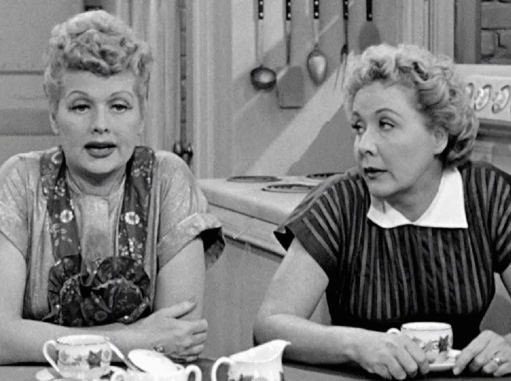
I Love Lucy is one of the most famous sitcoms ever made. Lucille Ball is a comedic genius, and her co-stars’ performances add to the comedy, love, and overall quality of the show. It is an absolute classic, and it defined television in the 1950s. Lucy Ricardo and Ethel Mertz are a terrific dynamic duo on the show. They paved the way for other comedic duos, including Laverne DeFazio and Shirley Feeney in the Happy Days spin-off, Laverne and Shirley.

Even though their friendship is iconic, there are definitely some moments looking back on the show that make viewers realize their friendship is not as perfect as it seems to be. Here are 10 moments featuring the friendship of Lucy and Ethel that show the characters’ relationship is not always perfect.

Lucy & Ethel Buy A Dress Shop

When the ladies decide to go into business together, trouble begins right away. Both ladies get a little conceited and fight over whose name will appear first in their new name for the shop. When friends work together, problems are bound to occur. However, the problems for these two characters start very early on, and they focus more on getting recognition than supporting each other, as they handle the difficult task of running a business.

It may not be the most serious argument in the world, but friends like these two should have easily been able to think of a solution to solve their simple problem.

Ethel Takes Lucy’s Role In A Movie

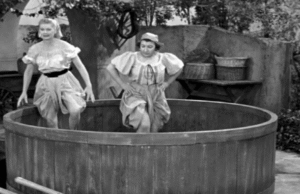
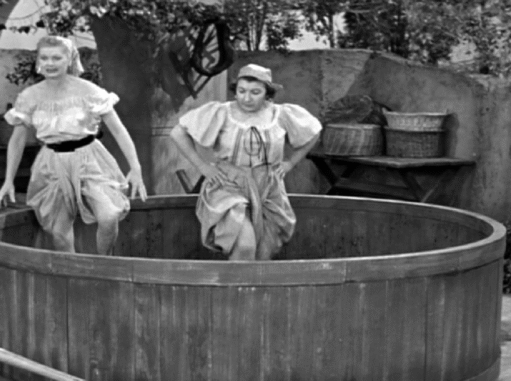
When Lucy learns she has the chance of getting a small role in an Italian movie, she tries her best to understand her role and the culture, which leads to the famous scene with Lucy stomping on grapes. However, things do not go as planned, and Ethel ends up getting the part.

Instead of declining the role after seeing all the hard work Lucy put into getting it, fame and recognition become the only things on Ethel’s mind, and she accepts the role without thinking of Lucy’s feelings. Getting a part in a big movie is a great opportunity, but Ethel did not even hesitate to accept the role without at least discussing it with her good friend first.

The Charm School

Lucy and Ethel decide to go to charm school to improve their appearances and make them look more attractive. That is the basic plot of this particular episode, and if Lucy and Ethel really were great friends, this episode would not even exist in the first place.

In the 1950s, women seemed to feel pressured to focus most of their efforts on appearances and manners. While there is nothing wrong with these things, no woman should feel forced to make any changes to their appearances or change the way they behave just because it is highly expected of them. Lucy and Ethel should have taken the opportunity to vouch for one another and have each other’s backs about the way they already look and act.

The Courtroom

This is one of the episodes where the Ricardos argue with the Mertzes. Lucy and Ricky buy Fred and Ethel a new television set for their anniversary. Ricky accidentally breaks it, and Fred ends up breaking the Ricardos’ TV, leading to a huge argument in a courtroom.

The friendship between the Ricardos and Mertzes is supposedly very strong, yet a simple accident almost wipes the whole friendship out. While it is nice to see Lucy and Ricky on the same side, it is hard to watch Lucy fight with Ethel, considering how close they are.

Ethel Stops Lucy From Singing Her Solo

Lucy writes a musical and gives Ethel the lead and casts herself as the Queen of the Gypsies. Lucy does not have a strong singing voice, so Ethel plans for all the background singers to sing Lucy’s solo with her, so Lucy’s voice won’t be heard.

Even though Lucy does not have a good voice, she was very excited about being in the show and wanted her moment in the spotlight. Ethel should have supported her and let her have her moment, regardless of the quality of her voice.

Lucy & Ethel Suspect Each Other Of Being A Burglar

The neighborhood is afraid of Madame X, a burglar that has broken into many other homes around where Lucy and Ricky live. Due to mistakes and confusion, Lucy and Ethel both suspect each other of being Madame X.

Considering how strong their friendship supposedly is, it is strange to think that they would think of each other this way so quickly without at least confronting each other about it first. They have been friends for years, and it is not okay for one person to think the other is even capable of breaking and stealing things from homes.

Breaking The Lease

This is another one of those scenarios where the Ricardos argue with the Mertzes. In this instance, Lucy and Ricky are a little loud in their apartment, and due to anger and frustration, the friendship between the two couples seem to be over, leading to Lucy and Ricky trying their best to break their lease.

No good friends would nearly have their friendship destroyed just by one night of frustration, especially when it is over something as innocent as being a little too loud one night. Lucy and Ethel are supposedly closer than that, so the attitude and anger between the two of them should not be acceptable.

The “Friendship” Song

Lucy and Ethel agree to not wear the same dress the night they do a performance. However, they both secretly put on the same dress, not knowing the other was going to put theirs on as well. This leads to them getting angry onstage, and ripping and tearing each other’s outfits in front of everybody.

In a scenario like this in real life, instead of a sitcom, Lucy and Ethel should have confronted each other after the show. It is too embarrassing and mean to make fools of each other in this way onstage. Any good friends like them would have settled their differences in this situation in a calm, appropriate manner.

Lucy Teaches Ethel How To Drive

Ricky gives Lucy one driving lesson, and it does not go very well. Lucy then decides to teach Ethel herself, and the car ends up needing repairs.

Lucy is aware that she is an inexperienced driver, especially since she only had one lesson. She should have known giving Ethel a lesson was a bad idea, especially because driving can be dangerous. Besides herself, Ethel could have been seriously injured. Lucy should have let herself become a better and more experienced driver first before ever even considering teaching someone else, especially her very best friend.

Ethel Does Not Help Lucy When She Thinks Ricky Is Trying To Murder Her

When Lucy believes her husband is trying to kill her and he comes home, Lucy tries to get Ethel to help her. However, Ethel is too afraid and just exits the apartment. She does not even try to help her out or even call the police.

Of course, Ricky was not actually trying to kill her, but Ethel thought so, and she should have done everything in her power to help out her best friend. She does nothing, proving her friendship with Lucy is not as perfect as it seems to be.

Lucille Ball’s Daughter Shares the Best (Albeit Cut-Throat) Advice Her Mother Ever Gave Her

Lucie Arnaz reflects on the advice Mom Lucille Ball gave her that’s always stuck with her.

Lucie Arnaz grew up with Lucille Ball as her mother and Desi Arnaz as her father. It’s safe to say she picked up a few pearls of wisdom about showbiz and life in general along the way.

In an interview with Good Morning America in 2019, Arnaz shared the best advice her mother ever gave her, and what she came to understand just by learning through example from the great Lucille Ball.

Lucille Ball with daughter Lucie Arnaz and son Desi Arnaz Jr. | Bettmann, Getty Images

Lucille Ball was not around a lot when her children were young

Just as Ball became a mother, her career skyrocketed.

“I was born six weeks before a big show called I Love Lucy went on the air and she was starring in that along with my father, of all people, who also was producing it,” Arnaz told the Television Academy Foundation in 2016. “So they were very busy. So I think up from birth through 7, they weren’t home a lot, I would say. Very late at night and weekends, and we were very fortunate to have some hiatus times, weekends off, and summers, summers off, when we had a house in Del Mar.”

Arnaz told GMA that her favorite memories of her mother were just whenever they were home together.

“Home and being together is a fond and favorite memory — if she made me a grilled cheese sandwich and we sat in the living room and we talked, that is a great moment in my memory,” she said. “She was just home. She was just being mom, making sandwiches. Those were the magic times for me.”

What Lucie Arnaz learned from Mom Lucille Ball

Arnaz went on to say that, in some ways, she is like her mother today, and in others, she’s like her father.

“She was very nuts and bolts,” Arnaz said of her mother. “[She’d say], ‘You’ve got to take care of business and you’ve got to brush your teeth and you’ve got to do your homework.’ My father [would say], ‘Let’s have a fiesta. Let’s cook and let’s have a good time.’ I have a responsible side … but I’m also very much like my father.”

She continued: “He trusted people, he hired the right people and let them do their job. He wasn’t a micromanager. He was the best deal maker in the world. I loved watching him do business.”

Lucille Ball, Desi Arnaz Jr., Lucie Arnaz, and Desi Arnaz | J. Wilds/Keystone/Hulton Archive/Getty Images

In terms of advice, Arnaz recalls her mother always encouraging her to take care of herself.

“She was very focused on, ‘Take care of yourself first. Put your oxygen mask on before anybody else.’ And I think about that a lot. And [she gave] very practical advice like, ‘Never leave your luggage.’ That pops into my mind a lot,” she said.

“And as far as the stuff that she didn’t actually say that you sort of pick up by osmosis I think it’s just to be incredibly professional and do your job,” Arnaz added. “Don’t come in whining. Know your lines. Be a team player. Don’t blame other people for what you didn’t do right.”

Popular

A Simple Christmas Dinner Conversation That Marked the Start of a...

0
Christmas Eve at my parents’ home had always followed the same polished script—beautiful table settings, carefully prepared food, polite conversation, and just enough tension...